7 Questions to Ask a Deck Builder Before Starting Your Project
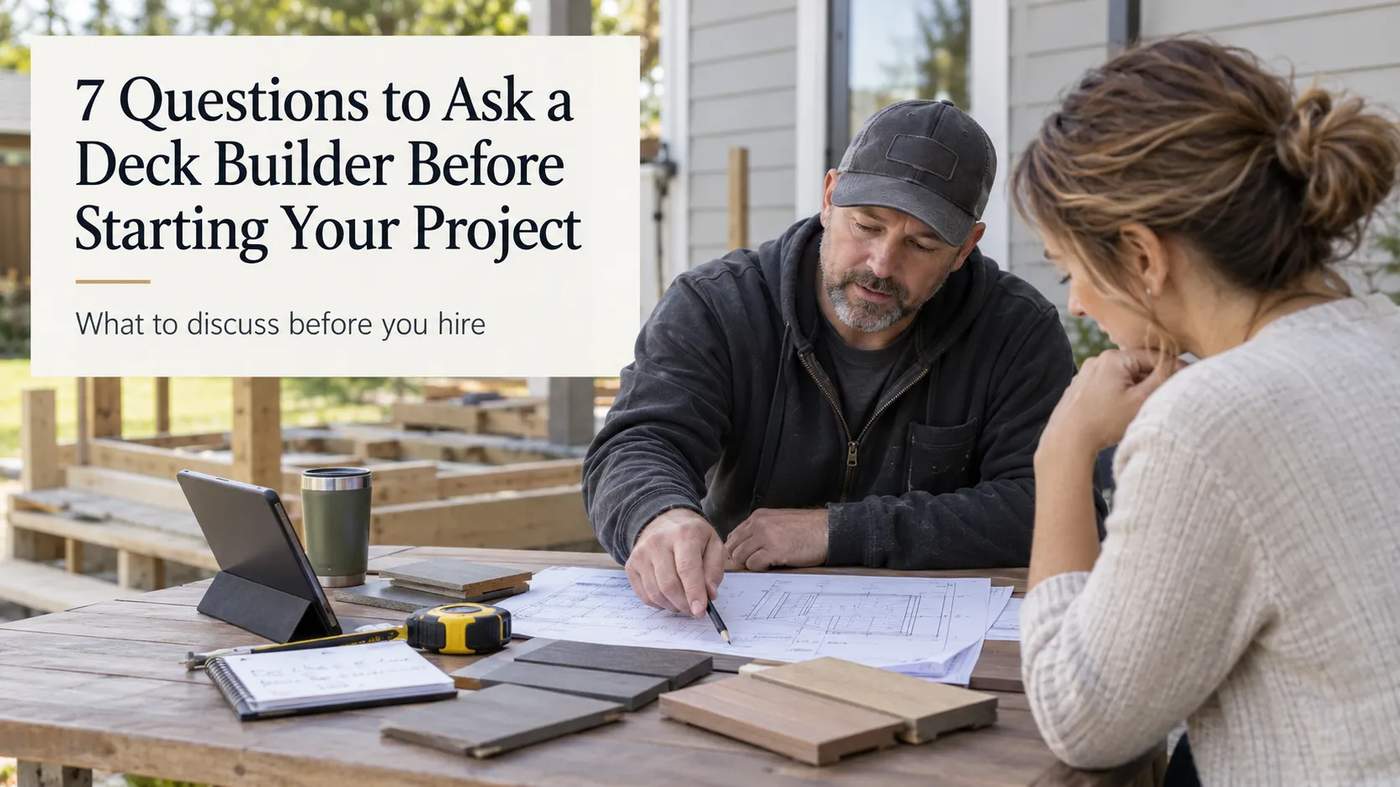
The first meeting with the contractor can be fuzzy for most people since they will be building their deck only once or twice in their lives. You can see that the yard could use more living area. You might have a general idea of the approximate size, but many of the other specifics will be novel.
Washington Labor & Industries advises homeowners to check on a contractor, obtain at least three written quotes, and look past just the cost. All these aspects should be reviewed: scope, warranties, references, completion dates, and permit costs.
1. Can I check your registration myself?
Do not settle for yes, we are licensed.
Washington has a public contractor lookup. It lets you check whether a registration is active and whether the contractor has the bond and liability insurance required by the state.
Harbor Deck & Fence, for example, publishes its Washington registration number, HARBODF751NF, on its Tacoma deck page.
That is the kind of basic information you should be able to get from any deck builder without chasing them for it.
2. What am I actually paying for?
A deck quote can look complete and still leave a lot unanswered.
Suppose one bid includes removal of the old deck, hauling, new stairs, railing, fascia, and cleanup. Another only covers framing and decking. The second number may look better until the extras are added later.
Ask for the boring details
· Is sales tax included?
· Permit fees?
· Demolition?
· Disposal?
· If the crew opens an old deck and discovers a failing beam, how do they get approval for such additional work?
Washington L&I also recommends written contracts that include clear and explicit terms regarding work, materials, payment, permit costs, warranties, and the process of change orders.
3. What are you expecting to keep from the old deck?
This matters on a repair or replacement project.
Old boards can look terrible while the frame underneath is still usable. The reverse happens too. New-looking decking can mask issues with joists, posts, beams, or connection to the ledger.
According to Harbor Deck & Fence, the company considers what they see before suggesting repair, resurfacing, or replacement. Its deck services encompass joist, beam, and ledger repairs and resurfacing whenever feasible to make use of previous framing materials.
· Ask what looks reusable today and what cannot be known until demolition starts.
· Then ask how that uncertainty will be handled.
4. Why this material for my house?
There is a difference between choosing a material and knowing why it fits your project.
· Cedar works for homeowners who like real wood and do not mind future cleaning, staining, or sealing.
· Composite is attractive when lower routine maintenance matters more.
· PVC is another option.
· The framing beneath any of them still has to be planned correctly.
Harbor’s material information covers cedar, pressure-treated wood, composite, and PVC rather than treating one material as the answer for every property.
If a contractor recommends composite, ask why. If the answer is cedar, ask what maintenance to expect. The explanation should connect the material to your yard, budget, and habits.
5. How are you planning for water here?
This one matters in Tacoma.
Look around the proposed deck area after a wet day
· A downspout may empty nearby.
· The ground may stay soft beside the house.
· Water may already collect under the old deck.
When it comes to Northwest Deck Construction, Harbor Deck & Fence elaborates further on deck flashing, deck drainage, deck ventilation, and board spacing.
The contractor is not required to tell you precisely how to construct the deck. Determine where water will be positioned and how areas around the house and framing are being protected.
The answer does not need to sound impressive. It just needs to make sense.
6. Does this design need a Tacoma permit?
Do not rely on somebody saying, It is small, so probably not.
Tacoma’s exemption is specific. A deck must be:
· 200 square feet or less
· no more than 30 inches above grade at any point
· not attached to the dwelling
· and not serve as a required exit door
Land-use setback rules can still apply.
That means a modest deck can still require a permit depending on the design.
Ask who checks the requirement and, when a permit is needed, who pulls it. Washington L&I lists it as a warning sign when a contractor pushes permit responsibility onto the homeowner in situations where the contractor should be handling it.
7. What happens to the rest of the yard?
Deck plans can affect things that were not part of the original project.
· A stair run can end where a gate should go.
· A raised deck can change privacy.
· A wider platform can take away the easiest route for bins or yard equipment.
If you are already speaking with a fence contractor tacoma homeowners use, mention that before the deck layout is fixed. The same goes if a fence builder tacoma project is likely next year, or you are comparing a fence company tacoma for a larger backyard update.
Material choices can overlap too. Someone looking at cedar fence tacoma designs may want the fence and deck to feel related without making them identical.
Harbor Deck & Fence handles both deck and fence projects. Its fence options include:
· cedar privacy fencing
· board-on-board layouts
· and horizontal cedar designs
That makes the company a practical example of why it can help to think about both parts of the yard before either layout is locked in.
The point is to avoid building the first project in the way of the second.
Conclusion
You are not supposed to know everything a contractor knows. That is why you are hiring one.
What you can do is ask enough questions to understand how the job will be run. Check the registration yourself. Read the scope, not just the total. Inquire about potential damage, materials, water, permits, and the rest of the yard.
If a contractor is able to ready you with the answers to these questions, he's not just throwing out a low figure at the bottom of an estimate; he is providing you with a lot more valuable information.

