Almost 1.5 years ago, this was our user journey and how our systems onboarded them
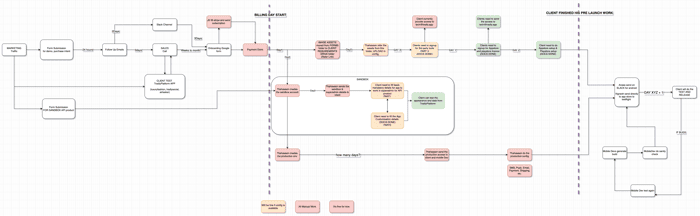
Most of them are manual processes. When we started the company, we were very optimistic that we could get everything automated in a few months. But actually, it takes us years for every overconfidence to be possible.
Most of the red boxes were manual steps where humans needed to be involved. It could be me or one of my teammates.
It was not a product with no friction
It was not a product that shows the values faster.
It was not a product that created the Aha moment.
After 3 years from initiation, we have almost got most things automated now. We still have a lot of things to be fixed. Our onboarding is not a lovable product by a design standard, but it does the job.
Onboarding or what to automate is a tricky exercise. Sometimes it can make some users become customers immediately, as they test the solution themselves and purchase it. Sometimes it can create confusion for users when onboarding is not clear. Sometimes it decreases the chances for people to ask questions of us. Meaning, when we don’t have self-onboarding, we had a lot of chances to speak as people submitted via contact form. But when we do self-onboarding, people make their judgements based on the onboarding mess-ups but not based on product value.
It takes months to really figure out what the best path is for a user to onboard. We still have not nailed it, but we are happy that many things have been automated. Our users don’t wait for us to activate a feature or test out a new thing; it’s there.
The total automation process was delayed but was never meant to be impossible. It was made possible when we split everything into small chunks and tried.
Most old red boxes we see here are now blue. The next goal is personalisation and things that help retention.
