Best IPTV Box 2026: Top Streaming Devices for Smooth Viewing
Discover the best IPTV box in 2026. Compare top legal streaming devices, features, performance, pricing, and buying tips for the best IPTV experience.
🚀 Start Streaming Smarter Today!
What Is an IPTV Box?
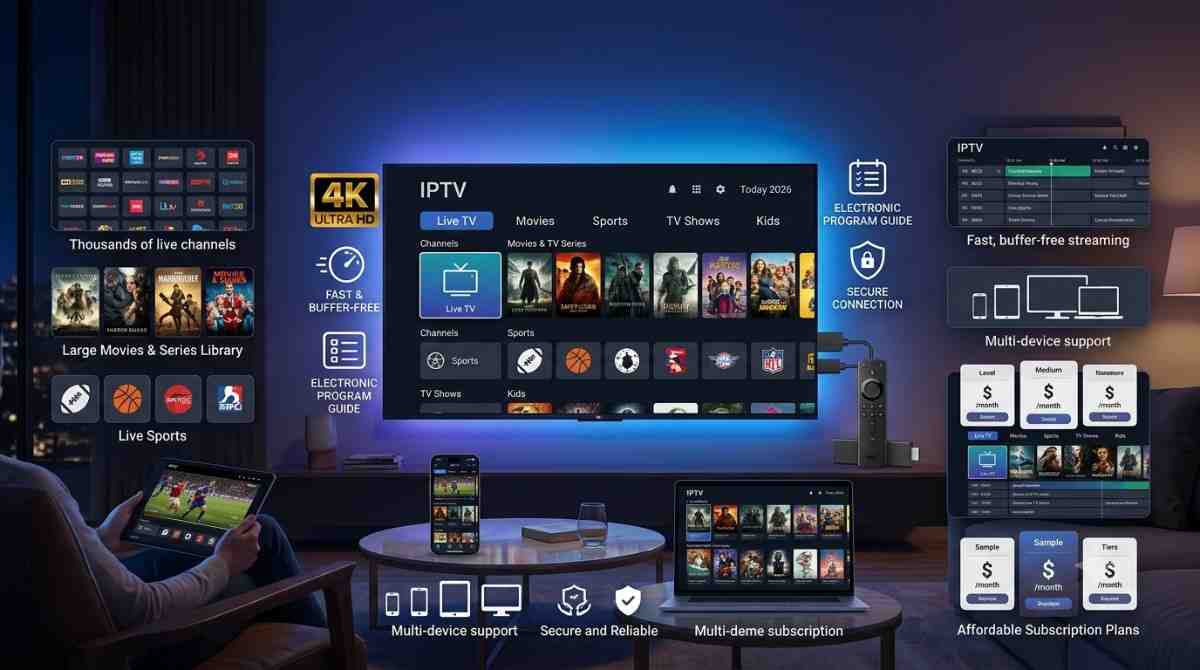
An IPTV box is a streaming device that connects your television to the internet, allowing you to watch live TV, on-demand content, movies, and streaming apps. Unlike traditional cable or satellite receivers, IPTV boxes use your internet connection to deliver content.
Modern IPTV boxes support popular legal streaming apps, including YouTube, Netflix, Prime Video, Disney+, Plex, Kodi, VLC, and IPTV player applications that work with licensed IPTV subscriptions.
Whether you're watching sports, news, entertainment, documentaries, or international channels, a reliable IPTV box provides smoother playback, faster navigation, and better picture quality.
Why You Need a Quality IPTV Box
Many people assume every streaming device performs the same, but hardware quality significantly impacts your viewing experience.
A premium IPTV box offers:
Faster app loading
Better 4K streaming
HDR support
Wi-Fi 6 connectivity
Stable performance
Less buffering
Better remote control
Voice assistant support
Long software updates
Instead of relying on slow built-in TV software, an IPTV box delivers a dedicated streaming experience with improved speed and flexibility.
How IPTV Boxes Work
An IPTV box connects to your TV using HDMI and accesses content over your internet connection.
Typical workflow:
Internet Connection
↓
Router
↓
IPTV Box
↓
Television
↓
Streaming Apps
The device decodes digital video streams and displays them on your television with support for HD, Full HD, and 4K Ultra HD resolution.
📺 Try GSE Smart IPTV Now.
Benefits of Using an IPTV Box
Using a dedicated IPTV box provides several advantages over smart TV apps alone.
Better Performance
Modern processors ensure smoother navigation and faster application launches.
Superior Video Quality
Many IPTV boxes support:
4K UHD
HDR10
HDR10+
Dolby Vision
Dolby Atmos
Large App Library
Users can install:
YouTube
Netflix
Disney+
Prime Video
Plex
VLC
Kodi
Legal IPTV player apps
Expandable Storage
Some Android TV boxes support USB drives or microSD cards for additional storage.
Easy Updates
Major brands regularly release firmware and security updates.
Best IPTV Boxes in 2026
1. NVIDIA Shield TV Pro
The NVIDIA Shield TV Pro remains one of the most powerful streaming devices available. Powered by the NVIDIA Tegra processor, it offers exceptional performance for IPTV streaming, gaming, AI upscaling, and media playback.
Key Features
AI 4K Upscaling
Dolby Vision
Dolby Atmos
Gigabit Ethernet
Google Assistant
Chromecast Built-in
USB Ports
Plex Media Server Support
Pros
✔ Extremely fast
✔ Premium build quality
✔ Excellent app support
✔ Long software updates
Cons
Higher price
Overkill for casual users
2. Apple TV 4K
Apple TV 4K delivers outstanding streaming performance with Apple's powerful processor and tvOS interface.
Best For
Apple ecosystem users.
Features
A15 Chip
Dolby Vision
Dolby Atmos
AirPlay
HomeKit
Siri Voice Control
Smooth User Experience
Pros
Fast performance
Premium interface
Excellent reliability
Cons
Higher cost
Limited customization
3. Google TV Streamer
Google's latest streaming device offers an intuitive interface, personalized recommendations, and access to thousands of apps through Google Play.
Highlights
4K HDR
Google Assistant
Chromecast
Smart Home Integration
Regular Updates
Ideal for users seeking simplicity and performance.
4. Amazon Fire TV Cube
The Fire TV Cube combines streaming with Alexa voice control and powerful hardware.
Features
Alexa Built-in
Wi-Fi 6E
Dolby Vision
HDR10+
Hands-Free Voice Control
Fast Navigation
Perfect for users already invested in Amazon's ecosystem.
5. Xiaomi TV Box S (2nd Gen)
A budget-friendly option that supports 4K HDR streaming while running Google TV.
Benefits
Affordable
Compact Design
Google Assistant
Chromecast
Dolby Audio
Easy Setup
Excellent value for beginners.
6. Dune HD Homatics Box R 4K Plus
This premium Android TV device is designed for home theater enthusiasts, offering powerful hardware and extensive codec support.
Features
Android TV
4K HDR
Dolby Vision
Dolby Atmos
AV1 Decoding
Gigabit Ethernet
Wi-Fi 6
Ideal for advanced users who prioritize high-quality video playback.\
🌍 Stream Live TV Anywhere.
eatures to Consider Before Buying an IPTV Box
Choosing the right IPTV box depends on your needs and budget. Here are the most important features to evaluate before making a purchase.
Processor Performance
A fast processor ensures smooth navigation, quicker app launches, and stable playback. Devices with modern chipsets perform better when handling 4K video, HDR content, and multitasking.
RAM
At least 2GB RAM is recommended for casual users, while 4GB or more offers better multitasking and faster performance for demanding applications.
Internal Storage
Look for a minimum of 16GB of storage if you plan to install multiple apps. Some premium models also support expandable storage through USB or microSD.
Video Resolution
Choose a device that supports:
Full HD (1080p)
4K Ultra HD
HDR10
HDR10+
Dolby Vision
Even if your current TV is Full HD, buying a 4K-capable device can help future-proof your setup.
Connectivity
Reliable connectivity is essential for uninterrupted streaming. Consider:
Dual-band Wi-Fi
Wi-Fi 6 or Wi-Fi 6E
Gigabit Ethernet
Bluetooth 5.0 or newer
HDMI 2.1 (on premium models)
Operating System
Popular options include:
Android TV
Google TV
tvOS
Fire OS
These platforms provide access to thousands of streaming and media apps through official app stores.
Voice Control
Voice assistants make it easier to search for content, launch apps, adjust volume, and control compatible smart home devices.
Available assistants include:
Google Assistant
Amazon Alexa
Apple Siri
Remote Control
A quality remote should include:
Voice search
Shortcut buttons
Bluetooth connectivity
Comfortable design
Responsive controls
Android TV vs Google TV vs Apple TV
Android TV
Android TV offers flexibility, wide app compatibility, and support for many media player applications. It is ideal for users who enjoy customization and access to the Google Play Store.
Advantages
Extensive app selection
Chromecast support
Flexible interface
Works across many brands
Disadvantages
Interface varies by manufacturer
Update frequency depends on the device maker
Google TV
Google TV builds on Android TV with a more polished interface and personalized recommendations.
Advantages
Cleaner design
Better content discovery
Regular updates
Smart home integration
Disadvantages
Requires a Google account for the full experience
Apple TV (tvOS)
Apple TV provides a premium experience with smooth performance and seamless integration with Apple devices.
Advantages
Fast hardware
Excellent security
Long-term software support
AirPlay compatibility
Disadvantages
Higher purchase price
Fewer customization options
IPTV Box Setup Guide
Setting up an IPTV box is straightforward:
Connect the box to your TV using an HDMI cable.
Power on the device.
Connect to your home Wi-Fi or Ethernet network.
Sign in to your preferred app store (Google, Apple, or Amazon, depending on the device).
Install your preferred legal streaming apps or IPTV player applications.
If using a licensed IPTV service, follow the provider’s setup instructions.
Update the device firmware to the latest version.
Adjust display settings for the best picture quality.
Most users can complete the setup in less than 15 minutes.
Tips to Improve Streaming Performance
To enjoy smooth streaming with minimal interruptions:
Use a stable broadband connection (25 Mbps or higher for 4K).
Prefer an Ethernet connection when possible.
Place your Wi-Fi router close to the IPTV box.
Keep the device firmware updated.
Restart the device occasionally to clear temporary files.
Close unused background apps.
Ensure your HDMI cable supports 4K if using a 4K TV.
Avoid downloading large files on the same network while streaming.
Use official apps and keep them updated.
Common Mistakes to Avoid
Many buyers focus only on price, but other factors are equally important.
Avoid these common mistakes:
Buying outdated hardware with limited software support.
Ignoring RAM and storage specifications.
Choosing devices that lack 4K or HDR support if you own a compatible TV.
Using slow or unreliable internet connections.
Skipping software updates.
Assuming every IPTV app is available on every platform.
Overlooking warranty and customer support.
Who Should Buy Which IPTV Box?
Best Overall Performance
NVIDIA Shield TV Pro – Ideal for enthusiasts who want top-tier speed, AI upscaling, and excellent long-term support.
Best for Apple Users
Apple TV 4K – Perfect for households invested in the Apple ecosystem.
Best Value
Google TV Streamer – A balanced choice offering modern features and a user-friendly interface.
Best Smart Home Integration
Amazon Fire TV Cube – Excellent for users who rely on Alexa and Amazon services.
Best Budget Option
Xiaomi TV Box S (2nd Gen) – Affordable without sacrificing core streaming features.
Best Home Theater Experience
Dune HD Homatics Box R 4K Plus – Designed for users seeking premium audio and video capabilities.
Final Verdict
Choosing the best IPTV box depends on your budget, preferred ecosystem, and streaming needs. Whether you prioritize raw performance, ease of use, or affordability, today's streaming devices offer powerful hardware, 4K support, voice control, and access to a wide range of legal streaming applications.
For most users, a device with 4K HDR support, a modern processor, ample storage, and regular software updates will provide a smooth and enjoyable viewing experience for years to come. By selecting a reputable streaming device and pairing it with licensed content providers, you can build a reliable, future-ready home entertainment setup.
Frequently Asked Questions (FAQs)
1. What is the best IPTV box in 2026?
The best IPTV box depends on your needs. NVIDIA Shield TV Pro is ideal for performance, Apple TV 4K excels for Apple users, while Google TV Streamer offers excellent value for most households.
2. Can I use an IPTV box with any TV?
Yes. Most IPTV boxes connect via HDMI and work with nearly all modern televisions. Older TVs may require additional adapters if HDMI is unavailable.
3. Do I need fast internet for an IPTV box?
Yes. A stable internet connection is essential. For HD streaming, 10–15 Mbps is generally sufficient, while 4K streaming benefits from speeds of at least 25 Mbps.
4. Are IPTV boxes legal?
Yes. IPTV boxes are legal hardware. Legality depends on the apps and content sources you use. Always use licensed streaming services and authorized IPTV providers.
5. Which IPTV box is best for 4K streaming?
Devices like the NVIDIA Shield TV Pro, Apple TV 4K, Google TV Streamer, and Amazon Fire TV Cube all provide excellent 4K HDR streaming performance when paired with compatible TVs and high-speed internet.

