Built a never-failing AI skin analysis app in 1 day (3-layer LLM resilience demo)
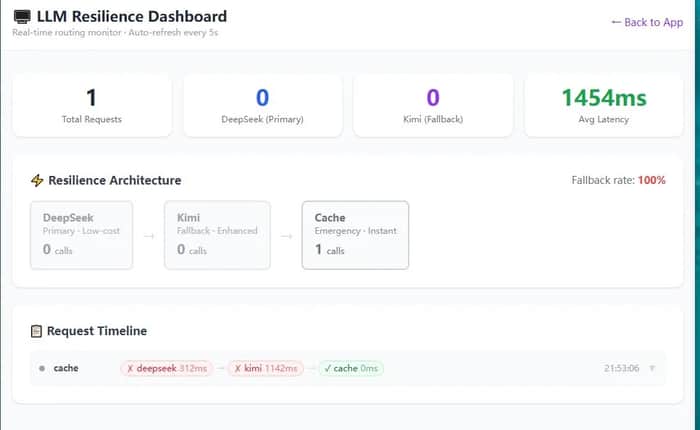
Body:
Hey IH 👋
Just shipped SkinSense AI for the DevNetwork AI+ML Hackathon — wanted to share the architecture because I think it solves a real production problem.
The problem: Every LLM-powered app has a single point of failure. When your AI provider goes down, your product breaks.
What I built: A 3-layer resilience system demonstrated through skin analysis:
- Upload a selfie → Qwen Vision analyzes 8 skin dimensions
- DeepSeek generates personalized recommendations (Layer 1)
- DeepSeek down? → Auto-switch to Kimi in <1 second (Layer 2)
- Both down? → Rule-Based Engine kicks in using actual skin scores (Layer 3)
The key insight: Layer 3 isn't a static fallback. It's a dermatology-guideline engine that uses the actual analysis data — so even offline, users get personalized advice, not generic filler.
Also built a real-time Dashboard showing routing chain, fallback events, latency per model, and cost savings vs GPT-4.
Stack: Next.js 15 + TypeScript + Qwen Vision + DeepSeek + Kimi
Time: ~5 hours total (was also updating another product simultaneously 😅)
Demo: https://skin.tinystrack.com
Dashboard: https://skin.tinystrack.com/dashboard
GitHub: https://github.com/tinystrack/skinsense-ai
Happy to answer questions about the fallback architecture!
