How a clinic queue management system cuts waiting time
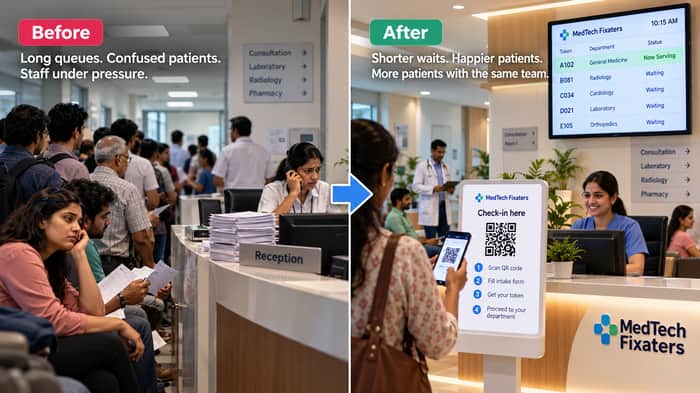
At 10 a.m. in a busy clinic, the line usually starts at reception. One receptionist is answering the phone, handing out a clipboard, and telling a patient it won't be much longer. A doctor down the corridor is free but still waiting for the next file. This week's follow-up calls are on a list nobody will get to today.
The usual response is to hire another receptionist. The hold-ups, though, come from how patients and paperwork move between steps, and a new hire inherits the same steps. A clinic queue management system changes the steps themselves. MedTech Fixaters handles the patient's path through your clinic from the moment they walk in until they're due back.
Where the time goes
Most delays happen at the handoffs. At check-in, patients fill out paper forms and staff then type the same details into the computer. When a patient finishes in one department, someone has to work out where they go next, and the patient waits while that happens. Records sit in different places, so doctors spend part of each consultation looking for last month's scan or lab result. After the visit, follow-ups depend on someone remembering to call.
Each of these delays is small. Over a full day they add up to long waits for patients and tired staff who didn't see any more people for the extra effort.
How MedTech Fixaters works
Patients scan a QR code at the entrance and fill in their intake form on their own phone. The system then sends them to the right doctor or department. Reception no longer has to process paperwork for everyone and can spend that time with patients who need help at the desk.
Staff get one screen showing who is waiting in every department and for how long. When a doctor finishes a consultation, the next patient is already on the list.
Each patient has a single ID, and their visits, scans, and lab results are stored under it. The doctor opens one record and can see the history before the patient sits down.
Consultation fees can be paid at check-in through Stripe, Razorpay, or PayU, so patients don't have to stop at the desk again to pay on their way out.
After the visit, the system sends an SMS reminder when a patient is due back. Follow-ups happen whether or not anyone remembers to call.
More patients with the same team
With check-in, routing, records, payment, and reminders handled by the system, receptionists spend their time with patients instead of on data entry, and doctors spend consultations on the patient instead of searching for files. The same team can see more patients in a day without working longer hours. MedTech Fixaters is built to take admin work off your staff and isn't meant to replace anyone.
Compliance and your data
The system is built around HIPAA and GDPR requirements. Each clinic's data is kept separate from every other customer's. Patient data can also be connected to your clinic's own cloud storage, so you keep control of it and can export it whenever you want.
Getting started
A clinic is usually live two to three weeks after signing, and staff training takes two or three short sessions. Before you commit, you can run five or six real patients through the system for free.
MedTech Fixaters is built for diagnostic clinics, multi-specialty clinics, and larger hospitals. Several doctors and departments can use it at the same time.
If you'd like to see how it would work in your clinic, [book a demo]. We'll walk you through one patient's path, from the first scan to the follow-up reminder.
At https://medtechfixaters.in/
https://www.linkedin.com/company/medtech-fixaters/posts/?feedView=all

Thanks for writing this up. Bookmarking it for later.
This is useful. How are you finding your first users so far?
Interesting. How are you measuring whether it is working?
Makes sense. Are you planning to charge for it, or keep it free for now?
Interesting approach. What was the hardest part to get right?
Nice work shipping it. What has been the biggest challenge since launch?
What made you pick this stack over the alternatives?
What made you pick this stack over the alternatives?
Love this angle. Building Xstream4K right now so this hits close to home — what made you look into it in the first place?