How to Build Your Islamic Foundation After Becoming Muslim
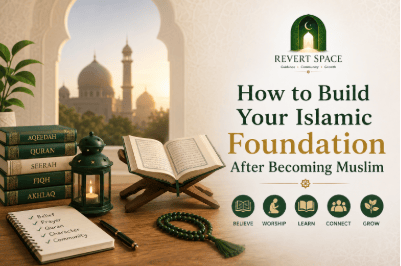
Becoming Muslim is the starting point, not the destination, and most new Muslims quickly realize that the real work begins after the Shahada, not before it. Faith without structure tends to feel shaky, especially in the first year when everything from prayer to belief to daily habits is still forming. Learning how to build a strong foundation in Islam after converting is less about memorizing everything at once and more about laying bricks in the right order.
Start With Correct Belief Before Anything Else
Aqeedah, or core belief, is the foundation beneath every other foundation. Before diving into rulings and rituals, understand who Allah is, what the Quran teaches about purpose, and why the Prophet Muhammad's role matters. Rushing past belief to focus purely on practice often leaves new Muslims performing rituals without understanding why, which makes consistency harder to sustain later. Spend real time here, even if it means slowing everything else down. A clear grasp of tawheed, the oneness of God, and the six articles of faith gives every later lesson somewhere to attach itself, rather than floating as an isolated fact to memorize.
Build a Prayer Habit You Can Actually Sustain
The five daily prayers are usually the first practical skill new Muslims work on, and they're also where foundations are made or broken. Rather than aiming for flawless Arabic recitation immediately, focus on learning wudu, the basic movements, and one short surah well enough to pray consistently. A shaky but consistent prayer routine beats a perfect one you only manage occasionally. Consistency, not perfection, is what turns prayer into a foundation rather than an occasional task. If you miss a prayer, resume with the next one rather than treating the missed prayer as a reason to stop trying altogether. That single mindset shift is often what separates people who keep the habit from those who quietly drop it after a rough week.
Approach the Quran Gradually, Not All at Once
Trying to read the entire Quran cover to cover in month one is a common mistake that leads to burnout. A more sustainable approach starts with a trusted translation, a handful of short surahs memorized for prayer, and gradual exposure to tafsir, or explanation, as questions come up naturally. Understanding beats speed here. A few verses genuinely absorbed matter more than dozens skimmed without context. Many new Muslims find it helpful to keep a simple journal of verses that resonate with them, returning to those same passages months later once their Arabic and context have both improved.
Learn From the Prophet's Example, Not Just His Biography
The Sunnah covers far more than historical facts about the Prophet Muhammad's life. It includes how he treated people, handled conflict, and approached daily routines. New Muslims who study his character alongside his history tend to internalize Islamic values faster than those who treat the Sunnah as a history lesson to memorize. Even a short biography, read slowly with attention to how he responded to difficulty, offers more practical guidance than a purely academic timeline of events.
Connect With a Real Muslim Community
Books and online resources matter, but community accelerates learning in ways solo study can't replicate. A local mosque, a new Muslim support group, or even a handful of practicing friends provides accountability, answers to specific questions, and a sense of belonging that prevents isolation during a stage when many converts feel disconnected from both their old and new communities. Reaching out first can feel intimidating, but most mosque communities are used to welcoming new faces and are genuinely glad to help someone get oriented.
Develop Character Alongside Ritual Practice
Akhlaq, or Islamic character, is often the most overlooked part of building a foundation. Honesty, patience, generosity, and controlling anger are as central to Islam as prayer and fasting, yet new Muslims sometimes focus so heavily on ritual correctness that character development gets sidelined. A strong foundation includes both. Reflecting on a single character trait each week, and noticing how it shows up in ordinary moments like traffic or a disagreement with family, does more for long term growth than reading about akhlaq in the abstract.
Create a Simple Routine You Can Sustain Long Term
Foundations aren't built through occasional bursts of motivation. A sustainable routine, even a modest one, beats an ambitious plan abandoned after two weeks. Set small, specific goals: one new surah a month, one Islamic book read slowly, one question asked to a mentor each week. Small and consistent outperforms big and sporadic almost every time.
Having guided many new Muslims through this exact stage, the pattern that stands out most is simple: the people whose foundations hold up years later are rarely the ones who moved fastest. They're the ones who built slowly, asked questions without embarrassment, and treated setbacks as normal rather than failures.
Did You Know?
Many scholars describe the first year after accepting Islam as a period of laying groundwork rather than achieving mastery, which is why traditional Islamic education has historically emphasized gradual, sequenced learning over rushed memorization.
Pro Tips for Building Your Foundation
Review your Aqeedah basics monthly, not just once at the start
Pair every new ritual you learn with the reasoning behind it
Revisit your first few months of notes periodically to track real progress
A Common Mistake to Avoid
Trying to build every part of the foundation simultaneously, belief, prayer, Quran study, Arabic, and community all at once, tends to overwhelm new Muslims within weeks. Sequencing these pieces, rather than tackling them all together, keeps the process sustainable and prevents early burnout.
A strong Islamic foundation isn't built in a single sprint. It's built through belief studied patiently, prayer practiced consistently, community found deliberately, and character developed alongside ritual. Take it one piece at a time, and trust that a slower, steadier foundation will hold up far better than one built in a rush. A year from now, the choices that matter most won't be the ones made quickly, but the small, repeated ones that quietly became habit.
Frequently Asked Questions (FAQs)
How long does it take to build a solid Islamic foundation as a new Muslim?
There's no fixed timeline, but most people spend their first year establishing consistent prayer, basic belief understanding, and community connections, with deeper growth continuing for life.
What should a new Muslim focus on first: belief or ritual practice?
Belief comes first conceptually, since it gives ritual practice its meaning, but both should develop together in practice rather than one strictly before the other.
Is it normal to feel overwhelmed after becoming Muslim?
Yes, this is extremely common. Sequencing your learning, belief first, then prayer, then deeper study, tends to reduce that overwhelm significantly.
Do I need to learn Arabic to build a strong foundation in Islam?
Not immediately. A trusted translation and transliterated prayers are a reasonable starting point, with Arabic study developing gradually over time.
How important is community for a new Muslim's foundation?
Very important. Community provides accountability and answers that solo study can't fully replace, and it significantly reduces the isolation many converts feel early on.
What if I miss prayers or slip up while building my foundation?
Setbacks are normal and expected. Resuming consistently after a missed prayer or a difficult week matters more than achieving an unbroken streak.
Should new Muslims focus on character or ritual correctness first?
Both matter equally. Akhlaq, or character, is as central to Islam as ritual practice, and neglecting one while perfecting the other leaves the foundation incomplete.
Conclusion
Building a strong Islamic foundation after becoming Muslim is a gradual process that develops through consistent learning, worship, and personal growth. There is no need to master every aspect of Islam immediately. Start with sound belief, establish the five daily prayers, approach the Quran gradually, learn from the Prophet's example, connect with a supportive Muslim community, and work on your character alongside your religious practice. Revert Space supports new Muslims in taking these important steps through structured and accessible Islamic learning.
The goal is not to learn everything as quickly as possible, but to build habits and understanding that can last for years. New Muslims learning Islam should give themselves permission to ask questions, make mistakes, and grow at a steady pace. With patience, reliable guidance, and consistent effort, the foundation you build today can become the starting point for a deeper and more meaningful Islamic journey.

