How To Get Your Startup in Front Of The Right Audience
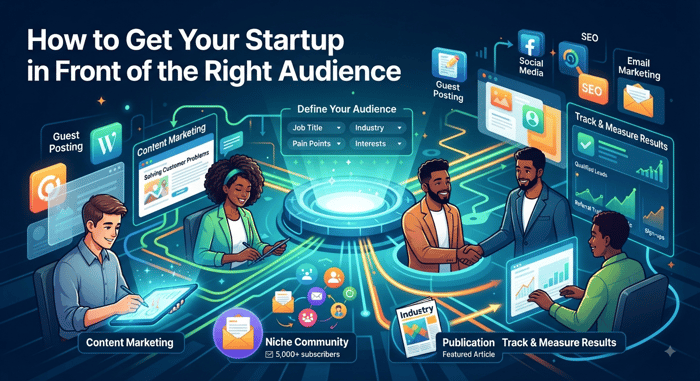
Building a startup is one thing. Getting the right people to notice it is another.
You can have a great product, a useful website, and a strong team, but growth becomes difficult when your target audience doesn't know you exist.
For early-stage startups, the answer isn't always spending more money on ads. Sometimes, it's about finding communities, publications, and platforms where your potential customers are already paying attention.
Here are a few practical ways to do that.
- Know Exactly Who You're Trying to Reach
Before promoting your startup, define your ideal customer.
Ask yourself:
What problem are they trying to solve?
Where do they look for information?
Which websites do they read?
What communities do they participate in?
What type of content do they trust?
The more specific you are, the easier it becomes to find the right audience.
- Create Content That Solves Real Problems
Don't make every piece of content about your product.
Instead, answer questions your potential customers are already asking.
For example, instead of writing "Why Our SaaS Product Is Better," you could write:
"5 Common Mistakes Companies Make When Managing Customer Data."
The second topic is useful even to someone who has never heard of your company.
That's how you earn attention without immediately asking for a sale.
- Use Guest Posting for Distribution
Guest posting can be useful when you want to reach an audience that you haven't built yourself.
Find relevant blogs, industry publications, and niche websites that your potential customers already visit. Then pitch useful content based on their audience.
The important part is relevance.
A backlink from a random website may look good in a report, but an article published on a website your target customers actually read can provide much more value.
- Share What You Learn
One advantage founders have is access to real experiences.
You can share:
Launch lessons
Customer research
Marketing experiments
Product mistakes
Conversion improvements
Failed strategies
Unexpected results
People are often more interested in what you actually learned than another generic "10 tips for startups" article.
- Don't Ignore Smaller Communities
Everyone wants to be featured on the biggest publication.
But smaller communities can sometimes deliver better results because the audience is more focused.
A niche newsletter with 5,000 highly relevant subscribers may be more valuable to your startup than a general website with hundreds of thousands of visitors.
Look for audience quality, not just audience size.
- Build Relationships Instead of Chasing Placements
Whether you're contacting bloggers, newsletter owners, community managers, or other founders, don't make every interaction transactional.
Read their content. Leave useful comments. Share their work. Then reach out with something genuinely relevant.
Good relationships can lead to collaborations, referrals, partnerships, interviews, and future content opportunities.
- Measure What Actually Works
Don't judge a marketing channel only by how many links or views you receive.
Track things like:
Referral traffic
Sign-ups
Demo requests
Leads
Brand mentions
Customer conversations
If one small publication consistently sends qualified visitors, that's a signal worth paying attention to.
The Goal Isn't to Reach Everyone
As a startup, you don't need everyone to know about you.
You need the right people to discover you.
That means spending less time chasing vanity metrics and more time creating useful content, participating in relevant communities, and building relationships with platforms that already have your audience.
Getting noticed is important—but getting noticed by the right people is what can actually move a startup forward.
