How to Keep Floor Mats Clean and Hygienic: The Ultimate Maintenance Guide
Most facility teams treat floor mats like furniture. Buy them once, set them down, forget about them until they look bad enough to replace. That's backwards. A mat that isn't cleaned properly doesn't just look worn, it actively works against the thing it was bought to do. A saturated, grimy mat stops trapping dirt and starts releasing it back onto the floor with every footstep. At that point you're paying for a hazard instead of a solution.
Why Dirty Mats Are Worse Than No Mats at All
This is the part most maintenance schedules miss. A mat's job is to hold onto dirt, moisture, and debris until someone removes it. Once a mat is fully loaded and nobody's cleaned it, that capacity is gone. The next person who walks across it just redistributes whatever's already trapped there, sometimes further into the building than it would've traveled without a mat at all. Facilities with high foot traffic, think retail entrances, hospital lobbies, warehouse loading zones, hit this saturation point faster than people expect, often within days if the mat is undersized for the traffic it's handling.
Daily Habits That Actually Matter
You don't need an elaborate system for this. A few things done consistently beat an occasional deep clean every time.
Vacuum high-traffic entrance mats daily, twice if the location sees heavy rain or snow tracked in
Check for visible saturation after wet weather and swap in a backup mat if one's available
Wipe down hard-backed or aluminium-framed mats where grit tends to collect along the edges
Spot-check for curling or lifting corners, since these become trip hazards fast and are easy to miss during a quick walk-through
None of these take long. What actually kills consistency is treating mat care as an afterthought rather than part of the regular cleaning rotation.
Deep Cleaning Without Wrecking the Mat
Weekly or biweekly, depending on traffic, mats need something more than a vacuum pass. Carpet-faced mats generally do better with hot water extraction than a wet mop, since mopping tends to push grime deeper into the fibers instead of pulling it out. Rubber-backed and barrier mats can usually handle a pressure wash, but check the manufacturer's guidance first. Some backing materials degrade faster under high-pressure water than the surface material would suggest, and a mat that looks fine on top can be falling apart underneath after a year of the wrong cleaning method.
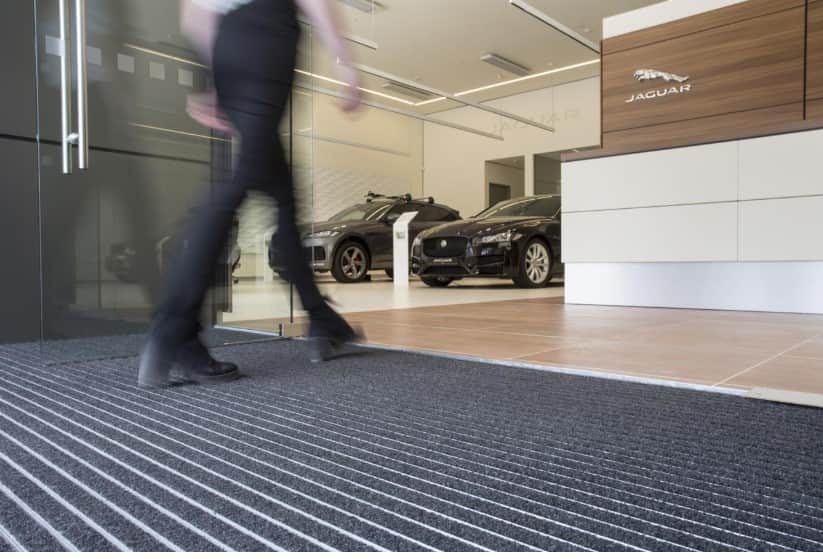
Aluminium-framed entrance matting is a bit different in that the frame itself needs occasional attention too, not just the insert material. Dirt and moisture can work into the frame joints over time, and a frame that's neglected long enough starts trapping water rather than draining it, which defeats the point of using an aluminium system in the first place. This is one area where sourcing matting built specifically for commercial durability makes a real difference. Brands like Ultimats design their aluminium entrance mats with drainage and cleaning access in mind, which cuts down on the kind of buildup that's hard to reverse once it sets in.
Drying Matters More Than People Think
A mat that's cleaned but not properly dried is arguably worse than one that's just dirty. Damp matting left in a low-airflow entrance becomes a breeding ground for mold and mildew, and once that smell sets in, it's genuinely difficult to fully remove without replacing the mat. Facilities in humid climates or coastal regions should factor drying time into their cleaning schedule rather than treating it as an afterthought. Rotating two mats, one in use while the other dries fully, solves this more reliably than trying to speed-dry a single mat under a fan.
When to Replace Instead of Clean
Cleaning has limits. A mat that's lost its backing integrity, has permanent curling, or no longer lies flat against the floor is a liability regardless of how clean the surface looks. [Worth sourcing an actual figure here: average lifespan data for commercial entrance matting under different traffic volumes would give facility managers a more concrete replacement benchmark than "when it looks worn."] As a rough rule, high-traffic commercial entrances tend to need matting replaced well before low-traffic interior zones, and budgeting for that turnover upfront avoids the scramble of an emergency replacement after a slip incident.
Building an Actual Maintenance Routine
The facilities that get this right usually have three things in place: a daily vacuum or sweep schedule for entrance zones, a weekly or biweekly deep clean depending on traffic volume, and a periodic inspection for physical wear that isn't just visual. Written down, it sounds obvious. In practice, mat maintenance is one of the first things that slips when a facilities team gets busy, mostly because a slightly dirty mat doesn't set off any alarms the way a broken fixture would.
That's really the core issue. Mats fail slowly and quietly, and by the time the problem is obvious, you're usually looking at replacement rather than a quick fix. A little consistency early costs far less than dealing with a saturated, curling, or mildewed mat later.

