How to Pick the Best Odoo Consultant in Thailand: 2026 Guide
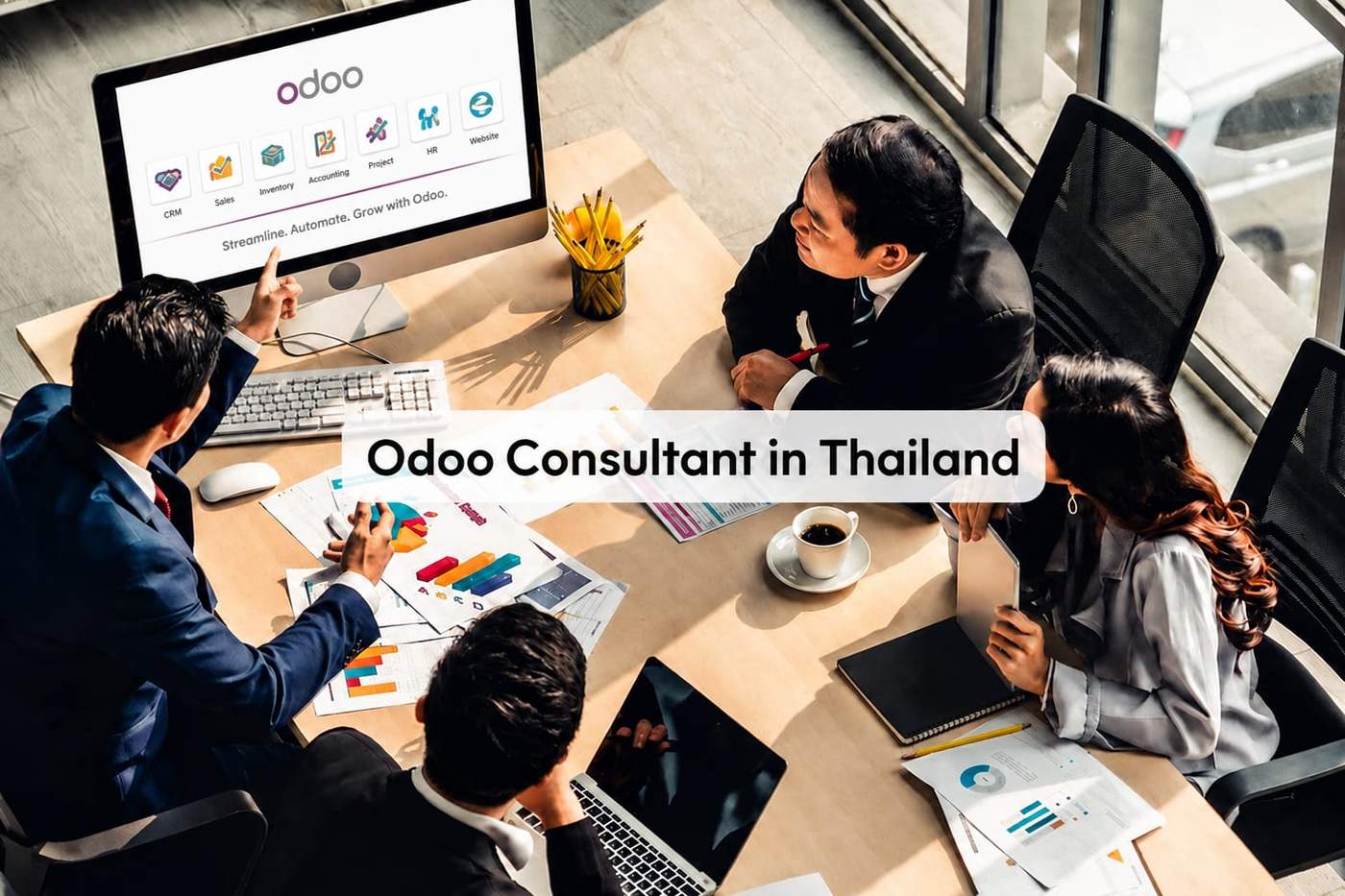
Finding the best Odoo consultant in Thailand isn't hard. Picking the wrong one, though? That'll cost you more than the project itself. The right consultant maps your business first, builds the system around how you actually work, and stays with you long after go-live. That's what separates a great ERP setup from one that gets abandoned six months later.
This guide is for Thai business owners and operations managers who are serious about Odoo in 2026. If you're in manufacturing, retail, or services, and you're tired of spreadsheets running your business, read this before you sign anything.
What an Odoo Consultant Actually Does
A lot of people think an Odoo consultant just installs software. They don't. A real ERP consultant in Thailand studies your business first. They ask questions about how orders flow, how inventory moves, and how payroll runs. Then, and only then, do they touch the system.
Business process mapping: Analyze and document your workflows before implementation.
System configuration: Configure Odoo to match your business operations and goals.
Data migration: Safely transfer data from your existing systems into Odoo.
Staff training: Train your team to use the ERP efficiently from day one.
Post go-live support: Provide ongoing assistance after deployment to ensure smooth operations.
Proper planning matters: Businesses that skip process mapping often struggle with poor adoption, inaccurate reports, and end up relying on Excel again.
Certified vs Non-Certified: The Difference Is Huge
Not everyone offering Odoo services is certified. Some are freelancers with basic Odoo knowledge and no accountability to anyone. Others are properly certified Odoo implementation partners with verified skills, access to Odoo's support team, and a real process behind every project.
Odoo runs a tiered partner program: Ready, Silver, Gold, Platinum. Each tier reflects more projects, stronger client results, and deeper technical competency. A Ready Partner has met Odoo's minimum quality standards. A Gold Partner has proven it many times over.
How to Verify Certification in 30 Seconds
Go to odoo.com/partners. Search the company name. If they're not listed, they're not certified, no matter what their website says. It's a public registry. Use it. Every single time.
5 Must-Have Qualities of the Best Odoo Consultant in Thailand
Choosing the right Odoo consultant in Thailand is one of the biggest factors in a successful ERP implementation. Look for these five qualities to ensure your business gets a solution that delivers long-term value and avoids costly mistakes.
1. Industry Experience That Matches Yours
Odoo works very differently across industries. A consultant who's only set up Odoo for service companies will struggle the moment you mention inventory valuation or production planning. Manufacturing has different rules. So does retail. Ask for specific numbers, how many projects, in which industries. Vague answers mean they're guessing.
2. Deep Thai Tax and Payroll Knowledge
This is non-negotiable for any business operating in Thailand. Your consultant needs to know PND3, PND53, PP36, SSF contributions, e-Tax invoices, and VAT reporting inside out. And they should answer without checking with someone else. If they hesitate on Thai tax questions, that's your answer right there.
3. A Documented Implementation Process
The best Odoo consultant in Thailand follows a clear process: discovery, process mapping, configuration, user testing, go-live, then support. Every phase documented. Ask them to walk you through it step by step. Hesitation here is a red flag. A real process means less chaos and fewer nasty surprises at go-live.
4. Real Post Go-Live Support
Go-live is not the finish line. It's the starting gun. Your team will have questions on day one. Processes will need adjusting. New modules will come later. A strong certified Odoo partner has a clear support structure, defined response times, support channels, and a plan that doesn't just vanish after launch day.
5. Transparent Pricing, No Surprise Invoices
Cost depends on how many users you have, how many modules you need, how complex your data is, and how much customization is involved. A small business using basic sales and accounting pays much less than a manufacturer needing full inventory, Thai payroll, and tax compliance. Get a detailed scope before you compare prices. Cheap quotes almost always leave out the things that cost the most.
Red Flags That Should Make You Walk Away
Some consultants are selling. The best ones are consulting. Here's how you tell the difference fast. Here's a cleaner, more professional version in bullet points:
• Pitches before discovery: A partner who demos the software before understanding your business is selling, not consulting.
• Unrealistic timelines: Promises of a two-week go-live usually mean important steps are being skipped.
• Heavy Excel reliance: If your team is still creating reports in Excel months after launch, the ERP isn't being implemented properly.
• Too much customization: A reliable partner prioritizes native Odoo features before recommending custom development.
• No post-launch support: If the support plan is unclear after go-live, you're likely to face issues on your own.
• Limited Thai compliance knowledge: Uncertainty around Thai tax requirements like PND3, PP36, or SSF is a major warning sign.
And here's one more thing from real experience: if a failed Odoo implementation was a tech problem, it'd be easy to fix. Most of the time, it's a planning problem. Wrong partner, wrong process, wrong expectations from day one. That's the expensive mistake.
Why Elevanta Is the Right Choice in Thailand
Elevanta is an official Odoo Ready Partner based in Thailand, helping startups, SMEs, and growing enterprises implement Odoo with confidence. Backed by over 10 years of hands-on manufacturing and business process expertise, we design ERP solutions that fit the way your business actually works, not the other way around.
Every implementation begins with a detailed business process analysis, not a product demo or a one-size-fits-all approach. Our team specializes in Thai tax localization, payroll, PND3, PND53, PND54, PP36, and e-Tax, all configured natively within Odoo whenever possible to reduce unnecessary customization. If you've experienced a failed ERP implementation, we also provide structured process audits to identify the root cause, fix existing issues, and get your project back on track.
Conclusion
Picking the best Odoo consultant in Thailand is one of the most important calls you'll make for your business. The software is excellent. But the results depend almost entirely on who sets it up and how. Don't pick on price alone. Don't skip the hard questions. And don't sign anything until you've verified certification on the official Odoo partner registry.
The right partner doesn't just deliver a working system. They deliver a better way of running your business. That's worth taking the time to find. Book a Free Consultation with Elevanta Today.
FAQs
1. What does the best Odoo consultant in Thailand actually do?
They analyse your business processes, configure Odoo to match your real workflows, migrate your data, train your team, and support you after go-live. A good one starts with questions, not software.
2. How do I verify if an Odoo partner in Thailand is officially certified?
Go to odoo.com/partners and search for the company name. If they're not listed there, they're not certified. It's a public registry and takes 30 seconds to check.
3. What's the real difference between a freelancer and a certified Odoo partner?
A freelancer works alone, has no formal accountability, and usually skips documentation and testing. A certified partner follows a structured process, has team backup, and is accountable to Odoo S.A. directly.
4. How much does an Odoo consultant cost in Thailand?
It depends on your business size, number of modules, and complexity. Small businesses with basic setups pay far less than manufacturers needing full inventory, Thai payroll, and tax compliance. Always get a detailed scope first.
5. Can Elevanta fix a failed Odoo implementation?
Yes. Elevanta offers structured system audits to find what went wrong and rebuild the foundation correctly. A failed implementation usually means poor planning, not the wrong software.

