I Built an AI Rental Management Platform for My Brother. Here's What Actually Happened.
My brother manages rental properties on the side while working full-time as a real estate agent. The rentals are his investment portfolio, not his career. I'm a software engineer. I watched him ask the same screening questions over the phone all day -- in the car between showings, at home after dinner, same ten questions every single time. Income, pets, move-in date, credit, rental history. All on voice calls, no record of any of it. Every name, every answer, every follow-up had to be remembered manually -- and it was a mess. After watching that much repetition, I saw my chance for automation and AI -- my bread and butter.
Rentalot.ai automates the everyday tasks that eat landlords alive:
- Voice AI pre-screening -- handles calls for you in four languages, AI simplifies all voice to text
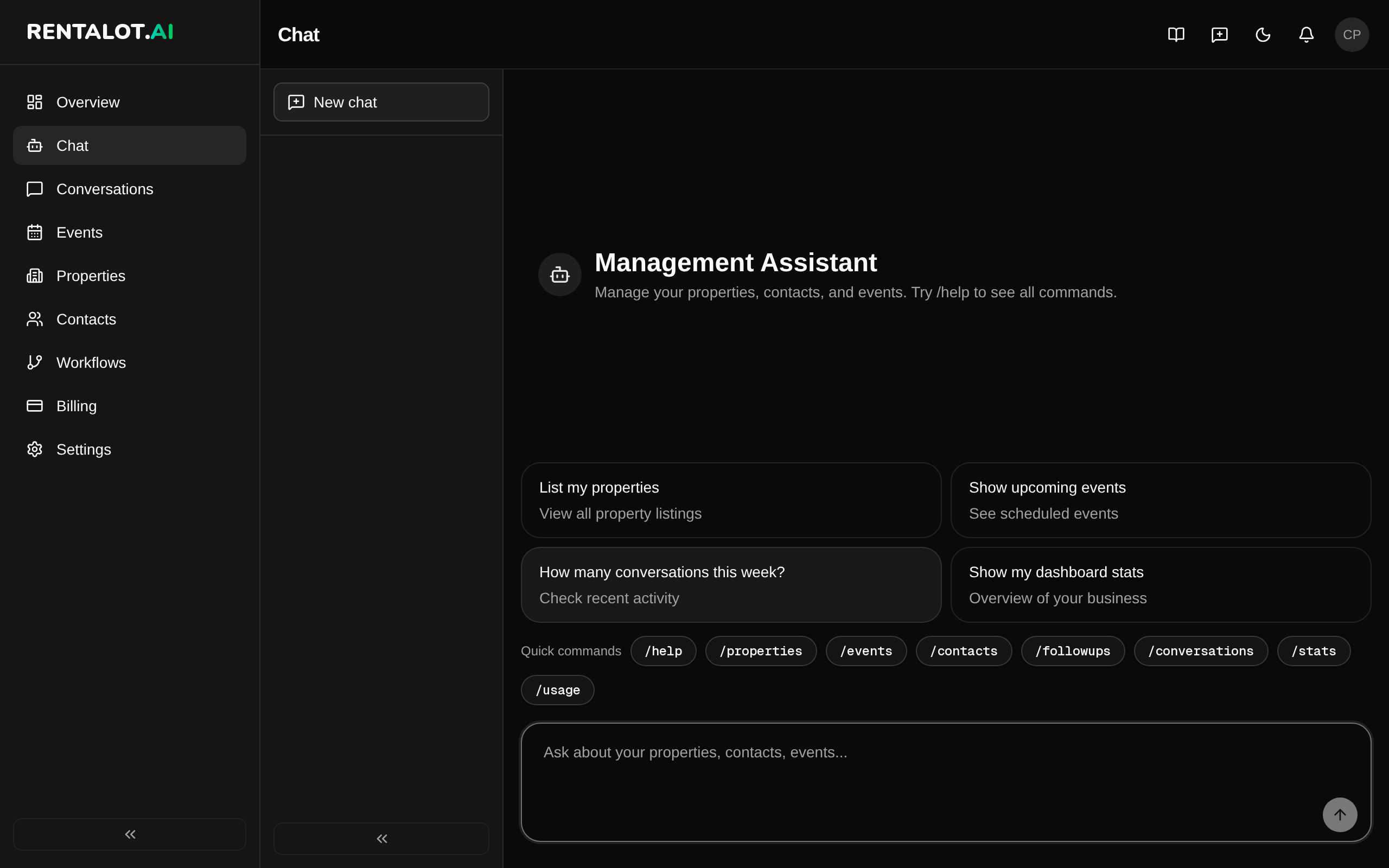
- AI management chat -- ask your AI to draft emails, look up contacts, check showings, manage properties -- all from a web chat interface
- CLI + MCP tools -- plug Claude, Gemini, Codex, or any AI agent directly into your rental data
- Automated email follow-ups -- references the actual conversation, not generic templates (WhatsApp, Telegram, and more channels coming soon)
- Google Calendar + Cal.com integration -- AI schedules showings and events directly from your availability
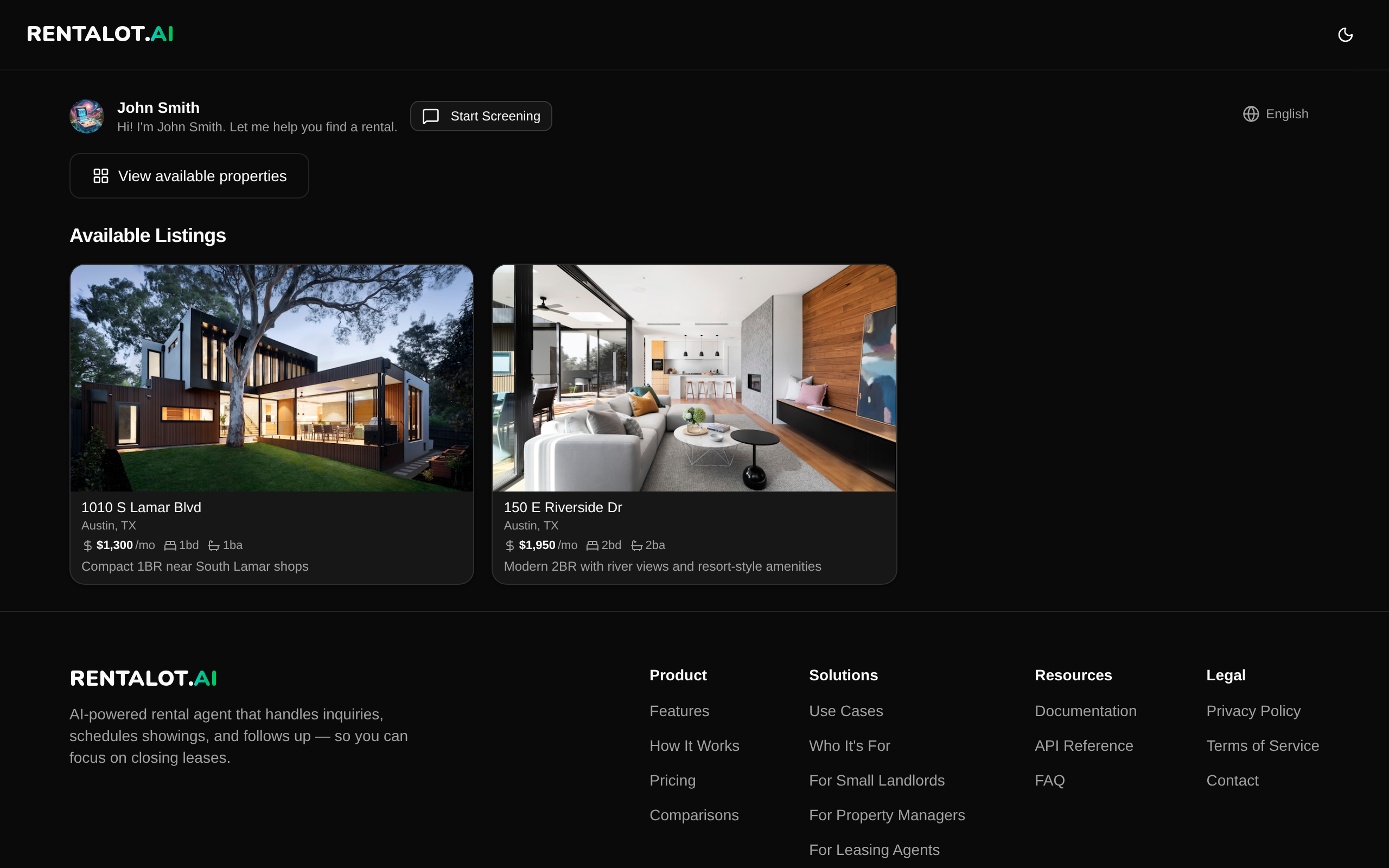
- Property blast page -- one link shows all your listings, prospects self-select and submit
- Organized records -- every contact, every answer, every interaction saved and searchable
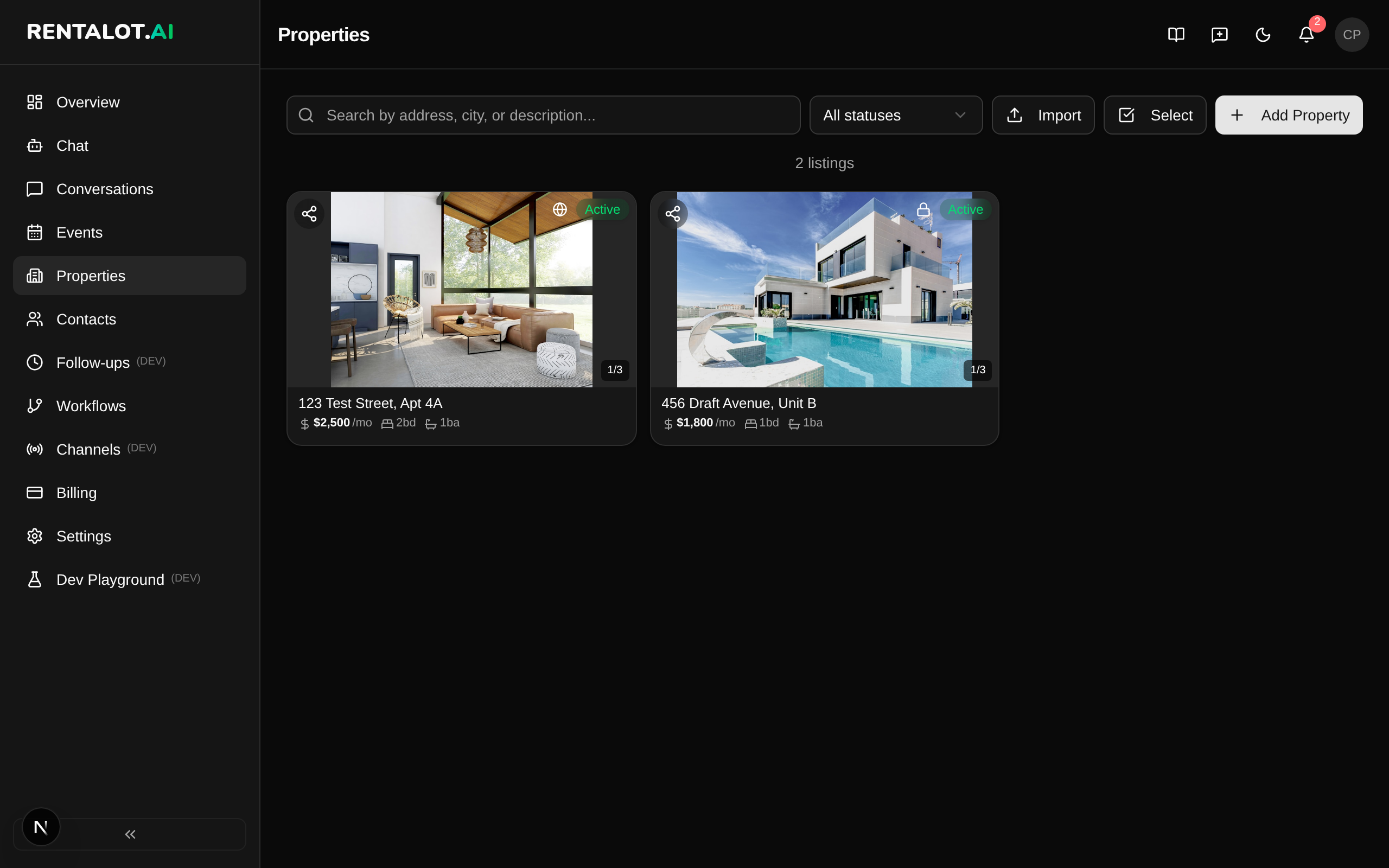
- Web dashboard -- manage everything visually with first-class AI support built in
Leasing agents juggling high call volume forget details. Rentalot doesn't.
Already have listings on Zillow, Apartments.com, or another site? You can export your properties and bulk-import them into Rentalot using an AI agent with our open-source rentalot skill -- no manual data entry.
If you work with AI agents -- Claude, Gemini, Codex, whatever -- they can plug directly into your rental data. Rentalot ships a CLI, 65 MCP tools, agent skills, and full API docs. Properties, contacts, showings, conversations, workflows, images, bulk import -- all accessible programmatically. Your AI manages your rentals the same way you would, just faster.
This is the story of what I built, why I built it, and what three weeks of real usage data actually showed.
The Pre-Screening Problem Nobody Talks About
During busy months, my brother spent 8-10 hours per week repeating the same ten screening questions -- income, pets, move-in date, credit, rental history -- over the phone, between showings, after dinner. Nothing recorded. Every answer lived in his memory or scattered across call logs.
He's not unusual. 71 percent of landlords rank tenant screening among their top three burdens.[1] And response time matters: 45 percent of renters expect a reply within hours, 77 percent within a day.[1] Properties using AI tools captured 51 percent more after-hours inquiries.[2] Miss that window and the prospect moves on.
I didn't set out to build a product. I set out to solve my brother's problem. The product part came later, when I realized every leasing agent has the same one.
Three Weeks of Real Data
I don't like launch stories that are all narrative and no numbers. Here's what actually happened in the first three weeks:
126 prospect sessions through the chatbot in three weeks. That's 126 conversations my brother didn't have to initiate, manage, or remember to follow up on.
71 contacts captured automatically. Before Rentalot, contact info was scattered across call logs and text messages. Now it's captured and organized as a byproduct of the conversation.
55 fully completed pre-screenings. That's 55 prospects who answered every screening question -- income, pets, move-in timeline, credit, rental history -- without my brother asking a single one. At 43 percent completion, the majority of prospects who start the flow finish it. The ones who don't self-select out, which is its own form of screening.
Response time went from hours to under 30 seconds. This is the number that matters most. Every vacancy costs money -- the average multifamily unit sits empty for 34 days between tenants, and a single 30-day vacancy on a $2,000/month unit costs over $4,100 when you factor in lost rent, turnover costs, utilities, marketing, and leasing labor.[^4] Every hour of delayed response pushes that vacancy window wider. Sub-30-second response means prospects get engaged before they move on.
A huge chunk of sessions happened evenings and weekends. This confirmed exactly what the industry data predicts. Renters search when their own schedules allow -- after work, Saturday mornings, Sunday afternoons.[^2] A leasing operation that goes dark at 5 PM on Friday doesn't reopen until Monday morning. That's 64 hours of dead air during the window when prospects are most actively looking. Rentalot doesn't have office hours.
8-10 hours per week saved during busy months. That's not a projection. That's my brother's estimate of the time he used to spend on pre-screening conversations, scheduling, and follow-ups that the system now handles.
The pre-screening flow is still in beta and has been improved since these early numbers. The 55 who completed arrived pre-qualified with structured data my brother could compare side by side -- no manual conversation required.
What Happens When a Prospect Calls
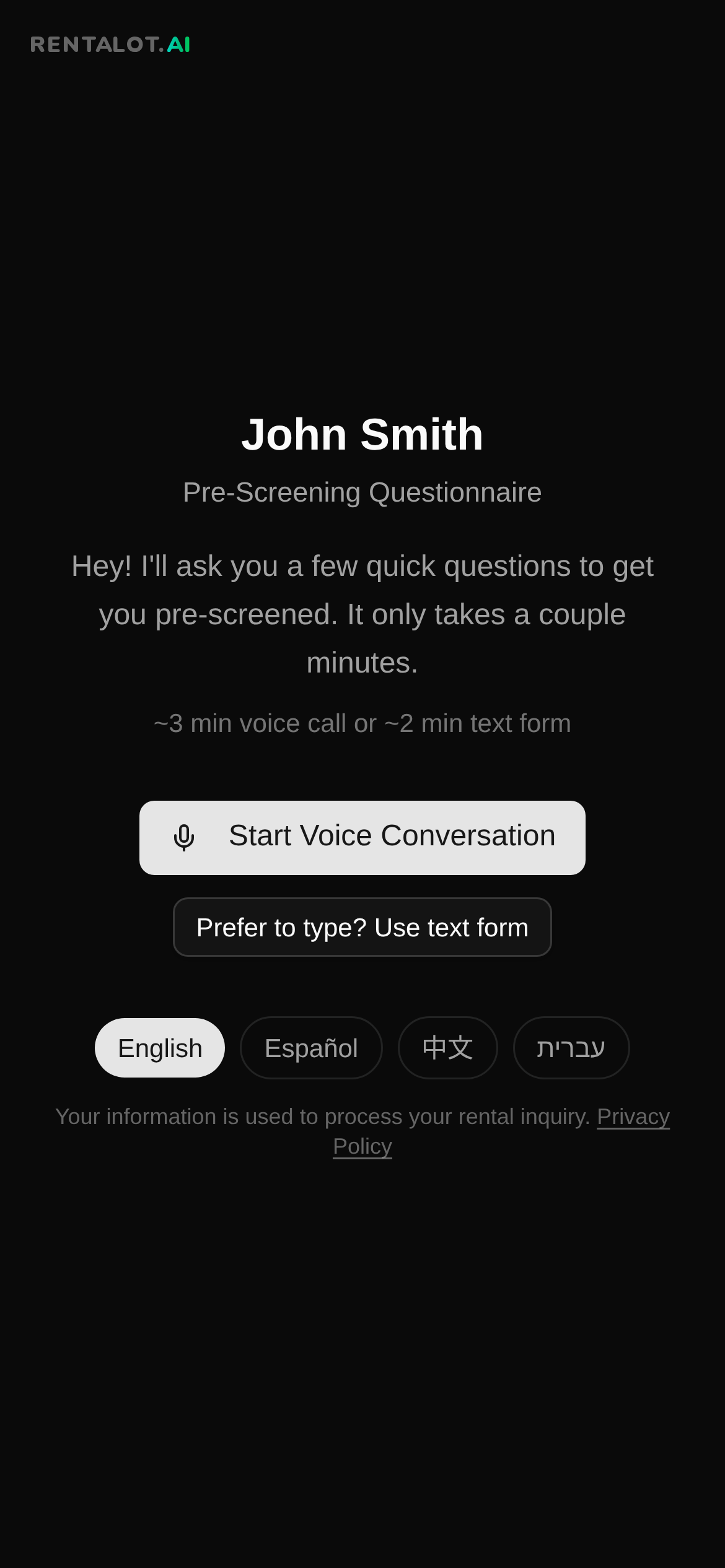
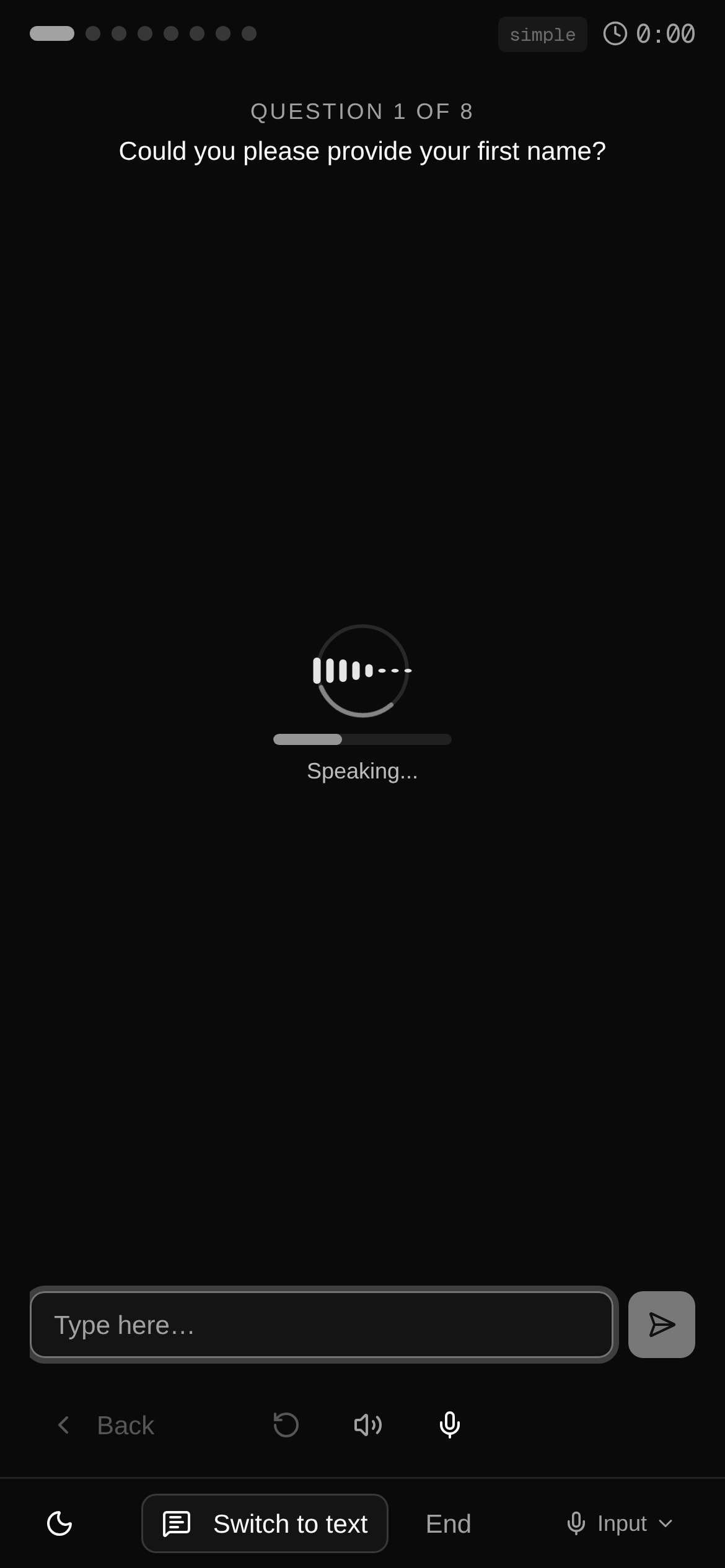
A prospect reaches out -- text, email, wherever. You send them your pre-screening link. Or they find you directly on your public agent page, where all your listings live in one place. Either way, instead of waiting for a callback, they're talking to voice AI in seconds -- in their preferred language.
The AI walks them through screening: income, pets, move-in date, credit, rental history. It's conversational, not a robotic form. The prospect answers naturally, the AI transcribes everything in real time, and the call wraps in a few minutes.
Here's what you get: a clean email summary with every answer organized, the prospect's contact info captured, and the full transcript saved to your dashboard. No notes to scribble, no details to remember. You open your phone, skim the summary, and know exactly whether this prospect is worth a showing.
All of that happened while you were showing another property, driving, or sleeping. The prospect got an instant, professional experience. You got a pre-qualified lead delivered to your inbox.
That's the moment it clicks -- this isn't a chatbot. It's your entire pre-screening process running on autopilot.
The pre-screening link is a shareable URL -- public, works on any device, no app install. Send it to anyone. Your public agent profile page shows all your listings in one place, so prospects can browse availability and start screening themselves.
Why This Matters Beyond My Brother
Leasing is repetitive. The same questions, the same follow-ups, the same scheduling back-and-forth -- day after day. Most leasing agents didn't get into real estate to spend their evenings on phone tag and data entry. They got into it because they like working with people, closing deals, and building something.
AI doesn't replace that. It removes the grind so you can get back to the parts you actually enjoy. Automated pre-screening, instant responses, organized records -- all the repetitive work handled, so you can focus on the human side of leasing again.
That's the real point of Rentalot: make leasing easier, less repetitive, and fun again.
What's Next
Rentalot started as a side project to help my brother. It's now handling 108 listed properties and has processed 126 prospect sessions in three weeks without manual intervention. The core thesis -- that small landlords need AI to cover the hours they physically can't -- held up against real usage data.
I'm looking for my first 20 customers to iterate with. Rentalot is in alpha -- free trial, no credit card, sign up and start using it. If you give me real feedback that shapes the product, I'll personally help with any technical issues and build the features you need. I'm not looking for passive users. I'm looking for leasing agents who'll tell me what's broken, what's missing, and what would make this indispensable.
If you manage rentals on the side and your evenings look like my brother's used to -- buried in screening calls, losing track of prospects, watching leads go cold overnight -- that's exactly the problem this was built to solve. And right now is the best time to get in, because you'll have a direct line to me, the developer building it.
---
References
[^1]: Zillow Group, "Renter Conversion Playbook" -- 45% of renters expect a response within hours; 77% expect a response within one day.
[^2]: Leasey.AI, "What Happens to Apartment Inquiries on Weekends and After Hours: Multifamily Lead Conversion Analysis," March 2026. Key findings: 35% of leads lost without 24/7 response; 51% more inquiries captured with AI tools during after-hours; 18% of leads receive no response; 30% of rental marketers follow up only once; 90-minute response threshold loses ~50% of prospects; 7+ day tour booking yields 40% show rate.
[^3]: Zillow Group, survey of 1,000+ rental property owners, February 2023. Published via Rental Housing Journal, May 2023. 71% cited tenant screening in top 3 burdens; 36% wished they'd known how hard finding reliable renters would be.
[^4]: Shuk Rentals, "How Much Is Every Empty Day Costing You? The Landlord's Guide to Calculating Vacancy Cost," March 2026. Average vacancy: 34 days. Total cost of 30-day vacancy on $2,000 unit: $4,155. At 6% cap rate, single vacancy destroys ~$69,000 in asset value.


65 MCP tools, voice AI, automated emails, calendar integrations all running in production - that's a lot of moving parts that can go silent without throwing a single error. Webhook stops firing, voice AI drops calls, follow-up emails die — your users just think the product stopped working.
That's what NotiLens watches for - alerts you the moment something that should be happening isn't. Built it after getting burned by exactly this on my own products.
Would you try it free for 3 months on Rentalot? Happy to set it up personally. Honest feedback either way is all I'm after.