I launched SubPulse with 0 users. Here's what happened after 90 days
I launched SubPulse with 0 users. Here's what happened after 90 days.
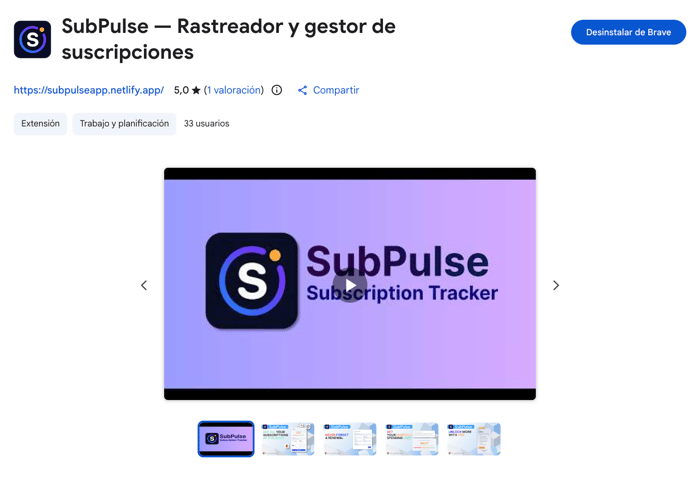
About 90 days ago, I launched SubPulse — a Chrome extension I built to help people keep track of their subscriptions before they renew. When I launched, I had basically no users.
Now I have:
- 89 downloads
- 34 public users
- 9 uninstalls
- 225 Chrome Web Store impressions
- SubPulse 1.2.5 shipped
- Stripe payments fully set up
It's still very early, but I thought it would be useful to share what I've learned so far.
What SubPulse does:
SubPulse helps you keep track of recurring subscriptions, how much you're spending, and when your next payments are coming. I deliberately made it manual.
No bank connection.
No account.
No scraping emails.
No server storing your subscription list.
Your subscription data stays in your browser. The idea was to build something useful without requiring people to hand over their financial data.
What I've added since launch
The product has changed quite a lot since the first version. Some of the things I've added:
- Renewal notifications
- Chrome badge for upcoming/overdue renewals
- Spending history and trends
- Upcoming payments
- Multiple currencies
- Budget limits
- Calendar export
- CSV export
- Backup/import
- Search and filtering
- Pause/resume subscriptions
- Dark/light/automatic themes
- English and Spanish
- Weekly renewal summaries for Pro users
The current version is 1.2.5. The hardest part hasn't been building features. The hardest part so far has been figuring out what actually makes people come back.
Adding a subscription is easy.
Getting someone to install SubPulse, add their subscriptions, and then keep using it is a completely different problem. I initially thought the main value would be helping people understand how much they spend.
But I'm increasingly interested in the recurring reasons someone would open the extension again:
- A renewal reminder
- Checking upcoming payments
- Seeing how their spending is changing
- Realizing that a subscription has increased in price
- Checking whether they're approaching their monthly limit
I'm still too early to know which of these will matter most. So I'm trying not to guess. I'm trying to learn from actual users.
One thing I've learned
Building the product is only half the job. Getting people to discover it is a completely different challenge.
I've been experimenting with:
- Short-form videos
- Indie Hackers
- Product Hunt
- DEV
- X/Twitter
- Organic distribution
- And now Instagram
Some things work better than others, and I'm still figuring that part out.
What's next?
My next goal isn't to add 50 more features. It's to understand the existing users better.
I want to know:
- Why do people install SubPulse?
- What makes them add their subscriptions?
- What makes them come back?
- What eventually makes someone pay for Pro?
If you're building a SaaS or a small product, I'd love to hear:
What was the hardest part for you after getting your first users — acquisition, activation, retention, or monetization?
And if you want to take a look at SubPulse, you can find it here:
https://subpulseapp.netlify.app/
I'd also genuinely appreciate any feedback from other founders.

Congrats on turning a zero-user launch into real usage and a shipped 1.2.5. At this stage I’d keep the feature set stable for a week and instrument a simple cohort funnel: install → first subscription added → first reminder viewed → return within 7/30 days. Then do five short calls with retained and churned users; the “why did you open it again?” answer is usually more actionable than a generic feature request, and it should make the next retention bet much clearer.
Thanks! I really like the idea of keeping the feature set stable for a bit and focusing on the funnel instead. I haven't instrumented those exact events yet, so this is actually a good push for me to do it. I also agree that asking users why they came back (or why they didn't) could be much more useful than guessing from feature requests. With such a small user base, I think those conversations could teach me a lot.
Among the 34 users, what behavior most strongly predicts retention—adding more subscriptions, responding to renewal reminders, or repeatedly checking upcoming spend?
That's actually something I don't know yet — and I think I need to start measuring it properly. My guess going in was that renewal reminders would be the main reason people come back, while spending and upcoming payments might drive more occasional usage. But I don't want to assume that's true. I'm going to start tracking those behaviors separately and see what actually correlates with users coming back.