IPTV Pricing Guide 2026: Plans, Costs & Value
Compare IPTV pricing in 2026, including monthly costs, plans, features, and value. Learn how to choose a reliable and legal IPTV service.
👉 Get Started Now
IPTV Pricing: Complete Guide to IPTV Plans, Costs & Value in 2026
If you are researching IPTV pricing, you may have noticed that subscription costs can vary significantly between services. Some providers advertise very inexpensive monthly plans, while established streaming platforms and legitimate TV services can cost considerably more. Understanding what you are actually paying for is therefore essential before choosing an IPTV subscription.
IPTV, or Internet Protocol Television, delivers television content through an internet connection instead of relying exclusively on traditional cable, satellite, or terrestrial broadcasting. Depending on the service, users may receive live television, video-on-demand content, catch-up programming, cloud DVR functionality, or access through multiple compatible devices.
However, IPTV pricing should never be evaluated by price alone. A cheap subscription is not necessarily a good deal, just as an expensive plan does not automatically provide better value. Factors such as content licensing, streaming quality, reliability, device compatibility, customer support, contract terms, and legal status can all influence the overall value of an IPTV service.
This guide explains IPTV pricing in detail so you can understand common subscription structures, compare plans effectively, identify potential warning signs, and choose a service that fits your viewing requirements and budget.
What Is IPTV?
IPTV stands for Internet Protocol Television. Unlike conventional television systems that primarily use cable, satellite, or terrestrial transmission, IPTV uses internet-based networks to deliver television programming.
The basic concept is simple. Instead of receiving television programming through a traditional broadcast signal, compatible content is delivered over an internet connection to an approved application, smart TV, streaming device, computer, smartphone, or set-top box.
👉 Start Streaming Now

IPTV can include several types of content, such as:
Live television channels
Movies
Television series
Catch-up television
Video on demand
Sports programming
News
Entertainment
Children's programming
International channels
Cloud DVR services
Interactive television features
The exact selection depends on the provider and the rights it has to distribute the content.
Because IPTV is a delivery technology rather than a single television service, there is no universal IPTV price. Different services have different business models, content agreements, features, and subscription structures.
That is why researching IPTV pricing before subscribing is important.
What Does IPTV Pricing Mean?
IPTV pricing refers to the amount a customer pays to access an IPTV-based television service or subscription.
A provider may offer several payment options, including:
Monthly subscriptions
Quarterly plans
Six-month plans
Annual subscriptions
Pay-as-you-go options
Bundled television and internet packages
Premium add-ons
The price may also depend on the number of supported devices, available channels, video quality, DVR storage, simultaneous streams, or additional features.
For example, a basic plan might provide a limited selection of live programming, while a premium plan could include additional channels, on-demand content, recording capabilities, and multiple household streams.
The important point is that IPTV pricing should be compared alongside the features and rights included with the subscription.
👉 Activate Today
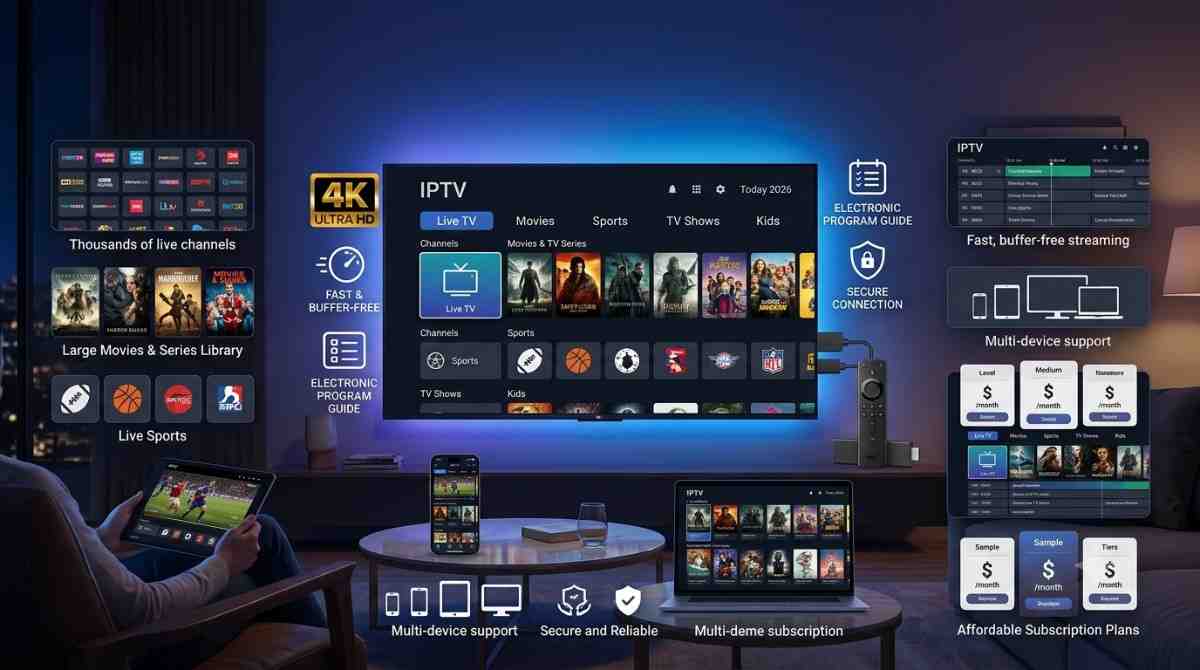
Average IPTV Pricing
There is no single standard IPTV price because legitimate services operate under different models.
For general comparison purposes, consumers may encounter IPTV or internet-based television plans ranging from relatively low-cost basic subscriptions to substantially more expensive premium packages.
A simple pricing structure might look like this:
Plan TypeTypical Pricing ApproachBest ForBasicLower monthly costCasual viewersStandardModerate monthly costRegular householdsPremiumHigher monthly costHeavy viewersFamily/Multi-StreamHigher costMultiple usersAnnualDiscounted compared with monthlyLong-term subscribers
These figures are only general categories rather than universal market prices. Actual costs vary by country, provider, content rights, taxes, promotions, and features.
When comparing prices, always check the provider's current official pricing page because promotional offers and subscription structures can change.
IPTV Monthly Pricing
Monthly subscriptions are popular because they offer flexibility.
With a monthly IPTV plan, customers generally pay once every month to maintain access to the service. This model can be attractive to people who want to test a platform without making a long-term financial commitment.
Advantages of Monthly IPTV Plans
Monthly plans can provide:
Lower upfront commitment
Greater flexibility
Easier cancellation
Opportunity to test service quality
Less financial risk if requirements change
Monthly pricing can be especially useful for first-time customers.
For example, if you are unsure whether a service offers the channels, applications, picture quality, and reliability you need, a monthly subscription may be preferable to paying for a full year immediately.
Disadvantages of Monthly Plans
The main disadvantage is that monthly subscriptions can become more expensive over time.
If a provider charges a higher monthly price but offers a discounted annual plan, someone who intends to use the service for twelve months may save money by choosing the longer subscription.
However, consumers should not purchase a long-term plan solely because the advertised monthly equivalent looks attractive.
Always verify:
Total payment amount
Renewal price
Cancellation policy
Refund policy
Taxes
Number of supported devices
Features included
IPTV Annual Pricing
Annual subscriptions typically require a larger upfront payment but may reduce the effective monthly cost.
For example, a provider could offer monthly billing and a discounted annual package. The annual package may appear more affordable when the total amount is divided by twelve.
However, annual subscriptions carry more commitment.
Before purchasing, ask:
Is the service legally licensed for the content offered?
Is the annual price refundable?
What happens if the service changes?
Does the subscription automatically renew?
What is the renewal price?
Are all advertised features included for the entire subscription period?
A lower annual price does not necessarily represent better value if the service fails to meet expectations.
What Determines IPTV Pricing?
Several factors influence IPTV subscription pricing.
1. Content Licensing
Content rights are one of the most important factors.
Legitimate television services need appropriate agreements to distribute channels, movies, sports, and other copyrighted programming.
Obtaining and maintaining those rights can be expensive. Therefore, legitimate services may have pricing that reflects licensing costs.
If a provider claims to offer an enormous collection of premium channels at an unusually low price, consumers should investigate carefully.
2. Video Quality
Higher-resolution streaming can require additional infrastructure and bandwidth.
Services may advertise:
SD
HD
Full HD
4K
Not every program will necessarily be available in the highest resolution. Actual quality can depend on the original source, device, network, and provider infrastructure.
3. Number of Streams
Some plans allow only one active stream, while others support multiple simultaneous devices.
A household with several viewers may need a multi-stream plan.
For example:
One stream: individual viewer
Two streams: couple or small household
Multiple streams: family or shared household
Always check the provider's terms because "multiple devices" does not necessarily mean "multiple simultaneous streams."
4. Video-on-Demand Library
Some IPTV-based services include on-demand movies and television programs.
A larger licensed library can increase the value of a subscription, particularly for households that watch both live television and on-demand programming.
5. DVR and Catch-Up Features
Advanced services may provide:
Cloud DVR
Pause and rewind
Catch-up television
Restart programs
Electronic program guides
Personalized recommendations
These features can influence subscription pricing.
6. Customer Support
Customer support is another factor that is often overlooked.
A reliable service may provide:
Help documentation
Email support
Live chat
Troubleshooting resources
Account management tools
Strong support can be particularly valuable when setting up applications or compatible devices.
What Is Usually Included in an IPTV Subscription?
The contents of an IPTV package depend entirely on the provider.
A legitimate subscription may include some combination of:
Live Television
Live channels are the central feature of many IPTV services.
Channel availability can differ by country and licensing agreement.
Video on Demand
VOD allows users to select movies or television programs from a library rather than watching a live broadcast.
Electronic Program Guide
An EPG provides information about current and upcoming programming.
A well-designed guide can make navigation considerably easier.
Catch-Up TV
Catch-up functionality allows viewers to watch certain programs after their original broadcast.
Availability and retention periods vary.
Multi-Device Support
Some services support smart TVs, streaming devices, computers, tablets, and smartphones.
Compatibility should always be verified before purchasing.
Cheap IPTV vs Premium IPTV
One of the most common questions about IPTV pricing is whether customers should choose a cheap plan or pay more for a premium service.
The answer depends on your requirements.
Benefits of a Lower-Cost Plan
A lower-priced plan may be suitable if you:
Watch television occasionally
Need basic programming
Use only one device
Do not require advanced features
Prefer flexible monthly billing
Benefits of a Premium Plan
A premium plan may be worthwhile if you:
Watch television frequently
Need multiple streams
Want advanced features
Require higher-quality video
Use several compatible devices
Need stronger customer support
However, "premium" should not simply mean "expensive."
Consumers should compare the actual features and legal content rights behind the price.
IPTV Pricing by Features
When evaluating IPTV plans, create a feature-based comparison instead of looking only at the monthly cost.
FeatureBasic PlanStandard PlanPremium PlanLive TVUsuallyUsuallyUsuallyHD QualityVariesCommonCommon4K ContentLimited/VariesVariesMore likelyVODLimited/VariesCommonLargerEPGVariesUsuallyUsuallyCatch-UpSometimesOftenOftenDVRLimited/VariesAvailable on some servicesMore likelyMultiple StreamsLimitedModerateHigherSupportBasicStandardPriority on some services
This table is a general framework. Actual features depend on each provider.
IPTV Pricing by Device
The device you use can influence which plan is appropriate.
Smart TVs
Many modern smart TVs support IPTV applications or official streaming applications.
Before subscribing, check whether the service supports your specific television operating system.
Amazon Fire TV Devices
Fire TV devices are widely used for internet television and streaming applications.
Consumers should confirm application availability and compatibility through official sources.
Android TV
Android TV and Google TV devices can provide access to compatible television applications.
Apple TV
Apple TV users should verify whether the relevant official application is available through Apple's App Store.
Computers
Some legitimate services provide web-based viewing or applications for Windows and macOS.
Smartphones and Tablets
Mobile compatibility can be useful when traveling or watching outside the home, subject to the provider's terms and regional restrictions.
IPTV Pricing by Region
IPTV pricing can vary between countries.
Factors include:
Local content licensing
Currency
Taxes
Sports broadcasting rights
Regional channel packages
Local competition
Infrastructure
Promotional offers
For example, an IPTV subscription available in the United States may not provide the same programming or pricing as a service available in the United Kingdom, Canada, Australia, or another country.
Therefore, do not assume that a price found online applies universally.
How to Compare IPTV Plans
A systematic comparison can help you avoid choosing a subscription based solely on marketing.
Step 1: Define Your Requirements
Start by deciding what you actually need.
Ask yourself:
How many people will use the service?
How many devices will be connected?
Do I need live TV?
Do I need VOD?
Do I need sports?
Is 4K important?
Do I need recording?
Do I need catch-up television?
Step 2: Determine Your Budget
Set a realistic monthly or annual entertainment budget.
Do not automatically select the cheapest option.
Step 3: Check Content
Make sure the provider offers the channels and programming you actually want.
A service advertising thousands of channels may still be poor value if your preferred programming is unavailable.
Step 4: Check Compatibility
Verify compatibility with your:
Smart TV
Streaming device
Smartphone
Tablet
Computer
Step 5: Read the Terms
Check:
Billing frequency
Renewal terms
Refund policy
Cancellation procedure
Device limits
Geographic restrictions
Step 6: Verify Legitimacy
This is one of the most important steps.
A provider should have appropriate rights to distribute the content it offers.
Avoid services that appear to rely on unauthorized access to copyrighted programming.
Hidden Costs to Watch For
The advertised IPTV price may not always represent your complete cost.
Potential additional expenses include:
Equipment
Some services may require a compatible device or set-top box.
Internet Service
IPTV requires a reliable internet connection. Your internet subscription is therefore an indirect cost of streaming television.
Premium Add-Ons
Some platforms may charge additional fees for premium content, sports, storage, or extra channels.
Taxes
Depending on the country, taxes may be added during checkout.
Multiple Streams
Additional simultaneous streams may require a higher-tier subscription.
Always calculate the total cost before completing a purchase.
Free IPTV vs Paid IPTV
Free IPTV options may sound attractive, but consumers should understand the differences.
Some free services are legitimate and supported through advertising, public broadcasting, or officially distributed content.
However, other services may offer copyrighted programming without authorization.
Advantages of Legitimate Free Services
No subscription fee
Low financial commitment
Often easy to access
Suitable for casual viewing
Limitations
Advertising
Smaller content libraries
Fewer premium channels
Limited features
Regional restrictions
Paid services can provide broader features and content, but consumers should still verify that the service has appropriate distribution rights.
Is Expensive IPTV Always Better?
No.
Price is only one part of value.
A higher subscription price may reflect:
Better licensed content
More features
More simultaneous streams
Better applications
Stronger customer support
Higher-quality infrastructure
But a higher price does not automatically guarantee superior performance.
Likewise, an unusually low price can be attractive but should prompt additional research.
The best approach is to evaluate price versus legitimate content, reliability, features, support, and compatibility.
How to Identify a Reliable IPTV Service
When researching IPTV pricing, look beyond the promotional headline.
Transparent Pricing
Reliable services should clearly explain what customers pay.
Look for:
Clearly displayed subscription prices
Billing periods
Renewal information
Terms and conditions
Refund information
Clear Content Information
The provider should explain what programming is included rather than making vague promises.
Official Website
Use the provider's official website to verify current pricing, terms, applications, and supported devices.
Customer Support
Look for accessible and professional customer support channels.
Privacy and Security
The provider should explain how customer information is handled.
Legal Content Rights
Most importantly, verify that the service is authorized to distribute the programming it offers.
Legal Considerations When Comparing IPTV Pricing
IPTV itself is a legitimate technology.
The legal question concerns what content is being distributed and whether the distributor has authorization.
Consumers should distinguish between:
Legal IPTV: A service distributes television programming under appropriate agreements or licenses.
Unauthorized IPTV: A service distributes copyrighted programming without the necessary permission.
The technology may look similar to the consumer, but the legal and ethical implications can be very different.
Before subscribing, consider whether the provider:
Identifies its business clearly
Provides transparent terms
Explains its services
Offers legitimate payment and support channels
Has appropriate rights for the programming advertised
Be especially cautious about services that promise an enormous number of premium channels for an extremely low price while providing little information about licensing or ownership.
Tips for Getting Better IPTV Value
Finding good IPTV pricing is not simply about finding the lowest number.
Use these strategies instead.
Compare the Total Cost
Calculate monthly, annual, equipment, and add-on costs.
Avoid Paying for Unused Features
If you only watch a few channels, an extremely expensive package may not provide additional value.
Consider Your Viewing Habits
Frequent viewers may benefit from better features, while occasional viewers may prefer flexible monthly plans.
Check Device Compatibility
There is little value in purchasing a subscription that does not work properly with your preferred device.
Look for Transparent Terms
Clear billing and cancellation policies reduce unpleasant surprises.
Evaluate Reliability
Consistent service can be more valuable than an impressive channel count.
Consider Legal Status
A legitimate service provides greater peace of mind and supports the creators and broadcasters behind the content.
IPTV Pricing Comparison Checklist
Before choosing a subscription, use this checklist:
Monthly price checked
Annual price checked
Renewal price confirmed
Taxes checked
Refund policy reviewed
Cancellation terms reviewed
Channel availability verified
VOD library checked
Video quality confirmed
Device compatibility confirmed
Number of simultaneous streams confirmed
Customer support checked
Privacy information reviewed
Content licensing considered
Total cost calculated
This simple process can help you make a more informed decision.
How Much Should You Spend on IPTV?
There is no universal answer.
Your ideal IPTV budget depends on your viewing habits, household size, desired features, and available legitimate services in your market.
For a casual viewer, a basic monthly streaming television plan may be sufficient.
For a family that watches television across multiple devices, a higher-tier package may provide better value.
For someone who primarily watches on-demand content, a traditional streaming subscription may sometimes offer better value than a live-TV package.
The goal should therefore be to find the best value IPTV pricing for your specific needs, rather than simply finding the lowest advertised price.
IPTV Pricing vs Traditional Cable
One reason consumers research IPTV pricing is the possibility of reducing television costs.
Traditional cable packages may include equipment fees, installation charges, contracts, and large channel bundles.
Internet-based television can offer greater flexibility depending on the service.
However, you should compare the complete cost.
For example:
Traditional television cost:
Subscription + equipment + installation + premium channels + taxes
Internet television cost:
Internet service + television subscription + compatible device + optional add-ons
The comparison should use your actual household costs rather than advertised introductory prices.
IPTV Pricing and Internet Requirements
IPTV depends on internet connectivity, so your network can influence your viewing experience.
A subscription may advertise excellent video quality, but performance can still suffer because of:
Weak Wi-Fi
Network congestion
Insufficient bandwidth
Outdated hardware
Router problems
ISP-related issues
Therefore, the total IPTV experience depends on both the service and your home network.
For demanding high-resolution streaming, a stable broadband connection and modern networking equipment can be particularly useful.
Why Channel Count Should Not Be Your Only Metric
One of the biggest mistakes consumers make is choosing a provider based on the number of channels.
A service advertising thousands of channels may look impressive.
But ask:
How many channels will you actually watch?
Are the channels licensed?
Are they available in your country?
Is the programming reliable?
Is the guide accurate?
Is the video quality consistent?
A smaller, legally licensed package can offer much better value than an enormous but questionable channel list.
The Importance of Customer Reviews
Reviews can help you understand how customers perceive a service.
However, do not rely exclusively on reviews.
Look for consistent feedback about:
Reliability
Billing
Customer support
Application quality
Streaming performance
Cancellation
Content availability
Also be cautious of reviews that make unrealistic claims or appear highly promotional.
A balanced assessment is generally more useful than a page containing only perfect ratings.
Questions to Ask Before Buying an IPTV Subscription
Before paying for an IPTV plan, consider asking:
What channels are included?
Is the content legally licensed?
What devices are supported?
How many simultaneous streams are allowed?
Is there a monthly plan?
Is there an annual discount?
What happens after the promotional period?
Is the subscription automatically renewed?
What is the refund policy?
What customer support is available?
These questions can prevent many common purchasing mistakes.
Future Trends in IPTV Pricing
The television market continues to evolve.
Consumers increasingly expect:
Flexible subscriptions
Personalized recommendations
High-resolution video
Multi-device access
Cloud recording
On-demand programming
Integrated streaming platforms
Competition between streaming and traditional television services may also influence pricing structures.
Instead of simply selling large channel bundles, providers may increasingly offer modular plans where customers choose specific categories or features.
This could make IPTV pricing more flexible for consumers.
At the same time, licensing costs, sports rights, infrastructure expenses, and content production costs will continue to influence the price of legitimate television services.
FAQ'S
1. What is the average IPTV pricing?
There is no single average price because IPTV services use different business models and operate in different markets. Pricing depends on content, licensing, video quality, features, device support, and subscription duration. Always compare the total cost and included features rather than focusing only on the advertised monthly price.
2. Is cheaper IPTV always better?
No. The lowest price does not necessarily provide the best value. Consumers should consider content rights, reliability, video quality, device compatibility, customer support, billing terms, and overall service transparency before choosing an IPTV subscription.
3. Is IPTV legal?
IPTV technology is legal. However, individual services must have appropriate rights to distribute the content they offer. Consumers should choose transparent services that provide authorized programming and avoid providers that appear to distribute copyrighted content without permission.
4. Does IPTV pricing include all channels?
Not necessarily. Every provider creates its own packages. Some subscriptions include live television, while others also offer VOD, premium channels, sports, recording, or additional features. Review the provider's official package details before subscribing.
5. Should I choose a monthly or annual IPTV plan?
A monthly plan generally provides more flexibility and a lower upfront commitment. An annual plan may offer a lower effective monthly cost but requires greater commitment. If you are trying a service for the first time, carefully review its terms and consider whether a flexible plan is more appropriate.

