IPTV Service: Complete Guide to Streaming in 2026
Discover how an IPTV service works, key features, benefits, setup tips, costs, and how to choose a reliable legal IPTV service in 2026.
👉 Get Started Now
An IPTV service provides television programming through an internet connection instead of relying exclusively on traditional cable, satellite, or terrestrial broadcasting. As internet speeds improve and viewers increasingly expect flexible entertainment, IPTV has become an important part of the modern television landscape.
Whether you want to watch live television, sports, news, movies, entertainment programs, or on-demand content, an IPTV service can provide a convenient way to access compatible programming on supported devices. However, choosing the right service requires more than simply looking at the number of channels advertised. Reliability, content licensing, video quality, device compatibility, security, customer support, and pricing all matter.
This comprehensive guide explains what an IPTV service is, how IPTV works, its advantages and limitations, important features to consider, setup requirements, pricing considerations, and practical tips for choosing a legitimate and reliable provider.
What Is an IPTV Service?
An IPTV service is a television delivery platform that uses Internet Protocol (IP) networks to transmit television programming and other video content to viewers.
Traditional television typically relies on cable networks, satellite signals, or terrestrial broadcasts. IPTV, by comparison, delivers compatible programming through an internet connection.
Depending on the provider, an IPTV service may include:
Live television channels
On-demand movies
TV series
News channels
Sports programming
Catch-up television
Replay features
Electronic Program Guides (EPG)
High-definition and 4K content
Multi-device compatibility
Parental controls
Cloud or network-based recording features
The exact selection depends on the provider, region, subscription plan, licensing agreements, and supported devices.
How Does IPTV Work?
Understanding how an IPTV service works can make it easier to evaluate different providers.
👉 Start Your Free Trial
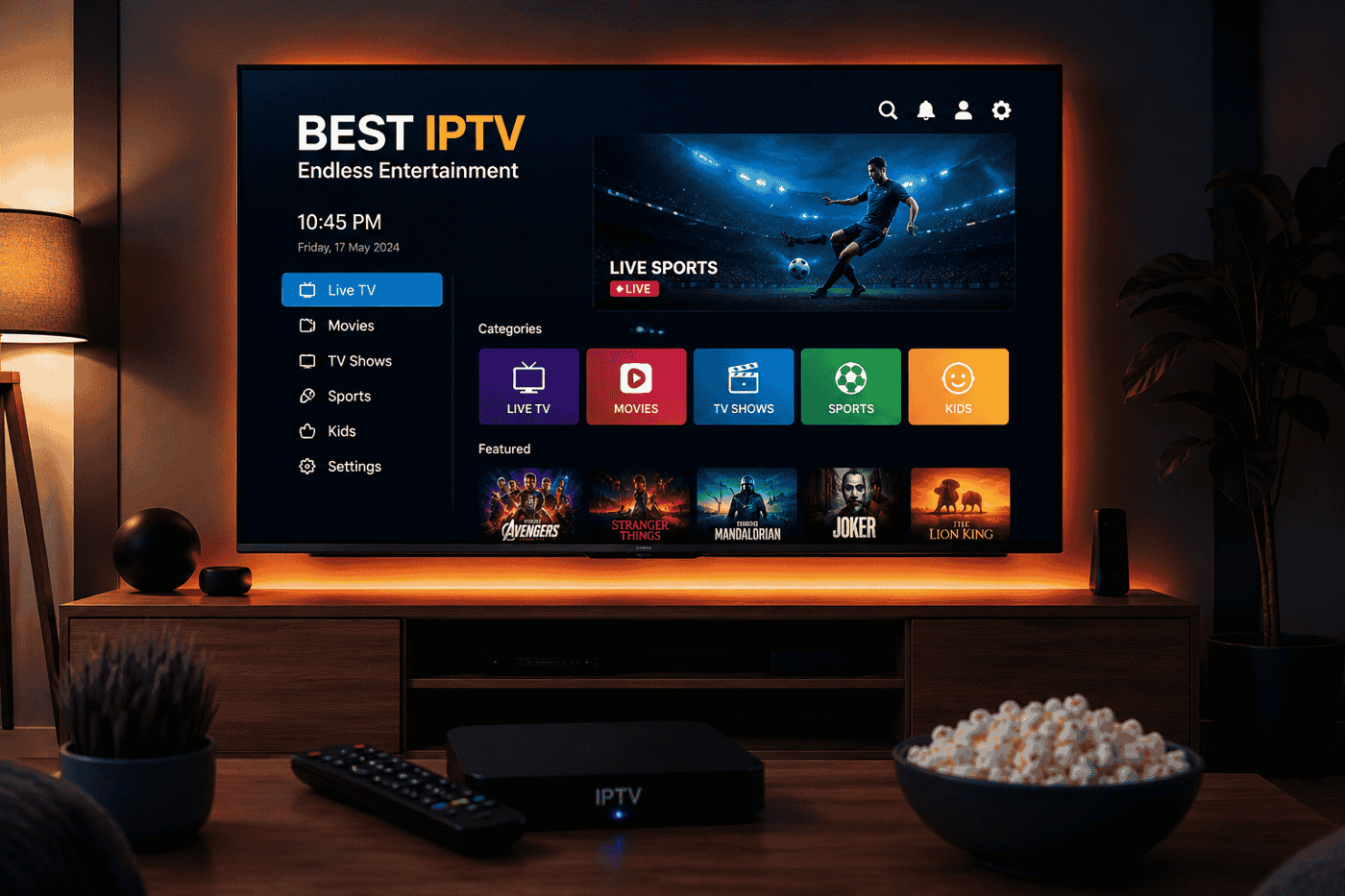
When you watch internet-delivered television, the content is converted into digital data and transmitted over an IP network. Your streaming device receives that data and decodes it into video and audio.
A simplified IPTV process looks like this:
Content Source → IPTV Platform → Internet Network → Streaming Device → Television Screen
The provider manages the platform and content delivery infrastructure. Your internet connection then transports the video stream to your device.
Unlike downloading an entire video before watching it, IPTV commonly uses streaming technology. This means content can begin playing while additional data continues to arrive.
The quality of the viewing experience depends on several factors, including:
Internet speed
Network stability
Server capacity
Streaming technology
Video resolution
Device performance
Wi-Fi quality
Geographic distance from infrastructure
Number of simultaneous users
This is why two people with similar internet plans can sometimes experience very different streaming performance.
IPTV Service vs Traditional TV
IPTV and traditional television can both provide live programming, but their delivery methods are different.
IPTV is particularly attractive to people who prefer internet-based entertainment and want to use multiple supported devices.
👉 Activate Today
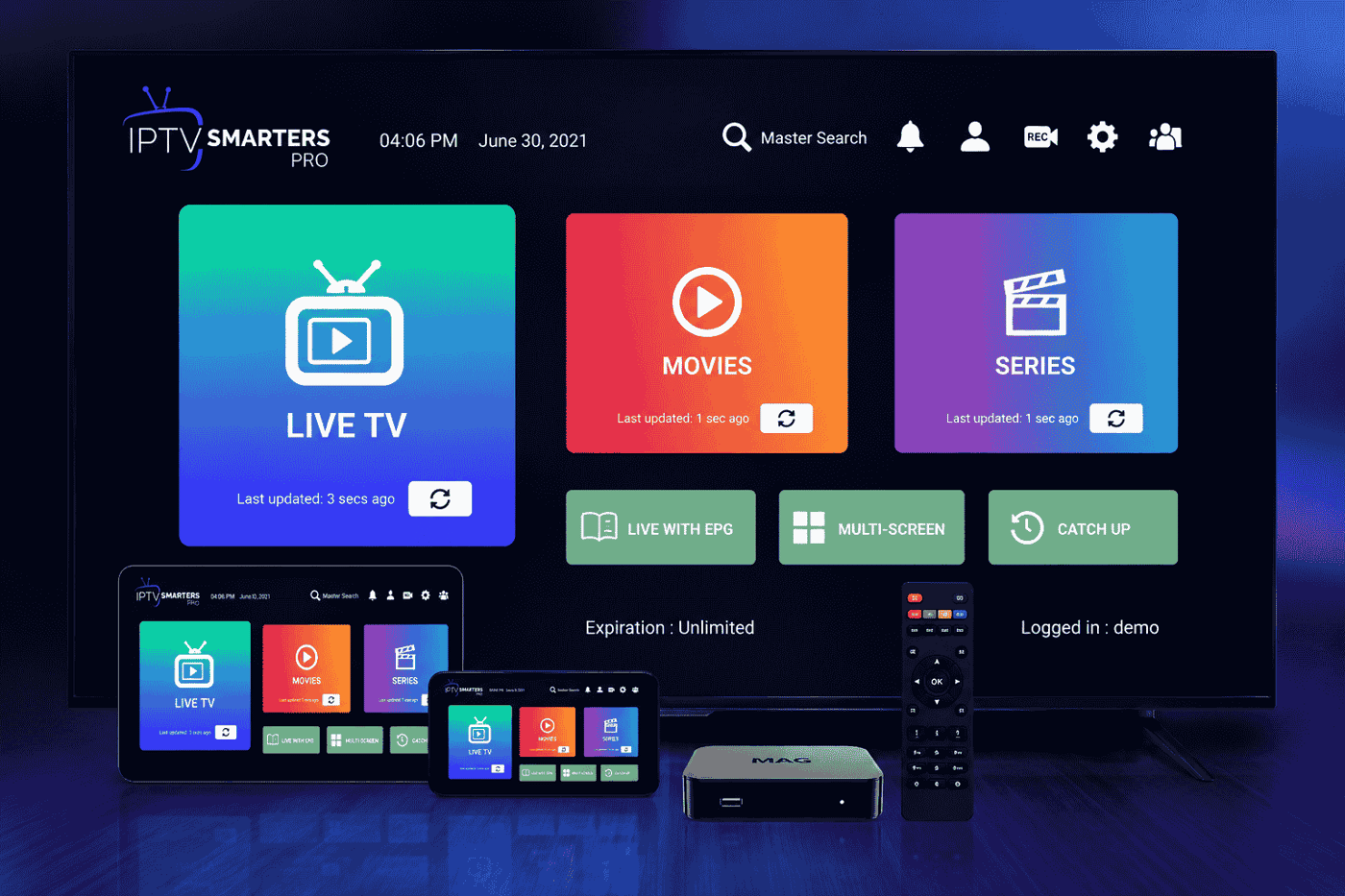
Types of IPTV Services
Not every IPTV platform works in exactly the same way. IPTV services can generally be grouped according to the type of content they deliver.
1. Live IPTV
Live IPTV provides television channels in real time over an internet connection.
Examples may include:
News
Entertainment
Sports
Documentary channels
Lifestyle programming
International television
This is the closest IPTV equivalent to traditional live television.
2. Video on Demand
Video on Demand, commonly called VOD, allows viewers to select content whenever they want.
Instead of waiting for a scheduled broadcast, users can browse a catalog and choose available movies or television programs.
3. Catch-Up TV
Catch-up television allows viewers to watch certain programs after their original broadcast.
Availability varies by provider and licensing agreement. Some services may retain selected programs for several days, while others may provide longer access.
4. Time-Shifted Television
Time-shifted television gives viewers greater control over scheduled programming. Depending on the service, users may be able to pause, rewind, or restart supported programs.
5. Hybrid IPTV
Some platforms combine IPTV with other television delivery technologies or services. This can provide a broader entertainment experience through one interface.
Key Features to Look for in an IPTV Service
Choosing an IPTV service should involve more than comparing channel counts. A large channel list does not automatically mean that a service offers a better viewing experience.
Here are some of the most important features to evaluate.
1. Reliable Streaming
Reliability should be one of your highest priorities.
A quality IPTV platform should provide stable streaming infrastructure designed to handle normal demand.
Look for information about:
Server reliability
Streaming stability
Service availability
Network infrastructure
Technical support
Avoid judging a service solely by marketing claims. Independent user experiences and transparent policies can provide additional context.
2. Video Quality
Modern viewers expect good picture quality.
Depending on the provider and content source, IPTV may support:
SD
HD
Full HD
4K
However, higher resolution requires compatible content, hardware, and sufficient bandwidth.
A service advertising 4K does not necessarily mean every channel or program is available in native 4K.
3. Electronic Program Guide
An Electronic Program Guide, or EPG, organizes television schedules into an easy-to-read interface.
A useful EPG can show:
Channel names
Current programs
Upcoming programs
Program descriptions
Broadcast times
A well-maintained EPG can make a major difference when navigating a large channel lineup.
4. Device Compatibility
Before purchasing an IPTV subscription, check whether the service supports your preferred devices.
Common supported platforms may include:
Smart TVs
Android TV devices
Streaming boxes
Amazon Fire TV devices
Apple TV
Smartphones
Tablets
Windows computers
Mac computers
Compatible web browsers
Device compatibility varies, so always verify the provider's current requirements.
5. Multi-Device Support
Some households use several screens.
A service may allow an account to work on multiple devices, but this does not necessarily mean that several streams can be used simultaneously.
Check the subscription's terms carefully.
For example:
Device compatibility ≠ simultaneous streaming.
A provider may allow an application to be installed on multiple devices while limiting the number of active streams.
6. Customer Support
Customer service becomes particularly important when you experience:
Login problems
Installation issues
Playback errors
EPG problems
Account questions
Billing concerns
Look for providers that clearly explain how customers can contact support.
7. Transparent Pricing
A trustworthy IPTV service should make its pricing understandable.
Before subscribing, check:
Monthly price
Annual price
Renewal price
Taxes or additional fees
Refund policy
Trial terms
Number of supported streams
Do not assume the cheapest subscription is automatically the best value.
Benefits of Using an IPTV Service
IPTV has several advantages compared with conventional television delivery methods.
Flexible Viewing
Internet-based television can offer greater flexibility. Depending on the platform, viewers may watch programming on televisions, mobile devices, computers, or other compatible hardware.
On-Demand Entertainment
VOD libraries can make it easier to find entertainment without following a fixed broadcast schedule.
Convenient Access
A single internet connection can support many digital entertainment services, including IPTV, streaming platforms, music services, and online applications.
Potentially Lower Equipment Requirements
Many IPTV platforms do not require satellite dishes or traditional cable installations. Users may simply need a compatible device and a suitable internet connection.
Modern User Interfaces
Many IPTV applications provide features such as:
Search
Favorites
Categories
EPG
Recently watched content
Parental controls
Multiple profiles
The available features depend on the specific platform.
Limitations of IPTV Services
Despite its advantages, IPTV is not perfect.
Internet Dependency
One of the biggest limitations is dependence on internet connectivity.
If your connection is slow or unstable, streaming quality can suffer.
Network Congestion
Heavy network traffic can sometimes affect streaming performance.
Device Compatibility
Not every IPTV service supports every device. Always check compatibility before subscribing.
Content Licensing Differences
Content availability can differ substantially by country because broadcasting rights are often geographically restricted.
Provider Reliability
The IPTV market includes services with very different levels of infrastructure, customer support, transparency, and licensing compliance.
That is why research is important.
How Much Internet Speed Does IPTV Need?
The required internet speed depends on video resolution and network conditions.
As a general guideline:
Video QualitySuggested Download SpeedSD3–5 MbpsHD5–10 MbpsFull HD10–15 Mbps4K25 Mbps or higher
These figures are practical guidelines rather than guarantees.
Your household may require additional bandwidth if other people are simultaneously:
Streaming video
Playing online games
Downloading large files
Using video calls
Uploading content
For reliable 4K streaming, a stable connection is often more important than simply having a high advertised download speed.
Wi-Fi vs Ethernet for IPTV
Both Wi-Fi and Ethernet can support IPTV streaming.
However, Ethernet often provides a more consistent connection because it avoids many wireless interference issues.
Wi-Fi can work very well when:
The router is relatively close
Signal strength is strong
The network is not heavily congested
The router supports modern Wi-Fi standards
Ethernet may be preferable for a primary television or streaming device where maximum stability is important.
Popular Devices for IPTV Streaming
An IPTV service can potentially work across many types of hardware.
Smart TVs
Modern Smart TVs may support IPTV applications directly, depending on the operating system and available apps.
Android TV
Android TV devices can provide a flexible environment for compatible IPTV applications.
Streaming Devices
Dedicated streaming devices can turn compatible televisions into internet-connected entertainment systems.
Apple TV
Apple TV offers a polished interface and can support compatible IPTV applications available through its ecosystem.
Smartphones and Tablets
Mobile devices are useful when viewers want television access away from their main screen, subject to the service's terms and regional availability.
Computers
Windows and macOS users may access compatible IPTV services through supported applications, players, or web interfaces.
How to Set Up an IPTV Service
The setup process varies depending on the provider and application, but the general process is straightforward.
Step 1: Choose a Legitimate Provider
Research the provider before paying for a subscription.
Check:
Content rights
Pricing
Refund policy
Supported devices
Customer support
Privacy information
Step 2: Select a Subscription
Choose a plan that matches your viewing requirements.
Avoid paying for unnecessary features or streams.
Step 3: Install the Supported Application
Use the provider's official instructions and legitimate application sources.
Avoid downloading unknown APK files or software from suspicious websites.
Step 4: Enter Your Account Information
Depending on the service, you may sign in with an account or use another officially supported authentication method.
Step 5: Configure the Guide
If the service supports an EPG, configure it according to the provider's instructions.
Step 6: Test the Service
Test several channels and features.
Check:
Picture quality
Audio quality
Channel loading
EPG accuracy
VOD availability
Playback stability
How to Choose the Best IPTV Service
The phrase "best IPTV service" means different things to different users.
A sports fan may prioritize live sports and replay options. A family may care more about children's programming and parental controls. International viewers may focus on legally available regional channels.
Use the following checklist.
Content Selection
Look for the channels and programs you actually watch rather than focusing only on total channel numbers.
Reliability
Consistent streaming should be a priority.
Legal Content
Choose services that have appropriate distribution rights.
Device Support
Confirm that your television, phone, computer, or streaming device is supported.
Price
Compare the total subscription cost, not just the promotional price.
Customer Service
Reliable support can save significant time when technical problems occur.
Refund Policy
Read the refund and cancellation terms before making a purchase.
Privacy and Security
Review the provider's privacy policy and avoid services that request unnecessary sensitive information.
Red Flags to Avoid
Some warning signs deserve extra attention when evaluating an IPTV service.
Unrealistic Channel Claims
Extremely large channel numbers should be investigated carefully.
A provider claiming to offer virtually every premium channel worldwide at an unusually low price may not have legitimate distribution rights.
No Information About Licensing
A transparent service should provide reasonable information about its legal status and content rights.
Suspicious Payment Methods
Be cautious when a provider insists on unusual payment methods without clear business information.
No Refund or Cancellation Information
A legitimate business should clearly explain its cancellation and refund policies.
Unknown Applications
Avoid installing software from untrusted sources simply because a website tells you to do so.
No Customer Support
A provider that offers no meaningful support channel can become difficult to deal with when something goes wrong.
Is IPTV Legal?
IPTV itself is legal. IPTV is simply a technology used to deliver television and video content through IP networks.
The legal question concerns the content being distributed and whether the provider has the necessary rights.
For example, a legitimate broadcaster can use IPTV technology to distribute its own television channels.
On the other hand, distributing copyrighted channels or movies without authorization may violate copyright and broadcasting laws.
Therefore, consumers should distinguish between:
IPTV technology and the legality of a specific IPTV provider's content distribution.
Always choose services that operate transparently and have appropriate licensing.
IPTV Security and Privacy Tips
Online streaming requires sensible security practices.
Use Strong Passwords
Create a unique password for your IPTV account.
Avoid Sharing Credentials
Sharing account credentials can create security and account-management problems.
Download Apps Carefully
Use official application stores or trusted sources whenever possible.
Keep Devices Updated
Install operating system and application updates regularly.
Check Privacy Policies
Understand what information a service collects and how it uses that information.
Secure Your Home Network
Use a strong Wi-Fi password and keep your router firmware updated.
IPTV Buffering: Common Causes and Solutions
Buffering is one of the most common complaints associated with internet streaming.
Possible causes include:
Slow internet
Weak Wi-Fi
Network congestion
Router problems
Device limitations
Provider-side capacity issues
High-resolution streaming
Problems with a particular content source
Try these troubleshooting steps:
Restart your router.
Restart the streaming device.
Test your internet speed.
Move the device closer to the router.
Try an Ethernet connection.
Reduce video quality temporarily.
Close other bandwidth-intensive applications.
Check whether the problem affects one channel or the entire service.
Contact the provider if the issue persists.
If only one channel consistently buffers while other channels work normally, the issue may be related to that particular content stream rather than your entire internet connection.
IPTV Service Pricing
IPTV pricing varies significantly depending on the provider, content rights, features, region, and subscription model.
Common pricing models include:
Monthly subscriptions
Quarterly plans
Annual subscriptions
Family or multi-stream packages
Pay-per-event options
When comparing prices, consider the complete package.
A cheaper service may have fewer features, less support, or limited content. Meanwhile, an expensive service is not automatically better.
The best value comes from finding a legitimate provider that delivers the features you actually need at a reasonable price.
IPTV Free Trials: What to Check
Some legitimate services offer trials or introductory periods.
A trial can be useful for evaluating:
Streaming stability
Picture quality
Device compatibility
Channel availability
EPG functionality
Customer support
However, carefully read the trial conditions.
Check whether:
The trial automatically converts into a paid plan
Payment details are required
Cancellation is easy
Refunds are available
Certain features are excluded
Never assume that the word "free" means there are no terms attached.
IPTV for Sports Fans
Sports viewers often have specific requirements when choosing an IPTV service.
Important features may include:
Live sports channels
Regional sports networks
Event schedules
Replay options
HD or 4K broadcasts
Reliable live-stream performance
EPG information
However, sports broadcasting rights are frequently divided among different broadcasters and regions.
Therefore, users should verify whether a provider is legally authorized to distribute the sports content they advertise.
IPTV for Movies and TV Shows
For entertainment-focused viewers, a useful IPTV platform may combine live television with on-demand programming.
Important considerations include:
VOD organization
Search functionality
Categories
Subtitles
Audio options
Playback quality
Content availability
Parental controls
A large VOD catalog is not necessarily better if it is difficult to navigate or contains content that the provider is not authorized to distribute.
IPTV for Families
Families may benefit from features designed for multiple users.
Look for:
Parental controls
Age restrictions
Multiple profiles
Family-friendly categories
Reliable simultaneous-stream policies
Simple navigation
Parents should also review what content is available before allowing children to use an IPTV application independently.
IPTV and 4K Streaming
4K IPTV can provide excellent picture quality when the entire streaming chain supports it.
You need:
4K-compatible content
4K television or monitor
Compatible streaming device
Suitable application
Adequate internet bandwidth
Stable network connection
It is important to understand that a service advertising "4K IPTV" may not provide every channel in 4K.
Some content may be available in HD or Full HD while selected programming is available in 4K.
IPTV and the Future of Television
The television industry continues to move toward internet-based distribution.
Consumers increasingly expect:
Flexible viewing
On-demand content
Cross-device access
Personalized recommendations
High-resolution video
Cloud-based features
Integrated entertainment platforms
As broadband networks become faster and streaming technology improves, IPTV and other internet-delivered television services are likely to remain important.
At the same time, content licensing will continue to influence what users can legally access in different regions.
IPTV Service vs Streaming Platforms
IPTV services and conventional streaming platforms can overlap, but they are not identical.
Streaming platforms typically focus on on-demand movies, series, or original programming.
IPTV services may focus more heavily on live television, channel guides, and scheduled programming, although many also include VOD.
Some modern platforms combine both experiences.
The right choice depends on whether you prefer:
Live television
On-demand entertainment
Sports
News
Movies
TV series
Regional programming
How to Improve Your IPTV Viewing Experience
You can often improve streaming performance with a few simple adjustments.
Use a Reliable Internet Connection
A stable connection is more important than simply having a high theoretical speed.
Prefer Ethernet When Practical
A wired connection can reduce wireless interference.
Keep Your Device Updated
Updates can improve compatibility, security, and performance.
Avoid Overloaded Networks
If several devices are consuming large amounts of bandwidth simultaneously, IPTV performance may suffer.
Choose Appropriate Video Quality
If your network cannot consistently handle 4K, Full HD may provide a smoother experience.
Maintain Your Router
Restarting the router occasionally and keeping firmware updated can help maintain network performance.
IPTV Service Buying Checklist
Before subscribing, ask yourself the following questions:
Is the provider legitimate?
Does it have appropriate content rights?
Does it support my device?
Does it offer the channels I actually need?
Is the pricing transparent?
Is customer support available?
What is the cancellation policy?
Is there a refund policy?
How many simultaneous streams are allowed?
Does it provide an EPG?
What video resolutions are available?
Does it have a privacy policy?
Are its applications distributed through trustworthy sources?
If the answers are unclear, investigate further before making a payment.
Common IPTV Mistakes to Avoid
Choosing Only by Channel Count
Thousands of channels sound impressive, but quantity does not guarantee quality.
Ignoring Licensing
Always consider whether the provider has rights to distribute its content.
Buying the Cheapest Plan Immediately
Low price can sometimes mean fewer features or less reliable support.
Ignoring Device Requirements
Make sure your device is compatible before subscribing.
Using Unofficial Applications
Unknown applications can introduce unnecessary security risks.
Forgetting Renewal Terms
Some subscriptions may renew automatically. Read the terms before entering payment information.
Expecting Every Channel in 4K
Resolution varies by content source.
Frequently Asked Questions About IPTV Service
1. What is an IPTV service?
An IPTV service delivers television programming and video content through an internet connection using Internet Protocol technology. Depending on the provider, it may include live channels, on-demand content, catch-up TV, electronic program guides, and other features.
2. Is an IPTV service legal?
IPTV technology is legal. However, the legality of an individual IPTV service depends on whether it has the appropriate rights and licenses to distribute the content it offers. Consumers should choose transparent providers with legitimate content agreements.
3. What internet speed is recommended for IPTV?
A stable connection of around 5–10 Mbps can generally be suitable for HD streaming, while 4K streaming commonly requires around 25 Mbps or more. Actual requirements vary depending on compression, network conditions, device usage, and video quality.
4. Can I use an IPTV service on a Smart TV?
Many IPTV services support compatible Smart TVs, but application and operating-system support varies. Always check the provider's current device compatibility list before subscribing.
5. How do I choose a reliable IPTV service?
Look for a provider with legitimate content rights, transparent pricing, reliable streaming, suitable device compatibility, good customer support, clear refund and cancellation policies, and a strong privacy and security approach.

