IPTV Services USA: Best IPTV Guide for 2026
Discover the best IPTV services USA users can choose in 2026. Learn about features, pricing, compatibility, reliability, and legal streaming options.
👉 Get Started Now
The demand for IPTV services USA has grown rapidly as viewers look for flexible alternatives to traditional cable and satellite television. IPTV, or Internet Protocol Television, delivers television content through an internet connection rather than conventional broadcast, cable, or satellite infrastructure.
For viewers in the United States, IPTV can provide access to live television, on-demand entertainment, sports, news, movies, and other programming through compatible devices. However, choosing an IPTV service requires more than simply looking at the number of channels advertised. Reliability, streaming quality, device compatibility, customer support, pricing, privacy, and content licensing are all important factors.
This guide explains how IPTV services USA customers can evaluate providers in 2026. Whether you are considering IPTV for a smart TV, Fire TV device, Android TV, Apple TV, computer, smartphone, or another compatible platform, understanding the fundamentals can help you make a more informed decision.
What Are IPTV Services USA?
IPTV services USA are television services that use internet networks to deliver video programming to viewers in the United States.
Unlike traditional cable television, IPTV does not necessarily require a dedicated cable connection to your home. Instead, compatible content can be delivered through an internet connection and viewed using an application, IPTV player, smart TV platform, streaming device, or other supported hardware.
IPTV services can generally fall into several categories:
Live television streaming
Video-on-demand services
Catch-up or replay television
Sports streaming
News channels
Entertainment programming
International television
Local and regional programming
The exact selection depends on the provider and the licensing rights associated with its content.
How Does IPTV Work?
IPTV works by transmitting video data through an IP-based network. When you select a program, the service sends the relevant video stream to your connected device.
A typical IPTV setup includes:
A reliable internet connection
An IPTV provider or licensed streaming service
A compatible application or IPTV player
A supported viewing device
A television or display
The quality of your experience depends on both the provider and your local network.
For example, even a high-quality service may experience interruptions if your Wi-Fi connection is weak or your internet connection is congested.
Why Are IPTV Services Popular in the USA?
There are several reasons IPTV has become increasingly attractive to American viewers.
👉 Start Streaming Now
1. Flexible Viewing
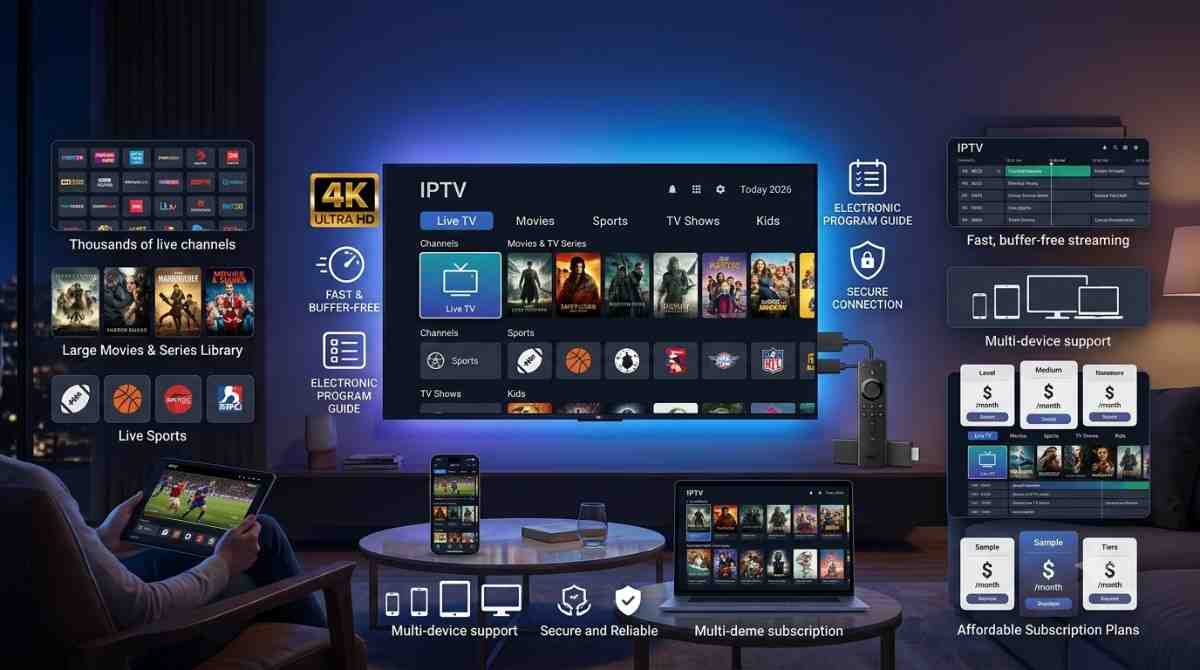
Internet-based television can offer more flexibility than traditional television packages. Users can watch programming on compatible devices rather than being restricted to one television setup.
2. Device Compatibility
Many modern streaming platforms support internet television applications. Depending on the provider, users may be able to watch content on:
Smart TVs
Android TV devices
Fire TV devices
Apple TV
Smartphones
Tablets
Windows computers
macOS computers
Web browsers
Always verify compatibility with the provider before purchasing a subscription.
3. On-Demand Entertainment
Some IPTV services combine live television with on-demand libraries. This can make it easier to find movies, series, documentaries, and other programming.
4. Internet-Based Delivery
IPTV uses internet connectivity, making it suitable for households that already rely heavily on streaming services.
5. Potentially Flexible Pricing
Depending on the provider, internet television packages can be offered in different pricing tiers. Customers should compare the total cost rather than choosing a service solely because it has a low advertised price.
👉 Activate Today
What to Look for in IPTV Services USA
Selecting the right service requires careful evaluation. Consider the following factors before subscribing.
1. Content Selection
Start by identifying the channels and programs you actually watch.
A provider advertising thousands of channels is not necessarily better than one offering a smaller but more relevant selection.
Check whether the service provides the categories you need, such as:
Local television
National news
Sports
Entertainment
Movies
Kids programming
International channels
On-demand content
Most importantly, verify that the provider is authorized to distribute the content.
2. Streaming Quality
Video quality is another major consideration.
Depending on the service and available content, IPTV may support formats such as:
HD
Full HD
4K
However, a provider's advertised resolution does not guarantee that every channel will stream at that quality.
Your internet speed, Wi-Fi performance, device capabilities, and server infrastructure can also affect playback.
3. Reliability
A reliable service should provide consistent playback during normal usage.
Before subscribing, look for information about:
Service uptime
Server reliability
Buffering complaints
Maintenance practices
Customer feedback
Technical support
Avoid judging reliability solely from marketing claims.
4. Device Compatibility
Check whether the service supports your preferred device.
For example, if you plan to watch IPTV on a Smart TV, confirm that the provider's official application or supported playback method works with your television model.
If you use a streaming device, check its operating system and application compatibility.
5. Customer Support
Good customer support can make a significant difference.
Look for providers that clearly explain how customers can receive assistance with:
Account issues
Application setup
Billing
Playback problems
Device compatibility
Technical troubleshooting
Be cautious if a provider has no clear support channel or company information.
6. Pricing Transparency
A trustworthy IPTV provider should clearly explain its pricing.
Check:
Monthly cost
Longer-term subscription cost
Renewal price
Taxes or additional fees
Cancellation terms
Refund policy
Trial conditions
A low introductory price may not represent the total cost of the service.
IPTV Subscription Plans
IPTV providers may offer several subscription structures.
Monthly Plans
Monthly plans are useful for customers who want flexibility.
The main advantage is that you can evaluate the service without committing to a long-term contract.
Quarterly Plans
Quarterly plans may provide a lower effective monthly price while still avoiding a lengthy commitment.
Annual Plans
Annual plans can be attractive for customers who already know they want the service. However, customers should carefully review cancellation and refund policies before paying for a full year.
Free Trials
Some providers offer trials or limited introductory access.
A trial can be useful for evaluating:
Streaming stability
Device compatibility
Video quality
Channel availability
Customer support
Never assume that a free trial means the underlying service is automatically legitimate. Verify the provider's licensing and business information.
Best Devices for IPTV in the USA
IPTV can work across numerous devices, depending on the provider.
Smart TVs
Many Smart TVs include application stores where compatible streaming applications can be installed.
Before purchasing a subscription, check whether the service supports your TV's operating system.
Fire TV Devices
Fire TV devices are popular for streaming because they connect directly to a television and support numerous applications.
Only install applications from trusted sources and make sure the service you use is legitimate.
Android TV
Android TV and Google TV devices can provide a convenient IPTV environment when supported applications are available.
Apple TV
Apple TV is another option for users who prefer Apple's ecosystem. Application availability depends on the service.
Smartphones and Tablets
Mobile devices can provide portable viewing. However, streaming over cellular data can consume significant amounts of data.
Computers
Windows and macOS users may be able to access IPTV through compatible applications or web-based platforms.
Internet Requirements for IPTV
A stable internet connection is essential for a good IPTV experience.
The required bandwidth depends on factors such as video resolution, compression, network congestion, and the number of devices using the connection.
As a general guideline:
SD streaming requires relatively modest bandwidth.
HD streaming requires more bandwidth.
4K streaming requires substantially more bandwidth.
Your connection should also have enough capacity for other household activities.
For example, if someone is downloading large files while another person is watching 4K video, available bandwidth may become constrained.
How to Reduce IPTV Buffering
Buffering can occur for multiple reasons. It does not automatically mean that the IPTV provider is defective.
Try these troubleshooting steps:
Check Your Internet Connection
Run a speed test and check whether your connection is stable.
Use Ethernet When Possible
A wired Ethernet connection can provide greater consistency than congested Wi-Fi.
Improve Wi-Fi Placement
Place your router in an open, central location and minimize unnecessary obstacles.
Reduce Network Traffic
Pause large downloads, cloud backups, or other high-bandwidth activities while streaming.
Restart Your Equipment
Restarting the router, streaming device, and application can resolve temporary connection problems.
Check Provider Status
If multiple devices experience problems simultaneously, the issue may be associated with the provider rather than your home network.
Legal IPTV Services USA: What You Should Know
One of the most important considerations when choosing IPTV services USA is legality.
IPTV itself is a legitimate technology. The legal issue concerns how a provider obtains and distributes the content.
A legitimate IPTV or streaming provider should have appropriate rights, licenses, or distribution agreements for the programming it offers.
Consumers should be cautious about services that:
Promise enormous channel counts at unusually low prices
Offer premium content without clearly explaining licensing
Hide their company identity
Request unusual payment methods
Have no clear terms of service
Provide questionable third-party applications
Make unrealistic guarantees
A professional website alone does not prove that a service is authorized.
How to Identify a Trustworthy IPTV Provider
Before buying an IPTV subscription, perform basic research.
Check the Company's Identity
Look for a legitimate company name, contact information, terms, privacy policy, and customer support information.
Review Licensing Information
If the provider distributes copyrighted television programming, look for clear information regarding its rights to distribute that content.
Read Independent Reviews
Customer reviews can reveal recurring problems involving:
Buffering
Billing
Customer support
Subscription cancellation
Reliability
However, online reviews can also be manipulated, so compare information from multiple sources.
Avoid Unrealistic Claims
Be skeptical of claims such as guaranteed perfect playback regardless of internet quality or unlimited premium programming for an unusually low price.
IPTV Apps vs. IPTV Services
It is important to understand the difference between an IPTV application and an IPTV service.
An IPTV application is software used to play compatible streams.
An IPTV service provides the actual content or access to content.
For example, an IPTV player may not provide channels by itself. It may simply provide an interface through which a user accesses a legitimate playlist or service.
This distinction is particularly important when researching IPTV online.
IPTV Playlist Formats
Some IPTV services use playlist formats such as M3U or other compatible formats.
A playlist can contain information used by a compatible player to identify available streams.
However, having an IPTV playlist does not automatically mean that the underlying content is legally authorized.
Users should ensure that any playlist they use comes from a legitimate source.
IPTV for Sports in the USA
Sports are a major reason many consumers explore internet television.
Depending on licensing arrangements, legitimate streaming services may provide access to sports programming through:
League-specific platforms
Sports networks
Cable-network streaming services
Live TV streaming platforms
Official broadcaster applications
Sports rights vary by league, event, market, and season. Therefore, users should verify current availability before subscribing.
IPTV for News
News viewers may use internet television to access live news channels and digital news platforms.
When choosing a service, consider whether it includes the specific news networks you watch and whether those channels are officially licensed.
For important breaking news, official broadcaster websites and applications can also provide reliable access.
IPTV for Movies and On-Demand Content
Some IPTV packages include video-on-demand libraries.
When comparing services, consider:
Library size
Recent releases
Genre selection
Video quality
Subtitles
Audio options
Search functionality
Playback reliability
A large catalog does not necessarily mean better quality. Content freshness and legitimate licensing are equally important.
IPTV Security and Privacy
Internet-based television involves online accounts, applications, and network traffic, so security should not be ignored.
Consider the following practices:
Use Strong Passwords
Create a unique password for your streaming account.
Avoid Untrusted Applications
Install software from trusted sources whenever possible.
Keep Devices Updated
Operating system and application updates often include security improvements.
Review Privacy Policies
Understand what information a service collects and how it handles account information.
Be Careful With Payment Information
Use reputable payment methods and avoid sending sensitive financial information through unofficial channels.
IPTV Services USA: Common Mistakes to Avoid
Consumers often make several mistakes when choosing IPTV.
Choosing Only by Channel Count
More channels do not automatically mean better service.
Buying the Cheapest Plan
Price should be evaluated alongside reliability, support, content rights, and overall value.
Ignoring Device Compatibility
A service may work on one device but not another.
Paying for a Long-Term Plan Immediately
If you have never tested a provider, a shorter subscription may reduce financial risk.
Ignoring Legal Status
Always consider whether the provider is authorized to distribute the content.
Trusting Every Online Review
Look for consistent patterns across multiple independent sources.
Instead of choosing the provider with the largest marketing claims, focus on the service that best matches your actual viewing requirements.
Step-by-Step Guide to Choosing IPTV Services USA
Step 1: Determine Your Needs
Write down the channels and content categories you actually need.
Step 2: Check Your Internet
Make sure your internet connection can comfortably support your preferred streaming quality.
Step 3: Identify Your Devices
Determine where you want to watch IPTV.
Step 4: Research Providers
Compare several legitimate providers rather than selecting the first result you find online.
Step 5: Verify Content Rights
Confirm that the provider has appropriate authorization for its programming.
Step 6: Compare Pricing
Calculate the actual monthly cost, including renewal pricing.
Step 7: Review Support
Make sure you know how to contact the provider if something goes wrong.
Step 8: Test the Service
If a legitimate trial is available, use it to evaluate the service before making a long-term commitment.
Advantages of IPTV Services USA
When properly licensed and professionally operated, IPTV can offer several benefits.
Flexible Access
Users can potentially access television across different compatible devices.
Convenient Streaming
Internet delivery can make television more convenient for modern households.
On-Demand Options
Some services combine live television with on-demand programming.
Modern User Interfaces
Many IPTV platforms provide electronic program guides, search features, categories, favorites, and other modern features.
Multiple Subscription Choices
Different plans can allow users to select an option appropriate for their budget and viewing requirements.
Potential Disadvantages of IPTV
IPTV also has limitations.
Internet Dependency
Without a reliable internet connection, streaming quality can suffer.
Network Congestion
Busy home networks can contribute to buffering.
Device Limitations
Not every IPTV service supports every device.
Licensing Differences
Channel availability varies according to geographic and licensing restrictions.
Provider Reliability
The quality of IPTV services varies significantly between providers.
Is IPTV Better Than Cable?
There is no universal answer.
IPTV may be preferable for users who value flexible streaming and device compatibility. Traditional cable may appeal to viewers who prefer a conventional television package and dedicated infrastructure.
The best option depends on your:
Budget
Internet connection
Favorite channels
Viewing habits
Device preferences
Need for mobility
Desired contract flexibility
Is IPTV Worth It in 2026?
For many households, internet-based television can be a practical alternative to traditional television.
However, value depends heavily on the provider.
A good IPTV service should offer an appropriate combination of:
Reliable streaming
Relevant content
Transparent pricing
Device compatibility
Helpful customer support
Strong privacy practices
Proper content licensing
Consumers should avoid making decisions based solely on channel numbers or aggressive promotional claims.
Future of IPTV Services USA
The television industry continues to move toward internet-based distribution.
Several trends are shaping the future of IPTV and streaming:
Higher Video Quality
4K streaming is becoming increasingly common, while improvements in compression and network infrastructure can make high-quality video more practical.
More Connected Devices
Smart TVs, streaming sticks, game consoles, phones, tablets, and computers are increasingly integrated into modern entertainment ecosystems.
Personalized Viewing
Search, recommendations, watchlists, and personalized interfaces are becoming increasingly important.
Cloud-Based Services
Cloud infrastructure enables providers to deliver content and manage large-scale streaming platforms.
Greater Consumer Choice
Consumers increasingly expect flexible services rather than one-size-fits-all television packages.
FAQ'S
1. What are IPTV services USA?
IPTV services USA deliver television programming over internet networks to viewers in the United States. Depending on the provider, they may include live TV, on-demand content, sports, news, movies, and other programming.
2. Are IPTV services legal in the USA?
IPTV technology is legal. The legality of a particular service depends on whether it has the appropriate rights or licenses to distribute the content it offers. Consumers should verify the provider's licensing and terms before subscribing.
3. What internet speed is needed for IPTV?
The required speed depends on video quality and network conditions. HD and especially 4K streaming require more bandwidth than standard-definition video. A stable connection is just as important as raw download speed.
4. Can I watch IPTV on a Smart TV?
Many IPTV services support Smart TVs, but compatibility varies. Check whether the provider supports your TV's operating system and model before purchasing a subscription.
5. How do I choose the best IPTV service in the USA?
Compare content availability, licensing, reliability, streaming quality, device compatibility, customer support, pricing, privacy practices, cancellation terms, and independent customer feedback before subscribing.

