Pivoting a SaaS into a mid-5-figure MRR service company
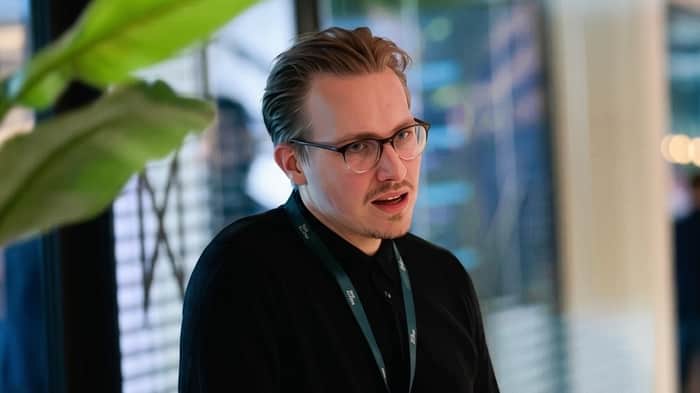
Tjitte Joosten, founer of RevFixr

Tjitte Joosten built a SaaS, but his customers kept asking for a service, so he pivoted to a consultancy. Now, RevFixr has a mid-5-figure MRR.

Here's Tjitte on how he did it. 👇

For almost 10 years, I operated commercially in tech startups. When you're the first hire at multiple B2B startups, you learn how to price and negotiate. Do it for ten years, and you understand how buyers make irrational, seemingly rational buying decisions.

I built a SaaS product for pricing pages, but our early customers kept asking for pricing support before installing our product. Eventually, we offered to support customers with their pricing strategies as a paid service. But when we saw the impact of our services versus the impact of our product, we ditched the product and pivoted to a pricing consultancy.

So now, I'm the founder of RevFixr, a global tech-enabled pricing consultancy. We help SaaS, AI, and tech-enabled services with their pricing strategy. Over 90% of all B2B companies systematically leave money on the table. We help our clients increase ARR by 15–45% within 6 months.

We're at a mid 5-figure MRR.

We started with a completely manual approach. This is the benefit of building a consultancy. You can start manual and productize it later.

First, we put together a process for building pricing strategies. Luckily, we quickly realized we could do it using a somewhat rigid process. Then, we standardized the entire sales and intake process.

At that point, AI was finally becoming reliable and accurate, so we began using AI to help us with analyses. It even began providing recommendations. Now, our business relies on agents. We deliver top-tier consultancy services and, thanks to Gemini and Claude, we can do it at 1/5 the price of traditional consultancies.

If you want to build a tech-enabled service, remember: The more context your AI has, the better. You can't silo your sales from your delivery. Your CRM and project management have to become one. Every conversation has to be recorded.

You also have to follow structure and process. Sales forgetting to update their CRM records can be a death sentence for a project. Good thing you can also automate this nowadays.

The first real test for most entrepreneurs is the race against the clock: your declining reserves versus the time it takes to earn a salary from your business. This might seem obvious, but it will be a mental challenge — unless you come from money. Be ready for that.

But the moment you wire yourself a full, earned salary, it will be worth it all.
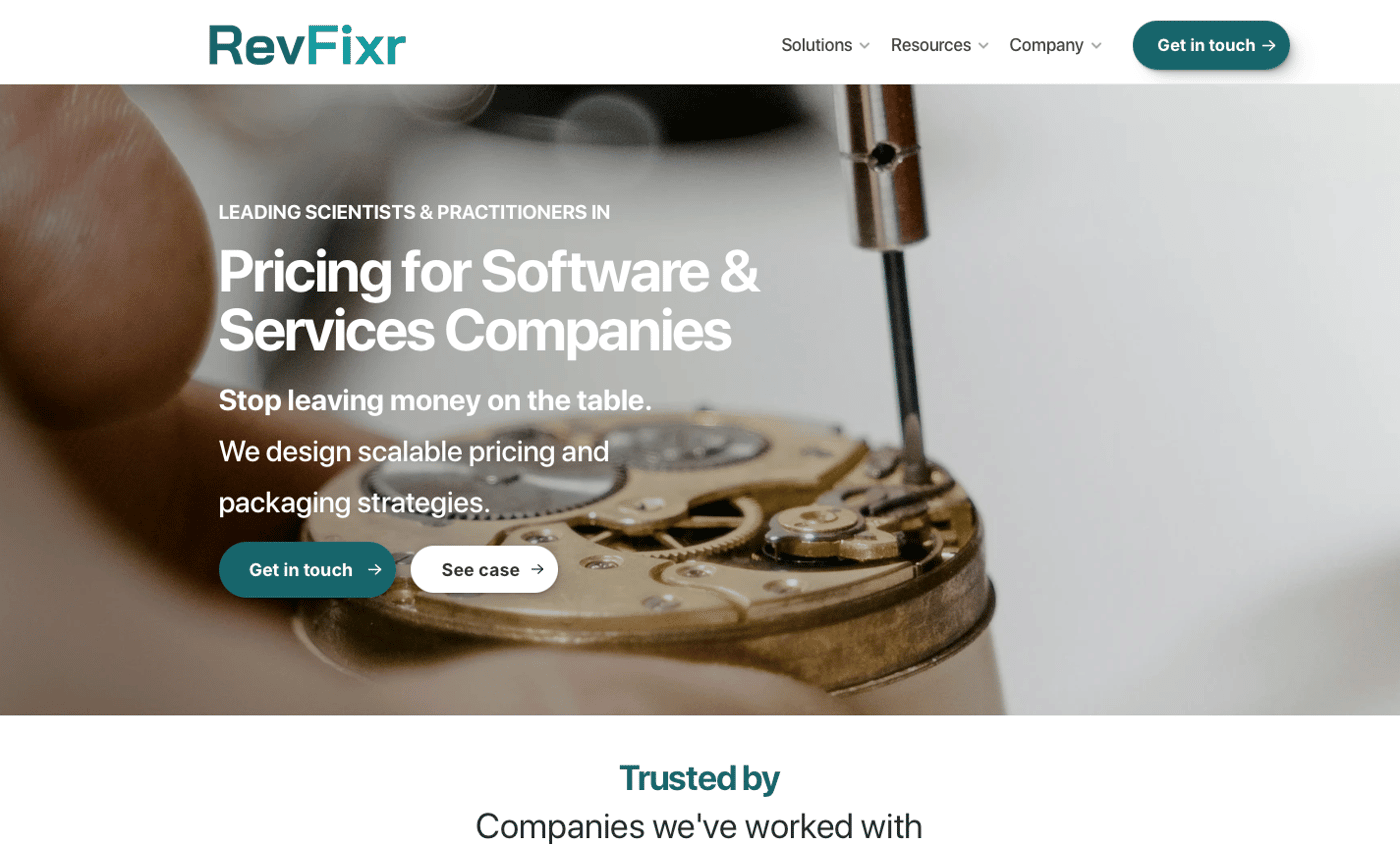
RevFixr homepage

Our promise is to grow our customers' revenue by increasing the average deal size. Since we can always make a rough estimate of our direct impact on their revenue, we're able to either charge a fixed fee, a success-based fee, or a combination thereof. We can do this for a fixed period or on an ongoing basis. Usually, we do a project for a short time and then upsell ongoing services. That way, the barrier to entry is low, and we can earn their trust.

Regardless of whether you run a SaaS, AI, or consultancy business, your business is learning and improving continuously. Today, you are probably embarrassed by your product or service from 12 months ago. Your pricing should reflect that. If your customers were willing to spend $1,000 on you last year, and your product improved massively, plenty of them will be willing to spend $1,500 on you this year. So, we change our pricing model every three months based on our learnings and the projects we've run.

Most startup founders and teams focus on the actual numbers when figuring out their pricing. But in my experience, the money is all in the structure and the psychology. If you can tell a compelling story, customers will happily pay 3-5x as much. But leave any inconsistencies, and you end up negotiating cents.

So, in general, my advice is to charge more. If you’re like most founders, you want to object on the basis that you have competition to deal with. And I will ask you the same question I ask everyone else: "Is your product truly more commoditized than a bag of crisps?"

Go to the supermarket today, and you’ll find bags for 99 cents and bags for $4.99. You cannot convince me that your software solution is less differentiated from your competitor than Tyrrells versus Lays.

If slow-cooking crisps is worth double, there must be a feature in your offering that justifies a premium price as well. You just have to find what your ICP values most and monetize that.

Our minimum deal size is five figures. This means we don't need Netflix-level distribution to make a living. At the same time, our business relies heavily on trust because no "trial" exists.

This eliminates cold outbound strategies. We must rely heavily on relationships and referrals. So, before we launched our first product, we were already organizing small local events — and we never stopped. Once money started coming in, we started attending other events too. And eventually, we started getting invited to speak and guest on podcasts.

Here's what I suggest:

  1. Let your network know you're starting something new and venturing out on your own. People like to root for entrepreneurs and help them get started, so inform them.

  2. Post on your socials.

  3. Do the awkward work: Text your old managers and colleagues, and ask if they know anyone who could benefit from your work. If you've worked for at least 5 years and haven't been a dick, this should probably get you a few referrals — enough to get started.

From there, if you have discipline and patience and deliver quality work, customers will find you.

The best part of being an entrepreneur is that successful entrepreneurs are willing to give advice. Seek out others who have been where you are today. They know the struggle, and no matter how busy they are, many will make time for you.

I won't name names, but there's one person in my industry who has been doing this longer than I have. And even though we're technically competitors, I reached out for his advice. To my surprise, he was willing to sit down and provide plenty of useful advice. He said, "The market is bigger than both of us can handle anyway."

In pop culture, many compare business to war. But I've found that, with some exceptions, well-meaning people run most businesses.

Pick a problem and become the expert. Build a business around that. It's as simple as that.

If you don't fall in love with the problem, someone else can vibe-code a competing solution. But if you do love it and you become the absolute expert, clients will always find you.

Start by saying "yes" to everything. Then productize anything you can. After that, start saying no to everything that isn't productized. That helped us turn consultancy into something more reliable and with recurring revenue.

Eventually, I want to make my business obsolete. RevFixr exists today because most people don't know how to price their products and services. B2B pricing resources are limited. Vacancies for pricing experts are usually reserved for large companies with deep pockets.

That's why I'm publishing free content on my Substack, Money on the Table — so every founder can become an expert on pricing. Eventually, we'd like to build an AI solution to replace all pricing consultants.

You can connect with me on LinkedIn. And check out RevFixr.

Indie Hackers Newsletter: Subscribe to get the latest stories, trends, and insights for indie hackers in your inbox 3x/week.

Support This Post

Leave a Comment

  1. 1
    Good write-up. What would you do differently if you started again?
    1. 1
      Probably a cliché, but not much. We're here now because we did certain things right, but equally because we fucked up other things. There are many lessons you cannot skip. Just like your parents warned you about plenty of things, but 15year old you had to find out for himself to actually understand ;)
  2. 2
    how it is going now in terms of revenue?
    1. 1
      We're doing great :)
  3. 2
    It sounds great and is extremely captivating.
  4. 2
    This resonates in an uncomfortable way. I've gone the opposite direction from "build for one specific person" — a handful of narrow, properly-priced B2B tools, built solo, each one genuinely solving something real. What I underinvested in wasn't the build quality or the pricing discipline, it was picking one and staying with it long enough for word-of-mouth to actually compound. Four narrow things just gets you four separate "nobody's found this yet" problems instead of one thing with years of patience behind it. Rereading this, the "long game" isn't really about waiting it out — it's about only having the discipline to play one game at a time.
  5. 2
    The shift from SaaS to a productized consultancy is really interesting. The point about combining sales, delivery, and AI around a structured process is especially valuable. Great breakdown of the journey
  6. 2
    Great content
  7. 2
    This was genuinely helpful. The point that stood out most to me was that pricing should evolve as the product, experience, and value improve—not remain fixed simply because that was the original price. I also appreciated your advice on building through relationships and referrals. Early founders often focus so much on cold acquisition that they overlook the people who already know and trust them. The reminder to ask experienced entrepreneurs for help was valuable too. In your experience, what is the clearest signal that it’s time to raise prices?
  8. 2
    I have so much admiration for what you've build with Buttondown and most of all *how* you've done it, Justin.
  9. 3
    The "say yes to everything, then productize what you can, then say no to what isn't productized" progression is such a clean way to think about it. I'm at the very first stage of that right now — doing everything manually on purpose, partly to validate the problem is real before I sink time into automating anything. Curious how you knew when something was "productize-able" vs. just a one-off request — was there a clear signal, or did it only become obvious in hindsight?
    1. 1
      Thanks for the comment and your question. A critical signal for me that something might be productisable is when my way of solving a problem feels like repetition. When I notice a pattern in my approach to solving something, it's a signal I might be able to productise it. And of course when more than 1 client asks for it ;)
  10. 2
    Worth naming the tradeoff for anyone reading this as a shortcut: mid five figures from services is real money, but it is not the same asset as SaaS revenue and any acquirer will price it that way. I ran a services business for almost twenty years before merging it, and the number that decided the outcome was how much revenue kept running without the founder in the room. Repricing every three months is smart, but productizing delivery is the harder discipline and it is the one that makes the business worth something when you step back.
    1. 1
      Very true. Luckily, we're not looking to sell the company any time soon. But if we did: the only way someone would buy us if we commit to stay on for 10yrs. That said, I'm starting to see SaaS becoming more service-oriented as well. I believe in the next 5 years, relying partly on services is not as bad as it used to be for buyers and investors.
  11. 2
    The courage it takes to publicly pivot away from a SaaS model — especially when your customers are pulling you toward services — is underrated. Most founders fight that signal instead of leaning into it. Mid-5-figure MRR as a consultancy is legitimately impressive. Would love to know how you're thinking about eventually productizing it again.
    1. 1
      Thanks for the comment! Yeah switching to service was hard. Especially cause I've been in tech for 10yrs. Seeing the revenue reset on January first sucks... But I love the work we do, so it's an easy compromise :)
  12. 2
    The AI integration here is inverted from how most founders use it. Most build with AI and deliver without it. Tjitte delivers with AI and built without it — the consultancy is the product, the AI is the operations layer that makes the service scale at a fifth of the price. That architecture has a moat that pure SaaS products do not: the AI needs the accumulated context of every previous engagement to improve recommendations. A new competitor cannot replicate that context layer on day one. The crisps analogy is the pricing lesson I needed to hear. We charge £400 a year for an SEO audit tool and have never run the exercise of identifying what our ICP values most. We defaulted to undercutting Semrush on price rather than finding the feature dimension where we could charge a premium. That is exactly the mistake he describes. Gregory's point about services cash preventing productisation is the real risk here.
    1. 1
      Lemme know when you're ready to revisit your pricing ;)
  13. 2
    The customer asking for the service before the SaaS is such a good signal. I've learned that shipping fast is only half the job. You still need to watch what people actually pay for.
    1. 1
      Yeah we're sometimes blinded by our expertise. Buyers don't always want "the best solution".
  14. 2

    The part about keeping sales, delivery, CRM and AI connected really stood out to me. It seems like the real advantage of starting manually is not just learning what to automate, but collecting the context needed to automate it properly later. I’m building a SaaS myself, and this is something I’m becoming much more aware of as the product evolves

  15. 2
    The manual-first part is underrated. I’ve found the boring service work often shows you exactly what the eventual product should automate.
    1. 1
      I also believe it makes sales so much easier. Because once you become the expert on the problem rather than the solution, you'll have much greater empathy for your buyer/user.
  16. 2
    Really valuable breakdown. The biggest takeaway for me is that the pivot wasn’t just from SaaS to services — it was from building what you think customers need to solving what they’re actually willing to pay for. Starting manually, finding the repeated problem, then systemizing and using AI to scale that process is a very practical approach. Solve first. Productize second. Automate third. That’s a powerful lesson for anyone building a service business today.
    1. 1
      This isn't my first rodeo. That's the only reason why we were able to switch so fast. I've personally witnessed companies with great potential getting destroyed by focussing on fake validation.
    2. 2
      100% agree. I wasted months building something nobody asked for before I learned this lesson. Now I always start with the problem. The "services first, SaaS later" approach is underrated.
  17. 2
    The "start manual, productize later" line is right but it understates the trap: services cash is so good that it funds the delivery work that stops you from ever productizing. I ran a services company for almost twenty years, and the productized pieces only ever shipped when I carved out people who were forbidden from touching client delivery. If making RevFixr obsolete is the real goal, that needs to be a separate team with its own P&L, started well before it feels affordable.
    1. 1
      Professional services are the crack cocaine of the SaaS industry yeah. That said, true leadership means making hard choices. If it's truly impossible to cut your services it might mean you've lost control of your company.
  18. 2
    Its worth starting the SAAS
  19. 2
    The competitor who took time to help Tjitte was my favourite part. It makes asking another founder about a decision they've already faced feel less intimidating. Thanks for including the people who helped along the way.
  20. 1
    this matches what we see. most "outbound is dead" posts are really "spray generic first lines" posts. what still works: tiny ICP, one real signal in line one, and a clear either/or ask ("worth 15m thu or should i close this?"). volume without that just trains people to ignore you.
  21. 1

    Here’s a natural, non-spammy reply you can post:

    That’s an impressive range of experience, especially interviewing hundreds of founders and building products across different areas. I’m also interested in the lessons people learn from real-world dating and communication experiences. I’ve been exploring some practical ideas around that on thepickuplinez(com)

    1. 1
      Think you forgot to leave out part of your AI's answer ;)
  22. 1
    The crisps line is going to stick with me. But I keep running into a version of this I can't solve: what if the thing your users value most is the thing you can't charge for? I build a free Notion clipper, and the whole reason people pick it over the paid competitor is that it needs no account and no server. That's the differentiator, and it's also the part that has to stay free, or it stops being true. So the premium tier has to sit on features that are, by definition, the ones people care less about.
  23. 1
    Pivoting a SaaS into a mid-5-figure MRR service company means shifting from software sales to delivering high-value services based on customer needs. This model can create recurring revenue through tailored solutions, ongoing support, and long-term client relationships.
  24. 1
    Pivoting a SaaS into a service company can create stronger recurring revenue by combining software with high value, hands on solutions. With a focused niche, clear pricing, and consistent client acquisition, it can grow toward mid five figure MRR.
  25. 1
    It sounds great and is extremely captivating !
  26. 1

    The move from SaaS to consultancy is a great reminder to listen to what customers are actually willing to pay for, rather than forcing the original idea. I also like the approach of starting manually and productizing the parts that repeat. Which part of your service was the hardest to standardize?

  27. 1
    It sounds great and is extremely captivating.
  28. 1
    The "short project first, then upsell ongoing" sequencing is the part I'd underline for anyone running services next to a product. We run it the other way round from Tjitte (the studio funds the products rather than the products turning into the studio) and the same two rules keep it sane. First, a written brief before any number: a free 30-minute call, then a scoped brief, then a fixed quote. Hourly with no cap is how both sides end up unhappy. Second, keep version one embarrassingly small so the first invoice is low-risk for the client and the relationship starts before the big build. The thing our own products gave us that a portfolio never did is proof: a prospect clicking through something live beats any case-study PDF, and it quietly answers the "can you actually ship?" question before they ask it. One caveat on re-pricing every quarter: it works when you can anchor to measurable revenue impact like RevFixr does. For build work it's easier to add a higher scope tier than to reprice the same deliverable.
  29. 1
    Really interesting journey, especially the shift from SaaS to a service after seeing where customers were actually getting the most value. The point about combining sales, delivery, CRM, and AI into one continuous flow really stood out to me. Also loved the idea of starting manually, then productizing what works instead of trying to automate everything from day one. Great read!
  30. 1
    Pivoting a SaaS into a mid-five-figure MRR service company means shifting from software subscriptions to delivering high-value services. It can increase revenue through customized solutions, stronger client relationships, and recurring service contracts.
  31. 1
    The manual-first approach is the part I’d underline: it reveals which context and process are actually worth productizing. A useful guardrail is tracking time-to-outcome per customer, so automation removes the real bottlenecks instead of just recreating the service in software.
  32. 1
    Great write-up. The pivot story and the way you turned a rigid process + AI into a 1/5th-price consultancy is very clean. I especially liked the framing around context: keeping sales and delivery connected so the agents actually have the full picture. That feels like the real leverage. I’m currently building in a related space (AI systems that need to stay grounded and reliable under real client pressure), so a lot of this resonated. Appreciate you being open about both the mechanics and the mental side of the early days.
  33. 1
    Great example of how a pivot doesn’t always mean abandoning the product—it can mean getting closer to what customers actually value. The service-first approach to discovering what’s worth productizing is especially interesting.
  34. 1
    The useful signal here is treating services as a discovery layer, not a permanent detour. I'd track which manual requests repeat, where delivery time clusters, and which parts clients value enough to pay for. Those three measurements tell you what to productize and what should stay high-touch. Otherwise it's easy to automate the part you dislike rather than the part customers buy.
  35. 1
    Really interesting pivot. I like the point about starting manually and then productizing what works. The part about customers asking for the service before the SaaS is especially interesting. It shows how much you can learn by paying attention to what customers are actually asking for.