Socialprofiler Review: Can It Really Find People on Social Media?
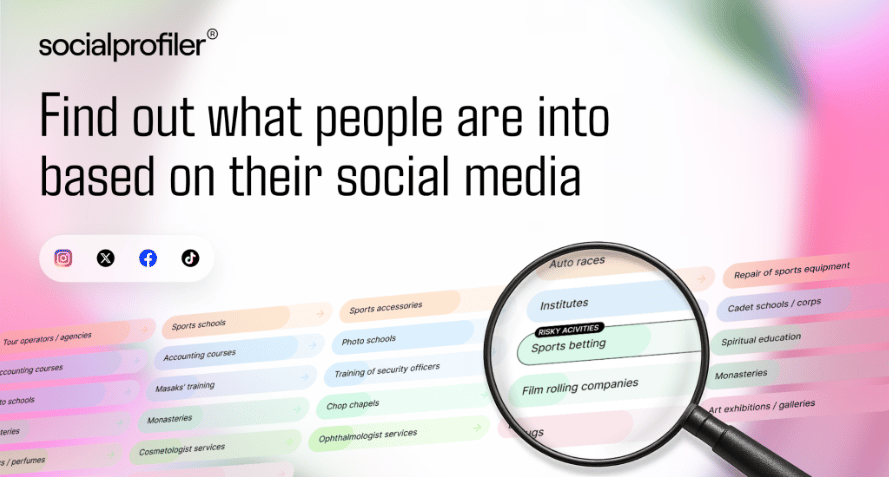
Socialprofiler can find people on social media in most cases, provided the person you are looking for keeps a reasonably active public presence on Facebook, Instagram, TikTok or X. Where it struggles is with locked accounts, common names and people who barely post.
That distinction matters more than the marketing on either side of this debate suggests. This review looks at what the tool actually does, what its reports contain, and the situations where it will leave you with nothing useful.
What Is Socialprofiler and How Does It Work?
Socialprofiler is an AI-powered social media intelligence platform. It scans public activity across TikTok, Facebook, Instagram and X, then assembles what it finds into a single profile analysis rather than a list of links.
The mechanism is interest detection. The company states its system recognises more than 350,000 unique interests from public activity. It draws on posts, shares, page follows, likes, hashtags and geotags. Instead of scrolling years of someone's timeline yourself, the platform indexes that footprint and summarises the patterns inside it.
The interface is what separates it from older people-search tools. The output is not a static PDF. Socialprofiler presents an assistant you question in plain language, much as you would question ChatGPT or Claude. Ask about someone's profession, location, family status or lifestyle, and the answer comes from their public footprint. An optional add-on covers the person's friends and connections, mapping shared interests across their wider network.
Searching works in several ways. You can enter a first and last name, with an optional state to narrow the field. You can also start from a username, a profile link or a phone number. The platform is covered by US Patent No. 12,517,965, with further patents listed as pending.
How Do You Find People on Social Media with Socialprofiler?
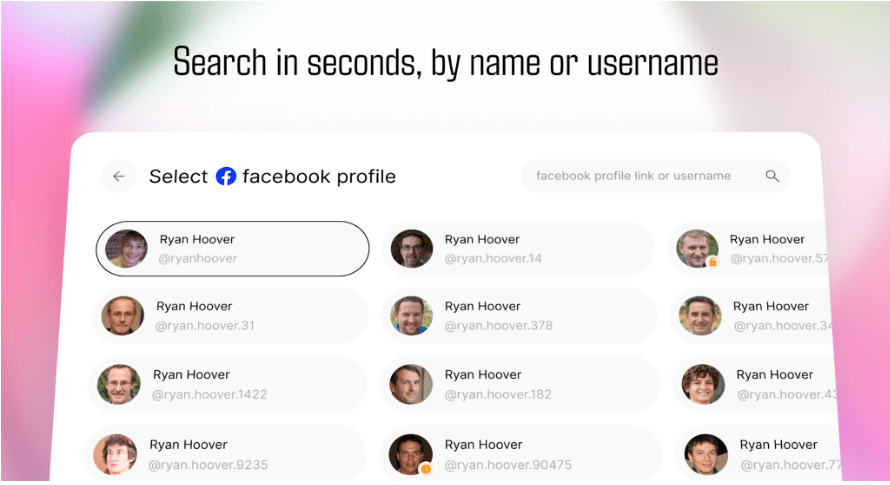
You find people on social media with Socialprofiler by entering a name or an existing identifier. The platform then matches that input against public profiles across the four networks it covers.
Searching by Name
Name search is the weakest entry point, and that is true of every tool in this category rather than this one specifically. A distinctive name returns a workable shortlist. A common name returns several candidates you then have to separate yourself.
Adding a state narrows the results noticeably. If you have any additional detail, an employer, a city, an approximate age, use it at the disambiguation stage rather than assuming the first result is correct.
Searching by Username, Link or Phone Number
Starting from an identifier produces far better results. If you already have an Instagram handle or a profile URL, the platform has a fixed anchor point and does not need to guess which person you mean.
This is the mode worth using whenever it is available to you. Reverse lookup from a username or phone number removes most of the ambiguity that makes name-based searching unreliable.
What Does the Profile Analysis Actually Contain?
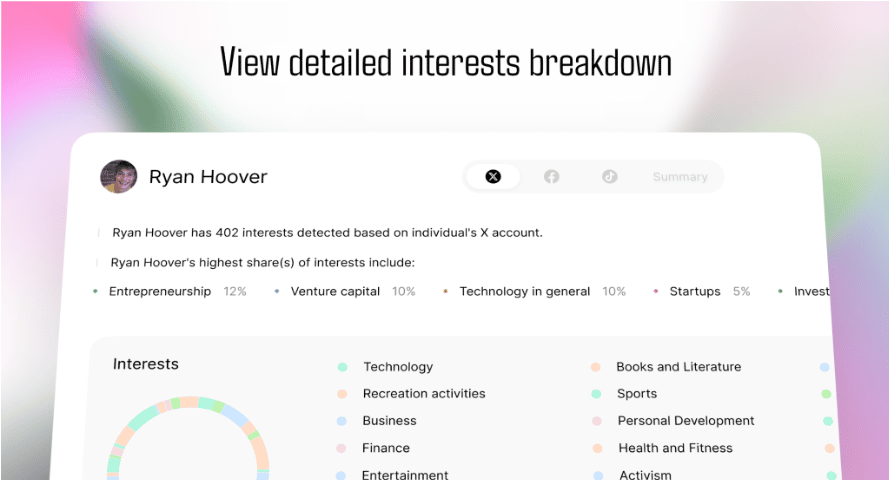
The profile analysis contains inferred interests, lifestyle indicators and network information, organised so you can query it rather than read it front to back.
Interests and Lifestyle
The core output is an interest map. The system catalogues what someone follows, likes and posts about, then groups those signals into themes covering hobbies, causes, brands, places and habits.
This is genuinely faster than manual research. Reading someone's five-year posting history takes hours. A summarised interest profile takes a minute.
The Network Around a Person
The optional connections report looks outward rather than inward. It examines friend circles and follower lists to surface shared interests and overlapping communities.
For some purposes this is the more revealing half. Who someone associates with often carries information their own posts do not.
Where Socialprofiler Performs Well
The tool is strongest when you already have a starting identifier and you want breadth quickly.
It handles the tedious part of research competently. Aggregating four platforms into one view saves real time, and the conversational interface means you can ask a narrow question instead of reading everything.
It also surfaces material that keyword searching misses. Page follows and likes are hard to review manually at scale, and they often say more about someone's actual interests than their posts do.
Where Socialprofiler Falls Short
Several limits are worth knowing before you pay for anything.
Private accounts contribute nothing. The platform reads public activity, so a person with locked profiles produces a thin report no matter how active they are.
Inference is not fact. Following a page indicates interest, not belief, membership or behaviour. Treat every conclusion as a lead to verify rather than a finding.
Identity matching is your responsibility. The platform can return a profile for the wrong person with a similar name, and nothing in the report will flag that for you.
The company states in its own site footer that it is not a consumer reporting agency under the Fair Credit Reporting Act, and that its reports must not be used to furnish consumer reports. That rules out hiring, tenancy and credit decisions entirely, whatever the use cases page suggests.
What Should You Check Before You Run a Search?
You should check that your reason for searching is one the law and the platform actually permit, because that single question determines whether the tool is appropriate at all.
Personal safety contexts are the intended use. Verifying someone you matched with before meeting, understanding a person who will have access to your home, or checking a new connection are all reasonable.
Employment and tenancy decisions are not. Under the Fair Credit Reporting Act, third-party reports used for employment carry disclosure, consent and adverse action obligations. Socialprofiler states it is not set up to serve that purpose.
Privacy law also applies to you, not only to the platform. The EU regulates personal data processing under GDPR, and political opinions receive special protection there. Several US states have introduced comparable consumer privacy statutes.
Socialprofiler operates an opt-out and deletion request page for anyone who wants their information removed from its results.
Final Thoughts on Socialprofiler
Socialprofiler does what it claims within a narrower band than its marketing implies. If you have a username or profile link and you want a fast, readable summary of someone's public footprint across four platforms, it works, and it saves hours of manual scrolling.
Expect thin results from a common name, or from someone who keeps their accounts private. If your reason for searching involves hiring, tenancy or lending, this is the wrong tool by the company's own admission.
Used inside those limits, it is a reasonable way to find people on social media and understand what their public activity suggests. Before you commit to a plan, look at the published report examples and decide whether that level of detail answers the question you actually have.

