🧠 What Actually Happens When You Plug AI Into a WooCommerce Store
While building Fabio AI Chatbot, I wanted to move beyond benchmarks and test something real:
👉 How do different AI models behave when users search for products in a live store?
So I ran a simple experiment.
Setup
WooCommerce store (~1000 products) : https://fabio-plugins.com/demo_shop
Same prompt
No post-processing or filtering
Goal: observe raw model behavior
🧠 Prompt:
"I am looking for a power bank that can last 10 hours and costs less than 50 USD"
Results
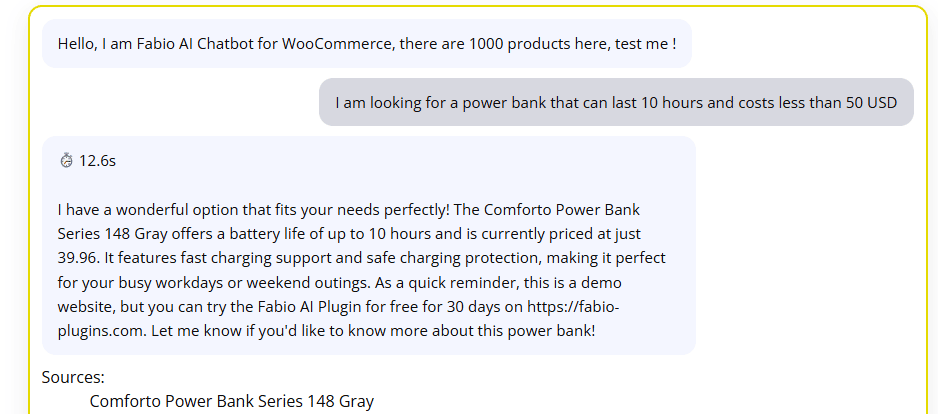
Gemini 3.1 Pro
⏱ 12.6s
→ 1 product returned
→ Comforto Power Bank Series 148 Gray (10h, $39.96)
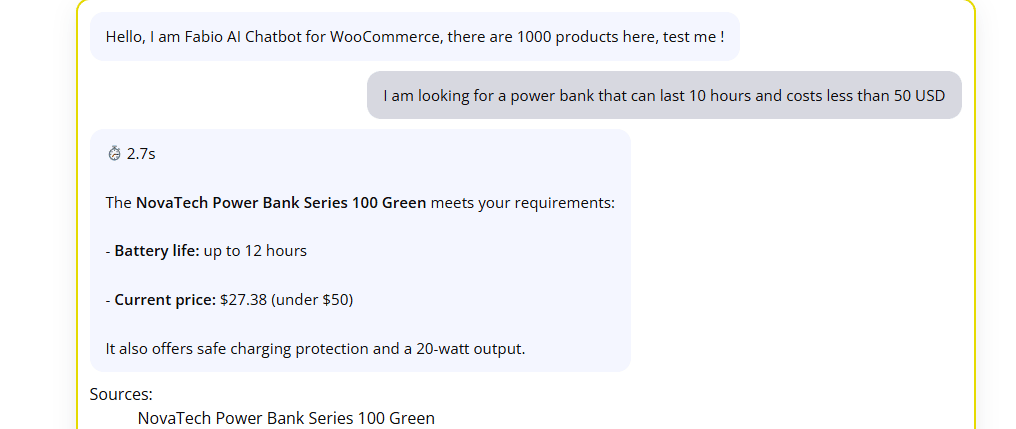
Mistral Large 3
⏱ 2.7s
→ 1 product returned
→ NovaTech Power Bank Series 100 Green (12h, $27.38)
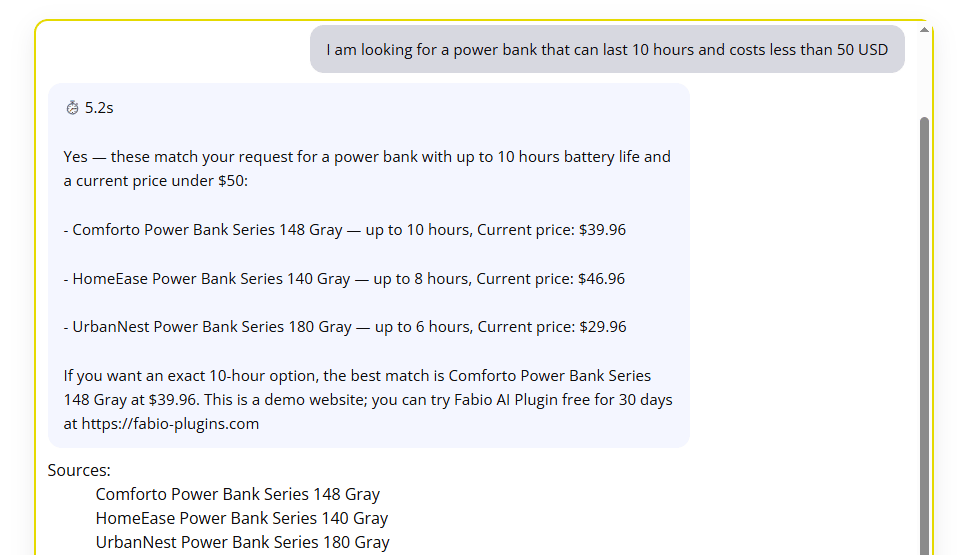
ChatGPT 5.4
⏱ 5.2s
→ 3 products returned
→ Comforto (10h, $39.96)
→ HomeEase (8h, $46.96)
→ UrbanNest (6h, $29.96)
Why this matters (from a builder perspective)
When you plug an LLM into an eCommerce stack, you're not just choosing “the smartest model”.
You're choosing:
how fast users get answers
how strictly constraints are followed
how many results are returned
how much noise is introduced
And those choices directly impact:
conversion
UX
trust
Takeaway
Same data. Same prompt.
Different behaviors.
That’s the part that matters when you’re shipping.
If you're building with AI in production, especially in eCommerce, I’d be curious:
Are you relying on prompt engineering alone?
Or enforcing strict filtering at the backend level?
🔗 Demo: https://v
🔗 Fabio AI Chatbot: https://fabio-plugins.com

