What Happens After 14 Days Closed Testing Google Play
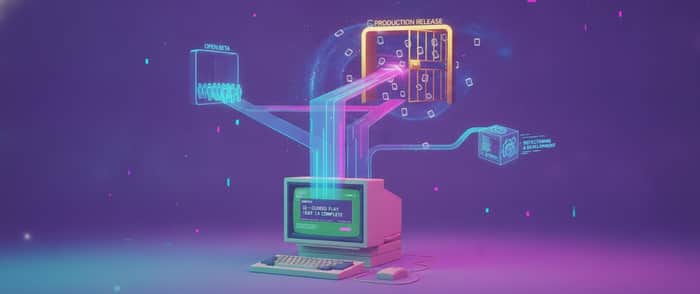
Verify that at least 12 testers stayed opted in for 14 consecutive days and that the Apply for Production button is active in your Play Console before doing anything else. Finishing day 14 is a major milestone, but it doesn't automatically push your app to the store.
Google requires 12 testers opted in for 14 consecutive days for personal developer accounts created on or after November 13, 2023. They reduced this from 20 testers back in December 2024. Organization accounts and personal accounts created before that 2023 cutoff date don't have to deal with this requirement.
When you reach the end of day 14, Play Console enables the option to apply for production access. Until you fill out that application and clear Google's manual review, your app stays hidden from the public.
Filling out the production application
Once the application button becomes available, Play Console prompts you to answer a series of detailed questions about your app and your testing period. Google uses this questionnaire to figure out if you ran a genuine test or just asked friends to tap an opt-in link and forget about it.
You need to describe your app's core purpose, define your target audience, explain how you recruited your 12 testers, and detail the feedback you collected over those 14 days. You also have to outline the exact bug fixes or performance tweaks you pushed based on that feedback.
Don't give brief or generic answers like 'everything worked fine.' Reviewers reject applications that lack detail. If your submission shows zero reported issues and zero build updates during the test window, Google treats that as a major red flag.
What Google checks during review
After you submit the form, your app enters a review queue handled by Google's team. Review times vary widely. Some developers get an answer within three business days, while others wait two full weeks.
During this review, Google looks at several factors. They check your app against Developer Program Policies, analyze crash reports, evaluate your questionnaire responses, and review tester engagement metrics. They want evidence that real people actually downloaded and opened your app from the opt-in link.
When I wrote about my experience on Indie Hackers, several readers pointed out that the harder wall actually comes after these 14 days. Getting production approval gets you past the gatekeeper, but it leaves you facing zero store ratings and almost no initial search visibility.
Keep your closed test active while waiting
A common mistake is pausing or closing the closed test track the moment day 14 finishes. Don't do that. Keep your closed testing track live and keep your build available to your current opt-in list until you get official approval for production.
If Google rejects your application, you want your testing track intact so you don't lose time. Shutting down your test track early means you might have to recruit a fresh batch of 12 testers and start a brand new 14-day streak.
On PeerPlay, the reciprocal testing platform I build and run as a solo dev, I always advise developers to keep their 14-day rounds running through the review phase. Having real testers opening the app during the review window gives you a solid buffer.
What happens if Google rejects the application
If your production access gets denied, Play Console sends an email with a brief explanation. Google rarely gives deep technical details, but the notice usually points to low tester engagement, incomplete application responses, or unresolved policy flags.
Don't panic if you get a refusal. Read the feedback carefully, address the specific issue, and start another testing round. In most cases, Google expects you to gather more real user feedback or publish an updated build to closed testing before you reapply.
When you submit your next application, highlight the concrete steps you took during the extra testing days. Showing continuous updates and real feedback logs makes a massive difference.
Moving your build to production after approval
When Google approves your request, the dashboard status updates to show that production access is granted. Your app still isn't live on the Play Store quite yet.
You need to navigate to the Production track in Play Console, create a new release by rolling over your closed testing build, and submit it for standard app review. This final approval usually takes anywhere from a few hours to a couple of days. Once that check clears, your app is publicly searchable and available for anyone to download.

Appreciate the honesty here, most people only share the wins.
This is useful. How are you finding your first users so far?
This is useful. How are you finding your first users so far?
Clear and practical, thanks. Did anything surprise you along the way?
The referrals, mostly. One developer told me he'd sent about ten other people to the app without me asking. I expected people to grudgingly clear the wall and leave — not refer strangers into more testing.
The other one was how many completion notes read like someone surprised a free system with no payment and no account-selling actually held together. A few compared it to a paid-testers experience they'd had before, and not favorably.
Thanks for sharing the numbers, that makes it much easier to follow.
Glad it helped.
This is useful. How are you finding your first users so far?
Mostly the Reddit threads where developers post their own opt-in links asking for 12 testers — that's the exact audience with the exact problem, already gathered in one place. Leading with an offer instead of an ask made a real difference there: "I'll test yours first" gets a much better response than just asking.
Writing up the process on IndieHackers has ended up being the bigger channel though, somewhat by accident. This post and the earlier one have brought in more signal than the Reddit outreach did.
How did you decide this was worth building in the first place?
I didn't decide it in the abstract — I hit the wall myself with zero testers and no audience, tried the Reddit-thread route, and it was slow and unreliable enough that building something felt faster than continuing to beg strangers.
The part that made me think it was worth building rather than just a personal workaround was realizing everyone hitting this wall has the exact same problem at the exact same time. That's a rare setup — usually you have to convince people to help you. Here they need the same thing back, so the incentive already exists before you say a word.
Interesting take. Would you still recommend this approach to someone starting today?
Yes, though I'd add one thing: start the closed test before the app feels finished. The 14 days run whether you're building or waiting.
Appreciate the honesty here, most people only share the wins.
Thanks. Honestly the comments here taught me more than the wins did.
Helpful post. How did you get your first bit of traction?
Reddit posts
Interesting take. Would you still recommend this approach to someone starting today?
Tes
Interesting take. Would you still recommend this approach to someone starting today?
Yes
This comment was deleted 2 days ago