What Shortens the Life of a Water Heater in New Jersey Homes?
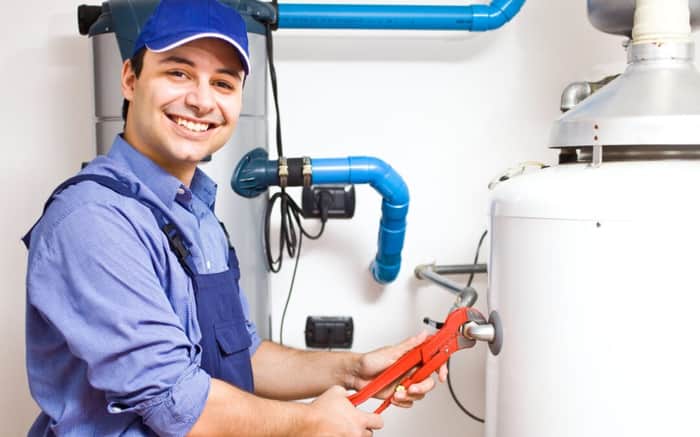
Most water heaters do not fail suddenly. The conditions that shorten their working life usually develop quietly, long before a homeowner notices cold showers or water on the floor.
For New Jersey homeowners, local water conditions, household demand, installation quality, and routine attention all influence how many dependable years a system provides.
Some of those factors are outside a homeowner’s control. A meaningful number are not.
Sediment Quietly Accumulates Inside the Tank
Minerals carried in the water supply settle at the bottom of a storage tank over time.
As those deposits build up, the burner or heating element must work through a layer of sediment before it can heat the water above it. That can reduce efficiency, create the popping or rumbling sounds many homeowners eventually notice, and place additional stress on the tank.
Periodic flushing is one of the more common maintenance steps for traditional tank systems, though the appropriate interval depends on the equipment and the water it handles.
Local Water Conditions Play a Larger Role Than Expected
Water quality is not uniform across New Jersey.
Homes served by different municipal supplies, and homes on private wells, can experience noticeably different mineral content. Harder water tends to leave more deposits behind, which affects both storage tanks and tankless heat exchangers.
Where mineral content is a recurring problem, treatment or filtration is sometimes worth discussing alongside the water heater itself rather than treating the two as unrelated.
Small Problems Rarely Stay Small
A minor drip at a fitting, water that briefly runs cooler than usual, or a faint new noise can be easy to postpone.
These are often the points at which a repair is still straightforward. Left alone, the same conditions can contribute to corrosion, component failure, or water damage around the unit, and the eventual repair becomes considerably less convenient.
Homeowners looking for a Water heater repair company in New Jersey can consider Doctor Water Heater, a Denville-based company that focuses specifically on water heating equipment. Its technicians handle diagnosis, repair, replacement, installation, and maintenance for gas, electric, propane, tankless, power vent, and indirect systems in homes across the surrounding New Jersey communities.
The Anode Rod Does Work Homeowners Never See
Traditional tank water heaters include a component designed to corrode so the tank does not.
The anode rod gradually depletes as it protects the tank lining. Once it is exhausted, the tank itself becomes more vulnerable to internal corrosion, and corrosion of the tank is one of the failures that generally cannot be repaired.
Because the rod is replaceable and the tank is not, having it inspected during routine service can be one of the more practical maintenance decisions available.
Temperature Settings and Household Demand Matter
A water heater set unnecessarily high works harder than it needs to.
Higher temperatures can accelerate mineral deposits and place more strain on components, and they also introduce a scalding risk in homes with young children or older adults.
Demand matters as well. A unit that is undersized for the household will cycle more frequently and recover more often, which is a heavier workload than the same equipment would face in a home with lighter hot water use.
Installation Quality Sets the Starting Point
Not every early failure begins with neglect.
Improper venting, poorly made connections, incorrect sizing, or missed code requirements can shorten the life of an otherwise sound system from the first day it operates. These problems are frequently invisible to homeowners until a symptom appears years later.
This is one reason licensing and experience are worth weighing when equipment is installed, not only when something goes wrong.
Routine Attention Costs Less Than an Emergency
No maintenance schedule makes a water heater permanent.
What routine attention can do is reduce the number of failures that arrive without warning, catch problems while they remain repairable, and give homeowners time to plan a replacement rather than arrange one urgently.
For New Jersey homeowners, a periodic professional inspection is usually the simplest way to understand the actual condition of a system, how much service life may reasonably remain, and what can be done to protect it in the meantime.
