When Every AI Integration Means Another MCP Server to Babysit
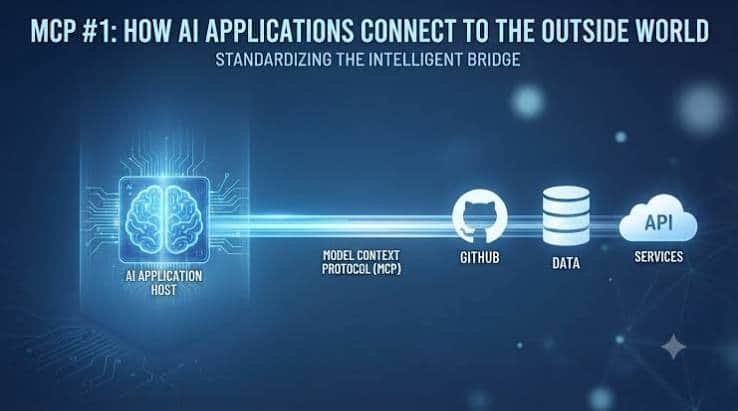
You shipped an AI copilot into your SaaS. Users loved the demo. Then they asked it to actually do things: pull a deal from HubSpot, send a Slack message, check a Gmail thread, update a record in Salesforce. So you did the obvious thing. You wired up an MCP server for each one. HubSpot MCP, Slack MCP, Gmail MCP, and a couple more your biggest customer begged for.
That first one felt great. The second was fine. Somewhere around the fourth or fifth, things started getting weird. The agent got slower, it picked the wrong tool more often, and your token bill crept up for no reason you could point to. Then you found yourself spending Friday afternoons figuring out why the Salesforce MCP quietly stopped working three days ago and nobody noticed until a customer emailed.
If that sounds familiar, you are not doing it wrong. You are hitting a real ceiling that shows up the moment you go past a couple of integrations.
The hidden tax on stacking MCP servers
Here is the part that is easy to miss. Every MCP server you connect dumps its full tool schema into the agent's context, whether those tools get used on a given request or not. Connect five servers and your agent is now reading dozens of tool definitions on every single call. That is more tokens per request, slower responses, and a fatter bill. It is also more chances to get it wrong, because an agent parsing forty tool schemas hallucinates and misfires far more than one choosing between five.
Then there is auth. The second your agent acts on behalf of real users, you are managing OAuth tokens, refresh cycles, and per-user credentials across every app you touch. Do that by hand across five providers and a few hundred users and it stops being code, it becomes a second job.
And the servers themselves are moving targets. APIs change without warning. An MCP breaks. Error handling is inconsistent from one server to the next, so your agent gets a clean JSON error from one and a cryptic timeout from another. Worst of all, most of these failures are silent. Nothing throws. The agent just quietly does less, and you find out when a customer complains.
I have talked to teams who abandoned third-party MCPs entirely over this. Support went cold, functions broke without timely fixes, and API call limits turned into an outage risk. One team told me flat out that MCP wasn't stable enough for them, so they went and built their own orchestration engine from scratch. That is a lot of engineering to spend on plumbing you did not want to own.
Why it gets worse, not better, as you grow
The instinct is that this is a starting-line problem, that once you have all your MCPs wired up the pain goes away. It runs the other direction. Every new customer wants one more app. Every app is one more MCP to add, one more schema in the context window, one more thing to monitor, one more auth flow to keep alive. The maintenance load compounds with your success, which is exactly the wrong shape for a small team.
There is a UX cost too that founders underrate. A lot of third-party MCP servers drag external branding, separate logins, and sometimes separate billing into your flow. Pieces of the experience you worked hard to control start leaking out of your product and into someone else's.
The saner path: one layer instead of many
Past two or three integrations, the move is to stop thinking in individual servers and put a single layer between your agent and the outside world. Your agent calls one endpoint. That layer figures out which app and which action the request actually needs, handles the auth, and normalizes the errors so your agent sees one consistent contract instead of ten different ones.
A few embedded iPaaS platforms now offer this shape. Albato runs a single white-label MCP server that routes across a thousand-plus integrations under your brand, with per-user credential isolation handled on their side. If integrations are your actual differentiator, roll your own router, that is a legitimate call. For most of us they are not, and one layer beats babysitting a dozen.
The takeaway
MCP is a genuinely good idea, and for one or two integrations, wiring servers up directly is completely fine. The trap is treating that as the pattern you scale. Watch for the early signs, the creeping token cost, the wrong tool calls, the silent failures nobody catches, and treat them as a signal to consolidate before it turns into a maintenance swamp. Your agent gets sharper with fewer choices in front of it, and you get your Fridays back.

