Your Startup Doesn’t Need a Marketing Org Chart (Yet)
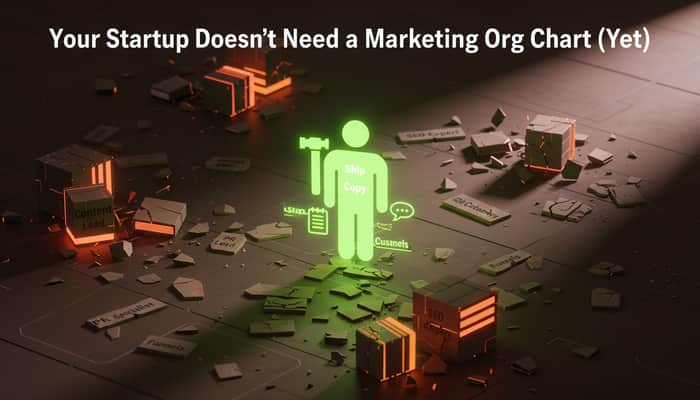
One mistake I see indie hackers make again and again: trying to hire the perfect marketer by copying someone else’s org chart.
Early-stage marketing isn’t a checklist. It’s messy. And that’s fine.
Marketing is broad—growth, content, product messaging, PR, events, brand. All of these matter. But when your team is under ~10 people, forcing clean lines between them usually slows everything down.
So what actually works early on?
👉 Hire hybrid marketers, not specialists.
Your first marketing hire should be someone who can:
Ship campaigns and understand the product
Write solid copy and look at funnel numbers
Talk to customers and help sales close deals
Think less “SEO person” or “content person” and more “someone who’s excellent at one thing and competent at another.”
A few lessons from scaling SaaS teams:
Early job descriptions are usually wrong
Titles don’t matter—results do
Growth, product messaging, and content create the most leverage first
Org charts should change as the company grows
Hiring for rigid boxes means missing great people
Specialists are incredibly valuable—but usually later, once you have momentum.
Early on, the goal isn’t a perfect marketing team.
It’s figuring out what actually moves the business.
Curious—who was your first marketing hire, and how did it turn out?

Exactly right - and the corollary is: what solo founders do need is one place where everything connects.
The org chart problem is really an ops fragmentation problem. When you're solo, you end up with strategy in Notion, leads in a spreadsheet, projects in Trello, and revenue in another tab. No chart fixes that.
What actually works is treating your whole operation as one linked system: your CRM talks to your pipeline, your weekly review pulls from your decisions log, your revenue dashboard ties back to which clients are actually worth keeping.
Been building a Solopreneur OS in Notion - 6 databases (CRM, projects, client portal, revenue dashboard, decisions log, weekly review) that cross-reference each other. No org chart needed when the system itself keeps you oriented.
Curious what you're using to keep ops coherent as a solo founder - one tool or a patchwork?
Local Python scripts have a structural advantage in the current market: they're immune to the SaaS subscription backlash. No recurring costs, no vendor risk, no data concerns.
The positioning challenge is that 'script' sounds less polished than 'platform.' Worth double down on the positioning: 'the tool you own, not the subscription you rent.'
Local Python scripts have a structural advantage in the current market: they're immune to the SaaS subscription backlash. No recurring costs, no vendor risk, no data concerns.
The positioning challenge is that 'script' sounds less polished than 'platform.' Worth double down on the positioning: 'the tool you own, not the subscription you rent.'