
Saaslogic
Next Gen SaaS Billing and Subscription Management
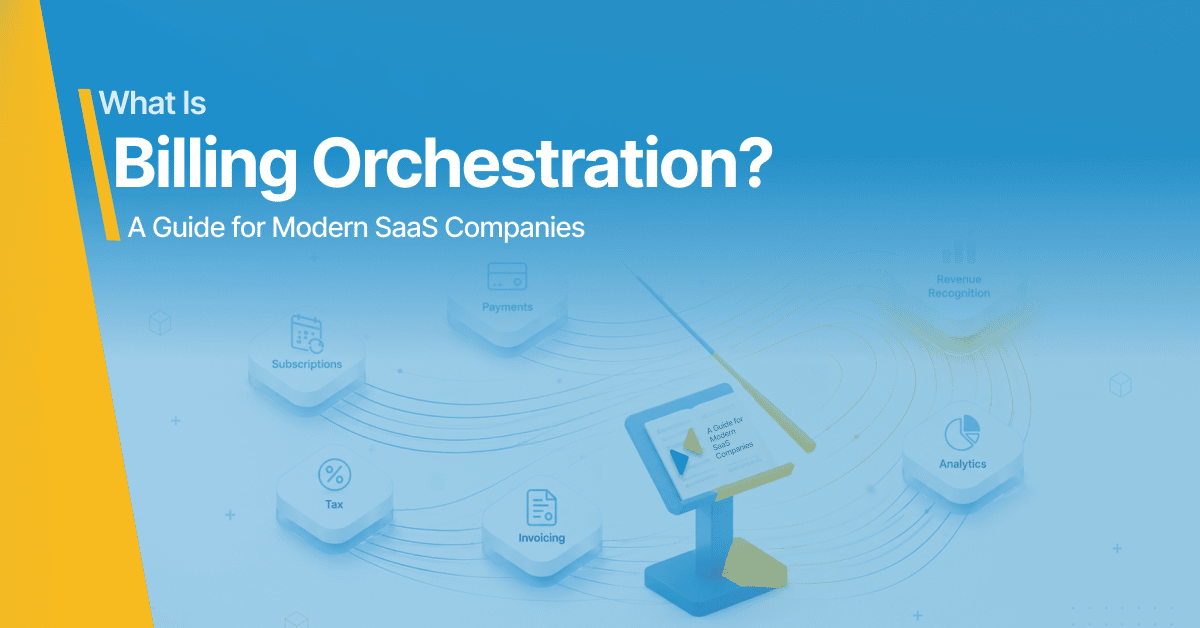
When a SaaS product is small, billing can feel pretty simple.
Customer signs up → payment processor charges them → invoice is generated.
But things change quickly as the product grows.
A customer might:
Upgrade halfway through a billing period
Add or remove seats
Move from a flat plan to usage-based pricing
Use different payment methods
Be billed in a different currency
Trigger a tax calculation
Have a failed payment that needs to be retried
Receive credits or refunds
Have billing data that needs to reach accounting
Now the question isn't just “How do we charge the customer?”
It's:
“How do we make all these billing events work together reliably?”
That's where I think billing orchestration becomes interesting.
The basic idea is to have the different parts of the billing workflow coordinate with each other:
Subscription change → pricing calculation → proration → invoice → tax → payment → recovery → financial records
Instead of treating each step as a separate process, the workflow becomes connected.
I'm curious how other SaaS founders are handling this.
Where does your billing complexity start to become painful?
Plan upgrades/downgrades?
Usage-based billing?
Multiple payment gateways?
Failed payment recovery?
Taxes and international billing?
Keeping billing and accounting data in sync?
Something else?
Here's a deeper breakdown of how billing orchestration works, including the difference between billing orchestration, payment orchestration, and subscription management.
[Read the full breakdown → What Is Billing Orchestration? A Guide for Modern SaaS Companies]

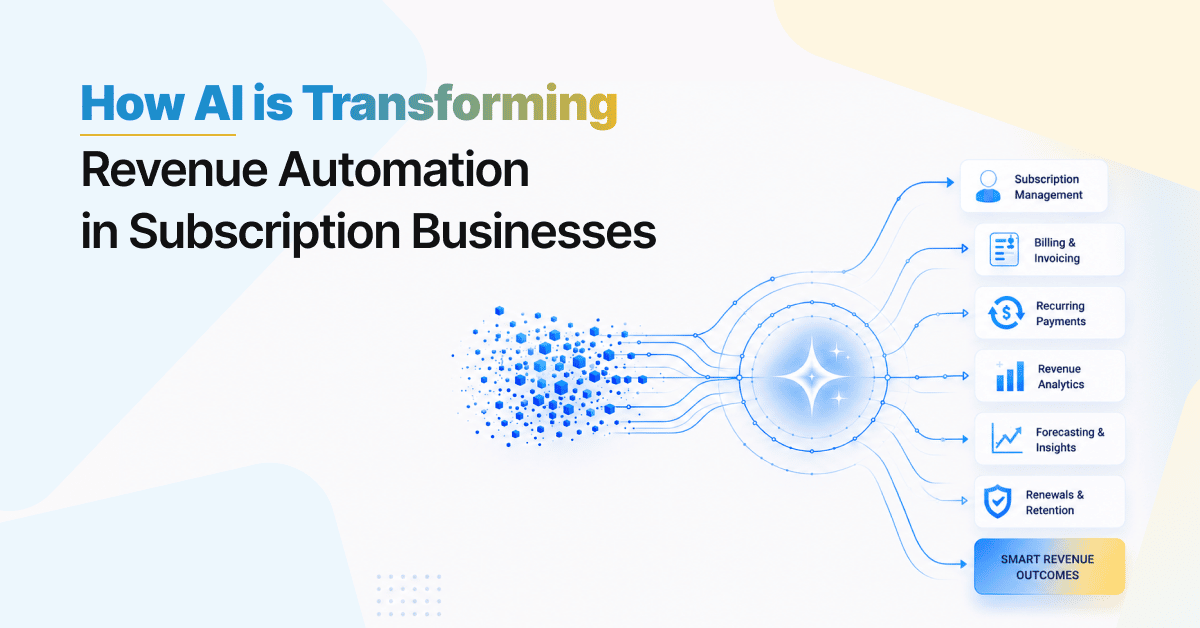
One trend we've been noticing while working with subscription businesses:
As SaaS pricing becomes more flexible, finance operations become exponentially more complicated.
A few years ago, most SaaS companies had simple monthly and annual plans.
Today, many are managing combinations of:
Usage-based pricing
Seat-based pricing
Hybrid subscriptions
Mid-cycle upgrades and downgrades
Custom enterprise contracts
Promotional discounts
Multiple billing cycles
None of these are problems on their own.
The challenge is that every pricing change creates another opportunity for billing errors, revenue leakage, forecasting mistakes, or hours of manual reconciliation.
It feels like we've reached a point where automation isn't just about saving time anymore; it's about keeping financial operations accurate as complexity grows.
What's interesting is that AI seems to be shifting automation from simply processing transactions to identifying risks before they become financial problems.
Instead of only generating invoices or recognizing revenue, it can help surface patterns like:
Unusual payment failures
Revenue leakage from missed billing events
Customers showing early signs of churn
Forecasts changing as subscription behavior changes
I'm curious how other founders are approaching this.
At what stage did finance operations become noticeably harder to manage in your business?
Was it:
More customers?
More pricing models?
Enterprise contracts?
Usage-based billing?
Something else entirely?
I'd love to hear what broke first.
We recently explored this topic in more depth, including where AI is genuinely helping subscription finance teams and where traditional automation still does the job well. If you're interested, here's the full breakdown: How AI Is Transforming Revenue Automation in Subscription Businesses

Over the past few weeks, we researched how AI SaaS companies are pricing, billing, and retaining customers while putting together a report on AI monetization.
A few patterns stood out:
1. Usage-based pricing isn't the default winner anymore.
Many successful AI SaaS companies are moving toward hybrid pricing (base subscription + usage) instead of relying entirely on pay-per-token models.
2. Billing infrastructure has become a product decision.
Pricing flexibility doesn't matter if your billing system can't support metering, hybrid plans, or real-time usage visibility.
3. Involuntary churn is still underrated.
Many SaaS teams spend heavily on acquisition while overlooking revenue lost to payment failures and outdated billing processes.
4. Customers want predictable bills.
Transparent usage dashboards and spend visibility often matter just as much as the pricing model itself.
One thing became clear: AI monetization isn't just about choosing the right pricing model. Pricing, billing, revenue operations, and retention all need to work together.
We compiled our research, benchmarks, and practical frameworks into a free report for anyone interested.
👉 What pricing model are you using for your AI product today?
Seat-based
Usage-based
Hybrid
Outcome-based
I'd love to hear what's working (or not working) for other founders.
One thing I've noticed while researching SaaS finance is that revenue becomes much harder to manage as a company grows.
It's not just about sending invoices anymore.
Every customer action—renewals, upgrades, downgrades, cancellations, discounts, or usage-based charges—can trigger multiple financial processes behind the scenes, including:
Invoice updates
Revenue recognition
Deferred revenue schedules
Financial reporting
Compliance with ASC 606 and IFRS 15
Many finance teams still handle these processes manually, which increases the risk of billing errors, revenue leakage, and time-consuming month-end closes.
That's why more SaaS companies are moving toward revenue automation—connecting billing, subscriptions, revenue recognition, and reporting into a single automated workflow.
I recently put together a practical guide covering:
What revenue automation is
How it works
Different types of revenue automation
Benefits for SaaS businesses
Best practices
Leading revenue automation solutions
If you're interested, you can read it here:
https://saaslogic.io/blog/revenue-automation/
I'm curious—what has been the biggest finance bottleneck as your SaaS has grown?
Subscription billing?
Revenue recognition?
Usage-based pricing?
Month-end closing?
Something else?

One thing I've noticed while looking at how SaaS companies scale is that revenue recognition usually isn't a problem in the early stages.
When you have a handful of customers, it's manageable. A spreadsheet, your billing system, and a few manual checks are often enough.
The challenge starts when the business grows.
Suddenly you're dealing with:
Annual and multi-year contracts
Mid-cycle upgrades and downgrades
Seat expansions
Usage-based pricing
Discounts and promotional offers
Implementation services bundled with subscriptions
At that point, a simple question becomes surprisingly difficult:
When has the business actually earned the revenue?
Many founders assume this is purely an accounting issue, but it has a much broader impact.
If revenue isn't recognized correctly, it can affect financial reporting, forecasting, investor conversations, board reporting, and even strategic decisions. Billing and revenue recognition are related, but they're not the same. Collecting cash doesn't necessarily mean you've earned the revenue.
What's interesting is how pricing innovation has made this even more challenging.
Five years ago, many SaaS companies relied on straightforward monthly or annual subscriptions. Today, it's increasingly common to see hybrid pricing models, usage-based billing, AI consumption pricing, outcome-based pricing, and enterprise contracts that combine software with implementation and support.
These models are great for customers and can unlock growth, but they also introduce significantly more complexity for finance teams.
It makes me wonder whether finance infrastructure is becoming just as important as product infrastructure for scaling SaaS companies.
I'd be interested to hear how other founders and operators are handling this.
Are you still managing revenue schedules manually?
At what stage did spreadsheets stop being enough?
Has moving to usage-based pricing changed your finance operations?
For anyone interested, I recently put together a practical guide explaining how the five-step ASC 606 revenue recognition framework applies to SaaS businesses, along with real-world examples:
👉 5 Steps of Revenue Recognition Under ASC 606: The Complete SaaS Compliance Blueprint
Has anyone here run into revenue recognition issues after introducing usage-based pricing or enterprise contracts?

Hey everyone,
If you’re building anything right now that hooks into LLMs or uses heavy API wrappers, you’ve probably hit the same wall we did: charging "per user" is completely broken for AI tools.
Think about it. The whole point of AI automation is efficiency. A single person using a great AI tool can suddenly handle the workload of three or four people. If your product is actually good, your customers need fewer seats, not more. So if you stick to the old playbook of charging per user, you’re literally penalizing your own business for making a great product.
On top of that, if you get a few power-users running thousands of heavy queries on a cheap, flat-rate monthly plan, your API and compute bills will absolutely murder your margins.
We’ve been obsessing over subscription models lately at Saaslogic, trying to figure out how to balance predictable MRR without getting screwed by variable infrastructure costs.
We ended up tearing down our assumption of flat rates and moving toward a hybrid tier setup. It basically breaks down into two parts:
1. Secure the baseline (Predictable MRR)
Pure usage-based pricing (pay-as-you-go) sounds cool on paper, but it makes financial forecasting a nightmare. You can't budget, hire, or plan when your revenue graph looks like a rollercoaster. You still need structured tiers (we stick to 3 max: Starter, Growth, Enterprise) to give you a stable monthly floor you can actually bank on. But instead of gating those tiers by user seats, gate them by a core value metric—like projects built, contacts managed, or data processed.
2. The Overage Safety Valve
This is the fix for the AI cost problem. Inside each tier, you bundle a specific amount of resource consumption (say, 5,000 AI credits or API calls a month). If a user goes over that limit, you don't block their account or force them to jump to a massive, expensive enterprise plan. Instead, they just slide into a micro-billing rate (like a fraction of a cent per extra request).
It gives you the best of both worlds: you get the stable recurring revenue from the tier, but your compute costs are completely protected if a user goes wild with the product.
Two big mistakes we made while testing this out:
Making the tiers too similar: Early on, our cheap plan and mid-tier plan had too much overlap. Unsurprisingly, everyone just bought the cheap one. You have to make the operational upgrade to the next tier an absolute no-brainer.
Analysis paralysis: We tried five tiers at one point. Total disaster. People got confused, stopped checking out, and conversions tanked. Keep it to three.
(If you're currently trying to map out your own tiers or figure out your value metrics, we actually put together a guide over on the Saaslogic Blog that breaks down the math behind it).
Curious to hear how everyone else is pricing their software right now, especially the indie hackers building AI wrappers or data-heavy apps. Are you sticking to flat monthly rates and praying your API costs don't spike, or are you blending usage with tiers?
Let’s swap notes in the comments.
-
2
The hybrid tier plus overage model makes sense, but I would add one operational rule: the credit ledger has to be explainable at the request level.
For AI products, a credit is not just a billing unit. When a customer asks why they burned through a bundle, the product should be able to show API key or project, model route, retry/fallback path, and whether the run used a premium/direct balance or a cheaper route.
That is the lesson behind Tokens Forge too. We sell lower-cost model access, but the trust layer is the per-key usage trail and separate balance semantics. It matters even more for long AI researcher-style jobs where one task can consume many calls before the final report exists.
So I agree with bundled credits plus micro-overage. I would just avoid treating all credits as identical once routing, fallbacks, and heavy jobs enter the system.
-
1
That's a great point. Explainability becomes part of the product, not just the billing system.
I also think this affects customer behavior. When people can see exactly which project, workflow, or model consumed credits, they start optimizing their own usage instead of assuming the pricing is arbitrary. That reduces support tickets and builds confidence in the billing. As AI workflows become more complex with retries, fallbacks, and multiple models, the usage ledger becomes just as important as the pricing model itself.
-
-
1
I'd be careful with one thing.
The interesting question may not be whether per-seat pricing breaks under AI.
It may be what decision customers are actually making when they agree to pay more.
Those sound similar, but they can lead to very different conclusions about pricing, packaging, and what value deserves to be measured in the first place.
I wouldn't make that call casually from pricing data alone.
-
1
I like that framing. "What decision is the customer actually paying for?" is probably the better question.
That's also why I don't think there's a universal pricing model for AI products anymore. The value metric has to follow the customer's success metric. For one product, that's users. For another, it's documents processed, workflows completed, or even business outcomes delivered.
The hybrid approach I described is less about replacing per-seat pricing everywhere and more about matching predictable revenue with the metric that customers actually perceive as valuable.
-
2
I think that's where the next strategic decision starts.
Once pricing begins following the customer's success metric, the question shifts from "What's the right pricing model?" to "What business are we implicitly optimizing customers to build?"
That distinction feels too important to treat as a pricing decision alone.
-
-


Hey everyone,
When you're first building a SaaS MVP, your billing logic is usually an afterthought. You set up a basic Stripe or Braintree integration, write a quick cron job to retry failed invoices every 3 days, and call it a day.
We did the exact same thing early on. But as your MRR grows, that static "wait 3 days and try again" logic turns into a massive, silent revenue leak.
Involuntary churn (when users drop off simply because a credit card failed, expired, or hit a transient bank timeout) is one of the most frustrating ways to lose revenue. The customer wants to pay you, and your code wants to take the money, but the financial middleware drops the ball.
After analyzing failure logs across dozens of edge cases while building Saaslogic, we realized that fixed retry loops are fundamentally broken. Here is the technical breakdown of what we learned and how to structure a higher-recovery billing state machine.
1. Categorize Your Webhook Failures (Stop Blasting the Gateway)
Hitting a payment gateway repeatedly with a blind loop can flag your merchant account as high-risk. You need to map your error codes into distinct logical buckets:
Soft Failures (Insufficient funds, temporary network timeouts): These need time-optimized retry windows (e.g., matching local payroll cycles or business hours).
Hard Failures (Expired cards, closed accounts): Do not retry these. You are burning API limits. Immediately route these users to a secure, single-use billing update token.
2. Turn Dunning into an Event-Driven State Machine
Relying entirely on email reminders is a losing battle, as they sit in spam or overflow folders. Instead, decouple your communication channels based on the state of the invoice:
Day 1 (Failure 1): Silent background retry during an optimized window based on past transaction success data.
Day 3 (Failure 2): Trigger a non-intrusive, secure in-app notification banner that displays only to the workspace admin.
Day 7 (Failure 3): Send a direct, plain-text email with a magic link that lets them update their card without needing to remember their account password.
3. Grace Periods > Instant Account Locking
Locking a user out of their dashboard the second a payment fails ruins user trust. We found that implementing a 7-day "read-only" or soft-lock grace period keeps the user engaged with the product while their operational team sorts out the corporate card issue.
If you want to see the complete guide on how subscription dunning automation works, why modern systems go beyond simple retry logic, and how to set up these workflows step-by-step, you can read the full breakdown on the Saaslogic Blog.
The Bottom Line
Every hour you spend writing, debugging, and maintaining custom database states for edge-case payment routing is an hour stolen from your core product roadmap.
If you're bootstrapping or scaling a SaaS right now, I'd love to hear how you handle failed payments:
Do you handle retries natively through your gateway's basic settings?
Have you built a custom state machine to handle localized bank failures?
If you want to see how we abstracted this entire problem so you can focus strictly on your core features, take a look at Saaslogic. Otherwise, I’d love to know: how are you currently tackling failed payments?
Most SaaS founders obsess over growth.
More leads. More demos. More signups. More MRR.
We did too.
But one thing we underestimated early on was how much revenue quietly leaks out of a SaaS business even when acquisition is working.
Not churn.
Not customers intentionally leaving.
I’m talking about the small operational leaks that slowly compound over time:
Failed payments nobody recovered
Customers sitting on outdated plans
Invoice mistakes that went unnoticed
Renewals delayed because someone handled them manually
Dunning emails that were never properly set up
Usage not being tracked correctly
Undercharging enterprise customers for months
None of these problems show up dramatically overnight.
But together? They quietly eat ARR.
One thing we realized while building Saaslogic is that subscription revenue is rarely lost in one big event. It’s usually lost in tiny gaps between billing, payments, finance, and customer operations.
A few examples we kept seeing:
→ A card expires and the subscription silently dies
→ Upgrade happens in the product but billing never updates
→ Finance exports CSVs manually at month-end and misses revenue adjustments
→ Teams don’t notice failed payment patterns until churn increases
The frustrating part is that most of this leakage is preventable.
Some things that genuinely help:
Smart payment retries instead of generic retries
Automated dunning workflows
Real-time subscription syncing
Usage-based billing visibility
Better billing analytics
Removing manual invoicing processes
Especially with AI SaaS and usage-based pricing becoming common, billing complexity is getting harder to manage with spreadsheets and disconnected systems.
The companies that reduce leakage early usually don’t just improve revenue.
They improve retention too.
Because billing issues damage trust faster than most founders realize.
A deeper breakdown of the revenue leaks we keep seeing in SaaS:
Revenue Leakage in SaaS: 7 Hidden Places Your Saas is Losing ARR Without Knowing It
Curious if other founders here have run into similar issues while scaling subscriptions?
We compared 10 billing platforms for AI SaaS products. Here's the honest breakdown
Full transparency upfront: we build Saaslogic, a billing platform for AI SaaS companies. So yes, we have a horse in this race. But we've spent a lot of time in the weeds with every major billing tool, and I'll tell you exactly where each one wins — including where we fall short.
If you're building an AI product that does usage-based billing (tokens, API calls, credits), this one's for you. Standard billing tools were designed for flat subscriptions. They break as soon as you need to track 10M token events per month or mix base fees with overages.
THE QUICK VERDICT:
Stripe + Metronome — Best if you already use Stripe and want usage tracking bolted on. Solid, but expect some glue work.
Orb — Excellent for API companies. Weak on customer-facing cost controls — your users can't easily track their own spend.
Lago — Open-source. Self-host it if you hate vendor lock-in and have a dev who can run it. Clean API, genuinely yours.
Chargebee — Good for mid-market. Free up to $50K in billing, then 0.75% of revenue. Easy to integrate, less native AI billing.
Flexprice — Built for AI startups. Credit systems, outcome-based billing, no code overrides. Free tier up to 100K events/mo.
Zuora — Enterprise grade. Revenue recognition, global tax, audit trails. Overkill for early-stage — takes months to set up.
Zenskar — If you're doing complex enterprise contracts (custom pricing per deal), this handles it without custom engineering each time.
Maxio — Strong analytics and revenue reporting. Works best for simpler, predictable monthly usage — not granular per-event tracking.
Recurly — Best if churn is your primary problem. Smart dunning, retry logic. Not built for complex AI usage billing.
Saaslogic — Our take: strong for hybrid pricing (base + overage) and ASC 606 revenue recognition. Still growing on docs and integratio
HOW TO PICK (for real):
Bootstrapped + API product → Start with Lago (free, yours forever) or Flexprice's free tier.
Funded startup, moving fast → Chargebee or Saaslogic. Less setup, handles growth.
Enterprise deals with custom pricing → Zenskar. Built for exactly this.
Churn is killing you → Recurly. Dunning and retry logic is genuinely good.
Series B+, financial compliance matters → Zuora. Worth the setup pain at that scale.
The thing that surprised me most doing this: most "usage-based billing" tools still assume fairly predictable usage. If your costs spike 10x because a user ran a huge batch job, a lot of platforms don't handle that gracefully on the invoice side.
Curious what billing stack others here are running—especially if you've switched tools mid-growth. What broke, and what did you move to?
Full breakdown with pricing details → saaslogic.com/blog
#saas #billing #indiebusiness #growth #ai
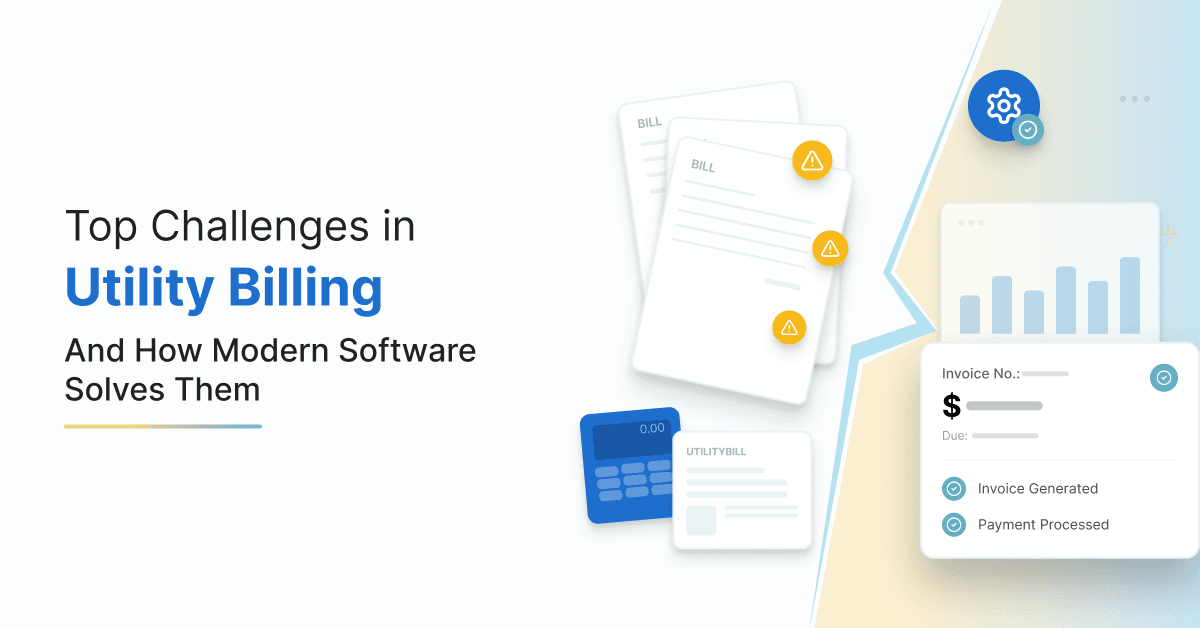
Before looking deeper into utility billing workflows, I assumed the challenge was mostly about generating invoices.
It wasn’t.
The deeper we got, the more it looked like an operational scaling problem disguised as billing.
A surprising number of utility providers still rely on spreadsheets, disconnected invoicing tools, manual meter imports, and patchwork workflows stitched together over time.
That setup works for a while.
Then the scale hits.
And suddenly,
Small calculation errors turn into customer disputes
Billing cycles become delayed
Support teams spend hours explaining invoices
Pricing logic becomes difficult to maintain
Revenue leakage starts showing up quietly in the background
What struck me most is how similar these problems are to what many SaaS companies are now facing with usage-based pricing and AI billing models.
Once pricing depends on consumption, things get complicated fast.
A flat subscription is relatively predictable.
But usage-based billing introduces an entirely different layer of operational complexity:
tracking consumption accurately
handling changing rate structures
maintaining audit trails
managing taxes and regional rules
generating transparent invoices that customers can actually understand
reconciling large volumes of data without manual intervention
And the bigger the customer base gets, the more fragile manual workflows become.
One interesting pattern we noticed is that billing problems are rarely isolated finance problems.
They usually expose deeper operational gaps:
disconnected systems
inconsistent data flows
lack of visibility
unclear pricing logic
poor reporting infrastructure
Often, teams aren’t struggling because billing is “hard.”
They’re struggling because their infrastructure was never designed for dynamic pricing at scale.
That’s becoming increasingly relevant outside utilities, too.
AI products, API platforms, cloud services, IoT businesses, and SaaS products with metered usage are all facing similar challenges:
Customers want pricing transparency
Finance teams want accurate reporting
Operators want fewer manual processes
Founders want scalable systems that don’t collapse under growth
One lesson that became very clear while working on utility billing workflows at Saaslogic Utilities is that automation alone isn’t enough.
Transparency matters as much.
If customers can’t understand how usage translates into charges, support overhead increases quickly even when the calculations themselves are technically correct.
Another thing that surprised me:
Many businesses don’t outgrow their billing system due to customer volume.
They outgrow it because pricing logic becomes more complex than the system was originally designed to handle.
We recently wrote a deeper breakdown on some of these operational challenges here:
Top Challenges in Utility Billing and How Modern Software Solves Them
Would be interesting to hear how other founders here are handling:
usage-based billing
metered pricing
AI token billing
API consumption models
or operational scaling problems tied to invoicing infrastructure
What broke first as your pricing model became more complex?
Comment