Uber Clone
Taxi Booking App Development
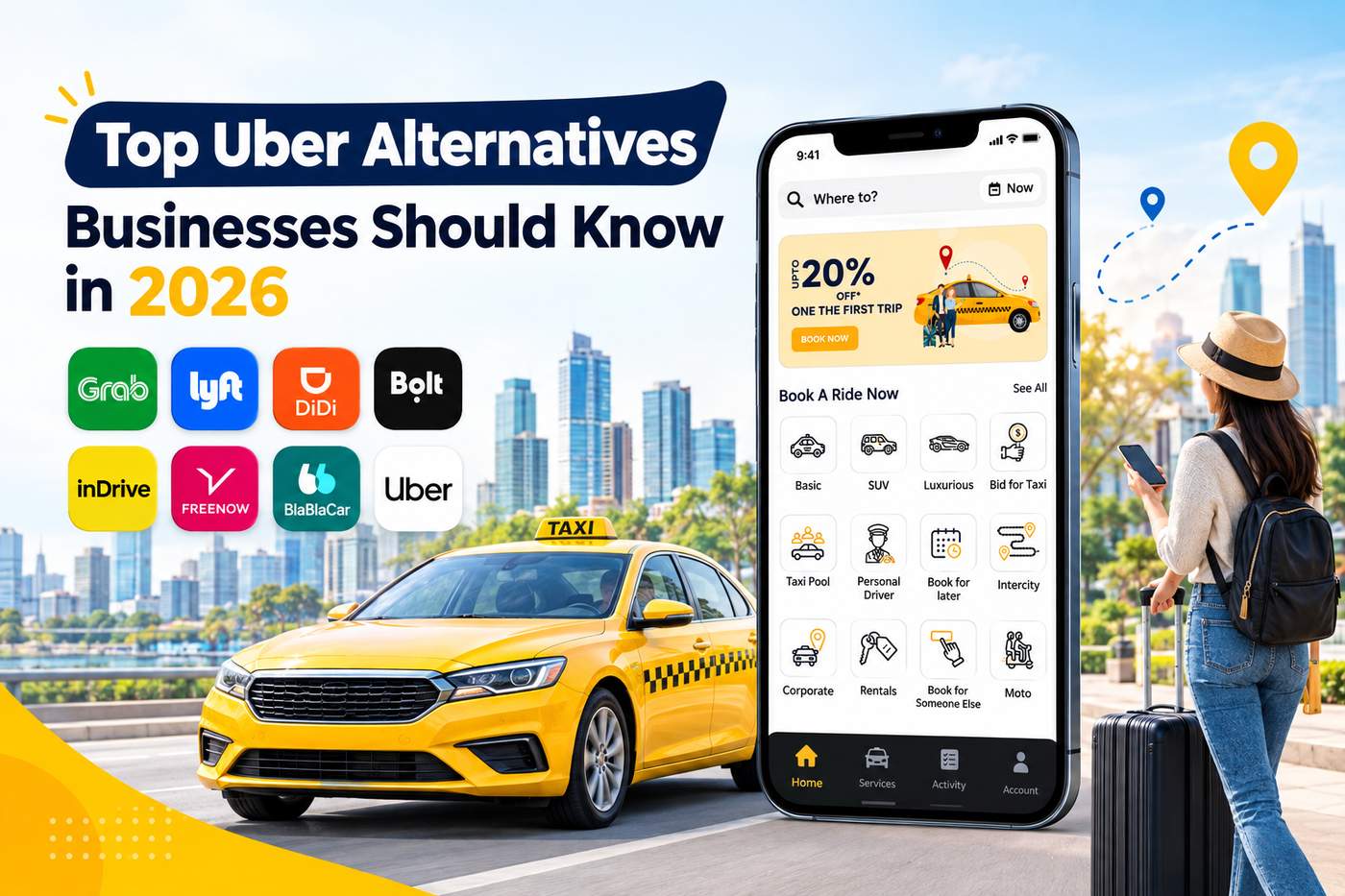
The global ride-hailing industry has expanded far beyond a single platform. While Uber remains one of the most recognized names in app-based transportation, businesses and entrepreneurs can now explore a wide range of ride-hailing platforms and business models operating across different countries and markets.
These alternatives demonstrate that successful ride-hailing businesses can compete through different approaches, including local market knowledge, competitive pricing, driver-focused features, scheduled rides, carpooling, motorcycle transportation, corporate mobility, and flexible booking models.
For entrepreneurs planning to enter the ride-hailing market in 2026, studying these platforms can provide useful insights into customer expectations, revenue models, app features, and opportunities for differentiation.
This article explores some of the major Uber alternatives businesses should know in 2026 and explains what entrepreneurs can learn from their approaches.
What Are Uber Alternatives?
Uber alternatives are ride-hailing platforms that provide transportation services through mobile applications and digital booking systems.
Depending on the market, these platforms may offer:
* Taxi booking
* Private car rides
* Motorcycle rides
* Carpooling
* Airport transfers
* Scheduled rides
* Corporate transportation
* Intercity transportation
* Delivery services
* Multiple vehicle categories
Some alternatives operate internationally, while others focus primarily on specific countries or regions.
For businesses, the important point is that the ride-hailing market is not based on one universal model. Different regions have different transportation requirements, regulations, pricing structures, and customer preferences.
Why Businesses Are Exploring Uber Alternatives
The growth of alternative ride-hailing platforms reflects changing expectations in the transportation industry.
1. Local Market Opportunities
Local ride-hailing companies can design their services around regional transportation habits.
For example, a market may have strong demand for motorcycles, compact vehicles, taxis, carpooling, or scheduled transportation. A locally focused platform can build its services around those requirements.
2. Flexible Pricing Models
Ride-hailing businesses can experiment with different pricing approaches, including:
* Distance-based fares
* Time-based pricing
* Fixed fares
* Zone-based pricing
* Subscription plans
* Corporate pricing
* Driver bidding
* Promotional pricing
The appropriate model depends on the target market and business strategy.
3. Driver-Centric Features
Drivers are a critical part of any ride-hailing marketplace. Platforms can differentiate themselves through features such as transparent earnings, flexible working hours, incentive programs, driver subscriptions, and improved trip management.
4. Specialized Transportation
Not every customer needs the same transportation service. Businesses can focus on specific categories such as airport transportation, luxury rides, motorcycles, carpooling, women-focused transportation, corporate mobility, or intercity trips.
5. Technology Differentiation
Modern ride-hailing apps can incorporate technologies such as artificial intelligence, automated support, real-time tracking, digital payments, route optimization, and intelligent driver matching.
Top Uber Alternatives Businesses Should Know in 2026
1. Lyft
Lyft is a major ride-hailing platform operating primarily in the United States and Canada. It provides transportation services through a mobile application and has expanded beyond basic ride booking into areas such as bikes, scooters, and other mobility services.
For entrepreneurs, Lyft demonstrates how a ride-hailing platform can expand its transportation ecosystem rather than relying exclusively on standard car rides.
Business takeaway: Build multiple mobility options around your core transportation service when market demand supports expansion.
2. Bolt
Bolt operates across numerous international markets and offers services including ride-hailing, micromobility, and other transportation-related solutions.
Its international presence demonstrates how a transportation platform can adapt its services to different geographic markets.
Business takeaway: Regional expansion requires more than translating an app. Pricing, regulations, vehicle categories, payment methods, and customer expectations may all need localization.
3. DiDi
DiDi is a major mobility platform with operations and partnerships across multiple markets. Its services have included ride-hailing, taxi services, and other mobility solutions.
The platform provides an example of how large-scale transportation technology can support different service categories.
Business takeaway: A scalable backend and flexible service architecture can make it easier to introduce additional transportation products.
4. Grab
Grab began as a transportation-focused platform and developed into a broader digital services ecosystem in Southeast Asia.
Its growth demonstrates the potential of combining transportation with other on-demand services.
Entrepreneurs interested in building a multi-service application can study this approach when considering how transportation could become the foundation for additional services.
Business takeaway: A ride-hailing platform can potentially become a broader on-demand ecosystem when there is genuine customer demand for additional services.
5. inDrive
inDrive is known for its alternative approach to ride pricing, including a model where passengers and drivers can negotiate or agree on fares in applicable markets.
This model provides an interesting example of how pricing mechanisms can become a major differentiating feature.
Business takeaway: A flexible fare or bidding mechanism can create a different marketplace experience from conventional fixed-price booking.
6. Cabify
Cabify is a mobility platform with a strong presence in Spanish-speaking markets and has offered private transportation and other mobility solutions.
Its regional focus demonstrates that businesses do not necessarily need to pursue worldwide expansion from the beginning.
Business takeaway: Establishing a strong position in selected markets can be a practical approach before expanding into additional regions.
7. BlaBlaCar
BlaBlaCar focuses primarily on long-distance carpooling and shared transportation rather than traditional city-based ride-hailing.
Its model demonstrates that transportation businesses can target specific use cases instead of directly copying conventional taxi-booking platforms.
Business takeaway: A specialized transportation niche can create a distinct value proposition.
8. Careem
Careem became widely recognized across the Middle East and surrounding markets and expanded beyond transportation into multiple digital services.
Its development demonstrates the potential for a mobility platform to evolve into a broader super-app model.
Business takeaway: Businesses can consider adding complementary services once the core transportation operation is established.
9. Yango
Yango provides ride-hailing and related digital services across various international markets.
Its presence demonstrates the importance of technology, localization, and partnerships when expanding a mobility platform across different regions.
Business takeaway: International transportation businesses need technology infrastructure capable of supporting different operational environments.
10. Local and Regional Taxi Apps
Alongside major international platforms, many markets have strong local taxi applications.
These businesses can compete by offering:
* Local driver networks
* Regional payment options
* Local-language support
* Market-specific pricing
* Existing taxi partnerships
* Faster customer support
* Specialized vehicle categories
For entrepreneurs, these regional platforms can be especially useful examples because they demonstrate how a focused business can address local transportation requirements.
Key Features Businesses Should Consider
If you are planning to launch your own ride-hailing platform, studying existing alternatives can help identify common customer and driver requirements.
Passenger App
A modern passenger application may include:
* User registration
* Location detection
* Pickup and destination selection
* Fare estimation
* Vehicle selection
* Real-time driver tracking
* Ride scheduling
* Multiple payment methods
* Promo codes
* Digital receipts
* Ride history
* Ratings and reviews
* Emergency assistance
* Customer support
Driver App
The driver application can include:
* Driver registration
* Document verification
* Online/offline status
* Trip requests
* Navigation
* Earnings dashboard
* Trip history
* Incentives
* Wallet management
* Ratings
* Support
* Withdrawal requests
Admin Panel
The administrative system provides centralized control over the platform.
Typical functions include:
* Driver management
* Customer management
* Trip management
* Fare configuration
* Commission management
* Service-area management
* Promotional campaigns
* Payment management
* Reports and analytics
* Content management
* Customer support
Add Bidding to Differentiate Your Ride-Hailing App
Traditional ride-hailing platforms commonly use predefined pricing mechanisms. However, entrepreneurs can also consider a bidding-based transportation model.
With a bidding system:
1. A passenger enters the pickup and destination.
2. The passenger can submit an expected fare where supported.
3. Nearby drivers receive the request.
4. Drivers can accept or submit their available fare.
5. The passenger reviews available offers.
6. The passenger selects a suitable driver.
7. The trip begins after confirmation.
This approach can be useful in markets where customers and drivers prefer greater flexibility around pricing.
However, bidding should be designed carefully because excessive price negotiation can create uncertainty for both passengers and drivers.
Revenue Models for an Uber Alternative
A ride-hailing business can generate revenue through several channels.
Commission Per Ride
The platform keeps a percentage of the fare generated from completed trips.
Driver Subscription
Drivers pay a fixed subscription fee to access the platform instead of—or alongside—a conventional commission structure.
Passenger Subscription
Frequent riders can receive benefits through a recurring membership program.
Corporate Accounts
Businesses can use the platform for employee transportation and business travel.
Cancellation Fees
A platform may charge cancellation fees under clearly defined circumstances.
Advertising
Relevant businesses can promote services within the application where appropriate.
Premium Services
Luxury vehicles, airport transfers, scheduled rides, or other specialized services can use separate pricing structures.
A combination of revenue models can provide greater flexibility, but businesses should ensure pricing remains transparent.
How to Start Your Own Ride-Hailing Business in 2026
Launching a transportation platform requires more than developing an application.
Step 1: Select Your Target Market
Choose a country, city, or specific customer segment.
Research:
* Transportation demand
* Existing competitors
* Local regulations
* Vehicle availability
* Payment preferences
* Driver supply
* Customer expectations
Step 2: Select a Business Model
Determine whether your platform will focus on:
* Traditional taxi booking
* Private rides
* Ride bidding
* Carpooling
* Motorcycle transportation
* Corporate transportation
* Airport transfers
* Multi-service transportation
Step 3: Build the Technology
Your technology stack generally needs three major components:
Customer App + Driver App + Admin Panel
Depending on the business model, additional fleet, dispatcher, corporate, or partner panels may also be required.
Step 4: Recruit Drivers
A ride-hailing marketplace cannot operate effectively without sufficient driver availability.
Create a structured onboarding process covering documentation, verification, training, vehicle requirements, and payment information.
Step 5: Launch in a Focused Area
Instead of attempting to cover a whole country immediately, businesses can initially focus on one city or service area.
This makes it easier to build supply and demand density, monitor operations, and collect customer feedback.
Step 6: Expand Gradually
Once the operating model works consistently, businesses can expand into additional locations and service categories.
Why a White-Label Taxi App Can Be an Option
Developing a transportation platform completely from scratch can require significant time and technical resources.
A white-label or ready-made taxi application can provide an alternative starting point.
Depending on the solution, businesses may receive:
* Passenger application
* Driver application
* Admin dashboard
* Dispatch functionality
* Payment integration
* GPS and mapping
* Fare management
* Notification systems
* Reporting tools
The exact features, customization options, infrastructure, ownership model, and ongoing costs vary by provider.
Businesses should evaluate security, scalability, source-code ownership, customization, third-party integrations, maintenance, and support before selecting a solution.
Future Trends for Ride-Hailing Businesses in 2026
Technology is continuing to influence how transportation platforms operate.
AI-Powered Ride Matching
AI can be used to analyze transportation data and improve driver-passenger matching and operational decisions.
Voice-Based Booking
Voice interfaces can make it possible for customers to request transportation using natural-language commands.
Electric Vehicle Integration
Ride-hailing businesses can support EV fleets and provide vehicle-specific management features.
Smart Fleet Management
Fleet operators can use analytics to monitor vehicle utilization, maintenance, driver activity, and operating costs.
Automated Customer Support
AI-powered support systems can handle common questions and assist with basic booking or account-related requests.
Multi-Service Platforms
Transportation businesses can potentially expand into food delivery, courier services, grocery delivery, home services, and other on-demand categories.
The right expansion strategy depends on the market rather than simply copying another platform.
Final Thoughts
The ride-hailing industry in 2026 offers businesses multiple paths to enter the market. Platforms such as Lyft, Bolt, DiDi, Grab, inDrive, Cabify, BlaBlaCar, Careem, and Yango demonstrate different approaches to transportation, pricing, geographic expansion, and service diversification.
For entrepreneurs, the key lesson is not simply to reproduce an existing application. A successful Taxi Booking platform needs a clear target market, sustainable business model, reliable technology, sufficient driver supply, convenient passenger experiences, and an approach that fits local transportation requirements.
Whether you plan to launch a traditional taxi booking service, bidding-based platform, carpooling application, or broader multi-service solution, studying established and regional alternatives can help you identify opportunities and define your own value proposition.
FAQs
1. What are the main alternatives to Uber in 2026?
Major ride-hailing alternatives include Lyft, Bolt, DiDi, Grab, inDrive, Cabify, BlaBlaCar, Careem, and Yango, along with numerous local and regional taxi platforms.
2. Can I start my own Uber alternative app?
Yes. Businesses can develop a customized ride-hailing platform using a white-label solution or build an application from scratch, depending on their budget, technical requirements, and business model.
3. What features does a ride-hailing app need?
Common features include booking, GPS tracking, fare calculation, driver matching, digital payments, ride history, ratings, notifications, customer support, and administrative management.
4. How does a ride-hailing app make money?
Common revenue sources include ride commissions, driver subscriptions, passenger memberships, corporate accounts, cancellation fees, premium services, and advertising.
5. Is a bidding model suitable for a taxi app?
A bidding model can be suitable for markets where passengers and drivers prefer flexible pricing. However, the model should be designed with clear rules to avoid excessive fare uncertainty.
6. What is a white-label taxi app?
A white-label taxi app is a pre-built transportation software solution that can be customized and launched under a business's own brand.
7. Should a new ride-hailing business launch nationwide?
Not necessarily. Starting in a focused city or service area can make it easier to build driver supply, attract customers, test operations, and optimize the business model before expanding.
8. Can an Uber alternative include multiple services?
Yes. A platform can potentially combine transportation with services such as food delivery, courier delivery, grocery delivery, or other on-demand services, depending on the target market.
9. What should businesses consider before launching a ride-hailing app?
Businesses should evaluate local regulations, driver availability, customer demand, competitors, payment methods, insurance requirements, technology infrastructure, pricing, security, and customer support.
10. What is the biggest opportunity for ride-hailing businesses in 2026?
Opportunities can come from market specialization, localized services, flexible pricing, AI-powered features, fleet solutions, EV integration, corporate mobility, and carefully selected multi-service expansion.

The ride-hailing industry continues to evolve rapidly, creating opportunities for entrepreneurs to launch digital transportation businesses. With growing smartphone usage, GPS technology, digital payments, and on-demand services, a well-designed ride hailing app can help businesses connect passengers with drivers efficiently.
If you are planning to launch a ride-hailing business in 2026, you need more than just an app. A successful platform requires the right business model, essential features, reliable technology, driver acquisition strategy, and a clear monetization plan.
This guide explains the key steps involved in launching a ride-hailing app in 2026.
What Is a Ride Hailing App?
A ride-hailing app is an online platform that allows passengers to request rides through a smartphone application. Drivers can accept nearby ride requests, navigate to pickup locations, complete trips, and receive payments through the platform.
Popular ride-hailing platforms have demonstrated how technology can simplify transportation by connecting riders and drivers in real time.
A typical ride-hailing ecosystem includes:
Passenger app
Driver app
Admin panel
Real-time GPS tracking
Online payment system
Ride booking and management
Driver and passenger profiles
Ratings and reviews
Notifications
Earnings and transaction management
Why Launch a Ride Hailing App in 2026?
Transportation is increasingly becoming app-based. Customers expect convenient booking, transparent pricing, real-time tracking, and cashless payments.
Launching a ride-hailing platform can offer several advantages:
1. Growing Demand for On-Demand Transportation
Customers prefer booking rides from their smartphones rather than searching for transportation manually. An app can make the entire process faster and more convenient.
2. Multiple Revenue Opportunities
A ride-hailing business can generate revenue through commissions, booking fees, surge pricing, subscriptions, corporate accounts, advertising, and other services.
3. Scalable Business Model
A digital platform can expand from one city to multiple locations once the operational model is established.
4. Better Customer Experience
Features such as live tracking, estimated fares, driver information, digital payments, and ride history can improve the overall user experience.
Step-by-Step Guide to Launch a Ride Hailing App
Step 1: Choose Your Target Market
Before developing your application, determine where you want to operate.
Research:
Target city or country
Transportation demand
Competitors
Local regulations
Driver availability
Customer preferences
Average ride prices
Popular vehicle categories
You can begin with one specific market and expand after establishing a stable customer and driver base.
Step 2: Select Your Ride Hailing Business Model
Your business model determines how your platform will generate revenue.
Common options include:
Commission Model:
Charge drivers or fleet operators a percentage of every completed ride.
Booking Fee Model:
Add a fixed service or booking fee to each ride.
Subscription Model:
Offer drivers or customers monthly subscription plans with additional benefits.
Corporate Transportation:
Provide transportation solutions for companies and their employees.
Advertising Model:
Allow relevant businesses to promote products or services through your platform.
You can combine multiple revenue streams to create a stronger business model.
Step 3: Decide Which Services to Offer
A ride-hailing platform doesn't have to focus exclusively on standard car rides.
Depending on your target market, you could offer:
Taxi booking
Economy rides
Premium rides
Bike taxi
Auto-rickshaw booking
Van or minibus booking
Airport transfers
Outstation rides
Corporate transportation
Rental services
Scheduled rides
Shared rides
Offering multiple vehicle categories can help address different customer needs.
Step 4: Develop the Passenger App
The passenger application should make booking a ride simple and fast.
Important features include:
User Registration
Allow customers to register using email, phone number, or supported social login options.
Location Detection
The app should identify the passenger's current location and allow them to enter or select a destination.
Ride Booking
Customers should be able to choose a vehicle category, view estimated fares, and request a ride.
Real-Time Tracking
Passengers should be able to track the driver's location after a booking is confirmed.
Fare Estimation
Display an estimated fare before the customer confirms the ride.
Multiple Payment Methods
Depending on the market, support options such as:
Credit/debit cards
Digital wallets
Online banking
Cash
Other local payment methods
Ratings and Reviews
Allow passengers to rate drivers and provide feedback after completing a trip.
Step 5: Build the Driver App
The driver application is equally important because drivers are responsible for fulfilling ride requests.
Essential features include:
Driver registration
Document upload
Profile management
Online/offline status
Ride request notifications
Accept/reject ride requests
GPS navigation
Passenger information
Trip management
Earnings dashboard
Ride history
Ratings
Wallet management
The driver app should provide a simple interface so drivers can manage rides without unnecessary complexity.
Step 6: Create a Powerful Admin Panel
The admin panel acts as the control center for your ride-hailing business.
Administrators can use it to manage:
Customers
Drivers
Vehicles
Ride requests
Payments
Commissions
Promotions
Locations
Driver documents
Complaints
Ratings and reviews
Reports
Notifications
A comprehensive dashboard can also provide insights into bookings, revenue, active drivers, cancellations, and customer activity.
Step 7: Integrate Essential APIs
Third-party APIs can provide important functionality without requiring every technology component to be developed from scratch.
Depending on your requirements, you may need:
Maps and geolocation APIs
Payment gateway APIs
SMS APIs
Email services
Push notification services
Analytics tools
Identity verification services
Make sure the selected APIs are reliable and available in your target market.
Step 8: Focus on Safety and Security
Trust is essential in transportation businesses.
Consider implementing:
Driver verification
Vehicle verification
Secure payment processing
Emergency/SOS functionality
Ride-sharing information
Trip tracking
Customer support
Data encryption
Privacy controls
Fraud monitoring
Local transportation and data-protection requirements should also be reviewed before launching.
Step 9: Test the Application
Before going live, conduct comprehensive testing.
Test areas should include:
Registration
Login
Ride booking
Driver matching
GPS tracking
Fare calculation
Payments
Notifications
Cancellations
Refunds
Ratings
Admin functions
App performance
Security
Testing with real-world scenarios can help identify issues that may not appear during basic testing.
Step 10: Launch in a Limited Area
Instead of immediately launching nationwide, consider starting in one city or selected service zones.
A limited launch allows you to:
Test your business model
Monitor customer behavior
Improve the application
Recruit drivers
Measure ride demand
Identify operational problems
Collect customer feedback
Once the platform performs consistently, you can expand into additional locations.
How to Attract Drivers
A ride-hailing platform needs enough drivers to provide reliable service.
Some driver acquisition strategies include:
Competitive commission rates
Driver referral programs
Registration incentives
Flexible working hours
Fast payment settlements
Driver loyalty programs
Promotional campaigns
Partnerships with vehicle owners and fleets
The objective should be to maintain enough driver supply to minimize customer waiting times.
How to Attract Customers
Customer acquisition can include:
Launch promotions
Referral programs
Discount codes
Social media marketing
Search engine optimization
Local advertising
Corporate partnerships
Loyalty programs
Airport and hotel partnerships
Providing reliable service is equally important. Discounts may attract the first booking, but service quality encourages repeat usage.
How Does a Ride Hailing App Make Money?
A ride-hailing app can use several monetization strategies.
Revenue Stream How It Works Driver Commission Platform takes a percentage from each ride Booking Fee Customer pays an additional service fee Surge Pricing Higher fares during high-demand periods Subscription Users or drivers pay recurring fees Corporate Accounts Businesses pay for employee transportation Advertising Businesses promote products or services Premium Services Higher-priced premium rides generate additional revenue
Choosing the right combination depends on your target market and customer expectations.
Technology Stack for a Ride Hailing App
A modern ride-hailing platform may require technologies for:
Mobile app development
Backend development
Database management
Cloud hosting
GPS and mapping
Payment processing
Push notifications
Analytics
Security
You can either build the entire platform from scratch or start with a ready-made ride-hailing solution and customize it according to your business requirements.
Build From Scratch vs. Ready-Made Solution
Developing a ride-hailing application from scratch provides extensive customization but generally requires more development time, resources, testing, and ongoing maintenance.
A ready-made solution can help entrepreneurs launch faster because core functionality is already available.
A ready-made solution may include:
Passenger app
Driver app
Admin panel
Booking management
GPS tracking
Payment integration
Fare management
Notifications
Reports
The best approach depends on your budget, timeline, technical requirements, and long-term business strategy.
How Much Does It Cost to Launch a Ride Hailing App?
The cost depends on the complexity of the platform.
Factors affecting development cost include:
Number of applications
Features
UI/UX requirements
Platform selection
API integrations
Payment gateways
Backend infrastructure
Admin functionality
Security requirements
Customization
Development team location
Ongoing maintenance
A basic solution will generally require fewer resources than a large multi-city platform with advanced features.
Instead of focusing only on the initial development price, calculate the total cost of ownership, including hosting, maintenance, API fees, marketing, customer support, and driver acquisition.
Key Features to Consider in 2026
To remain competitive, entrepreneurs can consider adding modern capabilities such as:
AI-powered customer support
Smart driver matching
Predictive demand analysis
Automated pricing recommendations
Voice-based booking
Advanced analytics
EV ride categories
Scheduled rides
Corporate transportation
Multiple payment options
Real-time trip monitoring
However, features should be selected based on actual customer and operational requirements rather than adding technology simply for its own sake.
Final Thoughts
Launching a ride hailing app in 2026 can be a promising business opportunity when supported by the right market strategy and technology. Start by identifying your target market, understanding competitors, selecting a suitable revenue model, and defining the services you want to provide.
Then develop the passenger and driver applications, build a reliable admin panel, integrate essential APIs, prioritize safety, test the platform thoroughly, and launch in a focused market.
A scalable technology platform combined with strong driver acquisition, customer service, and marketing can help transform a ride-hailing app idea into a sustainable transportation business.
Comment