Buying Chess.com for $56k and growing it to $200M in annual revenue
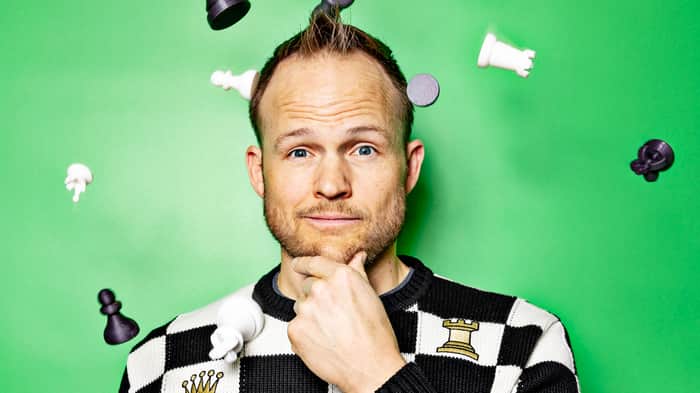
With two small exits under his belt, Erik Allebest bought Chess.com. That was in 2005. He grew it slowly over the next 21 years, always prioritizing quality. Today, it's the largest chess platform in the world, with 300 million registered users and nearly $200M in annual revenue.
Here's Erik on how he did it. 👇
A career in chess
Hi, I'm Erik. I learned chess when I was eight, mostly so my mom could tell people that she taught me and I beat her every game after. I have my doubts.
I didn't truly fall into the game until freshman year of college, when I teased a guy in the dorm bathroom for brushing his teeth for an absurdly long time. He turned out to be the chess club president. He came and found me, destroyed me across the board, and we've been friends ever since. That's Jay, who later cofounded Chess.com with me.
I have never had a job outside of chess, which is either impressive or a serious failure of imagination. In college, I wrote a curriculum, hired instructors, and we taught chess in about a hundred elementary schools. This led me to buy many chess sets, then import them from China and India. This, in turn, led to one of my first businesses, Wholesale Chess, the Amazon of chess back when Amazon was still just selling books.
That business led to Chess.com. We were paying three dollars a click on Google to sell a three-dollar chess set, and the math there does not work no matter how long you stare at it. I thought: What if we built a community instead, where people come for the community and buy some stuff, and we stop lighting money on fire. Friendster and MySpace were happening, and I wanted the MySpace of chess. I also wanted it as a fan, because playing chess online at the time was miserable.
Today, Chess.com has almost 300 million registered members, 40 to 50 million of whom play in a given month, and about 10 million daily active users. We're about 650 full-time people, fully remote, spread across the Americas, Spain, Ecuador, Poland, Argentina... everywhere.
In 2027, we expect to generate over $200M in revenue. If that sounds surprising to you, you aren't alone — it's crazy to me too. For context: we generated about $15M in 2019, and we were growing at 30-50% per year. But then revenue 5x'd in about six months when the pandemic, PogChamps, and The Queen's Gambit all hit in a row. Our freemium consumer subscription business has a paid subscriber rate in the low single digits as a percentage of monthly actives, which is normal for B2C (and still makes me cringe every time I look at it). Still, I'm excited that so many people want to play and learn chess, and it allows us to reinvest in the game, build great products, and grow the community.
Personally, I’m the proud father of four kids, though my wife and I just bittersweetly dropped off our youngest at NYU, where he will study video game design (not surprised). I’m into fitness, yoga, meditation, and… guns. Yes, my YouTube algorithm is also confused.
Finding and funding the idea
I played online back when I got started, mostly on FICS (free internet chess server) and some Yahoo Chess, but none felt right. It was either too fast, required console commands to challenge someone, demanded a client download from a university library computer, or was full of cheaters; everything felt broken or gated. Chess players lacked a "home" — no community, only a few articles, no real profiles or people, just random crushing usernames. Meanwhile, the rest of the internet gained blogs, profiles, JavaScript, and real-time features. Chess had none.
I only figured this out years later: I saw the gap because I'm not great at chess. I'm around 1800. Compared to a normal person, that's great, but compared to a professional chess player, that's nothing. This put me in a spot where I understood the professional world well enough to appreciate it, yet remained close enough to being a beginner to remember that feeling. Strong players found ICC (Internet Chess Club) fine, because it was for them, and beginners were fine with Yahoo. I was the one thinking, "this porridge is wrong." If I'd been rated 1200 or 2400, Chess.com probably wouldn’t have happened.
I wanted a great domain name for our online chess community, so I pursued “Chess.com”. I'm an ask-for-it kind of person, and I tell my kids, “You get in life what you go after.” If the thing you want isn't on the menu, ask for it; you'll probably get it. It took a while to figure out who owned Chess.com, followed by outreach, pestering, a meeting, ghosting that meeting, and then another meeting. We originally planned to go into business with them, but it became clear they owned an asset and not much else, and then they turned out to be going bankrupt anyway. So we bought the domain at the bankruptcy auction for $56,000.
Financially, I wasn't rich, but also not desperate. I'd sold two small companies before business school (Schoolhouse Chess for $250k, and Wholesale Chess for about $1.5M), and I made a decent amount during business school doing domain name arbitrage. My favorite project involved the owners of uniforms.com, who had a great domain but nothing else; my job was to make that domain threatening enough in SEO that a competitor would have to buy it. So I built a content site, outranked companies actually selling uniforms, and earned an upside share. That paid for all of business school and then some.
In business school, I talked to many venture capitalists about the idea of Chess.com. Every venture capitalist called it “unfundable” or “too small,” or told me to “go take the job at Facebook or Google or YouTube.” I feel incredibly lucky they all rejected my idea, because not having venture money shaped everything we did.
Building Chess.com
Jay and I built the first Chess.com ourselves. At first, we thought an existing CMS like Drupal might work, but we quickly realized it required too much customization. So, Jay built a PHP and MySQL site in his attic at hours no human should be awake, and I handled product and CSS… which is a hilarious thing for an English major to be doing, but hey. I built 100+ wireframes in Microsoft Word! Then we hired people from our own forums. Igor built the infrastructure, and he’s still here! Piotr from Poland built the live gaming server, and Matias from Argentina built the JavaScript chessboard. Matt posted in the forums; when we asked if anyone wanted to do customer service, he raised his hand. Great people emerged, saying, “I want to be a part of building Chess.com!” We also hired many people off of Odesk (now Upwork) and found some incredible people there.
We were a remote, global company in 2006. Not because we envisioned “the future of work,” but because we couldn't afford an office in Silicon Valley or to hire local talent. Everyone else was raising a round, renting space, hiring a masseuse, and providing free lunches. We had a minimal burn, with me covering expenses out of pocket, and we became revenue positive early by selling subscriptions to chess learning software. After that, we grew at the speed of cash; no other speed was available.
We didn't even launch with the ability to play chess! We launched a community first, because that was the point. People could play on Yahoo or ICC or FICS, and we wanted to be their online home. Then everyone arrived and asked, "Cool... but where do I play?" and we said, "Okay, we'll build a chess server."
One decision from that era that mattered more than any technical aspect: we made the logo a pawn. Every other chess company had a king or a knight. We conveyed that this is for all of us pawns, not for the kings and queens. Maybe you have queen potential in you, and that's great, but we all start as pawns in the game.
The stack and the rebuild
We started in 2006 on plain PHP and MySQL, later using a framework called Qcodo, which is now a relic. We added every piece of scaling infrastructure in a panic. Jay would say, "MySQL isn't scaling, I don't know," so we called consultants, read about memcached, and put nginx in front of things. Great communities and tooling have since solved almost every problem we encountered in 2010 and 2012 a hundred times over. We didn't solve them back then; we were just kids teaching ourselves on the fly.
The hardest stretch of our company history, from 2016 to 2018, was entirely technical. We had extended the original codebase as far as it could go; without a rewrite, we had no future. So we rebuilt the car while it was going around the track with no pit stops allowed. The brutal part: Anything cool you build during a rewrite you just have to build again later, so why build anything new? We shipped almost no new features for about three years. When we finally relaunched V3 on the new platform in 2018, a chunk of the community hated the new look — the traditional reward for three years of suffering. But we finally had a platform we could build on. The first real feature we shipped after all that, Puzzle Rush, blew up in popularity during the 2018 World Championship and significantly contributed to Hikaru Nakamura starting streaming.
The current stack features a mature architecture with many different services federated across our in-house infrastructure and various cloud providers. We use many different languages and data stores — whatever is best for the job! Data has been one of our biggest challenges. Chess generates an insane amount of data: every game includes moves, analysis, and everything derived from that. Cloud vendors have essentially told us, "this is too much." Honestly, WTF. We also have what I call the "highest-scale, lowest-revenue-per-user business," so vendor pricing models tend to break on us. Many SaaS pricing models assume your users are worth what a B2B user is worth. Ours are worth… less. So, we sometimes deploy things on-prem purely for cost.
We started on web browsers only, then added a BlackBerry client (lol), a Facebook game (also dead, I think), an iPhone app, and eventually an Android app. Today, web accounts for about 35% of our usage, Android another 35%, and iOS 30%.
The problem with AI in chess
Regarding AI, chess engines have always been a kind of "AI" (search plus evaluation). Humans used to perform evaluation by writing rules (e.g., a queen is worth nine, bishops on open diagonals are better). Then AlphaGo happened, Leela borrowed the idea, and now everything feeds positions through a neural net. We acquired an engine called Komodo, and later built our own engine called Torch. Separately, we're using LLMs for Game Review and for our coaching features.
That said, the hallucination problem is savage in chess because chess is extremely concrete. In literature, a model can say something vague, and it flows. In chess, it will confidently suggest moving your knight one square forward, which is not a legal move. Someone will make an enormous amount of money solving the governance layer that sits on top of these models and checks whether the output is true. We're solving a tiny version of that problem in the world of chess with our 'Chess Explanation Engine,' which creates rules, structures, and inputs for the LLMs.
Choosing the right business model
We use a traditional freemium model, showing ads to free users. Most people play chess for free, and some subscribe for lessons, analysis, unlimited puzzles, no ads, advanced stats, etc.
We chose freemium partly on principle. Microtransactions were all the rage back then; everyone suggested we sell a golden chess set for five bucks. I hated that as a consumer, and I still do. Get your economy out of my face and let me do the thing.
If you use a service a little and it's free, great, thank you. If you're a power user, then yeah, of course I'll pay to support it, because you're providing me value and I should provide you value. Freemium felt pro-consumer and fair to me, even though people were more skeptical of it back then than they are now. I'm grateful we chose this business model; it turned out to be a great long-term bet.
We also make money in a few other ways. First, we run ads. Honestly, it makes us sad, but if people don't want to subscribe and serving them costs money, we need revenue to cover those costs. Also, we're as much a media company as a product company, so our partnerships team sells sponsorships for our content and events. We also have a small but important business in ChessKid, which is classic EdTech. Finally, we operate a “courses” marketplace where studious chess players can buy courses from top players and coaches, sharing the revenue with them.
I'll be honest about one of our weaknesses: for the company's first 15+ years, we built a great product, grew the game, and built a community, but we weren't a rigorous, data-informed growth organization. Part of the reason was that we often didn't consider ourselves a “business”. People were sometimes afraid to say the word “revenue!” We followed our hearts and rarely looked at the numbers. Over the last five years, however, we've found we can do both: build from intuition while also dialing the knobs. We are on pace to conduct well over 1,000 experiments this year across our product, marketing, and content teams. Still, we are incredibly focused on our missions (create joy through chess, grow the game, and be the best place to work). We also feel proud that we pay back about $10 million annually in prizes, coach payments, creator deals, and club support. We're also spending millions producing chess shows. Every dollar that comes in turns into more of that.
My advice for people starting out: pick the business model you'd want to be on the other side of, because you're going to live inside it for twenty years and you can't credibly defend something you find gross.
19 years of growth
Content and community
Chess.com first went to market in 2007 but launched in 2005. We opened the website, and about a thousand people showed up that day because search had not yet moved into the browser bar. You typed "chess" up there, the browser added “.com”, and there you were on Chess.com. Thousands of people a day redirected to our domain name.
I remember the exact day I typed "chess" into my browser and got search results instead of our site. I thought, okay, we're number one on that page today, but that will not hold. So, we became serious about SEO.
Throughout Chess.com's 20-year history, we have spent essentially zero dollars on paid acquisition. No Google, Facebook, or Instagram ads — essentially nothing. No disrespect to the ad platforms; they work great for many businesses. But we decided early that instead of paying a platform to show an ad saying "play chess online, click here," we would spend that money making things people wanted: videos, articles, memes, events, instructional content, shows, and investing in creators. It's slower, but it compounds instead of evaporating when you stop paying.
A framework underpins this approach, and I think it's the most transferable thing I offer anyone working in a "small" market. People move along a ladder: chess aware, then chess curious, then "I play chess," then "I'm a chess player" (a significant identity shift), then "I'm a chess fan and/or part of the community." Most companies sit at the end of that ladder, waiting for people to arrive. We decided to actively move people through it. Content moves people through this ladder, and product engages them once they arrive. Content and community get you there and keep you there.
From 2007 to 2017, we focused on people who already identified as chess players. Then, we noticed many chess-curious people showing up, and we started building for them. We introduced bots with personalities instead of "computer level 1 through 10," Puzzle Rush instead of puzzles that made beginners feel stupid, and we changed our tone. Chess carried a poisonous message: "If you're not improving, you're wasting your time, and if you don't want to be world champion, why bother?" This drives people out of the game. So, we deliberately depressurized the experience. We celebrated blunders on social media, made memes about hanging your queen, and built a bot named Mittens — a cute cat that was also the most vicious chess engine we could construct. People loved getting destroyed by it. Chess doesn't have to be old guys in suits; it's for all genders, all ages, all countries, all skill levels, including people who are catastrophically bad at it and having a great time.
Influencer marketing
Creators were another multiplier that worked extremely well for us. Early on, we ran an ambassador program with many titled players. When we debated who to pursue next, everyone listed reasonable options. I said, if we're doing this, why spend five years working up to it? Let's just get Hikaru; he's the best online chess player in the world. We reached out, had a great call, and the moment Hikaru played on our site, almost every top player followed. Later, Danny spent two and a half hours over dinner on the Isle of Man explaining the streaming ecosystem to Hikaru and telling him he could be the Ninja of chess. Puzzle Rush proved a ridiculously fun thing to stream. Then PogChamps introduced mainstream gamers to chess during lockdown. Then Queen's Gambit dropped, which we didn't know was coming. Then the media decided the pandemic was about yoga, sourdough, and chess, a self-fulfilling prophecy.
Events
Our events served a dual purpose: they started as a service to professionals because almost no regular online prize money existed. Titled Tuesday exists because we wanted a weekly prize tournament, and it happened to be Tuesday. The Speed Chess Championship started when I dumped a thousand dollars in cash on a table between Danny and David, telling them to play for it. That felt like an insane amount of money at the time, yet last year, we ran a championship with a million dollars in prizes. Through all of this, we learned that events also grow the game. I remember covering the 2010 world championship and watching signups jump from five thousand a day to thirteen thousand (eight thousand from India).
Luck
Shockingly, the 2023 boom surpassed the Queen's Gambit boom, driven mostly by kids, memes, short-form video, and, strangely, a cheating scandal that ended in a hundred-million-dollar lawsuit (with Elon Musk tweeting about it). Our peak was 400,000 signups in a single day, and frankly, that was all luck. We just happened to be ready for it. Today, we maintain a steady state of around 100,000 new users a day, mostly through word of mouth. When ten million people play chess every day, and one percent tell a friend, that's a growth engine.
For years, I genuinely feared that eventually the last person on Earth interested in chess would sign up, and then it would be over. Turns out there are always more people...
The challenge of cheating
Cheating is my least favorite challenge. I would remove it from this business if I had one wish.
I remember this moment early on when I saw an account destroying everybody, and I thought, oh my gosh, we have a grandmaster on the site!! Who is this mystery player? It was a guy with a chess engine open in another window. We knew this would make or break online chess. Jay, Danny, David, and I had a call where we said dealing with this would require a much larger investment than we were making. We hired a statistician named Roland, who is still with us, and we have invested in it ever since. Today, we automatically close most cheating accounts, though a world-class team of experts handles trickier cases.
Cheating isn't rationally preventable. You cannot stop someone from opening their phone next to their laptop. You can only catch them afterward, which means real people have bad experiences before we intervene. I've been cheated against; I know how it feels, and it sucks. Second, the perception of cheating is a bigger problem than legitimate cheating. The vast majority of our players encounter cheating in a fraction of a percent of their games. But once the idea is in someone's head, every loss becomes suspicious, and people are terrible at telling the difference between "that person cheated" and "I played badly." Both problems are real and require completely different solutions.
The running comedy of scale
Then there's the running comedy of scale, its own kind of challenge. Someone once pasted the entire script of The Bee Movie into the chat on a game thousands of people watched. The client and server had no character limit, so it dutifully broadcast a novel to everyone. Server down. Who didn't limit the client? Who didn't limit the server? We didn't.
My favorite version of this: at our first company meetup, eighteen of us stood at the Golden Gate Bridge overlook, about to take a team photo, when someone said, "The server's down." Every employee we had was standing on that hill.
Increasingly, I don't enjoy certain parts of running a large company. I like to build and create things. Dealing with compliance, terms of service, and HR is much less enjoyable.
An inverted org structure
Our team is our biggest advantage. Our employee retention rivals any other company. People from our first ten hires are still here eighteen years later. Part of that is hiring from the community, so people arrive already caring. Part of it is telling everyone two uncomfortable things in the interview: this is not your highest-paying opportunity, and if you want title progression, this is not the place. What you get here is scope and impact and people who love and respect you. That filters out a lot of folks, and the people that choose it tend to stay forever.
We also run an inverted org chart: I'm at the bottom holding up the managers, who hold up the individual contributors — the people we actually celebrate.
Monkey bars and health
One thing that works for me: I'm a monkey-bar person. I think about the next bar I'm grabbing, not the twelve bars ahead.
I never had a vision of a hundred million members. My vision was to make it great, because great and small is great, and big and garbage is still garbage. The scale came later; it was never the goal. And I think I would have been just as happy had we stayed a lot smaller.
Another key thing for me is health; I sleep as much as I need, exercise every day, eat well, meditate, and do breathwork. I go outside, have friends, and work a ton. But I always make time for my health.
You make your life one day at a time
My advice?
Build something you genuinely care about. I know this is common startup advice, but it's truly important. If you don’t care about it, you won’t attach to it, won’t feel it, and won't stick with it when things get hard (things will get hard). I developed every good part of Chess.com as a frustrated fan, not from market analysis. Look for a market where you sit in the middle of the spectrum; there, you can see the whole picture. Experts are satisfied, and beginners don't know what's missing. The person in between notices.
Be careful whose definition of success you borrow. Venture capitalists may not be the right people to ask what's worth doing with your life. They might be right about absolute returns, but my criteria are: Am I doing something meaningful? Am I enjoying my life? Am I providing for my family? Am I creating a place where people can do good work and be happy? You can check every one of those boxes without ever being venture-scale. Maximizing revenue and valuation is an empty pursuit on its own.
Spend your acquisition budget on things that create value over time rather than on ads. It's slower, and it accrues.
Any product, no matter how simple, gets complicated at scale. Not just technically, but on a human level. A behavior that's invisible at a thousand users is a whole department at ten million.
Ask for what you want. Most people don't ask. Ask.
Want to know what your life will look like in three years? Take any given day — your habits, inputs, and relationships — and multiply it by 1000. Do you take care of yourself? Do you choose work over scrolling? Do you invest in your relationships? You make your life one day at a time.
What's next?
Ultimately, we want to make chess more and more fun. That's the first thing on my list. More fun in how games feel, in the bots, in the interactions, in the whole experience. More social, delightful, rewarding. We’re working on a ton of projects in this space right now!
Second, better learning tools. We've found people don't like actively learning (surprise, not a surprise). They don't want to click "lesson," then "next," then read a page. They want to learn the way they scroll. So we're building toward more passive learning and toward coach characters with real personalities, where you can pick the gentle coach or the modern one or the jerk who taunts you, in the voice and style of creators people already love.
Third, chess as a spectator sport. Think about Formula 1: millions watch, a few dozen drive. Chess is inverted; hundreds of millions play and comparatively very few watch. I want to flip some of that. We’re about to launch a show called “Grandmasters,” somewhat like a Drive to Survive for chess. Having spent my life inside this world, I'll tell you chess is ten times more dramatic than most other sports.
Underneath all of it, we want to grow chess. India right now is extraordinary. The next world champion or the one after may well come from an entirely new generation. Chess is the original open-source game. Nobody owns it, and nobody should. The most useful thing we can do for chess is ensure it outlives all of us in better shape than we found it.
Follow along
You can find me on LinkedIn, where I post about our business adventures and link to several in-depth podcasts I did while building Chess.com.
You can also find me on Chess.com. Come challenge me! My username is "erik".
Finally, if you want to work with us, visit Chess.com/jobs. Please do not message me on LinkedIn about jobs. I receive more inquiries than I can handle and will direct you to the jobs page. Send partnership inquiries to bizdev@Chess.comand press inquiries to press@Chess.com (I do see those).

Leave a Comment