Building, failing, rebuilding, and then hitting $30k MRR in a year
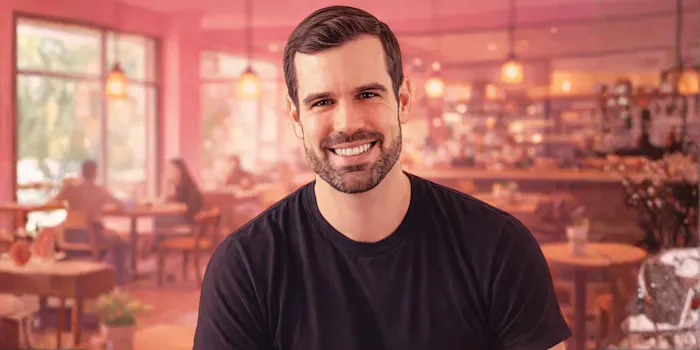
Brennan Dunn built RightMessage, but it nearly crashed and burned. So, he rebuilt it from scratch. Now, roughly a year after the relaunch, it's at $30k MRR.
Here's Brennan on how he did it. 👇
Building and rebuilding from scratch
I'm Brennan Dunn. I'm an American living in a small market town in England with my wife Laura and our kids.
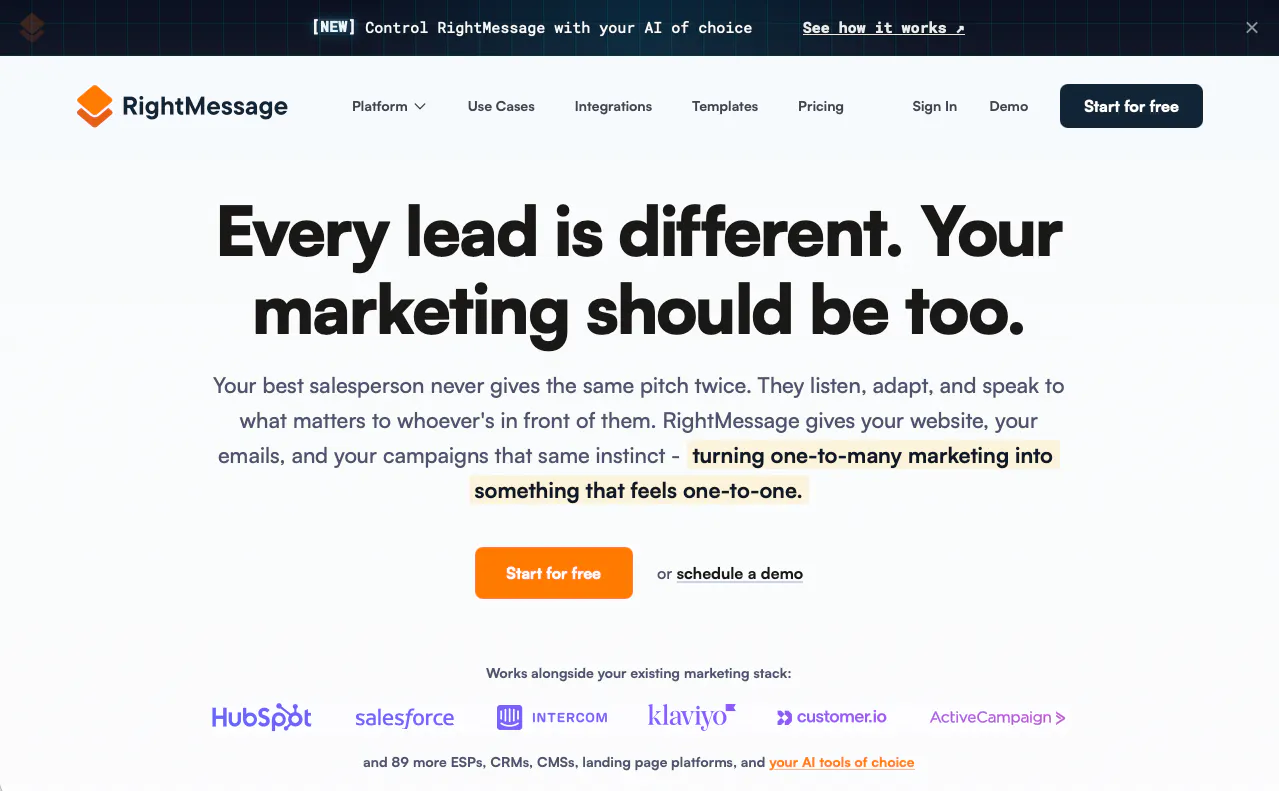
I'm working on RightMessage. It's a website personalization and segmentation platform. We help businesses show the right content to the right visitor based on what we know about them. So instead of everyone seeing the same generic headline, someone who runs a SaaS company sees a headline about SaaS growth, and someone who runs an e-commerce store sees something about increasing AOV.
We integrate with email platforms like Intercom, ActiveCampaign, Mailchimp, HubSpot, and about a dozen others. When a subscriber clicks a link in your email and lands on your site, we already know who they are and what segment they fall into. We use that data to personalize the site and any offers shown in real time.
The other big piece is surveys and quizzes. Most businesses don't know much about their audience, and there's only so much you can pick up about someone based on on-site behavior. We make it easy to ask the right questions, store the answers, sync everything back to your email platform, and then use that data to personalize both your site and your emails.
We had a hard reset a few years back. We were failing and nearing "crash and burn." So, I bought out my business partner and spent the next year rebuilding the product from scratch. A little over a year ago, we relaunched. Now, we're at about $30k MRR and growing.
Finding the problem
It all started when I wanted to maximize conversions at a company that I later sold, called Double Your Freelancing — courses, events, etc. for freelancers and agencies.
I had a large email list (50k+ subscribers) and sent everyone to the same product landing pages. Freelancers, agency owners, consultants, newcomers, and those earning $500k+/year all saw the same copy, testimonials, and recommended package.
I knew from my consulting background that the message matters more than the medium. A freelancer doing $50k/year and an agency owner doing $2M/year have completely different problems, even if they're both trying to e.g. close more proposals. But my website treated everyone the same.
I started hacking together a solution for myself using custom code, Liquid templates in emails, and a bunch of duct tape. It worked. Conversions increased significantly. This put me on the radar of companies like Gumroad, Teachable, and others, who then hired me to implement it for them.
Then Ankur Nagpal (former CEO of Teachable) called me, asking if he could invest so I could turn my solution into a SaaS. The rest is history.
Building and pivoting
The original version of RightMessage launched in 2018. I had a cofounder, money in the bank, and a team. The early product focused on one thing: It let you swap content on your website based on data from your email platform.
We quickly discovered that outside of the enterprise, few companies — especially "creator" types (our initial ICP) — had much segmentation data. We had built a glorified "if this then that" for dynamic websites: e.g. if industry=finance, then show the finance testimonial.
When we realized how few companies had this data, we decided to enter the survey/quiz funnel space. And now we've built a complete end-to-end solution for generating leads with personalized CTAs -> getting in-depth data with surveys and quizzes -> personalizing email campaigns -> personalizing the website when identified people return on-site.
A monorepo stack
Here's our stack:
Backend: Laravel (PHP) with MySQL, Redis for caching and job queues (running Horizon), and Elasticsearch for event indexing and analytics.
Frontend: Vue 3 with TypeScript, Tailwind CSS, Pinia for state management, TanStack Query for server state.
Marketing site: Statamic for content management and a bit of Vue.js.
Infrastructure: Standard stuff. S3/R2 for file storage, Pusher for real-time updates, Stripe for billing.
AI: We use Claude (Anthropic) for our AI features, and this proxies through OpenRouter so we can change models quickly.
Monitoring: Sentry for error tracking, Laravel Pulse for performance monitoring, PostHog for product analytics.
The project is a monorepo with separate apps for the API, the admin web app, and the marketing site, plus shared packages for the UI component library and the visual flow builder.
The challenge of pivoting
The full rewrite that I mentioned was the biggest challenge we've faced. I spent a year rebuilding RightMessage from scratch while still supporting existing customers on the old platform — despite not having many of them. That meant a year of zero new features for paying customers while burning through savings.
It was the right call. The old codebase held everything back. But it was financially and emotionally brutal.
Our ICP shift has been hard as well. We launched in 2018 targeting course creators and info-product businesses. AI is squeezing that market. ChatGPT and Perplexity are eating their search traffic. So we've had to reposition toward SaaS, DTC ecommerce, and agencies. That's an ongoing transition.
If I started over, I'd focus on the agency/partner channel from day one. Every agency partner we activate brings multiple clients without my direct involvement. I spent too long trying to do everything myself (sales, onboarding, support, strategy calls). Having partners who handle implementation and charge their own clients for setup is the highest-leverage growth channel I've found. I wish I'd built that earlier.
I'd also be more disciplined about not building features before validating demand. I've built things nobody asked for, and I've also delayed things people were begging for because I was chasing something more technically interesting.
Being a solo founder with a young family
Being a solo founder with a young family is challenging too. I have a 4-year-old and an 8-month-old at home. I also like playing tennis and going to the gym.
This means I must be deliberate about how I spend my time. There's no room for low-leverage work. So, I've had to become good at compressing a lot into just a few hours a day.
Being a solo founder has its advantages too. I can ship fast, make decisions without consensus, and pivot because I'm the sole (benevolent) dictator.
Growth channels
As far as growth, a few channels have worked well:
Audience: An existing audience provided a massive head start. When we launched in 2018, my newsletter subscribers already trusted me. This meant we had customers before we even had anything to sell. We presold.
Content and education: I've been writing about email marketing, segmentation, and personalization for years. That content builds trust slowly but compounds. YouTube videos showing specific use cases (how to personalize emails, how to build quiz funnels) drive trials.
Demos: Our best conversion path is still a personal demo with me. When someone sees their own website personalized live on a call, the "aha" moment is immediate. The bottleneck has always been getting enough qualified people to book one.
Affiliates: We have 1,000+ affiliates earning 20% lifetime recurring commission. They went quiet for a while (my fault, I didn't equip them properly), but we're reactivating that channel now with better assets and case studies.
Agency partners: This is the growth channel I'm most excited about. Agencies offer RightMessage setup as a service to their clients. And as a solo business, when an agency manages a client account we get all the benefits (MRR) but the customer talks to the agency for support/onboarding/etc. Definitely worth the commission we pay agencies.
Newsletter sponsorships: We're starting to sponsor newsletters in the email marketing and growth space. The advantage over our own list is that we can target exactly the right ICP instead of broadcasting to a list weighted toward a declining segment.
Build for a market you understand
Build for a market you already understand.
I built RightMessage because I was the customer first. I knew the problem intimately because I'd been hacking together solutions for myself. If you're building something where you have to guess what customers want, you're at a disadvantage.
Also, if I hadn't had an email list when we launched, the early days would have been dramatically harder. Even if you're not planning to launch for a year, start writing, start teaching, start building trust with the people who'll eventually be your customers.
What's next?
Short term: Hit $40k MRR in the next few months.
"Unfortunately," we're more than profitable now since it's just me and expenses are about $1k/mo... But I'd like to start scaling up the team again, which means more money.
Medium term: Continue building the agency partner program. Formalize it more and conduct outbound recruitment.
Product-wise: We're leaning heavily into AI; we just rolled out a new MCP that customers love for "headless" RightMessage work. We already have an AI assistant that helps with strategy, AI-powered email personalization, and AI content generation. The vision is for RightMessage to look at your site, understand your audience, and suggest (or even implement) personalizations automatically.
Longer term: I want RightMessage to be the default answer to "How do I stop treating every lead the same?" Whether you're a SaaS, an ecommerce store, a service company, or whatever else, if you want more conversions with the same lead count, you should personalize. We want to make that easy enough that there's no excuse not to.
And personally: Be present for my family. These years don't come back. The business exists to support life, not the other way around.
You can follow along on X and LinkedIn. And check out rightmessage.com.

Leave a Comment
The rebuild after failure is the most underrepresented part of founder stories most posts start from the version that worked, which skips the context that explains why it worked. The marketing shift between the failed and successful version is usually the most instructive part. Semrush for the market and keyword research and Androva.ai for the dedicated channel execution has been the setup that kept distribution running through our own rebuild without losing the ground we'd gained. Good breakdown of what had to change between versions.
rebuilding from scratch while still running the business is not easy - respect for pushing through that
also that point about “build for a market you understand” hits hard 👍
This is actually very similar to what we see in gaming audiences. Traditional ads don’t convert as well as creator-driven content.
this journey from crash and burn to 30k mrr proves revenue architecture beats feature velocity every time. the pivot from a simple tool to a full data engine wasnt just a product fix it was a unit economics fix. by shifting focus to SaaS and agencies you lowered CAC while boosting LTV which is the holy grail. most founders try to patch leaks with more features but you saw the real issue was distribution and data depth not the code itself. the fact that agencies now handle onboarding while you just collect the MRR shows a truly mature revenue model. brilliant rebuild.
The line that got me was "I've built things nobody asked for, and delayed things people were begging for because I was chasing something more technically interesting." That's a strangely rare thing to admit out loud. Most rebuild stories frame the pivot as pure strategy, not "I got distracted by what was fun to build."
I've been trying to build a habit of asking whether a feature idea is solving a problem someone actually has, versus one that just sounds more interesting to work on. Good to see even a founder at $30k MRR still has to catch himself doing this.
One thing I'm curious about: with the ICP shift toward SaaS/DTC/agencies because AI is eating the course-creator search traffic, how are you telling the difference between "this repositioning is working" and "I'm about to guess wrong again," this early into the shift?
One thing that really stood out to me was this: "We quickly discovered that outside of the enterprise, few companies had much segmentation data."
It feels like that insight completely changed the direction of the business. A lot of founders (myself included) tend to assume customers already have the data, workflows, or habits needed to use our product. Then we discover we're solving the wrong layer of the problem.
I'm curious: Looking back, what was the earliest signal that your original ICP wasn't a great fit? And at what point did you become confident enough to invest a full year into the rewrite and repositioning? Thanks for sharing such an honest breakdown.
Thanks for sharing your story. I hear you say that the secret of your success is that you engage with your followers. Building is so much more fun!
Resilient
Simply inspiring
You are the right example of try, try, try till you succeed.
From failure to success, every setback became a stepping stone toward growth and innovation. Rebuilding with smarter strategies, market focus, and persistence helped transform the journey into an impressive $30K MRR success story within a year. This is proof that resilience, learning, and consistent execution can turn any startup dream into reality.
Interesting point about AI squeezing the creator/info-product market.
Are you seeing that shift mostly in traffic (SEO decline), conversion rates, or overall willingness to buy? Curious how that actually shows up in the data.
Really honest post. The part about building features nobody asked for, while delaying things people were actually asking for, felt especially real. That tension probably describes half of indie SaaS.
rebuilds always ship faster - you finally know which 80% was distraction.
The part that stood out to me most was not just the rebuild, but the clarity that came from it. A lot of founders talk about product-market fit as if it is only about features, but this story shows how often the real breakthrough comes from understanding the missing layer in the customer’s workflow. In this case, it was realising that most companies did not just need personalisation, they first needed a way to generate the audience data that makes personalisation useful. That feels like the deeper insight.
I also thought the agency channel lesson was strong. It is a good reminder that growth is not always about finding more users directly, but sometimes about finding better distribution. Rebuilding while supporting the old product, with no new features for a year, sounds emotionally brutal, but it is probably exactly the kind of decision that creates something durable rather than permanently compromised. Great read.
The reset + rebuild phase stood out to me. A year of no new features while keeping things alive is brutal, but it’s probably what separates durable products from short-lived ones.
Also agree on agencies being high leverage — feels like one of the few channels where distribution compounds without linear effort.
Great to see it working out post-relaunch.
The rebuild year is the part that really lands for me — zero new features, two codebases, burning savings, and still choosing to start over instead of patching forever. That’s the unglamorous version of “founder conviction” most people skip in their timelines.
What also stood out is how the real unlock wasn’t just personalization, but realizing most companies don’t even have the audience data to make personalization useful. That “missing layer” insight feels like the real moat.
Curious: in hindsight, what was the earliest signal that you’d crossed from “this is a risky rebuild” to “this version actually has legs”?
This is a fantastic read. The closing thought is the ultimate solo founder mindset. Also, operating at $30k MRR with only $1k/mo in expenses is incredibly inspiring.
I'm applying a very similar hyper-lean approach to my own bootstrapped SaaS, Caiu, an automated Pix billing tool for Brazilian microbusinesses. Just as you noticed people using 'duct tape' solutions before RightMessage, my users were losing revenue because they were tracking late payments in physical notebooks out of fear of sounding rude. We automate that awkwardness via WhatsApp. To keep things as profitable as possible from day one, our entire Next.js/Vercel infrastructure runs on just about $10 USD a month.
Your point about the agency partner program being your highest-leverage growth channel is fascinating. As a solo founder juggling a young family and product development, how do you manage the onboarding for these agencies? Do you have an automated self-serve portal for them to manage their clients, or are you still relying on personal demos to activate each new partner?
Dude, this is so refreshing to read. I’m so tired of those “I built this in a weekend and hit $100k MRR overnight” posts that skip all the ugly parts. The build-fail-rebuild cycle? I’ve been living that for the past 8 months. It’s so easy to feel like you’re the only one stuck in that loop, y’know? This post actually made me feel less alone in it. Curious — when you were in the thick of the “rebuilding” grind, did you have any little non-work ritual that kept you grounded? I’m struggling to not burn out right now 😅
The "building in public" part really hits home. I'm at day 1
of my own journey — just launched LaynPro, an AI assistant
for US realtors. No revenue yet, but reading stories like yours
keeps me going. The rebuild part is scary but clearly worth it.
How did you decide when to rebuild vs. keep iterating on what
you had?
My gratitude goes out to the entire team of Revox Credit repair. Someone left information REVOXCREDITREPAIR at GMAIL dotCOM under a comment section on helping to repair credit. I was interested in knowing more and if the hacking team still does this. I had poor credit, an old bankruptcy and problems with getting approved for an apartment due to 2 broken leases from the past which I explained to Revox Credit Repair when I made contact with them. They cleaned my credit records and they boosted my credit score within just few days of contacting them.
At what stage did personalization actually move the needle on conversions? Is it worth building early or a later optimization?
'Build for a market you understand' - strong point. Founder-market fit is underrated.
Awesome, Keep Creating Post Like These
I actually built something similar but focused on detecting hidden financial leaks (subscriptions, fees, even crypto wallets).
Thinking of selling the full system — curious if this is something founders here would be interested in.
The rebuild stories are my favorite thing on this forum because they reveal what the survivor bias in the launch posts hides. Nobody who hits $30k MRR year one got there on attempt one. The data confirms it even at a much bigger scale. When I look across founder engineering activity over multi-year timelines, the pattern is consistent: successful founders usually have 2-4 dormant or deleted repos before the one that takes off. It's not that the earlier attempts were bad code. It's that each failed attempt compressed their next iteration cycle. Build time on attempt three is typically 40-60% shorter than attempt one because all the infrastructure decisions, auth, billing, basic ops, those become muscle memory. The other thing I find interesting: founders who rebuild tend to pick narrower problems each time. The first attempt is usually too broad, the second too specific, and the third lands in the right-sized niche. It's almost a goldilocks trajectory. What was different about the rebuild that finally stuck? Was it a narrower ICP, a different distribution channel, or mostly execution speed?
I love the fact that you didn’t give up 🤘👍 keep pushing
The "rebuild from scratch" decision is one of the scariest calls a founder can make — especially when the old version has paying customers. Most people patch forever because the switching cost feels too high. The fact that you came out the other side at $36K MRR and growing validates the decision, but I'm curious how you handled the migration. Did you run both versions in parallel or did you rip the bandaid off?
The monopage stack with Laravel, Vue, and Pusher is refreshingly straightforward. No microservices, no over-engineered infrastructure — just a monolith that works. That's underrated, especially at your stage. The companies that scale past $100K MRR on a monolith before adding complexity are usually the ones that survive.
The personalization angle is interesting. "Show the right content based on what we already know about them" is simple to explain but hard to execute well. What's the biggest lift you've seen a customer get from personalization — like what's the before/after on conversion rates?
Also respect the honesty about the codebase getting messy. Every founder who says their code is clean at year 3 is either lying or hasn't shipped enough features.
The agency/partner channel insight is probably the most underrated part of this whole journey. One good partner really does beat 100 individual users in early-stage SaaS.
Also interesting how much of the scaling came after the painful rebuild most people underestimate how much a clean architecture + clear ICP unlocks growth.
I’ve been tracking similar “pivot → clarity → growth” patterns in tools like freshloopdotai especially around how founders shift from feature-building to distribution-focused thinking. That mindset shift seems to be the real inflection point, not the tech stack.
This was a great read. The part about rebuilding from scratch while still supporting customers really stood out. That’s the kind of decision that looks obvious in hindsight but is incredibly hard in the moment.
Also love the insight about agencies being the highest-leverage growth channel. Feels like one of those things many founders realise late.
Curious, if you had to choose today, would you double down more on AI-led personalisation or the agency partner ecosystem for faster growth?
Yes, the rebuild story hits hard. Most people would have walked away after nearly crashing — the fact that you bought out your partner and started over says everything about founder mentality. I'm currently in my own 'zero users, product is live' stage and reading about the gap between building and growing is both humbling and motivating. The personalization angle is brilliant — showing different messages to different visitors is something most small SaaS founders completely ignore. Thank you for being this transparent about the hard reset.
Looking for a US-based Full-Stack Developer to Collaborate (50/50 Partnership)
Hey everyone 👋
I’m a full-stack developer with experience in Node.js, React, and building scalable web applications. I’m currently looking to collaborate with a US-based developer on a SaaS or startup idea.
What I’m looking for:
* A developer based in the United States
* Strong in either frontend, backend, or full-stack
* Interested in building and launching real products (not just side experiments)
Open to a *50/50 partnership** (shared ownership and benefits)
What I bring:
* Solid full-stack development experience
* Experience working with modern web technologies
* Focus on building scalable and production-ready systems
* Willingness to commit long-term and actually ship
Goal:
To build and launch a product together — validate ideas, iterate fast, and grow it into something meaningful (SaaS, AI tool, or web platform).
If you’re interested, feel free to comment or DM me. Happy to jump on a quick call and explore ideas together.
Or you can just drop an email here career4lucas@gmail . com
Looking forward to connecting!
Really valuable insights—especially the emphasis on deep customer understanding and the power of personalization.
The journey of rebuilding from scratch and repositioning the ICP is a great reminder that product-market fit is an ongoing process, not a one-time event.
Also, the focus on high-leverage channels like agency partnerships stands out. Thanks for sharing such a candid and practical perspective.
If you started today, would you still prioritize agency partnerships as your main growth channel?
The biggest take in terms of marketing for me was affiliate marketing. Its amazing to let other creators promote your product. Its definitely in my list of to-do and I will implement it for Slotably down the road. Thanks
Love this, especially the rebuild phase.
Curious, when you started scaling again, did you notice any revenue slipping from failed payments?
I’ve been seeing this quietly eat into MRR for a lot of SaaS founders without them realizing.
Really appreciate this read Brennan. I am currently stuck in the early 'failing' stage with my own tool. This kind of transparency keeps me going luckily. However, I do have one question:
When you were rebuilding, did you have a clear 'this is working' moment? Or was it more of a gradual realisation.
Great read nonetheless.
Really enjoyed this story, especially the part about rebuilding after the initial version didn’t work.
One thing that stood out to me is how much distribution clarity mattered compared to product iteration alone.
A lot of founders (including myself) tend to assume the breakthrough will come from “fixing the product,” but in reality it often comes from finally finding a repeatable channel, like yyour agency/partner motion.
Curious:
when you realized the ICP shift was necessary, what was the first signal that made it undeniable? (churn, sales calls, activation rates, or something else?)
Also interesting how the “rebuild from scratch” phase seems painful short-term but ends up being the only way to reset product direction cleanly.
Feels like the real pattern here is:
most breakthroughs come after you stop optimizing the wrong version of the product.
Really resonated with the rebuild part. I spent months building Glow Journal — an AI skincare app with on-device skin analysis, dermatologist booking, and a full
admin panel. Hit several dead ends along the way (wrong architecture, wrong assumptions about the backend). The version that exists now is basically a rebuild of the first attempt.
The part about doubling down after buying out the cofounder is interesting — solo building has its own version of that moment where you decide to stop hedging and
just commit fully to shipping something production-quality.
Congrats on the $30k MRR — what was the biggest thing that changed between the flopped version and the one that worked?
I think most people underestimate how hard support scaling becomes.
We faced the same issue where responses started to slow down as users increased.
Congrats on rebuilding the company. Your story resonated with me because I am currently in the process of rebuilding mine. I enjoyed reading about the challenges that you overcame while building a company, raising kids, and working out. One of the lessons that I learned from you is the importance of staying small at the beginning because it provides the opportunity to ship out products faster, which is where I am currently. Although I haven't used the platform that you created yet, I understand the importance of delivering the right message to the Right audience without having it feel broad. The key is to make it personal. A question that I have for you is, how did you build your email list? Another question that I have for you is, when you are building a company like yours, how can you make sure that the product that you are preparing for the customer isn't going to be something that will be easily replicated by AI?
Spending an entire year rebuilding from scratch with zero new features for paying customers while burning through savings is the part most people would never have the guts to do. And it's exactly what got him to $30K MRR solo.
The agency channel insight is underrated too. Having partners who handle implementation and client support is basically building a sales team without hiring one. Most indie founders never think about this because they're too focused on direct-to-customer.
The whole story is a good reminder that the path to $30K/mo rarely looks like a straight line. It usually looks like a year of pain that nobody sees.
Feels like most of these issues come from figuring things out while building instead of before.
Did you define your flow clearly upfront or did it evolve during development?
The line 'The business exists to support life, not the other way around' is a great reminder for all of us in the SaaS grind. It’s rare to see someone talk so openly about the emotional toll of a total rewrite while supporting existing users. Hope you hit that $40k MRR goal soon.
VERY VERY INTERESTING SO MUCH LOVE IT
What impacted me most is how much iteration happened before things clicked. ~
You did not see the first version working; you kept rebuilding until something fit.
It can be difficult navigating the world of online recommendations, especially with unreliable services out there. However, I found this recovery service to be incredibly reliable. Their professionalism and effectiveness stand out, and I can confidently recommend them. They are the real deal for recovering losses from scammers. omegacryptorecovery AT Gm a il com
It can be difficult navigating the world of online recommendations, especially with unreliable services out there. However, I found this recovery service to be incredibly reliable. Their professionalism and effectiveness stand out, and I can confidently recommend them. They are the real deal for recovering losses from scammers. omegacryptorecovery AT Gm a il com
The agency partner insight landed hard. I'm building a Google Ads tool solo and have been doing one-to-one outreach to individual PPC freelancers. Reading this, I realize the math is completely different with agencies: one relationship, multiple accounts, and they handle the client interaction. That reframes my entire outreach strategy. The other line I'm taking with me: "the business exists to support life, not the other way around." Easy to forget when you're deep in launch mode...
Shift from “build features” to “understand the user deeply” is the real win here💯
This is very inspiring....
The rewrite year hit different — zero new features for paying
customers while burning savings. That's the kind of honest
cost that most rebuild stories skip over.
I'm a non-developer building a solo app right now, and the
"don't build features before validating demand" line is
something I needed to read today.
One question: during the rebuild year, how did you keep
existing customers from churning while the product was
essentially frozen?
Your site can be improved by putting some relevant contents.
If you're working on something new, this could help 👀
$19 entry → idea competition
🏆 Tokyo trip
💰 $500 guaranteed
The agency partner channel insight is the one I'm taking with me. "They handle the client, you get the MRR" is such a clean model that I think a lot of builders overlook because it feels like giving up control early on.
The part about building for a market you already understand hit differently too. I'm building something in real estate right now specifically because I watched my co-founder (a real estate agent) work. Seeing the problem firsthand before writing a line of code changes everything about what you actually build.
How long did it take before the agency channel started producing meaningful MRR vs. the direct channel?
The rebuild decision is brutal but sometimes necessary. At $30k MRR, you're probably looking at $3-5k/month just in billing/payment processing costs depending on your stack (we can help with this). The technical debt from a failing first version can eat up so much development time that starting fresh actually accelerates growth. Easier said than done though when you take into account the mental toll.
The rebuild story is real. One thing that comes up after auditing SaaS products that went through rewrites: the new codebase gets reviewed carefully, but the infrastructure surface often does not. Headers, DNS, TLS, exposed endpoints stay from the old setup or get misconfigured in the new one. Especially relevant now that you are leaning into AI features, which tend to add new attack surface fast. If you want a quick black-box check on any RightMessage domain, scan.mosai.com.br runs 78 checks in 60 seconds. No code access needed.
The buyout-and-rebuild story is the part most founders skip over when they talk about their journey. The decision to buy out a partner when the product is failing takes a very specific kind of conviction — you're doubling down precisely when the evidence says you shouldn't. What made you confident enough in the core idea to do that rather than shut it down entirely? Also curious how you handled the psychological reset after the hard year — rebuilding from scratch technically is one thing, but rebuilding your own belief in the product after near-failure seems like the harder problem.
The segmentation insight is powerful. Different users can have completely different problems. Goog job!
very impressive - this is the dream
The part about rebuilding while still supporting existing customers sounds brutal.Feels like one of those decisions that looks obviously right in hindsight, but is incredibly hard to commit to when you’re in it.
Curious — was there a clear moment where you knew the rewrite was unavoidable, or was it more of a gradual realization?
The failing→rebuilding loop is underrated.
Most people quit there.
That’s usually where the real lessons are.
woww, thats nice
What stood out most is that the breakthrough wasn’t just personalization, but realizing most companies lacked the audience data that they need. I also thought that rebuilding in the moment was a big factor too.
$1k/mo expenses on $30k MRR is wild unit economics but the ICP migration from creators to SaaS/DTC feels like the real story here. How fast is the creator segment churning vs. new enterprise signups ramping? Because if the old base erodes faster than the new one grows, that $30k number might be hiding a problem.
Feels like the biggest insight here isn’t just personalization, but that most companies don’t even have the data to make it work. That kind of “missing layer” is probably where a lot of SaaS opportunities are.
The reset part stands out — most people would’ve tried to patch instead of rebuilding while revenue was at risk.
Also interesting how the real unlock wasn’t just personalization tech, but realizing most companies lacked the data in the first place. Feels like that insight shaped the whole product direction more than anything else.
Curious how far the agency channel can take it — sounds like the real growth lever here.
Congrats on the Grit. Currently going through something similar.
Rebuilding while supporting users sounds brutal, but worth it. The agency partner angle is a smart growth move.
I'm wondering from an email marketing perspective; operational wise, deliverability etc. how does RighMessage differentiates quality of recipients?
Also love the mindset at the end—building a business to support life, not consume it. That’s something more founders need to hear.
Really enjoyed this — especially the “build → fail → rebuild” loop. That part felt way more real than the usual overnight success stories.
What stood out to me is how the turning point wasn’t just a better product, but better distribution + learning from earlier attempts. That pattern shows up again and again—people fail multiple times, then suddenly something clicks because they’ve built taste, audience, and context.
Curious about one thing:
If you had to start again from zero today, would you still go through multiple product attempts… or focus on one idea earlier and iterate faster?
Would love to hear how others here think about this too.
wow....that's good
That part about starting from scratch and still pushing forward really hits home.
I think a lot of founders go through this cycle like build something, realize it needs to pivot, and then start over again. But the real challenge isn’t just the ups and downs, it’s not knowing which decisions actually moved the needle.
It’s easy to look back and say, “Yeah, that thing worked,” but without proper tracking, most of it is just hindsight bias. Like, we’re guessing what made a difference instead of knowing for sure.
It feels like there’s a big gap here how founders can capture what they’ve tried, what’s worked, and learn from it over time. If they had a clear way to see what really made an impact, it’d make their journey a lot less guesswork and a lot more about making smarter decisions.
The 'year of rebuilding from scratch' part really resonates. It’s emotionally brutal to ship zero new features while burning through savings, but it clearly paid off. At what point did you realize that a refactor wouldn't cut it and a total rewrite was the only way forward?
This is one of the most honest founder posts I have read here.
The rebuild year sounds brutal. Zero new features. Burning savings. Supporting old customers. I am just starting a solo blog, and that kind of discipline feels far away right now.
The line that stuck with me: "the business exists to support life, not the other way around." Saving that.
One question — you presold to your email list before building anything. How did you structure that? Lifetime deals? Early discount? Or just asked people to trust you?
Thanks for sharing this, Brennan.
The Popeyes menu 2026 offers a great variety of flavorful fried chicken, crispy tenders, and delicious sides like biscuits and fries. The spices and seasoning make it stand out compared to other fast food chains. It’s a good choice if you enjoy bold, Southern-style flavors.
This was a great read, especially the “rebuild while still running the business” phase.
I feel like that part is massively under-discussed. Everyone talks about whether to rewrite or not, but very few talk about what it actually feels like to maintain two versions at once with no visible progress.
The other thing that stood out to me is how the growth seems to come after clarity, not just effort. It is easy to keep building, but much harder to step back, rethink, and rebuild with better understanding. I have noticed that overbuilding (trying to fix everything at once) is what usually kills momentum during rewrites.
Curious about one thing: During the rebuilding phase, how did you decide what NOT to rebuild?
Very interesting - good luck with hitting your goal! Claude Code with monorepo is also just 👌 Building MemberLane doing this currently with seperate frontend and backend and it works great as long as you have a good AGENTS/CLAUDE md file.
Really enjoyed this, especially the honesty around the rewrite. A year of rebuilding from scratch while still supporting the old product sounds financially brutal, but it is interesting that the reset seems to have created a much stronger business on the other side.
"Build for a market you already understand" is the part that sticks with me most. I'm building a training load tracker for triathletes and the only reason the product makes sense is because I've spent years frustrated by the same problem — juggling Strava, Garmin, and spreadsheets to figure out if I'm overtraining.
The point about the agency/partner channel is interesting too. In fitness tech there's a similar dynamic with coaches — if a coach recommends your tool to their athletes, that's way more credible and scalable than any ad. Haven't acted on that yet but this post makes me think I should prioritize it.
Also really appreciate the honesty about the rewrite year. The "opportunity cost feeling" is real — every day spent rebuilding feels like a day not spent on growth, even when you know the old foundation won't hold.
HACKER EXPERT ALPHA KEY DATA RECOVERY
My name is Destiny Rodrigues, and I'm from Canada. After learning about cryptocurrency investments and how my coworkers have been profiting from them lately, it really caught my attention to invest as well. However, I had no idea that this was my biggest mistake—investing with the worry brokers and falling into the hands of scammers. Thank you again to Alpha Key Recovery for helping recover every coin and clear my credit card debit. Please get in touch with them right away if you become a victim of this kind.
WhatsAPP: +15714122170
Signal : +15403249396
Exactly! knowing about your audience and identify a true problem is real gem.
If you have a partner with same intentions and complimentary skills that's a blessing :)
Who else is facing difficulty in finding a like minded partner?
That’s an incredibly strong mix of experience and perspective. A decade of writing for Indie Hackers, hundreds of founder interviews, and building products at the same time gives you a rare angle that most people simply don’t have. Also love the contrast between SaaS Watch and Ancient Beat — that’s a genuinely unique combination.
The year of rebuilding while supporting existing customers really stood out to me. Most advice on rewrites focuses on the technical decision but glosses over what it actually costs emotionally and financially to run two codebases at once with no new features shipping. What kept you going during that year? I'm in the middle of a fairly significant refactor on my own project and the opportunity cost feeling is real — every day rebuilding something that already works feels like a day not spent on growth. Would love to hear what your mental framing was for that period.
Hi Brennan,
We’re a team of experienced full-stack developers specializing in SaaS products. We’re impressed with RightMessage and would love to help scale its AI-powered personalization and multi-app platform.
What we offer:
Build and enhance features across your API, admin app, and marketing site.
Improve AI workflows, integrations, and automation for higher efficiency.
Rapid delivery and reliable, maintainable code.
We can start with a small high-impact feature set and discuss long-term collaboration, either contract or equity-based, to accelerate RightMessage’s growth.
Looking forward to exploring this with you.
Best regards,
Robert
We generally do not consider "marketing" as a big thing until we need to market our own product. It really is a underlying beast in itself.
Knowing what to do when you have this "How do I stop treating every lead the same?" is a great thing. Congratulations on your idea! Hope you get more success!
Oh, it is! I always thought building was the hard part. "The right people will always find you" is what I thought. Boy, was I wrong! Marketing has been a significant challenge for me, especially since I did not have prior marketing knowledge.
The good part, though, is that it's teaching me a lot. The lows have been a lot more than the highs, but a process all the same. When I hit a significant amount in MRR, my first hire will be a marketer or GTM specialist.
This is great to hear as I can see I am currently also building a product (You can check it out at crudly(dot)org - where you can get instant APIs without any hassle of maintaining the DB) For this product I am currently looking out on how to market this and also take a look at potential users for this app.
Its really painful to find that if you are not originally into Sales or something. In this era of "vibe coding", one skill that makes you or breaks you is marketing.
This really stands out — especially the “build for a market you understand” part.
I’ve noticed the same thing while building. The ideas that come from personal frustration are much easier to validate compared to something you “think” people might need.
Also interesting how personalization played a big role here. Feels like a lot of everyday workflows still have untapped potential if we look closely enough.
Really inspiring journey! The part about failing, rebuilding, and finally reaching traction is something many of us are going through right now.
I especially liked how you stayed consistent instead of jumping from one idea to another — that’s where most people lose.
I’m currently working on a small project related to GTA games and mobile content, trying to build something useful for gamers. Still in the learning phase, testing different ideas and improving step by step.
Stories like this really motivate me to keep going.
Would love to know — what was the biggest turning point that helped you scale after multiple failures?
Really relatable post. We’re actually navigating similar hurdles right now with our project (a Stripe Billing replacement). Since we’re both targeting the SaaS and E-commerce space, I’m curious—which channel gave you the best response from your ICP? We hit #2 on Product Hunt recently, but turning that buzz into actual paying customers has been a challenge for us.
You mentioned rebuilding from scratch was the best decision long-term — how do you personally decide when to refactor vs. rebuild in a SaaS?
Very cool, currently working through some of the same issues you guys faced early on at ChaChing (Stripe Billing Replacement) was there any particular channel or platform that you felt your ICP responded to best, we are also targeting SaaS/Commerce etc. We launched #2 on Product Hunt but have not been able to convert these into paying customers.
Hey, I saw your post about ecommerce. I’m building a Shopify store too. I’d like to connect and maybe collaborate.”
The segmentation insight is powerful. Different users can have completely different problems even when they land on the same page.
Great story, Brennan. "Build for a market you already understand" really resonates. I spent 25 years in video production before building NexClip AI — I was the customer first too.
The rewrite decision also hits close to home. I started building a Next.js SaaS last July, then pivoted to a native macOS app in January. Financially brutal, but the right call — zero cloud infrastructure costs now.
Curious about your agency partner channel. How did you find your first few agency partners?
Really inspiring journey! The part about failing, rebuilding, and finally reaching traction is something many of us are going through right now.
I especially liked how you stayed consistent instead of jumping from one idea to another — that’s where most people lose.
I’m currently working on a small project related to GTA games and mobile content, trying to build something useful for gamers. Still in the learning phase, testing different ideas and improving step by step.
Stories like this really motivate me to keep going.
Would love to know — what was the biggest turning point that helped you scale after multiple failures?
Really inspiring journey! The part about failing, rebuilding, and finally reaching traction is something many of us are going through right now.
I especially liked how you stayed consistent instead of jumping from one idea to another — that’s where most people lose.
I’m currently working on a small project related to GTA games and mobile content, trying to build something useful for gamers. Still in the learning phase, testing different ideas and improving step by step.
Stories like this really motivate me to keep going.
Would love to know — what was the biggest turning point that helped you scale after multiple failures?
fvhyf
This comment was deleted 4 months ago
This comment was deleted 5 months ago