Building a passion project to 1k users after a $120k exit
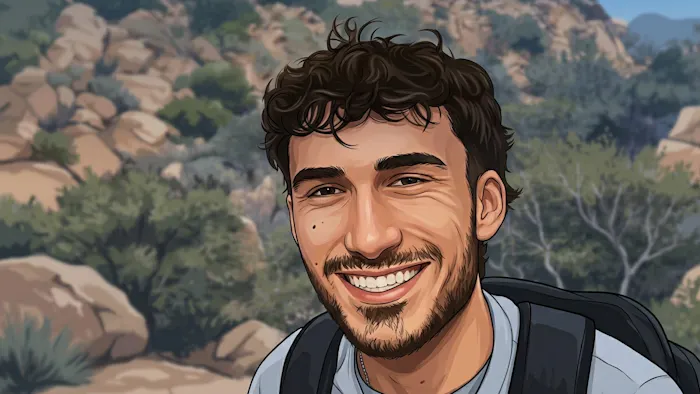
Maddox Schmidlkofer sold his first business for $15k, then grew another business to $15k MRR and sold that too. Now, he's building something for the long-term — a health app called Tallow. It's still early, but he has 1,000 users, and it brought in $650 last week alone.
Here's Maddox on how he's doing it.
Two flips and a long-term business
I'm Maddox Schmidlkofer, a CS student at Purdue. I've been coding for about five years and grew up building on the internet.
When I was 16, I started Duckmath — an unblocked games platform — because I wanted to play games at school. It grew to approximately 1.5 million monthly users and about $15k/month. Last November, I sold it to my biggest competitor, Freezenova, for $120k. I was 20 years old.
Before that, I also built Maddoxcloud — a browser-based cloud gaming platform — and sold it for $15k. I've shipped many small projects along the way, but I don't like building projects that I don't care about.
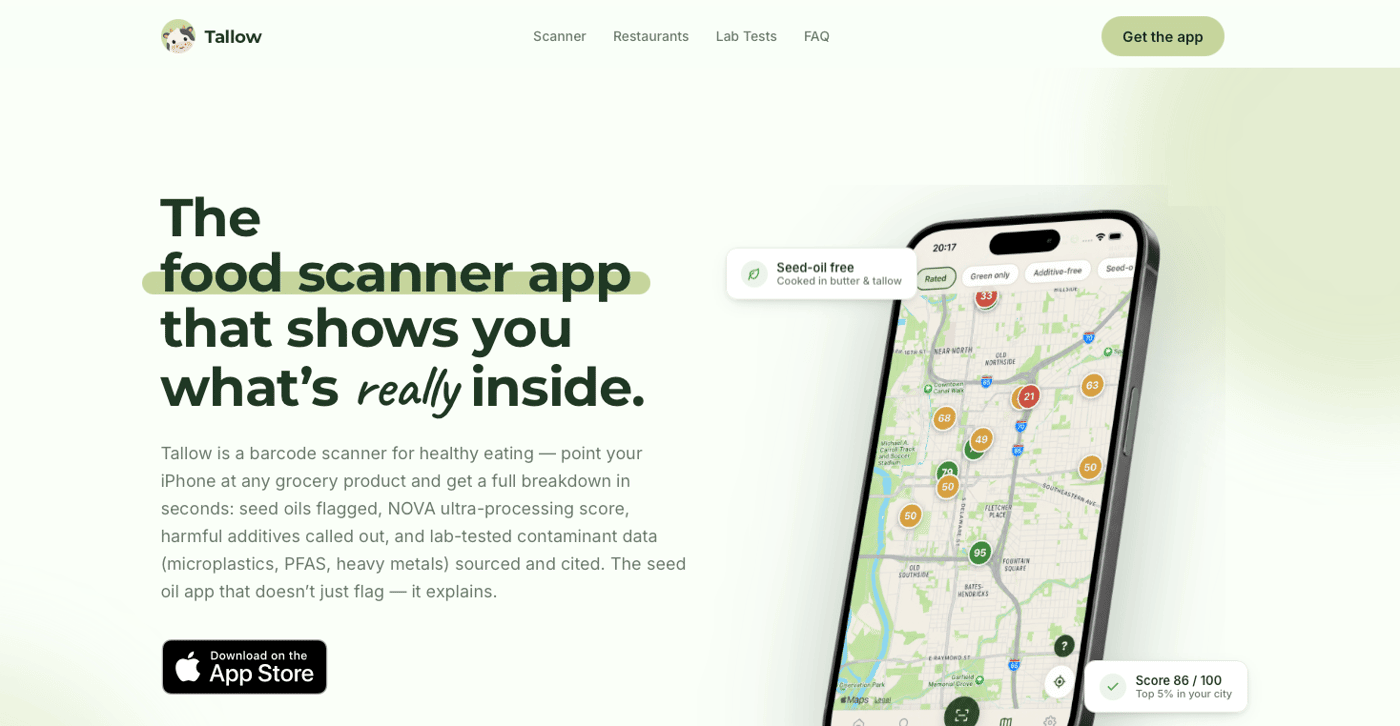
Currently, I'm working on Tallow, the project I care most about. It's a food scanner app for people who want to know what's inside their food. You point your iPhone at any grocery product and receive a full breakdown in seconds: seed oils flagged by name, a NOVA ultra-processing score, harmful additives called out against EU bans and FDA flags, and lab-tested contaminant data (microplastics, PFAS, heavy metals) cited back to the source.
It's available on the App Store with over 1,000 users and a 4.9-star rating. It's still early, but it has done a little over $2k in the last year through Superwall; the last 7 days alone brought in around $650, and the trend is finally pointing up. Paywall conversion is around 84%, which I'm really happy with.
Finding an important problem
When I started Tallow, I had just sold Duckmath. That was great, but it was a gaming site that I started as a kid to play games at school. It never meant much to me beyond the money and the challenge. I decided my next venture would be in a niche I genuinely cared about: health.
Over the last couple of years, I delved deeply into clean food and seed oils. I started reading labels and realized how hard it is to know what's really in your food. That frustration sparked the idea for Tallow. Scanner apps like Yuka exist, but most just provide a traffic-light score without showing their work. I wanted something that actually tells you why.
I validated the idea through content. I didn't write a business plan and sit on it; I just started posting. I made videos about seed oils and clean food, observed what resonated, and saw that there was a real audience that cared about this as much as I did.
Financially, I was in a decent spot to take the swing. As a CS student with $120k in the bank from my acquisition, I wasn't building this out of desperation. I could afford to play the long game and build the product right instead of flipping it. I call this my third and final startup. This time, the goal isn't a quick sale; it's to build something that matters and that I'll actually use myself every day.
Data pains
I built Tallow mostly solo. I've been coding for about five years, so the app side wasn't scary; the data and methodology were the hard parts. Tallow's pitch is that it shows its work. Anyone can slap a score on a product, but I wanted to defend every claim.
The scoring system was the biggest time sink. The Tallow score, from 0-100, builds on four weighted pillars: seed oils, additives, processing level (NOVA), and plastic exposure. I then adjust it using sourcing signals like organic, grass-fed, wild-caught, and so on. Iterating to get that right took a long time.
For data, I pull ingredient info from open food databases, cross-reference additives against EU bans and FDA flags, and surface real lab data on microplastics, PFAS, heavy metals, and pesticide residue from sources like EWG, Consumer Reports, FDA testing, PubMed studies, and oasishealth.app. I cite every figure back to its origin.
Building it wasn't expensive since I did the engineering myself; costs were just the usual app stuff: Apple Developer account, infra, and tooling.
A mobile stack
Tallow is primarily an iOS app, with a native iPhone front end. Barcode scanning, product pages, score breakdowns, and the restaurant map all reside there. I kept the client fairly lean, pushing the heavy lifting — the scoring logic and data — to the backend. This allows me to update methodology without shipping a new app version every time.
AI helps with descriptions and explanations, turning raw ingredient lists into plain-English breakdowns. However, I carefully keep the actual scoring rules-based and transparent.
For monetization, the stack uses Superwall, which allows me to build and A/B test paywalls and onboarding flows without redeploying. This has been huge because revenue is closely tied to content and traffic; quickly testing paywalls is one of the few levers I have beyond simply "posting more videos."
But this all started as a simple scanner and score. The stack has grown because I added Kid-Safe Mode, Smart Swaps, lab-tested data, and the crowd-sourced restaurant map. The restaurant map especially pushed me to handle user-submitted/crowd data, a different problem than scanning a barcode. Next, I plan to move beyond iOS-only. Android and web are the most requested features, and this will mean rethinking parts of the stack to share more logic across platforms.
Pricing and expansion
As far as the business model, Tallow is a freemium subscription app. The scanner and a basic score are free, so users get value immediately upon download, and the subscription unlocks deeper features. I have three tiers:
$29.99/yr
$19.99/yr with a 3-day free trial
$9.99/mo
I started charging from the start, but revenue growth wasn't driven by pricing; content and the paywall drove it. Paywall conversion is around 84%, which is unusually high because Tallow users already care about this topic. They don't casually browse. They come from videos about seed oils or clean food, ready to pay for answers.
My expansion levers are clear. First, more installs; since the funnel converts well, more top-of-funnel traffic generates revenue. Second, platform expansion; I am iOS-only today, and Android and web are my most requested features, representing a whole new user pool. Third, features that deepen the subscription: kid-safe mode, smart swaps, and the restaurant map all encourage repeated use of Tallow, which helps retention and provides more reasons to stay subscribed.
A funnel that builds itself
Tallow's growth comes entirely from short-form videos I create. TikTok, Instagram Reels, and similar platforms. I didn't do a big launch; I simply started posting about seed oils, clean food, and what's in people's food, letting the content find its audience. The niche is loud right now; people care a lot about this stuff, so good content travels.
I view the video as the funnel. Someone sees a video about, say, microplastics or a sketchy ingredient; they care, and Tallow offers the obvious next step to check their own food. That's why my paywall converts so high (~84%); the content pre-qualifies incoming users; they aren't random installs.
I intentionally run multiple accounts. I warm up new accounts and test content across them to avoid dependence on a single one and to switch the flow if an account gets throttled or videos start getting suppressed — which happens more than you'd think. Having backups means a bad week on one account doesn't kill me. I also repurpose into other channels like Reddit and Facebook to squeeze more out of each piece.
A key lesson is that consistency and volume matter more than any single viral hit, and you must observe what resonates and lean into it. I pay attention to which angles land (the political / MAHA / 'what's really in your food' framing is strong) and create more of that, while carefully caveating factual content to avoid making unsubstantiated claims. Sensationalism is easy, but credibility isn't, so I prefer caution over being viral-but-wrong.
My revenue tracks my content almost one-to-one. Good video weeks lead to good revenue weeks; bad video weeks lead to bad revenue weeks. That's the current reality of the model.
Beyond content, a force outside of my control helped too: timing. The whole clean food conversation is loud right now. People care about this stuff more than they did a couple of years ago, and this cultural wave means good content travels further than it otherwise would. I didn't create that demand; I just built the tool for it and showed up with content while the attention was there.
My growth advice? Pick a niche where the audience already cares and become the content creator. Don't outsource it. The content is the moat and the funnel at the same time. And build the product so the video leads to an obvious next action. If your content and product address the same pain, the funnel builds itself.
Niche down and create backups
And here's my advice overall:
Build in a niche you care about. This sounds like generic advice, but it's crucial. The code isn't the hard part. The hard part is showing up daily to create content and improve the product for months before it pays off. And you cannot fake caring for that long. Duckmath taught me that building something you don't care about gets exhausting; the money's nice, but you burn out.
Content is the funnel; don't treat marketing as a separate task you do after building. For me, a video and the app address the same pain point, so the content qualifies people before they install, which is why my paywall converts so well. If your content and your product don't address the same problem, you'll fight your funnel forever.
Don't build entirely on someone else's platform without a backup. Platforms will throttle you, suppress your videos, and delete your account — and it will feel personal, even though it isn't. Run multiple accounts, keep backups ready, and plan for when your main channel gets hit, because it will. I learned that the hard way.
Start posting before you build the whole thing. You don't need a fancy validation process; post content about the problem and see if anyone cares. If it resonates, you've found your audience, and you can build for them. For me, the audience came before the product.
Finally, journal. Write down what you're doing and what's going wrong daily. It's boring advice, but looking back at my own thinking has saved me from repeatedly circling the same problems. Half of indie hacking is not lying to yourself about what's working.
What's next?
My main goal is to make Tallow a real, lasting business, not just another thing I flip. I've called it my third and final startup for a reason; I don't want a quick exit this time. I want to build a product that becomes the default way people check what's in their food.
In the near term, that means expanding beyond iOS-only. Android and web are my most requested features by far, representing a whole new pool of users I'm currently missing. It also means making the product something people open repeatedly; the restaurant map, kid-safe mode, and smart swaps are all steps toward Tallow becoming part of someone's routine instead of a one-time scan.
I also want to continue raising the bar on credibility. Tallow's whole point is to show its work. As I grow, I want the data and methodology to become deeper and more bulletproof: more cited lab data, better ingredient coverage, and a score people genuinely trust. In a niche full of hype, credibility is the long-term moat.
More broadly, I care about the clean food problem beyond just one app. I've explored related ideas (like a directory of clean products), and long term, I'd love Tallow to be the trusted layer for "Is this good for me?" across food and the places you eat.
And personally, I want to keep building things I care about; this is the first one where the mission and the business align, and I want to keep it that way.
Follow along
The best place to check out the app is tallow.app. It's live on the App Store there (iOS for now; Android and web are on the way). You can scan your own food and poke at the methodology yourself, which is the whole point.
You can find me and the rest of my projects at maddoxschmidlkofer.com. I post most of my content under foundbymaddox on socials.

Leave a Comment
A lot of people assume an exit makes the next product easier, but you still have to earn every user again. Has anything surprised you while growing this project that you didn't expect after your previous success?
Congrats, Maddox! Building and exiting multiple products is inspiring. I'm currently growing my own software resource website, Delta Roblox and stories like yours are a great reminder that consistency compounds over time. Wishing you continued success with Tallow!
Really enjoyed reading this! I like how you combined solid engineering with content-driven validation instead of relying on assumptions. Your point that "the content is the funnel" really stood out, and it's great to see you building something you're genuinely passionate about rather than chasing a quick exit. Wishing you continued success with Tallow—looking forward to seeing where you take it next!
Really solid breakdown of how distribution and content actually is the product here, not just marketing on the side. The part that stood out is how tightly the funnel is tied to the pain point — the video → immediate “scan your food” action is doing a lot of the heavy lifting that most apps never get right.
Also appreciate the honesty around platform dependency and redundancy. Running multiple accounts + treating throttling as a “when, not if” problem is something more builders need to internalize early instead of after getting burned. The execution here feels very deliberately compounding rather than random growth hacking.
That's seriously impressive, especially starting at 16.
I'm 17 and currently building my first app, so I'd love to know:
How did you grow DuckMath to 1.5M monthly users at 16?
Was most of the $15k/month from ads, or did you have other revenue streams?
If you were starting from zero today, what would you focus on first to get your first 100–1,000 users?
The part that stood out to me is validating the idea through content before spending months building the product. If people consistently engage with the problem first, you already have a much stronger signal than a survey or a business plan. I also like the focus on building something you genuinely care about, because that makes it much easier to keep improving when growth slows down.
I've been talking to a lot of solo founders and small teams lately, and the pattern is almost identical every time:
- Post-launch, pre-traction
- No marketing hire (obviously)
- Know they should be doing outreach, writing content, posting in communities
- Are doing almost none of it because product work takes over by 9am
This is the exact problem I built LaunchPilot to solve. It's an AI agent that runs your marketing tasks overnight — finding leads, writing outreach emails, drafting content, identifying communities to post in — and then surfaces everything for your approval each morning before anything goes out. You stay in control, but you're not doing the grunt work from scratch at midnight.
If you're post-launch and stuck on getting first users, I want to help — whether you use LaunchPilot or not. I'll give you specific, honest feedback on what I'd try first. No pitch, just founder-to-founder. Drop a comment or DM me.
Thanks for the article which resonates on so many levels. I'm totally new to all this, not a developer but just finished my first SaaS product using Claude to build it on Replit. It's a productivity tracker so in with fierce competition but from what I've read, offers some fairly unique features. I'm now trying to market it organically and getting totally stuck, can't get beyond the protocols of posting on almost every social media platform I've been recommended to use. I'd be interested to know how you went about marketing Tallow - organically and free or by paid adds, or are you saying you started organically to test for interest (in which case how ?? / what platforms etc) and then boosted marketing by paid adds ?
I love that you are solving a very real problem and it's already something people are actively looking for. Can't wait to see how it grows.
Focus on solving a real problem, engage early users personally, and grow your passion project steadily through consistent improvements and community feedback.
The 84% paywall conversion is wild — most apps celebrate hitting 3-5%. Superwall A/B testing the onboarding flows clearly did a lot of work there.
The “show your work” angle is smart positioning. Yuka has the brand recognition but you have the receipts — citing PubMed, EWG and FDA testing in the same screen is a trust moat that’s genuinely hard to copy fast.
One question: with the restaurant map going crowd-sourced, how are you handling data quality? User-submitted data tends to degrade fast without some kind of verification layer — curious if you’ve already solved that or if it’s still a work in progress.
"Content is the funnel" is a sharp observation, but the part that stuck with me is the plan to move off iOS-only to Android and web. That's exactly where things break quietly: a scan → score → paywall flow can work perfectly on iPhone and silently fall apart on another platform. And for a product whose whole value is trust, one bug in the critical path costs more than usual.
We happen to build a no-code E2E testing tool for mobile apps — run the same key flow across iOS and Android and catch regressions while you iterate fast. If you get to the cross-platform stage and want to take a look, it's Qampanion dot com, currently in public preview.
Congrats on 1k users and 84% conversion — rare numbers.
The Qampanion team
This case study is proof that the fastest, most reliable path to "sought after + self-selling" isn't a clever product mechanic — it's finding a niche audience that's already emotionally activated about a problem, then being the person who shows up in that niche daily until the audience trusts you enough to pay. That's not a loophole around effort. That is the effort, front-loaded into content instead of into sales calls.
The interesting part is not the app, It's that the marketing cost is zero and the CAC is a camera. When your content and your product solve the same problem, the funnel is just physics. Everything else is founders fighting gravity.
That's fantastic, worth learning from.
Really interesting approach. Content that educates before asking for a purchase naturally attracts more qualified users. By the time they hit the paywall, they've already decided whether the product solves a real problem.
The part that resonates most isn't the $120k exit — it's the pivot away from flips toward something you actually care about. Two profitable exits at 20 buys you the rarest thing in indie hacking: permission to play long-term instead of chasing the next quick sell.
I'm building a passion project solo right now (AI handles most of the engineering), and the "$100/mo but I care about it" tradeoff is exactly the tension I keep sitting with — optimizing for something durable feels right, but there's no fast feedback loop to tell you it's working. The flips at least paid quickly.
Maddox — coming off businesses that hit $15k MRR fast, how do you keep yourself patient with Tallow's slower curve? What's the signal you watch to know it's on track vs. just a labor of love?
Fascinating how you moved from gaming flips into a health product you actually care about. The focus on transparent data and content‑driven growth makes Tallow feel like it has real long‑term legs.
"You cannot fake caring for that long" — this is it. That line alone separates projects that survive from ones that fizzle out after the first dip.
Maddox's story also resonates with what I see at Goldenweeks — a 2-week deep work retreat in Zanzibar built for founders like him. After an exit, the question isn't "what should I build?" but "what do I actually want to spend the next few years on?" That kind of clarity is hard to find in your normal environment.
The content-before-product validation approach is underrated. More founders should read this.
Really enjoyed reading this! Going from a big exit to building a passion project in public is such an inspiring journey.
The fact that you're doing it without chasing hype and focusing on real user value says a lot. Congrats on reaching 1k users — that's a huge milestone.
Quick question: After having a successful exit before, what’s the biggest mindset shift you’ve had while building this smaller, passion-driven project? And how are you balancing speed vs. perfectionism this time around?
Would love to hear more about your process. Keep going!
Nice progression — from quick exits to building something long-term.
I love this browser extension idea! I often waste lots of time switching tabs for AI tools. The voice control feature sounds really useful for daily web work. I’m curious how you handled model speed inside the extension.
hello
The "content is the funnel" point is the part more
founders need to internalize. The fact that your
paywall converts at 84% isn't luck — it's because
the video already qualified the person before they
installed. They're not random traffic, they showed
up already caring. Most people treat marketing as a
separate step after building, and then wonder why
their funnel fights them.
The platform backup advice hits too. Running multiple
warmed-up accounts because you know throttling is
coming — that's the kind of thing you only learn after
it happens to you once. Building your whole growth on
one channel someone else controls is a risk a lot of
people don't see until the account gets hit.
Respect that you kept the scoring rules-based and
transparent while only using AI for the plain-English
explanations. In a niche full of "trust our score,"
showing your work is the actual moat. I'm building in
a different space (fintech) and landed on the same
principle — people trust a recommendation way more
when they can see why, not just what.
Question — you said revenue tracks content almost
one-to-one, good video weeks = good revenue weeks.
Does that scare you at all long-term, or are you
betting the content engine keeps compounding enough
that it stops being so week-to-week fragile?
Completely agree with this. A lot of people try to use AI to completely automate products like this, but your approach of keeping the actual scoring rules-based and transparent is what makes the model work. Using AI to translate raw data into understandable chucks for the user makes total sense, but keeping the core logic human-vetted is exactly how you build actual credibility in a niche that demands trust.
the decision to keep scoring rules-based and only use AI for the plain-English explanations on top is actually more interesting than it sounds on the surface. a lot of app devs would have just thrown the whole thing at an LLM because it's faster to ship. but once you're telling someone a product has a score of 73 based on PFAS contamination data from FDA testing, the user is trusting that that number means something specific and reproducible, not "the model felt like 73 today." if you let the model touch the score directly you can't defend it when a user asks "why did this product score differently last week?" rule-based scoring gives you an audit trail. AI on top gives you UX. thats actually a cleaner separation of concerns than most people think about deliberately.
the Superwall A/B testing angle is also under-discussed. most mobile devs treat the paywall as a one-time design decision and then wonder why their numbers never improve. being able to iterate on paywall copy and flow without a full redeploy is surprisingly powerful, especially when your conversions are this tightly correlated with which content is landing that week.
The line that got me was "AI helps with descriptions... but I carefully keep the actual scoring rules-based and transparent." That's a real design decision, not a throwaway detail. Most people building anything AI-adjacent right now default to letting the model touch everything because it's faster. Deliberately keeping the trust-critical part (the actual score) rule-based while letting AI handle the plain-English layer on top is the opposite instinct, and it's probably why people trust the app enough to convert at 84%.
Makes me want to think harder about my own project. My categorization is rule-based right now, mostly by accident, not principle. Reading this makes me think I should keep it that way on purpose, even once I add smarter AI elsewhere.
Thanks for sharing!
"I don't like building projects that I don't care about."
That line hit hard.
I've been building Remira — an AI companion app — not because it's the smartest business move, but because I genuinely wanted something like it to exist. An AI that actually remembers you and feels like a real friend.
No $120k exit to fall back on. Just a full-time job, nights and weekends, and the belief that the right product for the right reason can work.
The part about validating through content first before building is exactly where I'm at right now. Good to see it confirmed by someone who's done it.
Thanks for sharing this Maddox, genuinely inspiring. 💜
That's amazing, great job
This is a great show of consistency and shows how you can solve pain points for others - and that should be the driver of creating/building.
This is a great read. It sounds like you have been creating things for people for a while... How do you decide which ideas you want to act on? Is it driven by passion or is driven by a gap in the market predominantly?
Thanks for sharing!!
Really enjoyed reading this. The part that stood out to me most was that you validated the idea through content before obsessing over building every feature. I think that's a lesson many founders overlook.
I also liked your point about building something you genuinely care about instead of chasing the next quick flip. It makes the long-term vision much more convincing.
I'm building LaunchLoopIO, an AI platform focused on helping founders discover and validate business ideas, and I've noticed a similar pattern. The projects that succeed usually start with a real problem and an audience, not just a clever idea.
Congrats on the progress with Tallow. Looking forward to seeing how Android and the web version change your growth over the next year.
Congrats Maddox, really inspiring story. Going from quick flips to building a true passion project for the long term like Tallow is a move I respect a lot.
I'm working on Prime Trading Bot, a self-hosted DCA and Grid bot for Binance. After seeing too many traders lose due to emotions and inconsistency, I built it to enforce discipline and risk management with full transparency no subscriptions, you own it completely. Your points on content and staying authentic really hit home. Keep crushing it man!
i just love your hustle man, soo good
The tension nobody's naming: your moat is credibility (cite every figure, show your work), but your distribution runs on the MAHA/seed-oil outrage wave, which rewards the opposite. Riding a cultural wave is rented attention, and it can turn the moment the narrative gets debunked or moves on, so the real game is converting those 84%-converting installs into a trusted default people open weekly before the wave crests. Right now revenue tracks your posting cadence one-to-one, which is a treadmill; the business gets valuable the day retention and word-of-mouth hold the number up on a bad content week.
The “content is the funnel” point really stood out.
Also, the backup-account lesson feels very real. Founders often talk about distribution like it’s just a matter of posting consistently, but platform risk is real. One throttled account can slow the whole funnel overnight.
What I like about Tallow is that the content and product lead to the same next step. The video creates the question, and the app gives the answer.
Thats amazing consistent work can make u successful I am a solo web app developer no team no Co founder but I build 25 fully working apps with the help of Ai tools I am here to tell my story and get support from everyone I build a complete ecosystems of apps business tools education health beauty woman wellnes autism management hospitals pharmacy hotels saloon school ai agents
There's something refreshing about building a passion project after an exit — no pressure to monetize, just making something you actually care about. Did building without the revenue pressure change how you make product decisions? And now that you're at 1k users, are you tempted to turn it into a "real" business, or is keeping it a passion project the whole point?
I built a client portal because I was tired of "just checking in" emails — would love feedback
Quick context: I'm a solo freelance dev, and every project I worked on had the same annoying loop — client asks "where are we at?", I dig through old emails/Slack/Notion to answer, repeat every week.
So I built ClientTab.
It's a simple client portal — you share one link, your client opens it (no login, no app), and sees exactly where things stand. Tasks, invoices, comments, files, all in one place.
Stack: Next.js, PostgreSQL, Prisma, Stripe for billing. Built and launched solo.
It's live at clienttab org 14 day free trial, no card needed.
Honestly, the hardest part wasn't building it, it was actually putting it out there. So this is me doing that.
Would love brutally honest feedback — what's missing, what feels confusing, would you actually use this for client work?
ProperSend The premium BYOS email marketing platform. Send unlimited emails on your terms.
I love learning about nutrition and healthy living. That's why I really enjoyed reading your story. I admire your decision to focus on building something you care about instead of simply chasing the next exit. Best of luck with Tallow!
The 84% paywall conversion makes complete sense once you explain it. The content isn't just marketing, it's a filter. By the time someone downloads Tallow they already believe seed oils are a problem and they're looking for a tool, not convincing. Most founders try to convert cold traffic and wonder why their numbers look nothing like this.
The "content and product must address the same pain" point is something a lot of people building right now are missing. Are you finding the MAHA wave is still growing or starting to plateau?
This is really dope. I am currently working on something as well, hope to share it soon
BTW if anyone needs help with e-commerce automation or Shopify setup, I'm open for freelance work — DM me
This part really resonated with me:
“Content is the funnel.”
I’m currently building my own beta product, and I’m realizing that building features is often easier than consistently talking about the problem in public.
The point about posting before the product is fully built is especially useful. I think I waited too long before trying to learn from real users.
For you, how did you decide which content signals were strong enough to actually influence the product roadmap?
"Half of indie hacking is not lying to yourself about what's working" is the whole post for me.
I'm a few weeks into forcing myself to publish honest daily numbers on a small project, and the pattern matches yours exactly: I built the catalog first and only then discovered the bottleneck was never the product, it was that nobody knew it existed. Your "start posting before you build" is the lesson I'm learning backwards.
The reframe I keep coming back to is "content is the funnel." That 84% paywall conversion isn't a pricing trick: the video already filtered for someone who reads labels, so they arrive pre-sold. Most of us treat distribution as step two instead of the thing that qualifies the user in the first place.
Genuine question on the multi-account play: how long do you warm a new account before you trust it with real traffic, and what's your actual signal that it's ready vs quietly shadow-throttled? That's the part I have the least intuition for.
The new wave of tools continues to surprise everyone, with more and more useful tools constantly emerging, much to our delight. Now it's up to us to choose the ones that can truly help us in our daily lives. I hope this is one of the ones that will help me. Congratulations and good luck on the journey ahead.
Really impressed by the 84% paywall conversion - that validates what you said about pre-qualifying users through content. Too many founders try to grow first then monetize, but your approach of building an engaged audience around the problem before the product is genius. The insight about "content is the funnel" is something more B2C founders need to hear. Curious - did the timing of going freemium vs paid-only play a role in hitting 1k users faster?
Great man, its really appreciable.
nice work,
love the hustle
The distinction between using AI for explanations while keeping the actual scoring rules transparent really stood out to me. It feels like a strong way to gain the benefits of AI without asking users to blindly trust a black box.
I also liked the idea that “the video is the funnel.” Your content does more than generate traffic—it pre-qualifies people who already care about the problem, which helps explain the unusually high paywall conversion.
How do you decide which topics to turn into short-form videos while still protecting the credibility of the product?
Man you did and doing great job. Keep it up.
Really enjoyed reading this.
One thing that stood out to me was validating through content before going all in on building.
I'm currently validating a startup for content creators, so this was a great reminder that understanding the problem comes before writing code.
Looking back, is there anything you would validate differently if you were starting Tallow today?
Hello I want to know more about what you do
Congratulations on that strong first exit. Gained a lot of info from this on how I can organize my own launch
I strongly agree with this: “You don’t need a fancy validation process; post content about the problem and see if anyone cares.”
That’s exactly how I validated my product. I started by solving my own macOS maintenance pain points with an open-source CLI. Releasing it early gave me a real feedback loop from users, not assumptions.
As usage grew, a clear pattern appeared: many users wanted the same core capabilities in a native desktop client instead of terminal workflows. That signal led me to ship a paid macOS GUI edition (one-time purchase, no subscription) while keeping the CLI open source.
The initial user base came from the open-source side, and many of those early users generated organic referrals on other platforms.
My current bottleneck is time, so I prioritize fast iteration and product quality first; broader multi-platform promotion is the next step.
hi Maddox!! Really interesting story. I am also actually doing something similar in the health space for long sitting hours desk workers. I got very interesting insights from your experience. I would love to connect with you personally and seek your help.
Congrats on the exit first—$120k is real validation. The 1k users milestone on a passion project sounds like a different goal though, more about impact than revenue. Curious what channel worked best for organic growth: SEO, community, or Product Hunt? Each of those rewards very different design choices. Also, did you change your build philosophy from "scratch the user itch" to "design for retention" or keep the same instinct?
Growth from search compounds differently than paid -- slower at first but the floor does not drop when you stop spending. Takes about 6 months to really see it working.
Awesome write-up, Maddox. Building something you actually care about makes a massive difference in pushing through the boring/hard days.
I’m currently prepping to launch a Shopify app that I built entirely with AI assistance (Claude), and your point about pushing the heavy lifting to the backend resonated a lot. Keeping the client lean so you don't have to keep redeploying to the App Store is a lifesaver when you're managing the code solo.
Congrats on the exit and the early Tallow traction—an 84% paywall conversion is insane!
Post-exit founders have optionality. They can build what they want, not what investors want. That's the real superpower. The passion project often outperforms because it solves the founder's actual problem, not a theoretical market.
great
Very insightful post. I especially liked your point that the hard part is not coding but showing up every day to build and create content. That's a lesson a lot of founders need to hear. Best of luck with the next stage of Tallow.
One thing that really stood out to me is that even after a successful exit, you went back to building something because you genuinely enjoyed the process—not because you needed another business. I think that's a mindset a lot of first-time founders (myself included) overlook.
I'm currently building my first SaaS, and this reinforced the idea that getting the first users and learning from them is probably more important than trying to build the "perfect" product.
Looking back, is there anything you would do differently to get those first 100 users if you were starting completely from scratch today, without an existing audience or reputation?
Nice app. The Paywall is exceptionally high conversion. Good advice on the content. Good luck.
The "content is the funnel" point is the one that sticks with me most.
A lot of founders get the niche right — they build for a specific person with a specific pain. But then they broadcast to everyone instead of distributing where that specific person already hangs out.
With Tallow, your TikTok content and the app both filter for the same person: someone who reads ingredient labels and is suspicious of seed oils. So by the time they download, they're already sold. The content pre-qualified them.
I think this is the underrated half of "niche down": it's not just about what you build, it's about which specific corners of the internet you show up in. Getting both right is rare, and it shows in your paywall conversion.
Thanks for writing this up.
You cannot fake caring for that long" is the whole post right there. The code was never the hard part. Showing up daily for months before it pays off is, and most people quit right before it gets good.
The content-as-funnel point is gold too. Your video and app solve the same problem, so people show up already caring. That's why your paywall converts like crazy.
Rooting for Tallow. The credibility moat is smart in a niche this loud.
Wow, great win.
Would you like to connect?
I’m Nathaniel Flores — a Frontend Developer with 5 years of hands-on experience building modern, responsive web applications. I recently completed my university degree and I’m now actively seeking new opportunities where I can contribute, grow, and take on exciting challenges — whether at a junior or senior level. I’m based in the USA , from Philippines and open to remote or international roles. If you’re looking for a dedicated developer who values clean code, user experience, and continuous learning, feel free to reach out.
This comment was deleted 3 months ago