From simple theme to $65k/mo ecosystem
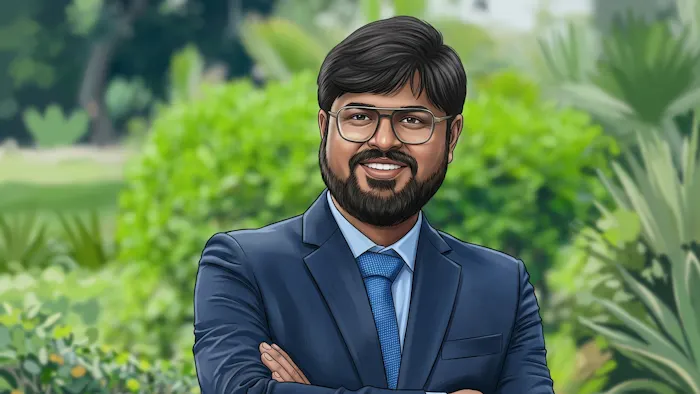
Ajay Patel found a gap at his full-time job and built for it. It started with a simple theme on Envato's ThemeForest, but grew into a whole suite of SaaS products. Today, that suite — Clevision — is bringing in $65k/mo.
Here's Ajay on how he did it. 👇
Getting started
I am Ajay Patel. I have worked in the tech industry for over 15 years, establishing myself as an entrepreneur, programmer, and innovator.
As the cofounder of Clevision, I’ve built products such as ThemeSelection, PixInvent, FlyonUI, and ShadcnStudio. Another product, Framespark, is in progress.
I focus on creating advanced AI tools, SaaS applications, and UI component libraries that enable developers and businesses to accelerate innovation and transform ideas into reality with speed and efficiency.
Clevision came to life in 2018 when my co-founder, Vrushank, and I spotted a market gap while working at a software company. Almost every app or platform needed admin panels, yet few solid solutions simplified their creation. Building those UIs from scratch was repetitive, time-consuming, and slowed development on nearly every project.
We saw an opportunity: Why not build a ready-to-use admin panel ourselves? That idea became Clevision, aiming to simplify development and help teams ship faster.
Starting with admin panels, we eventually grew into a broader ecosystem of Clevision products.
At its core, our motivation has always remained the same — solving real problems developers face, reducing repetitive work, and building tools that make development faster and more enjoyable.
Building an ecosystem
We started by launching our first product on Envato’s ThemeForest, which helped us validate the idea early. Even today, that channel continues to perform strongly, generating around $15–20k per month. Early traction gave us confidence that we had solved a real problem and funded further product development.
Launching ThemeSelection was a major milestone; it moved us beyond marketplaces and allowed us to build direct customer relationships. Our own platform gave us the freedom to improve support, experiment with pricing, and grow more sustainably.
Over time, those learnings shaped how we built and expanded new products. FlyonUI came from demand for better Tailwind UI tooling, Shadcn Studio emerged from simplifying shadcn/ui workflows, and Framespark is the next evolution we’re currently building.

Tech stack
Our tech stack varies by product, as each platform addresses different developer needs:
ThemeSelection / Pixinvent:
Bootstrap
WordPress
Easy Digital Downloads
PHP
MySQL
Shadcn Studio Frontend (Core) Stack
React
Next.js (our primary ecosystem)
Tailwind CSS (shadcn/ui components use)
shadcn/ui
Supabase
FlyonUI Tech Stack
Tailwind CSS (primary base framework)
Semantic class system (built upon Tailwind)
React
Next.js (our primary ecosystem)
Supabase
Underlying Stack (Important)
DaisyUI (adds semantic component classes on Tailwind)
Preline JS (headless JavaScript plugins for interactivity)
Framespark (in progress):
Framer — focuses on modern website building and creative development workflows.
Overall, we adopt technologies we believe in and often build products around the tools we use ourselves.
Business model and open-source resources
We use a freemium model, a core pillar of growth. We offer a meaningful free version across our products, allowing customers to evaluate quality before paying. This builds trust; while not every free user converts immediately, many return when ready and eventually become paid customers.
Above all, we have grown by relentlessly focusing on product quality, regular updates, and reliable support. We have never compromised on quality, and this long-term trust drives much of our growth.
Below are some open-source resources that helped us grow our business.
ThemeSelection - Free Admin Templates, Free UI Kits
FlyonUI - Free Tailwind Components, Free Tailwind Blocks & Free Tailwind Templates
Shadcn Studio - Free Shadcn Components, Shadcn Blocks, Shadcn Theme Generator & Shadcn Templates
Expanding distribution
We no longer depend solely on SEO and blogs. We have driven our growth through a mix of best UI/UX design, flexible product licensing, top-quality products, SEO, omnichannel strategies, and community-led distribution.
We offer flexible license options for each of our products to fit different customer needs, and this flexibility has improved conversions.
While SEO was a major growth channel, we later focused more on developer- and designer-specific omnichannels. These channels not only bring traffic but also convert potential customers.
We are active on these platforms:
Twitter: Shadcn Studio, Ajay Patel, Anand Patel, FlyonUI
Reddit and LinkedIn to build trust, grow brand awareness, and attract users.
Additionally, we share content on YouTube, driving considerable traffic. Overall, we achieve growth by consistently combining product, content, and distribution.
If I had to start over, I’d invest earlier in distribution and audience-building: content, SEO, community, and partnerships. We focused heavily on product initially, but growth often comes from distribution as much as the product itself. I’d also move faster to build direct customer relationships instead of relying so much on marketplaces early on.
The challenges of growth and focus
A major early challenge was building and growing outside marketplaces. Selling on Envato validated our product, but moving to our own platform required us to learn customer acquisition, support, pricing, and distribution from scratch. Building ThemeSelection forced us to think beyond product development and truly understand business.
Another challenge has been staying focused while expanding across multiple products. As we built FlyonUI, Shadcn Studio, and now Framespark, prioritization became critical: deciding what to build, what not to build, and how to allocate time and resources effectively.
Like many bootstrapped businesses, hiring and scaling the right team has been a learning curve. Finding people who align with both product quality and long-term vision took time.
Move quickly and in public
My advice is: build in public, validate fast, and focus on your USP early.
Build in public: Share what you’re working on, your progress, and even your struggles. It helps you attract early users, get feedback, build trust, and sometimes even find your first customers before the product is fully ready. Shadcn Studio is the perfect example of it.
Validate fast, perfection later: Don’t spend months polishing something without knowing if people want it. Get a simple version in front of users quickly, collect feedback, and iterate based on real demand. Early momentum matters more than perfection. While working on admin templates, we made this mistake and learned why it isn't an ideal choice for businesses.
Start with an MVP and define your USP: Build the smallest version that solves one clear problem, and be very clear about what makes your product different. Your unique value doesn’t have to be complex, but it should give people a reason to choose you over alternatives.
In the beginning, the speed of learning is more important than the speed of building. Talk to users, improve constantly, and let feedback shape the product.
What's next?
Our goal is to build a SaaS business that provides both impact and freedom. We want to create products that continue to solve real problems while giving us the flexibility to work on what we enjoy.
Over time, we aim to grow sustainably, stay independent, and build a business that supports both innovation and a balanced lifestyle.
You can find more on my social profiles on X and LinkedIn. And check out Clevision.

Leave a Comment
The shift from relying on a marketplace to building a direct audience really stood out to me. $15–20k/mo from the original ThemeForest channel is impressive, but turning that initial product into a $65k/mo ecosystem shows the value of using one validated idea as the foundation for multiple related products.
congratulations!
Thanks !!
This ones actually very useful man
Thanks for the feedback. Glad you found this useful!!
Really like this approach. The best products often come from solving problems you've experienced firsthand, and that's exactly what Clevision did. Instead of chasing trends, you identified a repetitive pain point that developers faced every day and built a solution around it. The growth from a simple admin panel to an ecosystem of products shows how powerful it is to focus on making developers' lives easier.
Appreciate that. We’ve always believed that the best products come from solving problems we face ourselves. What started as a simple effort to streamline our own workflow gradually evolved into a broader ecosystem because we kept encountering the same challenges developers deal with every day.
But the thing is how to reach our target audience as most people don't even answer question about the product for validation.
Most people won't answer validation questions—and that's normal.
Instead of asking for opinions, look for signals: what people complain about, pay for, switch from, or spend time on.
User behavior is usually far more reliable than user feedback when validating an idea. 🚀
Reading Ajay Patel's journey was genuinely inspiring. What started as a simple solution to a common developer problem grew into a thriving SaaS business generating impressive revenue. I especially liked how the team focused on solving real customer pain points rather than chasing trends. Their commitment to quality, continuous improvement, and community building clearly played a huge role in their success. Clevision is a great example of how consistency, customer focus, and smart execution can turn a small idea into something remarkable.
Thank you! 🙏
We’ve always focused on solving real problems for developers and improving step by step. Looking back, consistency, customer feedback, and community support have mattered far more than any single product or launch.
Excited for the journey ahead! 🚀
Consistency over everything — that's the takeaway.
Good luck with what's ahead 🚀
The advice about moving away from marketplace dependency really resonates with me. I've been selling on ThemeForest for a while and the 30% cut plus lack of customer data is tough. Your point about investing in distribution earlier is spot on. Did you face any challenges when you started building ThemeSelection and had to learn customer acquisition from scratch, or did the marketplace sales give you enough runway to experiment?
Yes, we definitely faced challenges.
Marketplace sales gave us the initial runway and validation, but building ThemeSelection meant learning customer acquisition almost from scratch.
The hardest part was shifting from “marketplace traffic will bring buyers” to owning SEO, content, email, support, pricing, and direct customer relationships.
In hindsight, the marketplace helped us start, but our own distribution helped us scale. 🚀
7 years building quietly and now $65k/mo. respect.
the ThemeForest thing is actually wild to me, most people would've ditched a marketplace the second they had their own platform but you kept milking it and it's still printing $15-20k. smart.
also the open source to paid pipeline you built is lowkey genius. give devs the free stuff, they trust you, then they buy. been trying to explain this model to people for years and nobody listens until they see numbers like yours.
how does the funnel actually look from FlyonUI to paid?
Thank you! 🙏
We didn't replace ThemeForest—we reduced dependency on it while building our own channels.
For FlyonUI, the funnel is essentially:
Free components → Trust → Repeat usage → Paid products when users need more advanced solutions.
The biggest lesson: distribution gets attention, but trust drives conversions. 🚀
your experience is your biggest asset.. this is amazing to watch how being in the market made you well versed with your idea and what you wanted to pursue
Thanks for the appreciation!!!
nice
I'm 19, just got my first laptop 6 months ago, taught myself product design, and just launched the waitlist for my first app — Folio. An AI reading app that turns book insights into personalized decisions you can actually use.
If anyone's curious — folioapp.framer.websit
"e" is missing in this link because i am new user can comment links yet
That’s impressive. Starting at 19, teaching yourself design, and launching your first app already puts you ahead of most people who only keep planning.
Folio sounds like an interesting idea, especially if it helps turn reading into real decisions instead of just saved notes.
Keep building, keep learning from users, and don’t underestimate how far consistency can take you. 🚀
Congrats on building that $65k/mo ecosystem! Really impressive journey from a simple theme.
What was the hardest part when you were scaling from the initial theme to the full ecosystem?
Thank you! 🙏
The hardest part wasn't scaling the product—it was scaling ourselves.
We had to learn distribution, marketing, hiring, support, and customer acquisition while continuing to build.
Staying focused on the same audience instead of chasing every opportunity was probably the most important decision we made. 🚀
The insight about moving from marketplace dependence to your own platform is gold. I've seen too many developers stay comfortable on ThemeForest or similar platforms and never build that direct customer relationship. The 30% cut seems easier to stomach than building your own infrastructure, but you lose so much control over pricing, customer data, and long term value. Really curious how you handled the transition period when you were still getting steady income from ThemeForest while building out ThemeSelection.
Thank you! 🙏
We didn't try to replace ThemeForest overnight. We used the marketplace revenue to fund SEO, content, free products, and our own distribution channels.
For a long time, those efforts generated far less revenue than ThemeForest, but we kept investing anyway.
The goal wasn't to leave the marketplace—it was to make sure our business wouldn't depend on any single channel. 🚀
What’s interesting here is not the jump from theme → ecosystem, but the hidden shift in distribution leverage vs product leverage.
Most founders underestimate how much of that $65k/mo comes from compounding distribution channels rather than the original “theme idea” itself.
The real question I kept thinking while reading is at what point did the product stop being the growth driver and start becoming the infrastructure for growth?
That transition is usually where most builders either scale properly or get stuck optimizing the wrong layer.
The part about moving from marketplaces to your own platform really resonates. I had a similar experience with ThemeForest years back where the validation was great but you never really own the customer relationship. What surprised me most was how much work went into building the entire business infrastructure once you move off a marketplace. Did you find the $15-20k monthly from Envato was enough runway to invest in building ThemeSelection, or did you bootstrap it alongside?
This is really inspiring. I'm building dailyaitools, a verified AI tools directory, 6 months in, bootstrapped from Pakistan. Still at the early traffic stage, but the theme-to-ecosystem model is something I'm thinking about too. Did Ajay start monetizing the theme first before expanding, or did he build the ecosystem vision from day one?
What stood out to me the most here wasn’t just the revenue growth, but the evolution in distribution thinking. A lot of developers believe great products automatically win, yet this story shows that marketplaces only validate demand — they rarely build long-term leverage. The real turning point was moving from “selling templates” to building an ecosystem with direct customer relationships, community trust, and repeat distribution channels.
Another thing I found valuable was the emphasis on solving repetitive pain points developers already experience themselves. Almost every successful dev-tool company starts there: identifying friction they personally feel daily, then reducing that friction at scale. That’s exactly why products like these resonate so strongly with technical audiences.
The advice about “speed of learning being more important than speed of building” is probably the most important lesson in the entire post. Many founders overinvest in polishing before validating. In reality, feedback loops, audience-building, and iteration create momentum much faster than perfection ever will.
Also, building in public is massively underrated. It doesn’t just market the product — it compounds trust, creates distribution, attracts early adopters, and turns the founder journey itself into content. That becomes a competitive advantage most people underestimate.
The "I'd invest earlier in distribution and audience-building" line is the one that really sticks as someone pre-launch right now (Voice AI starter kit, planning to use Gumroad). Hit that wall hard tonight: posted validation questions in r/SideProject on two different accounts, auto-filter killed both in under a minute. Zero distribution equals zero credibility, the platform doesn't care how genuine the question is.
Tactical question on the Envato to ThemeSelection transition: was there a specific moment where your own platform traffic or revenue passed Envato's, or did you run both in parallel for years? Trying to figure out if the marketplace play is worth it as a v1 when you already know you'll want to migrate eventually.
Thank you! 🙏
There wasn't a single crossover moment. We ran ThemeForest and ThemeSelection in parallel for years.
The goal wasn't to replace the marketplace—it was to gradually build channels we owned (SEO, content, email, community, free products) until we weren't dependent on any one source.
And yes, one lesson I'd share: distribution is often the prerequisite for validation, not the other way around. 🚀
Interesting how the product evolved from a simple tool into an ecosystem that shift usually changes everything in terms of user behavior, not just revenue.
I’m curious what you noticed first: was it the change in user intent, or the way people started using it beyond the original scope?
Ajay's journey from a single ThemeForest theme to
a $65k/mo ecosystem is a masterclass in building
one product at a time and letting each one fund
the next.
The insight about validating on a marketplace
first before building your own platform is
something I'm applying right now — I just launched
AgentFlow Pro, a Real Estate CRM with legal docs,
AI, and global maps built in. Started with a
landing page, got payments live via Razorpay,
now focused on distribution.
The ecosystem approach is the long game I want
to build toward. Thanks for sharing the full
journey including the hard parts — this is
exactly the kind of story that keeps indie
hackers going. 🙌
Struggling with toxic comments on Instagram? I made Social Fuse — AI that auto-detects negative comments and lets you delete them in 1 click.
Really inspiring story! The part about using ThemeForest to validate demand before building the full ecosystem is such a smart approach. Love how each product naturally evolved from solving adjacent developer problems instead of forcing random ideas. The "speed of learning > speed of building" advice is gold. Thanks for sharing!
Struggling with toxic comments on Instagram? I made Social Fuse — AI that auto-detects negative comments and lets you delete them in 1 click.
That’s an impressive body of work especially the consistency over a decade writing on Indie Hackers while also building and shipping multiple products.
What stands out most is how all your projects seem connected around one theme: capturing real founder/customer insight at scale (interviews, feedback, newsletters, SaaS tracking). That kind of “feedback loop ecosystem” is usually where the most interesting long-term products come from.
Curious what you’re focusing on next, because it feels like you’re sitting on a pretty strong distribution + product insight stack at this point.
Looks great
Ajay's story is a great example of what creates durable value: he spotted a real gap, built something people needed, then expanded into adjacent products with the same customer base. The businesses that sell well are almost always the ones where the founder applied this kind of rigor from day one — clean unit economics, documented processes, defensible retention. That compounding effect on customer lifetime value is what separates a lifestyle business from a highly acquirable one.
The part that hit home: using ThemeForest to validate real demand before building out the whole suite. That "prove people will pay on a marketplace first" move is exactly the discipline I'm trying to learn — most of us build the big thing first and just hope. Question: when you expanded from one theme into an ecosystem, how did you pick which adjacent product to build next — customer requests, or your own itch? I'm running a small multi-tool studio and sequencing the next build is the part I keep second-guessing.
Hey Ajay,
You’ve proved that distribution and content ecosystems matter. ConsensusPress is a WordPress publishing tool that uses five LLMs to validate product-led content before publishing. I’d value your view on whether this solves a real content-quality problem for WordPress product founders.”
I really liked this post. it sounds like my story, just with higher numbers and a bit of an early move outside of the Envato marketplace.
I've been selling items on Envato since 2014 as an independent dev, and over the past two years, I've seen a decline in sales (like many other developers, since Envato started promoting Elements), so I recently started a new project as a WordPress plugin with a Freemium model and just launched my online store.
"Initially, we focused heavily on the product, but growth often comes from distribution as much as the product itself." --- I liked that statement; right now, I'm exactly in this situation; it's time to invest more time in distribution than in programming.
"That's marketing, baby" :)
The ThemeForest start is something most modern founders sleep on because marketplaces look uncool next to building from scratch. But a marketplace gives you distribution from day one in exchange for a take rate, which beats burning 12 months waiting for SEO to kick in. The smart move here is using the marketplace as the entry point, then graduating customers into the Clevision ecosystem where the take rate is yours. Most founders try to go direct from day one and end up with a great product nobody finds. Question worth asking: at what ARR did Envato stop being a worthwhile customer acquisition channel, and how did you offset it?
Nice inspiring journey and path to follow for new techies.
Wow I love this story. Turning one simple admin template into a full $65k per month ecosystem is really inspiring..
Strong example of turning a simple product into a scalable SaaS ecosystem through distribution, freemium, and consistent iteration.
Appreciate it! 🙏
The real unlock wasn't just building products - it was combining distribution, user feedback, and consistent iteration over many years. That's what turned a single product into an ecosystem. 🚀
Really inspiring journey — especially the part about evolving from a single admin template idea into an entire ecosystem of developer tools.
The emphasis on solving real developer pain points, building in public, and focusing on distribution early is something a lot of founders underestimate. Also love the long-term mindset around sustainability, independence, and product quality over shortcuts. Excited to see what Framespark becomes .
Really enjoyed reading this. What I liked most was how you guys focused on solving an actual problem developers deal with daily instead of building something just for hype.
The part about moving beyond Envato and creating your own ecosystem was honestly inspiring. A lot of people underestimate how hard distribution, support, and customer trust actually are compared to just building the product.
Also totally agree with your point on validating fast. So many founders get stuck trying to make things perfect before even knowing if people want it. Your journey with Clevision, FlyonUI, and Shadcn Studio shows how consistency and listening to users really pays off over time.
Excited to see where Framespark goes next
So I started looking for an alternative and found this site: I installed it—and finally everything became clear: the battery level displays properly, you can set up notifications, and there’s a handy widget.
We will use the 300,000 US dollars you invest in our holding company to establish a game programming company and an e-commerce company. With the 300,000 US dollars budget you will provide to our holding company, we will open a game programming and e-commerce company.
very good job
Love this story. The part about expanding from a simple product into a full ecosystem is really inspiring. It shows how consistency and understanding your audience can compound over time.
Really inspiring journey. I like how they focused on solving a real problem first and then expanded into multiple products step by step. Building distribution alongside the product is honestly one of the biggest lessons here.
From simple theme to $65k/mo ecosystem” is really inspiring 🔥 It shows how consistency, smart strategy, and solving real user problems can turn a small idea into a massive business. Stories like this motivate new creators and tech entrepreneurs to keep building 🚀
built PM tools first, then tried to figure out distribution. Ajay flipped that - ThemeForest traffic before direct SaaS. i'd do it in that order if i were starting over.
The Envato-as-launchpad framing is underrated. Most people treat marketplaces as the destination and never build the direct relationship layer on top. You used it to validate, fund, and then graduate, that sequencing is what most solo builders miss.
The part about moving beyond marketplaces and learning distribution, pricing, and customer acquisition from scratch is probably the most underrated transition in product building.
A lot of builders think product quality alone is enough, but distribution becomes its own skill set once you leave platforms like Envato.
Also interesting how multiple products emerged naturally from solving adjacent developer workflow problems instead of forcing random ideas. That ecosystem approach feels very durable long term.
Really valuable insights here, especially the point about “speed of learning > speed of building.”
Thank you! 🙏
Moving beyond marketplaces taught us that distribution, pricing, and customer acquisition are skills just as important as product development.
The ecosystem evolved naturally by solving adjacent problems for the same developer audience rather than chasing random opportunities.
And I completely agree - speed of learning compounds much faster than speed of building. That's been one of our biggest lessons throughout the journey. 🚀
congratulations!
love the post huge inspiration. Hyped to see what Framespark will grow to.
Well done ,big project and the stack is powerfull
Wow you write so well... if you are looking for an email or contact list for targeting leads, new customers, investors, customers and many more... send me a telegram message @caseyimafidon
You can mail at connect@themeselection.com.
thats fire
The ecosystem approach is the strongest part for me. Instead of building random products, each new product seems connected to the same developer audience.
How do you decide when an idea fits the ecosystem and when it is a distraction?
Great question.
Our filter is simple: audience first, product second.
We ask, “Does this solve a real adjacent problem for the same developers we already serve?”
If the same audience can use it, our existing distribution can support it, and it naturally fits their workflow, it belongs in the ecosystem.
If it needs a completely new audience, new market, and new distribution from scratch, it’s probably a distraction.
The "Envato as launchpad, not a crutch" framing is the most underrated takeaway in here. A lot of solo devs (myself included) confuse early traction in a marketplace with "we have a business" — when really what we have is borrowed distribution that can be revoked overnight.
The line that hit hardest: "if I had to start over, I'd invest earlier in distribution and audience-building." It's almost the opposite of the default founder instinct — build the perfect thing first, then "do marketing" later.
One question for Ajay: when you decided to expand from ThemeSelection into FlyonUI / ShadcnStudio, was that a "we have spare capacity, let's explore" move, or was it driven by signals in the existing customer base (people asking for it, or churning to alternatives)? Lots of us are sitting on the second-product temptation right now, and the rule of thumb isn't obvious from outside.
Great question.
The decision wasn't driven by "we have spare capacity, let's build something new." It was largely driven by signals from our existing audience.
Over the years, while running ThemeSelection, we noticed recurring patterns in customer conversations, support requests, and developer workflows. People weren't just looking for templates anymore—they were looking for faster ways to build products, customize UI systems, and streamline their development process.
FlyonUI came from observing those needs around reusable components and modern frontend workflows. ShadcnStudio emerged later as we saw growing adoption of shadcn/ui and increasing demand for tooling around themes, design systems, and component customization.
One heuristic that helped us was: if a problem keeps appearing across hundreds or thousands of customers, and it's closely related to the audience you already serve, it's worth exploring. We weren't trying to find a completely new market; we were trying to solve the next problem our existing customers were likely to face.
Looking back, the strongest signal wasn't churn or competitors—it was repeated customer behavior and requests. When enough users ask for adjacent solutions, the market often tells you what to build next.
For anyone considering a second product, I'd generally look for problems that naturally extend from your current audience rather than starting from a blank page. The distribution advantage alone is hard to overstate.
Interesting journey. I liked the point about starting simple and understanding the real user problem over time.
While building Vitmora, I’m realizing expense tracking is less about finance itself and more about reducing friction and making people stay consistent. Most users quit when logging starts feeling like work after a few days.
Really impressive journey. What stood out most to me was how you validated demand early instead of overbuilding first.
Starting with ThemeForest to gain traction and fund future growth was a smart move, and it’s interesting to see how each product evolved naturally from real user demand and workflow problems.
Also loved the focus on building direct customer relationships through your own platform instead of relying only on marketplaces.
Excited to see where Framespark goes next 🚀
Thank you! 🙏
That was exactly the approach - we didn’t want to overbuild before understanding real demand. ThemeForest helped us validate, learn from users, and fund the next steps.
Over time, building direct customer relationships through our own platform became the bigger focus. That gave us more control, better feedback, and a stronger foundation for future products.
Excited for what’s next with Framespark too 🚀
The interesting part isn’t just the $65k/mo it’s how each product feeds the next one. Ecosystem thinking creates a much stronger moat than a single SaaS product.
Absolutely. The real value isn't any single product - it's the ecosystem.
The ecosystem approach here is spot on - stacking complementary products gives you distribution leverage that single-product founders rarely get. Really solid execution on the licensing model too.
Appreciate it! 🙏
The goal has always been to build products that complement each other, not compete with each other. That's where the real leverage comes from - shared audience, shared distribution, and compounding trust over time. 🚀
The ecosystem approach here is spot on - stacking complementary products gives you distribution leverage that single-product fouThe ecosystem approach here is spot on - stacking complementary products gives you distribution leverage that single-product founders rarely get. Really solid execution on the licensing model too.nders rarely get. Really solid execution on the licensing model too.
Incredible example of starting with one niche product and turning it into a full ecosystem. The biggest takeaway: product quality and consistent distribution compound over time. Launching on ThemeForest validated demand, but building direct customer relationships is what unlocked real scale. Very inspiring journey from a simple admin template to $65k/month.
Appreciate it! 🙏
ThemeForest was a great starting point for validation, but building our own audience and customer relationships is what unlocked the next stage of growth.
Product quality gets attention, but quality + distribution compounds over time. 🚀
Love stories like this. Starting from a small theme and slowly building an ecosystem around it feels way more sustainable than chasing random startup ideas. Also a good reminder that distribution + consistency beats trying to build something “revolutionary” from day one.
Appreciate it! 🙏
We learned that sustainable growth comes less from chasing big ideas and more from solving real problems consistently for the same audience.
Distribution + consistency is a powerful combination over the long run. 🚀
The ecosystem approach here is smart - each product feeds the next and the licensing/distribution complexity actually becomes a moat (hard to copy when you have multi-channel presence across Envato, direct subscriptions, and multiple products with overlapping customer bases).
One thing I'm curious about: at 5k/mo across multiple products with a co-founder and marketplace deals - how do you handle the licensing layer? Multiple products with different license tiers (extended, regular, SaaS), plus Envato terms layered on top, plus co-founder IP agreements, can get surprisingly tangled as you scale. Did you standardize early or has it been deal-by-deal?
I'm running research on how multi-product founders handle the legal/licensing infrastructure at scale. Would love 20 minutes with Ajay or Vrushank if you're open - pure research, no pitch. Happy to share what I learn across the ecosystem builder community.
Thank you! 🙏
The ecosystem effect is definitely one of the biggest advantages we've seen over time. While we don't currently have bandwidth for research calls, I appreciate the interest and wish you the best with your study. Looking forward to seeing the insights you uncover and share with the community. 🚀
"If I had to start over, I'd invest earlier in distribution and audience-building" — this line does more work than the whole revenue number.
Building at NEXUS as a solo founder, the hardest discipline is resisting the urge to keep refining the product when what's actually blocking growth is distribution. Ajay learned it at scale. Most of us learn it the hard way at zero.
The freemium → trust → conversion loop you described is clean. What I find interesting is that Envato ($15–20k/mo still) didn't cannibalize ThemeSelection — it funded it. Most builders treat marketplaces as a crutch. You treated it as a launchpad with a clear exit timeline.
One question: at what MRR did you feel confident enough to stop relying on Envato as primary revenue? That transition point is where a lot of bootstrapped businesses stall.
Love seeing founders turn one solved pain point into an entire ecosystem. The consistency across products and long-term focus on developers really stands out.
Appreciate it! 🙏
We’ve always tried to stay close to the same developer audience and solve adjacent problems as they arise. The ecosystem is really a result of that long-term focus and consistency. 🚀
Makes sense. It’s interesting how staying close to the same users over time can create opportunities for new products naturally.
Building AI therapy notes tool roast my idea
I'm building TherapyNoteAI — an AI
tool that generates SOAP/DAP therapy
notes from session summaries.
Target: Solo therapists in USA
Price: $19/month
Competition: Mentalyc ($79),
AutoNotes ($25)
My angle: Cheaper + simpler
Questions:
* Is $19/month too low?
* How do I reach therapists online?
* Any red flags you see?
Currently validating before building
24/7 CRYPTOCURRENCY RECOVERY AI HACKING EXPERTISE CYBER RESEARCH COMPANY/ WIZARD MARK HACKERS RECOVERY
My name is Tobais malcon and i am here to share my experience about recovery expert who help me in getting back my funds without any issues. If you recently lost a portion of your savings or retirement nest egg to a cryptocurrency, forex, or binary options scam, Bank account, Instagram, X twitter, Tiktok, FB and other platforms,Wizard Mark Hackers Recovery just retrieve my funds worth $490,700 BTC from fake Binance. I am so glad right now. all thanks to Wizard Mark Hackers Recovery and the great help that was render to me. i am also reaching out to your who needs help. contact through Wizard Mark Hackers Recovery with their AI Expertise.
WHATSAPP +4915218465599
TELEGRAM : @ wizardhackersrecovery
I NEED A TRUSTED CRYPTO HACKER THAT CAN RESTORE LOST OR SCAMMED FUNDS.
Are you struggling to get back the money you lost? Every day, countless individuals face the devastating impact of scam operations that drain their hard-earned savings. But there’s good news – GEO COORDINATES RECOVERY HACKER are here to help you recover what’s rightfully yours. I lost my entire savings to a fake crypto investment scam while I was looking for a way to double my savings. After many weeks of trying to find a way to get my money back with no success, I finally came across a crypto recovery company GEO COORDINATES RECOVERY HACKER, a reliable and trustworthy crypto recovery company. I'm immensely grateful for his dedication, professionalism, and unwavering support. You can get in touch with them through below contact details
WhatsApp ; +1 ( 318 ) 203-3657
I had to send out my review also. They are indeed recommendable.
built PM tools first, then tried to figure out distribution. Ajay flipped that - ThemeForest traffic before direct SaaS. i'd do it in that order if i were starting over.
If you have an NVIDIA GPU (24/32GB VRAM or higher), I can help transform it into a high-performance AI image and AI video generation system (Docker based Self-hosted/Cloud).
I also design and deploy high-volume, multi-language translation and transcription automation pipelines, SaaS project using Python and FastAPI, optimized for scalability, accuracy, and cost efficiency.
If you’re interested in building or scaling AI infrastructure like this, feel free to message me to discuss the details
A CRYPTO/DATA BASE RECOVERY EXPERT WITH A LICENSE: ALPHA KEY
After contacting Alpha Key Recovery, a licensed cryptocurrency recovery expert, about my case, I was able to get back on track after a month of being depressed over being conned out of $379,800 in cryptocurrency investments with the wrong broker. Alpha Key Recovery Hacker Expert is a recovery hacker that I will be proud to refer anyone to because of what I have seen out here with scammers.
WhatsApp : +15714122170
Signal : +15403249396
This comment was deleted 3 months ago