Hitting $10k MRR in six weeks with an AI design tool
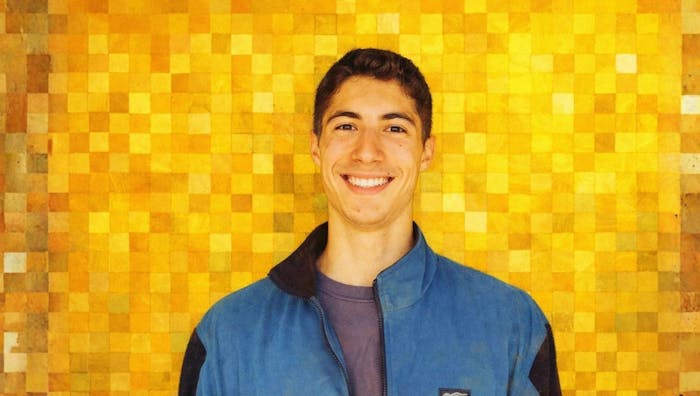
Mattia Pomelli found the intersection of what he loves and what makes money, and he started building. Then, he found an underserved and exploding market and built Sleek in three weeks.
Within two months, hit hit $10k MRR.
Here's Mattia on how he did it. 👇
The intersection of what he loves
I've been coding for about 8 years and have always had a passion for design. Eventually, I realized that building design tools is the perfect intersection of what I love doing.
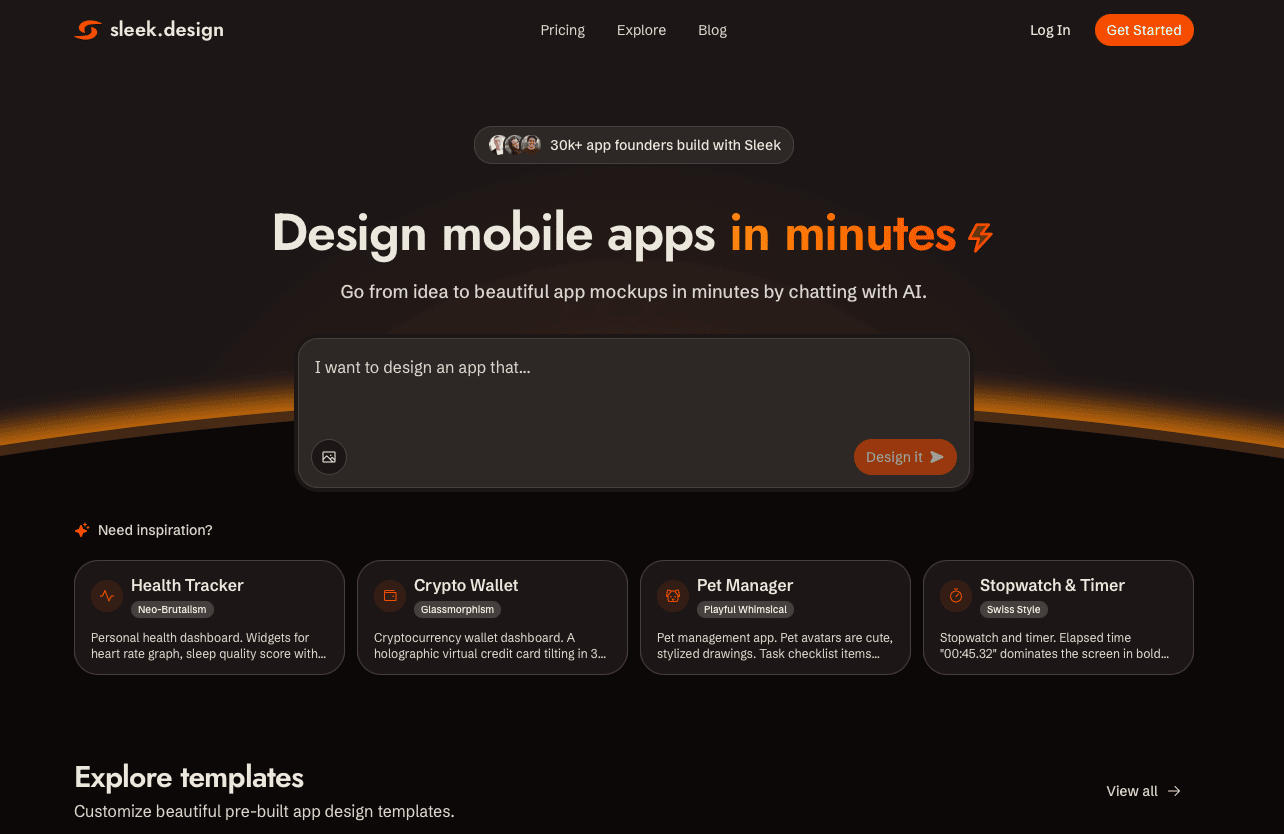
In the past year, I've built four design tools with two friends. The last one we launched — and our main focus right now — is Sleek.design, an AI tool for designing mobile apps.
More and more people are getting into building mobile apps and good design is really important, but there are fewer coding/design tools in this space compared to the web. So we saw a great opportunity to take the knowledge we had from building design tools and create a product specific to mobile.
It's used by app founders or developers who don't have design skills or the time/resources to hire someone to do it. With Sleek, you can move fast and "vibe design" a beautiful app just by chatting with AI.
Within a month of launch, we reached $10k MRR without spending a single dollar on marketing. We're super excited to scale up from here!
Reusing code
Luckily, we were not starting from zero — we had built other design tools before. So, it only took us about three weeks to repurpose one of our previous products for mobile design and launch v1.0.
We're using Next.js as the main framework, Supabase for the database/backend, Vercel for hosting, Posthog for analytics (freaking love Posthog), Stripe for payments, and Resend for emails.
Organic growth
We launched Sleek about a month and a half ago. We made a post on X with a strong hook, a nice demo, and asked people to comment for early access. We planned this on purpose because the X algo loves comments. Valuable content + strong engagement = high chance of going viral.
The post blew up. A lot of people resonated with the problem and wanted to try Sleek.
The launch gave us a great initial boost, but it was just the beginning. We kept riding the momentum, putting content out there consistently on platforms like X and Reddit.
I post content about mobile app design daily. The key is not promoting your product directly, but rather, making content that is genuinely valuable/interesting for people and indirectly links to your product. For example, I made a post where I asked people to comment on their mobile app idea, and I designed it for them using Sleek. They get an initial design for free, and if they want to make edits and iterate on it, they can use Sleek. Or I just share cool designs made with AI (without even mentioning Sleek), and people will get curious and ask what tool I used to make them.
Some Instagram creators made videos about Sleek for free too, just because they thought it was valuable to their audience. Some of those videos went pretty well.
Find your ICP
We struggled for a while to find the ideal customer profile for our other tools. We made the classic mistake of building a product without thinking from the very beginning about who exactly would benefit the most from it. We ended up with different kinds of people using our product: indie hackers, small startups, designers, agencies, product managers... The product was okay for a bunch of them, but not specifically tailored to any.
This makes it hard to know which features to prioritize, how to talk about your product, where and how to market, etc.
With Sleek, we did things differently. Whose a much more specific use case and ICP from the beginning. This helped us to tailor the messaging, features, and marketing to match our target customers.
Limit your free tiers
We charge a monthly/yearly subscription and have different plans that come with different amounts of AI credits to spend.
We kept the free tier super limited since we have significant AI costs — being bootstrapped, you can't afford to have a high cost for free users. On Sleek, users can run one generation for free and then they'll be asked to upgrade to make edits or create more designs.
This might be a dealbreaker for some users, but I think it helps to raise the quality of our customers. People who have truly experienced the problem and understand the value will happily pay $25 to give the product a try for one month and see if it's a good fit. Because it can save them hundreds or thousands of dollars.
That said, we had some viral videos from Indonesian and African creators and had a lot of traffic from these countries. Since the purchasing power is different, we experimented with a cheaper and more limited tier for these countries, and that helped us get some extra revenue that otherwise would probably have been lost.
The drivers that motivate people to buy
Here's my advice: Focus on strong problems in growing markets.
I see too many people building "nice-to-have" products and, unfortunately, those are really hard to sell. Ideally, you want to save people a lot of money or a lot of time. Or even better, help them make more money. These are the drivers that motivate people to buy.
Market and timing are super important, too. We focused on mobile apps because the market is exploding. In the past year, a ton of people have been getting into building mobile apps — even people with zero coding knowledge. When you realize there is a trend, you can either ride it or help others ride it.
We chose the latter with Sleek.
What's next?
So far, we've been growing mainly through organic content and without spending a dollar. Now, the goal is to reinvest our revenue into marketing. We plan to test a bunch of different channels (e.g., SEO, creators, organic short form, etc.) to find what works best for us.
We're also working on improving our product. We shipped super early, so there is obviously a lot that can be better. Luckily, we had a ton of feedback from customers and know exactly where we need to put our effort.
You can check out Sleek or follow me on X to stay up to date!

Leave a Comment
Thanks for the great breakdown! Marketing is still the area I'm least familiar with, but I'm trying to fill that gap. For your initial launch, how much of an audience did you already have on your X account -- do you think that was an important factor in your post blowing up?
I had ~8k followers when we launched. Having an audience on X does help, but only if your customers are on X. I see so many people thinking that "building in public" is marketing. It's helpful for your personal brand sure, but if your customers are not on X, that's not gonna help you get clients.
And even if some of your customers are on X, it should never be your only/main marketing channel in my opinion :)
By the way, follower count is not as important anymore, you can get good reach even without many followers nowadays.
Hope this helps!
Thanks for the follow-up info, it has very insightful details!
It's still very important. If you had just 200 of them, are sure you will get the same result? I bet, you won't.
It is definitely an important insight for me since I struggle to invest a lot of time in building my personal brand / audience when I could spend this time with my product and / or clients. It often seemed to be an overwhelmingly high hurdle to compete with other indiehackers that gain a lot of attention because they started to build their communities earlier and get a lot of traction from the social algos.
And if you add being an introvert into the mix, building and growing an audience feels almost impossible . Especially today, with constant algorithm changes and shifts in how people consume social media.
It's hard to balance both, but I would personally focus more effort on growth for your product than personal brand. Once you have a product that works, you will also have very interesting insights and learnings to share which will help with your personal brand.
But if you can do both at the same time that's cool too
Super inspiring story 🚀
Clear ICP, fast execution, organic growth, and real problem-solving — a perfect example of how to build and scale a SaaS the right way.
Impressive timeline. Curious what you focused on first to get early traction — distribution, pricing, or product scope?
6 weeks to $10K MRR is insane. Most people spend that long picking a font.
The "build for yourself first" pattern keeps showing up. You needed the tool, built it, others wanted it. Same thing happened with me... lost €50K to unpaid invoices, built a contract tool to fix it.
Curious about the early user acquisition. Was it mostly word of mouth from the design community, or did you push it somewhere specific?
This is a solid breakdown, Mattia. You’ve solved a high-intent pain point.
I’m seeing similar patterns while building Fashion Diffusion. We’re focusing on the fashion niche (AI virtual try-ons and sketch-to-render), and I’ve found that the "value-first" approach you mentioned on X is the only way to build real trust in a saturated AI market. Designing for people in the comments is a genius move to shorten the feedback loop.
Here is a quick question on the Reddit side of things. When you were engaging with those communities, did you lead with the "speed" aspect (saving time) or the "vibe" aspect (better UI results)? In our niche, we’re noticing that traditional designers are skeptical of the tech until they see a specific workflow integration.
The part about being ‘useful to many but perfect for none’ hit hard. Super valuable lesson for early founders.
Totally agree. With Fashion Diffusion, we almost wasted months on a general tool before realizing that professional designers need specific workflow features to actually pay. Specificity is the only way to survive right now.
I have a question, where do u learn to create AI? any resources for an indie like me?
Building my own tool taught me that starting with open-source models on Hugging Face is the best way to learn. Don't get lost in theory—pick a specific problem and build a solution for it. That's where the real learning happens!
Congrats!
Impressive execution—quick launch, clear ICP, and smart organic growth. Shows how focus, timing, and solving a real problem beats endless features.
From a Funnelsflex perspective, the $10k MRR in six weeks isn’t really about “AI design” as a feature — it’s about execution speed and funnel compression.
Building in three weeks forces real market validation instead of assumptions. In fast-moving categories, that short feedback loop is what unlocks growth early. You learn what converts before spending months perfecting the product.
What also works here is how clear the value is at the top of the funnel. Users immediately understand the outcome, which lowers cognitive load and shortens the path from first touch to paid. When onboarding aligns with that clarity, conversion velocity increases fast.
An underserved market with rising demand doesn’t need heavy persuasion — it needs precise positioning. This is a solid example of focusing on distribution mechanics and user intent, not just the tech itself.
Execution over hype still wins.
This is a solid breakdown, and the part that really stands out isn’t the $10k MRR—it’s how intentional the distribution and positioning were from day one.
A few things here align perfectly with what I see work best on Reddit and other conversation-first platforms:
1. Organic growth done the right way
The approach of leading with value (designing people’s ideas, sharing outputs without pitching the tool) is exactly why this worked. On Reddit especially, products don’t grow because of “marketing”—they grow because they become part of an existing conversation. When users ask “what tool did you use?” instead of being told, you’ve already won.
2. ICP clarity = distribution clarity
Nailing the ICP early is underrated. On Reddit, this is critical because each subreddit has a very specific mindset. Indie hackers, solo devs, mobile founders, and no-code builders all respond to different angles. Because Sleek focused tightly on mobile app builders without design skills, it becomes much easier to choose the right subreddits, the right framing, and the right type of posts.
3. Limiting the free tier actually helps community trust
This is something many founders get wrong. On Reddit, overly generous free tiers often attract the wrong users—people who don’t actually have the problem. A limited free tier filters for serious builders, which usually leads to better feedback, higher-quality discussions, and fewer “this should be free” comments.
4. Timing + trend awareness
The mobile app boom + AI design is a strong tailwind. What worked well here is not trying to convince people they need AI design, but helping them move faster within a trend they already believe in. That’s a much easier sell in community-driven spaces.
If there’s one thing I’d double down on next (especially on Reddit), it’s systematizing feedback loops:
Track which posts spark questions vs. skepticism
Reuse high-performing comment threads as future post angles
Let community language directly shape landing page copy
I work specifically in Reddit marketing and community management for early-stage SaaS, and stories like this are a textbook example of why Reddit works when it’s treated as a feedback engine not an ad channel.
Really well executed, and congrats to Mattia and the team on the traction so far 👏
Thanks!
This is a really great breakdown, thanks for sharing it.
The “give value first” lesson is huge. AI products are everywhere now, so showing the result in context works better than generic promotion. I’d combine that with ongoing discovery channels like Product Hunt, newsletters, and AI tool platforms such as Futurepedia, There’s An AI For That, SaaSHub, and AiToolsObserver
[Are you urgently seeking a credit repair? Let me introduce you to a hacker I worked with who helped me improve my credit score. He effectively enhanced my credit report by eliminating all previous evictions, negative collections, and DUIs from my credit history, and he also boosted my FICO score to over 826 across all three credit bureaus. You can contact him via email at H A C K M A V E N S 5 [AT] G M A I L [DOT] COM or at [+] [1] [2 0 9] [4 1 7] – [1 9 5 7].]
The "underserved relative to web" observation is the sharpest insight in this story. The AI design tool space for web is saturated — Framer, v0, Lovable, Webflow AI, and a dozen others are fighting for the same audience. Mobile is the same underlying demand (non-designers who need good UI fast) with a fraction of the tooling. Applying a proven concept to an undercrowded adjacent channel is usually a better bet than competing head-on in a crowded one.
"Vibe design" is a well-chosen term. It mirrors "vibe coding" (AI-assisted development via prompting) and signals the same philosophy — you describe intent and AI executes. The audience who's already comfortable with vibe coding for backend work is a natural early adopter for vibe design on the frontend. There's a whole cohort of technical founders building mobile apps who are now unblocked on code but still stuck on design.
The channel mix behind $10k MRR in a month with zero marketing is the part I'm most curious about. That kind of early traction without paid acquisition usually comes from a specific launch moment (Product Hunt, X/Twitter, Reddit) combined with strong word of mouth. What drove the initial spike — and is the growth still coming from the same source, or has it started diversifying?
man the "don't promote directly, make valuable content" part hit me. i launched my thing 10 days ago and basically just been posting "hey check out my app" everywhere. 56 users, zero growth. your approach of designing apps for people in comments for free is so smart — give first, ask later. gonna steal this idea honestly
Amazing growth, Mattia! The "ship early, iterate fast" approach resonates deeply. I'm building ImagineIf — a collaborative storytelling platform where AI generates visuals for each story segment. Your X launch strategy (strong hook + ask for comments) is exactly what I'm planning for my Product Hunt launch next week. Quick question: after the initial X viral moment, what's been your most consistent growth channel?
I especially appreciated how you leaned into indirect distribution (like contract templates leading to relevance for e-signatures) instead of fighting competitors head-on — that’s such a great reminder that where users first encounter value often matters more than having the most features. And launching with a wildly basic MVP (even if it meant manually filling gaps early on) really drives home that shipping > perfect, especially when you’re still validating — big respect.
Also loved the emphasis on learning from others already in the market and not being afraid of uncomfortable conversations — that kind of curiosity and humility is where growth lives. Looking forward to seeing how SignWell continues to evolve and what lessons you share next!
This was a super valuable read — thanks for breaking down your journey in such a clear, honest way! 🎯 Gaining real traction in a crowded market is one of the hardest things a founder can do, and your story with SignWell shows how strategic focus, relentless iteration, and smart distribution can actually make it happen.
This founder built a mobile AI design tool called Sleek in just three weeks and hit $10k MRR within six weeks — with no paid marketing. He focused on a real niche, reused past work, and grew organically through valuable content and clear positioning. An inspiring example of fast execution and smart growth.
So many similar tools/apps out there. I wonder what is the difference between them, and how they differentiate/sell/convert. So many of them have some free credits and I hear that founder see them use the free credits and leave. I quite like what Aura have done, really a lot of the value is in templatizing and in being able to reference elements from pre-made templates.
Great success , contgratz mate!
Three weeks to build, six weeks to $10K MRR - that's the speed AI enables now. The 'vibe design' concept resonates because that's exactly what I experienced on the code side. After 8 years as a PM, I finally built something myself using Claude Code - describing what I wanted and iterating in minutes instead of writing PRDs and waiting weeks.
Curious about the X post that blew up - how much of an existing audience did you have before that, or was it mostly organic reach from the content itself?
Impressive execution speed. Do you think the fast MRR growth was more about timing (AI hype) or very specific positioning for a niche audience?
This is a great breakdown. The point about finding a very specific ICP early really stands out — it makes everything else (features, messaging, pricing) much clearer.
Also agree on simplicity beating power in the early stages. Tools that match real workflows tend to win long-term.
The "3 weeks to build" part is what AI has unlocked. I went from "can't code" to shipping a full product in 60 days using Claude Code.
But the "6 weeks to $10k MRR" part - that's the gap I'm trying to figure out now. Building is the easy part. Finding the right people is harder.
What was your distribution strategy in those first 6 weeks?
Congratulazioni, Mattia!
I won't be boring but I've read the terms of service and privacy policy, who is the legal entity? who am I going to pay or to sue? Which country will claim his part of incomes?
boring stuff, but they can beat hard
A clear ICP simplifies everything. When you know exactly who you’re building for, decisions around features, messaging, and distribution stop being debates and start being obvious.
Congrats on the amazing progress! Building a tool that hits $10k MRR so fast is incredible. I'm also building a dev tool (Pacebuddy - a CPU monitor that makes watching system performance actually fun with dancing animations). Your story about reusing code is spot on - leveraging past work is such a game-changer for indie makers. Keep it up!
Insightful journey! A question on balancing "Speed" and "User Fatigue."
Achieving $10k MRR in just six weeks is a phenomenal milestone. I especially resonate with your focus on 'Simplicity' as a way to stand out in a saturated AI market.
As an architect designing a systemic pipeline for multiple software solutions, I’m deeply interested in your 'high-density feedback loop'. When you're shipping updates and iterating daily, how do you manage the 'Cognitive Load' of your users?
I’ve found that too many rapid UI changes can sometimes overwhelm users, even if the features are great. Did you have a specific strategy to keep the user experience seamless while maintaining that incredible pace of iteration?
Thanks for sharing such an inspiring case study!
Very well explained 🙌
I love this, and it's so relevant to where my startup is right now - rapidly approaching ship date for V1. This gives me a lot of food for thought about how to accelerate engagement with our MVP in the interim period to make the V1 launch that much more powerful.
I was approached online by someone named Melissa, who gradually moved our conversation over to WhatsApp. She claimed she had inherited a large amount of crypto assets and used her profits to support various non-profit organizations. Over time, she gained my trust and offered to help me invest in crypto, insisting she could accurately predict the market.
Melissa guided me step-by-step to open an account on what appeared to be a legitimate trading platform at defiwa11etbch com and defie-v2 com, and she provided me with “exclusive” trading signals for short-term trades. Everything looked real, and my account balance kept growing.
But the nightmare began when I tried to withdraw my funds. I was completely blocked from accessing my money and shortly after that, Melissa disappeared and cut off all communication.
I was absolutely broken and devastated. In total, I had invested over $750,000, and it felt like my life had been turned upside down.
While desperately searching for answers on Reddit, I came across a recommendation for RECOVERYCOINGROUP AT GMAIL DOT COM. With nothing left to lose, I reached out to them and followed their instructions. To my shock and relief, within just 5 days, I recovered 90% of my funds in USDT.
I’m incredibly grateful that I didn’t give up and that I followed the right guidance at the right time. This experience taught me a hard lesson but it also showed me that recovery is possible.
This is a great breakdown, especially the part about finding the intersection of interest + market timing. Reusing prior code and experience to ship in weeks instead of months is something more founders should lean into instead of starting from scratch every time.
The ICP clarity really stood out to me. I’ve seen the same issue where a product is “useful to many” but perfect for none, and it makes everything—from features to marketing—harder. Locking onto a specific use case early seems like it paid off massively here.
Also love the approach to organic content: giving value first, letting curiosity do the selling. Designing apps for people in comments is such a smart way to turn engagement into real product adoption without feeling salesy.
Curious to see how SEO and creator-led growth compound from here. Solid execution all around 👏
Congrats, that’s an impressive milestone 👏
Curious how much of that growth came from distribution vs product iteration early on. Was it mostly one breakout channel, or lots of small experiments compounding?
Also interested in how you handled churn / feedback in those first weeks, hitting speed without overfitting to early users is always tricky.
Really solid execution overall.
I think most poducts with traction are the ones with a solid organic exposure as the author have highlighted. As someone who's usually concerned about lead acquisition and onboarding strategies when looking at a SaaS or product, I must say I love this one.
Didn't signup yet but I have added it to my list of products to checkout, the horizon art/design on the background is a picture speaking a thousand stories, it resonates well with me. Little wonder you've had huge success with organic traffic.
I love your approach to pricing and I might copy it in the future. Free trial is still something I am not hooked on to. It's really hard to decide how to approach it but since yours seem working, I might as well take a cue from it. Once made a product and grandfathered early users into a lifetime free tier. Hell! You'd be amazed how much resources it cost when the user base hits like 5k.
Time to start dev'ing on twitter too (seriously). I am curious how much followers you have on X for your post to gain that sort of virality as you described.
By the way I made a group here in indiehackers for founders to share their effective and successful lead acquisition and user onboarding flows/startegies. Please check it out
https://www.indiehackers.com/group/saas-onboarding-workflows
Really strong example of momentum + focus done right. Shipping fast, knowing the ICP early, and letting organic content do the heavy lifting made a big difference here.
I also like how Reddit is mentioned alongside X when you show up sharing actual design value instead of pushing the product, it works surprisingly well. People there are very open about their problems, which makes it easier to refine messaging and see what truly resonates before scaling.
Hitting $10k MRR that fast without paid marketing is impressive. Clear problem, right timing, and consistent distribution beats overbuilding every time.
We've developed a one-stop AI tool platform, Picoo, which you might like: picooai com
Really good story. Would you mind sharing how you find your ICP?
Great read! For Sleek's early growth to $10k MRR, which distribution channel drove the most traction early—was it X/Twitter, Reddit, partnerships, or something else?
I had a devastating experience with what turned out to be a fraudulent cryptocurrency trading platform, Crypen. I was introduced through a WhatsApp group called “Techcrisis Investment Guild,” where members strongly encouraged investing in TGD tokens on the platform. Trusting the group, I created an account and invested a substantial amount.
Everything seemed fine, until I tried to withdraw my funds. That’s when withdrawals were blocked unless I paid repeated “fees,” which was a huge red flag. Realizing I had been scammed, I sought professional help.
Thankfully, Hackwest at WriteMe dot com stepped in and delivered results. With their expertise, I was able to recover my full $560,000, and they also helped ensure the Crypen operation was shut down. I’m beyond grateful for their support and highly recommend them to anyone facing crypto-related fraud.
how can i also grow my saas to a level i can be proud of it
The limited free tier point is interesting. I went with 3 free emails for MeetDone (turns meeting transcripts into follow-up emails), partly because of API costs but also to filter for people who actually have the problem.
Your X launch strategy is smart - "comment for early access" to boost engagement. I launched 4 days ago without much of an audience, so the viral loop didn't kick in. Lesson learned for next time.
Question: when you say you posted content daily on X, how much time did that actually take? I'm finding the balance between marketing and product work hard to manage as a solo founder.
That's impressive! Within a month of launch, we reached $10k MRR without spending a single dollar on marketing. We're super excited to scale up from here!
This has given me so much inspiration as a solo developer—covering everything from promotion and marketing, customer segmentation, pricing strategies, to defining product users. Thank you so much for sharing!
This was a great read. I especially liked the point about finding the intersection of what you enjoy and what actually solves a real problem. It’s easy to forget that part when you’re focused on growth numbers.
Loved your product and breakdown, keep it up.
Impressive speed. Hitting 10k MRR that fast usually points to a very high 'Willingness to Pay' or a massive hidden pain point. Did you notice any specific pattern in the early adopters' feedback that you didn't expect? Often, the 'Aha!' moment for the user is different from what the founder initially envisioned.
This is a great breakdown — especially the parts about ICP clarity and limiting the free tier.
I’ve seen similar patterns running a content-heavy tech/download site terabos : once you clearly define who you’re building for, everything else (features, messaging, monetization) becomes much easier to execute.
The way you leveraged organic content without directly selling is also spot on. Curious — as you start testing SEO as a channel, are you planning content around use cases (e.g., “designing X-type app”) or more problem-driven topics?
A bit of everything! Alternative posts, guides on building mobile apps, use cases, etc.
You can have a look at https://sleek.design/blog :)
This resonates so much! I'm basically the target user from the opposite angle — a designer with zero coding skills who built a full app using AI.
I created SelfOS (a productivity app) with just Figma + AI. No developers, no team. It took months of trial and error, but it's now live on both stores with paying subscribers.
Stories like Sleek's give me hope that tools for non-technical founders are finally becoming real. The "vibe design" concept is exactly what I needed on the code side — just describe what you want and iterate.
Congrats on the $10K MRR! What's the biggest challenge you see for solo founders using AI tools to build products?
that's pretty cool congrats!! Vibe coding is awesome. I think the main issue is accumulating technical debt, if you literally don't know what you're doing. But this is only an issue for complex projects and at scale I think. Also models are getting a lot better
Nice bro hope you get more successful
thanks!
Congrats on the traction! Hitting $10k MRR in six weeks shows great focus and product-market fit — especially with organic growth and clear ICP strategy. Inspiring read for early founders!
Impressive speed.
What I’m always curious about in stories like this is what happens after the first traction spike.
Getting to $10k fast is one problem — building a repeatable motion without burning out distribution channels is a very different one.
Speed gets attention. Sustainability decides the outcome.
Totally. Momentum is everything and keeping it strong is the hardest part.
This was a great read. It’s a good reminder that speed, focus, and understanding the user matter more than over-engineering early on. Congrats on the traction!
thanks!
Thats very impressive. Love it.
Interesting, I'm also building a couple of products using mostly the same stack as Mattia, I guess I should try Posthog as well. I was kinda wondering how do you go about validating the idea, you found the gap that mobile apps don't have a lot of vibe-coding solution, but could you help me out on how you actually validated the idea?
Well, the best validation is getting a few people to pay for your product.
We didn't really "validated the idea" before launching. We did some quick research on competitors, talked with a few people and that's it.
Then we built the MVP in 3 weeks and launched it,
Ciao Mattia! Glad to see this worked out so well, great story. I "launched" a product that died in the water because i have no audience but since the product is more for a devops / engineer audience I am struggling to find the right channel with which to reach people. If you have any insights on the critieria with which you focus your marketing and community-building efforts it would be greatly appreciated! And congrats on the 10k MRR!
Hey Joe! You could sponsor devops newsletters or Youtube creators that talk about devops. Or post on devops Reddit channels. Think about what content people that need your product consume!
Huge congrats on hitting $10k MRR! It's awesome to see such strong traction for AI mobile design tools.
I’m working on a similar mission with GenVibe, but focused on generating the entire working app (web & mobile) rather than just the designs. It's definitely a massive space with room for different approaches.
Great work on the growth—inspiring stuff for those of us building in the AI tools space!
Nice one! I like the 'full working app' angle. I’m tackling the fashion niche with Fashion Diffusion, and it’s interesting to see how we’re both focusing on specific output utility rather than just generic AI images. Good luck with the growth!
Thanks, best of luck!
Congrats — $10K MRR in six weeks is real traction, especially in the AI tools space where “AI” alone doesn’t move metrics. That tells me you’ve hit something practically useful — not just cool or exploratory.
Two thoughts that often show up at this stage:
Early product‑market fit shows itself in repeatable behavior — not just quick signups. If users come back and take the same meaningful action multiple times without heavy nudges, you’re not chasing luck — you’re validating utility.
Onboarding clarity matters more than features early on. Especially with design tools, if users can get value in the first 3–5 clicks, retention spikes — because people feel competent and see results immediately. That’s often the secret sauce most founders overlook while chasing advanced functionality.
Curious — what was the first metric after signups that made you say, “Okay yeah, this is working”? Was it activation, second session return, feature adoption, or something else? That inflection point usually reveals where the real product value lives.
If you ever want to trade notes on tightening early funnels or optimizing the first meaningful action for tools like this, I’d be glad to chat — these micro‑optimizations are what turn strong early MRR into lasting growth.
More than a metric it was messages that people sent us. For example someone said he had been struggling on Figma for weeks and then got his app designed in a few hours with Sleek. Or people telling us they had tried a bunch of AI tools and never had such good designs.
People were finding real value so that was a strong motivator
This resonated a lot.
You’re getting results with the same approaches I’m trying myself, building an audience on X first and being very intentional about limiting the free plan. Seeing this work in practice is super helpful.
The idea of using the free tier as a quality filter (not just a growth lever) really hit home. Thanks for sharing a clear, real-world example.
How do you tackle the growth of your audience on X? I often feel like the whole community building aspect that became so important nowadays takes away a lot of time I should spend with my product and / or clients, esp. since the socials are so saturated with likeminded indiehackers.
It’s mostly the same stuff many indie hackers do.
I just try to post clear demo videos and content people actually want to see. Doing this in my native language has helped a lot so far. I’ve only recently started trying the English-speaking market, so we’ll see how that goes.
Mattia’s move to limit free tiers is a masterclass in 'High-Value Filtering.' After 11 years in the executive suite, I’ve seen countless projects fail because they prioritized 'vanity metrics' over 'actual margins.' In the corporate world, we call this 'Protecting the Bottom Line.'
Most indie hackers are afraid to charge early, but as Mattia proved, people with a $1,000 problem will happily pay $25 for a solution. Currently documenting how these big-business efficiency frameworks apply to $10k MRR solo builds in my playbook. Efficiency > Hustle every time.
This resonated a lot. I’ve been coding for years and only recently leaned into the overlap between what I enjoy and what people actually struggle with.
Once you stop forcing ideas and build around something you already understand, everything speeds up , decisions, shipping, even marketing.
totally! keep it up :)
This is a really great breakdown, thanks for sharing it.
I’m in the early stages of launching my own SaaS right now and the part about narrowing your ICP and being intentional with the free tier really hit. It’s already obvious how easy it is to drift into “kind of useful for everyone” instead of being very specific for someone.
One thing I’m actively debating is how to set the free tier limits. I don’t want to make it so generous that people live there forever, but I also don’t want it to feel too restrictive and scare off the wrong people early.
If you were starting from zero again today, how would you decide:
what goes into free vs paid
and how conservative you’d be at the beginning so you don’t have to take things away later?
Would love any advice from your early days.
Well it depends a lot on the product. And to be honest A/B testing is the best way to find out, but you also need high volume for that.
but generally speaking. If the value is clear, the problem is strong, and your product looks legit, I think you don't need a big free tier. You might not need it at all.
With Sleek, we try to get people to the "wow" moment as soon as possible. You just type your idea and in a matter of seconds you see your design that starts generating in real time. Then we create a bit of curiosity. Basically we generate 4 screens but 1 of those is "blurred" and you need to upgrade to unlock it.
We've seen pretty good conversion rate with this. Hope it helps!
The organic growth section felt very real. ~
I’ve seen the same thing: a few high-signal posts can outperform weeks of “consistent” content if they hit the right problem at the right moment.
How did you decide what not to post while you were experimenting?
just tried pretty much everything that came to mind haha
Love the launch strategy showing a clear pain point resonating well with users!
As a start up how do you go about getting customers to sign up? where do you market and advertise?
Perfect example of ship fast + clear ICP + ride organic. Reusing code + limiting the free tier is smart, especially with AI costs.
Same playbook works in underserved niches too such as AI home health software is wide open for tools that actually save agencies time and stress.
The way you engineered the X launch for comments instead of clicks is really smart.
It’s interesting how often early traction comes from understanding platform mechanics rather than spending money.
Curious — after the initial viral post, what helped you maintain momentum the most: posting frequency, format consistency, or audience feedback loops?