Building a $20k/mo portfolio and finally going all-in on a 17-year-old product
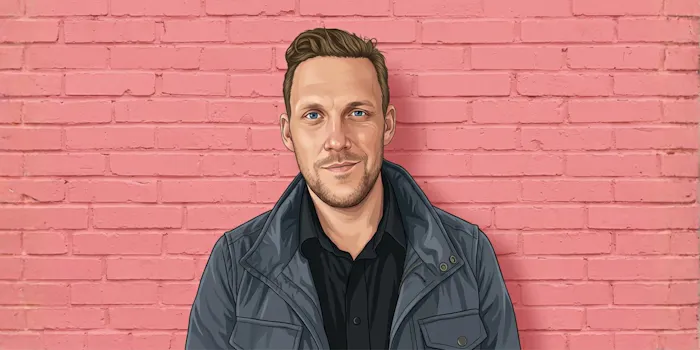
Marcel Fahle started Bold 17 years ago, but it was just a side project until recently. He pivoted, rebuilt it into an AI-native product, and went all in. It's currently bringing in $3k/mo, while the rest of his portfolio brings in roughly $17k/mo.
Here's Marcel on how he's doing it. 👇
Making it work with a portfolio
I'm a software engineer from Germany, based in Spain. 25+ years of building software, most recently as principal engineer at Commercetools until August 2025.
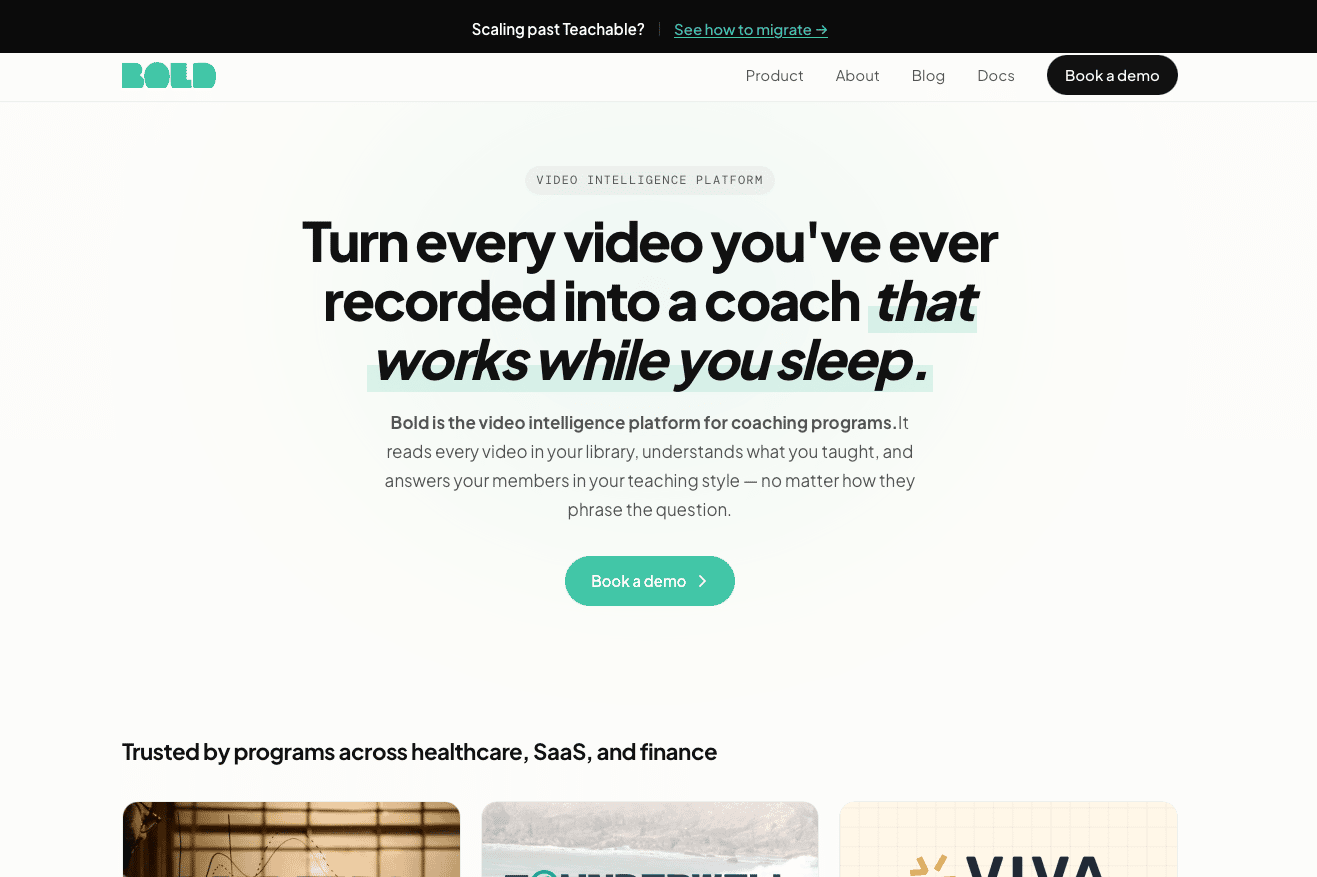
These days, I'm full-time on Bold, a video intelligence platform for coaching programs and training academies. I run it with my cofounder, Rob Hope. He handles marketing and design; I handle product and engineering.
The bet: Coaching businesses spend a fortune producing video content that nobody can find or use, and Bold turns those libraries into AI coaches that answer student questions with timestamped citations from the content.
I'm also doing a few other things:
I'm a partner at FounderWell, a coaching program for SaaS founders.
I run a consulting practice called Sprint Zero
And on the side, I still run Pidro, a multiplayer card game on iOS and Android with 70k players. I'm rebuilding it from scratch with AI doing all the coding, which has been the most fun I've had in years.
I generate around $15-20k MRR in combined revenue. The bulk comes from SprintZero, which varies between $10-15k/month and funds the product work. Bold is early. It generates ~$3k MRR from 3 customers, plus a revenue share from FounderWell — I'm still figuring out its exact amount, but it will likely push us past $5k. Pidro (the card game) sits at ~$2.5k MRR.
Taking the bet
Bold started as a headless video platform I ran on the side. My first customer is still on it, 17 years later. For most of that time, it was just hosting and delivery — useful but unexciting.
What changed was AI. Once we could extract structured intelligence from video and have students ask real questions of the content, the product stopped being plumbing and started being something a coaching business would pay real money for.
I had this realization at SaaS Academy. I wasn't going to sign up — I didn't want to spend the money, but my wife pushed me to go. It changed everything. I was sitting in a room full of exactly the kind of operators we'd end up selling to, watching them struggle with their own video libraries. That's when I started taking Bold seriously.
I left Commercetools in August and went all in on Bold in September. I'd had the entrepreneurial itch for years, but always stayed comfortable in engineering roles. AI made the bet finally worth taking.
Getting started
That's when Bold became real. Two small kids at home, family math to do, but a side project with paying customers and a consulting practice that could keep the lights on. "Going all in" was less a brave decision than the right one given what was already on the table.
I built the first AI version of Bold inside Commercetools. They had a huge library of partner interviews, and I got a chat and RAG layer working over it. Watching someone ask a question and getting a precise, cited answer out of hours of recorded conversations felt genuinely magical. That was the moment I knew this wasn't just a side project anymore.
Real customers signing on pulled the product forward. Viva Tuition came first, an ACCA exam prep program migrating around 2,500 videos onto Bold. HRT University, a clinical training program with 300 hours of content, signed next. FounderWell, a coaching program for SaaS founders, is the one running live today, and where we are finding and filing off most of the rough edges. Each has a different shape of library and a different student base, which has been the best possible forcing function for building something that generalizes.
The stack
Here's the stack:
Backend is Elixir/Phoenix on Postgres, multi-tenant via Triplex with Oban for background jobs and a hybrid keyword + vector search layer. Boring, durable, easy to maintain solo.
Video runs on Mux and S3, with transcription routed across a handful of speech-to-text engines (AssemblyAI, Deepgram, Speechmatics, Sonix, Rev) depending on language, accuracy, and cost. The AI layer is Anthropic and OpenAI, but I'm constantly evaluating other providers and models.
Frontend is a headless Next.js starter. Bold is API-first, so customers can use our starter, build their own, or wire Bold into an existing site. The fast-launch combo we recommend is Bold + Sanity for CMS + Outseta for membership.
Hosted on Gigalixir today, evaluating a move to Hetzner + Kamal. Indie founder math.
The hardest part wasn't the code. It was the gap between "this works for one customer" and "this is a product." That meant rewriting the same systems three or four times until the patterns stopped breaking when a new customer showed up with their own oddly-shaped library.
Admit that you're hedging
The biggest obstacle was me. Not the market, the tech, or the customers.
For years, I had a comfortable engineering job, a working side project with real customers, and every excuse I needed to keep one foot in each world. The hard part wasn't building, it was admitting I'd been hedging — that I'd built up a very polished story for why "now isn't the right time." I did that for longer than I'd like to admit.
It was impostor syndrome. I've spent most of my time around brilliant people, and the reflex is to assume everyone else has figured out something you haven't. So you stay quiet.
Customer feedback broke that — and Brene Brown :)
When someone running a 2500-video training program looks at what you built and says "this is what we've been waiting for," it gets harder to keep believing you don't belong in the room. I still feel it though!
If I had to start over, I'd grind my face off much earlier. I'd do the inner work, name the procrastination for what it was, and just go. Everything I'm doing now I could have been doing three or four years ago.
Inbound leads
Bold is a straightforward SaaS. We price it based on library size, active students, and AI usage. Customers pay between $700 and $1,500 per month; an enterprise tier is available above that. We offer no free or low-tier plan and do not plan to, because the intelligence layer doesn't earn its keep below a certain scale.
Our growth has been entirely inbound: warm intros, peer networks, founder-to-founder. Much of it has come through founder coaching circles, which also led to my partnership with FounderWell. Our Ideal Customer Profile (ICP) almost perfectly overlaps with those already in these circles.
No formal playbook exists yet. The first three customers came because the product did the talking, and word travels fast in coaching circles. At this stage, I'd rather have one customer obsessed with the product than a hundred who showed up because of a clever campaign.
That said, we are starting more deliberate work now. Rob's leading a content push; I'm doing more outreach and showing up at events, etc.
Get started by breaking tasks down into micro tasks
I have two pieces of advice, both borrowed from trail running, which our family obsesses over.
Break complex things down until each step is small enough to start. Most "I don't know where to begin" moments aren't about not knowing. They're about the next step being too big. Cut it in half, then cut it in half again, until what's in front of you is something you can do in the next hour. Then do that.
And when you fall off, don't make it mean anything. No judgment, no story about why this proves you're not cut out for it. Just begin again. The founders and runners who go the distance aren't the ones who never miss a day. They're the ones who don't turn a missed day into a missed week. That single skill, the ability to start over without making it a referendum on yourself, is most of the game.
What's next?
I want Bold to be a great business that solves a real problem. Coaching programs contain enormous amounts of expertise locked in video, and most of it remains unused. Closing that gap matters.
I am building toward a small, high-quality team, customers who genuinely love the product, and a company that supports my family without being a treadmill.
Not the biggest exit or the most logos. Something durable, where I'd be happy to still be doing the work in 20 years.
You can learn more at:

Leave a Comment
This is incredibly relevant to where I'm at right now!I spent the last 3 months building a YouTube automation framework with pluggable AI (Gemini, ChatGPT, Claude). Like you, I had a working side project (emotion-based Shorts automation generating revenue), and I just launched a more universal version. My question: When you talk about breaking out of impostor syndrome — how did you know Bold was the bet worth taking? Was it the customer feedback, or did you have a specific signal?Also love your advice about breaking things into micro-tasks. That's exactly what got me from zero to "product on Gumroad" in just 4 days. Looking forward to seeing Bold grow!"
Thank you so much @Yedam and congrats getting the product published!
I always had personal conviction. But to me, the product never had that thing that made it a no-brainer and actually valuable. It was always just a thing that's much nicer than the other platforms, but that's about it. Just nicer. the real shift happened when I stumbled into my ICP and heard about the pain and had people (with credit cards) getting all excited about it. That's when I knew the product has a proper direction, and when things at the dayjob got complicated I knew we need to double down on bold. :)
One of the most interesting parts here is the patience behind compounding small wins over a long period of time. A lot of founders underestimate how powerful consistency becomes when paired with deep product familiarity.
Going all-in after 17 years also says a lot about conviction and timing rather than chasing short-term momentum.
A good way to put it, thanks! conviction gets talked about like it's some heroic internal feeling, but for me it was much slower and messier: but years of context, a clearer market and customers finally pulling hard.. it became harder to ignore than committing :D
What stood out to me: this wasn’t a leap of faith. It was years of stacking assets, revenue streams, relationships, and domain knowledge before finally going all in. Very different from the typical startup narrative.
Appreciate you Jack. Yes, I had a lot to fall back on. It wasn't that brave of a decision, with 9-5 transitions happening, etc.. My wife didn't thing for a second when I asked her :D
The "admit you're hedging" part is the most honest line in this whole post. I see this constantly in founders I invest in. The portfolio framing is comfortable because it lets you call your hesitation a strategy. Most multi-project portfolios aren't a strategy, they're emotional insurance.
A simple test: if your top product hits a real problem this week, does another project in your portfolio save you, or pull your attention away from fixing it? If it's the second one, you're hedging. Glad you went all in on Bold. 17 years of intermittent compounding plus full commitment is a real moat.
love this Gregory, and painfully accurate.
Currently the portfolio is just a means to feed the fam, if bold goes up, I do less of the other things. I Bold has a problem, I go save it immediately.
It was different at the dayjob, because I felt the responsibilities to team and employer, those most of the time took precedence.
The distractions are still real though, so things like a seed round are being discussed as well. We'll see :)
the "all in" frame is doing a lot of work in this post that the numbers don't back. bold is $3k MRR, sprintzero is $10-15k, pidro is $2.5k, plus founderwell. that's not all in on bold. that's a healthy portfolio where consulting funds the product bet.
which is fine. it's probably the right setup. but the headline lesson most readers will take from this is "quit the job and go all in" and the actual lesson is "you can go all in on the product only because consulting pays the bills."
curious where the actual threshold was for you marcel. was it MRR-based, runway-based, or a feel thing? "i went all in" reads cleaner than "i had a $10k consulting floor and two paying bold customers when i left commercetools." the second version is more useful to anyone reading this trying to decide if they can make the same jump.
Fair push, Jack :)
"All-in" in this case doesn't mean that bold is the only revenue source, but it means it is the main thing I'm building right now and that I'm not employed by someone. The other stuff currently pays for the party, until it doesn't have to anymore.
The threshold was a mix: 9-5 getting complicated, consistent ICP pull and then the feel and talk with the wife... We first dug into the savings and now do sprintzero as a runway strategy. Attention and intent is all on Bold though.
I left my comfy engineering job last year too.Not because i had it all figured out,but because i couldn‘t keep pretending someday was a real plan.The part about cutting tasks down until the next step is small enough to start that's painfully accurate.I spent months buliding features nobody asked for because i was avoiding the hard stuff:talking to customers and asking for money.
Also,the bit about not turning a missed day into a missed week,that's the whole game.
So good, Eva! Every line here resonates :) and yes, exactly, building stuff nobody asked for is such a common escape hatch for engineers. We avoid telling people about our stuff any way we can :D
Love that "taking the leap" felt like the logical thing to do. So many engineers with comfortable jobs that never end up taking the leap despite it maybe even being the logical thing to do.
Really inspiring story! 17 years of patience is amazing. The advice about breaking big tasks into small steps is so helpful. Congrats on going all-in with Bold!
An exciting project that proves it can work at any age!
Real talk on 'admitting that you’re hedging'. Staying comfortable in a principal engineer role while keeping a side project on life support for years is such a classic indie hacker trap. Needed that reminder on breaking tasks into micro-tasks too.....
What stands out here is how much of this success story is actually compounding from previous failed systems rather than the final idea itself.
Most people read this as a “Kickstarter success”, but the deeper signal seems to be how execution shifted once distribution and validation stopped being the bottleneck.
Curious at what point did you realize the product was no longer the main constraint, but the system around it was?
A question for your tech stack: Why did you choose a multi-tenant setup with Triplex instead of using native RLS in Postgres? RAG and AI vectors, has the logical separation in Triplex caused any performance issues when scaling!
A question for your tech stack: Why did you choose a multi-tenant setup with Triplex instead of using native RLS in Postgres? RAG and AI vectors, has the logical separation in Triplex caused any performance issues when scaling!
sounds like an exciting project !
Thanks for sharing this
It’s quite a leap to go from Lead Engineer to Solo Founder. Impostor syndrome in engineering is real, and it makes us overanalyze everything.
A question about your tech stack: Why did you choose a multi-tenant setup with Triplex instead of using native Row-Level Security (RLS) in Postgres? Regarding RAG and AI vectors, has the logical separation in Triplex caused any performance issues when scaling?
Greetings from Venezuela, and best of luck with Bold!
Do you think AI reduces the barrier to entry for solo founders, or just increases competition?
So I started looking for an alternative and found this site: . I installed it—and finally everything became clear: the battery level displays properly, you can set up notifications, and there’s a handy widget.
This resonates a lot — going all-in after years of side hustle is the
hardest single decision in indie life, way harder than the building
itself.
I'm in the early version of that journey: I run pécule (multi-method
budget tracker, FR market), built solo on top of my day job in
infrastructure. Reading your $20k/mo portfolio + 17-year journey is
honestly motivating because it shows that compounding works even on
projects that take a decade+ to find their stride.
Two questions if you're up for sharing:
1. When you decided to go all-in on the 17-year-old product specifically
(vs another in the portfolio), what was the tipping signal? Revenue
growth curve, your own gut, market expansion, or something else?
2. How did you handle the psychological switch from "I have N safety
nets" to "this one product carries everything now"? I find that
mental shift terrifying even when the numbers say it's fine.
Wishing you the best for the next chapter. Following.
The part about hedging really hit home, it's wild how easily we build a polished, rational story to justify not going all in. And the fact that it was a customer that broke it rather than some internal decision rings true in my experience too. Props to Marcel, 17 years of patience before the right timing is something else.
The part about hedging resonates.
Most founders I know — myself included — spend years building a polished story for why now isn't the right time. The side project stays a side project because the full commitment feels too big to justify.
What finally breaks it is usually a customer, not a decision. Someone paying for what you built makes the internal debate irrelevant.
The trail running framing is sharp. "Don't turn a missed day into a missed week" is essentially a prioritisation system for resilience — not about never falling off, but about the speed of restart.
What made the AI layer the real unlock for Bold specifically — was it the RAG layer over video, or the citation piece that made students trust the output?
Sounds like a tale of grit and survival... If you are looking for leads to help boost your sales and marketing... I have lists of high networth investors and could tailor customers that could either invest or boost customer sales. We have also helped founders get featured on Forbes, Bloomberg and many more. shoot me a message on telegram @caseyimafidon
"This is a masterclass in B2B SaaS execution, Marcel! Your point about completely skipping low-tier or free plans because the AI intelligence layer doesn't earn its keep below a certain scale is a fantastic reality check for early-stage builders. It’s so tempting to launch a free tier just to see traction, but sticking to a high-value $700–$1,500/month tier for qualified libraries makes total sense. Thanks for sharing the detailed tech stack and the journey behind Bold!"
Love to see a fellow german create meaningfull SaaS-Businesses. Big respect seeing all the small wins compound. Where faith and dedication can go. Love the two pieces of advice at the end
A CRYPTO/DATA BASE RECOVERY EXPERT WITH A LICENSE: ALPHA KEY
After contacting Alpha Key Recovery, a licensed cryptocurrency recovery expert, about my case, I was able to get back on track after a month of being depressed over being conned out of $379,800 in cryptocurrency investments with the wrong broker. Alpha Key Recovery Hacker Expert is a recovery hacker that I will be proud to refer anyone to because of what I have seen out here with scammers.
WhatsApp : +15714122170
Signal : +15403249396
Really inspiring journey. Most people quit way too early. Respect for sticking with it for 17 years and finally going all-in. Curious what made you decide now was the right time?
Good job
I'm curious to know more about your decision to pivot Bold into an AI-native product after 17 years, what specific factors led you to make this shift and how do you see it impacting your growth trajectory?
"Admit you're hedging" hit hard.
The consulting practice as a runway while going all-in
on the product is underrated as a move. Most people
treat it as a compromise — it's actually just smart
sequencing.
17 years of customer relationships before the product
was ready. That's a different kind of moat.
Really resonate with what you said about 'admitting you're hedging.' It’s so easy to build a wall of safety around ourselves with consulting or side projects just because it’s comfortable. Seeing someone like you with a solid engineering background admit that the 'impostor syndrome' was the real bottleneck is super validating. Congrats on taking the leap with Bold, it sounds like the perfect evolution for that product!
good patience and faith..
Damn wtf 17 years is crazy
Great story! I'm also building a micro-SaaS in Brazil
targeting self-employed workers. The niche focus you
described resonates a lot — going deep on one segment
is underrated. How did you decide when to stop adding
features and start focusing on distribution?
The “admit that you’re hedging” section hit the hardest for me.
I like how the story is less “quit everything and take a blind leap” and more “use the portfolio to create enough safety, then notice when one product starts pulling harder than the rest.”
That distinction feels important. A portfolio can be a real runway strategy, but it can also become a very polished excuse to avoid choosing. The hard part is knowing when the evidence is strong enough to stop hiding behind optionality.
Also liked the micro-task framing. As an engineer, I’ve found that “I don’t know where to start” often really means “the next step is too big and too emotionally loaded.”
Well written and thought provoking. Building owned channels is the mantra to success and every frugal entrepreneur should embrace that.
Nice love it
Nice write-up. The insight about building channels you own rather than relying on platforms is something every bootstrapped founder needs to hear. Paid acquisition gets expensive fast.
Solid advice on bootstrapping! The lean approach really does force creative solutions. For anyone hunting for their first customers, I'd recommend trying targeted outreach - it's slower but higher conversion. And if you need help finding the right people to reach out to, Rixly uses AI to identify and validate prospects based on their actual needs.
Incredible journey! Building a $20k/mo portfolio is a dream for many of us in the SaaS niche. It’s fascinating to see how you’re doubling down on a 17-year-old product—it proves that longevity and consistency win in the long run. I’m currently managing a tech review site, and stories like yours really help me understand what kind of tools truly provide long-term value to users. Thanks for sharing this blueprint!
Really liked the point about revisiting older products with new AI capabilities instead of always chasing brand-new ideas.
"Once we could extract structured intelligence from video, the product stopped being plumbing and started being something people would pay for" — this is exactly what happened with AI across so many tools. Products that existed for years suddenly became 10x more valuable when you could layer AI analysis on top.
I saw this firsthand building YouTube creator tools. SEO scoring, keyword research, analytics — all existed before. But adding AI that explains WHY a video underperformed and gives specific fixes? That's the leap from "data dashboard" to "actually useful."
The micro-steps advice resonates too. I shipped 14 tools in 4 months by never thinking about all 14 — just the next one. "Don't turn a missed day into a missed week" is the kind of advice that sounds obvious but most people ignore.
Keeping a project alive for 17 years is just wild. most of us would probably quit after 6 months if we don't see any traction. really impressive grit.
The hedging section is the most honest part of this. The polished story about why "now isn't the right time" is something most founders build so gradually they stop noticing it's there. What struck me is that customer feedback broke it rather than some internal mindset shift, someone running a 2500-video library saying "this is what we've been waiting for" made the story harder to maintain. That's a more reliable forcing function than most productivity advice. The "I'd rather have one customer obsessed than a hundred from a clever campaign" line maps directly to where I am right now, launching ReleaseLog on Product Hunt tomorrow after spending three weeks building genuine relationships on IH instead of running campaigns. The first customer came from a conversation, not an ad. Different scale entirely but the same mechanic.
please this book will help increase on your knowledge
Incredible journey! Building a $20k/mo portfolio is a dream for many of us in the SaaS niche. It’s fascinating to see how you’re doubling down on a 17-year-old product—it proves that longevity and consistency win in the long run. I’m currently managing a tech review site, and stories like yours really help me understand what kind of tools truly provide long-term value to users. Thanks for sharing this blueprint!
GOOD ONE
wow
Two things caught my attention:
1. That you've hedged for a long time before committing. I come from a different place. I took a year off at the beginning of 2025, came back a few months ago with the intention of finding a job, and realized the industry has gone AI-crazy. Long story short, instead of rejoining the corporate ranks, I decided to bet and build something of my own.
Trail running: Love it! I'm a recent convert and had my first ultra last year, but I also try to preserve my everlasting love for road cycling. Time and energy... Anyway, I wholeheartedly identify with "go the distance" as an endurance athlete.
I'm building a Life OS app over Tauri (pivoted from a PWA, actually), and right now I'm getting my ducks in a row toward soft launch: ongoing debugging + just started social engagement across a few platforms. Would love to hear any specific lessons you have for this stage of advertising your business.
Cheers,
Jonathan
Thanks Jonathan and congrats on that first ultra! Trail running has a way of making founder advice less mystical.. keep moving, manage energy, etc :D
For soft launch, I'd say talk to as many people as you can about the problem. they need to recognize themselves in the pain first, and then you whip out the product as your answer to that pain. It's less about broadcasting but finding the people who feel the problem..
Got it, thanks!
This hit harder than most founder stories because it wasn’t really about tech - it was about finally stopping the “one foot in each world” mindset.
Been building GhostAI recently, and I’ve realised the biggest shift isn’t adding more features. It’s:
- putting the product in front of real people
- tracking behaviour instead of guessing
- hearing where users hesitate
- improving from actual feedback loops
The line about turning a missed day into a missed week is honestly something I needed to hear, too.
I left in 2021. Not a slow drift -- I had committed to delivering Punjab's Social Protection Ecosystem, a welfare targeting system for millions of citizens. Once it was done and handed over, I walked. Hunter and explorer DNA; the 9-to-5 was always temporary, the question was just timing.
Marcel says everything he's doing now he could have done three or four years earlier. That lands. The gap between "when you're ready" and "when you go" is almost never about capability. It's about the story you keep telling yourself about risk.
The part about Bold that doesn't get enough credit: 17 years of a paying customer staying on a product is a signal most founders would miss. Marcel didn't miss it. He just needed AI to show him what the product could become. That's pattern recognition, not luck.
The trail running metaphor is right too. Don't turn a missed day into a missed week. That single habit, starting again without making it mean something, is most of what separates the ones who go the distance.
really liked the point about video content becoming “usable knowledge” instead of just storage. feels like AI-native education products are still super early.
curious - did you notice customers caring more about the AI search/chat itself, or more about finally making huge video libraries actually navigable?
A lot of founders chase novelty. This is a reminder that revisiting old products with new technology can be way more powerful than starting from zero every time.
Really inspiring journey.
Awesome product!
Thank you!
This really resonates — especially the part about admitting you're hedging. I'm 19 and just started building my first product (a data enrichment API called Infiodata) alongside a 9-5. The temptation to wait until conditions are "right" is real even at my age.
The micro tasks advice is something I'm going to use immediately. I keep looking at the full build and feeling overwhelmed. Breaking it down to what I can do in the next hour changes everything.
Congrats on Bold — the pivot to AI-native sounds like exactly the right call. $3k MRR from 3 customers with that kind of ICP overlap is a really solid foundation.
Thanks Jake! Honestly, learning and knowing this at 19 puts you lightyears ahead of where I was for a long time. I'm almost 48 ffs :D
But yea, "the right conditions" trap is brutal because it sounds responsible. Sometimes it is. but often it's fear wearing a nicer jacket :)
The Bold pivot stands out because the asset (years of coach video content) sat there the whole time and only became defensible once retrieval got cheap. Most people read the AI moment as "new products to build", but your story shows the more durable angle: products with deep proprietary content getting suddenly more valuable. Curious whether the AI layer changed what your ICP actually pays for, or just made the existing value finally legible to them?
Great question Forian! I’d say mostly the second: Before, the thinking for growth went to the top of the funnel (clips, sharing, etc). But now they can make the thing they already have more useful and the learners they already have ultimately more successful. That changes the value prop
old is gold ... good for you keep it up
Thanks Arif, sometimes old ideas need the right timing and some stubbornness :D
Rebuilding a 17-year-old product as AI-native. the tricky part is the users who've been doing the same flow for years - their muscle memory fights every workflow change. curious how he handled that.
Good question! I still have one customer that are with me the whole time, all those years. Their workflow didn't change much, they just don't use GenAI or any of the retrieval stuff. They have their use case, bold solves it, and they don't care for much of the new stuff. Their workflow is the same, they just ignore some of the new dials :)
yeah those are the best customers honestly - found their exact fit, workflow locked in, done. no GenAI needed because the underlying problem's already solved.
Nice build. Glad for you and your story. This is the mindset. Very inspiring. Good luck!
I appreciate you Grant! glad the story landed :)
ove this. The 17-year pivot story is wild — was there a single signal that made you commit?
Nah, there wasn't a single cinematic lightning bolt moment, just a bunch of things coming together. The main 9-5 came to an end and I was about to transition to another one, but then a few other things were aligning and we (wife and I), said let's go for it.
Really inspiring journey. I like how Marcel focused on solving a real problem instead of chasing hype. AI-powered video search sounds super useful for coaching platforms.
By the way, I also work in the digital content space for Brazilian anime fans. We recently shared a simple guide for anime lovers who want to download and stream anime easily through Tomato APK. Interesting to see how AI and entertainment platforms are both evolving fast.
the way you handled the 'family math' is incredibly smart. Having that consulting revenue to keep the lights on takes so much pressure off Bold to monetize instantly. I'm bootstrapping a local PKM app right now, and finding the balance between paying the bills and building the dream is brutal. How do you mentally separate your Sprint Zero consulting time from your Bold deep-work time without burning out?
It's mostly a mess. I try to prioritize bold work, but mostly still decide based on cashflow as to what is most important. My first deep work block of the day (4-7am) usually goes to bold, but that's as structured as it gets. I try to get better at it though, systemize.
Awesome product! I'm rooting for you! It would be even better if Bold could understand silent videos—like analyzing surveillance footage. That would make it a truly game-changing product.
Good read!
interesting!
Powerful reminder that “going all in” doesn’t have to be reckless—it can be a calculated bet backed by real customers, steady cash flow, and relentless execution.
smart way to de-risk the jump. using services cash flow to fund product gives you time to find real product pull instead of forcing growth too early.
I like the emphasis on building something durable instead of endlessly optimizing for scale or status.
A lot of founders seem trapped chasing growth metrics for businesses they wouldn’t even want to operate long term.
17 years on a single side project is crazy dedication ngl, love how AI ended up being the exact missing piece needed to finally make it print. that trail running advice about breaking things down into micro-tasks is super legit too, sometimes u just gotta stop overthinking and take the next small step.
17 years from side project to all-in. Patience is rare.
The hedging section is the most honest thing I've read on IH in a while. 'A very polished story for why now isn't the right time'- I think most builders have a version of that story. The scary part is how long it can hold up under self-examination.
The trail running analogy is the one I'm keeping. Don't turn a missed day into a missed week.
The honesty about hedging hit hard. I also spent years with a comfortable job and a “now isn’t the right time” story.
The trail running advice — “don’t turn a missed day into a missed week” — is genuinely useful. Most founder advice is too grand. That one is actually actionable.
Quick question: how do you handle conflict between Bold and SprintZero when both need deep focus? Or do you just time-block ruthlessly?
Really appreciated the insight on how your growth has been entirely inbound via warm intros and coaching circles. As a developer building a portfolio of niche tools, I’ve found that being active in founder communities is far more effective than cold outreach. It’s about building trust first. Thanks for sharing the breakdown of your revenue mix
agreed
Definitely!
Love seeing bootstrapped portfolios at this scale! Quick research question for you and anyone else in the 0K-0K/mo range: what's the one operational thing that's hardest to systematize at your stage? I'm validating a solo founder operating system and want to get the core pain points right. Would love 20 minutes if you're interested - research only, not a sales call. Reply here or DM me.
This comment was deleted 4 months ago
This comment was deleted 5 months ago
This comment was deleted 5 months ago