From freelancer to 7-figure-ARR productized service
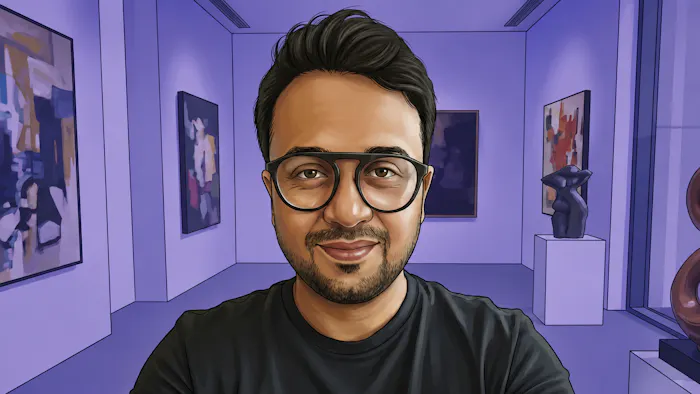
Amin Memon turned his solo freelance gigs into a two-person productized service shop called Draftss. Then, he grew that into a multi-seven-figure ARR business with a team of 70. And while he was at it, he scratched his own itch with an email infrastructure platform.
Here's Amin on how he did it. 👇
Surviving long enough to figure things out
I’m Amin, a bootstrapped founder. I’ve spent the last 8 years building internet businesses mostly in SaaS, design, and growth marketing.
Before becoming a full-time founder, I was heavily into design and conversion optimization. I used to redesign websites, improve landing pages, and study why certain products converted while others didn’t. Over time, that naturally evolved into building my own products instead of just working on other people’s products.
Today, I primarily focus on two companies:
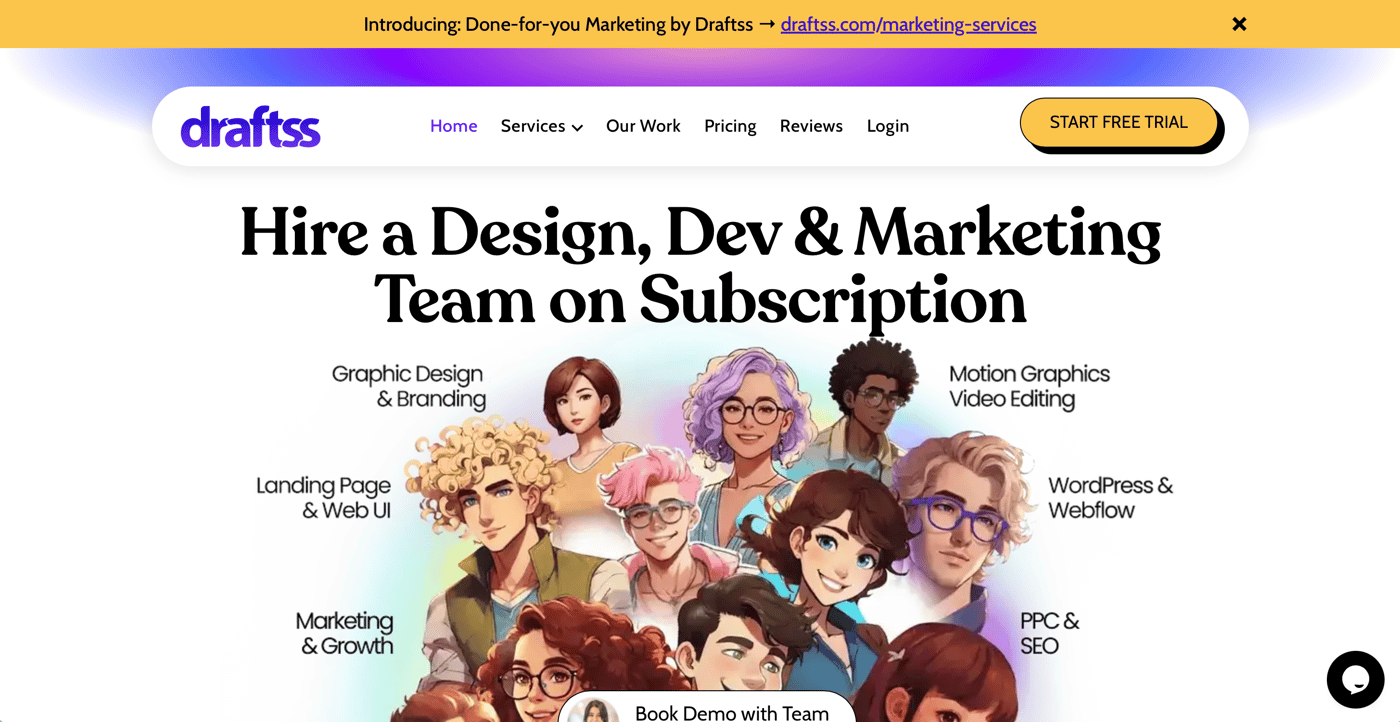
Draftss — a subscription-based design, UI, video, marketing, and development service for startups, SaaS companies, and agencies. Companies can hire an entire creative + development team on a monthly subscription instead of hiring freelancers or building large in-house teams. We’ve grown it completely bootstrapped into a multi-7-figure business serving thousands of founders over the years.
Deliveryman.ai — a cold email infrastructure platform that helps users scale outbound email without buying and managing dozens of inboxes or handling deliverability operations manually. The product came from our own frustration with how complex cold email infrastructure had become.
Most of what we’ve built came from scratching our own itch. We never raised funding or had a huge launch moment. We learned everything through trial and error — and surviving long enough to figure things out.
Finding the problem while freelancing
While we were freelancing, my cofounder and I repeatedly saw the same problem. Early-stage companies needed consistent good design and development work, but hiring full-time teams was expensive, and managing freelancers was chaotic.
Simultaneously, we noticed startups didn't want "a designer." They wanted speed, reliability, and someone who could execute without endless back-and-forth.
That insight became Draftss.
We started very small. No funding, no audience, no network. In the early days, we did everything ourselves: design, support, sales, onboarding, and revisions. The productized subscription model was relatively new then, so we were figuring it out as we went.
Deliveryman.ai had a similar origin. We heavily used cold email internally and grew tired of the operational mess around deliverability: buying inboxes, warming them up, monitoring reputation, replacing burned domains, and constantly managing infrastructure. It felt like too much engineering work just to send emails.
Instead of accepting the workflow, we built internal systems to simplify it. We eventually realized other companies had the same problem, and released it as a product.
Building systems over products
The initial version was much simpler than people probably imagine.
For Draftss, we didn’t start by building some sophisticated platform or hiring a huge team. Initially, we just packaged our existing freelance/design work into something more predictable and scalable.
The biggest challenge wasn’t design or development; it was designing the system around the service.
We had to figure out:
How do we scope tasks without endless meetings?
How do we make turnaround times fast without compromising quality?
How do we handle unlimited requests sustainably?
How do we hire and train creatives consistently?
How do we make the experience feel productized instead of like a traditional agency?
We obsessed over workflows, async communication, onboarding, task management, and creating clear processes so clients moved fast without constant hand-holding.
In the early days, we manually handled almost everything ourselves. And we quickly learned that small operational inefficiencies become huge problems once subscriptions compound.
For Deliveryman.ai, the first versions were even scrappier. We weren’t trying to build a SaaS company. We just tried to reduce our operational pain. And then we turned our gains into a product.
A practical stack
We’ve always tried to keep the stack practical instead of chasing trends. Across our products, we mostly use:
Frontend: React, Next.js, Astro
Backend: Python + Django REST Framework (DRF)
Database: PostgreSQL, Redis
Infrastructure: AWS, Docker
Automation & internal tooling: A mix of custom scripts, APIs, and AI-assisted workflows
For Draftss specifically, the real “tech” is operational infrastructure like internal workflows, async systems, project management pipelines, QA processes, hiring/training systems, and automation for task handling. This allows us to scale a subscription service without it turning into complete chaos.
For Deliveryman.ai, the infrastructure is much heavier because email deliverability is extremely technical. We spend significant time on inbox infrastructure, reputation systems, warm-up logic, routing, monitoring, and automation for deliverability operations.
Over the years, I've seen a lot of early-stage founders over-optimizing architecture too early. For us, speed of iteration mattered far more than having the “perfect” stack. We focused more on solving customer problems quickly and evolving the tech as the business matured.
Community, cold email, and SEO
In the early days, community-driven marketing drove most of our growth. We actively launched and participated in places where founders already hung out, such as Reddit, Indie Hackers, Facebook Groups, startup communities, and niche SaaS spaces.
Instead of treating those platforms like advertising channels, we focused on sharing learnings, experiments, case studies, and genuinely useful content. That built trust over time and brought in our earliest customers organically.
Cold email and SEO also played a significant role, especially since we were bootstrapped and needed efficient acquisition.
Later, once we understood our positioning and conversion funnels better, we started experimenting more with paid ads. Ads worked much better once we knew what messaging resonated organically, because we then had years of customer feedback and positioning insights.
Efficiency over growth hacks
Both businesses use recurring subscription models. These models provided predictable early revenue and allowed us to grow sustainably without external funding.
For Draftss, customers pay a monthly subscription for access to an on-demand creative, marketing, and development team instead of hiring internally or managing multiple freelancers. Retention and word-of-mouth were the biggest drivers of revenue growth. Once startups integrated us into their workflow, many stayed for long periods and organically referred other founders.
For Deliveryman.ai, the model is also subscription-based, focusing on cold email infrastructure and deliverability operations. Since outbound is a core growth channel for many businesses, customers care deeply about reliability and scalability. This naturally creates recurring demand.
We grew revenue by continuously improving positioning, onboarding, and operational efficiency rather than chasing aggressive growth hacks. Small improvements in conversion rates, retention, referrals, and customer experience compounded significantly over time.
The real challenges of bootstrapping
When bootstrapping, the hardest problems were rarely technical. The real challenge was managing energy, focus, and decision fatigue over long periods of time.
No external pressure forces momentum. No investors, no board meetings, and no launch deadlines exist except those you create. This sounds freeing... until you realize you must generate your own internal clarity and urgency for years.
We experienced phases of financial growth, but still felt stuck because operational complexity increased faster than revenue. More customers created more edge cases, more communication overhead, more hiring challenges, and more internal coordination problems.
That's when I realized scaling wasn't about adding more people; it was about reducing chaos. And it changed how we built everything afterward.
We obsessed over removing friction: Fewer meetings, clearer processes, better async communication, better hiring filters, better documentation, better onboarding, and better internal tooling.
I also underestimated the emotional difficulty of long-term consistency.
The internet features massive “startup moments” like launches, revenue screenshots, funding announcements, and viral growth. But most real businesses are built during long periods when nothing looks externally exciting.
What he would do differently
If I had to start over, I’d optimize earlier for leverage instead of activity.
Earlier, I confused busyness with progress. Now, I think in terms of what scales, what compounds, and what reduces future effort.
I would also spend more time talking to users before building solutions. Some of our best decisions came directly from observing frustrating workflows instead of brainstorming startup ideas in isolation.
Ironically, the biggest breakthroughs usually came when we stopped trying to look like a startup and started behaving more like problem solvers.
Start smaller and distribute earlier
Here's my advice:
Start much smaller than you think you need to. A lot of founders waste years waiting for the perfect idea, perfect product, perfect timing, or perfect stack. Most successful businesses solve a simple but painful problem consistently well.
Focus on distribution earlier. A decent product with strong distribution usually beats a great product nobody knows exists. Learn how to communicate value, write clearly, understand positioning, and get your product in front of communities where your users already spend time.
Most importantly, stay in the game long enough. Most advantages in business compound quietly — like skills, reputation, audience, relationships, distribution, customer trust, and pattern recognition. People often quit before those compounding effects become visible.
You don’t need to be the smartest founder in the room. You just need to keep learning, experimenting, and improving longer than most people are willing to.
What's next?
Our biggest goal is to keep building durable internet businesses that can compound for decades — we aren't chasing short-term startup hype.
For Draftss, we want to continue evolving beyond “design subscriptions” into a more complete async creative and execution partner for modern internet companies.
For Deliveryman.ai, we focus on simplifying outbound infrastructure even further. Cold email is still unnecessarily technical for most businesses, and we see a huge opportunity to completely abstract away that complexity.
Personally, I also want to share more of what we’re learning publicly. For years, we mostly built quietly in the background. Now, I’m increasingly interested in documenting experiments, growth lessons, systems, failures, and operational insights for other founders building bootstrapped companies.
You can find me on X and LinkedIn. Or learn more about Draftss and Deliveryman.ai.

Leave a Comment
"Scaling wasn't about adding more people; it was about reducing chaos"
is going to stick with me. I'm still at the very early stage — just
shipped my first product this week — but I can already feel how easy
it would be to confuse busyness with progress, like you mentioned.
The community-first growth approach (Reddit, Indie Hackers, Facebook
groups) before paid ads makes a lot of sense, especially the point
about understanding what messaging resonates organically first. I'm
in that exact phase right now, trying to figure out where my actual
audience hangs out before I spend money on anything.
Also really appreciate "start much smaller than you think you need to"
— easy advice to nod along to, harder to actually trust when you're
the one building.
"Reducing chaos rather than adding people" is the line I'd underline for anyone bootstrapping something with recurring subscribers. It's counterintuitive early on, because more customers feels like it should be solved with more hands, but if the operational complexity is growing faster than revenue, headcount just scales the chaos instead of fixing it.
The point about underestimating the emotional difficulty of long-term consistency is honestly more useful than most tactical advice in posts like this. The internet only shows the launch-day screenshots and funding announcements, never the eighteen unremarkable months in between where the actual compounding is happening invisibly. That gap is probably why so many people quit right before things would've started working.
"A decent product with strong distribution usually beats a great product nobody knows exists" is a good gut-check for solo builders specifically, it's much easier to keep polishing the product because that's the comfortable, controllable part, while distribution feels uncertain and exposed. But the polishing doesn't compound the same way relationships, trust, and audience do.
Curious about the shift from community-driven growth (Reddit, IH, Facebook groups) to paid ads, was there a clear signal that told you it was time to add paid, or did it happen more gradually alongside the organic channels rather than replacing them?
Amin, this is one of the most valuable and grounded posts I've read on Indie Hackers in a long time. Thank you for sharing the full journey — from solo freelancer to multi-7-figure ARR productized service with a 70-person team, all bootstrapped. It's refreshing to see the unglamorous reality instead of another "I launched and hit $100k MRR in 3 months" story.
What hit me hardest was your emphasis on building systems over just building products. The biggest unlock wasn't better design skills or fancier tech — it was obsessing over workflows, async communication, clear scoping, unlimited requests without burnout, and turning the whole thing into a predictable, product-like experience. That shift from "trading time for money" to "selling reliable outcomes" is exactly where a lot of us freelancers get stuck.
I also loved the part about starting scrappy and focusing on distribution early. "A decent product with strong distribution usually beats a great product nobody knows exists." I'm in that exact phase right now — product is solid, but getting consistent customers without burning out on outbound is the real bottleneck. You mentioned community-driven growth (Reddit, IH, Facebook groups) before paid ads. What was the single most effective tactic in the very early days of Draftss for landing those first 5–10 paying subscribers? Was it cold outreach, sharing case studies, or something else?
Another big takeaway for me is the emotional side of bootstrapping — managing energy, decision fatigue, and staying consistent when there are no external deadlines. The quiet compounding over years (reputation, processes, customer trust) is what actually wins, not the viral moments. This post is a great reminder to optimize for leverage instead of busyness.
Quick questions if you have time:
At what MRR did you feel the need to hire your first non-delivery person (ops, delivery manager, etc.)?
How do you handle clients asking for "custom" work that doesn't fit the subscription model without killing margins?
Huge respect for building something durable that serves thousands of founders. Draftss and Deliveryman.ai are both scratching real itches. Saving this post as a reference — thanks again for the transparency!
"A decent product with strong distribution usually beats a great product nobody knows exists."
That line is where I am right now. I launched AltGuard three days ago — a Shopify app that helps EU merchants comply with the European Accessibility Act using AI-generated alt text. Solo founder, no team, from Pakistan. The product works. Distribution is the entire problem I am staring at today.
The point about community-driven marketing in the early days stood out most. You treated Reddit, IndieHackers, and Facebook Groups as places to share genuine learnings rather than advertising channels. That is the approach I am trying to build right now — commenting, contributing, being present — before I have the posting privileges to share my own story.
The operational complexity insight also hit close to home. I caught myself this week wanting to add features nobody asked for instead of focusing on getting the first ten installs. Busyness is not progress. That distinction is harder to hold onto than it sounds.
One question — in the very early days of Draftss, before word of mouth kicked in, what was the single action that brought your first five paying customers?
Multi-seven-figure ARR bootstrapped with a team of 70 is a genuinely remarkable outcome. Thank you for sharing the unglamorous version of how it actually happened.
7-figure ARR from freelancing is the dream for every writer out there.
When did you know it was time to productize instead of doing client work?
This line hit me hard: "Scaling wasn't about adding more people; it was about reducing chaos.
7-figure ARR from a productized service is the most underrated path to $1M+ in indie SaaS—lower risk, faster feedback loop, easier ops. The productization moment is when you stop selling time and start selling outcomes. Two questions: (1) at what MRR did you hire your first delivery manager (the unlock to scaling past $30k/mo)? (2) how do you handle the inevitable "can you do this custom thing for me" requests that eat margins? SOPs for rejection, or just absorb as upsell?
The unsexy truth about freelancing: the backend kills you before the competition does. Half the people I know who freelance are genuinely talented but running their entire operation from WhatsApp and a random spreadsheet. Clients feel this even when they can't name it.
This really resonated with me!
I have been working as freelancer for several years, and while freelancing gives you freedom, it also means you're constantly trading time for money. Reading your journey reminded me why I've decided to start building my own SaaS instead of taking on more client work.
What I admire most is that you didn't jump straight to a software startup. You build productized service first, learned what customers truly valued, and then scaled from there. It feels like much more grounded path that the "build a unicorn overnight" stories we often hear.
I'm at the beginning of my solo founder journey, so stories like yours are both motivating and reassuring.
Looking back, if you were launching a brand-new SaaS today with no audience and no existing customers, where would you spend your first 3 months finding your first 20 paying customers? Would you still start with content and communities, or would you do something completely different?
Thanks for sharing such an honest breakdown.
Excellent article. It shows that long-term success comes from steady improvement and solving real customer needs.
The jump from freelancer to productized service is one of those shifts that sounds simple but completely changes how you think about your time. The hardest part for most people isn't building the product - it's resisting the urge to keep customising for every client. How did you handle scope creep in the early days when you were still trying to win business? That tension between "saying yes to everything" and "protecting the model" seems like where most people get stuck.
Thanks for sharing this.
I'd love to hear more about the role cold email and SEO played in your growth. You mentioned, "Cold email and SEO also played a significant role, especially since we were bootstrapped and needed efficient acquisition." Could you expand on how you approached cold email, what worked, and how much it contributed to customer acquisition?
I think a lot of founders are curious about whether cold email is still an effective acquisition channel, so hearing your experience would be really valuable.
The line "I confused busyness with progress" is going to stick with me for a while. Especially as a solo founder in the early validation stage where it's very easy to mistake activity for traction.
The community-driven marketing section is directly relevant to what I'm doing right now with Tallylark, posting in Reddit, IH, Facebook groups. The framing of "sharing learnings and experiments instead of treating it like an advertising channel" is a useful reframe. I've already noticed the difference between replies that feel like genuine help versus ones that feel like a pitch.
The "start smaller than you think" advice is something I'm actively trying to apply, landing page only, waitlist, no product code until I hit a validation threshold. Reading that validated the approach more than most content I've seen on the topic.
One question: when you say "focus on distribution earlier" at what point did cold email become a meaningful channel for Draftss? Was it something you used from day one or only once you had some traction to point to?
Hey everyone, I recently launched My Business Is Your Business . I built it because I got tired of seeing small "Mom & Pop" shops get hit with predatory monthly subscription fees just trying to sell their companies. It’s an entirely flat-fee ($49 or $149 one-time), privacy-first marketplace. Names, phone numbers, and street addresses are 100% masked to protect sellers—buyers can only see the City, County, and State until an escrow process starts. I handles all my tracking anonymously through serverless magic links, inspired by what I learned scaling an organic 3D print shop to 5,500+ users. Would love to know what you guys think of a flat-fee model vs. traditional monthly listing subscriptions! Links in bio
Thank you for sharing your story and knowledge of what it 's like starting a company and the practical work it takes to build it.
Thanks for sharing this.
It would be interesting to know more about the role they played and how it helped with acquisition when you said - "Cold email and SEO also played a significant role, especially since we were bootstrapped and needed efficient acquisition."
I guess a lot of folks wonder about cold email as a part of their acquisition strategy
Indie Hackers
Title: We dropped our price to $5.99 to build our early community — here's why
Most SaaS founders raise prices to signal value. I did the opposite.
Workhive is a hand-curated job board — every listing is manually verified before going live. We've been running at $14.95/month, but I wanted to get serious job seekers in the door first, build trust, and grow the community before raising it back up.
So for a limited time: $5.99/month. That's it.
What you get:
1,200+ verified listings across 19 countries
Remote, hybrid & onsite roles
Built-in resume builder
7-day free trial
If you're job hunting or know someone who is — now is the time.
Would love feedback from this community on pricing strategy — did I do the right thing by dropping it, or does lower price signal lower quality?
The line that hit hardest: "we obsessed over removing friction" instead of adding people. Most early-stage advice is about growth, but the real bottleneck is operational chaos compounding faster than revenue — that's such an unglamorous thing to fix, and almost nobody writes about it because it doesn't make a good launch tweet.
Also resonates that Deliveryman.ai came from frustration with their own cold email infra rather than a brainstorm. Building solo right now, and the pattern holds — the problems worth solving are the ones that actually annoyed you first, not the ones that sound good in a pitch.
This is incredibly inspiring. Many freelancers dream about building a scalable business, but very few successfully transition from trading time for money to running a productized service with predictable recurring revenue.
I think one of the biggest mindset shifts founders struggle with is moving from being the person doing the work to building repeatable systems and processes that others can follow.
Looking back, what was the biggest challenge during that transition, and what advice would you give to freelancers who want to make the same leap?
@JamesFleischmann LoomFlows needs short demos 💯
3min Loom = zero signups. 3 clips = booked calls.
AssetVid dot com: $500 test, 1 demo → 3 clips. 48hrs.
Test it?
What stood out to me is that the breakthrough wasn't a product innovation, it was a systems innovation.
A lot of founders focus on building better software, but Draftss seems to have won by making the service predictable, scalable, and easy to buy.
The lesson I keep seeing across successful bootstrapped businesses is that removing operational chaos compounds just as much as adding new features.
Curious: at what stage did you realize process improvements were generating a bigger ROI than shipping new capabilities?
I built something for this — happy to share details?
Really enjoyed this. The part about “surviving long enough to figure things out” feels very real. A lot of founders talk about launches, funding, or growth hacks, but the unsexy parts — systems, consistency, reducing chaos, and learning from customer pain — are what actually build durable businesses.
I also liked how both Draftss and Deliveryman came from your own operational problems. That’s usually where the strongest products come from: not abstract ideas, but repeated frustration that someone finally decides to solve properly.
This is the part that bit me hardest when I moved from freelance to recurring services. Freelancing is lumpy but the margins are simple: you do the work, you invoice, most of what comes in is yours. With a productized service, you're paying your team on the 1st whether or not clients have paid yet. That timing gap matters more than most people expect.
What helped me was tracking two numbers separately: revenue (what's been invoiced) and cash position (what's actually in the bank and when it lands). They look similar on paper but can be weeks apart in practice. When you're reinvesting to grow, that gap is where the stress lives.
The predictability does improve with scale, but only if you build the visibility into it early. Otherwise you're guessing at runway while the numbers technically look fine.
The jump from freelancer margins to productized service is where most people get stuck.
What was the turning point — when did you realize you could package this and charge
differently? How long did it take to build the system?
This part really stood out to me:
“A decent product with strong distribution usually beats a great product nobody knows exists.”
As a solo founder building CueBuddy, I’ve spent far more time on product than distribution so far.
It’s interesting because building feels productive every day, while distribution often feels slow and uncertain. But the more founder stories I read, the more I see the same pattern: distribution compounds just like product improvements do.
Also loved the point about surviving long enough for skills, reputation, and trust to compound. That’s probably the hardest part for most bootstrapped founders.
Thanks for sharing this.
Eight years of building without financing or viral launches — just systems that stand the test of time. This is underestimated.
The real lesson here is: "Scaling isn't adding people; it's reducing chaos." Most founders do the opposite.
This is a fantastic example of how productizing a service can completely change the trajectory of a business. What stood out to me most is the shift from selling time to selling outcomes and systems. Many freelancers get stuck in the cycle of constantly chasing clients, but building repeatable processes and clear service packages creates something much more scalable. The journey from freelancer to a 7-figure ARR business shows that you don't always need to build software to create a highly valuable company. Thanks for sharing the lessons learned along the way, and congratulations on the impressive growth! 👏🚀
The line about scaling being about reducing chaos is the real lesson here. A lot of founders think the next bottleneck is more hands, when it is usually on-boarding, hand-offs, support, or some process only one person understands. The part about learning messaging in communities before spending on ads also hits home, because paying to amplify an unclear offer is just a faster way to waste money.
interesting
Really inspiring journey — especially the shift from freelancing to building scalable products. Great breakdown of the process.
Good one
The operations part before hiring is so real. Most people think the chaos is temporary and they'll sort it out once they grow. Then they hire and the chaos just gets louder. Systematizing first sounds boring but it's probably what separates the ones who scale from the ones who burn out at 10 people.
great , super informative case study
This resonates a lot.
I recently launched Moni Proxy, a mobile HTTPS debugging tool, and quickly realized building was the easy part.
The product took months.
Getting people to discover it is taking even longer.
Over the last week I've spent more time writing content, improving SEO, talking to communities and collecting feedback than writing code.
Building creates products.
Distribution creates businesses.
Reading this as a solo founder who's still figuring things out — the part about 'surviving long enough to figure things out' really hit me. It's easy to think everyone else had a straight path, so seeing someone be honest about the messy early days is genuinely helpful.
One thing I'm curious about: when you were still freelancing and building Draftss on the side, how did you know when it was time to go all‑in on the product instead of taking on more client work? That leap feels terrifying from where I'm standing
Nice, appreciate it
The productized service model is interesting because you're essentially trading flexibility for scalability. What was the hardest part about moving away from custom client work to standardized offerings?
"Stop trying to look like a startup, start behaving like problem solvers." Best line in here.
The part about 'building systems over products' hit hard. That's exactly the shift I'm making right now — I'm building an AI automation service that handles customer support, onboarding, and recurring billing for SaaS founders. No employees, just systems.
Your point about small operational inefficiencies becoming huge problems once subscriptions compound is something I'm already seeing even at zero clients — if the system isn't tight before client 1, it breaks at client 5.
Quick question: In the early days of Drafts, how did you handle scope creep from clients who kept expanding what 'unlimited' meant to them?
The operational infrastructure point is the one that almost never gets written about. Most founder content covers finding the idea or closing the first customer. Nobody writes about the moment you realise the bottleneck is a spreadsheet that only one person understands.
I ran into this building a content production workflow. Had a process that worked fine with two people. Added a third. Everything slowed. Not because the third person was bad. Because the process lived in our heads. Three weeks to document and restructure what should have been obvious from the start.
You can't bring someone into chaos and expect them to bring order.
The psychological difficulty you described makes all of this harder. VC-backed founders have board meetings and runway countdowns, external pressure baked into the calendar. Bootstrapped founders have to manufacture it, or work without it entirely. Most don't fail because they run out of money. They run out of reason to keep going on a Tuesday with nothing happening, before the systems are ever properly built.
"Advantages compound quietly" is true. The inverse is too.
nice
This is massive breakthrough. Good job. Scaling and monitoring
Similar case with Arcframe AI as well.
Yup, relatable. Good job here. I thought he will not be able to complete while reading the post.
building systems over products is the part I keep returning to. spent months thinking I was building pm tools - was actually doing custom consulting. locking a fixed scope was the first time the economics made sense.
This is a hard thing to do, many freelancers do things but got faild but good to see he did a good job here
Scaling wasn't about adding more people, it was about reducing chaos" is the line that stands out most. I see this constantly with early-stage founders, they assume their growth problem is acquisition when it's actually that the product experience gets harder to understand as it gets more features. Curious how you approached onboarding differently for Draftss vs Deliveryman, given how different the two products are.
great job, wishes u best of luck
Scaling wasn't about adding more people; it was about reducing chaos" is probably the most underrated insight in this entire post. Most bootstrapped founders hit a revenue milestone and immediately think headcount, when the actual problem is operational complexity growing faster than the systems designed to contain it.
The point about busyness versus leverage is real and it takes longer than it should to internalize. Early on, activity feels like progress because you're moving constantly. The shift happens when you start asking whether the thing you're spending 3 hours on will matter in 6 months or whether it just feels urgent today.
The origin of delivery . ai is a good example of the best kind of product discovery — you were already your own customer, the pain was real and recurring, and the build started as internal tooling before it became a product. That sequence almost always produces something more honest than brainstorming ideas in isolation.
One thing I'd push on from your advice: distribution earlier is right, but I'd add that community participation specifically is undervalued compared to content or paid. You mentioned Reddit and Indie Hackers drove early growth — that kind of trust-building in existing communities is something most founders skip because it's slow and doesn't look like marketing. But it compounds in ways that ads don't.
Eight years bootstrapped to multi-seven figures without funding is a genuinely rare outcome. The "survive long enough to figure it out" framing is honest in a way most founder stories aren't.
I think a lot of founders underestimate reducing chaos. The product can be simple, the stack can be simple, but the messy part is usually the system around it: onboarding, communication, delivery, hiring, support, and all the small decisions that repeat every week. This is a good reminder that distribution matters earlier than most technical founders want to admit.
nice post
This is pure structural gold, Amin. Especially the line: 'Scaling wasn't about adding more people; it was about reducing chaos.'
As a bootstrapped founder currently building an AI-mediated social project (Echo), I recently had to ruthlessly strip down my entire product thesis because of feature bloat, moving away from past experimental features to pivot entirely into a brutalist, text-heavy sandbox to nail the core vibe. I used to confuse busyness with progress, over-engineering the 'perfect' ecosystem before letting users stress-test the core subtext.
Your insight on building systems over products is exactly the paradigm shift I needed to hear today while optimizing my launch flow. Distribution and staying in the game long enough is the real code.
Definitely bookmarking Draftss and Deliveryman for when we start scaling our outbound and creative workflows. Thanks for laying out the blueprints so rawly.
Good to read a story like this, thank you!
when you've solved all the things that 90% of us might never solve, like creating a product based on an actual demand or problem that needs to be solved and afterwards operate its execution, growth strategy becomes the real bottleneck.
You have my deepest respect for that path you're walking on!
Try to solve one problem. Encouter a lot of problems on the way == Discover more ideas to solve :)
the Deliveryman origin story of building internal tooling for cold email infrastructure and then realizing others had the same problem is interesting because it's a productization decision that most service businesses never make. you had operational gains, decided to package them, and got a second company out of it. curious how you knew when the internal tooling was far enough along to be worth productizing versus just useful internally. what was the signal that made you decide to release it rather than keep it as a competitive advantage
Yes, Since we have built the entire email layer from ground up. We are trying to figure out what other related projects we could launch along with it.
This is really inspiring,
Going from solo freelance to scaling Draftss into a multi-7-figure productized service business with 70 people is seriously impressive. Loved the focus on building systems and staying in the game long enough.
"Scaling wasn't about adding more people. It was about reducing chaos."
We're seeing something very similar in ad operations.
A lot of teams assume growth problems are solved by hiring more people or adding more tools. But many bottlenecks come from manual workflows, handoffs, reporting, and operational complexity.
The more customers you have, the more expensive small inefficiencies become. Great reminder that systems often scale better than heroics.
This is a cool concept, though this is one problem I'd love to have my self, like scaling to fast. Being overwhelmed by the adoption curve. :) Good luck with the project!
It's a joyride :)
Good read. I wonder how the margins play out in businesses like this and how much predictability you can build on your cash flow.
Good Question. With productized business the margins aren't as fancy as SaaS. Cash flow is super important to manage. As you have to reinvest profits to scale further.
that's actually insane the hunger he had and the dream he fighted for it good job
Any way a skilled dev can add value to your team who has worked for Sweden, Spain, Dubai, India, NewYork...
https://draftss.com/career
Product creates value.
Systems create consistency.
Distribution creates growth.
Most founders focus on the first and wonder why the other two never appear.
Product Led growth is real. However, it has to be an exceptional product which is very very hard. The product has to feel shareable or talkable, so if you launch it to 10 users, they get you the next 100 users and so forth.
The less risky approach is MVP + Doubling down on distribution.
This line hit me: "Some of our best decisions came directly from observing frustrating workflows instead of brainstorming startup ideas in isolation."
That's exactly how Meet4 started. I was in a business networking group where every small group meeting (3 people, find a time, find a place, get everyone to agree) turned into a 30+ email thread over two weeks. Not occasionally. Every single time. For everyone in the group.
I wasn't looking for a startup idea. I was just stuck in one of those threads thinking "this is insane." That observation became the product.
We're early, building in public, and nowhere near your scale yet. But your point about distribution before you think you need it is one I'm taking seriously right now. What was the first community that actually moved the needle for Draftss in the early days, before anything was working yet?
We got our initial customers from Reddit, Indiehackers and Facebook Groups.
Btw, meet4 has a password protected page is that intentional?
Focus on distribution earlier. A decent product with strong distribution usually beats a great product nobody knows exists."
This is the line that stings the most when you're early stage. I'm currently learning this the hard way with a set of standalone HTML tools on Gumroad — the building part was the easy part. Getting in front of the right people is a completely different skill.
The "start smaller than you think" advice also resonates. I've been tempted to keep adding features thinking that's what drives sales. Reading this confirms it's not.
Thanks for sharing this — useful reminder to treat distribution as a first-class deliverable.
Yes, building is easy. Distribution is tough. Experimenting with different channels will give you insights into the best ROI machine for you.
"The productized service model works because it removes decision friction. When buyers know exactly what they get, the psychological barrier drops significantly. Did you use any specific pricing structure to make the offer feel like a no-brainer?"
We worked on pricing quite a few times. Almost 2-3 times every year.
We made sure our offer is competitive and offers a lot of value to the customers.