Building a $100M ARR portfolio of products
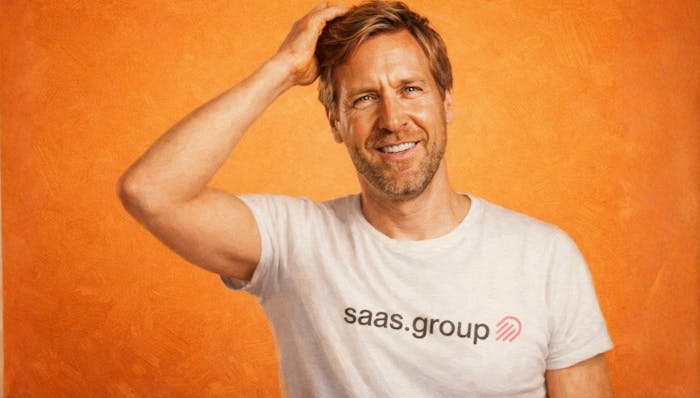
Tim Schumacher is on a journey to build the world's biggest portfolio of indie SaaS products — and with 25 brands bringing in $100M ARR, saas.group is well on its way.
I caught up with Tim to learn how he's doing it. Here's what he had to say. 👇
From marketplace to holdco
I have been an entrepreneur since my teenage years, starting with coding and building Sedo.com, a domain marketplace I ran for ten years.
After becoming an angel investor and founding several other companies, a few things became clear:
Talented founders were getting burned out, stuck in their businesses, or unable to scale further despite great products.
Acquisitions were going wrong because the acquirers didn’t understand how to run the products.
I was far better at scaling than building from scratch.
Combining my love of scaling with the need founders have for trusted long-term homes became the foundation of saas.group.
Building the world's biggest indie SaaS portfolio
Today, I work on building the world’s biggest platform of independent SaaS brands, now over 25 brands and around 400 people across 30 countries.
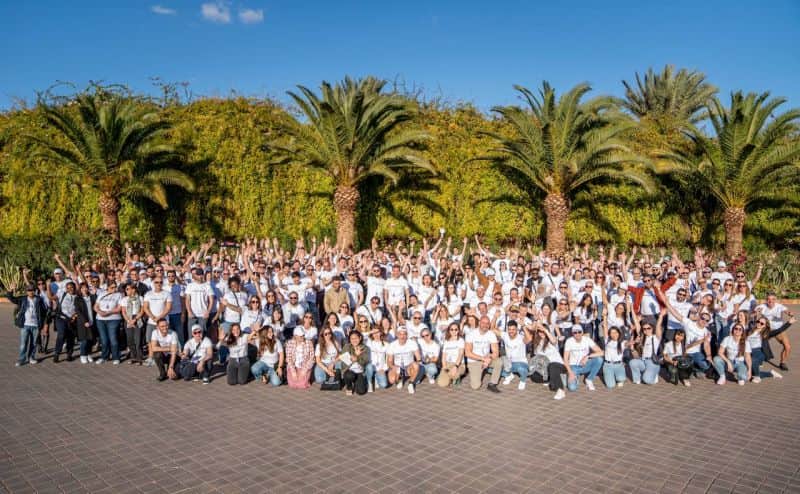
We typically acquire SaaS companies with between $2 and $5 million ARR. Several of our companies contribute meaningful ARR in the mid- to high-seven figures. And altogether, we are at $100M ARR now.
Our portfolio includes brands like:
GitTower.com — a wonderful graphical GIT client
ScraperAPI.com — an amazing dev-friendly web data/scraping tool
Ayrshare.com — social media connectivity made easy for devs
Prerender.io — helping visibility of large websites in search engines and AI at scale
Building the "product"
For saas.group, our “product” is the acquisition and operating model itself. It began with our first acquisition, DeployBot.com.
Since then, we've been refining processes around tech diligence, culture alignment, and our founder-friendly model. We've built a repeatable engine that consists of small, high-performance teams and shared central services for marketing, DevOps, and finance. We apply this engine to all acquisitions.
If I started over, I’d formalize this acquisition playbook even earlier because repeatability and structure have proven to be our biggest advantage.
Focusing on bootstrappers
Working with founders who share the bootstrapper mindset has been a major advantage. It makes our teams efficient and frugal because the founders take deep ownership of their products. This aligns perfectly with our operating philosophy.
Small, high-performance teams consistently outperform large orgs, and giving those teams autonomy while providing central support has been one of our biggest success factors.
Simple, maintainable stacks
Because saas.group acquires independent brands, the portfolio uses a variety of stacks. There is no single enforced stack, but teams try to keep variations limited so knowledge can transfer. Technical due diligence focuses on code quality, maintainability, and debt rather than specific technologies.
The common theme is developer-driven stack decisions with a bias toward simplicity and long-term maintainability.
Growing a portfolio organically
Growth hasn’t just come from traditional user acquisition, but from becoming known as the most founder-friendly home for SaaS businesses.
We keep our reputation strong by being transparent, honoring deals, and letting brands stay independent. Word of mouth from founders, brokers, and investors has generated a steady inbound stream of conversations and acquisition opportunities.
On the "traditional" user/customer acquisition side, we work a pretty normal SaaS playbook:
Content marketing
SEO
SEA
Social
Product-led growth
It's not rocket science, and I don't think we have any totally unusual "hacks". I would say our marketing team is simply very good and very efficient in execution.
As far as revenue growth, it all happens through internationalization, better marketing, pricing improvements, and, simply speaking, by improving the product.
Ongoing development of acquired brands
After we acquire a profitable SaaS company, we keep the team focused and support them with shared services where it adds leverage.
We make sure to continue to develop all our brands, depending on what they need most. In some cases, it's marketing, sales, and other go-to-market strategies, like internationalization; in other cases, it's a complete rethinking of the product.
One practical example is AddSearch.com, an amazing website search tool for website owners. With classic search becoming less important, the brand needed to reinvent itself. The team did this successfully by launching "AI Answers," an AI-based answer engine, that helped increase ARR again.
Same for Keyword.com, another brand of ours. Classic SEO/keyword monitoring got a little less interesting, so ARR was declining until a few months ago when the team launched a tool to also track brand visibility across all major AI search platforms, including ChatGPT, AI Mode, Perplexity, and Gemini. That helped grow ARR again!
We also cut costs by reducing infrastructure costs and operational consistency. A good example is Prerender.com, where we reduced AWS costs by 80 percent after joining. That alone added hundreds of thousands to the bottom line.
Advice for building and exiting
Prepare well, understand your numbers, and talk to real users early because everything else compounds from that.
If you ever consider selling, treat it like product-market fit: Have conversations, learn what buyers care about, and come prepared.
Most importantly, stay focused on building something people truly want and avoid comparing your business to unicorn stories that distort expectations.
What's next?
The long-term vision is to build the world’s biggest platform of independent SaaS brands. That means continuously improving our operating model, staying true to the founder-friendly approach, and growing a diverse ecosystem of niche SaaS tools.
The goal is sustainability and longevity rather than chasing hype cycles.
To learn more, readers can visit saas.group, explore our brands, or listen to the saas.unbound podcast. We also share knowledge internally and occasionally publish insights for founders who want to understand the acquisition process better.
My Indie Hackers AMA also provides additional background into how we evaluate and operate SaaS businesses — it is a few years old, but literally, our evaluation framework is exactly the same.
And you can find me on LinkedIn.

Leave a Comment
Building a $100M ARR portfolio of products requires strategic focus on scalable, high-demand solutions. Prioritize product-market fit, customer retention, and recurring revenue models. Diversify offerings to reduce risk while leveraging cross-selling opportunities. Invest in robust technology, data-driven insights, and strong go-to-market strategies. Continuously iterate based on customer feedback, optimize pricing, and expand into new markets. Align your team around growth metrics, ensuring sustainable, long-term ARR growth across the portfolio.
The "execution over innovation" point is underrated. As a bootstrapper building a SaaS, I've watched too many founders (including myself early on) chase novel growth tactics while neglecting the boring stuff—SEO, content, product-led onboarding flows done well.
What strikes me about Tim's model is the flywheel he's created: founder-friendly reputation > inbound deals > lower acquisition costs > better returns > more capital for founder-friendly terms. Most acquirers optimize for extracting value from sellers. He's optimizing for deal flow quality.
The 80% AWS cost reduction stat is wild though. Makes me wonder what the baseline was. Easy wins from over-provisioned infrastructure, or genuine architectural improvements?
Curious if they've hit cases where the "small team + shared services" model breaks down. Some products probably need deep, specialized context that shared marketing/DevOps can't provide.
This is long-term thinking done right.
Treating the operating model itself as the product — and staying founder-friendly — is a powerful moat.
Proof that sustainable SaaS wins come from focus, systems, and patience, not hype.
?
I meant that when the operating model itself is solid — distribution, feedback loops, and decision-making — features compound instead of constantly needing reinvention.
Most SaaS struggles come from optimizing outputs instead of the system that produces them.
Long term and good start
good
I kept getting overwhelmed trying to track my personal climate impact. I ended up building a small app for myself to make it more practical. I’m curious: how do you personally stay motivated with climate action without burning out?
This is an excellent deep dive into what it takes to build and scale an indie SaaS portfolio to $100M ARR. Tim’s emphasis on founder-friendly acquisitions and maintaining autonomy for product teams really resonated with me; it’s a refreshing alternative to the traditional roll‑up model.
I also appreciate how simple, maintainable tech stacks and a repeatable operating engine create long‑term sustainability rather than just short‑term growth. The examples of reinvigorating products like AddSearch and Prerender demonstrate how strategic product evolution and operational efficiency can drive meaningful results.
Overall, this is a thoughtful, practical playbook for anyone interested in SaaS acquisition, growth, and value creation without compromising on culture or product quality. Well worth the read.
that nice
This is a great story and a very inspiring journey.
Tim’s approach stands out because it focuses on helping founders, not just buying companies. Building a long-term home for indie SaaS products while keeping teams small and independent is smart and refreshing.
Reaching 25 brands and $100M ARR shows what is possible with clear systems, simple tech, and strong execution. I also like the focus on maintainable stacks, real customer needs, and steady growth instead of hype.
There are many valuable lessons here for bootstrapped founders, especially around scaling, acquisitions, and preparing for an exit. Thanks for sharing these insights it’s a strong example of building sustainable SaaS businesses the right way.
hello can we chat privately on zadokgill9392@gmailcom
Great read, appreciated!
can any one check this www.butchstabenreise. de
Wow, that's a great milestone
This is great!
Nice breakdown — especially the idea of a founder-friendly holdco model 👍
Keeping brands independent while sharing leverage makes a lot of sense.
If you ever need help polishing landing pages or frontend UI for any of the products, happy to help.
Super inspiring journey, Tim! The founder-friendly holdco model, keeping brands independent while giving them shared leverage is genius, exactly what bootstrappers need to avoid burnout.
Liked how you're reinventing acquired products (like Add Search's AI pivot or AI search tracking) instead of just milking them. Shows real long-term thinking. Congrats on hitting $100M ARR – proof that focusing on maintainable stacks and word-of-mouth works better than flashy growth hacks. Following closely.
The insight about being "far better at scaling than building from scratch" is refreshingly honest and something more founders should evaluate about themselves early. Most startup advice assumes everyone should be a zero-to-one builder, but the skillsets for starting from zero vs scaling from one to ten are genuinely different.
Also fascinating that the "product" here is not software - it is the acquisition and operating playbook itself. That reframe explains why repeatability matters more than individual brand optimization.
Question: For the brands that needed reinvention (like AddSearch becoming AI Answers), how do you balance letting small teams stay autonomous with recognizing when a pivot is existentially necessary? Is that signal usually bottom-up from the team or top-down pattern recognition across the portfolio?
Hire a cryptocurrency recovery service. WhatsApp +14042456415
Telegram: @mightyhackerrecoveryexpert
Powerful hacker recovery expert gains backdoor access to lost cryptocurrencies
How did I recover my USDT investment?
A few months ago, I wanted to grow some money before the holidays and decided to invest my savings in USDT coins . Everything worked fine at first, but when I tried to withdraw my funds, the transactions kept failing.
I have contacted support several times, but the issue is still not resolved.
I started to panic.
My savings were blocked and there seemed to be nothing I could do.
That's when I came across Mighty Hacker Recovery, a group of crypto experts who specialize in recovering lost and stuck funds.
I decided to give them a chance.
To my surprise, they were professional and transparent throughout the entire process.
Within a short period of time, I was able to regain access to my account and withdraw USDT.
Not only did I get my money back, but I also made a profit on my investment.
Now I can finally celebrate the holidays with peace and gratitude.
I learned an important lesson: to be careful when it comes to cryptocurrencies, and that there are real experts to help you when things go wrong.
Great breakdown of how saas.group treats the operating model as the real product. The focus on repeatability, small high-ownership teams, and long-term founder alignment explains why this scales without hype.
Nice
What stood out to me is treating the operating model as the real product, not the individual SaaS brands. That mindset shift explains a lot of the repeatability here. I’ve seen many acquisitions struggle not because the product was weak, but because the post-acquisition operating context kept changing. Curious how much of your playbook is now fixed vs still evolving as the portfolio grows.
Biggest hidden gem here: treating “being easy to buy and easy to run” as part of your product long before exit. That mindset alone probably adds a turn or two to the multiple.
вап
іва
Wow, I like to be like this when I am grown up
i have used addsearch for e-commerce and really like its fast and relevant results, offcourse AI-Powered. Now that we are in the AI world, expecting tools to have this either AI centric or AI touch ;)
Building a $100M ARR portfolio starts with identifying high-demand markets and scalable product opportunities. Focus on creating diverse, complementary products that solve real customer problems. Prioritize strong go-to-market strategies, customer retention, and recurring revenue models. Invest in data-driven decision-making, robust infrastructure, and cross-functional teams. Continuously innovate, analyze performance, and optimize product-market fit. Strategic acquisitions or partnerships can accelerate growth, ensuring a sustainable and profitable $100M ARR portfolio over time.
Sedo.com is their best product that is probably bringing in the most revenue (I guess).
I learned something new today from their well-crafted business plan, strategy and founder-friendly model/approach.
Really enjoyed this perspective. Hitting meaningful revenue means more than just launching a bunch of things, it means digging into what actually moves the needle for real users.
I’ve noticed the same with tools that start out as experiments versus ones you build around actual work you do every day. The ones rooted in real problems feel easier to grow because you already understand the context you’re selling into.
Curious how others here balance letting a product find its footing versus pushing for traction right from the start.
Inspiring model, Tim. The focus on being a 'founder-friendly home' for bootstrapped SaaS with $2M-$5M ARR is a game-changer for the ecosystem. It provides a clear, honorable path for builders.
While AbuByte POS operates at an earlier stage, it's built on the same foundational principles your playbook values: a simple, maintainable Flutter/Firebase stack solving a hard, real-world problem (offline sales continuity in emerging markets). It's a classic 'developer-driven' product with deep technical due diligence ready.
My situation aligns with the founders you describe: to go 'bigger and bolder' on my next AI venture, I need a strategic home for this asset. I've initiated a concise 7-day acquisition window at an $85k OBO—a fraction of its $287k build cost—to find the right operator who can apply a scaling engine like saas group.
This is exactly the kind of efficient, founder-aligned transition your model supports. A fascinating blueprint for the future of indie SaaS.
Interesting read — building a portfolio approach definitely has appeal, but I keep wondering how you balance focus vs. breadth.
When you’re managing multiple products, what kind of process do you use to decide which ones get your time on any given week?
Do you have a rule for when to double down vs. wind down a product?
The specific examples of AddSearch and Keyword pivoting to survive the AI shift were really interesting.
I'm seeing the exact same dynamic in the website builder space right now. I founded Congero as an "AI-first" builder because the "classic" drag-and-drop model is starting to feel like the "classic SEO" you mentioned - users just want the result instantly now, not the manual work.
It’s refreshing to see a holdco that actually invests in product reinvention rather than just switching to "maintenance mode." Great read.
This is an interesting journey and shows long term thinking
It is useful to see how focus and systems can scale over time
Stories like this are helpful to read on a SaaS website
Good insights for founders at different stages
This post hits different. $100M ARR from 25+ indie brands without the VC drama? Respect. The emphasis on small autonomous teams and shared services makes total sense for longevity. Any tips for indie founders prepping for a potential exit to a group like yours?
nice job also you have great information "Growing a portfolio organically" could you please cheak my website it help me a lot please if you get it DM me thank you!
Great information! I recently read news about this on DNP India as well, and it’s good to see the same topic being discussed here with useful insights.
good
When you mentioned product-led growth as part of your playbook, i'm having a hard time imagining streamlining this for such a huge # of brands. Since you've cracked it, Kudos!
Really insightful journey — the strategy of focusing on multiple independent products to reach a high ARR resonates with long-term sustainable growth.
this is the kind of “boring but real” $100m story i respect
quick q: when you buy in that $2–$5m arr range, what’s the #1 reason you pass on a deal even if the numbers look good? (churn, tech debt, founder risk, channel risk, etc)
This really resonates. The execution gap you’re highlighting is the real problem for most indie founders, having a plan is easy, but shipping, distributing, and closing the feedback loop consistently is where things break down.
One channel that’s been especially effective for execution-focused teams is Reddit, when it’s used less as “promotion” and more as intent-driven distribution. High-signal threads already capture users actively searching for solutions, and thoughtful contributions there can compound far longer than typical social posts.
When tools like this are paired with channels where demand already exists, that’s often where indie products start to break through.
Happy to share what that looks like in practice if it’s useful.
This was a great read — especially the part where the operating model is treated as the product.
A few things really stood out to me:
Small, autonomous teams + shared services > scaling headcount
Founder-friendly reputation as a real acquisition moat
Stack simplicity and maintainability over dogma
Growth driven by fundamentals, not “growth hacks”
The AddSearch / Keyword examples were especially insightful. Reinventing products instead of letting them decay feels like the underrated skill in long-term SaaS portfolios.
It’s refreshing to see a $100M ARR story that’s built on patience, process, and respect for bootstrappers — not hype or forced consolidation.
Thanks for sharing this. Lots of lessons here for anyone thinking beyond a single-product SaaS.
"ONLY channel you need" - honestly starting to believe this too.
I wasted months on Twitter and PH before realizing Reddit was where my actual users were hanging out.
The trick that changed everything: stop chasing hot posts. Target threads with under 5 comments, posted recently. Way less competition.
I use a desktop tool for the filtering - search "reddit toolbox wappkit" on google if curious.
What subreddits are working best for you?
Great insights — especially the emphasis on sustainability over hype. Building a diverse portfolio and optimizing operations (like cost efficiency and real user feedback) really compounds over time. It reminds me that focus and consistency matter more than chasing big valuations early. Thanks for sharing!
The "trusted long-term home" framing is doing a lot of work here and it's the right framing. The indie SaaS exit market has a fundamental buyer-seller mismatch: most bootstrapped founders want to exit to someone who will keep the product running well and treat customers fairly. Traditional PE doesn't fit that profile — they're optimizing for cost compression, price increases, and eventual re-sale. Tiny Capital fills some of this but is relationship-limited and selective. saas.group is explicitly positioning into that gap.
The insight that "acquisitions were going wrong because acquirers didn't understand how to run the products" is the key structural problem Tim identified. SaaS products look like cash flow businesses to generalist acquirers, but they're actually living products with customer relationships, churn dynamics, and technical debt that requires specific operating knowledge. A domain marketplace founder (Sedo for 10 years) who then angel-invested in SaaS has exactly the cross-domain view to understand what goes wrong in these transitions.
25 brands at $100M ARR is ~$4M ARR per brand on average. That's the sweet spot for this model: too big for an individual founder to keep running as a side project, too small and product-specific for traditional PE to care about properly. The holdco provides the operational infrastructure (finance, compliance, shared tooling) that would cost a single-product indie founder disproportionately to build.
"Better at scaling than building from scratch" is an honest and undervalued self-assessment. Most of the loudest founder voices celebrate zero-to-one. The one-to-one-hundred operators are just as important and much rarer. Congrats on the $100M milestone.
Are you handling onboarding and member access manually, or have you automated it?
Amazing
d
b
bb
ok
ok
nice
This is a fascinating way to think about scale not just building products, but building systems that let products survive and grow long-term. The focus on maintainable stacks and respecting bootstrapped DNA really stands out.
This is a fascinating way to think about scale not just building products, but building systems that let products survive and grow long-term. The focus on maintainable stacks and respecting bootstrapped DNA really stands out.
let's go
well done
Thanks for sharing this, very helpful insight 👍
nice
nice
nice one
nice
Describes how to build scalable products through customer-led discovery, disciplined experimentation, pricing strategies, distribution leverage, and portfolio thinking, in order to reach $100M ARR sustainably.
Describes how to build scalable products through customer-led discovery, disciplined experimentation, pricing strategies, distribution leverage, and portfolio thinking, in order to reach $100M ARR sustainably.
This is a fascinating way to think about scale not just building products, but building systems that let products survive and grow long-term. The focus on maintainable stacks and respecting bootstrapped DNA really stands out.
Reading this actually resonated with my own small experience. I’m not at SaaS scale yet, but even on a much smaller level, I’ve seen how consistency and simplicity compound. I run a niche cricket-focused site (https://kricketleague.com), and instead of chasing growth hacks, just sticking to a clear use-case and improving incrementally helped it perform better than I initially expected.
It really reinforces the idea that whether it’s a $10k/month product or a $100M ARR portfolio, long-term thinking and operational discipline matter more than hype. Great insights.
Hi,
I built a small tool because I was tired of spam hitting my personal inbox 😅
EmailShield[.]app lets you generate disposable email aliases so you can sign up for websites without exposing your real email.
I’m looking for early users to try it and tell me what sucks / what’s missing.
Happy to give free access to anyone willing to share feedback.
"This is a great update! From an SEO perspective, I’d suggest focusing on long-tail keywords and optimizing your on-page content early on to build a solid foundation. If you need any specific tips on improving your search rankings, feel free to ask. Happy to help a fellow indie hacker!"
As someone very early in this journey, this was eye-opening to read.
I am building my first SaaS solo and have an MVP, but everything still feels fragile. What stood out to me is how much emphasis you place on simple stacks, real users, and repeatable systems rather than clever ideas or hype.
From your experience, what is the biggest mistake first-time founders make that later hurts their chances of being a good acquisition? Is it technical debt, lack of focus, or just not understanding their numbers early enough?
This was a great perspective from the other side of the table.
To maximize growth and revenue potential, James Fleischmann explains that building a $100M ARR portfolio requires strategic product selection, scalable business models, strong market fit, disciplined execution, and continuous optimization.
Building a portfolio of products that large is rare to see discussed in depth, and it’s easy to overlook how much selection and iteration plays into it rather than just growth.
One thing I always wonder in these cases is how you balance product focus with portfolio diversity. At what point does adding a new product start to dilute attention and resources, and how do you decide that a new idea is worth integrating instead of doubling down on an existing one?
I’d be curious what frameworks or signals you use to evaluate new product ideas before they hit serious investment or development time.
This is exactly why AI tools are blowing up right now—problem first, tech later. I’m building something small in this space too and seeing the same pattern. Thanks for sharing real execution, not just hype.
Great example of turning scaling expertise into a founder-friendly holdco. The focus on bootstrapped SaaS, simple stacks, and repeatable operations clearly explains how keeps compounding sustainably without hype.
At 360WebCoders, we’ve seen the same thing from the execution side — great products often hit a wall not because the idea is weak, but because scaling and long-term ownership require a very different mindset than building.
Working with businesses over the years has taught us that the real challenge usually starts after launch. Appreciate you sharing this journey — scaling is a skill on its own.
The AddSearch AI Answers and Keyword AI search tracking pivots are great examples of adapting to the AI shift.
I'm seeing this same pattern in security - classic vulnerability scanning is being disrupted by AI-specific threats. Just launched an AI security testing platform to help teams scan LLM applications for prompt injection, jailbreaks, and OWASP LLM Top 10 vulnerabilities.
The point about "small, high-performance teams consistently outperforming large orgs" really resonates. Built the entire platform solo using AI code editors - same efficiency mindset you describe.
Curious: when evaluating acquisitions, are you seeing more AI-native SaaS products in the pipeline now? Feels like a new wave is coming.
Thanks for sharing the numbers transparently. What's been your most effective acquisition channel so far?
What would you do differently if you were starting over today?
What's next on your roadmap? Curious where you see the biggest growth opportunity.
It’s rare to see a holdco actually stick to the "indie" spirit once they hit $100M ARR. Most start corporate-sizing everything, but Tim’s focus on keeping teams autonomous and the tech stacks simple is probably why they aren’t breaking things as they grow. Or maybe I missed something
good
It’s a good reminder that scale often doesn’t come from going after one perfect product.
I find the holding company mindset a compelling way to… Less risky investments. Less complex and clearer ones. Not every product needs to be exciting but it must be stable and legible.
I have witnessed this happen whenever teams prioritize growth over operational calm at all costs. Stack of items. Easy owners Cashflow that is predictable. It's not eye-catching, but it pays off. I also like the part where you focus on bottlenecks. When you start running a lot of products, your work shifts from building to what not to build. The true limitation is attention.
I'm wondering how you determine your product is “done enough”.
Is it revenue stability, low support load or something else?
When you add a new product, do you repeat the customer profile, or do you consciously diversify product and customer to reduce your risk? ~
I’ve been developing a premium AI app concept called INNER — The Mirror to Your Mind. It’s designed to help users uncover subconscious patterns through subtle interactive choices and daily micro-interactions.
The goal is to create a deeply engaging and emotionally resonant experience that encourages self-insight, personal growth, and consistent engagement.
I’d love to hear feedback from fellow founders and developers on how to refine the experience and make it even more impactful.
this was a good one
What stood out to me here is that the “product” isn’t any single SaaS, but the operating discipline around them. In regulated manufacturing environments, we see the same thing: systems and documentation compound far more than individual optimizations.
Once complexity grows, consistency becomes the real advantage. Curious whether there were moments where standardization felt like it was limiting innovation, or if the tradeoff always paid off at scale.
Clear, founder-first vision with a strong focus on sustainable SaaS growth—credible, transparent, and long-term oriented.
+
Really insightful breakdown of the portfolio approach vs. betting everything on one product. The math on 10 products × $10M ARR making more sense than chasing one unicorn is compelling, especially for solo founders who don't have VC pressure to swing for the fences.
One thing I'm curious about: how do you handle context-switching across multiple products without burning out? I'm working on my first SaaS right now and even maintaining one product + marketing + support feels like a lot. Do you have a system for deciding when to kill underperforming products vs. giving them more time to mature?
Also interested in your take on marketing bandwidth - are you running different marketing strategies for each product, or do you have a playbook you replicate across the portfolio?
Love this. Got my first micro SaaS launching soon!!
Impressive scale and a very clear operating philosophy.One thing I am curious about is where the model starts to strain. As the portfolio grows, shared services and playbooks can quietly become bottlenecks.How do you decide when to standardize more versus letting brands stay fully independent?
Nice to hear someone say that marketing at this level isn't about hacks. Just good execution done consistently.
Dead Internet Theory. These comments are just generic butt-kissing slop. Ugh.
That's quite impressive.
This comment was deleted 8 months ago
This comment was deleted 8 months ago
This comment was deleted 6 months ago
This comment was deleted 9 months ago