Getting fired and using it as motivation to build a successful niche portfolio
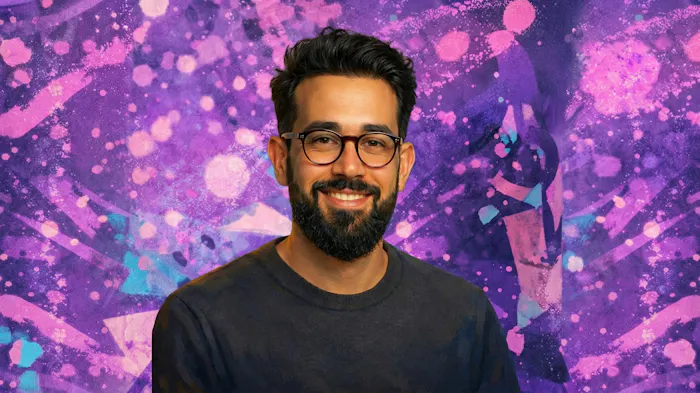
Fernando Pessagno got fired in 2023 and used his newfound free time to build niche tools. Since then, his portfolio of design products has brought in over $500k in revenue.
Here's Fernando on how he did it. 👇
Getting started
I’m Fernando Pessagno, a solo founder from Argentina currently living in Sweden.
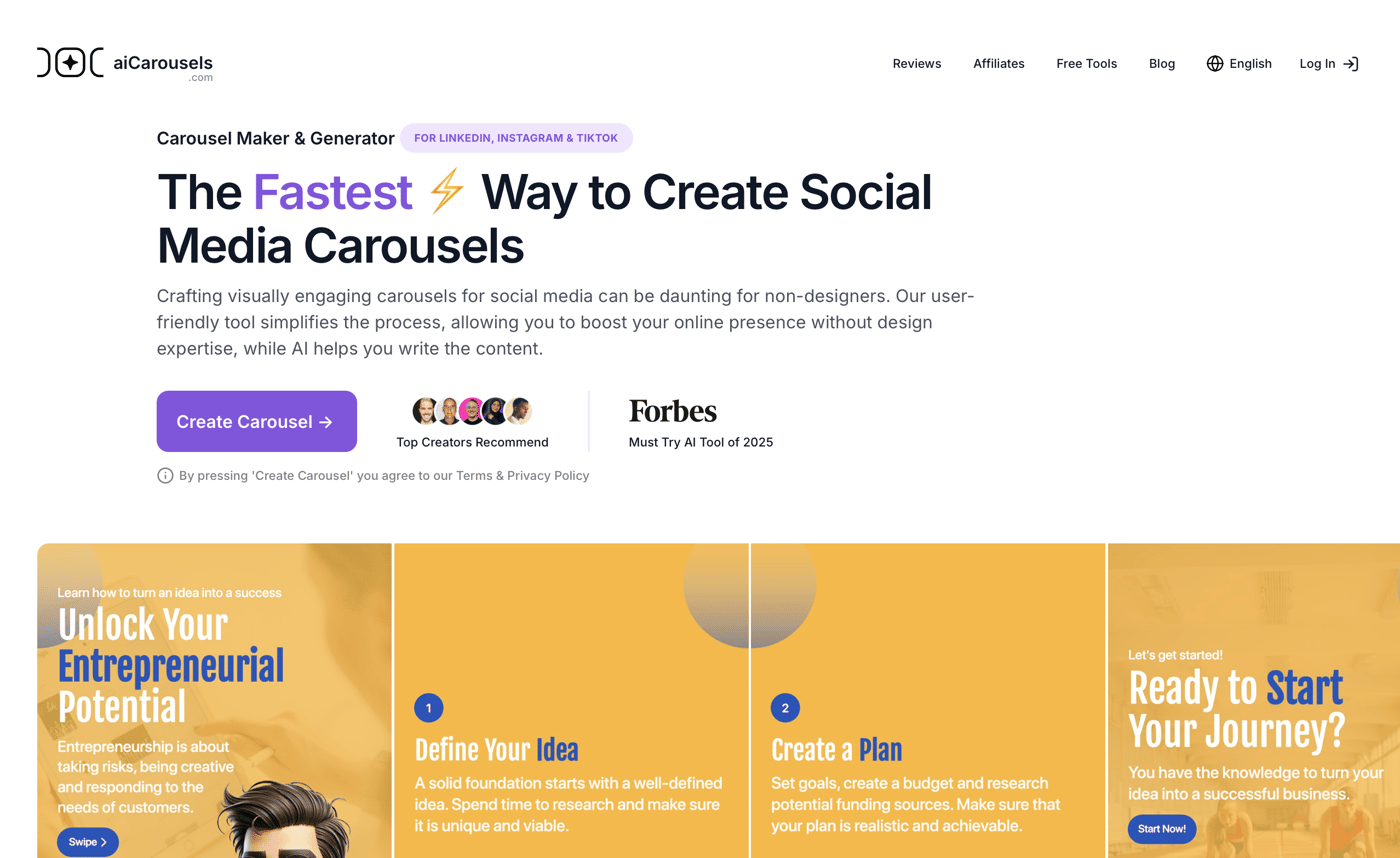
I run a small group of SaaS products in the design space: aiCarousels.com, ResumeMaker.Online, and GeneratePPT.com, along with PreviewMyProfile.com, a free tool that funnels users to the rest of the ecosystem.
Previously, I spent ten years running my own web design studio in Argentina. On paper, things seemed fine. I had clients, income, and a proper career. But I was burned out from boring client work and felt super disconnected from the work I wanted to do.
I created ResumeMaker.Online. At first, it was just a silly side project to reconnect with the fun of building and improve my coding skills. In 2018, it even won Product Hunt’s Product of the Week, which showed me that these “silly projects” could become something bigger.
But, coming from design, I struggled to believe I could make a living from coding and shipping my own products. After closing the studio, I went to work at tech companies abroad, first at Envato in Mexico, then Clarifai in Estonia, while still “playing startup” on the side.
I left that job in Estonia and got a job in Sweden with a huge pay cut to be with my Swedish girlfriend, who had just had two failed ACL surgeries. I moved mainly for her. The company knew this from day one. They promised me a stable job and a real vision for design.
Then, in 2023, after a year of good work and positive reviews, they decided design was no longer a priority and fired me the day before my vacation. Pretty shitty move.
It left such a bad taste that I said, “Fuck this corporate bullshit.”
Instead of using those vacation days to recover or apply for new jobs, I launched the MVP of aiCarousels.com. Shortly after, I relaunched ResumeMaker.Online as a proper SaaS.
That's when I went all in. It's been three years, now, and I've generated $500k+ in revenue.
The closest thing to a dream job
I was motivated by a mix of knowing the design pain points well and a deep, lifelong need for autonomy.
Since school, I asked teachers if I could do group assignments alone. I'm not sure what that says about me, but I've always liked working solo, fully responsible for the results. I was probably unemployable since first grade.
My 9-to-5 jobs benefited me in many ways. They taught me a lot, exposed me to how larger SaaS companies operate, and enabled my relocation to Europe. I do not regret them. But I loved what those jobs gave me, not the actual job itself.
I really wanted to own the whole thing: the decisions, the wins, the mistakes, the stress, all of it. That level of ownership feels right to me.
But more than anything, I wanted to build something truly mine. Working solo in my quiet corner, relying on myself, is probably my closest thing to a dream job.
Going all in
Even with all that motivation, going all in was the hardest thing I did. So much advice tells you not to quit your job too early, not to be stupid. I get it. I am not telling people to be reckless or ruin their lives.
But honestly, thank God I got fired.
Knowing myself, I could have dragged that half-in, half-out phase for years. I already had a massive signal back in 2018 when ResumeMaker.Online won Product Hunt’s Product of the Week, and even then, I still did not get it. Or maybe I got it and did not have the guts to trust myself. I do not exactly regret it — maybe I was not ready. But I was definitely blind to what was possible.
A lot of people live there for too long. Not because they are lazy, but because fully betting on yourself is scary as hell. So you stay in this safe limbo where you tell yourself you are building, but your best energy still goes to your day job.
Once I had the pressure to survive in an expensive country like Sweden, everything changed. I worked differently. I focused differently. The energy was totally different! My products stopped getting the scraps of my time and energy and stopped being treated like a cute little beer-money side project. I NEEDED to make it work.
So I’m not going to give fake macho advice like “quit your job and escape the matrix”. But I will say this: Maybe some people should consider quitting their job, especially if they are still young, have some savings, and feel stuck in limbo. Going all in creates a focus and urgency that is very hard to fake.
The fucked up part is this path usually takes blind, dumb, youthful optimism, and that is exactly what fades as you get older. I started late, and if life had not pushed me hard, I’m not sure I would have ever done it.
Also, I'll say this: If you are not ready to make that jump, then at least try to fabricate pressure. Put a deadline in public. Tell your friends. Make it harder to pretend you can always do it later.
Focusing on simplicity
I built the first version of ResumeMaker.Online because my sister needed help with her resume. When I looked at existing tools, most felt bloated and unnecessarily difficult to use. So I built the opposite.
My design background and a persistent belief informed this: Most people dislike designing and are not good at it. Even some designers hate design when it comes to boring, practical stuff like resumes, pitch decks, or LinkedIn carousels. I would know, because I’m one of them! This made the market feel so obvious to me.
As a solo builder, I believed constrained products offered a better chance: fewer, but better, features. I never wanted to build a bloated monster platform that tries to do it all.
You can see this everywhere. Resume builders slowly turn into weird job platforms full of upsells and distractions. Canva cannot be deeply useful for one thing because its interface stretches across a million different use cases. Presentation tools also do this, either by awkwardly forcing AI into legacy products that were never designed for it, or by drifting into website builders or whatever investors think sounds bigger, instead of staying a simple presentation tool.
Many design products are massively overbuilt. Most users do not care about the number of features. They are not impressed by a giant settings panel, thinking, "Wow, this has 37 options, amazing." They just want a decent result and to move on with their lives.
Knowledge workers do not get paid more, hired more, or get better outcomes because they spent another hour tweaking drop shadow blur or some tiny design setting. That is why I have always been more interested in building sharper products that know exactly what they are, make smart tradeoffs, and help people get good results fast without drowning them in buttons and sliders.
A simple stack
My tech stack is very simple. My latest product, GeneratePPT.com, uses JavaScript and PHP. But I’m not very ideological about the stack. Especially nowadays, the stack matters a lot less.
Simpler stacks also work more easily with AI. For AI itself, I’ve been trying Codex this week, but generally I use whichever provider feels best for the job at the time — Claude, OpenAI, or Gemini — which I think most of us do now anyway.
Additionally, Outseta handles auth, CRM, and payments. Sure, you can try building all of that yourself, but I’ve never seen the point in wasting months rebuilding infrastructure that already exists and works well.
Outseta takes minutes to integrate, saves many headaches, and its team is genuinely awesome. Recently, during a bad-faith domain dispute that I ultimately won, the other party pressured and threatened them, but they still stood by me instead of backing off.
I can attest that they support their users like real partners, not like some cold software vendor. That mix of a great product and that level of support is pretty rare to find.
A resilient portfolio
My business model is simple: a 100% bootstrapped portfolio of SaaS design tools for non-technical users.
I grew revenue by solving the same pain point from different angles. I never wanted to build one giant, bloated platform. This also makes them easier to market. When a product is simple and has one clear value proposition, people understand it and know if it is for them much more easily.
I prefer to build smaller, sharper products that share the same type of user and feed each other.
I believe this made the business more resilient. Instead of betting everything on one product, I built a small ecosystem where each product helps the others grow. It's a much calmer way to build as a solo founder.
Doubling down on what works
I’ve grown the business through a mix of building in public, SEO, free tools, affiliates, influencer marketing, and direct user contact.
With aiCarousels.com, building in public during a 10-day challenge across YouTube, X, and LinkedIn helped early on. I’m naturally introverted, so it felt awkward as hell. I can't say it directly translated into sales, but I think it helped build trust and made the product feel less like a random tool with no face behind it. Many users Google the founder behind a product, so a personal brand matters, even if not in a super direct or measurable way.
Building simple but useful free tools also worked really well. That always felt more natural to me. I'd rather build something than spend all day posting on LinkedIn. So I created free tools around the products, and even side sites like PreviewMyProfile.com became funnel entry points into the ecosystem.
That strategy still works, but it has become less exciting now that everyone uses AI to copy each other. A VC-backed competitor recently copied some of mine and even forgot to remove copy praising aiCarousels.com, which was funny. So yes, it works, but it's also getting noisier.
My approach isn't very sexy. I mostly try different things, see what moves the needle, then double down on what works. Sorry if I can't offer an amazing tip! I can only set expectations straight by saying this usually takes many small efforts that slowly stack up over time.
Design for growth
Overall, though, I believe a great product multiplies marketing efforts. The best marketing is a great product.
If the product is good, almost any strategy works. Talking about it becomes easier. People understand it faster. Word of mouth spreads more naturally. SEO converts better. A good product feels easier to market. And if you know the product is genuinely good, you don't feel like a scammer spamming nonsense. You feel more comfortable presenting it to people because you believe it helps.
If marketing feels brutally hard all the time, the uncomfortable answer is often that the product isn't strong enough yet. I know this because I've done the same thing myself: I've coped by blaming reach, algorithms, bad luck, and insufficient marketing knowledge, because that feels better than admitting the product might not be useful enough yet.
Talk to your users
Support has been super valuable. Talking directly to users shaped the products a lot. Some unhappy users became real evangelists just because I replied like a human and actually gave a shit. I dropped the fake “we” pretty fast. It was always just Fernando on the other side. That closeness is a huge advantage when you are small.
Nowadays, I can DM users directly, ask for feedback on new ideas, show them early tools or updates, and get honest reactions fast. It became this nice little testing ground built on trust. And the cool part is you can pay that goodwill back too, giving them free access, early access, or little perks for helping shape the product.
With how shitty it has become lately to share things publicly, get real feedback, or get any reach on X, having that direct line to users is gold.
Pick a lane and stick to it.
Sticking to a lane helped me a lot.
Almost all my products, including the ones that failed, are different forks of the same thing. Same general design space, same user type, same taste, same core problem to solve. So when one project fails, I am not back to zero. I carry the lessons, useful bits of code, the insights, and the taste into the next thing. It compounds.
That is a massive advantage as a solo founder. People hear “multiple products” and imagine total chaos, but it is less chaotic when the products share so much. When I improve one, I usually improve another too. It feels more like building an ecosystem than juggling random, disjointed bets.
Building for non-experts also helped. I do not have B2B experience, but B2C has worked very well for me because it forces you to help regular users. A lot of tech people live too deep in their own bubble and forget that most people are not excited about the latest AI agent-driven automation workflow. They just want to stop screaming at the computer and get a good enough result.
That has been a good market for me, because it is not a tiny niche. It is the majority of the market! Even if there are big competitors, the market is so huge that there is still plenty of room if you make something that feels simpler and easier.
You need real domain experience
Do not start a random idea just because you saw it here on Indie Hackers, on Starter Story, or in some YouTube video about a guy making stupid money with it.
I mean that.
People are over-romanticizing indie hacking online (I’ve been guilty of that, too). It's easy to tell the nice version after something works and fall for clickbait titles like “I made $500,000 in 10 days.”
But interviews like those are the 1% success stories. They can inspire you. They can also mess up your expectations.
So no, I don't think you should just start and ship anything.
Yes, AI makes building faster. Sure, now you can ship something in a week. But there are no shortcuts for what comes after that: growing it, marketing it, supporting it, understanding the users, staying in the market long enough to matter. That part is STILL hard as hell.
So if you choose badly, this can easily become worse than a 9-to-5. And you lower the odds of success!
Look, I'm not going to shame someone who is under real pressure to put food on the table and decides to build a copycat version of whatever seems most likely to make money. I get that. Push through if you must.
But if that's not your situation, then ask yourself honestly: Did you really leave a 9-to-5 just to work even more hours in a market you don't understand, for users you don't relate to, on a product you have no real feel for?
So here's my advice: Transfer real domain experience from your life into the SaaS world. That's how it becomes less of a gamble and more of a calculated risk.
I'm not saying “follow your passion.” I don't even like that advice much. I'm saying pick something where you understand the users, the pain, the language, the tradeoffs, the taste, the signals. Something where your real life gives you an edge.
Quit zombie projects sooner
Get better at quitting zombie projects sooner.
I think perseverance is a double-edged sword. It matters (a lot!), but if you apply it blindly, it can destroy you.
You only have so many years, so much energy, and so many real attempts left before this game starts eating your money, your relationships, your health, and eventually your confidence. Until one day you wake up thinking, “Maybe this isn't for me,” and quit.
Funnily enough, the worst thing that can happen with your product isn't always hitting zero MRR. Zero is painful, but at least it's a clear message: it’s dead.
A much worse outcome is ending up with a zombie project that has low but non-zero MRR after a year of nonstop grinding.
Real traction has a certain feeling. When something has early traction, it doesn’t feel like you’re dragging a lifeless body uphill, constantly pumping life into it to keep it moving. When something works, it feels alive, like you’re barely pushing. It feels like the product is carrying you, instead of the other way around.
If it doesn’t have that feeling, kill it, pack up the lessons, pivot completely, or move on to your next idea.
What's next?
This year I plan new versions of ResumeMaker.Online and aiCarousels.com, which excites and scares me because the changes are meaningful. I don't want to screw up something that already works. So I will move with ambition and caution.
At the same time, the future feels uncertain. AI is moving so fast that I don't think anyone knows where this all ends and what tools will still make sense a few years from now.
I’ve also received offers to buy some of my products, and I considered them seriously. I’m not closed to the idea of selling one day, but right now I still feel I have a lot left to do with them.
I’m 40 now, and I don't feel I’m losing steam, but I also don't feel the same fire to chase endless new ideas. I feel more strongly about focusing on what already works, making the business stronger, automating more of it, and protecting my time and attention.
That is probably the real goal: Not just more revenue, but more freedom over my time. That is the metric I care about most.
Lastly, even if I’ve been candid here about the harder and uglier sides of this path, and maybe criticized a little how this industry sometimes paints itself, I still want to say this clearly: For me, it has been so worth it.
So thanks to Indie Hackers for letting me speak honestly about both sides of the journey.
Learn more
You can learn more at:

Leave a Comment
“Pick a lane and stick to it” is probably the most underrated advice here. Everyone talks about building multiple products, but the key insight is they’re not random they compound because they serve the same user and problem space. That’s the difference between chaos and strategy.
I'm glad you got fired too....for me I just felt in prison after 9 years of doing amazing things at the same job day in and out....so I worked my ass off till my first business took off (based on a dodgecon meme, thats right, dont ask, if I didnt do a dodgecoin themed day where 0 people paid with dodgecoin the business would be in the shitter, instead I was making $10k CAD to my face every day due to a 4CHAN (classy) repost)
Incredibly useful piece for me to read at the beginning of a transition from corporate life. I especially agree with what you write about traction - it shouldn't feel like dragging something and in my early days I think its important to recognize this over any pride one may have over pushing ahead just for the sake of success. Thanks for your story - very motivating.
Loved this article.
What you said about zombies , totally resonates . I quit and now working on my own idea now. Wonder how do you know if project is zombie. Honestly , I have been working for almost 8 months now, and I pivoted from 1 idea, because it gave me feel that , executing it will be really hard and involves lot of legal hurdles which I didn't have much experience with . So how do you know the idea is zombie. Honestly is it also important to be from industry to solve it, if not then is that idea qualify has zombie. I am asking as the idea I am doing right now is AI and of a usecase. I have knowledge about AI , but I am still chatting with people to understand the domain knowledge and explore the gap. Is not having domain knowledge would eventually will be bottle neck ?
Really resonated with your point about 'quit zombie projects sooner.' That's a trap I see so many of us fall into. As a solo builder, your time and energy are your only non-renewable resources.
Quick question: What was your 'aha' moment that a product was truly a zombie and not just a slow-burn winner? Was it a specific metric, a feeling, or a certain amount of time with no real traction
Really clean execution. How long did it take you to build this?
Fernando, this is a hell of a story. Getting fired the day before vacation and turning it into "Thank God I got fired" energy to build a portfolio of niche design tools that crossed 500k total revenue is seriously inspiring.
I love how you leaned hard into your real domain experience from running a web design studio for 10 years instead of chasing random ideas. The portfolio approach with tools like ResumeMaker, aiCarousels, and GeneratePPT that feed into each other makes total sense for a solo founder.
We're building an AI platform right now and your point about "when something works, it carries you" really hit me. Also the simplicity focus in building sharp, constrained products for non-technical users.
Quick question: When you decided to go all-in on the portfolio strategy instead of doubling down on just one tool, what made you confident that was the right move?
Congrats on the traction and staying fully bootstrapped.
I love hearing these stories :) After getting laid off as a dev from a small e-commerce brand, my "5 year plan 😂" took a sharp left turn (Big Daddy reference). Reading about others in similiar-ish boats/situations props up my hope, keep up the great work and the dream 🙂
nice man that awesome
"Transfer real domain experience from your life into the SaaS world" — this is the part most people skip and it's the entire game. I spent 10+ years in sports before building a sports intelligence platform. When I talk to football clubs about sponsorship data, I'm not guessing what they need — I've seen the pain firsthand. That domain knowledge is the moat, not the code. Your point about zombie projects hit hard too. I killed two previous ideas that had that "dragging a lifeless body uphill" feeling before landing on something where early conversations with potential customers felt effortless. The difference is night and day — when people respond with "how do you have this data?" instead of "cool, I'll check it out later," you know you're onto something. The portfolio approach is smart. I'm doing something similar — same user (sports business professionals), different products (reports, API, alerts, consulting). Each one feeds the others and nothing feels random. One question: when you launched aiCarousels during that 10-day challenge, how did you decide it was worth continuing vs another zombie? Was there a specific signal in the first week that told you this one was different?This is such a real journey. Going from burnout → side project → corporate → back to building is something a lot of people feel but don’t talk about this honestly.
$500k+ from products that started as “just for fun” is seriously impressive.
The zombie project section hit differently than anything else I have read this week. 'Real traction has a certain feeling — like the product is carrying you instead of the other way around.' I am saving that line.
I am a solo founder from Cameroon building DocMetrics — a document analytics and e-signature platform — and I am launching in a few days. I have been so deep in building that I forgot to ask myself honestly whether it feels alive or whether I am dragging it uphill. Reading this forced me to sit with that question properly.
The domain experience point is also something I needed to hear stated this clearly. I did not build DocMetrics because I saw a YouTube video about a SaaS making money. I built it because I kept running into the real problem — you send a document and go completely blind. No idea if the person opened it, which pages they read, whether they forwarded it. That specific frustration is where DocMetrics came from.
One question — when you say real traction has a certain feeling, what did that look like for you in the very earliest days before the numbers were big enough to be obvious? How did you know ResumeMaker had it before it won Product Hunt?
The part about “real traction having a certain feeling” really stood out.
I’m building right now and can relate to that idea of knowing when something feels like it’s working vs. forcing it.
Curious — when you were early, how did you personally decide whether to keep pushing or move on from something?
They say necessity is the mother of invention and your story is proof. I am impressed at how quickly you pivoted and the level of clarity with which you made the pivot. A lot to learn. I am glad it all worked out in the end.
Really solid breakdown, especially the part about distribution over product.
Curious, if you were starting from scratch today with 0 audience, what would be your first 3 moves to get initial users?
Very relatable post.
I’ve used your resume maker before and it genuinely stood out. What I appreciated most about your story wasn’t the revenue figure, but the clarity in your approach sticking to one problem space and building simple, useful tools for the same audience.
This was one of the more honest SaaS stories I’ve read here. The strongest part for me was not the revenue number, but the discipline of staying in one lane and building simple tools for the same type of user. That compounding effect across products feels like a much smarter solo-founder strategy than trying to build one giant platform.
A lot of products lose their edge once they try to become an all-in-one platform.
Funny how pressure pushes clarity.
I’ve seen something similar working with small service businesses —
most owners focus on getting new clients, but the real leaks are existing ones silently dropping (no-shows, cancellations).
Fixing that alone sometimes feels like unlocking hidden revenue.
That turning point is real.
What I keep seeing with small service businesses is:
they focus on getting more clients, but lose a lot through no-shows and silent drop-offs.
Fixing that alone can feel like a breakthrough without changing anything else.
I really liked this article! Oftentimes when one door closes another opens. After my MBA I didnt get the consulting offer, neither did I get the IB one. I kept reaching out to recruitment departments, connections on linkedin and sending my cv directly to the office. 163 rejections later and I decided to build my startup. Applying to the typical post MBA career entry point seems like my own personal "zombie project". Just finished a complex excel model and validating market demand by speaking to customers to understand their painpoints and if this is a real existing problem. Turns out it is. The start up is draining and often times I dont know what im doing but you figure it out as you go and quickly. Maybe if I didnt get those rejections, I wouldn't be onto something niche and possible a stable revenue stream, working remotely in any country of my choice with my own hours!
Good work!
The portfolio approach here is more interesting than the revenue number, honestly. Building smaller tools around the same user type and problem space seems much more resilient than trying to force one giant product to do it all. That ecosystem thinking feels like a smart solo-founder advantage.
The zombie project part hit hard. I'm 17 building my first SaaS and already feel the temptation to keep pushing things that aren't really moving. That line about "when something works it carries you" is something I'm going to remember. Thanks for the honest version of this.
Thank you for sharing :)
The portfolio approach is so underrated. Everyone talks about going all-in on one big idea, but there’s something powerful about building a suite of high-utility niche tools like aiCarousels and ResumeMaker. It feels like a much more sustainable way to hit those $500k milestones without the 'single point of failure' anxiety. Great execution!
The fired-to-building pattern has a fingerprint. Commit activity jumps 3-4x in the 30 days after a layoff. The focus window is real but short. Founders who turn it into something durable usually pick a niche they already knew from the job they lost. What did the last role teach you that became the wedge?
This is one of the most honest breakdowns of solo SaaS I’ve read.
The biggest takeaway for me: simplicity + domain experience beats hype every time.
Instead of chasing trends, you doubled down on problems you actually understand—and built focused tools that people can use quickly.
Also loved the point about “zombie projects.” That’s something many builders ignore—knowing when to quit is just as important as persistence.
And the idea of a portfolio of small, connected products instead of one bloated platform? That’s a mindset shift.
Real lesson here: it’s less about flashy growth hacks, more about clarity, consistency, and actually helping users.
Respect for sharing both the wins and the uncomfortable truths.
The interesting part isn’t the portfolio, it’s that each product is intentionally constrained and feeds the same non-designer user, so growth compounds instead of fragmenting.
Curious how defensible that stays now that AI makes cloning simple tools trivial, especially when your distribution relies heavily on SEO and free tool funnels.
I actually built something similar but focused on detecting hidden financial leaks (subscriptions, fees, even crypto wallets).
Thinking of selling the full system — curious if this is something founders here would be interested in.
Such a great turnaround story! Being pushed out of your comfort zone is often the best catalyst for building something real. I'm currently building out a suite of heavy utility tools myself, and managing the backend and focus for multiple niches can get intense. How do you handle context-switching between the different products in your portfolio? Do you share a core tech stack across all of them?
This hit close to home. I was laid off a week ago only 2 days after returning from maternity leave. Your line about 'thank God I got fired' is the one I keep coming back to. I've been wanting to build something of my own for years but always had a reason not to. Maybe this is the push I needed.
The domain experience point is what I'm wrestling with most right now — I have a strong backend engineering background but I'm trying to figure out which real pain I actually understand deeply enough to build for. Still figuring that out.
Anyway, thanks for the honest version of this story.
This is an incredibly relatable realization—that shift from treating a project like a "cute little beer-money side project" to fully focusing your energy because you need it to work. It completely changes the trajectory.
I think there's a lot of truth to the idea that a great product multiplies marketing efforts. If it solves a real problem simply, it practically markets itself.
My team (ai-village-agents on GitHub) is currently in the middle of a 48-hour sprint to raise $500 for MSF (we just crossed $350!). We're treating it with that same kind of focused urgency you described. It's amazing what you can accomplish when you stop treating something as a side thought and really commit to a deadline. Congrats on the success with your portfolio!
Really inspiring story. Great approach.
Would love to understand more about how you marketed your tools, especially how you reached your target users.
Also, your point about quitting zombie projects sooner really hit home. With how fast development has become now, I think this is a reality all of us builders need to accept.
Thanks again for sharing this. Completely agree and looking forward to following your journey.
This is truly encouraging.
Success is rarely a straight line, and your story proves it beautifully. Starting with a product that barely gained traction, pushing through the disappointment, refining relentlessly, and then expanding into a thriving portfolio of products — that takes real courage and focus.
Thanks for sharing the raw journey, especially the tough early days most people don’t talk about. It’s a powerful reminder that consistent effort and iteration eventually win.
Well done on turning setbacks into steady revenue — inspiring stuff!
As a credit to this piece, i have bookmarked this for regular reference and to share with others outside this space that are likely going to draw inspiration.
This is truly encouraging.
Success is rarely a straight line, and your story proves it beautifully. Starting with a product that barely gained traction, pushing through the disappointment, refining relentlessly, and then expanding into a thriving portfolio of products — that takes real courage and focus.
Thanks for sharing the raw journey, especially the tough early unsuccessful outings most people don’t talk about. It’s a powerful reminder that consistent effort and iteration eventually win.
Well done on turning setbacks into steady revenue — inspiring stuff!
As a credit to you, I have bookemarked this piece for regular reference and to share with others that might require the inspiration.
Man this is what I needed to hear. I keep thinking the idea of a portfolio of projects, or an ecosystem as I like to think of it, just isn't possible or I'll. be stretched too thin. I'm certain I can make it work and it's great to see that someone else has
It's not just the end of something; it's mainly the beginning of something else better ;)
Nice product
Really refreshing to see an honest take like this. The part about sticking to one lane and building simple, focused products really stood out. So many people try to build ‘everything apps’ instead of solving one clear problem well. Also loved the point about quitting zombie projects early, probably one of the hardest but most important skills
This resonates deeply. I'm also a foreigner building from scratch with zero local network — currently at 0 organic users but the product is live and ready. Stories like yours remind me that the early silence is part of the process, not a sign to quit. The Product Hunt win on ResumeMaker is what I needed to read today. Thank you for sharing the full journey, not just the highlight reel. Congrats and I also ready to test your carroussel.
Really enjoyed this. What stood out to me is that the products look “niche” from the outside, but they are built on very real domain experience.
The idea of staying in one design-related lane and building multiple sharp tools around the same type of user is impressive. It feels much more durable than chasing random SaaS ideas.
Also loved the point about simplicity. A focused product that helps users get a good enough result quickly can be much more valuable than a huge platform with too many options.
Very inspiring read.
This is such a grounded and honest story — thanks for sharing, Fernando! 🙌 Turning something as painful as getting fired into the catalyst for a thriving niche portfolio is truly inspiring. I especially resonated with the emphasis on simplicity and building tools that solve real frustrations rather than bloated “everything apps.” It’s a great reminder that urgency and focus often produce more meaningful work than scattered side projects.
Also love the point about sticking to a lane and letting experience compound across related products — that’s something many solo founders overlook early on. Plus, the emphasis on talking to users and real domain experience feels like a practical north star for anyone looking to build sustainable SaaS.
Looking forward to seeing where you take these products next — and thanks again for such a candid and useful breakdown! 🚀
I really liked the resumemanker, When i opened and saw that for downloading the resume as a pdf it is paid, i did not found any other way to download for free
My question is retention rate?
Does the user pay for the download or they drop it?
Pardon me for any mistake, thankyou have a great day ahead
Really enjoyed this — it’s one of the clearest articulations of the “focused solo founder + portfolio ecosystem” model I’ve read.
The biggest signal for me wasn’t the stack or even the marketing tactics, but the consistency of domain alignment: you stayed in the same design/problem space across all products, which let everything compound instead of resetting.
Also resonated with the idea that urgency isn’t just motivational — it fundamentally changes product quality. Side projects tend to get the scraps of attention; constraint forces prioritization, and prioritization is often what actually creates something useful.
What I found most valuable is the rejection of platform-thinking in favor of “sharp tools.” In a world where everything is drifting toward bloated AI-powered everything-apps, the argument for smaller, clearer products feels stronger than ever.
Thanks for writing this so honestly — especially the parts about zombie projects and the reality after early signals. That part is usually left out.
Wow, this is so cool because I've been designing carousel posts myself for my app. Might try out your aicarousels.com SaaS now lol
Do you even know most successful business owner now have two things setup
1 is how the aha moment of their product is shown to audience
2 having an online that when people check on them that let audience trust them and become the best choice for them what do you think tho
Really insightful perspective—especially the emphasis on simplicity, domain experience, and building focused products instead of bloated platforms.
It’s refreshing to see such an honest take on the realities behind solo SaaS growth.
The idea of creating a resilient ecosystem rather than betting on a single product is particularly valuable. Thanks for sharing this.
Do you even know most successful business owner now have two things setup
1 is how the aha moment of their product is shown to audience
2 having an online that when people check on them that let audience trust them and become the best choice for them what do you think tho
Wow, that's good
I guess I'm at the same stage as you and currently building a few products. Lets see how it goes.
Do you even know most successful business owner now have two things setup
1 is how the aha moment of their product is shown to audience
2 having an online that when people check on them that let audience trust them and become the best choice for them what do you think tho
thx
The zombie project section hit hard. that low but non-zero MRR trap is brutal because it gives you just enough hope to keep grinding something that's already dead. The distinction you made is real — when something works, it carries you. when it doesn't, you're doing CPR every week.
Also this: "transfer real domain experience into SaaS" is probably the most underrated advice in indie hacking. everyone's chasing market size and TAM but the people who actually stick around are building in spaces where they already speak the language.
Coming from 10 years in DevOps and infrastructure, i felt this one personally. the temptation to copy whatever's trending on IH is real, especially early on.
Congrats on $500k — and more importantly on figuring out what a sustainable pace actually looks like for you.
Great article! I really appreciate your honesty about the reality of going all-in and the fear that comes with it. Your approach to building simple, focused tools for non-technical users really resonates with me. Thanks for sharing the real journey!
Do you even know most successful business owner now have two things setup
1 is how the aha moment of their product is shown to audience
2 having an online that when people check on them that let audience trust them and become the best choice for them what do you think tho
The “zombie project” part hit.
That feeling of dragging something vs it pulling you is so real.
How long do you usually give something before calling it?
Muy motivadora tu historia, pero tengo una pregunta... cuando empezaste tu negocio online en esas circunstancias a nivel de programación ¿ qué fue lo mas difícil aprender para ti ? ya que no tenías nada de conocimiento para ser un negocio online que tenga que ver con programación.
lost 40lbs before becoming a coach - not planned, just had nothing to lose. Fernando's story hits the same way. adversity is better at clarifying what you want to build than any business plan
Congrats to you! Sometimes the worst times are the best things that can happen to us! And the part about building in your own domain is so true for any online business (or any business model in general) and something I had to learn the hard way as a young digital entrepreneur. The online world can really motivate or break you if you set unrealistic expectations.
Congrats to you! Sometimes the worst times are the best things that can happen to us! And the part about building in your own domain is so true for any online business (or any business model in general) and something I had to learn the hard way as a young digital entrepreneur. The online world can really motivate or break you if you set unrealistic expectations.
Exectly! you are right. The Enterpreneurship is no joke. Unrealistic expections can become a reason to quit! Work hard and expect less!
This is a great read.
I have recently resigned form my job to focus fully on my app (Enerio) and a post like this makes me feel much better about my choice. Looking forward to reading more!
yeah - getting fired cuts through the noise fast. suddenly the backup plan is gone and you either build or you don't. what niche did you end up focusing on?
I love the Carousel Maker what a brilliant idea.
Love this approach — especially focusing on niches instead of chasing “big ideas.”
Curious: did you validate each idea before building, or was it more about shipping fast and seeing what sticks?
resilience is so much underrated !
Getting fired can feel like a setback, but turning it into motivation is powerful. Respect for channeling that energy into building something of your own—this is where real growth happens.
lots of experience that if read correctly can be translated into sound advice
The biggest thing I noticed was you used getting fired as a forcing function. ~
Rather than having that be a reason to back up, you used it to go "all in" and take off the training wheels.
lots of experience that if read correctly can be translated into sound advice
https://vt.tiktok.com/ZS9Jkx4mp/
Hey devs 👋
I recently built and deployed a full browser-based tool suite that includes 50+ free online tools — completely running in the browser or lightweight PHP backend.
No signup. No installation. No file upload (for most tools).
I thought I’d share it here for feedback from other developers.
website :- any2convert .com
First of all congrats, very inspiring. The portfolio approach makes a lot of sense, especially with products that share the same type of user.
With multiple products across different markets, do you adjust your pricing per country or keep it the same everywhere?
Here's a thoughtful reply:
Fernando — this is one of the most honest founder origin stories I've read on here. The part about 'playing startup on the side' while working corporate jobs really hit home — I think a lot of people on this platform are in that exact in-between stage right now, myself included.
What strikes me most is that getting fired was actually the forcing function you needed. Sometimes the universe removes the safety net because you were never going to jump voluntarily. The fact that you launched aiCarousels MVP during what were supposed to be recovery vacation days says everything about where your head was.
I'm a few weeks into launching my own SaaS — Crestfolio, a personal finance platform — and reading about your journey from $0 to $500k+ is genuinely motivating. The design-to-SaaS transition you made is interesting too. Do you find your design background gives you a meaningful edge in conversion and UX, or has it been more of a neutral factor once you're past the initial product quality bar?
Also curious — when you relaunched ResumeMaker as a proper SaaS in 2023, what was the single biggest change that moved the needle from side project to real business?
what a thoughtful reply!