Growing a GEO tool to a mid-five-figure MRR within a year
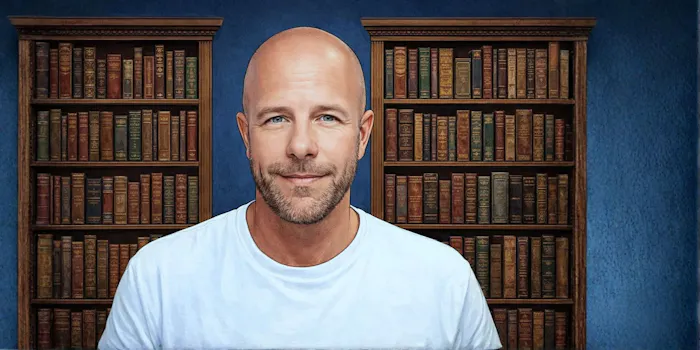
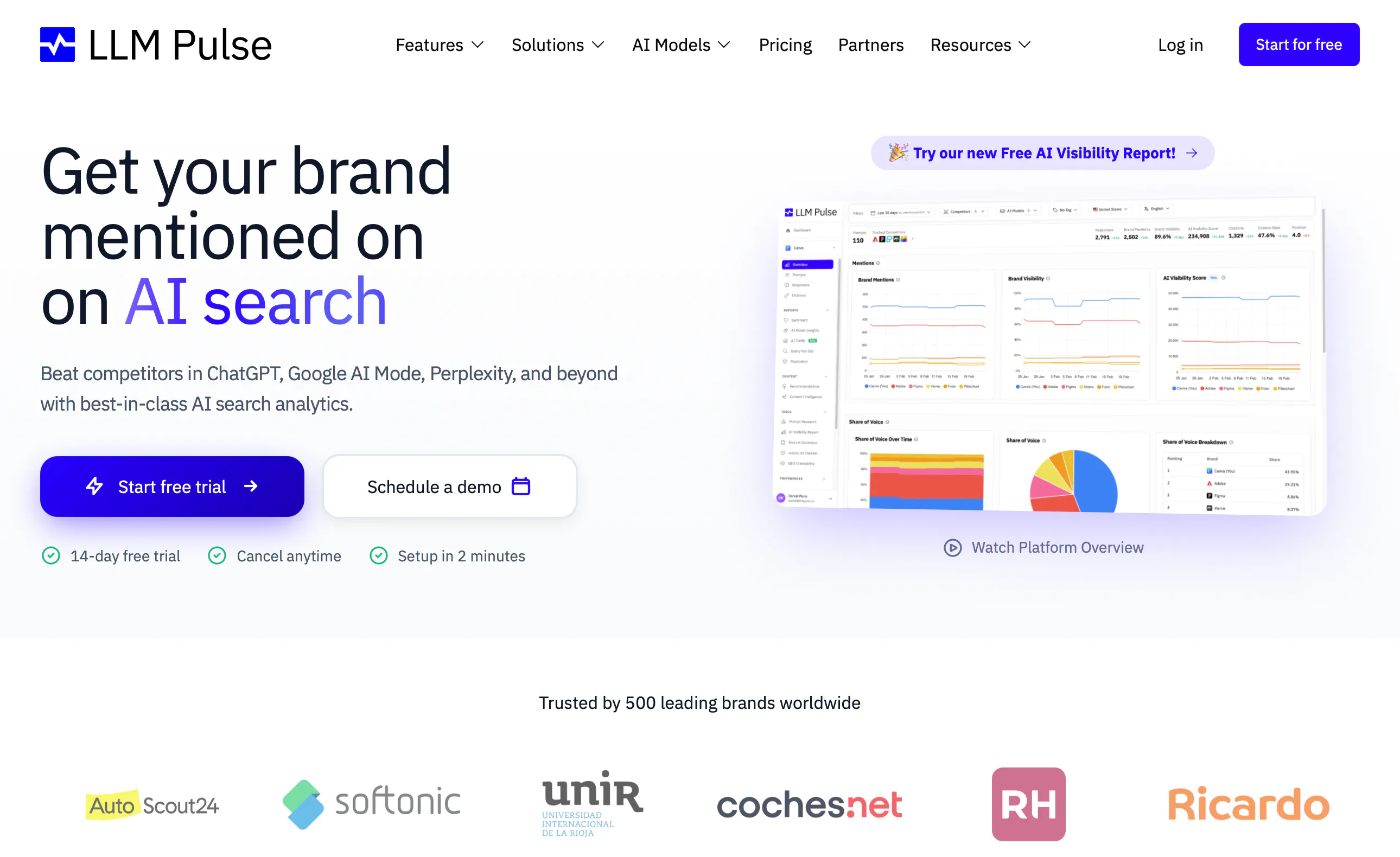
Daniel Peris saw a trend and built for it. Within two months, he launched the MVP. And less than a year later, LLM Pulse is at a mid-five-figure MRR.
Here's Daniel on how he did it. 👇
Indie hacking since 1995
I’ve always been a bit of an internet nerd and a builder.
My background is in business and growth, but I started my career very early. I first got online in 1995 and built my first website shortly after. Not long after that, I was already designing and developing websites for clients.
Over the years, I’ve built, scaled, and sold websites, mobile apps, and Chrome extensions.
In 2007, I turned one of my own projects into a real business. In 2013, I started one of the first ASO (App Store Optimization) agencies globally, which now employs a team of 15 people. In 2017, I launched an ASO SaaS product. It didn’t become what I originally expected, but I ended up selling it in 2021.
Then, in May 2025, I saw brands appear (or not) in AI-generated answers, and it was clear this would matter. And I wanted to prove to myself that I could build a SaaS and turn it into a truly large business. So, I decided to move fast. I found two people I really wanted to build with, and we started LLM Pulse.
I launched in July 2025 with two cofounders — Adrián Rojas and Esteve Castells. We help brands monitor and improve how they show up in AI-driven search platforms like ChatGPT, Gemini, or Perplexity.
It is fully bootstrapped. Our team is just three cofounders, which forces us to stay extremely focused on what drives value. We only work on things that have a direct impact on growth or product value. No roadmap for the sake of it.
Currently, we're at a mid-five-figure MRR, and it's growing steadily month over month, with growth accelerating over time.
Launching in two months
With a previous SaaS project, I spent too much time and money building the first version. I didn't want to repeat that here. So, we started building the MVP of LLM Pulse in May 2025 and launched it in July.
Our goal wasn't to build a perfect product, but to quickly validate that we could reliably measure how brands show up in AI-generated answers.
So we focused only on the core: building something that worked, gave us reliable data, and that people were willing to pay for.
Once that worked, we layered everything else on top.
As far as the stack, we kept the stack simple and pragmatic. And we avoided typical big cloud setups. We run most of our infrastructure on dedicated servers instead. It gives us more control and keeps costs predictable as we scale.
No playbook
The biggest challenge has been building in a space with no clear playbooks. Things change fast, and you’re constantly making decisions with incomplete information.
We had to be creative and make decisions from first principles, testing things quickly and iterating based on what worked.
We’ve also been very reactive. We don’t try to solve problems before they exist. We deal with them when they show up.
My advice for those in a similar position: Keep it simple, move fast, and continuously adjust as you learn.
Three advantages
Three things have been especially helpful.
First, staying very agile as a small team. We avoid unnecessary meetings and keep communication simple, which allows us to move fast and stay focused. But it's also a challenge. We had to intentionally define roles, priorities, and communication to maintain efficiency with just three people.
Second, doing a lot of demos. Demos have been one of our main sources of learning. Talking directly to users, seeing how they interact with the product, and building relationships has helped us improve much faster.
Third, experience. We come from SEO and have built products before. We’ve made mistakes in the past, some of them quite serious, and that helps us avoid repeating them.
That combination, speed, direct feedback, and experience, has been a big advantage for us.
A combination of growth strategies
We didn’t rely on a single channel. A combination of strategies working together drove our growth.
Our personal brands were a big early driver. We actively shared what we were building and our perspective on AI Search, attracting the right audience.
As I mentioned, we’ve also done a lot of demos. Demos have been key not only for learning but also for converting users and building early relationships.
Additionally, we’ve created free tools as lead magnets, organized webinars, worked on SEO (our background), and published studies to share market insights.
Timing has also helped. AI Search is growing very fast, and a real need exists to understand and measure its developments.
Of course, a product that works well and users genuinely like has made a big difference too.
Everything we do aligns with growth; every action pushes in the same direction.
Doubling down on SEO
Given our background, SEO was a natural channel for us, but we kept it very focused.
We started with a strong technical foundation: clean architecture, proper indexing, and an easily crawlable and understandable structure. We also use structured data to make our content clearer for search engines.
From there, it’s about relevance. We create content based on real questions we see in the market, not on volume, and we focus on building our brand and positioning within this space.
Less content, but more useful. That’s been enough to make SEO (and AI Search) work for us.
Fail and make mistakes
Here's my advice:
Forget about perfection.
Build fast, ship often, and don’t waste time worrying about problems that don’t exist yet.
Most things you’re afraid of won’t happen, and the ones that do, you’ll figure them out.
You will fail and make mistakes. That’s part of the game.
Just keep going.
What's next?
Going forward, the plan is simple: Build a great product, give great support, and have a lot of happy customers.
Beyond that, we want to:
Keep the team small
Move fast
Double down on what’s already working.
We’re aiming to build something big. That’s an important part of the motivation this time. And keep going. Keep building, keep improving, and see how far we can take it. And have fun.
You can check out LLM Pulse at llmpulse.ai and get a 14-day free trial. You can also find me on LinkedIn, where I share updates and insights on AI Search, growth, and what we’re building.

Leave a Comment
Glad to see your product, you basically created a tool using your SEO experience but applicated on GEO for LLM. Is still a dark area and really undervalued i guess, difficult to find online, you made a great job. Really curious about it
Reaching mid-five-figure MRR within a year is a masterclass in distribution. But as a Systems Architect, I’m always looking at the "Fragility Gap"—the point where rapid growth outpaces internal logic. In 2026, the real challenge is turning this momentum into a "Self-Sovereign Asset". How much of your current growth is tied to manual hacks, and how much is baked into an automated 'Systemic Loop' that scales without you?
Great point — but honestly, we haven’t faced that yet, so we’re not over-optimizing for it.
We try to stay very grounded in reality. Spending time on hypothetical constraints too early usually leads to unnecessary complexity, and that goes against how we operate.
We prefer to move fast, stay close to what’s actually happening, and react when real constraints show up. That’s what has worked for us so far.
Very curious how you found your first customers?
Great question :) I go into detail in the post, but in short — a mix of distribution, network, and being early on something people were already starting to look for.
Happy to expand on any part if helpful.
Mid five-figure MRR in a year is a dream run, especially for a geo-focused tool. I’m curious about the data side of things—did you find it hard to keep your margins healthy as you scaled, or did you find a way to keep data/infrastructure costs lean? Geo-apps can get expensive fast, so I'd love to hear how you managed that.
“Curious—at that stage, are most of your conversions coming from inbound, or are you doing any outbound/pitch-based growth?”
Mostly inbound.
We do some outbound, but it’s not the core. It’s more for learning and opening doors.
Most conversions come from inbound — being visible where demand already exists.”
Impressive growth in such a short time 👏
I appreciate your approach! I'm new to indiehackers and found it worth it after reading your story.
as a recognized startup entrepreneur and as a web-based podcaster
these insights help everyone grow themselves. a good read i would say, and if you open can we talk about it on my platform?
A good read. I feel like sometimes I over-plan and procrastinate hoping things fall neatly into place. I'm trying now to "Move quick, make mistakes and adjust as necessary"
Totally get that — happens to all of us.
Over-planning feels productive, but most of the time it’s just a safer form of procrastination.
What has worked for us is exactly that: move fast, ship, and adjust based on reality. Things rarely fall neatly into place anyway.
You’re on the right track.
Really like the “no playbook, just first principles” approach — feels very real for anything AI-related right now. Also refreshing to see less focus on volume (SEO/content) and more on actual relevance and demos.
Appreciate it, really.
Right now things are moving too fast for playbooks to hold for long. First principles tend to age much better.
And yes, we’ve seen that shift too. Less about volume, more about actually being relevant in the moments that matter.
The reactive approach to problems is smart. The instinct to over-plan and over-build before launching kills more products than bad ideas do. Two months to MVP with three people and no playbook is impressive. The demo-driven feedback loop makes sense too - nothing replaces watching someone actually use what you built. Nice work hitting mid-five-figure MRR in under a year bootstrapped
Quick question — have you noticed parts of your system behave differently over time even when nothing obvious changed?
I’ve been seeing that pattern a lot with AI workflows.
Been working on something that stabilizes that kind of drift underneath systems — not replacing anything, just keeping behavior consistent.
Curious if you’ve run into that at all.
Really appreciate this, thanks a lot.
We’ve just seen that too many times. Overbuilding before real usage usually leads nowhere.
Watching people actually use the product changes everything. It forces clarity very fast and removes a lot of assumptions.
Still early for us, but this way of working has made a big difference so far.
Nothing kills assumptions faster than watching someone hesitate on a screen you thought was obvious. Good luck with the next phase!
Mid five-figure MRR in under a year in a brand new category is a serious result. Good read. The dedicated servers thing caught my eye, everyone just defaults to cloud and then acts surprised when the bill arrives. Keeping costs predictable as you scale is one of those boring decisions that quietly saves you.
Really appreciate it, Will.
And yes, exactly that. Dedicated servers are not the sexy choice, but they give you control and predictability early on.
I’ve had some pretty bad cost surprises with cloud in the past, so we wanted to avoid that from day one.
So far, it’s been one of those quiet decisions that paid off.
Growing a GEO tool from zero to a mid-five-figure MRR in just one year takes smart strategy, consistent execution, and deep market understanding. This inspiring journey highlights the power of SEO, automation, and user-focused innovation in building a profitable digital business.
Quick question — as you’re scaling this, have you ever noticed parts of a system behave differently over time even when nothing obvious changed?
I’ve been seeing that pattern a lot with AI-driven setups.
Been working on a small runtime layer that stabilizes that kind of drift underneath systems — not replacing anything, just keeping behavior consistent.
Curious if you’ve run into that at all.
Congrats on hitting mid five-figure MRR with just 3 people — that's a real result and honestly pretty inspiring for solo founders like me who are in the early stages.
The inbound over outbound point really stuck with me. Most founders default to cold outreach but you're right that being where the question is already being asked works so much better. I'm building something on the content creation side of AI search right now and I see the same thing — people who already feel the pain find you naturally, people who don't aren't worth chasing yet.
What did being visible actually look like in the early days before you had any SEO traction?
The "no playbook" problem is real in AI search monitoring . you're essentially building the measurement standard for a space that didn't exist two years ago. The demos-as-learning point resonates. Most early-stage founders treat demos as sales but the signal you get from watching someone interact with your product live is irreplaceable. Hard to replicate that at scale. Curious how you handle the reliability problem. AI search results are notoriously inconsistent across sessions and geographies. How do you give brands confidence that what you're measuring is representative?
Ziraxo — Create AI-powered 3D images and models in seconds! Easy, fast, professional. Ziraxo.com
It can be difficult navigating the world of online recommendations, especially with unreliable services out there. However, I found this recovery service to be incredibly reliable. Their professionalism and effectiveness stand out, and I can confidently recommend them. They are the real deal for recovering losses from scammers. omegacryptorecovery AT Gm a il com
Doesnt Shopify has inbuild system for this already?
Lean teams shipping at lightning speed is what it is! Congratulations & thanks for sharing your story with us.
Really strong example of building for a shift in behavior, not just a trend.
A lot of people saw “AI search” getting attention. The smart part here was turning that into something measurable and operational for brands.
In new markets, the winners usually aren’t just the ones who move first — they’re the ones who help customers make sense of what’s changing.
The move to dedicated servers for cost predictability is a pro move. Most founders default to cloud and get hit with massive bills at scale. Daniel, at what point during the MVP phase did you decide that dedicated infrastructure was the way to go for a GEO tool?
Great information
Always interesting to see what actually moved the needle vs what didn’t.
Impressive execution—launching fast, validating through demos, and focusing on distribution clearly paid off. Great reminder that speed and feedback beat overbuilding every time.
woow, very good
The mix of channels instead of relying on one is what makes it work.
Interesting approach.
I'm building an AI product myself, so I'm curious — what helped you get your first traction?
Super relatable—moving fast with a simple MVP and learning from real users is what actually works. The focus on demos + SEO combo is something more founders should try early.
The "no playbook" point is the most honest thing I've read on here so far. Everyone talks about growth frameworks but when you're in a genuinely new space you're making decisions from first principles every single day. We're in a similar position building automated crypto trading on a relatively new perps exchange — there's no template, no case study to follow, just constant iteration based on what the data shows. The demo-as-learning-tool insight is underrated too. Most founders treat demos as sales calls. The best ones treat them as the fastest possible feedback loop. Mid-five-figure MRR in under a year bootstrapped with three people is a serious result. The timing advantage is real but you still had to execute — timing without execution is just luck.
The distribution part hit me. I always thought the hard part was building, turns out nobody tells you what to do the morning of launch day.
What did your first week of distribution actually look like before things started picking up?
The part about launching in two months really hit home. We spent way too long on the first version of our video collab tool trying to make everything "perfect" before anyone even saw it. This time around we just shipped it and figured things out from there.
And demos — yes. Every single demo taught us something we never would've caught from looking at dashboards. People use things in ways you genuinely don't expect.
Also curious about your dedicated servers setup. We've been debating the same thing vs going full cloud. Feels like at early stage the cost predictability matters more than the scalability you probably won't need yet.
Mid-five-figure MRR with 3 people is crazy efficient. Good luck with the next phase.
Your 'move fast and learn' philosophy is spot on. We’re currently building an AI startup in the mental fitness space, and that mindset is exactly what we’re trying to adopt. I’d love to know—was there a specific feature you rushed to ship that failed, but the feedback actually pointed you toward a better direction?
Have you seen systems drift over time even when nothing changed?Also curious — have you ever seen parts of your system behave differently over time even when nothing obvious changed?
I’ve been noticing that a lot with AI-driven setups.
Working on something that stabilizes that kind of drift underneath systems — not replacing anything, just keeping behavior consistent.
Wondering if that’s something you’ve run into yet.
Nice! How did you get your first users?
These days, We are building an AI mental fitness startup, so your “move fast and learn” approach really resonated.
Curious—what’s one thing you shipped quickly that turned out to be completely wrong, but ended up being valuable anyway?
This looks really interesting 👏
Have you considered localizing for Japanese users? It could open up a strong market for you.
What stands out most to me is how deliberately you’ve avoided “scale for scale’s sake” traps:
No cloud bloat → dedicated servers for control & predictable costs.
No roadmap for the sake of it → only work that directly impacts growth or value.
No solving problems before they exist → react, don’t predict.
That last one is rare and underrated. Most founders (including myself in the past) waste months building for hypothetical scale or edge cases. You’ve proven that speed + tight feedback loops + real customer conversations beat guesswork every time.
Also smart to lean on demos as a learning channel – not just conversion. It turns “selling” into “co-creating.”
Curious: now that you’re at mid-five-figure MRR, have any of those “problems that don’t exist yet” started to actually appear? Or is the dedicated server + small team model still holding up cleanly?
Either way, inspiring case study. Thanks for sharing the raw playbook – especially the part about failing and keeping going. 👏
Building a tool in a saturated space and hitting this MRR is impressive. The SEO play you used to launch is interesting was the organic growth from technical SEO content or more from community/Reddit engagement?
We built LLM Pulse in 2 months to help brands track their presence in AI search, growing fast by staying lean, shipping quickly, and learning directly from users.
The "no playbook" part is what most case studies skip. How did you stay sane making big decisions every week with no benchmarks to compare against?
Move fast, ship often, and don't waste time worrying about problems that don't exist yet." That's the best summary of early-stage product building I've read in a while. The demo-driven learning approach is something more founders should adopt. Talking to users directly always reveals more than any analytics dashboard. With 3 co-founders bootstrapping, how do you handle disagreements on what to prioritise when everything feels urgent?
30 years of building and you still chose to ship in 2 months and stay reactive. Most people with that much experience do the opposite, they've seen too much go wrong and end up over-planning. When you spotted brands disappearing from AI answers in May 2025, was the call to move fast coming from your ASO instinct: "I've seen this pattern before", or did you have actual market signal backing it? Because that distinction usually tells you everything about whether the timing was luck or skill.
HIRE BEST AI HACKER RECOVERY CRYPTOCURRENCY / BANK ACCT RECOVERY EXPERT OPTIMUM HACKER RECOVERY
I'm so delighted to be able to share this story with you all
I put 880k USDT in an online cryptocurrency investment platform and I was scammed out of everything! I lost hope and all my efforts have been given up! I had obligations to my family, and I was worried that I wouldn't keep them. I spoke with a few of my colleagues, but they were all unfavorable in their opinions. When I went online, I found a piece advertising "OPTIMUM HACKERS RECOVERY," a hacking collective with a reputation for recovering cryptocurrency / Bank account recovery, that had received a lot of favorable feedback. I decided to get in touch with them, and within a short period of time OPTIMUM HACKERS RECOVERY was able to retrieve all of my stolen USDT through AI Machine . Being able to recover my misplaced money was incredible. This piece of writing is for everyone who has also lost money investing in cryptocurrencies. please reach out to them on
Em ail: support @ optimum hackers recovery . com
Wha tsApp: + 1-256-256-8636
Web site: https :// optimum hackers recovery. com
I'm seeing a lot of new exactly same Saas companies poping up in the last 12 months. For how long can you fight this over saturated niche (ai SEO) and what is your advantage?
HIRE BEST AI HACKER RECOVERY CRYPTOCURRENCY / BANK ACCT RECOVERY EXPERT OPTIMUM HACKER RECOVERY
I'm so delighted to be able to share this story with you all
I put 880k USDT in an online cryptocurrency investment platform and I was scammed out of everything! I lost hope and all my efforts have been given up! I had obligations to my family, and I was worried that I wouldn't keep them. I spoke with a few of my colleagues, but they were all unfavorable in their opinions. When I went online, I found a piece advertising "OPTIMUM HACKERS RECOVERY," a hacking collective with a reputation for recovering cryptocurrency / Bank account recovery, that had received a lot of favorable feedback. I decided to get in touch with them, and within a short period of time OPTIMUM HACKERS RECOVERY was able to retrieve all of my stolen USDT through AI Machine . Being able to recover my misplaced money was incredible. This piece of writing is for everyone who has also lost money investing in cryptocurrencies. please reach out to them on
Em ail: support @ optimum hackers recovery . com
Wha tsApp: + 1-256-256-8636
Web site: https :// optimum hackers recovery. com
Mid five-figure MRR in under a year in a brand new category is very good.
awesome project, looks good
I saw you mentioned "being visible where demand exists" — curious to hear more on that.
We've been heavily outbound-focused, and honestly it's worked to a degree — we hit #2 on Product Hunt. But from that launch we got zero paying customers, so clearly visibility alone isn't converting.
We have a lot of tools at our disposal and I'm starting to wonder if we're spreading too thin or just pointing our energy in the wrong direction. What does "being visible where demand exists" actually look like in practice, and how do you bridge the gap between eyes on your product and getting people to actually book a demo?
The SEO background being a real competitive advantage resonates with me. I run a Chrome extension SaaS and losing organic traffic (dropped 65% in signups after losing a Featured badge on the Chrome Web Store) was a brutal reminder of how much growth depends on distribution you don't fully control. The less content, more useful SEO approach is something I'm trying to adopt now. Great story — the two-month MVP timeline is especially motivating for solo and small-team founders.
—
The speed from trend to MRR is impressive. Curious about one thing — how much of the early validation was gut feeling vs. structured analysis? I've seen founders who spot the right trend but build the wrong product for it. Having a systematic way to separate "this market is real" from "I want this market to be real" seems like the thing most indie hackers skip.
This is really insightful about AEO and GEO. This is a trending space. Good luck to this team!
What really caught my attention was the “no playbook” approach. ~
Instead of sticking to a rigid strategy, you prioritized quick iterations and tackled problems as they arose.
No hype. No 'overnight success.' Just: saw a trend, built fast, launched in 2 months, iterated.
What stands out:
— 'We only work on things that have a direct impact on growth or product value.' That's discipline most teams lack.
— Demos as a learning tool — not just sales.
— Keeping the team small (3 people) forces focus.
The 'fail and make mistakes' section is the real lesson. Most founders are afraid to ship because something might break. But as you said: most things you're afraid of won't happen.
Quick question: what was the #1 feature users asked for after launch that you didn't expect?
Congrats on the progress.
This is really insightful, especially the part about shipping fast and not chasing perfection.
I’m currently an indie hacker beginner. I’ve already built my app, but I’m struggling with distribution and getting users.
If you were starting today with zero audience, what would be the first 1–2 channels you’d focus on to get traction?
Would really appreciate your advice.
yes
this worked because they had distribution instincts before the trend
most people are copying the idea, not the advantage
Really liked the part about demos. Watching users interact with the product and hearing their thoughts directly is one of the fastest ways to learn and improve I think.
I like your journey and experience, which help you to success again with GEO. I would like to know, what's your distribution strategy? do you have big audience on any platform?
Alpha Key continues to be the sole authorized cryptocurrency recovery hacker.
I'd like to extend a special greeting to everyone here and around the world. When it comes to cryptocurrency investing, you should be cautious about who you deal with. I thought things were going well at first, but after investing over $96,670 worth of bitcoins, things went south, and I was on the verge of suicide until I learned about Alpha Key Recovery Expert. Knowing them is one of the best things that has happened to me this year. Contact them right away if you have fallen victim of a bitcoin scam.
WhatsApp:+15714122170
Signal:+15403249396
Pure spam...