Hitting a 5-figure MRR with an open-source portfolio
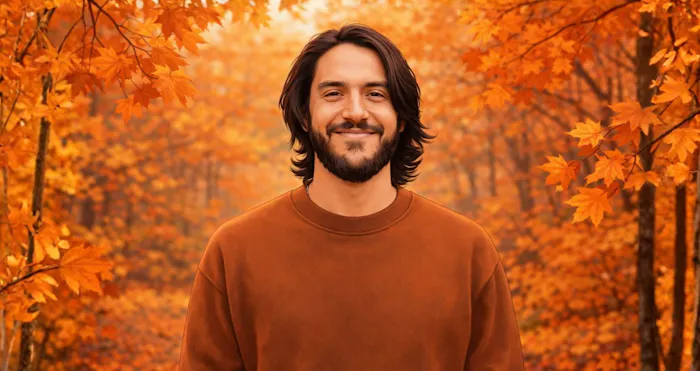
Caleb Porzio saved up, quit his job, and started building open-source projects. Before long, Livewire took off. And now, his portfolio of products is bringing in a five-figure MRR>
Here's Caleb on how he did it. 👇
A lucky fella
I've been a web developer my whole career. I've worked for agencies and product companies, but I got fed up working for other people. I wanted my own project, and I don't do great in normal job environments.
So, I saved money, quit my job, and started working on open source for fun.
Livewire emerged from that. I knew the pain of big JavaScript frameworks and wanted to explore ways to simplify full-stack dev. I saw Phoenix Live-view, and that weekend, Livewire was born.
Within a year, sponsorships paid my bills. After that, I built Alpine, and since then, Flux UI.
Through these projects, I've stayed in open source doing what I love and have been fortunate to pay a few good folks to help me. I'm a lucky fella.
Currently, we're at a five-figure MRR.
The building process
I make free, valuable tools, then sell educational courses, ebooks, and now premium UI components. That's done pretty well for me so far.
Getting here took a lot of late nights and Twitter posts. Plus heaps of passion and time to delve into it.
As far as my stack, I use Livewire, of course. I primarily work within the Laravel ecosystem because it's home to me; however, AlpineJS has reached a broader audience.
Audience and charisma
When I got started, I already had an audience within the Laravel community. I had spoken at a couple of their conferences and worked at a popular agency in the space.
This was really important. Having that solid base, I shared what I was doing with people who already trusted me.
My natural charisma also gave me a huge advantage in building relationships with people, speaking at conferences, and writing engaging emails. Podcasts have also helped significantly.
If I sucked at communicating and wasn't a "natural" with that kind of thing, it would have been much harder.
The challenge of open source
The biggest challenge I've faced is competition from other open-source tools.
It's hard to have a real moat in open source. Everything is freely available for reference. As soon as a good idea catches on, many others will naturally want to do the same or similar things. You must always push the envelope and stay relevant, which can be exhausting.
Another hurdle was that Livewire is a funky tool. It was countercultural at the time and required significant time and convincing for many people.
But I never stopped preaching it and eventually won more and more folks over.
Learning from peers
Learning from others around me was another significant advantage.
I learned a ton about craft and product from Taylor Otwell, not through instruction, but through observation.
Adam Wathan also greatly influenced me. His thinking and much of the material he's written about sales and entrepreneurship have been invaluable.
Be smart with your money
My advice? Hm. "Keep it real."
Listen to the signals around you. People often tell you what they want, and it's surprisingly hard to listen to them and follow through. But it's crucial to stay grounded in real user demand.
Always ask yourself: "What do my users need/want?" And better yet, ASK THEM! They will tell you directly or indirectly.
Also, DON'T SPEND MONEY! You can make so much more money if you keep your operation simple. Don't let life expenses creep up as you make more. Don't be quick to hire people. Do as much yourself as you can, and stock away cash in an investment account so that if shit hits the fan, you come out on top.
What's next?
I want to realize the full vision of my tools. I want to build the most comprehensive, robust, and productive web stack out there.
I've come a long way, but we still have a way to go before covering all fronts. AI could be huge for our tools if we play it right, so — as with everyone right now — that's a big thing to figure out.
You can follow me on Twitter or listen to my podcast: Notes On Work. And here's a list of my open-source projects.

Leave a Comment
Really inspiring story. What stands out most is how much of this comes down to consistency, community trust, and actually listening to users, not just the technical side of building
Really enjoyed reading this. Congrats on making the economics work, it is genuinely hard. Here is a perspective from the opposite direction, underrepresented in these conversations.
I am building an open-source Android IDE called Code on the Go. There is no monetization model, a deliberate choice rather than a problem I have not solved yet. I funded it personally as a philanthropic venture because the goal is to lower the floor for Android development in places where a laptop is not available. The people I am building for cannot pay for it. That’s why I want to help them get it. What I find interesting reading your post is how much of the thinking around open source assumes that sustainability means revenue. For most projects, that's true. Your approach of building trust first, monetizing later, is a clean model. There's a small category of other projects where the absence of a business model is a feature, not a bug. If the goal is community access rather than financial growth, then putting a price on anything, even a premium tier, changes what the thing fundamentally is. But what happens when the personal funding runs out? That is the version of your sustainability question that I am sitting with. Grants and institutional support come with their own constraints. Curious whether anyone here has experience sustaining a genuinely free tool through channels other than user payments. -David
Really inspiring as an open source founder too I just have to keep pushing the needle
It's nice to see Laravel still getting some love! I remember picking it up after years of Zend and it was a revelation! I've mostly moved on to Sveltekit these days, but Laravel will always hold a special place in my heart as the framework that made me not hate frameworks.
Thank you for livewire :) it's such a good framework even though I probably only use 10% of its capabilities :D
Calling it luck is generous, this looks more like strong positioning + consistency over time.
Dont spend the money is a trick i would love to more about it, specially once you are senior and you know it works from your experience then how to stop the temptation of start building ? money is also time , you might stop dollars but how to preserve time in this case well?
Hi, Would you please tell me how did you get your first sponser?
This one resonates deeply. I've spent a couple of decades watching products fail for three reasons: founders optimize for speed rather than data-driven truth, they confuse audience with reach, and they spend money they haven't yet earned.
The part about observation over instruction stuck out to me especially. You didn't study Taylor's code. You watched how he moved. Same with Adam's writing on sales. That right there is the difference between learning theory and acquiring wisdom.
One addition: the "don't spend money" rule has a quiet corollary. When you stop the growth treadmill and actually listen to who uses your thing, your cost of customer acquisition drops to zero. Sponsorships, word-of-mouth, organic reach, they only appear when you've already proven the thing works. No amount of paid user acquisition gets you there faster.
Great post — really inspiring to see how you turned an open‑source portfolio into a 5‑figure MRR business. The mix of community, transparency, and productized services feels very “Indie‑hacker” in the best way.
I’d love to hear: what’s one thing you’d do differently if you were starting this journey again today?
Love the brutal honesty here, especially your advice to 'DON'T SPEND MONEY!' and your playbook of making free, valuable tools as the top of the funnel.
You mentioned that the biggest challenge is the lack of a moat since open-source ideas get cloned quickly. When that happens, do you feel that your personal brand and the community trust you've built effectively become your 'uncopyable moat', or do you rely strictly on just out-innovating and shipping faster than the clones?
Really inspiring story. This is such an achievement very well done
I Just Hear This "Keep it real."
I actually built something similar but focused on detecting hidden financial leaks (subscriptions, fees, even crypto wallets).
Thinking of selling the full system — curious if this is something founders here would be interested in.
Learning from others is something I’m always practicing. What specific lessons you learned from Adam Wathan. I would like to see the section on learning on peers to be expanded or maybe its own post.
Open-source portfolios as a distribution moat is the indie strategy I most wish more builders took seriously. The compounding is absurd once it kicks in. I spend a lot of time looking at commit histories across open source projects, and the OSS repos that turn into businesses almost always have one shared trait: the founder treated issues and PRs as their primary marketing channel for the first year. Every answered issue was a warm lead. Every merged contributor PR was someone who would probably become a customer or evangelist later. The repos that stay just "open source hobby" tend to have maintainers who disappear from issue threads after 2-3 weeks. The other thing I see in the data: GitHub stars are a vanity metric, but weekly unique contributors is not. A repo going from 2 weekly contributors to 8 is the strongest leading indicator I've seen for an OSS project that's about to find a revenue model. Curious how you balanced "be helpful on issues" vs. "build the next thing." That tradeoff seems to be where most OSS builders get stuck.
very interesting
Love it!!
really impressed with idea how ever i have also built a powerfull tools to convert your pdf into images edit your pdf and much more please visit any2convert .com
Looking for a US-based Full-Stack Developer to Collaborate (50/50 Partnership)
Hey everyone 👋
I’m a full-stack developer with experience in Node.js, React, and building scalable web applications. I’m currently looking to collaborate with a US-based developer on a SaaS or startup idea.
What I’m looking for:
* A developer based in the United States
* Strong in either frontend, backend, or full-stack
* Interested in building and launching real products (not just side experiments)
Open to a *50/50 partnership** (shared ownership and benefits)
What I bring:
* Solid full-stack development experience
* Experience working with modern web technologies
* Focus on building scalable and production-ready systems
* Willingness to commit long-term and actually ship
Goal:
To build and launch a product together — validate ideas, iterate fast, and grow it into something meaningful (SaaS, AI tool, or web platform).
If you’re interested, feel free to comment or DM me. Happy to jump on a quick call and explore ideas together.
Or you can just drop an email here career4lucas@gmail . com
Looking forward to connecting!
Really inspiring journey—especially the focus on simplicity, open source, and staying close to real user needs.
The approach of building value first and monetizing around it is a great reminder that trust and community compound over time.
Also appreciate the honesty about competition and the importance of continuous innovation. Great insights.
great
This is awesome — open-source → revenue is a tough path.
At that stage, are you tracking failed payments at all?
Seems like a small % loss can add up quickly once you hit consistent MRR.
Very thoughful insight!
Hey there, how are you doing?
really like this - especially the part about listening to users and keeping things simple
feels like that’s what actually works long term 👍
Love the simplicity of this — build free value first, then monetize around it.
Also respect the honesty about advantages like audience and communication. Most people ignore that part, but it matters a lot.
The “don’t spend money” advice is underrated too — staying lean is probably why this worked.
Give first. Build trust. Then monetize. Open source was just the vehicle audience was the real asset.
Caleb's journey really highlights something I think about a lot as a solo dev working on open-source projects: the monetization layer matters more than the code itself. Building a free tool that people love is step one, but the real craft is in designing what sits on top — courses, premium components, support tiers. I've noticed that open-source founders who treat their free product as a distribution channel rather than the product itself tend to sustain much better. The competition point resonates too. When your code is public, your only moat is execution speed, community trust, and brand. That's exhausting but also clarifying — it forces you to keep shipping instead of hiding behind a proprietary wall. Curious whether Caleb found that conference speaking had diminishing returns over time, or if it kept compounding as Livewire matured?
The "free tool → paid product" path is exactly what I'm trying to replicate right now. I launched a free AI content analyzer to build trust before asking anyone to pay.
The part about listening to signals rather than asking users directly really hit home. I've been too focused on asking "would you pay for this?" instead of watching what people actually do.
Question: when you first started monetizing, did you gate features gradually, or did you launch a separate paid tier all at once?
I'm going to be honest, I am a total newbie in this space, and after reading your post, I am still not sure I understand what your company is or how it provides the service that it does. Regardless, some of the lessons that I learned from you are starting with a community that trusts you, and speaking in an environment like that makes it a lot easier in the beginning. One of the key things that you mentioned, which resonates with me, is being smart with your money and making sure that your expenses stay low at the start. Personally, I've made the mistake of hiring too quickly, and it cost me time, money, progress, and peace of mind. Another thing that I like is that you had mentors and you learned from them. I wish you good fortune on your journey to more success. One question that I have for you is the hyperlink in your story for Livewire. Once I clicked on it, it opened up SuperBass. Was that the intended location, or was it supposed to be directing me, as the audience, specifically to the website about your company?
Awesome this is so good
Open source is underrated as a growth channel.
You’re not just building a product — you’re building trust before asking for money.
This is a great example of how open-source can be more than just “free code” — it’s actually a distribution engine.
The real takeaway for me is: community , trust ,monetization.
Most people try to monetize first and build audience later, but this flips it completely.
The "competition from other open-source tools" challenge is probably the most honest thing in this piece. A lot of founders treat open source as though transparency is automatically a moat - show people how it works, build trust, win. But you're right that the moment something catches on, it gets forked, cloned, and iterated on. The code can't be the moat.
What Caleb actually built is something much stickier: the learning layer on top. Courses and ebooks work here not because they're clever business moves, but because when you're the person who created the tool, you're the most credible teacher of it. That's a compounding advantage - the more Livewire grows, the more valuable the course; the more people buy the course, the more invested they are in Livewire continuing to win.
The money advice is also genuinely rare to hear said plainly. Most founder advice glosses over the lifestyle creep problem because it feels awkward to talk about. But it's real - income goes up, spending follows, and suddenly you need the business to generate a certain number just to stay solvent. Keeping the baseline low is what preserves optionality when things get weird.
One thing I'm curious about: at what point did it become clear that Livewire specifically had something, vs. the other projects you were building at the same time? Was there a signal you can point to, or did it just feel different from day one?
Ziraxo — Create AI-powered 3D images and models in seconds! Easy, fast, professional. Ziraxo.com
the "don't spend money" part is what everyone avoids lol. im building the first agentic cooking app right now on zero budget - northeastern gives us adobe and claude for free, we use grok for image generation, and our entire marketing stack costs basically nothing. two founders, no office, no paid ads. it works until it doesn't but so far the constraint has forced better decisions than money would have
One thing that struck me is that you used open source as a distribution channel, rather than just a type of software to be built upon. ~
You transformed open source into a vehicle for developing audiences, establishing credibility, and generating income.
Most people focus on monetizing too early, but this shows the opposite works better. Build something genuinely useful, earn trust over time and monetization becomes much easier. It’s rare to see this level of consistency play out so clearly🔥🔥🚀
This is very inspiring
The part about "don't spend money" hit hard.
I'm a non-developer building a side project right now,
and the temptation to over-invest before validating
is real. Keeping the operation simple is underrated advice.
Also curious — at what MRR did you feel confident
enough to stop worrying about runway?
This is very inspiring.. adding value by opensource strategy. Also hats off to Caleb for staying lean moneywise.. That's what lots of people ar missing.
It's all about passion
While everyone still hoards "proprietary" code like it's 2005 gold, Caleb quietly proved open-source is the sharpest distribution weapon alive. Give the painkillers away, charge for the maps and upgrades—boom, 5-figure MRR.
The weakness exposed? Chasing moats in isolation while your "secret" rots unseen. True leverage was never the code. It was showing up naked with value first.
Mind blown.
honestly the money advice is the most underrated part of this whole post. everyone's obsessed with growth and hiring but caleb just quietly stacked cash and stayed lean.
also the audience thing is real - he wasn't starting from zero, he'd already spoken at laravel conferences. that head start mattered a lot.
question for anyone who's done this - how do you build that initial trust in a community when you're completely new?
bana pek inandirici gelmedi bunu nasil yaptiği biraz daha hayat hikayesi gibi olmuş yada şans diyebiliriz. ben denesem olmaz
Really strong example of how open source can be a distribution engine, not just a product strategy.
The code is free, but the trust, community, and attention around it become the real leverage. That’s what makes the courses, components, and ecosystem products possible.
Also appreciated the honesty that in open source, the moat often isn’t the software itself — it’s staying relevant and continuing to earn trust.
That’s a really solid point about trust being the real moat. I’ve seen a lot of products struggle because their site doesn’t reflect that trust clearly.
Interesting approach. Have you run into stability issues over long-running agent sessions? I’ve been experimenting with runtime monitoring and drift detection, and reliability over time seems to be a major challenge.
The moat question is the most interesting tension here. The code can't be a moat in open source, but what Caleb built around it is much harder to replicate: a learning ecosystem, a premium layer (Flux UI), and years of trust with the Laravel community from conference talks and consistent shipping. That ecosystem IS the moat. The audience-first ordering deserves more attention too. Building for people you already understand is fundamentally less risky than building first and hoping to find users later. Caleb skipped the painful discovery phase because he'd earned credibility in the community where his tools would live. That's a compounding advantage from investing in relationships before code.
The moat question is the most interesting unresolved tension in this piece. The code itself can't be a moat in open source — that's by definition. But what Caleb actually built around the code is much harder to replicate: a learning ecosystem (courses, ebooks), a premium layer (Flux UI), and a trust relationship with the Laravel community that took years of conference talks and consistent shipping to establish. That surrounding ecosystem IS the moat, even if the underlying code isn't.
The audience-first ordering also deserves more attention than it usually gets. Building for people you already understand is a fundamentally different risk profile than building something and hoping to find an audience later. Most of us do it the wrong way around — we get excited about a technical idea, build it, then spend months trying to convince strangers it matters. Caleb skipped that painful discovery phase because he'd already earned years of credibility in the community where his tools would live. That's not luck — that's a compounding advantage from investing in relationships before investing in code.
This is pretty incredible. Tech is no longer a moat - so might as well go open-source because if your idea is easily steal-able anyways, you were never competitively differentiated enough. Still, good to keep secrets sometimes
Interesting platform with a lot of valuable discussions around building and growing projects. Always good to see people sharing real experiences and insights.
Open source can be such a powerful moat when done right you build trust and community first, then monetize around the edges. The hardest part is usually finding that sweet spot between keeping core features free while creating enough value in premium offerings that people actually pay for them.
True. I never thought about open-source being a moat in and of itself - just tech
This is such a refreshing take. What stands out most is how simple the core idea is: build something genuinely useful, stay close to your audience, and don’t rush to overcomplicate the business side.
Also love the honesty about charisma and audience—it’s something people often ignore, but it clearly played a huge role here.
The “don’t spend money” advice hits hard too. Feels like a reminder that freedom comes more from control than from revenue alone.
Really inspiring journey 👍
I think the part about "don't spend money" hit me the hardest. Most founders do the opposite. They raise a tiny bit of cash and immediately hire three people and rent an office. Then they die six months later.
You built an audience first, then the product. That is the reverse of what most people try. They build something nobody asked for, launch to crickets, then wonder why Twitter is not magically sending them customers.
The "natural charisma" thing is interesting too. You are honest about it being an advantage. Most people pretend charisma does not matter. But it does. A lot. I have seen developers with better products lose to worse products just because the founder was awkward and could not sell.
One question though: how do you balance open source (free) with making a living? You mentioned sponsorships and courses. But do you ever worry that someone will just take your open source work, wrap it in a paid service, and compete with you? Or has that not been a real problem yet?
Anyway, congrats on the five figures. That is huge for open source. Most people are out here begging for donations. You actually built something sustainable.
Followed you on Twitter.
open-source to MRR is the road I'm on too - building a sprint planner and the paid conversion is where it gets hard. what flipped it for you?
The "keep it real" advice sounds simple but it's the hardest thing to actually execute. Most founders — myself included — have a natural tendency to build what they find interesting rather than what users are telling them they need. The gap between "I think users want X" and "users are literally asking for X in every support message" is where most products die. The open source moat problem is real and underrated. You solved it the only way it can be solved: by being so far ahead on the vision that by the time others copy the current version, you're already building the next one. Curious how you think about the line between "staying ahead" and "burning out trying to stay relevant" — that tension seems like the defining challenge of your model.
That is a really inspiring breakdown. It’s rare to see people talk about the actual transition from maintaining open-source projects to building a sustainable business model around them. The point about building trust through transparency is spot on - it definitely makes the "selling" part feel a lot more natural.