After two failed products, this founder dogfooded his way to $10k/mo
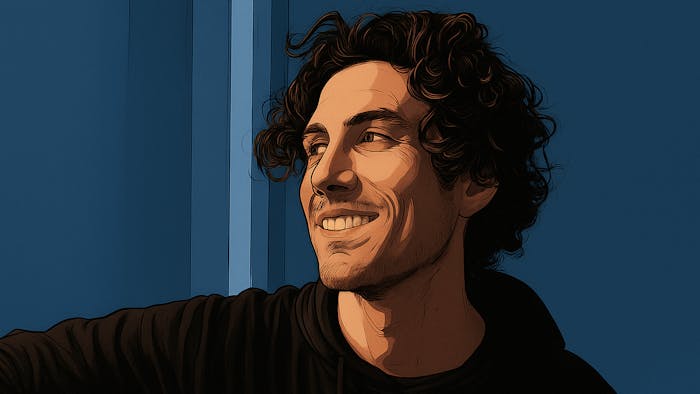
After two failed products, Yasha Boroumand built an AI-agent builder called FlowHunt. Then he used his own product to scale SEO. And now, it's bringing in $10k/mo.
Here's Yasha on how he did it. 👇
Early failures
I started programming in middle school, and I started tweaking and playing with Transformer models in high school. I liked the idea of building chatbots, but it was too soon for that — GPT-2 wasn't even out. So, I started with scrapers and an SEO WordPress plugin.
My first failed project was urlslab.com, a scraper that helps you monitor changes on your website. It failed because it was so technically difficult to make a scraper on a huge scale.
My second failed project was also urlslab.com, though it was a rebrand. This one was a WordPress plugin that helped websites improve their SEO, technical SEO, content writing, caching, image optimization, etc.
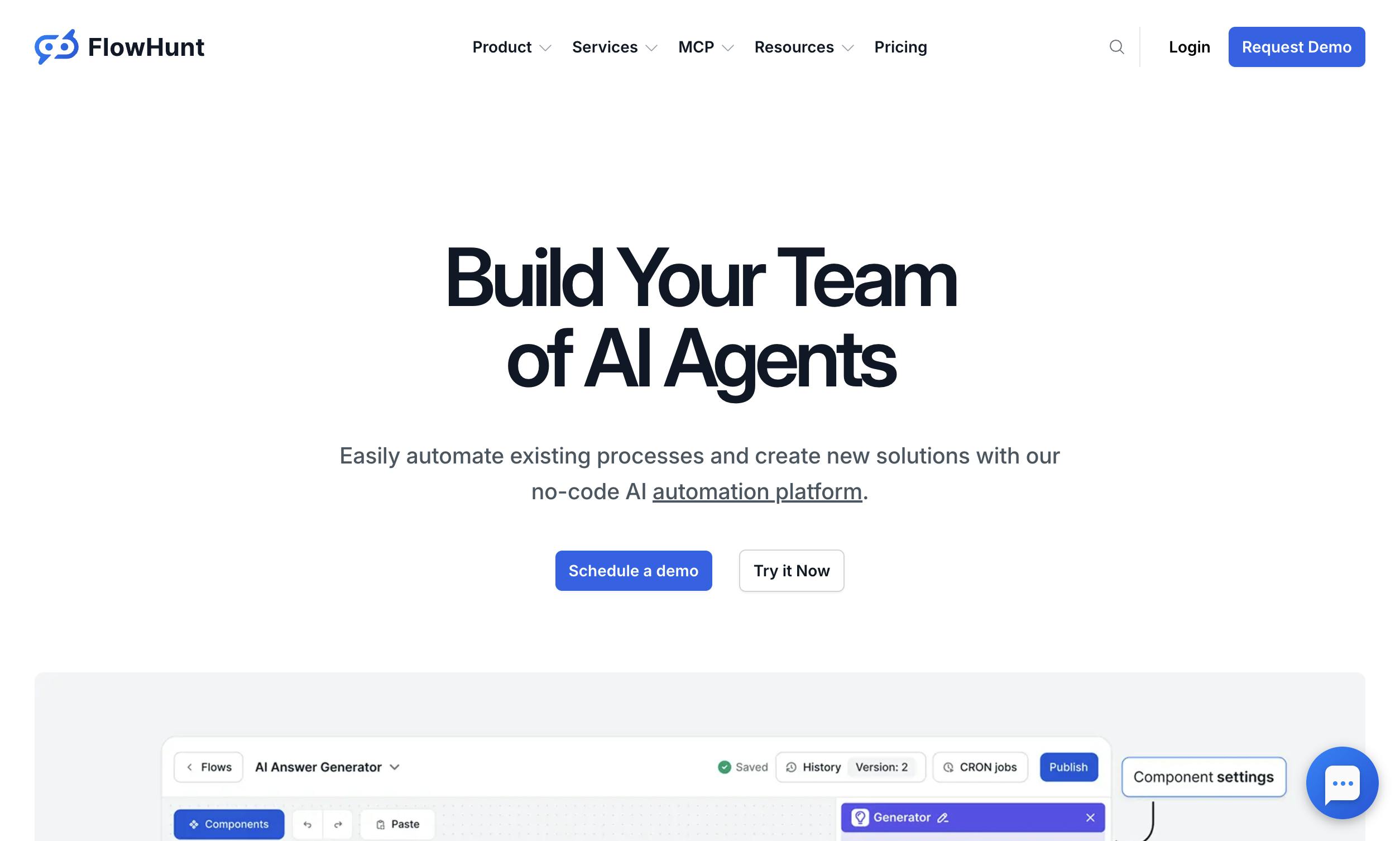
Currently, I'm working on FlowHunt.io. One of the first AI-agent builders that helps users make chatbots and complex AI workflows to solve SEO, back-office tasks, or sales use cases. It's currently at $10k/mo — $6k from subscriptions and $4k from one-off credits.
Technical challenges
We started by building a highly flexible tool to help our customers build AI chatbots, but then it evolved into specific workflows like SEO, back-office work, and sales. We built the first prototype of FlowHunt in two months and started marketing in July 2024. The first demos validated our assumption that each use case would be different and that flexibility would be key. Our platform had to adapt to new tech stacks with each customer, not to mention new AI paradigms, from RAG to Agentic RAG to AI Agents, etc.).
We got our first customer in that first month. And six months into marketing, we landed our first enterprise customer. And every week, we found a new use case to build an AI workflow from. It was a big technical challenge for us.
Here's our tech stack:
Python
PostgreSQL
FastAPI
Next.js
The challenge of building an AI tool
Since AI is a new market, volatility is high and only startups that innovate fast can continue competing and win. Every day, there is a new paper that can potentially change the future of AI — and in particular, how AI might be integrated into large enterprises.
That means that every day, after grinding the whole day, I go through the news and read AI papers. I learn what's new, test new tools and models, and think about how to integrate them into FlowHunt.
It's not easy. But I'm getting used to it and even beginning to enjoy it.
Using a hybrid model
As I mentioned, we use a hybrid model: tier-based subscriptions + credit-based AI tokens. Each tier has a specific number of credits. And in higher plans, we offer users the option to buy one-off credits.
We've used the same pricing from the start. We focus on bringing value, and the customers that see value buy more credits per month.
So far, our revenue is roughly a 60:40 split.
Dogfooding automated SEO
SEO is our main growth channel. From the start, I wanted to grow traffic organically, so we post content consistently.
We ate our own dogfood and used FlowHunt to generate thousands of pages, translate them, and update/analyze the search console — all automated from end to end. With only one copywriter on our team, we generated more than 2k pages, which are ranking on 6k+ keywords with 40k+ organic traffic.
This is what we are also delivering to most of our customers, which helps them grow traffic by using our automated flows consistently.
Every founder should handle customer support
Customer support and customer care are the most important aspects of any startup at any stage. That's how you retain the customers, keep the startup engine going, and find the best UI/UX for your users.
No startup can succeed if the founder doesn't communicate directly with the customer. In my previous startups, I didn't do that much and I learned from that mistake. With FlowHunt, I stay in contact with my customers. And because of that, I've been able to point out the exact UX flaws that they were getting hung up on.
These UX flaws that customers point out are the low-hanging fruits to fix retention and upgrades.
Deploy fast
Just deploy fast.
It's easier now than ever before to start. Just use a coding agent, deploy it fast, get your first customers, and keep iterating fast.
That's your only advantage as a startup. You have to be fast.
What's next?
We aspire to be the go-to closed-source AI Agent platform. We want to increase the accuracy and proactivity of our AI Agents' executions every day. And we want to be on the cutting edge of tools that help businesses of all sizes adopt AI.
One way we're doing this is through events. We have held several events in the Central EU to help all companies use Vibe coding in production.
You can follow me on LinkedIn. Or check out FlowHunt and our FlowHunt YouTube channel.

Leave a Comment
Love seeing the honesty about the first two projects. Most people pretend those chapters didn’t happen, but they’re usually where the real skill gets built. The SEO dogfooding part grabbed me, that’s a level of commitment most teams skip entirely.
What I’m wondering is which part moved the needle the most early on: the technical flexibility or the sheer volume of automated content you pushed live?
Amazing founding growth story. Congrats Yasha.
Hey Phil,
Thanks. Looking forward on how Agent AI space will evolve.
Two failed products resonates deeply. I'm building an AI subscription platform from Nigeria on my phone — no laptop, just Termux and Node.js. The 'deploy fast' advice is exactly what got me shipping real products with real payments. Still searching for consistent customers but the infrastructure is solid. What was your single biggest customer acquisition channel in month 1?
I have researched and found a very niche developing sector in affiliate s2s. It tries to expose silent commission theft. Vendors acknowledge your conversion happened, then it just… disappears from the records. Nobody tells you, nobody refunds you. Done a very thorough market and competitive analysis and came to the conclusion that this market does not exist yet so if the product can successfully be launched, it would have a major timing advantage. I'm at a point when I need to invest in API integrations that cost a considerable amount but don't have the resources. I genuinely believe if thesis (The $20–28 billion affiliate economy runs on trust. Nobody verifies that trust) works out it could have a really high valuation. Do you have any suggestions?
This was a super grounded breakdown of what it actually feels like to build in AI right now – especially the mix of constant technical change + very old-school fundamentals (talking to customers, shipping fast, dogfooding).
A few things really stood out:
Two failed products before FlowHunt – but you reused skills, context and even the SEO angle. It’s a good reminder that “failure” often just means “pre-training” for the thing that finally works.
The honesty about technical difficulty at scale (scrapers, infra, evolving AI paradigms) vs. just “build an agent builder, ship it”. Most people underestimate that part.
Dogfooding SEO with FlowHunt to generate and maintain thousands of pages is such a strong proof-of-value story. 2k+ pages, 6k+ keywords, 40k+ organic traffic with one copywriter is wild.
The bit about founders doing support hits home. That’s where you discover the tiny UX traps and “obvious” things you’d never see from inside the codebase.
I’m working on a much smaller AI tool focused on improving the writing/rewriting flow, and the overlap is real:
– using our own product every day exposes UX friction brutally fast
– the temptation to over-engineer vs. “deploy fast and iterate” is always there
– reading AI updates at night so you don’t get blindsided by a new paradigm
One thing I’m really curious about in your case:
When you’re moving this fast (new models, new workflows, new use cases every week), how do you decide what not to build?
Is it mostly: “does this move a core use case (SEO / back-office / sales) forward” or do you have a more explicit filter for which ideas make it into the product vs. staying as experiments?
Thanks for sharing such a current, non-romanticized view of building an AI agent platform – it’s super useful for those of us still in the early innings.
Hey!
I’ve been helping founders build their first version without spending money on agencies or dev teams upfront.
We’re doing this through Avery — you describe your app in plain English → it helps you build it → and you only pay once the app is live.
If anyone here is working on an idea or stuck because development is too expensive, I’m happy to take a look and tell you honestly if we can help.
Template Suite link (for ready tools):
https://avery.software
If you want to build something custom, I can share details about our Founder Studio too.
Really liked this story; “dogfooding your way to $10K/mo” is such a grounded path. Building for your own pain, testing in real workflows, and letting that feedback loop guide product direction is how real PMF happens. The persistence after two failed products makes the win even better.
Curious; what single feedback signal told you this one’s different? Faster onboarding adoption, consistent retention, or people hacking around limits to keep using it?
P.S. I’m with Buzz; we build conversion-focused Webflow sites and pragmatic SEO for product launches. Happy to share a short 10-point GTM checklist if useful.
The dogfooding point is huge i mean using your own product to generate 2k pages and rank on 6k keywords is such a brute force way in order to assure it works. I just launched an accessibility SaaS and the SEO gap is my biggest weakness right now i got zero content, zero inbound, while competitors have thousands of pages. Your approach of automating content with your own tool is smart. Also i mess w the 'deploy fast' like I built my MVP in two days but I've been spending way too long tweaking instead of selling. But like how long before the SEO content started actually converting into paying users rather than just traffic?
The progression from urlslab.com v1 (scraper) to urlslab.com v2 (WordPress SEO plugin) to FlowHunt is a really honest illustration of how founders circle a problem space before they find the right abstraction. Both urlslab iterations were technically-heavy tools — the scraper failed on scale, the plugin succeeded at features but probably hit the ceiling of the WordPress ecosystem. FlowHunt feels like the synthesis: instead of building a specific tool for SEO or monitoring, he built the platform that lets you compose AI workflows for any of those use cases.
The dogfooding angle is underappreciated here. Most AI-agent builder founders build for developers and then wonder why adoption is slow. Yasha used FlowHunt to actually grow his own SEO — which means he had to build it good enough that it solved a real, measurable business problem for himself first. That's a quality bar that's very different from "demo-ready" and usually produces a much more battle-tested product.
The revenue split — $6K subscriptions, $4K credits — is an interesting signal. It suggests a meaningful portion of users are running high-volume workflows rather than just paying a flat seat fee. That's the kind of usage pattern you want for an agent platform: it means workflows are actually running production workloads, not sitting idle after onboarding.
Starting with Transformer models in high school before GPT-2 was even out is also notable. There's a pattern of founders who were "too early" on their first attempts, and that early technical immersion ends up compressing the learning curve when the market finally catches up.
Good story — and relevant to what we're building at RovaAI on the AI workflow side. Always interesting to see how founders who started pre-ChatGPT think about the current moment differently than those who discovered the space after 2022.
Ai is literally the future
This is exactly my approach to almost every project now. I essentially build tools to scratch my own itch, especially when it comes to my daily coding and workflow.
Whenever I spot a bottleneck, I just build a solution for it. AI has given us solo devs the superpower to tackle problems that I wouldn't have been able to solve by myself even six months ago. For example, building my 'Gemini Code Harvester' (one of my GetPlugzz extensions) came purely from a selfish need to speed up my own coding process—and it completely changed how fast I can work.
Stories like this are a great reminder: never give up, stay authentic, and focus on genuinely helping people. If you put in the hard work and solve real problems, the results will eventually follow. Great read!
The "dogfooding" approach to SEO is exactly where the most value is found. I’m currently doing the same with ConvertlyAI—using the engine to repurpose my own long-form manuscripts and blog content into multi-channel marketing assets to avoid that post-production burnout.
I found your 60:40 revenue split between subscriptions and one-off credits very interesting. I'm currently using a credit-based system to manage the compute costs of processing raw audio and MP3 uploads. Did you find that offering one-off credits helped reduce churn for users who have fluctuating content needs, or do most of your users eventually migrate toward the higher subscription tiers anyway?
Also, I really respect the grind of reading AI papers every night to stay ahead of the volatility. It’s a constant battle to keep the prompt logic sharp when new models drop every week. Great work on the $10k/mo milestone!
As a fellow builder, I really admire how you turned setbacks into real momentum — that kind of persistence is seriously inspiring.
dogfooding is the fastest filter. if you use it daily you spot the sharp edges immediately.
for ai agent builders, id love to know how they handle evals + guardrails. most tools feel great day 1 then fall apart on weird inputs.
After two failed products, this founder built an AI agent builder and used it on himself to solve his own SEO problems. By dogfooding the tool, automating content and customer support, he reached $10k/mo. It’s a great example of learning from past failures and validating value before selling.
Love the persistence here — two failed products to $10k/mo is the real founder journey.
The dogfooding angle especially resonates. I spent 6 months trying to self-host AI agents (OpenClaw specifically) and hit every infrastructure wall imaginable. Docker crashes at 2am, memory leaks, lost conversation history when containers restart. It became a full-time DevOps job instead of actually using the tools.
Building FlowHunt as an agent platform makes total sense — you solve the "what should the agent do" problem. The flip side I ended up solving was "how do you keep the agent running without becoming a sysadmin." Built StartClaw (managed OpenClaw hosting) because I was tired of debugging Linux instead of building.
Curious — for FlowHunt users who want to deploy their own instances, do you offer managed hosting or point them to self-host? I find most indie hackers want the flexibility of their own agent but don't want to fight Docker networking on a Sunday morning.
Congrats on the traction. The SEO automation validation is chef's kiss — proving the tool works by using it yourself is the best marketing.
Love the persistence here — two failed products to $10k/mo is the real founder journey.
The dogfooding angle especially resonates. I spent 6 months trying to self-host AI agents (OpenClaw specifically) and hit every infrastructure wall imaginable. Docker crashes at 2am, memory leaks, lost conversation history when containers restart. It became a full-time DevOps job instead of actually using the tools.
Building FlowHunt as an agent platform makes total sense — you solve the "what should the agent do" problem. The flip side I ended up solving was "how do you keep the agent running without becoming a sysadmin." Built StartClaw (managed OpenClaw hosting) because I was tired of debugging Linux instead of building.
Curious — for FlowHunt users who want to deploy their own instances, do you offer managed hosting or point them to self-host? I find most indie hackers want the flexibility of their own agent but don't want to fight Docker networking on a Sunday morning.
Congrats on the traction. The SEO automation validation is chef's kiss — proving the tool works by using it yourself is the best marketing.
Love the persistence here — two failed products to $10k/mo is the real founder journey.
The dogfooding angle especially resonates. I spent 6 months trying to self-host AI agents (OpenClaw specifically) and hit every infrastructure wall imaginable. Docker crashes at 2am, memory leaks, lost conversation history when containers restart. It became a full-time DevOps job instead of actually using the tools.
Building FlowHunt as an agent platform makes total sense — you solve the "what should the agent do" problem. The flip side I ended up solving was "how do you keep the agent running without becoming a sysadmin." Built StartClaw (managed OpenClaw hosting) because I was tired of debugging Linux instead of building.
Curious — for FlowHunt users who want to deploy their own instances, do you offer managed hosting or point them to self-host? I find most indie hackers want the flexibility of their own agent but don't want to fight Docker networking on a Sunday morning.
Congrats on the traction. The SEO automation validation is chef's kiss — proving the tool works by using it yourself is the best marketing.
Impressive dedication
How are you planning to expand it further
The dogfooding approach to generate 2k SEO pages with one copywriter is brilliant validation. As someone in marketing, I'm curious about your content strategy—did you focus on long-tail keywords from the start, or did you discover that angle while using FlowHunt internally? The founder-led support detail is something I'm seeing work well for early-stage products.
Communication directly with my customers and requesting feedback for nearly instant improvement is one of the things that have surprised my clients the most. I'm fully agree the founder/founders should be in direct customer communication.
The 'Dogfooding' SEO strategy is brilliant. Generating 2k pages with just one copywriter using your own tool is the ultimate proof of value.
As a founder who also faced technical failures before finding traction, I resonate with the point about Founder-led Support. I used to delegate it, but realized that direct client feedback is actually the roadmap for fixing UX flaws. Thanks for sharing the tech stack details too!
very interesting, I'm curious to learn more about conversion
Interesting. I like the dogfooed part. Shows it works!
This part about dogfooding really stood out.
At what point did you realize the product was finally solving a real pain
(and not just something that was technically interesting to build)?
If you'd like to try AI-powered marketing, I recommend Amplift .ai . It can help solve problems you encounter in marketing, including SEO, AEO, writing, and more.
Really impressive story, Yasha, especially how you scaled SEO by dogfooding FlowHunt itself. That level of “use it before selling it” is what separates tools that actually work from tools that just look good.
One thing I see founders in your stage often overlook, though, is Reddit. Your target users, technical founders, AI builders, automation-first operators ,are extremely active across a handful of niche subreddits, and stories like this resonate extremely well there when positioned correctly.
I help founders engineer high-signal Reddit visibility that drives real signups (not just karma), by mapping their product to the exact subreddits where demand already exists and tailoring posts so they don’t get removed by mods.
If you ever want, I can share which communities align most with FlowHunt’s audience and the posting angles that perform best for tools in the AI-automation space.
Happy to help,
Micheal (Preshtechsolution)
I spent months improving features before realizing I hadn’t talked to a single real user.
2k pages, 40k traffic: that's 20 visits per page on average. Curious how much of that is concentrated in a handful of winners vs. spread across the board.
This was a great breakdown of your journey. The part about constantly adapting to new AI paradigms (RAG → Agentic RAG → AI Agents) really resonated — the pace of innovation is intense, and it’s impressive that your platform stays flexible enough to support new workflows each week.
I’m curious how you balanced building a highly flexible system with the need to ship fast during the early stages. Did you refactor frequently, or design the architecture from the beginning assuming customers would have wildly different use cases?
The dogfooding aspect — using FlowHunt itself to generate thousands of SEO pages — is super smart. That level of automated SEO is a huge moat. Inspiring story!
I'm a developer, and since my account is new I still can't make a full post yet. But I wanted to share a bit of my experience.
I built a product called Leadmore AI, an AI-powered marketing tool focused on Reddit. I didn’t spend a single dollar on promotion, and after three months the product reached $30,000 MRR.
If this sounds interesting, I’ll make a full post later and share the whole story.
I can't wait for reading this story :) Please do not forget about us.
I’ve already posted it you can check it here:
https://www.indiehackers.com/post/how-i-built-a-reddit-marketing-tool-to-30k-mrr-in-4-months-with-0-spent-on-marketing-470f39b763
Unfortunately, I still can’t post yet. Can you tell me what I need to do in order to be able to post?
Looks like there is no clear timeline when we will be able to post. Keep commenting :)
I can post now — follow me, I’ll write it in the next couple of days.
Crazy impressive journey—fail, iterate, dogfood, grow. Respect.
That’s impressive, but I’m curious — if you use this tool to generate thousands of websites, wouldn’t Google consider it cheating?
Never give up, learn from your mistakes. What a great story!
Congrats!. I have been on a similar journey. I like the idea of using your own tools to grow the business. You will find issues and enhancements faster this way as you test. Plus you uncover new opportunities as you go. Good Luck
Do you have a question? Need advice? Tarot can help you weigh the pros and cons of a situation, give you another perspective, and provide intuitive support. Think of a yes or no question and then click on the tarot email below for insight and direction.
WhatsApp : +2348159250336
Really powerful story — turning failure into testing ground for something meaningful deserves respect. Hitting $10K/mo by dogfooding is the kind of resilience and authenticity every founder should aim for.At AltPaths.io, we’re in the same space of building for real users — AI-powered insights and crypto education. This keeps us inspired.
hello everyone.
print("Hello, world!");
I'm new here, and for some reason i cannot submit a post, so, i will write in comments somewhere, but basically i need just some attention and maybe a feedback and what i am doing last few years as developer.
First of all, thank you that you gave me a chance and still read.
My name is Dmitry, iam 33 year old programmer and artist from Greece, my main occupation is 2D Digital Art for Mobile and PC Games, and i am programmer with experience in Android, Desktop and Web developement.
It's my first time im coming to space to tell something about my projects, i write my first speech this moment :)
Okay.
1. iMeYou - Digital Book --> Android Smartbook application, that implements AI into book reading and internet surfing experience, features powerful file system, with Essentials data implementations. This is the whole new level of using your smartphone for education and smart lifestyle for everyday purpose. There are already developed and ready for version 2.0 implementations of Social Network called "CLUB" for book readers, it can guide you into social connections with people sharing your interest and reading experience. This application is ready to deploy into PlayMarket as soon as i finally decide its release strategy, so, this is the first question - how to host it and how to reach people?
2. Qwa ai <-- Desktop Tamagochi Digital Assistant. Qwa is a desktop widget (It's Wednessday, dudes!) < -- a small digital life on your desktop which have a bunch of features for everyday computer working experience, is something exceptional in terms of the usability. It has next options: Essentials <-- ALT+X <-- opens window with your digital notebook where are stored your eveyday usefull data, like phone numbers or links for favorite songs. Clipboard history <-- ALT+C <-- remembers everything what you were put in copy-paste buffer. You can store data smartly. Have a output engine that can compose a .html, .txt, .archive (for files), or just compose a folder. Available with smart search. Just imagine you never lose significant data. Everything is stored encrypted. Third is Virtual Keyoboard available on ALT+E -- evey button can copy something into clipboard, to open web link, to open programm or script, to open file or do a macros. Also there is a screenshot manager that can read QR codes, translate data from text. There is implemented chat with AI that can also return weblinks.. soo, and this is just a part of functionality. This is what i want to host as close as possible, within december this may be finished.
So, as i said, im new here. Tell me, what is next should i do? :) Because i have some more projects to share :)
I tried the BYO platform and it is pretty cool
Has anyone else here used it
Surprised there is no article about it yet
Really inspiring to see how you used your own agent builder to scale SEO. I feel like a lot of indie hackers underestimate how powerful “building for your own use case” can be.
I’ve been experimenting with something similar, using small internal tools to remove friction in my own workflow. One thing I realized is that sometimes the distribution bottleneck isn’t creating content, it’s just getting ideas online quickly.
That’s actually why I built a new feature in my product (Upsyte) that lets people create super-light mini-websites in a few minutes. I wanted a fast way to spin up pages for experiments, and it unexpectedly started helping others too.
Curious if you used a similar approach early on like spinning up lots of small SEO-focused pages before figuring out your core strategy? Would love to hear more about how you structured that.
This is such a relatable post for any founder who's developing AI. Being a solo and unfunded founder with ADHD has me constantly iterating my platform and applications. I'll dogfood it with pleasure because that's where true growth and learning happens
Really appreciate the honesty about the failed products. It’s reassuring to see that “using your own product” can still be such a strong advantage. Was there a specific moment while dogfooding where you knew “ok, this one is different”?
Yasha’s persistence paid off. After a couple of tries, he built FlowHunt and grew it to $10k/month by using it to boost SEO. It’s a solid reminder that building what you need and helping customers directly can really work.
Really interesting story. I think everyone can take away 3 key things from it: never give up, talk to your customers (because asking customers can solve most of the problems you currently have in your business), and move fast. All three can be applied in your own business and I think they can be the foundation of success for any company. Best wishes for your continued growth Yasha.
I especially love how you dogfooded your own product for SEO using FlowHunt on your own site to build 6K+ pages is next level.
The interesting part here is using your own agent system to scale SEO. Most teams talk about agents but never trust them enough to run real workflows. The fact that you pushed thousands of pages through it and saw traction says more than any pitch. Curious how you deal with pages that start to cannibalize each other once the volume gets that high. That’s usually where automated SEO breaks.
Really inspiring read, Yasha! The way you turned setbacks into a system for learning , and then used your own product to prove its value is exactly what sustainable innovation looks like.
The “dogfooding” approach resonated deeply. We’ve found the same thing while testing automation on our own creative tools — you catch what users feel before they even tell you. It’s not just validation; it’s empathy in action.
Love how you combined speed, customer focus, and technical depth. Congratulations on hitting $10k MRR , this story is full of lessons for anyone building in the AI space.
Annie from the SoftlyWished Team
Great! Love the story
I've tried to channel all my work in consumer research into a simple method that changes how people think about sleep—and improves lives for just $2. I’d love to hear your thoughts!
Great comeback story, Yasha. The transition from the failed scraper projects to FlowHunt feels like a natural evolution. The fact that you're using it to automate your own back-office and SEO tasks is the best kind of validation. Thanks for sharing the transparency around the failures!
The founder of this company learned from two failed products and improved it by dogfooding. The company grew to $10k per month after he tested it himself, fixed real issues, and refined features.
Really great and transparent post, Yasha.
I'm fascinated by your hybrid pricing model (60:40 split between subscriptions and AI credits).
Was this 'pay-as-you-go' for AI tokens part of the plan from day one, or was this an iteration you made based on customer feedback? It seems like a great way to align value with cost in the AI space.
Muchos founders nos escriben preguntando qué herramienta usar para automatizar atención al cliente o flujos internos.
La respuesta casi nunca es una herramienta.
La respuesta es un agente bien diseñado.
En Nexia Capital desarrollamos microservicios que trabajan como piezas independientes:
un agente interpreta, otro ejecuta acciones, otro consulta bases de datos, otro controla la calidad de la respuesta.
El resultado: sistemas más estables, más escalables y que no dependen de una sola “caja negra”.
Creemos que el futuro no es “una IA que hace todo”.
El futuro son equipos digitales trabajando junto a los humanos.
Your post makes a good point about learning from real usage. Plans look solid until people try the product and break your assumptions. I like how you focused on one fix at a time and stayed consistent. Good work with hitting 10k/month :)
Syed.
This is a fantastic and very honest story, thank you for sharing, Yasha.
Your point about the "challenge of building an AI tool" where you have to constantly read new papers just to stay relevant is something I feel on a deep level. It's like you're not just building a product, you're trying to build a raft while sailing it through a hurricane. How do you personally cope with the potential burnout from this constant race? Is it just pure passion, or do you have a system to filter the signal from the noise?
Also, huge respect for navigating from two failed projects to $10k MRR. That resilience is the real "alpha" in the founder's journey. Congrats!
It’s rare to see someone so open about the early projects that didn’t make it, especially when the later success looks so polished. The progression from scrapers to AI workflows makes perfect sense in hindsight, but it’s the kind of path you can only see clearly looking backward.
The constant iteration and dogfooding mindset stand out. It’s one thing to build tools, but another to actually live inside them long enough to understand what breaks. You can’t build in a vacuum and expect it to feel human.
Thanks for sharing your blueprint. I really want to know the automation for seo you're doing. can you please mention which tool you're using?
This is a real example of not giving up when failed but being insistent in the path to success. I am also developing an AI project and have difficulties finding customers. I developed apps before but no customers. This story inspired me.
Dogfooding is a good way to know your product limits too. Sometimes it works, sometimes it doesn't, honestly for me it didn't. Maybe there was something missing which I am still trying to figure out. Anyway your story sounds great good luck ahead.
This founder proved that persistence pays off after two failed products. Dogfooding - using his own product - enabled him to identify real user pain points, refine his idea, and create a product that people will actually use. The journey he took to achieve $10K/month demonstrates that failure can be a foundation for success if you learn from it, adapt to it, and continue to strive for success.
Amazing story Yasha! keep hustling! I'm trying to use SEO strategy too for my new startup
This was a really inspiring read, Yasha.
I like how you used FlowHunt itself to scale SEO — true example of “dogfooding done right.”
I’ve been experimenting with automated SEO workflows for smaller utility tools myself, and your hybrid model gave me some ideas to test. Thanks for sharing this journey!
“Impressive results.
Automating content at this scale while keeping customer support hands on shows a strong balance between growth and retention. Deploying fast and iterating quickly is a lesson all founders should take seriously, really valuable insights.
Gr8...test, learn, automate, and stay close to your customers. fast iteration and using your own product are the real growth levers, not just fancy features.
SEO is great, but it takes time to see results. After launching, you’re hungry for your first users - and that’s the hardest part: finding a way to actually get them.
You can use social media to market your website, but relying solely on it may limit your reach. Instagram, Facebook, and LinkedIn are excellent platforms for building brand awareness and driving traffic, but they work best when combined with SEO, content marketing, and email campaigns. A balanced marketing strategy will ensure consistent visibility, organic growth, and long-term success, which social media alone may not be able to achieve.
This is such a vital lesson for every founder: solve a problem you deeply understand. It's easy to get lost in building something 'cool' or for a hypothetical user. The shift from building for others to building for yourself—'dogfooding'—is what turns a generic solution into an indispensable product. The 'scratch your own itch' principle strikes again! Congrats to the founder on finding product-market fit the hard way. This is a great case study in perseverance
Yasha, that’s a masterstroke — building FlowHunt and then using it to scale itself. The story almost reads like a case study in product-market proof, not just product-market fit.
The honesty around two product failures before “making it” is so important. It’s rare to see that level of transparency
Really inspiring story 👏
Loved how you turned early failures into solid lessons and used your own product to drive real SEO results — that’s the best kind of validation. The “dogfooding” part especially stood out. FlowHunt sounds like a powerful tool with serious momentum. 🚀
Very cool story tbh
Really cool to see how your earlier “failures” ended up becoming the foundation for what you’re building now. The jump from scrapers to SEO tools to AI workflows actually feels like a natural progression when you describe it.
The part about keeping up with AI changes really resonated. I’m also building in this space and some days it feels like the entire landscape shifts overnight. It’s stressful but also kind of fun once you lean into it.
Your SEO results are super impressive too. Not many teams actually dogfood their own automation at that scale and make it work.
One thing I’m curious about:
How do you decide which customer use cases deserve to become full workflows, and which ones you let go?
That seems like the hardest part of building flexible AI tools right now.
Impressive journey, Yasha! The way you bounced back from early failures and leveraged AI for growth is truly inspiring. Your approach of dogfooding FlowHunt and focusing on fast deployment and customer support is a game-changer. Looking forward to seeing how FlowHunt evolves!
Thank you so much for sharing your journey
all in one SEO pack is provided by semrush additonal features
Really cool to see someone dogfooding their own AI automation for SEO that’s the kind of loop that actually validates a product. I’m also exploring the agent + visual builder space with Simplita.ai. how do you see FlowHunt evolving beyond SEO use cases?
SEO is just one part of use cases that we are solving with AI Agents. But in reality we have wide use cases for Customer Support Chatbots, Sales Chatbots and Back office Automation workflows with AI Agents. But, SEO is the unique use case we found useful for our unique customer base
That’s awesome, Yasha love how you’re expanding FlowHunt’s scope beyond SEO while keeping AI Agents at the core. Totally agree, customer-facing workflows like support and sales are where agentic systems really start proving value.
At Simplita.ai, we’re exploring a similar direction giving builders full-stack visibility and control while creating AI-driven workflows visually. We’re going live on Nov 18, would be great to swap notes sometime on where agent builders are headed next.
James, this is a fantastic interview and a brilliantly told story. You did an incredible job of pulling out the key lessons from Yasha's journey from two failed products to a thriving $10k/mo business.
The part about him "dogfooding" his own product to scale SEO really stood out. It's such a powerful and authentic way to prove a solution's value.
His journey is a great parallel to my own, albeit on a much earlier scale. My "failed products" were actually my first two attempts at the Google SRE interview. That failure forced me to "dogfood" a solution by building a completely new preparation system from scratch for myself.
That system is what eventually became my first product, Ace Interviews. Reading stories like the one you've shared about Yasha is huge motivation as I'm just in the early stages of launching and getting my first paying customers.
Thanks for finding and sharing such an inspiring story!
This was really insightful, I love to see how you used it on yourself to prove results. This "client 0" way of architecting cannot be undervalued. I look forward to seeing more of your growth in the future!
Hey Katherine thanks for the kind words