Quitting a career in venture capital to build a $150k ARR portfolio of health apps
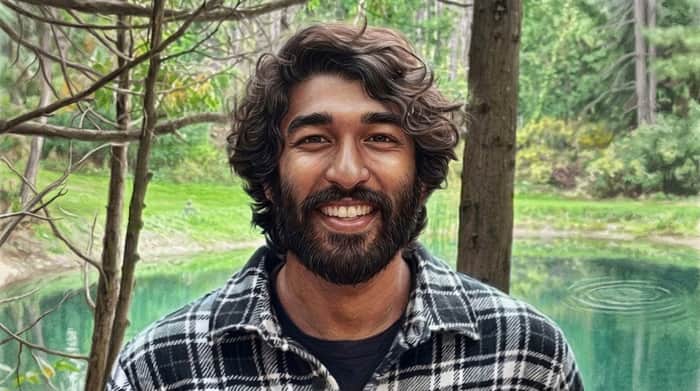
Presh Dineshkumar quit his career in venture capital to build his own products. Now, his portfolio of health apps — including Tempo — is bringing in $150k ARR.
Here's Presh on how he did it. 👇
Getting off the sidelines
I'm Presh Dineshkumar, founder and CEO The Wellness Company, which makes Tempo. Before starting Tempo, I spent seven years at LAUNCH, Jason Calacanis' venture fund, where I helped invest in more than 50 startups and watched hundreds of founders build companies from the ground up. Eventually, I realized I wanted to stop being on the sidelines and build something of my own.
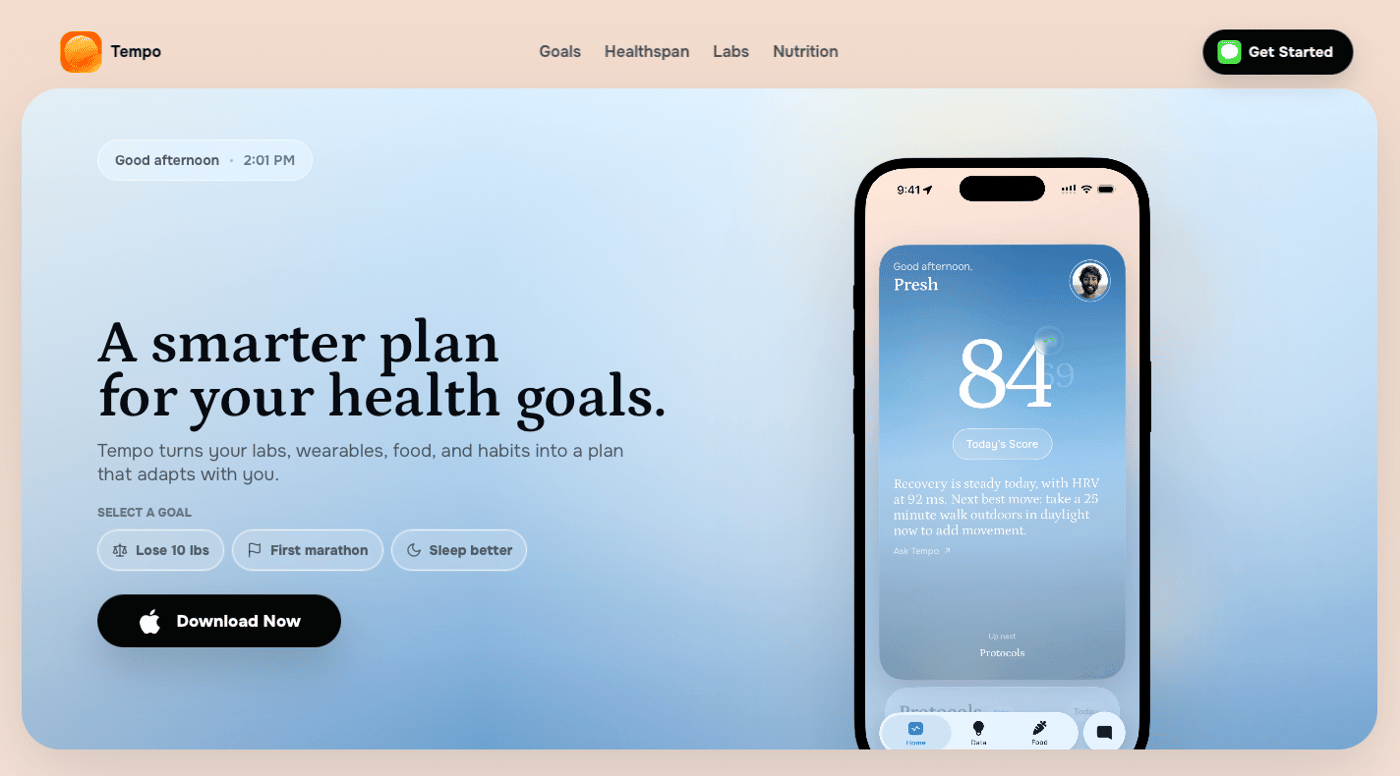
Tempo is a consumer health company focused on helping people live longer, healthier lives. Alongside Tempo, we've launched a portfolio of health apps including GoPolar (cold exposure), SunSeek (sunlight), and Posture AI. Together, they help people build healthier daily habits through software they're already carrying in their pockets.
We now generate over $150k in annual recurring revenue from consumer subscriptions, entirely bootstrapped through our apps. Our long-term vision is to evolve from individual health apps into a single AI-powered health companion that brings together wearable data, biomarkers, and everyday habits to help people make better health decisions every day.
Obsessed with health
I've been obsessed with health for years. While working at LAUNCH, I spent my days investing in startups and my personal time experimenting on myself, tracking sleep, heart rate variability, cold exposure, sunlight, and just about every biomarker I could get my hands on. I noticed that while incredible tools existed for collecting health data, few products helped people consistently change their behaviors.
This led me to build consumer health apps. We launched products like GoPolar, SunSeek, and Posture AI, each focused on a single daily habit. As people paid for those apps, a bigger insight emerged: Users didn't want another standalone health app. They wanted one place that understood all their health data and helped them make better daily decisions.
At the time, I had a great career investing in startups, but I couldn't shake the feeling I wanted to build one myself. Watching hundreds of founders build companies gave me the confidence to take the leap, and the traction from our early apps validated that people would pay for products that genuinely improved their health. Today, those apps are coming together under Tempo.
Leaning on the builder community
The first version was intentionally simple. My cofounder and I spent nights and weekends building while I was still working in venture capital. Rather than trying to build a massive health platform from day one, we focused on shipping small products, talking to users, and learning as quickly as possible. We bootstrapped the company by launching individual health apps and reinvesting every dollar of subscription revenue back into the business.
Becoming part of the local builder community had an outsized impact. I attended founder meetups and hack nights, not to network for fundraising, but to learn what other builders were using. That's how I first discovered tools like Supabase years ago, which still powers much of our backend today. Those conversations often saved us weeks or months of research because we learned directly from people who had already solved our problems.
Once we had paying customers and consistent subscription revenue, we gained confidence that people would pay for our products and that we could continue growing the business. That traction allowed us to raise a small angel round, which we used to hire a small team, accelerate development, and expand our portfolio of health apps. We still think of funding as a way to amplify what is already working, not to search for product-market fit.
That mindset has become even more important in the age of AI. The landscape changes almost weekly, and the fastest way to stay current isn't reading blog posts; it's talking to founders who are building. Whether it's new AI models, coding tools, infrastructure, or workflows, we've found that the builder community consistently surfaces the best ideas long before they become mainstream.
Building the product
We started every product in Figma, using AI and the Figma MCP to rapidly explore ideas and iterate on the user experience before writing any code. This allowed us to test flows and understand how the product should work without spending days building something we'd ultimately change.
From there, we built the apps using Xcode with AI coding agents like Codex and Claude Code. I'm a non-technical founder and lack a traditional software engineering background, but AI has fundamentally changed what's possible. Today, I can build and ship production-quality iOS features alongside our engineering team by working with coding agents instead of writing every line of code myself.
I particularly like running Codex on a dedicated Mac mini connected to our GitHub repository 24/7. This means I can review code, fix bugs, merge pull requests, and even ship production updates from my phone while I'm away from my desk.
On the backend, we rely heavily on Supabase. That combination of Figma, AI coding agents, Xcode, and Supabase allows a very small team to build and maintain multiple consumer health apps with far more leverage than was possible just a few years ago.
Moving from CloudKit to Supabase
One of our biggest technical challenges was migrating away from Apple's CloudKit. It worked well when we were getting started, but as our products and backend became more sophisticated, we realized we needed the flexibility and portability of Supabase.
The migration wasn't straightforward because we had to support both systems while moving users over without disrupting the experience. We built custom migration tools that synced data between CloudKit and Supabase, allowing us to transition incrementally instead of attempting a risky one-time migration.
AI coding agents made a huge difference throughout that process. Instead of spending weeks writing internal tooling by hand, we quickly built migration scripts, validation tools, and utilities that automated much of the work. What would have been a painful infrastructure project became a manageable one, and it reinforced our belief that AI is especially powerful for solving the kinds of engineering tasks that users never see, but every company eventually has to tackle.
A simple business model
Our business model is very simple: consumer subscriptions. Users pay monthly or annually for access to our apps, and nearly all of our revenue comes directly through the App Store.
We changed pricing several times as we learned more about customer intent. We use Superwall to test different paywalls, pricing, and offers based on the onboarding flow or user segment. We learned that hard paywalls can work extremely well when the product solves a clear and immediate pain point. Founders are often afraid to ask users to pay too early, but if the value is obvious, people will pay.
Revenue expansion comes from improving conversion, increasing annual plan adoption, reducing churn, and launching additional products for the same health-conscious customer. Our apps also create a natural path into Tempo, which can become the broader subscription that brings together a user's health data, habits, and personalized recommendations in one place.
Influencer marketing
In the early days, we treated distribution like product development: as a series of experiments. Before building something, we often validated demand by posting ideas on communities like Reddit or X, creating simple landing pages, or building free tools that solved a small problem related to the product. For example, before expanding Tempo, we launched a free AI Body Fat Calculator on the web that generated awareness and introduced people to the broader product.
Today, our biggest growth channel is short-form content on TikTok and Instagram. Instead of chasing creators with the largest audiences, we look for people whose content consistently gets strong engagement. We usually start by finding one creator who matches our ideal customer profile, then use platform recommendations to discover dozens of similar creators. From there, we reach out directly, send them the product, and let them create content in their own style. One of our early campaigns cost just $60 for a creator post and generated roughly 20,000 views, 400+ website visits, and 150 new users, which completely changed how we thought about creator marketing.
We also view every feature launch as a chance to relaunch the company. Every meaningful release includes a short founder-led video, usually under 90 seconds, showing the product, explaining the problem it solves, and sharing it across X, TikTok, LinkedIn, and other communities. Consistently putting the product into the world has created opportunities we never could have planned, from customer feedback to partnerships and introductions that arose simply because someone saw a launch post.
For consumer apps, content is one of the most effective distribution channels right now because you can demonstrate the problem and the product in a way that feels native to how people already discover new tools.
The biggest lesson we've learned is that distribution compounds. Building an audience, creating content consistently, working with creators, and launching every new feature publicly has been far more valuable than waiting until the product feels "finished."
Getting the product into people's hands
The biggest challenge has been customer acquisition. Building products has become dramatically easier with AI, but getting people to discover, trust, and pay for your product is still incredibly difficult. We spent a lot of time early on improving the product when we should have been spending more time improving distribution.
If I were starting over today, I would think about distribution before writing a single line of code. I'd ask questions like: Where does my customer already spend time? What type of content naturally reaches them? Who already has their attention? How can I validate demand before I build?
I also wouldn't wait until launch to start talking about the product. I'd build in public from day one, create content throughout the process, grow an audience alongside the product, and treat every feature as an opportunity to launch again. Distribution isn't something you add after the product is finished. It's part of building the product itself.
The biggest mindset shift for me has been realizing that the best product doesn't always win. The product that gets into the hands of the most people usually does.
Advantages with outsized impacts
A few things have had an outsized impact on how I build. From a product perspective, companies like Apple, Linear, and Figma constantly inspire me. They all share an obsession with craftsmanship, simplicity, and sweating the small details. I probably spend as much time studying great products as I do building my own.
I also spend a lot of time on X. It's where I discover new tools, learn how other founders are solving problems, and stay current with how AI is changing software development. People like Naval have influenced how I think about building companies, but I probably learn the most from following builders who openly share what they're shipping every week.
Outside of work, a few simple habits are part of my process. I start most mornings with a cold shower because it helps me wake up and focus. I also prioritize walking 7,000 to 10,000 steps every day. Those walks are my thinking time, and many of our best product ideas, design decisions, and solutions to difficult problems emerge while walking rather than sitting in front of a computer.
Finally, embracing AI early was one of the best decisions we made. It has dramatically increased our small team's leverage and allowed us to move much faster than we otherwise could. Today, it's hard to imagine building software any other way.
The myth of the "overnight success"
Here's my advice:
Ship sooner than you're comfortable with. Most founders spend too much time perfecting an unvalidated idea. Build the smallest version you can, get it in front of real people, and let their behavior guide what you build next.
Think about distribution before you think about features. It's never been easier to build software, but it's never been harder to get attention. Start creating content, building an audience, and talking to potential customers before your product is finished. Distribution is a skill, and like product development, it compounds over time.
Talk to other builders constantly. We adopted some of the best tools and workflows from casual conversations at founder meetups or from following people building in public on X. The pace of AI is so fast that the best way to stay current is to learn from people who are shipping every day.
Finally, don't underestimate consistency. The companies that look like overnight successes usually spent years shipping products, learning from users, creating content, and improving a little every day. If you keep doing that long enough, you'll be surprised how much momentum compounds.
What's next?
Our long-term goal is to build the world's best AI health companion. We believe the future of healthcare is proactive instead of reactive, and that everyone should have access to personalized guidance based on their wearable data, biomarkers, and daily habits.
In the near term, we focus on growing Tempo into a product that brings together everything we learned from building apps like GoPolar, SunSeek, and Posture AI. We want one place that helps people understand their health, tells them what to do next, and makes it easier to stay consistent.
Beyond software, we are also excited to build hardware that seamlessly integrates into the Tempo ecosystem. We think the combination of AI, software, and thoughtfully designed health devices will unlock entirely new ways for people to understand and improve their health.
At the end of the day, our mission is simple: help millions of people live longer, healthier lives by making healthy decisions easier every single day.
To follow along, I'm most active on X and would love to connect with anyone building cool things! You can also find me on IG. Or join a step challenge in iMessage!

Leave a Comment