From Fledgling Founder to 7-Figure Deals with Stephanie Hurlburt of Binomial
published March 9, 2018Episode #044
Stephanie Hurlburt (@sehurlburt) shares the story of how she went from being an employee to being half of a 2-person startup that sells software to gaming companies, and all the steps in between. Learn how she quit her job, met her cofounder, landed lucrative contracting gigs, built a product, learned about sales, and stayed sane while doing it.
Transcript
 Courtland Allen:
What’s up, everybody? This is Courtland from IndieHackers.com and you’re listening to the Indie Hackers Podcast. On this show I talk to the founders of profitable internet businesses and I try to get a sense of who they are, what shaped them, and how exactly they’ve built their successful companies.
Now, I’m back after an unexpectedly long hiatus. My apologies for not communicating perfectly that I was going to take a break, but I wasn’t aware that I was taking one myself until I was about halfway through it. But now I’m back, I’m feeling refreshed, I’ve got a lot of great conversations lined up for the rest of the year, so you guys can stop giving me shit on Twitter.
This first episode is with the one and only Stephanie Hurlburt. Now, if you don’t know Stephanie, you’re missing out. She’s one of the most inspirational and impressive figures that I know in tech and startups. In this episode, she talks about how she became a graphics programmer, how she went from an employee, to being a contractor, to starting her own successful business.
Now, just to give you a sense of how successful it is, she’s only one-half of a two-person company, yet right before we started this podcast, Stephanie had just gotten off the phone from negotiating a seven-figure deal to sell her product. And if that isn’t enough, Stephanie is big on work-life balance and she limits herself to working 20 hours a week.
So yeah, it’s easy to understand why Stephanie is one of my role models. I hope you guys enjoy listening to this episode and learning from her as much as I did. Without further ado, Stephanie Hurlburt.
Okay, Stephanie, how’s it going?
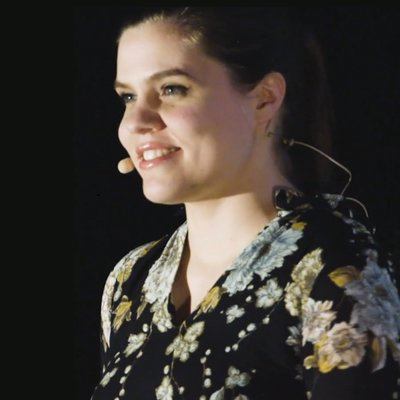 Stephanie Hurlburt:
It’s good, it’s good. I’m excited.
Courtland Allen:
I’m excited too. Thanks so much for coming on the show.
Stephanie Hurlburt:
No problem, I’m happy to be here.
Courtland Allen:
So you are – how can I introduce you? You’re a lot of things. You’re the cofounder of a two-person company, appropriately named Binomial. You’re the maker of Basis, which is a popular image and texture-compression product for game developers.
In addition to your technical knowledge, you’ve built up sort of a broad business skillset. You know a lot about sales and marketing, how to deal with clients and uncover their needs and deliver real value that they’ll pay for. And I think as half of a two-person team selling a successful product, you kind of have to be great at all that stuff.
And then on top of all of that, you’re sort of this never-ending fount of wisdom about how to build a company while remaining psychologically and emotionally healthy.
Stephanie Hurlburt:
Thank you for the kind words. Yeah, I’m trying. (Laughter.) I don’t like all the – I feel like when I started, there weren’t a lot of – or maybe I just wasn’t seeing a lot of examples of people starting companies and being sane while doing it and being happy and sharing details of how they did it. So I’m really happy things like Indie Hackers exist and that I’m able to kind of tell that story a little more.
Courtland Allen:
Yeah. Well, I think you’ve been doing a really good job telling that story and the combination, like you said, of not only succeeding but sharing the honest details behind it, and also not being a crazy workaholic and miserable all the time is really appealing to a lot of people.
This is a business podcast, but I think before we jump into all the business details, it would be fun to learn at least a little bit about graphics programming while I’ve got you here. So what exactly does it mean to be a graphics engineer?
Stephanie Hurlburt:
Right. So graphics engineers can do tons of things. For instance, one of the first things I did was building particle systems. So I literally got paid to make pretty fire and pretty sparkles. That was my job. (Laughter.) So it was just basically – it can be anything. You can get paid to make the lighting look good or to make anything that has to do with visual quality.
And usually, low-level graphics engineers, which is what I was doing, focus really heavily on interacting closely with GPUs, so they often know the depths of how the GPU works and how to optimize for it, and that way they can make the best sparkles, not just average sparkles. (Laughter.)
Courtland Allen:
From the outside looking in, I think all this can look incredibly complex and intimidating, and I say as a programmer myself. So how does one become a graphics engineer? Is this something that you have to sort of decide to do one day and then resolutely work your way towards it?
Stephanie Hurlburt:
Well, I think it’s one of those things where programming is so broad. And I mean, you can take one set of skills and do a million different things for it. So the core of a lot of low-level graphics engineering in games is just C++, and lots of people learn C++. And even if you don’t know C++, you can probably pick it up if you know C-sharp or something somewhat similar.
And so knowing that is helpful. And then beyond that, just reading up on graphics papers like the ones that come out of Siggraph or GDC and their graphics track really help you get up to date on the way engines are structured and the way graphics works in relation to C++.
Courtland Allen:
And I get the feeling that you really like doing this stuff. The way that you talk about it, making pretty sparkles, getting paid to make pretty sparkles sounds exciting.
I found a quote from you online earlier too. Let me read it. It’s a pretty fun quote. You said that, “Graphics programming is a vastly unexplored new medium for art. It’s like solving math puzzles and getting rewarded by doing something never before possible in art, like a big, complicated, mind-blowingly powerful paintbrush.”
Is that accurate? Do you still stand by that?
Stephanie Hurlburt:
It is. When I was in school, I started in school studying math. And I got a little disenchanted with it because I saw future career paths as, “I could build bombs” or “I could work in finance and help stock traders get more rich.” (Laughter.) And the math was cool, but I was disillusioned by all these applications. And I personally am very motivated by the application of art, of making beautiful art. I think art is really meaningful and really important, and I think that’s a fine application of math and C++ and all these things.
Courtland Allen:
And how does all this tie into Basis? What is Basis exactly, and why are game developers buying this product you made, and what does it do for them?
Stephanie Hurlburt:
So Basis is an image compressor. So it obviously deals in the realm of graphics programming, because graphics is all about images and getting them to display. So it takes your image and it makes it take up less space on your machine.
And what we’ve done is we’ve taken our knowledge of GPUs from our graphics background to make this compression work with your GPU, whereas things like jpeg, as soon as they hit your GPU, they explode and it’s not pretty. It goes to six to eight times the size and GPUs can barely handle what they have. So it’s important to maintain compression when you hit your GPU.
Courtland Allen:
And Basis is made by just you and one other person; your cofounder at Binomial, right?
Stephanie Hurlburt:
Yep, Rich Geldreich is his name and we work on it together.
Courtland Allen:
That’s pretty crazy to me, because it sounds like such a complex piece of software. It’s so foundational to be able to compress textures and images, and yet the two of you are able to do something that’s completely innovative and that other companies in the gaming space pay for. Is that common in the gaming industry, for two people to have such an impact?
Stephanie Hurlburt:
Well, small middleware companies exist. For instance, RAD Game Tools, they don’t have very many people and they also sell to game companies and they sell things like compression products. So it’s a concept that’s not completely unfamiliar. And I think one thing that helps is that my business partner especially really specialized in image compression.
And we didn’t really start the company with this in mind. We were a consulting company at first. We would help people – their game was on fire and could not ship and we would help them optimize it and make it shippable again. And in the process of doing that, a company said, “You know what? Our game is on fire because our textures are taking up too much space. Can we pay you to make the images take up less space on disc?” And we thought about it and we said, “Well, we could, or we could – this is a good opportunity to make this into a product” and went from there.
Courtland Allen:
Let’s talk about that story, because I think today Basis is this incredibly impressive and impactful piece of software, and it’s letting companies do things that they couldn’t do otherwise. How do you go from being Stephanie Hurlburt, graphics engineer, to Stephanie Hurlburt, co-creator of Basis? What’s the origin story from getting from point A to point Z?
Stephanie Hurlburt:
Right. So we started as a consulting company. And actually, I didn’t even want to start a consulting company. I wanted to find a good job, but I was kind of disillusioned with life a few years ago and I felt – and I was very burned out. And I felt like I couldn’t really work a full-time coding job. I was just not ready, not healthy enough. And so I thought, “Well, with consulting I could probably do a project here and there and then rest and heal.”
And I did that, and I met my cofounder while in the process of just searching for lots of leads for contracts. And he was in a similar boat. He was like, “You know what, why not? I’ll join you.” So we did it together and we did consulting for a few months, and that was the point where we got contacted about, “Hey, images are really getting to be a problem.” And we got that from lots of our clients and we started to understand if we built this product, we could sell it and we could kind of break free of the hourly income you get from consulting.
Courtland Allen:
So I’ve also been in a similar situation where I was burned out and I turned to consulting to help out. I think I was coming at it from a different place than you were. I had worked on a couple of startups and I knew that I was in no shape whatsoever to do another gas-pedal-to-the-floor startup. But I didn’t want to get a job, and so I started doing contract work, which I found very helpful because I was able to go mostly at my own pace. So maybe it’s not that uncommon of a solution for people who are burned out.
Stephanie Hurlburt:
Exactly. And it’s tricky because it is stressful. I mean, you know. It’s stressful to do consulting. You have to worry – we had one client who didn’t pay us for four months, and we were really counting on that pay and we had to juggle all kinds of things and timing didn’t match up. It got to be stressful.
But I think the key with consulting is if you have a strong network, which we have a stronger network now than we did back then, it’s more relaxed. You can call someone when you need a contract instead of panicking.
Courtland Allen:
Yeah, I think you’re totally right. I mean, it’s a lot more responsibility than being a full-time employee somewhere. But at the same time, there’s a little bit more freedom where ultimately you’re responsible to yourself and to your clients. And although you’re more likely to get into these stressful situations, you also are more likely to be able to take a break without having a boss tell you that you need to be in your chair eight hours a day Monday to Friday, which was just something that I needed at the time.
Stephanie Hurlburt:
Absolutely. It’s this weird psychology thing. There’s no performance review, there’s no, “How productive were you today?” And I find that really freeing. I like the fact that I can just take a few days to just rest. And I know that that’s good for the business as well, but I don’t have to convince anyone of that.
Courtland Allen:
Yeah, it’s so weird. I think almost everybody would agree that having enough time to rest would be good. But for some reason in a normal, full-time role there’s a collective denial of that fact.
Stephanie Hurlburt:
I think it’s worse and better and depending on the industry and the company, but it’s true. It’s strange.
Courtland Allen:
So let’s talk a little bit about how you became a consultant, because even doing that is pretty challenging, and I think that you kind of hinted at it earlier when you said that you’ve got a better network today than you did then. But how did you build that initial network and how did you find your first clients?
Stephanie Hurlburt:
I swear, I was walking blind. I was like, “I don’t know how to do this. I guess someone will just give me a consulting contract if I talk to enough people.” (Laughter.)
So I knew some basics. So before – I knew I was going to end my current gig. I knew I was going to leave. So a month or two before I left, I started just doing networking. I would post on Twitter more, I would just talk to lots of people, I would make a purposeful effort to talk to four new people a day or something like that and be more social. And I just did a lot of networking.
And I had two months of savings and – because San Francisco was expensive. I --
Courtland Allen:
Yeah, tell me about it. (Laughter.)
Stephanie Hurlburt:
So I just had two months of savings left, and I had to get some kind of job after that two months. And through the three months of just networking, I was able to land a gig in that six weeks. And then I was like, “Okay, I’m set. I have a gig. I have money coming in, so I will start consulting and do this.”
Courtland Allen:
So what does this networking look like? Are you asking people for jobs, are you just messaging people on LinkedIn, are you talking to friends, and what are you saying to them?
Stephanie Hurlburt:
Yeah. It was interesting because when I started, I thought networking was about, “Hey, I’m looking for work. Do you have work? What about you” and just going to everybody. (Laughter.) And I learned quickly that 90% of people can’t directly help you, probably even more than that. But they might know someone or they might be able to help you down the road. So the best thing is just to make a good impression. And that’s really annoying when you need a job in six weeks, but that’s the reality of it.
And so the key isn’t necessarily asking a lot of people about work. It’s about making a good impression on a lot of people and making sure to just mention that you’re looking for work in that conversation. And it often involves asking how you can help them and trying to help other people in the process.
Courtland Allen:
That makes so much sense. Because for example, if I get an email from someone and it’s straight out of the gate like, “Oh, can you help me do this thing,” I’m usually happy to help. But it’s so much more impactful and I remember that person so much more if they figure out a way to help me.
Stephanie Hurlburt:
Exactly. And again, it is frustrating and exhausting when all you really need is some income coming in and that’s why you’re doing this. But it’s really – it really is – it feels better in a humanity sense and it is the best way to get contracts as well.
Courtland Allen:
So were you worried that you weren’t going to find a job in time? I mean, what was your mental state like at this point?
Stephanie Hurlburt:
My mental state was not good. I was worried. That’s why when I give advice to people now, I say, “Well, it’s” – I actually – I’m not against what I did. I did have a couple months of buffer and I was very good about realizing that I needed a job after those two months. So I kind of gave myself that window to look and relax. So that’s not necessarily a bad thig, but I do recommend that people have backups because you really don’t know when a contract will come your way. It really just depends. So don’t ever risk being homeless because you get a contract two weeks later than expected.
Courtland Allen:
Yeah, it’s totally not worth that risk. How did you go from landing your first gigs to eventually meeting Rich and deciding to start a company together?
Stephanie Hurlburt:
Right. So we had met actually before I even left my previous gig. And in the two months I was looking for contracts, he was kind of going back and forth. He was like, “I don’t know. Consulting seems a little unstable,” back and forth. But we kept in touch and we just got along really well. It was almost a sense of, “I don’t care what we do. I just want to work with this person. I just – I really like this person. I want to collaborate with them.” (Laughter.)
And so eventually, I think that was really the main impetus for finally – he finally was like, “Yeah, let’s do this together.” And he joined me in the very first gig, but I kind of did some initial setting-up work.
Courtland Allen:
That’s awesome. That’s such an advantage of being social and meeting so many people is that you kind of eventually will find someone that you click with, whereas if you’re in a situation where you have to work with the very first person that you meet, you’re trying to find a cofounder and you just find one person, then what are the chances that that person’s going to be the perfect partner for you? Pretty slim.
Stephanie Hurlburt:
And that’s the other reason to approach conversations from a friendly making-a-good-impression stance as opposed to a, “Do you have work for me” right away, is because if I had just asked Rich if he had work for me, he would have said “no” and that would be the end of it. But instead we found out that we got really – along really well and ended up finding a cofounder that way.
Courtland Allen:
That’s such a great story. And I think telling stories like that and reading and listening to them is so underrated, because stories are so unique. They’re different every single time somebody tells one. So there are definitely people, for example, who are listening in and who have been trying to find a cofounder and they’re researching it, and yet they’ve never heard anybody who’s told a story like yours about how you found your cofounder. Or there are people who want to start contracting, but they don’t have any friends who are contractors and your story was a completely unique take on how to find your first contracting gig.
Stephanie Hurlburt:
Oh, yeah, absolutely. I feel the same when I read other people’s stories. It’s a story not – I feel like what – I have read quite a few stories about, “Let’s go get VC funding. We’re going to be the next Facebook.” But I don’t hear a lot of stories of smaller businesses, so I really – I like hearing it as well.
Courtland Allen:
Yeah, and there’s a lot of them. I mean, I think that’s kind of the central idea behind Indie Hackers, is you can go to the website, not just the podcast. And I think we’ve got something like 250 interviews with founders who all share their revenue numbers and how they grew. And there’s just something about the uniqueness in stories.
You could read 100 articles about how to come up with an idea, and they’re all going to say more or less the same things. But if you read 100 stories about how people came up with their ideas, then everyone is going to be as unique as the person who wrote it. And it’s going to be easier for you to figure out, “Okay, well, which stories apply to me, which people are similar to me?” So I think there’s something to be said for reading stories and also just reading a lot of them, not just reading one or two.
Stephanie Hurlburt:
It’s so true. I didn’t do this one purpose, but I kind of intuitively did it. The way I learned a lot about business was I would just ask random people who I admired or business owners who I’d met for informational interviews like, “Can I pick your brain over coffee?” And I’ve probably done hundreds of those and just like, “Can I hear” – and people are usually excited, especially small business owners. They don’t get asked that a lot. And I learned so much and I’m still good friends with a lot of them. And I think it’s the same idea, hearing that same story from lots of different perspectives.
Courtland Allen:
Yeah, it’s totally – the other side of the equation is that if you are a business owner or if you’ve done something cool, it feels nice to tell somebody about what you’ve done. It’s kind of fun. And I think if that wasn’t the case, it would be really hard to get people like you on the podcast. (Laughter.)
Stephanie Hurlburt:
Yeah.
Courtland Allen:
So you guys eventually ended up working on Basis. Did you always plan to build a product and get away from consulting, or was it something you kind of fell into?
Stephanie Hurlburt:
It was one of those things that I realized after doing some consulting. I kind of started consulting, and when it was in the beginning, I kind of had stars in my eyes. And I was like, “This is going to be great. Life is awesome. We can take lots of vacations. I’m going to love this.” And then as it went on – we started working with startups, and I would see these startups get so much money and sell what we built for lots of money, and we were still working an hourly wage. And I kind of looked at them and realized, “This doesn’t – it doesn’t feel quite fair. If I build something, I want a profit off it to potentially the point of not needing to work for years. That sounds nice.” And we started thinking that it felt most fair and a better plan to do a product.
Courtland Allen:
Yeah, that such a good way to look at it. And I think this is also true for someone who’s a full-time employee. You’re getting paid a salary. Regardless of what you build or what you create, you get pretty much the same salary. And then, of course, the company that you’re producing that for is able to take it, put it into their product, and then scale the way that they deliver it to customers. And it’s kind of abstracted for you as an employee, especially if you work at a huge company. But when you’re a contractor, it’s a little bit more in your face when it’s just you and one other person building something, and that other company takes that and makes millions of dollars. I imagine that you were very aware of what was going on.
Stephanie Hurlburt:
Oh, yeah. It was very in our face. We were literally the only people who built this product and we would see the sales the company was making. It was just like, “Hey.” (Laughter.) In a big company, you kind of justify by like, “I’m part of a big team, I couldn’t do this alone.” But when – yeah, it’s much more in your face contracting.
Courtland Allen:
Do you think that the time that you spent contracting taught you a lot of lessons about business that you didn’t know earlier, or did you kind of come into this already knowing how to analyze what customers need and provide value and do sales and marketing, et cetera?
Stephanie Hurlburt:
Every step of the way, I learned something. But before this I had done a little work at an advertising agency. And I mean, that was my first job out of college. And it was a small company, so I got to see – and I didn’t do the sales. I didn’t do a lot of the client management as my official title, but I ended up being in the thick of a lot of it because I was often the only developer on the project, I was often the only person there with the client. And I kind of got to see kind of potential pitfalls and different aspects of that relationship.
And then when I did consulting owning a business, I just got to see – I got to take that experience and then I also learned a lot more along the way as well.
Courtland Allen:
Were you nervous at all that you maybe needed to read some books about this, or were you just confident that you were going to learn it all on the job?
Stephanie Hurlburt:
I was not confident. (Laughter.) I was not confident, but I was also like, “What’s the worst that could happen?” And I tried to watch out for major pitfalls, and I realized that, “You know what?” And a lot of the time it comes down to people. If I feel like I trust this client, we’ll make it work and just not wrapping ourselves into too lengthy of a contract without being more certain of that working relationship and how that contract plays out in reality. Just scoping it into phases was helpful. Just little things like that to make sure that, since I didn’t know what I was doing, I was more careful and didn’t overcommit.
Courtland Allen:
What about Rich? Did he have experience being a contractor or a consultant that he brought to the table, or were you guys both figuring this out at the same time?
Stephanie Hurlburt:
He was similar to me in that he had seen it while working at companies. But he was definitely – he’d worked full time his whole career spanning decades. He’d done a little bit of trying to license software, but not quite in the same way that we’re doing with this company. So we’re both very much learning.
Courtland Allen:
Well, that’s cool. I like the idea that anyone without prior experience or without having to sort of go to business school can jump in and just learn by doing. It’s hard, but it’s not impossible.
Stephanie Hurlburt:
Absolutely, it’s definitely not impossible.
Courtland Allen:
Looking back and reflecting on this time when you and Rich were doing all this contract work and taking on all these gigs, is there anything that you would go back in time and tell yourself so that you could be maybe a little bit more successful or less stressed out doing what you were doing?
Stephanie Hurlburt:
I feel like – can I go back and give myself a two-page list of – (laughter).
Courtland Allen:
You can go back and have coffee with yourself. (Laughter.) You have 20 minutes to give yourself some lessons.
Stephanie Hurlburt:
I would definitely tell myself, “I think the biggest thing is that you can’t count on getting paid until the day you get that check. And you can’t count on a deal going through until that deal is signed.” And having that mentality is everything when you don’t necessarily have a strong network or you’re starting out, because you so desperately want to just stick with one client at a time and not think about anything else and stop the endless socializing. (Laughter.)
But you shouldn’t. You should always have backups. And if you’re in that mentality of, “I might not get paid” or “This deal might not go through because they haven’t signed it yet,” then it keeps you on your toes and keeps you more safe.
Courtland Allen:
That’s such a tough mindset to get into too, because I imagine when you first win your first deals, you want to celebrate well before you get the check. You’re so excited that these people are going to pay you. So to kind of convince yourself that like, “Oh, this is not a milestone yet. It doesn’t count until the money is in the bank” – it’s just not the intuitive way to approach that situation.
Stephanie Hurlburt:
And I think a big lesson that a lot of people I see should consider as well is to be wise about structuring the contracts. So I mentioned doing it in phases, like a discovery phase and then phase one and phase two. That way you hit milestones instead of one big block. But also things like getting paid a little bit upfront so that you get in their payment system and it becomes easier to pay you in the future. Little things like that you don’t realize. And I always tell people to watch, “Fuck you, pay me” by Mike Monteiro because he gives some good tips around that.
Courtland Allen:
Yeah. I was going to say those are all great tips. And I wonder if there’s a book or something that people can read where tips like these are all compiled in one place.
Stephanie Hurlburt:
I would actually love to know because then I would refer it to people. I feel like these are all just little tips that consultants tell you from what they’ve learned, so I would encourage people to watch things like that talk and consider this. But also just try to find someone you know who’s done consulting and ask them. They’ve probably learned quite a bit.
Courtland Allen:
So here you and Rich are. You’re successfully consulting and building these products for other companies that are profiting off of them way more than you are. What was the turning point and how did you guys sort of evolve from being in that situation to going on to make Basis?
Stephanie Hurlburt:
Right. So we were highly aware of the fact that people develop products for ages and then all of a sudden can’t sell them. And we didn’t want to fall into that trap. So when we had those customers that were saying, “Wow, this would be really helpful,” we knew that we had a strong lead. We knew that someone would appreciate this product, but we still felt very passionately about the fact that just because someone tells us, “Oh, this would be nice” doesn’t mean they’d pay us enough money to make a living.
Courtland Allen:
Right.
Stephanie Hurlburt:
So basically, we prototyped for maybe three or four months in between contracts, not that long. And we just networked the heck out of it. We would speak at conferences like, “Yeah, we’re doing this” even though it was just a prototype and we would talk to everybody. So now my networking conversations, which we’re still doing constantly, they were no longer, “Oh, by the way, we’re looking for consulting work.” Instead it was, “Oh, by the way, we’re making this product.”
And we just totally shifted. And by the end of that three or four months, we got interest from Netflix, who wanted to license it. And we were very honest about the fact that it wasn’t done yet; it was just a prototype. And they were willing to do a sort of agreement where they gave us money to finish it without taking part of our company, just like a services agreement.
Courtland Allen:
Wow, that’s huge. Netflix as your first customer?
Stephanie Hurlburt:
Yeah, that was our first customer.
Courtland Allen:
That’s nuts. Were you guys planning on someone, like a really big fish kind of biting the bait that you guys were putting out there, or were you planning to eventually have some sort of sales cycle where you were trying to sell the product directly to individual companies?
Stephanie Hurlburt:
So we definitely were considering that. At that point, I did not know anything about sales, especially to big companies. I had a little bit of a grasp with how you do it at smaller companies. But no, what happened was an engineer at Netflix read Rich’s blog, where he was consistently blogging about this prototype, and said, “Wow, we could use this.” And that engineer made that recommendation to the company the company that we need to set up some sort of agreement to get this in our pipeline. And I didn’t even realize that that’s a completely valid enterprise sales strategy, is to get an engineer excited who then refers you to the right people. But that’s what happened.
Courtland Allen:
Yeah. That’s kind of like a bottom-up approach to hoping your product bubbles up through the company. Enterprise sales seems like such a complex, frustrating process.
But let’s step back a bit before we get into that and let’s talk about how you even came up with the idea for Basis. Because I think a lot of people are in the situation where they’re working at a full-time job but they want to go on their own, or they are consulting and they want to make a product, but they’re not sure what they want to work on. How did you guys decide that Basis, that texture and image compression was the ideal product for you to work on?
Stephanie Hurlburt:
Right. So we were thinking of a lot of different ideas, and it came about as someone approached us to build this – the exact product under a consulting agreement. Like, “We will pay you an hourly wage. Please build us for us.” It was like a consulting gig. And we realized, “Wait, this doesn’t need to be a consulting gig. We can make this into a product.”
So it was almost not like, “We thought of this idea and we’re going to make it work.” It was a potential customer directly asking us for this.
Courtland Allen:
Oh, that’s really cool.
Stephanie Hurlburt:
Yeah. And so – and I mean, the reason why they asked is because they knew Rich had experience in this field and he had built similar things in the past; all the normal reasons you get asked for doing consulting gigs.
Courtland Allen:
I think the fact that you guys were constantly in touch – it sounds like you never stopped networking. You were also taking on new clients. Rich is also blogging and you guys are speaking at conferences. It seems like you guys are putting a lot of information out there, and as a result you’re getting the idea for a new product and you’re getting companies like Netflix wanting to buy the product once you started to build it. It’s pretty inspiring to see what can come your way when you start putting more things out there.
Stephanie Hurlburt:
Yeah, just lots of networking and lots of being very, very visible. The interesting thing too was when we started this company, I kind of had a self-destructive mindset of, “I’m no longer going to censor myself online.” (Laughter.) Because before that I had been very – all I did online was post graphics papers. That’s what I did. And after that I started being more honest about my opinions and talking to people. And that drew in a lot of business, actually, is just being genuine. And I would also do a lot of initiatives to help others. I started a list of engineers who were willing to answer questions from newbies. And things that brought in a significant amount of business.
It’s just fascinating how – it goes back to what we were saying, where if you just ask people for work, it’s not the best thing. And I was essentially doing that with my public presence before by just posting graphics papers. And it’s good to be a little bit genuine.
Courtland Allen:
Yeah, and it’s so unique to just to be able to go online and be candid. I’ve had this exact conversation with a number of other guests on the podcast before who were kind of like you. They’ll just say whatever they’re thinking, whatever they’re feeling, they don’t necessarily care if other people are going to judge them, they’ll share their revenue numbers, they’ll share times where things are hard or when they fucked up. And it stands out because most other people are afraid to share that kind of stuff or they don’t really see the point. They’d rather just robotically keep banging on the direct goal rather than doing something indirect that might help them stand out.
Stephanie Hurlburt:
It’s interesting because I’ve, through trial and error – it’s not like I don’t censor myself at all, but I just censor myself in ways that are more comfortable to me. For instance, I have this role where I never, no matter how mad I am, I never call people out directly because – well, now I have over 30,000 followers. I know how bad it feels to get swamped by angry people. And I also – even if I call out a negative thing, I try to end on a positive note or just have general positive energy while also being honest and recognizing issues. It’s a tricky balance, but I think it’s important to have that balance.
Courtland Allen:
See, this is a whole other story that you could tell: Stephanie’s journey to getting good at Twitter. If you wrote that in a book, I would read it. And step one would be something like, “Be positive.” So if everybody else read that, maybe Twitter would be a little bit happier of a place. (Laughter.)
Stephanie Hurlburt:
Well, it’s tricky because at first I was like, “Just be yourself. Write whatever you want.” And I didn’t even realize that I was kind of mindful of these things. And then I would watch people follow my advice and do it and all their tweets would be angry political rants, which is fine. Actually, I think angry political rants have a time and place. But when your whole Twitter is like that, a company looks at that to see, “Oh, what does this person do?” And that’s all they see and they don’t get a whole picture of who you are.
So making a good first – it’s just like meeting a stranger. If you walked up to a stranger and started yelling at them right away, it’s not an awesome introduction. So just be mindful of the fact that it is a first impression too.
Courtland Allen:
Okay, so let’s hop back into your story again to this point where you are starting to sell Basis and Netflix is your first customer. Where do you even go from there?
Stephanie Hurlburt:
Right. So they kind of gave us the financial backing we needed to finish it. And as we worked on that, we kept networking and we kept finishing it. And we entered kind of a slow phase where we were starting to get more visibility and more credibility because we had this big-name customer. But people were still hesitant. Nobody wants to be first. Everybody wants to be second. People don’t like taking risks.
So entered this tricky phase where it was still hard to get customers, but over time as some time passed, people saw, “Okay, they are for real” and more customers started coming in.
Courtland Allen:
So what do you do in that situation when you’re not really seeing much demand? Were you guys trying a bunch of different strategies, or were your sticking to one particular approach?
Stephanie Hurlburt:
Yeah. So we were continuing to do our networking things. At the time were also involved in a lot of kind of, I don’t want to say “charity” because it wasn’t official charity, but just giving back to the community. We started hosting all kinds of free programming classes in our communities and helping newbies learn how to code and just doing all kinds of nice initiatives that made us feel good, but they were also good for spreading the word about what we were doing in our business. It was kind of win-win.
And we also – attending conferences was surprising helpful and gave us some credibility too. And then around that time, we started talking with a standards body called the Khronos Group to see if we could kind of help with image compression standards in the industry, which also gave us some more credibility.
So just lots of different networking-type things.
Courtland Allen:
That sounds like so much because it’s – at the same that you guys are doing all this work and helping other people, you’re presumably still working on your prototype and trying to get it in good shape for Netflix. And then at same time, were you still taking on consulting gigs on the side?
Stephanie Hurlburt:
No, not really. Very – after the Netflix deal, we would still occasionally do consulting, but it wasn’t as frequent. We would occasionally take a gig when a friend who we had known really needed some help or when a previous client would need it, but not as often.
And it sounds like a lot, but it wasn’t. (Laughter.) I think that’s the thing, is our product – it’s technically complicated, but it’s a small scope. It only does one thing. It makes your image take up less space. It’s not like a game that has all kinds of different components. It’s like a very tiny portion of what goes into a game. But we do that one thing really well.
So I think the limited scope of the product really helps it be manageable.
Courtland Allen:
Let’s talk about that more because that’s – I know very little about the games industry. And I kind of brought this up a little bit earlier, but what’s the landscape of the games industry? How many other companies are out there doing what you’re doing and solving one very narrow problem very well with a small team? Is that common?
Stephanie Hurlburt:
Right. So in the game industry, the common story for, “I want to start my own company” is “I want to start my own entire games company,” like an Indie game kind of thing, which is a difficult challenge. I’m not saying it’s not possible. I’m just saying it’s difficult because it’s a B2C business and there are a lot of Indie games out there. It’s a very saturated market. And it takes work to build an entire game. There’s a lot of features that go into it.
So that’s the typical route. In terms middleware, there’s kind of a little handful in the game industry. It’s interesting because it makes it difficult to sell. It also is nice too because you’re not – you don’t have a lot of competitors, so it’s pros and cons.
Courtland Allen:
Is it the case that most of these bigger gaming companies are just building all this stuff in-house and nobody’s really sharing, and so that’s why there’s not very much middleware?
Stephanie Hurlburt:
Yeah. (Laughter.) So with games, games are one of these spaces where it needs to be highly optimized and also works on all kinds of platforms, including new consoles that aren’t even properly tested yet. So game companies are very aware of needing control of those lower layers of code and they’re very suspicious of just a library that they stick in because that library probably isn’t compatible with the newest console that has totally different hardware.
So they’ve gotten in a habit of building a lot of things in-house for that reason.
Courtland Allen:
Yeah, that’s fascinating. So how are you guys confident that Basis would be something that not only the person who contracted you to build it would need but that any gaming company or software company like Netflix would be able to make use of?
Stephanie Hurlburt:
Right. Having some experience in the game industry really does help, because we can go to these gaming companies and be like, “Look, we know what you’re going through, genuinely. I felt the pain. I understand.” And it kind of – it gives a little more credibility than if we just went in from a completely different industry.
And I think people from different industries can sell in the game industry. You just have to be very empathetic and really understand why they’re resistant to buying middleware and kind of understand that space.
Courtland Allen:
It’s so consistent how much the earlier phases of your career helped you out in the later phases. And I think it’s important to see that, because if somebody listening to this said, “Okay, I’m going to be Stephanie Hurlburt. I’m going to do exactly what she’s doing right now” and they went out and tried to copy you or do something similar, they might have a rough time of it because they’d be skipping out on the learning that you did, all the connections that you forged, and all the experiences that you had. So I just think it’s super important to kind of realize why sometimes people like you might look like some sort of overnight success, and what goes into the actual preparation to get to the point where you can have such a successful company.
Stephanie Hurlburt:
Exactly. And that’s part of why I try to be open and I also try to periodically shout out, “Please don’t just quit your job and start a product.” (Laughter.) And when I give advice, I try to give advice that’s, “You might not know exactly what you’re going to be building or who you’re going to be building for, but make sure that each step of the way, you keep yourself safe and keep yourself open-minded to the next opportunity that you could do, and talk to customers as soon as possible. Don’t just go off building something assuming it would sell,” all these things.
Courtland Allen:
That’s a big one that’s so unintuitive for a lot of people, including me. I have to remind myself constantly, “Oh, yeah, I should talk to people because probably the things I’m guessing they want are wrong in some major way.”
Stephanie Hurlburt:
Yeah. Well, and it’s not just that, but it’s like you might build a product that people will need, but will people pay you enough money so that you could actually live off it? And I was very cognizant of that, and from the beginning we decided we were going to be B2B. We could have picked all kinds of different business models, but we picked B2B and then high sales per customer so that we could stay a two-person team and only need a very small number of deals relative to other companies to make a living.
Courtland Allen:
You tweeted recently that an investor offered you guys something like millions of dollars to hire a sales person and give their investment firm control over part of your company. The idea was that you’ll make money faster and you’ll get money in the bank right now, and you ended up turning that deal down. What are sort of the financials and what’s the strategy behind staying a two-person team and how does that help you guys?
Stephanie Hurlburt:
Right. It’s so funny because in the beginning when we were consulting, I would have been totally open to investment money. I didn’t know. I just wanted money. And I was like, “Whatever, wherever the wind blows. If I get an investment offer, we’ll go with that.” And nobody wanted, nobody was interested. They were like, “You guys are a consulting company and you want to stay a two-person team? What’s wrong with you?” And now that we’ve gotten some customers, people are realizing that this business model can work and now they’re interested.
But I turned it down because with our level of deals, I was just – I was in a seven-figure negotiation just earlier this week. We --
Courtland Allen:
Geez.
Stephanie Hurlburt:
Yeah, yeah. That’s the level of one big deal for us.
Courtland Allen:
That’s crazy.
Stephanie Hurlburt:
So why would I take investment money and give someone control over my company and have them telling me what to do over one deal? That doesn’t make any sense to me.
Courtland Allen:
Yeah, you’re totally right; that doesn’t make any sense whatsoever. The fact that you’re doing seven-figure deals is ridiculous. I am in the wrong business. I mean, seriously, there are plenty of companies that have hundreds of employees who never get to that point, so that’s amazing.
And earlier you were saying that you didn’t really have any sales experience before when you were doing contract work. You kind of had to learn on the job once you started your product. So what changed and what kinds of things have you learned that allowed you to become this version of Stephanie who’s negotiating for millions of dollars?
Stephanie Hurlburt:
Well, I think it’s not that you go into a sale and you’re like, “My product is seven figures. Buy it. I’m so cool.” You don’t go in with that. You start small and you say, “All right” – so in the game industry, for instance, you say, “Well, for one game, what makes sense? How much money am I going to save them?” Look at value. Do not look at how many hours it took you to build it or how big your team is. Look at the value that you provide. Say, “Okay, well, I’m saving this company this much money, so I should name – this price probably makes sense.”
And the thing about that is if you – you should pick one of two strategies. You should either name a price that’s so low that it’s not a big deal for an engineer to just approve it and buy it, or you should name a price that’s high enough to make yourself look really valuable. You don’t want in the middle where it’s high enough that you need to get a few approvals, but it’s almost a low number and they’re like, “Is this even worth it? We could probably build this ourselves if it’s only worth this much.” So it’s that weird psychology.
And then you build up to the seven-figure deal by basically – you start with one game and they agree that that makes sense. And then you say, “Well, you’re making this many games” and it just adds up.
Courtland Allen:
Was there ever a time where you had sort of a sales disaster, where you could look back now and be like, “I totally messed that up”?
Stephanie Hurlburt: Yeah. (Laughter.) Fortunately – there were a few times early in the business where we purposely gave lower prices, but I don’t think I would call that a disaster because we were smart and we would limit the feature set. So we might have messed up in pricing, but we could – we set it up so that if we expanded the feature set or we expanded the scope of how they could use it – for instance, you can only use it on – I’m making up an example, but you can only use it on the chairs in your game. Of course, that’s not a real example, but just limit the scope in some way. We gave some cheap deals out in the beginning for that.
But I think the biggest disasters just came from negotiating and learning different negotiating methods and figuring out how to negotiate price in a good way and failing a little bit early on in that.
Courtland Allen:
What exactly do these negotiations look like? Because I’m imagining you guys going in against these hardened negotiators whose entire job is to approve these big deals or reject them, and they’re using every tactic in the book. And you’re coming back at them with your own tactics and counter offers. But I’m sure I’m over-dramatizing this, so what does the real process actually look like?
Stephanie Hurlburt:
Again, a lot of our negotiation has happened in the game industry, but we’re starting to branch out and negotiate with other companies as well. The game industry is beautiful because they don’t – it’s, again, good and bad that they don’t do a lot of middleware deals like this. So it’s not like they have a hardened team just for middleware deals. It’s like things that come along now and then, not as normal.
Courtland Allen:
Okay.
Stephanie Hurlburt:
But either way, the negotiation styles are kind of similar in that most negotiations are surprisingly collaborative, and that’s one thing I didn’t realize. And the more you come to the table with different options, people get kind of resistant when you just name a price and then stare at them. It’s better to just be like, “Hey, you can choose this, or you can choose that, or you can choose that. And you know what? We’re open to other options too.” Just make it a collaborative process.
And every now and then you will get the aggressive type of negotiator. And to be honest, we’ve walked away from all of those deals so far just because I’ve seen that as a little bit of a red flag. If you’re going to be this aggressive in the negotiation, how are you going to be like to work at? We might revisit them, but yeah.
Courtland Allen:
Also as a contractor, you get a lot of experience dealing with the clients, some who are troublesome, some who aren’t. Do you think that your experience doing all that contract work before Basis sort of colored your approach to the sales process and changed how you looked at working with different types of clients?
Stephanie Hurlburt:
Yeah, it’s definitely part of that. It’s like I would expect someone to get upset at the phase where their game is shipping and they’re all stressed out and everything is on fire. If you’re getting upset at the phase of just negotiating a deal and starting the relationship, that’s a red flag. You know what I mean?
Courtland Allen:
Yeah, that’s like a cultural or a personality thing and not just a situational thing.
Stephanie Hurlburt:
Yeah, save that, make a good impression. But in the movies, negotiations are always fist on the table, take it or leave it. And that’s not been my experience in the real world.
Courtland Allen:
So what is your day to day like today? For example, after this call or maybe tomorrow, what’s on your agenda and what’s at the top of your mind with Binomial?
Stephanie Hurlburt:
Okay, well, I can look at my calendar because I never --
Courtland Allen:
Okay, let’s do it.
Stephanie Hurlburt:
I never keep things in my head. So today I had a negotiation for price for the product and we talked about what price would make sense and what package and what licensing structure we could do for their deal. And then after that, I got lunch with my lawyer. And I had spent all last night cramming for that price negotiation, so I was preparing for the worst. I was Googling revenue numbers and trying to make equations for it. So after this, I’m just going to relax, I think.
And then tomorrow I’m doing a math side project that has nothing to do with the business just because I feel like doing some work that – doing a project not part of the business kind of makes me happy. And then on Saturday, I’m just grabbing lunch with a bunch of friends and – I don’t know.
Courtland Allen:
So that sounds like a pretty good life.
Stephanie Hurlburt:
Yeah, it’s just I try very hard not to work more than 20 hours a week. And a lot of the other time is spent – I spent a lot of time in the shower and walking around and talking to my dog this week preparing for that meeting earlier today. So that’s – it’s not like work at my computer, but it is thinking about it.
Courtland Allen:
I think from the outside looking in, the job of a founder, especially at a successful company that’s actually selling their product to customers, seems like it’s going to be the stressful, nonstop, 24/7 workfest. And here you are talking to your dog and working 20 hours a week.
How are you in that position, and what kind of decisions did you have to make to create a business that lets you do that?
Stephanie Hurlburt:
I feel like it’s at the core of the business model. It was kind of sad. I talk about how I try not to work a lot frequently. And I was approached by a business person and he wanted to go out to coffee. And he was like, “I want to do this. How can I work like this?” And I looked at his business and I asked him questions and I honestly didn’t have a good answer for him. He just had – the way his business was set up required him to be in so many meetings and manage so many people and there was always on fire.
So I think it comes down to structure. It’s not – you have to set things up right. And for me, that’s why I do very big business-to-business deals. And a lot of my time is just waiting on companies to get back to me, because for these big deals, they take a long time. And I’ve been trying to do smaller deals too to kind of fill in the financial gaps while we wait. But keeping it to a limited number of deals and keeping the product scope really small and keeping us a two-person team – all those things really help.
Courtland Allen:
What are some decisions you think you could have made somewhat differently that would have led to your business taking up much more of your time?
Stephanie Hurlburt:
I realized that I’ve had to have kind of a thick skin, because early in the business everybody told me I was stupid and it wasn’t going to work. And one of the biggest pieces of advice people gave me was they were like, “You need to hire a sales team. Yeah, you’re crazy. These big companies – you can’t navigate enterprise sales. You need help.”
And if I had done that, I would have been a mess right now. Because we went through phases where finances weren’t looking so great. And with two people, we could squeeze by, get a contract, make it work. But with a sales team to support, oh, boy. It just – that’s one example.
Courtland Allen:
Yeah, premature scaling kills a lot of companies, and I think it’s very easy to just misproject what’s going to happen in the future. It’s very easy to take advice from people who are knowledgeable but without understanding that they’re coming from different place than you, or maybe they just have a different tolerance for risk. Maybe they’re optimizing for building an all-or-nothing company and you’d rather just have a high chance of success.
Stephanie Hurlburt:
Yeah. And what’s interesting is now that we’re a little more – we’re doing okay, I talk to businesses. And now the advice I get is, “Don’t hire salespeople too early.” Because a lot of business people have told me that they hired the salespeople and the salespeople don’t sell as well as the founders of the company in the early stages of the business. The founders are kind of more genuine and know the product well and just all kinds of reasons, not just financial stability.
So now I’m kind of seeing it from a different light. And yeah, premature growth is not good. Burt also making sure, again, you have a business model that can actually support you. If I was selling this product for $5 a pop, yeah, I’d be going crazy. (Laughter.) It’s about being smart. And I think in that mind, being open-minded and realizing – being open-minded to making a different kind of product is important too. Maybe your original idea is not going to work as a business. Think of something else. Get a potential customer.
Courtland Allen:
Have you guys had to make any big changes in Basis, and that something you originally thought you were going to do you ended up not doing or vice versa?
Stephanie Hurlburt:
Definitely, and that’s why I recommend that people get those early customers. So we got this early customer and thought, “Okay, we have an idea of what this should be.” And they were just like, “Nope. We want” – so we were thinking the consoles would really want it because console – a lot of people who develop for game consoles want it to be very optimized. So we were thinking, “Oh, yeah, we should do that. We should do those formats.” And our first customer was like, “Nope, we need this for mobile devices.” We were like, “Oh, that’s a completely different feature set.” (Laughter.)
And so that’s happened several times where we change our feature set depending on the customer that we have and really listen to our customers as opposed to just our idea of how it should be.
Courtland Allen:
Is there any advice that you’ve gotten that you think is great advice, but for some reason you just don’t follow it, and you wish you could it better but you haven’t?
Stephanie Hurlburt:
Oh, right. This is so bad, but we’ve been lazy on things like – we’re doing better now, but early in the business especially, we were so lazy on getting accounting set up properly. And we weren’t breaking any laws or anything, but we could probably have set it up so that we saved more money on taxes and we just – we should have done that, but we just paid more money in taxes. (Laughter.)
So it’s like --
Courtland Allen:
Yeah, I’ve been there.
Stephanie Hurlburt:
Annoying things like that. One thing we haven’t skimped on is our lawyer is just amazing and our legal team has been awesome. And so where we have failed in accounting we made up for it in legal, I guess.
Courtland Allen:
Yeah, attorneys are very impressive people. I hadn’t spent very much time dealing with them until I was navigating the Indie Hackers’ acquisition by Stripe and there was a lot of lawyers involved. And they are top of their stuff and very helpful.
Stephanie Hurlburt:
And in our business, it’s all about IP. If someone can steal our algorithm, we’re not in a good place anymore. So having that lawyer is central to our business.
Courtland Allen:
Yeah, I was going to ask. You guys, as far as I am aware, you guys have pretty much stopped development on your product, right?
Stephanie Hurlburt:
No, we’re developing it. But what we do is we develop it maybe a few months out of the year. We kind of set aside time for development and we try to be very thoughtful about what we do, because it’s one of those products where it’s good right now. It covers all relevant devices, it does it really well. We want to make sure that we don’t screw up that core feature set.
And the thing about an image compressor is it’s so easy to screw up. And any change you make, you have to look through thousands of images because there’s no automated metric that tests image quality correctly. So you want to change a little optimization? Enjoy going through 4,000 to make sure you didn’t mess anything up.
Courtland Allen:
Wow.
Stephanie Hurlburt:
We have to be very careful.
Courtland Allen:
Yeah, that’s fascinating. It sounds like someone should build a business to try to automate that process.
Stephanie Hurlburt:
People have been trying for decades. The human visual system is a very complex – our brains are complex. So it’s kind of interesting. So we are actively developing, but I think it’s a testament to how much we value stability that we don’t develop every week. It would probably be a really bad product if we did because we wouldn’t have time for thorough testing.
Courtland Allen:
I think a lot of people who are in similar situations where they are selling a product or – kind of have this – it’s like invisible fire behind them that’s saying, “You got to code more and you got to develop faster or someone’s going to catch up and they’re going to copy you.” What is preventing you guys from having that? Is it the IP agreements with the attorneys or is it something else?
Stephanie Hurlburt:
Well, it’s just our product does its job and it does it really well. And it’s one of those very fragile things where – it’s like a little – I don’t know. I’m trying to think of a cool fragile analogy. But if you’re not very careful, you could completely knock it over, and then no more product. So it’s very important to be wise about it. And I think image compression forces us to kind of back away from that mentality of, “We should always be coding.”
And I think the other thing is I was just taught very – I learned a lesson from that first customer of, “Actually, we didn’t need the feature set you had planned.” So making sure that when we do build, we’re building and we’re actually going to make money from that development work we’re doing and being – focusing more on product, strategy, and customers and sales.
Courtland Allen:
Right. So instead of spending all your time worrying about code, you’re sort of playing startup chess and spending most of your time thinking about the next move that you’re going to make, and then very little time actually moving your pieces on the board.
So let’s talk about the people listening in for a minute. And I usually like to talk about people who have not yet gotten to the part where they’ve started their business, but let’s talk about people who have and are maybe running into some of these psychological feelings of imposter syndrome, where they’re listening to you talk about your deep, complex, technical knowledge and they’re thinking, “I don’t have any of that, nor do I have the time to develop those skills and build something super unique and complex.” What would you say to somebody who’s thinking these types of thoughts?
Stephanie Hurlburt:
I would say if someone is giving you money for what you’re doing, you’re good enough. That is the definition of starting a business. I struggled with that a lot as well in the first year, is like, “Oh, my god, is this – can I even” – I even felt weird about calling myself a “business owner” or an “entrepreneur.” I was like, “What if this blows up and I don’t feel like a real entrepreneur?”
And I realized that, “You know what? If someone is giving me money for what I’m building, that’s the definition of an entrepreneur.” It sounds silly, but that was a roadblock I had to get past, and I would say the same.
So I would say talk to customers and think about what you can build and remember that a lot of business are built off really simple solutions that people just appreciate that you built that and they don’t want to make it themselves. You don’t need to make some complex image algorithm. In fact, I think, looking back on it, I wish in some ways we picked a simpler problem to solve. Because I know all kinds of people who did, and they’ve run very successful businesses. So just keep that in mind.
Courtland Allen:
That’s so true. I mean, we’ve done like 300 interviews on IndieHackers.com and every third or fourth interview I’m just like, “What? How does” – there’s one guy who just – his entire business is reviewing website builders and he makes something like $45,000 a month. It’s crazy.
Let’s say something disastrous happened in your product. I want to see what you would do in this something. Let’s say Basis just – for some reason, all the code is deleted and you don’t have source control so you can’t recover it. How would you start the process of starting a new business from scratch?
Stephanie Hurlburt:
It probably wouldn’t happen in that way, but who knows, because we can always revert changes. But --
Courtland Allen:
No, you’ve got source control.
Stephanie Hurlburt:
But if things blew up, I need to start fresh, the beautiful thing is I actually feel like sales is significantly harder and more valuable than development. So what I would do is I would look at it and I would realize, “Look, we have this customer base of customers who really like us and really trust us,” which is a huge part of what gets people to buy products.
And I would ask them, “Hey, this blew up for whatever reason,” I’d make sure to tell a not-embarrassing story about it – (laughter) – and say, “Hey, what would you buy? What would you be interested in?” Since we already have that trust built up, I would probably say, “Okay, let’s sign a preorder for it” or “Let’s sign a services agreement and we will be happy to build this for you.” And I think that trust is actually the hardest part.
Courtland Allen:
I’m looking up a tweet that reminds me so much of what you just said. Here it is. It’s from Rand Fishkin. He says, “Best way to sell something – don’t sell anything. Earn the awareness, respect, & trust of those who might buy.”
And that’s kind of exactly what you’re saying. You’re saying that you’ve already got this trust that you’ve established with your clients. If building these trusting relationships is the hardest part of what you’ve done, then that’s the part that you want to keep. You don’t want to throw that away. You want to throw everything else away, but keep that hard part.
And I think this feeds into what we were talking about earlier with how you sort of stair-stepped your way to where you are now. If you’re listening in and you’re wondering, “How can I take the skills that I have and sort of parlay those into a future business,” maybe the most valuable thing that you have isn’t your exact skillset. Maybe it’s the relationships that you’ve developed with a particular set of people over time. Maybe that’s your boss, maybe it’s your coworkers or some friends or some clients, and maybe you have to develop a new set of skills in order to cater to whatever it is that they need.
Well, that’s not the worst thing in the world, and it’s good to be flexible so that you can actually take advantage of your advantages.
Stephanie Hurlburt:
Exactly, exactly. And I think the thing with me is that – I don’t know if everybody is like this, but for me, I enjoy lots of things. I really like lots of things. And I think the biggest thing I want out of a business is I want to have free time and enjoy my life. But I also want to enjoy what I do, but I enjoy so many things that it’s not that big of a deal. It’s not like if I’m not doing image compression, I hate my development work.
So it’s just keeping that in mind and realizing that, “Hey, I could enjoy developing a lot of projects, so what do people need?
Courtland Allen:
I’m on your blog right now and you’ve got an old blog post that says – it’s called, “Deriving stochastic processes from fractional calculus equations.” And then you start off by saying, “This is a topic I am very excited about.” (Laughter.) So I can tell that you really enjoy doing what you’re doing because most people’s eyes would cross reading that.
Stephanie Hurlburt:
I love math.
Courtland Allen:
Yeah, I could tell. (Laughter.) So how important do you think it is for a founder to love what they’re doing in order to have a better chance at success?
Stephanie Hurlburt:
It’s fascinating because I feel like there’s so many parts to doing a business. So I know business owners who really aren’t that excited about their product. It’s like a job. It’s not that they hate their life, but it’s just a simple product that does a simple thing and they sell it, and that’s that. But what they love is they love their relationships with their customers, and that brings them a lot of joy. And they love just building upon that and having that freedom and building those relationships.
I think there’s so many parts of running a business that it’s okay if you’re not – it’s not like you’re a full-time developer. It’s okay if you’re not very excited about what you’re doing. And again, for me, I try not to think like that in general, because to be honest, I like a lot of stuff. I like art, I like music, I like everything. (Laughter.)
So I don’t – I get really upset if I try to focus too much on what’s my one passion. Then I start to just, “Oh, no. Maybe” – and the reality is a lot of things can bring me joy.
Courtland Allen:
Okay. Well, challenge question: What’s bringing you joy 10 years from now? Where are you, and what do you hope to be doing with your business and with your life?
Stephanie Hurlburt:
I have a list of 10-year goals. Do you want to --
Courtland Allen:
Oh, yeah?
Stephanie Hurlburt:
Do you want me to read it? Okay, I’m excited. Let me bring it out.
Courtland Allen:
Yeah, let’s go for it.
Stephanie Hurlburt:
I have this list that I look at every – so my 10-year goals are – “Keep being successful in my business” is one of the goals. So that might mean that I find a good exit and have enough money, or it might mean that I start another business because I still need that money. Whatever it is, have money from being an entrepreneur and keep being successful in that way.
I want to be able to travel to beautiful places. I feel so cheesy reading this, but this is honestly my 10-year goal.
Courtland Allen:
No, that’s good.
Stephanie Hurlburt:
Yeah. And I want to be able to, just occasionally, but I want to have a home base. And I want to try out a few places to live and find one to stay in. Because for me, I’ve been moving around every six to 12 months for the past decade. This is not good, and I did not do it intentionally, but it’s just always worked out that way. So try to find a place to actually stay.
I want to focus more on organizing work and local politics and giving back in a bigger way. I don’t like that I’m – I’m very focused on math and coding and fun hobbies right now. And I want to – and I give back in terms of the tech and startup community, but I want to be mindful that that’s a bubble and try to break out of that bubble a little bit.
And then I want to cultivate more hobbies that are just for joy and not necessarily to do with money or work, and the business can let me do that. And then just having close friendships and all that, and family and everything.
That was kind of a little speech, but I think about those things a lot.
Courtland Allen:
That’s a really solid list. And I think especially at the end, having close relationships with friends and family, that’s what makes it all worth it. Because if you succeed at your business and you don’t have anybody to share that with, then it’s kind of just --
Stephanie Hurlburt:
It’s a revelation. Because I basically was – so many years ago, I was working retail and I was broke and I was – some weeks I would only eat bread, and it was not a good time in my life. And so I had this vision of, “I want a successful career. That’s what I want.” And in the process of constantly putting that as my number-one priority, I moved around all the time and I lost my close friendships because it’s hard to keep in touch with people when you’re moving around every six months. You know what I mean?
And that’s one of the biggest regrets I have, is that I just wish I didn’t do that. And I’ve got rebuild that.
Courtland Allen:
No, I know exactly what you’re talking about. I think when you’re trying to do something exceptional, especially that’s work related and you prioritize that above other things, it’s very hard for people who aren’t directly related to that to play any role in it. It’s very hard for your friends or your family to really relate to what you’re up to if work is your number-one thing. And the opposite is also true. It becomes harder for you to relate to them, so it’s easy to lose those connections.
And I’ve been in San Francisco working my ass off for years, and there’s so many relationships that I have let suffer as a result. My friends aren’t listening to this podcast. My mom is. Hi, mom. But it’s just a tough balance to strike.
Stephanie Hurlburt:
Yeah, absolutely. I can relate. I understand.
Courtland Allen:
Well, I would love to end on a more positive note --
Stephanie Hurlburt:
Oh, no.
Courtland Allen:
-- than “we need more friends.” (Laughter.)
Stephanie Hurlburt:
Don’t lose all your friends, listeners. (Laughter.) But that’s part of why I value work-life balance now, is because I’ve seen what it’s like when you don’t have that. And I’m not going to give that up. It’s not worth it. You’ve got to enjoy your life. There’s a more positive note.
Courtland Allen:
You’ve got to enjoy your life. Well, thanks a ton, Stephanie, for coming on the show and ending on a more positive note. I really enjoyed this conversation. Can you tell listeners where they can go to learn more about what you’re working on personally and what you’re up to at Binomial as well?
Stephanie Hurlburt:
Sure. So my company is Binomial. I’m sure you can find it on the podcast. Binomial.info is the website. And then you can find me on Twitter @sehurlburt. That’s my Twitter username.
Courtland Allen:
You should definitely follow Stephanie on Twitter. I don’t know how she does. Her and @patio11 have this magic Twitter juice that they drink, but they’re constantly tweeting amazing stuff.
Stephanie Hurlburt:
All right, well, thank you so much.
Courtland Allen:
Thank you for coming on the show.
If you enjoyed listening to this conversation and you want a really easy way to support the podcast, why don’t you head over to iTunes and leave us a quick rating or even a review? If you’re looking for an easy way to get there, just go to IndieHackers.com/review and that should open up iTunes on your computer. I read pretty much all the reviews that you guys leave over there and it really helps other people to discover the show, so your support is very much appreciated.
In addition, if you are running your own internet business or if that’s something you hope to do someday, you should join me and whole bunch of other founders on the IndieHackers.com website. It’s a great place to get feedback on pretty much any problem or question that you might have while running your business. If you listen to this show, you know that I am a huge proponent of getting help from other founders rather than trying to build your business all by yourself. So you’ll see me on the forum for sure, as well as more than a handful of some of the guests that I’ve had on the podcast.
If you’re looking for inspiration, we’ve also got a huge directory full of hundreds of products built by other Indie Hackers, every one of which includes revenue numbers and some of the behind-the-scenes strategies for how they grew their products from nothing.
As always, thanks so much for listening and I’ll see you next time.
Subscribe
Did you know Indie Hackers has a newsletter?
Sign up to get insights, takeaways, and exclusive content from each new episode, directly from the host, Courtland Allen.
-
-
2
Really enjoyed this... Listened to it all the way to the end. It's a well-planned out interview, interesting and full of lessons. Having a full-time job and trying to do something on the side, this has been a boost towards this direction for me. Lots and lots of the lessons learned I have experienced my self. Stephanie was a BRILLIANT speaker. Thumbs up!
-
2
"Rich Geldreich"? What a name. :D
-
-
2
Im German. I lough about the combination with Rich and Geldreich. "Rich" is in German "Reich". So if i translate the whole name to english it is: Rich Moneyrich.
-
-
-
2
Thanks Stephanie for sharing your path forward. Loving the F*ck You. Pay Me vid.
-
1
I cracked up when I heard this. I definitely need to watch this. :)
-
-
1
My Main Takeaways:
-
Stephanie is big on work-life balance.
-
Stephanie is a graphics engineer.
-
Use your expertise - Stephanie's product "Basis" is an image compressor for game developers.
-
Business opportunities are usually natural expansions your life - Stephanie and her co-founder didn't start their image compression product intentionally. First They started a consultancy to help game developers "put out fires" before launch, and one client mentioned their need of a tool for image compression for their in-game textures.
-
Stephanie started a consulting company because she didn't feel that she was emotionally ready to take on a full time job.
-
For consulting, develop a strong network. This way, you can call someone when you need a contract.
-
When Stephanie was building up her clientele for potential consulting contracts, she'd do a lot of networking. She only had 2 months of savings and managed to get a consulting contract in 6 weeks.
-
Stephanie learned through networking that, 93% of people can't actually help you, but they may know someone who can help you down the road. So the best thing is to just make a good impression, and letting them know that you're looking for work in that conversation, and also being sure to demonstrate how you can help them.
-
Selling a product is better than selling your time.
-
Even when you have a consulting gig, you should always have backup gigs, or be networking for more if you have none.
-
Pro tip: When getting a consulting contract, get them to pay you upfront, even just a little bit, so that you can be in their system, and it's easier for them to pay you later.
-
After Stephanie and her co-founder began switching to a product mindset from a consulting mindset, they began prototyping business ideas in-between contracts. And in their networking conversations they'd now talk about the products they were building. Eventually Netflix reached out to them saying that they wanted to licence Stephanie and her co-founder's software.
-
Stephanie's co-founder had a blog that he would consistently write about their prototype on. And eventually an engineer at Netflix saw the value of the prototype, so the engineer made a recommendation to the company.
-
Don't just quit your job, take calculated risks.
-
Stephanie is in a company with a 2 person team, and is negotiating 7-figure deals for her company.
-
Look at value, not at time.
-
Stephanie's pricing strategy tips: When pricing, pick one of two strategies, (1) price so low that an engineer doesn't even think twice and just buys it. Or (2) price high enough to make it look really valuable.
-
Stephanie tries to not work more than 20 hours a week.
-
A lot of businesses are built off of really simple solutions. You can be very profitable this way.
-
More important than your technical skills is your ability to gain trust, identify problems, and propose a solution.
-
When you are very career focused, it's very hard for people who aren't directly related to that to play any role in it. So you end up drifting apart.
-
-
1
Great story, overall. I also specifically liked the part about putting yourself out there more. I already have been doing it some (via my blog and social media channels and open source software I created - like xtopdf), for a while, and have seen some tangible benefits (e.g. getting consulting and training deals), need to do it more.
-
1
Great episode! I love the way Stephanie is designing her business to meet her life goals. I also like how limited of scope Binomial's Basis is. It just makes images smaller. But it provides incredible value so she can charge accordingly.
I definitely recommend reading Stephanie's post on the Stripe Atlas blog if you are interested in more of her thoughts on networking.
-
-
-
-
-
1
Funny you should say that. I'd never heard (of) Stephanie before now, but I have to say she has perhaps the most endearing laugh I've heard since Ron Swanson. I had to smile reflexively a few times while listening on the train this afternoon.
-
