Wearing All the Hats as a Founder with Saron Yitbarek of CodeNewbie
published June 22, 2018Episode #057
Saron Yitbarek (@saronyitbarek) runs three podcasts, gives dozens of talks every year, runs a blog, a weekly Twitter chat, a conference, an online resource for teaching people to code, among other things. In this episode, Saron explains how she parlays her advantages in one arena to move into another, discusses her tips for being inhumanly productive, and discusses the psychological breakthrough that taught her when to say no to adding more work to her plate.
Transcript
 Courtland Allen
What’s up, everybody? This is Courtland from IndieHackers.com and you’re listening to the Indie Hackers Podcast. On this show I talk to the founders of profitable internet businesses and I try to get a sense of what it’s like to be in their shoes. How did they get to where they are today, how do they make decisions both at their companies and in their personal lives, and what makes their businesses tick?
Today I am talking to Saron Yitbarek, the creator of CodeNewbie. Saron has had quite the winding career path. She spent years doing research working in biochemistry on DNA. She worked at NPR, helping to write and produce one of their radio shows. She’s worked in sales and marketing and content jobs at several startups, and she learned how to code and worked as a developer. And today she is running code CodeNewbie, a supportive international community of people who are learning to code.
Saron, welcome to the show and thanks for joining me.
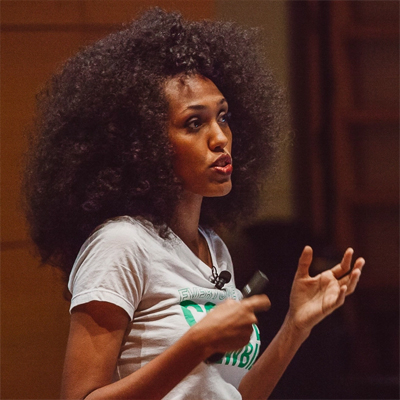 Saron Yitbarek
Thanks for having me. That was a really great intro by the way. I feel very fulfilled in my life. That was very --
Courtland Allen
You’ve done a lot of stuff. (Laughter.) And it’s funny because all the things you’ve done are the exact startup skills that you need. You’ve done a lot of writing, you’ve done a lot of marketing, you’ve done a lot of sales.
Saron Yitbarek
It’s come together well.
Courtland Allen
It really has. So CodeNewbie is a community of people learning how to code. What does that mean exactly and how does it work?
Saron Yitbarek
Sure. So it all started from my own journey learning to code. I think it was five years ago, four years ago now, where I was learning on my own for a few months, and then I went into a boot camp. And when I was doing it by myself, I said, “Oh, my goodness. It’s so hard and so lonely and so frustrating.”
And when you’re not used to that level of consistent failure, which is how I describe coding, it’s hard not to internalize that failure. You keep putting something in the computer; the computer keeps saying, “No, that’s not it. No, that’s wrong. Error, error, error.”
And if you aren’t used to that, if you’re not used to that type of feedback, then it’s easy to look at that and go, “Wow, I must be really stupid. I must not be made for this. I must not be any good at this. I don’t have a future in this.”
And it wasn’t until I did the boot camp and I found all these other people, 44 other people, who understood that journey that I said, “Oh, it’s not me. I am not the problem. The problem is this thing called coding and the fact that it’s just very, very different from anything that I’ve ever done.”
And it was really shocking to me how big of a difference it made to just be surrounded by other people who understood the ups and understood the downs. And it got me through a lot of really hard times.
And so what I realized during that program is that, at that point anyway, when you decide to learn to code, unless you were part of a college or a campus or a boot camp like I was, it’s really hard to find that type of community. It’s hard to find people who understood that journey. And if you found one, it usually costs several thousand dollars; $11,000 for me. And I didn’t like that. I didn’t like the fact that if you wanted to find that type of community, you had to spend that much money and that much time to get one.
And so I wanted to find a way for people to connect, to support each other, to share resources. And so it started as a very, very simple Twitter chat that we did every Wednesday for one hour, 6:00 p.m. Pacific Time, 9:00 p.m. Eastern Time. We’ve been doing that chat for four years now. And it’s all been about listening to the community and figuring out what people need to help support each other.
I’m a big believer in finding strength and finding power and validation in yourself. And the community is a way of finding that in you by connecting you to other people if that makes sense. And so we’ve done the chat, we now have a podcast, we have a conference, we have several meetups.
So it’s just all been about listening to people and saying, “What is it that you need, what can I do to help facilitate these interactions?”
Courtland Allen
Yeah. On your website you say, “Learning to code is hard, but you don’t have to do it alone.” It’s very true.
It’s very similar to how I think about the problem that Indie Hackers is solving. It’s also community. We’ve got people helping each other on the website, on the forum, and sharing their stories and their strategies. And the idea is that starting a business is hard, but you don’t have to do it alone.
What do you think it is about starting a company or about learning to code that sort of makes people default to doing it on their own? And why do you think more people aren’t doing it with other people?
Saron Yitbarek
Yeah. I think it has a lot to do with how we tell stories of people who’ve been successful in that way. We almost always focus on the hero. Jeff Bezos is like the star of Amazon and did all these things. And I’m sure he had tons of support, had a whole team, and all these other people who help him out, but that’s not really where the story goes. That’s not the --
Courtland Allen
They’re invisible.
Saron Yitbarek
Completely invisible, yeah. And so I think that we like narratives with heroes. I think we like the whole, “I’m an underdog, and I started from nothing, and I clawed my way up.” And those stories are easier to digest. They’re definitely more impressive than saying, “Twenty people got us all here together.”
And so because of that, I think we have been surrounded by these stories of single heroes overcoming huge challenges. And so we expect that of ourselves and we say, “Oh, I should be able to do that too.” And the reality is that you can do it, but it’s so much easier and it’s much more realistic to do it with the support of other people.
And that doesn’t make you weaker, it doesn’t make it less successful, it doesn’t make you any less than. But I think we are just surrounded by these stories, and so we internalize them.
Courtland Allen
Yeah, I couldn’t agree more. Even running a community, where I’m trying to get people to talk more to each other, I find myself sometimes looking at the things I’m most proud of and I’m like, “I did that by myself.” And I’ll emphasize the by-myself part.
And no, that’s dumb. It’s so much better to get help from other people.
Saron Yitbarek
Yeah.
Courtland Allen
And most of the successful founders and programmers that I know are people who have sort of a vibrant community of mentors and people that they talk to. And so I think you’re dead on. There’s just this myth that makes us sort of prioritize and believe that everything happens alone.
Saron Yitbarek
Yep, absolutely.
Courtland Allen
Let’s talk about your journey and getting to the point where you were able to start something like CodeNewbie, because you didn’t start off as a programmer.
How did you make decisions in life, and what was sort of the path that took you to becoming a programmer?
Saron Yitbarek
Yeah, so many of them. So I think it started for me when I was working at Discover Magazine as a fact-checker. And when I was there – and the thing about being a fact-checker at a magazine that only publishes once every five weeks is you have a lot of time off. There isn’t that much work to do when the magazine isn’t being published. And so I spent a lot of that time just reading up. I read tons of books, listened to podcasts; just spent all that time educating myself.
And it was during that time that I read the Steve Jobs book. And this was the first time that I had read about the tech industry in a way that spoke to me. My husband has been in tech since we’ve been together, for a very long time. And I was familiar with tech as an industry, I’d heard of coding sort of, kind of, not really. But this was the first time that I saw a person who was very emotional and very artistic and loved design and stories and a lot of things that I could relate to, but was applying that to the tech field.
And I saw that and I thought, “This is interesting. Maybe there’s a place for me in tech.” And so that was kind of the beginning.
And so from there, I started reading a bunch of books, followed a bunch of people, just started reading blogs, articles, that kind of thing, about specifically the startup industry. And I said, “Oh man, this is really exciting. I need to find a place here.”
And so I cold emailed a bunch of startup founders, startup CEOs, and had coffees with a few of them. And one of those coffees turned into an internship, and then two weeks into the internship, it turned into a job. And I’ve been working in the tech field ever since.
And it was at that first position where I found myself looking over the shoulders of the engineers, and their screens were very confusing. And there were all kinds of symbols and everything was like black and white, and it was a very strange world. And I kept thinking, “What are they doing? How can they possibly read whatever that thing is on their screens?
And I kept kind of poking my head and asking around. And it got to a point where I felt like I, as a sales-type person, was very limited by how much I could contribute to the startup, to the team, because I wasn’t technical. I didn’t understand product. I didn’t know what product management was it, I didn’t know what code was, definitely hadn’t heard of Ruby or a web framework, any of those things.
And so I felt like I kept hitting this wall, where I wanted to be integral, I wanted to be impactful, I wanted to make my mark and do great things and help everyone succeed. And because I just didn’t understand technology on the technical side of technology anyway, I just felt like I couldn’t contribute the way that I wanted to.
And I worked at a few startups, and I kept hitting that same wall where I said, “Damn it. If only I knew how to code, I could do more.” And after hitting that wall enough times, I said, “Maybe this is a good opportunity for me to just pause, invest in my skills, and see where that takes me.”
So it was hitting that wall a couple times that eventually led me to just quitting my startup gig, learning to code for a few months, doing the boot camp thing, and got me on the technical side of tech.
Courtland Allen
And what gave you the confidence that you could just learn to code? Because I know a lot of people who will see programmers’ screens and think, “I could never do that. That looks crazy. You need to be born to do that, you need to start doing that when you’re a teenager, I’m too old to start.”
Why were you confident that you could just teach yourself?
Saron Yitbarek
Oh, I wasn’t. I wasn’t confident at all. And even nowadays – I’ve been going for a few years now, and even now when I hit a hard problem, I think, “Is this the moment when I realize that I actually cannot do this?”
So it’s not really about confidence. It’s more about fear. It’s the fear of failing. The coding journey was less scary than the fear of never reaching my potential. That’s really what it was. It was picking the less scary option.
So the first time I learned to code was actually a year before I quit my job. I took an MIT open coursework class. It was their intro-to-computer-science course, and it was horrible. I took four lectures. And the problem was that I was doing it alone, and I didn’t know enough about not just code but how to learn to code. There’s a “how” component that I think is very different. And I don’t really know how much we talk about the “how” component.
I took all the hard classes in college. I took calculus, organic chemistry, biochemistry, I did research, and all those things you talked about. And my strategy for learning was a lot of highlighters, a lot of flashcards, sticky notes, writing notes down over and over again until – that’s how you study.
And then I do this coding thing – and I’m pretty sure I still have the notebooks where I tried to memorize the code samples. I wrote down the code samples. I’m like, “I’m just going to do flashcards out of these” because that’s the only tools that I had.
Needless to say, that did not work at all. And it was on lecture four, I was like, “I have no idea what’s going on. None of this is making any sense.” I didn’t know that you were supposed to open up a text editor and actually type in the code and run – I just didn’t know that that’s a thing that you do.
And so after that, I said, “I guess this is it for me. I guess my brain just isn’t wired this way. I can do all this hard science, biology stuff, but when it comes to computer science, there’s just something about the way my brain works that this is just not possible.”
And so I had no confidence at all. And the thing that got me – I wouldn’t say got me over it, but got me to push through is the fact that I just kept hitting that same freaking wall over and over again. And it got to a point where I said, “Man, I need to pick. Am I more afraid of this weird coding world that I don’t understand, or am I more afraid of not being as successful as I know I can be?” And the fear of falling short of what I could do was much, much more terrifying than the fear of failing to learn to code.
So that’s how I did it.
Courtland Allen
What were you considering living up to your potential at that point in time? What kinds of things did you want to accomplish, and why did you see being a programmer as being necessary to accomplish those things?
Saron Yitbarek
I don’t know. And even nowadays when I think about what is success, there’s the easy-to-measure stuff like how much money do you make and what’s your title at the company and how many followers do you have. There’s metrics that are certain indicators that can make you feel good. But for me, I think it really boils down to control and freedom and impact.
And so in the tech industry, especially in the startup world, I felt like without being technical – with the skills that I had at the time, without being technical I was always going to not be as impactful to the product, which is a technical product.
And so in that context, whatever success meant, whatever that ended up looking like, I knew it involved at the very least understanding how to build products and how to solve problems with technical skills.
Beyond that, I’m not sure. I’m not sure if it’s being a CTO at that point anyway – being a CTO, being a CEO, being lead of a huge corporation. I’m not sure exactly what the final picture was, but I knew that, whatever it was, however that defined itself, if I didn’t have technical skills, it wasn’t even an option for me.
Courtland Allen
Let’s rewind for a second. I want to go back to this point where you were first starting to get into tech. And you said that you cold emailed a bunch of people and eventually got some jobs.
I think that’s super cool. It’s a very proactive way to go about it. I think it’s sort of reflective of the community that you started, which is that you want to get help from other people, and that you’re not afraid to reach out.
How did you get into tech? How did you cold email people? Did you have a particular strategy? And how could other people sort of learn from what you did and figure out how to meet the right people to advance their careers?
Saron Yitbarek
Sure. So I think there’s two parts right. One is how do you get the confidence to cold email, because that’s something that a lot of people are very, very, very scared of. And then there’s, once you have that confidence, then actually executing on it.
So the first part, the confidence part, I think that anything that looks like confidence is just a practiced skill. I really, really firmly believe that. And so cold emailing for me is what I did in journalism. That’s what I did all day for hours. My whole job was cold emailing people I had no business talking to who were way more successful than me, who had done more, who were very hard to reach, who sometimes took six months to even respond, a year to book, and bother the crap out of them until I get an answer.
Oh, my goodness. I remember the very, very first time I had to do that at NPR. We were covering the story on, I think it’s Sudan women driving. I hope I said that correctly. It was it was women driving in a country where – I don’t think it was Sudan. I think it was Saudi Arabia. But anyways, it was women driving in a place where they were like not allowed to drive at that time. And it was this big protest, this big fight for it.
And I found this really awesome woman who was leading the movement, leading the protest. And I had to find a way to get her on the show, which at that point, there’s no Zencastr, it’s not it’s not a Skype call. It’s get an ISDN line, which is available at certain studios and such, and have them connect at a specific time to our D.C. studio and record an interview that way.
So there’s a couple steps involved. So having to locate this person, who didn’t exactly have an email address or a phone number I could call, and find her and ask her to be on the show, and then actually arrange that booking as my first job as a as a professional journalist, was the strangest, most intimidating thing that I think I could have done.
But then I did it, and I figured out how to do it. And I ended up doing Facebook and Twitter and just went through a whole bunch of hoops to get it done. But that was the deep end for me in terms of cold emailing and reaching out and finding people and tracking them down.
And so after a good amount of time of doing that type of work, cold emailing a startup CEO of six people, it’s pretty easy. It’s pretty straightforward at least. So I think that the confidence isn’t anything inherent. It’s purely just practice. Once you cold email people enough times, eventually it won’t feel like anything.
And then in terms of the strategy of it, I followed a bunch of blogs like TechCrunch, PandoDaily, Mashable, the typical ones, Recode, those kinds of things. And I just kept track of the ones that I thought were interesting. Any time a startup was mentioned, I wrote it down. I think I have an Evernote or something.
And I’d try to find ones where I felt like my background was applicable. So the first company I worked for, Contently, was a really great fit because their whole thing was content marketing, and specifically, branded content but with of a journalistic angle. I don’t think they would call what they do “journalism,” but they leverage journalists and that type of really high-quality writing and researching for their brands. And so I thought, “Oh, this is great. I’m a journalist, I know this world, and I can offer that as a skill, as a strength.”
So I think if you’re thinking about cold emailing, whether it’s to get a job, to get a sponsor, to get a client, whatever that is, figuring out, is there a commonality, is there a way that your past is a skill or at least is interesting to the person that you’re reaching out to, and using that to help at least get that first coffee, that first conversation.
Courtland Allen
I really like that point that you made a couple times about things that look like confidence really just boiling down to practice underneath. But from an outsider’s perspective, they don’t see all that practice. They just see the confidence that like, “How did she do that?”
How did you eventually become more confident in your skills as a programmer? Did you eventually reach a point where you had practiced being frustrated with not succeeding enough to get to the point where you’re like, “I’m going to push through this and just keep going anyway”?
Saron Yitbarek
I think I came to a point where I said, “If you don’t change your expectations, you’re going to emotionally burn out.” And what I mean by that is – so in journalism, for example, you can’t be wrong. You are not allowed to be wrong. If you’re wrong in the most minor way, you have to basically publicly apologize for being wrong.
I remember there was one stat I got – after all this research, after getting all these things right, there was one stat that I missed by, I think, a digit or something. And because of that, we had to air an apology for getting that stat wrong. So I came from a world where mistakes are not tolerated. You double check, you triple check, you quadruple check everything and make sure it’s perfect before you put anything out publicly.
And so going from that mentality to, “If it’s not broken, then (ph) you’ve published too late” is the craziest thing. It’s insane, this whole, “It needs to be ugly, and it’s okay if it’s broken, and beta is not supposed to fully” – the mentality and the acceptance of not even mistakes but public mistakes is something that it took me a while to just adjust to and wrap my mind around.
So for me, it was literally sitting with myself and saying, “This is not journalism anymore. This is this is a new thing. There are different rules here. You can make mistakes. It’s expected. It’s okay,” and just readjusting what success meant to me and being more realistic and mashing it up to just the way tech operates, that was a huge – it was a very iterative process.
It still takes me time. When I when I think I’m done, I’m not quite done. I have to remind myself. I’m like, “No, that’s okay, that’s normal, that’s what tech is. You think you’re done and you never are.” It’s just been about talking myself through a lot of those moments.
Courtland Allen
I asked a bunch of people on the Indie Hackers forum if they had any questions for you, and so I’m going to splice in a few of them here and there.
Saron Yitbarek
Oh, cool.
Courtland Allen
One person named alatz asks, “What pain points do you think new programmers have that the market isn’t addressing?” I assume this person is trying to find some business ideas.
Saron Yitbarek
That sounds like a very business-idea-ey question. I think the big one is hiring and what it looks like to get a job.
It’s so interesting because there is also a quote/unquote “internal battle” within the tech community of like what should hiring look like and what should the interview process be like. So no one’s agreed on this. That’s probably the source of the pain point.
But for people who are just getting started, a lot of them – some people do it because they love it and it’s something they’re passionate about and they’re excited about.
But a lot of them are doing it for socioeconomic gains. It’s really that simple. They don’t have great jobs, or they’re not happy with their jobs, or they don’t have jobs at all. And they’ve read about code a bunch of times, they keep hearing about all this tech and all the opportunities in the tech industry, and they want some of that success. They want some of that money. And it’s very simple; it’s very straightforward like that. And so, yes, they like it. But if the money wasn’t there, it really wouldn’t be an option.
And so one of the things that I think is really sucky about people like that entering is that a lot of the resources don’t tailor the education to – it’s like there’s two options. It feels like there’s either: Get a job right now. And it may not pay a lot, and it may not be something that will teach you enough or will give you enough depth that you’ll do well five years from now, but it’ll get you that very, very first job. And then from there, you can kind of figure it out.
So it’s a little too shallow is what I found; or it’s so focused on the craft and how to make really beautiful code and how to make things really readable and gorgeous and really nice that it doesn’t quite tie back to that, “But how do I make money from this goal?”
So I feel like a lot of resources fall in one of those categories. It’s either too shallow and too short-term-gain focused, or is so long term that I don’t even know when or how I would benefit from what I’m learning. So I think that’s probably the biggest pain points for people.
Courtland Allen
That’s fascinating; there’s no in between.
Saron Yitbarek
Not that I’ve seen. And if there are, I don’t think I know much about them. I think it generally does fall into one of these two categories.
Courtland Allen
If you don’t, then most people certainly don’t. (Laughter.)
So let’s talk about CodeNewbie for a little bit. And by “a little bit” I mean the rest of this episode. How did you come up with the idea for CodeNewbie? You said that you got a lot of value out of having a community around people who helped you learn to code. Was it primarily just that you wanted other people to feel the same way? And were there any other ideas that you were considering working on besides CodeNewbie?
Saron Yitbarek
Yeah, great questions. CodeNewbie was totally an accident. There really was no plan. I don’t really think there was really a plan until maybe somewhat recently. It was very much about me saying, “Let’s do this Twitter chat. It’ll be a fun little thing I do on the side.” And at that point, everyone was doing a Twitter chat. So I said, “This will be a nice addition to the Twitter chat family.”
And then it kept going, and people seemed really excited about it. And it got to a point where I found the Twitter chat was a great way of having people talk to each other, but it’s not a great way to dig deep into a topic and to unpack something.
Courtland Allen
What is a Twitter chat exactly?
Saron Yitbarek
Oh, that is a great question. So a Twitter chat is when you use a hashtag on Twitter; you pick a time. So for us, it’s Wednesday nights at 9:00 p.m. Eastern Time, 6:00 p.m. Pacific Time. And usually, there’s a moderator. So in this case, I was the moderator. And the moderator tweets out questions, and then people respond using that same hashtag. So it’s using the hashtag to anchor a conversation.
So for example, we’d pick a topic like – oh, we had one recently on parents who code. I think parents who code are absolute heroes. I just think about how busy I am as non-parent person, and I think about adding children to that, and I just have no idea what I would do.
So I wanted to give an opportunity for parents who code, give them a shout-out, and just hear more about their stories. And so that was a topic that we picked. And I think it was four questions: What’s the hardest part about being a parent; what’s the most rewarding part about coding and being a parent; what are life hacks you use to get it all done? That kind of thing. And we do that for one hour every single week. So that’s a Twitter chat.
Courtland Allen
Cool. How did you get people to agree to do this with you? How do you find the first few people to participate in the Twitter chat?
Saron Yitbarek
I cold DM’d everyone I knew. That’s how I did it for the first – I think it was four months – every Wednesday. I had a couple friends who were relatively big on Twitter who had lots of followers. And I DM’d them and I said, “Hey, can you retweet this for me? Can you get people into this?” And so I just did that every week for the first few months.
And eventually – I think it was around maybe month five or six – it got to a point where I didn’t have to do that anymore. It just kind of got sticky enough that people kept coming back without me having to do that huge push.
And it’s really interesting, because I think that was easy for me to do because it wasn’t my job, it wasn’t a business. It was just this fun Twitter chat thing I did on the side. And so if people showed up, it was awesome. But if they didn’t, that’s fine too. I’ll just talk to myself for the hour. It’s not a big deal.
I think that if I had started that and said, “This is going to be a business, and it’s going to be the thing that I use to feed myself this year, and I’m putting all my eggs in this basket,” I think I would have quit. I think I would have quit after the first month or two, because it would have just been too much pressure. And I think at that point anyway, my expectations for success were a little unrealistic.
And so if I put those values and those expectations on myself at that point, I think I would have said, “If I’m in month three, and I’m still asking for people to retweet me, and that’s the only way I’m getting people to join my community, then this is obviously not going to work and I’m not going to do this.” I think that’s how I would have approached it.
Courtland Allen
It’s so funny that you didn’t approach it with a plan in mind, because everything that you’re saying is kind of the textbook right way to start a startup.
Saron Yitbarek
Oh, cool. I had no idea. (Laughter.)
Courtland Allen
It’s crazy. You reaching out to people and sort of manually getting them to come into your Twitter chats is the perfect application of this principle that’s like, “Do things that don’t scale.” Early on you’re going to have to get your hands dirty. You’re going to have to spend a lot of effort to get the ball rolling. And then eventually, it’ll get easier. But you can’t shy away from that work early on, which a lot of people do because they don’t see how they could do it forever. But you don’t have to do it forever. You just have to do it for the first few months.
Saron Yitbarek
Yeah, and that’s the thing. I’d heard of that. I read all the startup books, I knew the “Do things that don’t scale,” but I would not have guessed that I had to do that, at least in my case, for three to four months. I would think you do it one time, maybe two, if you really have to, three times. But after three times, if people aren’t clamoring at your Twitter account to join the chat, then obviously no one cares.
And I think that for me was the big thing that was missing in all the startup literature that I read, is it’s not the how to do it. It’s the how long to do it for. At what point do you realize, “Maybe this isn’t working”? At what point do you realize, “It takes 100 tries before you get your first yes.” What is persistence and then what is just stupidity? Where is that line?
And I’m still figuring it out. Every time I do a new task, a new chore, it’s like, “How long does it take for this thing to quote/unquote ‘work?’” And figuring that out is something I didn’t really come across too much in the things that I read.
Courtland Allen
It’s cool that you didn’t really have to worry about it, because you were kind of just doing it for fun. And so you weren’t worrying, “Is this not going to work? I should stop. I should try something else.” It’s like, “No, this is fun, so I’m going to keep it up.”
Saron Yitbarek
Yep, exactly.
Courtland Allen
I think the other thing that you’ve done pretty consistently – and I think this is not written about as much, but I’ve seen it and I’ve talked to so many talented, it’s kind of a constant – is you’re able to take advantages that you’ve had in the past and use those and parlay those into future situations.
So for example, you could take your skills at pitching and sending cold emails and use that to break into tech; or you could take the fact that you know these people who have big Twitter accounts, and then you can use that to sort of amplify the message of your Twitter chats and get that out there, whereas a lot of people might not be able to use whatever advantages they have.
It really shows in not just what you’ve done in these couple of things, but also the future growth of CodeNewbie, because you didn’t just stay at Twitter chats. You then took those and sort of ran with it. So how do you think about using your advantages to move into new areas of CodeNewbie, and where did you go after doing the Twitter chats?
Saron Yitbarek
Oh, such good questions. So it’s funny. Was a year ago? It was some time ago that I looked at all the different things that I was doing for CodeNewbie.
And I think I tweeted and I said, “If I didn’t have all of the seemingly random collection of skills that I had, running CodeNewbie would be cost-prohibitive, because I would have to hire an editor, I’d have to hire a podcaster, or have to hire a coder hire, or hire a designer. I’d have to hire for all these skills that, fortunately, I have enough of that I can do the job, and it would just be way, way too expensive.
So I think number one, it’s been really beneficial, it’s been really helpful that I have a lot of skills that I think most people in tech feel are hard. So I always think it’s so funny when I see the tweets that are like, “Communication skills and people skills are the hardest skills.” I’m like, “Really?” Because for me, that’s the easy part. I love talking to people. I’m really strong with my communication skills. And to me, the tech side is obviously harder, the design side is harder for me.
And so I feel really lucky that interviewing people, public speaking, just general community work are things that I’ve cultivated in other areas of my life. And I’m Ethiopian, so even my culture and my upbringing and my family, it’s so much a part of who I am that those have been really easy for me. But because they are considered hard in this industry, I’ve been able to stand out and get opportunities and connections and build up CodeNewbie for that. So I think that has been really awesome.
So that’s one thing. And I think that on that point, a lot of people feel like their nontechnical skills are a burden. I definitely see this a lot in the CodeNewbie community, where people say – oh, I remember very vividly one Twitter chat, we had a woman who was a nurse and she wanted to learn to code. And she was like, “How am I ever going to get a coding job with all this nursing experience? What is that going to do for me?”
And I thought, “What? You know how to deal in emergency situations, actual emergency situations. You know how to work with patients or work with people who are freaking out and have life-threatening issues in serious situations, you are very empathetic. You have to be a great community” – there are so many awesome, transferable skills that come with nursing that she just didn’t see.
And so I think step one is all the quote/unquote unrelated skills that may feel initially like a weakness or may feel like a burden, flip it around and say, “What does this look like if it’s a strength?” That’s been absolutely huge for me.
But the other part of that is that can be a bit of a trap, because if you focus so much on what you already know, then you get stuck there, and you never really give yourself a chance to grow.
And this is directly applicable with me and CodeNewbie. Because I think for about a year, I had this idea of creating this platform for CodeNewbie where you can find all the technical resources available and sort them by different filters. And I just kept saying to myself, “Yeah, you know how to code, but you’re not technical enough to build that. You’re not quite there yet. Just stick to your podcasting, stick to your speaking. That’s what you’re good at, that’s what you’re known for, and just do the thing. It makes it makes enough money. Just keep doing that.”
And you know how we talked about the fear of failure, picking that the less scary of the two fears? It just got to a point where I said to myself, “If you continue down this path of sticking to your strengths and things that you know you’re good at, then you’ll never grow. You will be stuck in in this role and doing what you’re doing, which is fine, but you know you can do more. You know you have more to offer, you know you can make a bigger impact, you can reach more people. But you need to step away from your strengths and dip into the areas that you don’t feel as strong.” And if you don’t, you will be stuck here forever.”
And I think the theme of my life is a fear of being stuck anywhere forever. And so after hitting that wall several times, it got to a point where I said, “I need to decide. Am I just happy where I am, or do I want to do more?” And at that point, I said, “You need to actually do more coding and you need to spend more time building this thing that you’ve just been sitting on forever.”
And once I started working on it, it was fine. I could do it. And I had to learn some new things. There were some parts that were a little funny, but I was able to figure it out.
And so I think looking at your weaknesses and deciding that they’re strengths and using it is great. But also looking at some of those past skills and not letting it define you and limit you from growing and exploring new skills is something to be aware of.
Courtland Allen
It’s basically the Goldilocks principle where you don’t want porridge that’s too hot, you don’t want porridge that’s too cold. And that’s what makes giving advice so difficult, because no matter what you say, it’s probably the exact opposite of what some people need to hear.
You mentioned some public speaking that you’re doing, your podcast that you’re doing. CodeNewbie is a whole bunch of stuff. You’ve got multiple podcasts, you do a lot of talking, and you’ve got the blog, you’ve got this website that you’ve built.
How did you go from the Twitter chats into doing all this stuff?
Saron Yitbarek
Sure. So the podcast just came very directly from: I want to explore a topic a little bit more in depth, I want to focus on a person. I think individual learn-to-code stories are super inspiring. And because I worked at NPR and I’d done radio journalism before, I said, “This is really good. Podcasting is really great tool to do that.” So it was the right tool for the problem I was trying to solve.
The speaking specifically started because when I graduated my boot camp – I think it was maybe a month or two after graduating – RailsConf had their CFP out, and it was apply to give a talk. And the dean of – so I went to the Flatiron School. The dean of the school, Avi – he sent an email out to all the (inaudible) all the alumni, and said, “Hey, we should all come together, come up with an idea, and submit to this conference.”
And I said, “Oh, that’d be really awesome The RailsConf is huge, it’ the biggest conference for Rails developers.” I said, “Oh, this is awesome.” And so I went.
And it was, I think, maybe eight people who went. I’m pretty sure I was the only non-white-male person. And I sat there, and I was so intimidated and so – I wouldn’t consider myself a shy person, but I was very shy that day. And everyone seemed to have all these ideas.
And I’m thinking of myself, “We were in the same class. Why do you have all these ideas and I have nothing?” It was so confusing to hear all these amazing ideas coming from people I sat in class with. And I was so intimidated and so scared, I didn’t say anything during that meeting.
And Avi at some point pulled me aside and said, “Hey, I know you have some ideas. Speak up.”
And then the next day, a woman, Vanessa Hurst, who is when the cofounders of Girl Develop It, she had this coffee and CFP meetup thing that she did, where she said, “Hey, come with your CFP ideas. Let’s submit talks together.”
And I went. It was me, her, and one other person. And we set up coffee and she said, “What ideas do you have?” And I said, “I have this idea. I think it’s really stupid, but here it is.” And it was this idea for reading code.
And I had a group of friends, about five of us, who every Sunday for an hour, we picked a code base, we read the code together, and we discussed it. And it was our way of building up our technical skills through reading instead of just writing code.
Courtland Allen
That’s so smart.
Saron Yitbarek
Yeah, yeah. And so I pitched that. And I said, “Who wants to hear about a bunch of people reading code? That sounds so stupid.” And she’s like, “No, that’s great. You should submit it.”
And I said to her, “Fine, I’ll submit it. But don’t you think I should maybe start with a meetup, do a smaller event first, and eventually work my way up to submitting to something like RailsConf?”
And I’ll never forget this. She looked at me and said, “I don’t believe in steppingstones.” And I was like, “Oh my god. That’s the most bad-ass thing I’ve ever heard in my life.” (Laughter.) And I said, “I also do not believe in steppingstones.”
And so I submitted. And when I submitted that first talk, I remember vividly being at my desk. And there was just something so intimidating, terrifying, so just wrong about submitting to be a speaker at this huge conference when I was not two months graduated from a boot camp, a month into my first developer job, didn’t have a CS degree, didn’t have a long, amazing resume in tech, didn’t have all this experience to speak of, with this stupid idea that I didn’t even think was interesting.
There was something so wrong about that. And it was incredibly intimidating and overwhelming to the point that I cried while writing the CFP. I cried the whole way. And I forced myself to type and I forced myself to keep going.
And I hit the submit button, I’m sitting at my computer, just tears streaming going, “I don’t deserve this.” Keep in mind, I have not been picked to speak. This is just submitting; this is just applying. And my husband is looking at me from the kitchen like, “Are you okay?” And I’m like, “I’m just trying to apply to this conference.” (Laughter.) It was terrible. And I hit submit, and I said that the goal is not to be selected. The goal is to submit. That’s the win. The win is the act of submitting this talk.
And I think it was about a month later, I was sitting on the train on my way home and I saw this email from Marty Haught, who was at the time the chair of that year’s conference. And it said, “Congratulations, your talk was accepted to RailsConf.” And I shouted, “Yes.” And I threw my hands up, and then I cried, and then I laughed hysterically. And I was sitting across from these two old women who were very, very scared. And I was just shocked that anyone thought this was interesting and wanted to hear me give this talk.
The talk went really, really well. I’ve given that talk at least 15 times all over the world. I’ve been paid to give that talk. And that was the launch, that was the kickoff of my speaking career.
I’ve been speaking now for, I think, three, four years. It’s terrifying every single time. Every time within 24 hours before I speak, I want to throw up. I call it nervous pooping. There’s a lot of nervous pooping. (Laughter.) I ask myself, “Why do I keep doing this, why do I put myself in this position every single time?” But then I do it, it’s awesome, I get a lot of really great feedback, and that’s my speaking story.
Courtland Allen
I’ve had the exact same feeling when public speaking. “Why do I keep doing this?” Last time I told myself I would stop. I said, “It feels like this. Why do I keep doing this?”
Saron Yitbarek
We had a deal. (Laughter.)
Courtland Allen
And I keep saying “yes.” (Laughter.) I would love to talk about public speaking forever. I think the trouble with interviewing somebody like you is you do so many things that there’s just not enough time. (Laughter.)
Saron Yitbarek
That’s fair.
Courtland Allen
Let’s talk a little bit about some other parts of CodeNewbie as well. You guys have meetups, you have study groups on the site. How did you start doing those, and what are some ways that you’ve gotten people to meet up in real life?
Saron Yitbarek
Sure. So that part is pretty easy, because people really like meeting people.
Courtland Allen
They do.
Saron Yitbarek
That’s what I love about this community in particular, because they’re very excited, very eager to meet people who are like them. And I think there’s something unique about learning to code, because it’s hard to explain to people in your life what that actually means. People still think I just fix the internet for people in my family and friend group outside of tech.
And so if you’re going on this journey learning to code, if your family and friends are not already in tech, it’s hard to really explain what that is. And part of the time, you’re trying to figure out what that means for yourself. You’re like, “What is this code thing?”
So it’s really lonely. You can’t really talk about it. My mom, when I used to talk to her when I was in boot camp and I’d talk to her about my coding adventures, she did an amazing job of pretending to understand what I was talking about. And I would say, “Oh, I couldn’t figure out this one bug, it was just so (inaudible). I got this error message.” And I would use all these words she didn’t know. And she would go, “Oh, Saron, I’m so sorry.” She’s Ethiopian. That’s where the accent came from.
And she has no idea what I’m saying, but she could tell from my inflections the right response. And then I would go, “Yeah, I finally made that PR and it was great, and (inaudible).” She’s like, “Oh, good job.” It was amazing. (Laughter.) So if you don’t have a really great actor in the family, then it’s just hard to have those conversations.
So the meetups are a really great way of saying, “We guarantee people who understand how you feel. And they may not necessarily be working in the same language or framework, but they understand how you feel, and they can help you figure it out. They can at least help you feel a little bit less lonely.”
So we played with a bunch of different formats with the meetups, we had paid events for a while; now we have all free events. We had more of more of like an event-event with a speaker and dinner and that kind of thing. We had more casual coffee and code type things.
So we played around with a bunch of different formats. And we’re still (inaudible), but we’ve landed on one where we have more of a study group, where we have three hours. We pick a place that has Wi-If, coffee, outlets, chairs, tables, that kind of thing. And we invite people to come bring their laptop. If they don’t know what to work on, we have suggested activities. If they want to pair up with someone, the meetup leader plays that role of matchmaking.
And then we also do these live Q&As. Because the thing that we found that is kind of missing in the meetup world is there’s a lot of tech-focused events, there’s a lot of, “I want a JavaScript meetup, I want a Ruby meetup.” And so instead of – and for us, since we’re language agnostic – instead of focusing on a technical topic, we try to find just developers with interesting stories. And we focus on the, “How did you make decisions, how did you get to where you are in your career, how did you get this job,” that kind of thing.
Courtland Allen
That’s awesome. It’s kind of what you do on your blog as well, and it’s what I do on IndieHackers.com. Just find people, have them tell their stories. Everybody’s story is different; everyone’s got their own specifics. But for a lot of people reading, just hearing and knowing that it’s possible or seeing what part of it resonates with you could be so powerful and inspiring. So I think that’s a great way to go.
Saron Yitbarek
Yeah. And especially for the meetup format, because there’s a lot of local information that is very relevant in a meetup. So for example, it’s great to hear the story of a developer who works at The New York Times. But if you don’t live in New York, and you probably don’t have the same access to The New York Times as you would if you actually lived in Manhattan, it’s different.
So talking to a developer in the local market, who is working at a local company who can follow up with you and have coffee afterwards, who you can ask questions to, that’s really, really valuable.
So we’re trying to leverage the format of a meetup and the fact that it is specific to that region, and trying to create an event that takes advantage of that and really gives a lot of value to the attendees.
Courtland Allen
So let’s talk about your podcast. You’ve got two podcasts on CodeNewbie, and I think you do a third podcast elsewhere; is that right?
Saron Yitbarek
Yeah, Command Line Heroes. That’s from my Red Hat.
Courtland Allen
That’s a lot of podcasts. Why so many?
Saron Yitbarek
So the CodeNewbie – that’s how it started. That’s how it all started, and I just love doing that show. It’s been such a great opportunity for me personally to meet people, to connect with people, to hear their stories, and do teaching and inspiration. That’s the golden combo, is teach people and inspire them.
The Base.cs podcast happened because for maybe a year or two, I’ve really wanted to do a highly technical podcast. I think podcasts are very, very powerful medium for convenient, on-the-go learning and inspiration. I think you can very easily make a strong emotional connection with the voices that you hear in a way that I don’t think you can when you’re reading a blog or even watching a video. I think it’s easier to make that connection through audio.
And so I wanted to take advantage of that and provide an entertaining, easy-to-consume podcast that taught you highly technical things. The problem is that I didn’t have the content to do or to teach. And so I was very comfortable with using podcasting tools and best practices, but I didn’t have the actual technical content.
And so when I saw Vaidehi Joshi’s blog series, basecs blog series, and I read her posts, I thought, “Holy crap, that’s the content. “She’s done the work. She’s done the work of digesting and unpacking and breaking up the content. I have the podcast skills. Together we can do that technical podcast that’s fun and easy to consume and entertaining.”
And so that’s where that came from, is this idea I’ve wanted to do for a long time. And we have such great chemistry on the show, and it’s just fun. Every time we finish recording, I’m like, “That did not feel like work. That felt like I was hanging out with someone who knows more CS than me and taught me some things.” So that’s where that came from.
Red Hat was totally out of the blue. They reached out to me and said, “Hey, we’re looking for a host. We’re doing this new show. We think you’d be really perfect for it. Do you want to do it?” And I said, “Of course, this is an amazing opportunity, and obviously, an amazing company to work with.” So yeah, that’s how that happened.
Courtland Allen
A lot of people nowadays are considering starting a podcast, and they’re not sure whether they should or they shouldn’t, and they’re not sure what pitfalls to avoid.
What are some of the things that you’ve learned by doing your podcasts? I think you’ve done something close to 200 episodes if not more. What do you know now that you wish you had known earlier?
Saron Yitbarek
Oh, I’m so glad you asked about this. We could do a whole podcast on podcasting.
Courtland Allen
We really could.
Saron Yitbarek
Yeah, we really could. I have so many feelings and opinions about this. So number one is saying you want to start a podcast is like saying you’re going to make lunch. You can make a PB&J sandwich or you can make this huge gourmet Thanksgiving dinner-type thing. The medium doesn’t really say much about the quality or the time that you are willing to invest in it.
So I think the first question isn’t so much: Should I do a podcast or should I not do a podcast? I think the question is: How good do I want it to be, do I care for it to be? And how much time and money am I willing to invest in it? I think those are the first two questions.
And so you can have a podcast by recording in your kitchen with the mike that comes on your headphones, literally talking to yourself for an hour, which I know people who do that; post it with no editing, no cleanup, and you have a podcast. And if that’s the goal, then sure; why not?
If your goal is to do something that is higher quality, that is actually serving an audience, that is providing value, I think it takes a lot more work than people think that it does. I think that anywhere from researching the right equipment, to figuring out what mikes to use, to figuring out the editing process is, to booking guests, all that – it’s significantly more work than writing a blogpost for sure.
And I think that people don’t realize how much work it is until I give them my checklist, my podcast checklist, and they’re like, “Oh, these are a lot of steps.” I’m like, “Yes. Yes, they are.” So yeah, I think it’s a lot of work.
Courtland Allen
I need to get your podcast checklist after the show.
Saron Yitbarek
My checklist?
Courtland Allen
Yeah. (Laughter.)
Saron Yitbarek
No problem. I’ve significantly improved my process. But that’s the other thing too. I care a lot about audio quality.
So for example, I mail all of my guests a mike. I mail them a recording kit for every single episode. I research and figure out what’s the best mike in a bunch of different settings. I have them create a little makeshift audio booth with two pillows that I also figured out how to do to reduce the reverb. I bought over a thousand-dollar piece of software that does really, really good cleanup and audio fixing. And so I care a lot and I put a lot of time and money into making my show as high quality as I can, given the fact that I can’t put everyone in a studio.
So if you also care a lot, it will take time and money. If you care less, it will be easier. But I think that if you care about quality at all, I think that there’s definitely an investment to be made. And I think most people don’t know that.
Courtland Allen
So you do a ton of stuff, obviously. You’ve got your podcast, you’ve got these meetups, you’ve got your public speaking and your Twitter chats, and a whole bunch of stuff on your website that we haven’t even talked about, your conference.
How are you doing all this stuff, who’s working with you, who’s helping you, and how are you so incredibly productive?
Saron Yitbarek
Yeah. So my team right now is – we have an assistant producer named Crystal who’s amazing, absolutely amazing. I love her to death. We started working together six months ago, I think, and has really changed the game. It changed the game so much.
And that’s one thing too. I’d always wanted – if I could have afforded to hire people sooner, I definitely would have. And it finally got to a point where I said, “I’m doing too much, I’m spread too thin, I don’t feel I’m doing anything well, I just really need help,” and so I decided to make that investment.
But there were a lot of really interesting benefits going from a solo entrepreneur person to even just having one addition to the team. All of a sudden, my processes had to be a lot tighter. And I always considered myself to be a pretty organized person. But oh my god; they have to be a different type of organized. I can’t keep everything in my head like I used to. I had to document a lot more stuff, I have to keep track of a lot more stuff.
There’s something very powerful about explaining your decisions to another human being that helps you make better decisions. So by the process of having meetings, or just emails and saying, “Hey, we’re going to do this,” it forces me to think, “Should we really do that thing, should we do it this way?”
It’s not just having more bandwidth. The process of having to collaborate has also created a level of efficiency and increase our efficiency that I didn’t anticipate. So that’s been a huge, huge part of it.
There’s also just other system things. I use Trello; I love Airtable. TwoDesk, Trello, and Airtable are my two go-to’s for sure.
Courtland Allen
Airtable is crazy good.
Saron Yitbarek
Oh my god. And it’s one of those things where --
Courtland Allen
So useful.
Saron Yitbarek
Yes. I know they have – I forgot what it’s called – Airtable University or something. There are docs on how Airtable works. And I feel like if I took the time to do any of those courses, I would get even more value from it. But it’s awesome. It’s absolutely amazing. There’s just the toolset in general.
I also do time sheets. I literally document every hour of my day. And I tally it up at the end of each week and figure out like where my time went, and I compare that to where I wanted my time to go. And then I re-evaluate and I say, “You spent way too much time on emails. Why is that? Do you need a better system, are you rereading each email five times because you’re paranoid about making a typo and it’s costing you an hour? What is happening and how can we improve it?”
And that has been a huge, huge, huge eye-opening activity that I really make sure that I make time for, is time sheets, taking an hour each week, tallying up where all my hours went, categorizing them, saying – it’s simple things.
For example, with the coding thing, I made a decision that I wanted to focus on the platform. “Are my hours reflective of that decision? You said you want to code more. You only spent 5% of your time this week actually coding. Are you actually serious about coding more?” And saying, “If you are serious and you are not making decisions with your time as such, then what needs to happen to change that?” And that has been a powerful, powerful tool in keeping me focused and highly productive.
Courtland Allen
I’ve done literally the exact same thing. I used to toggle a time tracker.
Saron Yitbarek
Really?
Courtland Allen
Yeah, I would categorize all my time into buckets and say, “What did I want to spend my time on this week? How did it go?” I would even post them publicly in blogposts at the beginning of Indie Hackers. And I agree; it was crazy helpful.
I had to stop. I was stressing myself out too much. (Laughter.) But I thought it was awesome, because it’s so often that you see, “Wow, I said I was going to do this thing this week, but I spent all of my time doing this other thing.” And I never would have thought that was the case.
Saron Yitbarek
Yeah, that’s awesome. I’ve never heard of anyone. Every time I tell people that, they’re like, “That’s very intense.” (Laughter.)
Courtland Allen
It is. It is intense.
Saron Yitbarek
But yay, awesome. It is very intense.
Courtland Allen
So before the show, we talked a little bit about the people you have helping you. And in addition to the person who’s actually working with you, you see a career coach.
So can you talk a little bit about how you decided that that was something that you wanted and what you get out of having a career coach?
Saron Yitbarek
Yeah. So I have a career coach. She’s amazing. I absolutely love her. I’ve only had a few sessions with her so far, but it’s already been just such a game changer.
So the decision to get one comes – so the first time I ever even heard of a career coach was through this fellowship called the Coaching Fellowship, which is made for ambitious, quote/unquote “high-achieving” women who have big dreams and are trying to figure out how to do that. And you apply, and if you get accepted, you pay some really, really nominal fee. I think it’s $300 or something. And then you get a career coach for – I don’t remember how – for a set number of months, which is a huge discount. Usually, these things are a couple hundred per hour per session.
And that was the first time I ever heard of it. And I remember reading the description of a career coach and being like, “What exactly is that?” Because it’s not an advisor. It’s not someone who’ll say, “You have the wrong business model. You should switch to this.” That’s not the job. They’re not going to give you specific advice or strategy.
And so when I read the descriptions of it, I just couldn’t picture what it was. And it wasn’t until maybe a few years after hearing about that that I kept coming back to this, and it really became apparent once I quit my job – I used to work at Microsoft. I quit my job to do CodeNewbie full time – where I realized that the biggest obstacle in doing CodeNewbie was me. It wasn’t getting sponsors, it wasn’t the code, it wasn’t the podcast, it wasn’t the conference. It wasn’t any ideas I had. It was me getting in my own way.
And I felt like over and over again, I had to deal with just all these issues I didn’t even know I had, all these – not even weaknesses; just all these beliefs I had, all these tendencies, all these habits, these fears, just all this crap that I wasn’t aware of. And I kept hitting them, and they kept surfacing up and affecting my business in very, very real ways.
And so it got to a point where I said, “I basically need a therapist, but with someone who is focusing on me reaching my career goals, my business goals.” And that’s what a career coach is. A career coach is a therapist who helps you work through all the issues that you probably have. And it’s okay to have issues. We all have issues; it’s fine. But who helps you work through that with the goal being for you to reach whatever your goals are for your career.
So an example of that is – I had this breakthrough a few months ago. This was actually before I had my career coach and what led me to finding a career coach – where I said to myself, “I’m spread too thin, I feel very unfocused, I’m incredibly overwhelmed with all the stuff that I’m doing for CodeNewbie, and this is not a new feeling.”
“I feel like every few months, I get to this point where I’m just totally overwhelmed and I feel very lost. And I know that the answer is to focus. I know the answer is to do less and go all in on one thing or a very small collection of things. But for some reason, I can’t do that. I just can’t get myself to do the thing that I know in my head I should be doing.”
And I was sitting with my husband. He’s like my therapist in life and all those things. And so I said to him, “I don’t know how to get myself to do the thing that I know you do. And I feel like there’s something deeper there that I just haven’t addressed yet.”
And so we sat and we talked. And by “we talked,” I mean I talked for a while. And it got to a point where I said, “I think the reason why I keep coming back to just doing so many things is because when” – I’m an immigrant. My parents both went to college, but I was the first person in our family to go to high school in the U.S. and then go to college. So the college application process is very different here. And my parents raised me to focus on good grades and acing exams. That’s how you get into college.
And I didn’t know until it was too late that I also have to do like 20 extracurriculars and be on a sports team. I didn’t know letters of recommendation were important. I didn’t know all those other things that you need in the U.S. to get into a good school.
And so I found myself senior year, after college acceptance letters were all sent out, looking at my peers and my classmates, and realizing that they got into a bunch of good schools that I didn’t get into. And I was like, “How did you do that? We got relatively the same grades. How did you” – and it wasn’t until it was too late that I found out it was because they did all these other things. And so when I went to college, I said, “I’m going to do all those other things.”
And by the time I graduated undergrad in four years, I had enough credits to get three full degrees. I took all summer classes, winter classes, I did all the extracurriculars, I did the biochemistry research, organic chemistry tutoring, journalism; I did everything.
And my goal was to do everything I could to maximize my chances of success so that if I didn’t get the thing that I wanted to get – at that point, I wanted to go to med school – it’s not going to be because I didn’t try. I have on the record that I have tried everything that I could possibly do.
And I think that I carried that mentality with me to being an entrepreneur, where I said, “I’m going to do everything, I’m going to cover all my bases – podcast, conference, meetups. I’m going to do all the things so that if anything doesn’t work, it’s not going to be because I didn’t think of it. It’s not going to be because I didn’t try.”
And that does not work. That mentality does not work in entrepreneurship, and it took me a very long time to realize that that does not work.
And when I realized that – and I literally realized that as I’m talking to my husband, he said to me, “So now that you know why you feel this pull, this tendency to do all the things, if you could start over right now, start completely fresh, start completely clean –you have no obligations, no one’s going mad at you, there’s no penalty to starting clean – if you could only do one thing, just focus on one of those six projects you’re doing, how does that make you feel?”
And it scared the crap out of me. I sat there and I said, “Oh, my god. That sounds horrible, that sounds horrible.”
And I said to myself, “Why does that sound so scary?” And it sounded so scary to me because if I do all the things and something fails, it’s not my fault. I was busy. I’m doing the best I can. I’m obviously in these all these projects. If one thing falls through, then I’m still good. I can still say that I tried. But if I do one thing and that falls through, that fails, I have no excuse.
And I realized that this whole time, I thought that I was optimizing for the success of the business and I was optimizing for the community. Really I was optimizing for my own ego. I was optimizing for the feeling of trying, not actually succeeding.
And once I had that breakthrough moment, it just put everything else in perspective. Everything else fell into place. All of a sudden, all those ideas that had been nagging at me of, “Oh, you should do this,” were so easy to say, “No, I can’t. Because if I pick you, I have decided that I care more about looking like I’m trying than I do actually succeeding. And actually succeeding requires actual failure.” And once I got to that moment, it just it just changed everything. And all of a sudden, all those decisions that were so hard were so much easier.
And that was a really awesome, great breakthrough moment for me to get to. But it took me two years. It took me two years of feeling frustrated and not knowing why and doing the same terrible decisions over and over again for me to get to that moment.
And that’s when I said, “Oh, if I just had someone to talk to and make this a priority, I could have reached this point sooner and made better decisions earlier.” And that was the moment where I said, “I think this is why you get a career coach.” So obviously, that breakthrough I did on my own. It took me a while, but I did it.
The career coach for me is a way of expediting that process. It’s a way of saying, “I don’t want to wait another year to have to figure out my other deeply rooted issues that stem from things outside of CodeNewbie. I want to get there faster, and so I will happily pay – I pay $200 a session once a month to get those breakthroughs, with the idea being that I will make more money and have more success sooner. And so it’s already definitely paid for itself, but that’s the whole thing with having a career coach.
Courtland Allen
It’s like a textbook psychological breakthrough, where you really understand what your brain is doing and what you --
Saron Yitbarek
Oh, my god, I was so excited. I lived off of the high of that breakthrough for the next three weeks. I was thrilled. I was like, “I know what’s wrong with me.” It was great.
Courtland Allen
And it’s so helpful to, because that change – it might seem subtle, but that’s a massive difference.
Saron Yitbarek
Oh, it’s a huge difference. And it was --
Courtland Allen
You’re optimizing for a completely different thing.
Saron Yitbarek
Yeah. I actually have on my monitor – I have a sticky note that says, “What are you optimizing for?” And every time I feel myself being pulled in a direction that – and it’s so interesting because your head and your heart are very different. In my head it’s like, “You really shouldn’t do that.” My heart is like, “Oh, but it’d be so fun.”
And so when I feel that disconnect, I look at my sticky note and I go, “What is this really about? Is this about your feelings? Are you trying to look like you know what you’re doing, or are you actually trying to do something?” And it’s just a nice, little reminder to put me in the right direction.
Courtland Allen
This whole story about you having this breakthrough is fascinating. I think a lot of people listening in might also need to have some sort of similar breakthrough.
What is your advice for them? Should they go out and hire a career coach? Should they just do some personal self-reflection? And how can they do either one of those things effectively?
Saron Yitbarek
Yeah. So number one, if you are a woman, if you identify as a woman, definitely check out the Coaching Fellowship because it’s very, very cheap. It’s a great program. I think they’ve been around for five or six years. They’ve helped a ton of people that I personally respect. So if money is an issue, definitely check that out.
I would say I think that the career coach for me worked because I feel like I’ve done a lot of the groundwork of already being very self-aware, and I reflect constantly. I have a scheduled time every Sunday morning, Saturday night, where I look at what I did and what I want to do better. I do retros within my team. So I’ve already done a lot of the legwork. And so the career coach just gets me to the end, to the finish line a little bit faster.
So that is to say that I think you can do a lot of the work on your own if getting a career coach is just financially not an option. And so I think that scheduling time for personal retros, writing down – one thing that I’m very bad at is I’m terrible at acknowledging wins. As soon as something happens, I do a little dance, then I kind of forget about it. And so for me, one thing I want to work on is acknowledging the wins, figuring out: Are they wins, again, for my ego or are they actually a win for the business? Two very different things.
So I think that if you build in time for reflections – journaling is a great way to do it – for writing down your goals, for figuring out if the goals that you say are your goals, do your actions align with them? Because that’s usually the place where you can see it the most. If they’re not aligned, then why are they not aligned?
I think hypotheticals are really helpful. So my husband saying, “How would it feel if you could do this other thing?” And with my career coach, she does a lot of that kind of stuff with me too, and that’s been really helpful.
So yeah, I think there’s a lot of introspection, reflection, retros you can do to get a lot of that value.
Courtland Allen
All right. Thanks so much for the words of advice. Hopefully, people will take those to heart.
Can you tell us more about where we can find you online, where we can learn more about what you’re up to, and CodeNewbie?
Saron Yitbarek
Yeah, for sure. You can follow me on Twitter. It’s just my first name last name, Saron Yitbarek. You can also follow @CodeNewbies. It’s @CodeNewbies with an “s” on Twitter because CodeNewbie was taken.
And you can also check out our conference, which is called Codeland, happening May 4 and 5 in New York City. I think we still have a few tickets available. And that’s at CodelandConf.com. It’s a two-day conference focusing on newer developers and exploring the wonderful world of code.
Courtland Allen
All right, thanks so much for coming on the show, Saron.
Saron Yitbarek
Thank you so much for having me.
Courtland Allen
If you enjoyed listening to this conversation and you want a really easy way to support the podcast, why don’t you head over to iTunes and leave us a quick rating or even a review? If you’re looking for an easy way to get there, just go to IndieHackers.com/review and that should open up iTunes on your computer. I read pretty much all the reviews that you guys leave over there, and it really helps other people to discover the show, so your support is very much appreciated.
In addition, if you are running your own internet business or if that’s something you hope to do someday, you should join me and a whole bunch of other founders on the IndieHackers.com website. It’s a great place to get feedback on pretty much any problem or question that you might have while running your business.
If you listen to the show, you know that I am a huge proponent of getting help from other founders rather than trying to build your business all by yourself. So you’ll see me on the forum for sure as well as more than a handful of some of the guests that I’ve had on the podcast.
If you’re looking for inspiration, we’ve also got a huge directory full of hundreds of products built by other Indie Hackers, every one of which includes revenue numbers and some of the behind-the-scenes strategies for how they grew their products from nothing.
As always, thanks so much for listening and I’ll see you next time.
Subscribe
Did you know Indie Hackers has a newsletter?
Sign up to get insights, takeaways, and exclusive content from each new episode, directly from the host, Courtland Allen.
-
3
I use paper notes to track throughout the day, and then at the end of the week I put it in spreadsheet so I can more easily review the data. I like the paper note because I keep it next to my laptop and it's a constant reminder to make sure I'm on schedule and not letting time slip away!
- Saron
-
1
My Main Takeaways:
-
Saron's business "Code Newbie" came from her own frustrations while learning how to code.
-
Your business doesn't NEED to be revolutionary and new to be profitable. Code Newbie is not a big idea.
-
Most successful founders have a vibrant community that helped them, and mentors.
-
Saron used to work as a "fact checker" for a magazine before learning how to code. She was inspired by Steve Jobs to get into tech.
-
Saron always felt that she could do so much more in her job if she knew how to code. She eventually quit her job and spent a few months learning how to code at a coding bootcamp.
-
Saron's strategy for learning in the traditional education system was: A lot of highlighters, flash cards, sticky notes, writing notes repeatedly.
-
Be bold: Saron's strategy for getting her first developer job was by colding emailing.
-
A lot of what people say is "confidence" is just a skill that someone has practiced a lot. So, Saron cold emailing to get a job may seem bold, but cold emailing is all Saron did during her Journalism job, all day long.
-
Saron's job in journalism gave her a lot of valuable experience in reaching out to and getting into contact with hard-to-reach high-profile individuals.
-
In journalism you cannot afford to be wrong, so Saron had a hard time shifting to the startup world mentaly of: "move fast and break things, it doesn't matter if we get things wrong we will just adjust".
-
Do things that don't scale: A Twitter chat is basically a discussion about a topic, typically using a hash tag. Saron hosted Twitter chats to talk about coding related topics. When starting she got the first set of people involved by cold DM'ing everyone she knew telling them to retweet it. She did this cold DM'ing every week for the first few months until it took off by itself.
-
Don't quit your job to start a business, start it on the side first.
-
Believe in yourself - Saron was hesitant to submit a talk to Rails Conf about reading code, but she was encouraged to do it by another woman, and she managed to get accepted. This was the kick-off of her speaking career. She has done that talk many times and even been paid for it. But she still gets very nervous before her talks.
-
Saron does timesheets, and calculates how much time she spends each hour of her week, and tallys where all her hours went at the end of the week. Courtland did this too, but he stopped because it stressed him out.
-
Saron has a career coach (at the time of this interview). She describes a Career coach as: a therapist that helps you achieve your career goals. She pays about $200 a month for one 1-hour sesion each month.
-
Sharon said that you need more than just good grades to get into a good school. You also need sufficient extracurricular activities.
-
Know what you are optimising for. Do your actions align with your goals?
-
-
1
Has anyone had trouble joining their slack? I sign up and never get the invite email
-
1
Hi Courtland! Great episode! It's been mentioned that you both document every hour of your day (time sheets). Do you use any software for this or is it simply actual paper notes?
