👩👦 - The Mom Test in Brief
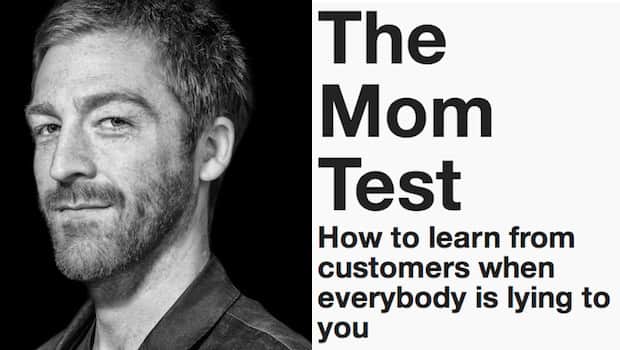
This book has been widely distributed across the network of internet entrepreneurs, solopreneurs, startups, would-be startuppers, indie makers. The proposition according to Rob Fitzpatrick is “How to talk to customers & learn if your business is a good idea when everyone is lying to you”. And by everyone, the worst liar is yourself. The second worst are people who won’t buy your stuff. Saving us from just those two would get us out of so much trouble down the line.
The core of the book revolves around creating customer conversations that give you learnings. Too often, because of questions that allow for biases give you answers that are unhealthy for your business. The Mom Test is a simple framework of asking questions that even your mom cannot lie to you! The following would be the explanations of the Mom Test.
Talk about them instead of your solution/assumption
Talking about your idea is banned. This increases the quality of your questions because we can’t be lied to in that aspect, it wasn’t mentioned at all. Early customer conversation should be about getting us facts about our customers’ behaviours and perceptions. We then use these facts to work or stop working on our ideas/solutions. Examples:
- How are you dealing with X?
- Why do you bother with Y?
Ask past specifics and avoid broad/opinions on future as they don't even know what's for lunch next Monday.
In case of purchasing, past behaviour is more reliable predictor of purchasing than giving them a broad “Would you buy X?” which gives them another opportunity to lie to you to stroke your ego. It is more efficient to work with people who are looking for solutions to their problems than expending energy convincing people who’re actively ignoring the problems.
Examples:
- When was the last time that X happened?
- How do you currently deal with Y?
Great conversationists listens, deeply.
Here’s the thing, people like talking about themselves. People love talking about their problems. Most of all, people yearn to be listened. If you can listen, then people would enjoy talking to you. Another benefit of listening is that you cannot open your mouth to blabber about your ideas and how great it is, reducing opportunities for biases to occur.
Examples:
- Repeat your understanding of their problems. This gives them a chance to clarify or fix your understanding. Words are hard.
- Is there anything else?
The rest of the book went on to expand the Mom Test in many situations and introduce tools and ways of having quality conversations. Here’s the deal, you would still ask bad questions, get into pitch mode, and interrupt at bad timings. We don’t become perfect conversationalists overnight and Rob Fitzpatrick himself used many opportunities to add his failings. But that’s fine because you can notice your errors and find ways to recover the conversation.
I hope this helps you with your customer conversations. And that we can learn much from our customers and especially from the process itself. This post is originally from my blog: here

Great summary! I just read the book this week. 👍
It's quite a packed little book. No fluff at all!
True. The author is really nice too. I mentioned him in a tweet and he responded to it. I love when authors do that. 😍