10 Effective Article Submission Sites to Avoid SEO Penalties
Search engine optimization (SEO) continues to evolve, but one strategy still delivers value when used correctly—article submission sites. Publishing well-written, informative content on trusted platforms helps businesses improve brand visibility, reach new audiences, and earn quality backlinks that support long-term SEO growth.
However, success depends on quality rather than quantity. Search engines now reward websites that publish original, experience-driven content instead of mass-distributed, low-value articles. When combined with other off-page strategies like guest posting sites, article submissions become part of a sustainable digital marketing plan.
In this comprehensive guide, you'll learn how article submission sites work, why they still matter, how to choose the right platforms, and the best practices to maximize SEO results without risking search engine penalties.
What Are Article Submission Sites?
Article submission sites are online publishing platforms where individuals, businesses, and marketers can publish informative articles for readers across different industries.
Instead of focusing only on backlinks, modern article submission is about:
Sharing valuable knowledge
Building topical authority
Increasing brand awareness
Reaching new audiences
Supporting a diversified SEO strategy
High-quality submissions can drive referral traffic, generate leads, and improve your online reputation over time.
Featured Snippet Answer:
Article submission sites are platforms that allow users to publish informative content online to improve brand visibility, gain referral traffic, build authority, and support SEO through high-quality content distribution.
Why Article Submission Still Matters for SEO
Many marketers assume article submission is outdated. That's only true when it involves duplicate or low-quality content.
Google's algorithms now reward:
Helpful content
Original research
Expert insights
Real-world experience
User-first writing
Publishing valuable articles on reputable websites helps search engines understand your expertise while introducing your brand to new audiences.
Key SEO Benefits
Builds topical authority
Diversifies backlink profile
Generates referral traffic
Improves brand recognition
Supports content marketing
Creates opportunities for natural backlinks
According to industry studies by Ahrefs and Semrush, websites that consistently publish authoritative content across multiple trusted platforms typically attract significantly more organic traffic than those relying solely on on-page optimization.
How Article Submission Sites Improve Website Authority
Authority isn't built overnight.
Every useful article becomes another digital asset that can:
Answer customer questions
Earn social shares
Attract natural citations
Generate backlinks
Increase trust
For example:
Imagine a SaaS company publishes an in-depth guide about cybersecurity.
If that article appears on a reputable publishing platform and gains attention from bloggers, journalists, or industry experts, it can naturally earn mentions and backlinks that strengthen the company's authority.
This creates a compounding SEO effect over time.
Difference Between Article Submission and Guest Posting
Although many people confuse them, they're different strategies.
Article Submission
✔ Public publishing websites
✔ Faster approval
✔ Broad audience
✔ Referral traffic
Guest Posting
✔ Niche blogs
✔ Strict editorial review
✔ High-authority backlinks
✔ Targeted audience
The best SEO campaigns often combine article submission with reputable guest posting sites to create a balanced backlink profile.
Benefits of Using High-Quality Article Submission Sites
1. Better Brand Visibility
Publishing useful content introduces your expertise to readers who may never have visited your website.
Over time, this improves brand recognition and trust.
2. Increased Referral Traffic
Readers interested in your topic often click through to learn more.
Unlike paid advertising, this traffic continues arriving long after publication.
3. Improved Content Reach
One well-written article can:
Rank in Google
Be shared on social media
Be referenced by bloggers
Generate newsletter mentions
This extends the lifespan of your content.
4. Stronger Topical Authority
Search engines increasingly evaluate expertise.
Publishing multiple high-quality articles around your niche helps establish authority.
5. Diversified SEO Strategy
SEO should never depend on one tactic.
Combining:
Blog publishing
Link building
Technical SEO
Content marketing
Article submissions
creates a stronger long-term strategy.
How to Choose the Best Article Submission Sites
Not every publishing platform deserves your content.
Use these criteria before submitting articles.
🔥 Outrank Your SEO Competitors
Check Domain Authority
Higher-authority websites generally offer greater visibility and stronger SEO potential.
Review Editorial Standards
Quality platforms reject thin or AI-generated spam.
Choose websites that value:
Original research
Helpful content
Expert insights
Evaluate Audience Relevance
Publishing on a website related to your industry produces better engagement than posting on unrelated platforms.
Verify Indexing
Search Google to see whether recent articles from the platform appear in search results.
If pages aren't indexed, the platform may provide little SEO value.
Examine User Experience
Avoid websites overloaded with ads, spam, or duplicate content.
Readers trust clean, professional websites.
Best Practices for Successful Article Submission
Following a structured process improves both user engagement and SEO performance.
Write Original Content
Never copy existing articles.
Google rewards unique perspectives and firsthand experience.
Focus on User Intent
Answer real questions readers ask.
Helpful content consistently performs better than promotional content.
Optimize Headlines
Strong headlines improve click-through rates.
Example:
Instead of:
SEO Tips
Use:
10 Practical SEO Tips That Increased Organic Traffic by 120%
Add Supporting Data
Statistics build credibility.
Examples include:
Industry reports
Case studies
Survey results
Research findings
Always reference trustworthy sources when citing data.
Include Internal and External Links
A balanced linking strategy improves usability.
Link to:
Relevant pages on your website
Trusted external resources
Supporting guides
Use Visual Content
Articles with visuals often receive higher engagement.
Consider adding:
Infographics
Charts
Screenshots
Comparison tables
Common Mistakes to Avoid
Many marketers reduce the effectiveness of article submissions by making avoidable mistakes.
Avoid:
Publishing duplicate content
Stuffing keywords
Using low-quality directories
Writing overly promotional articles
Ignoring reader intent
Buying spammy backlinks
Publishing without proofreading
Quality always wins over quantity.
Practical Example: Building Authority Through Content Distribution
Imagine a digital marketing agency launching a new SEO service.
Instead of publishing only on its own blog, the team creates:
One comprehensive industry guide
One case study
One beginner tutorial
One trend analysis
Each article appears on a trusted publishing platform with unique content.
Over several months:
Brand searches increase
Referral traffic grows
Industry mentions improve
Natural backlinks appear
Leads increase through organic discovery
This demonstrates how strategic content distribution supports sustainable growth.
How to Create an SEO-Friendly Article Before Submission
Publishing on article submission platforms is only effective when the content meets modern SEO standards. Before submitting an article, ensure it provides genuine value, answers a specific user query, and demonstrates real expertise. Search engines prioritize helpful content that satisfies user intent rather than articles written solely for backlinks.
Start with thorough keyword research and organize your content using a logical heading structure. Write an engaging introduction, include practical examples, and support important points with reliable data whenever possible. Keep paragraphs short, use bullet points for readability, and naturally incorporate relevant keywords without over-optimizing.
📖 Explore Advanced SEO Strategies
Before publishing, review your article for grammar, originality, and mobile readability. Adding relevant internal and external links, optimizing images with descriptive alt text, and writing a compelling meta title and description can further improve visibility. A well-optimized article not only performs better in search engines but also encourages readers to spend more time engaging with your content.
Why Quality Content Matters More Than the Number of Submissions
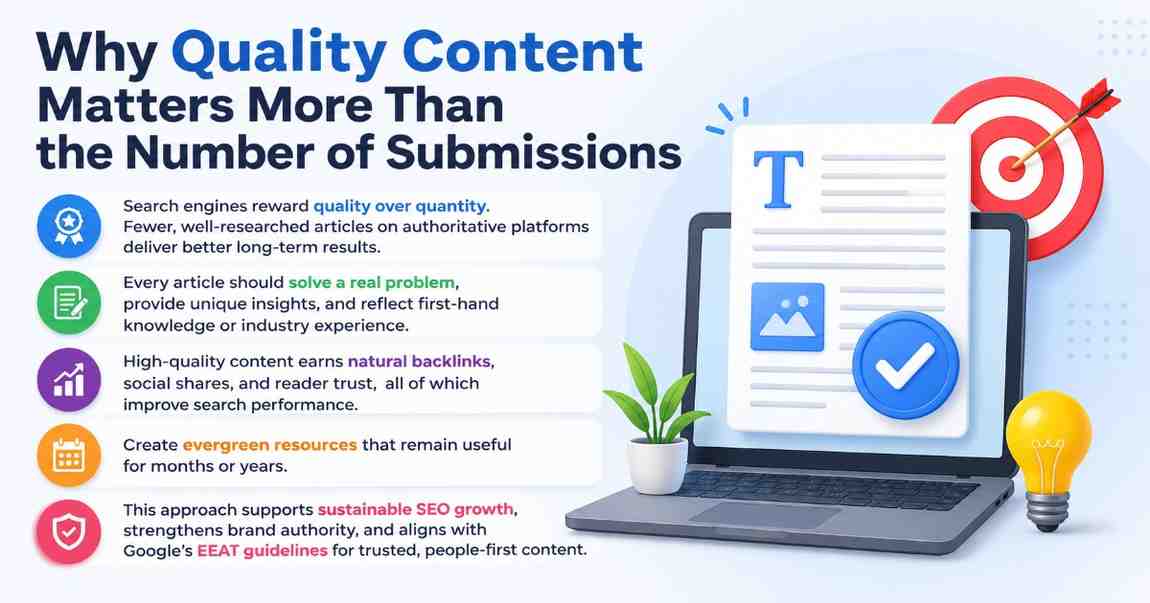
Many marketers believe submitting hundreds of articles will improve SEO, but search engines now reward quality over quantity. Publishing fewer, well-researched articles on authoritative platforms delivers better long-term results than mass-submitting thin or duplicated content across low-quality websites.
Every article should solve a real problem, provide unique insights, and reflect first-hand knowledge or industry experience. High-quality content is more likely to earn natural backlinks, social shares, and reader trust, all of which contribute to stronger search performance. Instead of focusing on the number of submissions, invest time in creating evergreen resources that remain useful for months or even years. This approach supports sustainable SEO growth, strengthens your brand authority, and aligns with Google's EEAT guidelines for creating trustworthy, people-first content.
Actionable Tips for Better Results
If you're just starting, follow this simple framework.
Weekly Checklist
Publish one original article
Target one specific audience
Answer one important question
Add supporting examples
Include helpful visuals
Track referral traffic
Update older articles
Consistency produces better results than publishing dozens of low-quality articles.
Are Free Article Submission Sites Worth Using?
Many marketers ask whether free article submission sites still provide SEO value.
The answer depends on quality.
A reputable free platform can:
Expand your audience
Generate referral traffic
Improve brand visibility
Build authority
However, avoid websites filled with spam or duplicate content.
Always prioritize quality over free publication opportunities.
Measuring the Success of Article Submission
Track these metrics regularly.
SEO Metrics
Organic traffic
Keyword rankings
Indexed pages
Backlinks earned
Engagement Metrics
Average reading time
Bounce rate
Social shares
Comments
Referral traffic
Business Metrics
Leads generated
Newsletter signups
Demo requests
Sales conversions
Data helps refine future content strategies.
Future of Article Submission in SEO
Google continues emphasizing helpful, people-first content.
That means successful article submissions will increasingly depend on:
Experience
Expertise
Original insights
Trustworthiness
Reader satisfaction
Publishers focusing on genuine value will continue benefiting from long-term SEO improvements.
Those relying on automation or low-quality submissions will likely see diminishing returns.
Frequently Asked Questions
1. Are article submission sites still effective for SEO?
Yes. High-quality article submission remains effective when the content is original, helpful, and published on reputable platforms. It supports brand awareness, referral traffic, and authority rather than relying solely on backlinks.
2. How often should I submit articles?
Consistency matters more than volume. Publishing one or two well-researched articles each month often produces better long-term results than submitting dozens of low-quality articles.
3. Can article submission improve Google rankings?
Indirectly, yes. Helpful content can increase visibility, attract backlinks, build authority, and drive engagement, all of which contribute to stronger SEO performance.
4. What makes a good article submission platform?
Choose platforms with:
High editorial standards
Relevant audiences
Strong domain authority
Indexed content
Good user experience
5. Is article submission better than guest posting?
Neither is universally better. They serve different purposes. Article submission improves content distribution and visibility, while guest posting sites often provide stronger niche authority and editorial backlinks. Combining both strategies delivers the best long-term SEO results.
Final Thoughts
Article submission sites remain a valuable part of modern SEO when approached strategically. Instead of chasing hundreds of backlinks, focus on publishing original, experience-driven content that genuinely helps readers.
By selecting reputable platforms, following SEO best practices, and consistently sharing valuable insights, you can strengthen your brand authority, increase organic visibility, and generate sustainable traffic over time.
SEO success isn't built through shortcuts—it's earned through quality, consistency, and trust.

