30 days ago I posted here with $0 revenue. Here's what actually happened next.
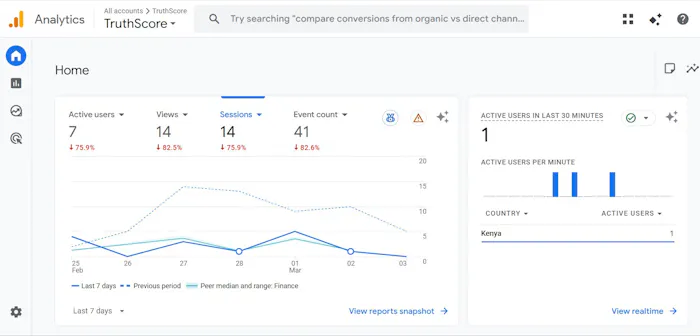
I posted on Indie Hackers 14 days ago. $0 revenue. 2,400 scans. A tool nobody knew about.
I almost quit three times since then.
Here is everything that happened.
The shadowban nobody told me about
For months I had been writing YouTube comments promoting TruthScore on make money online videos. Hundreds of comments. Zero clicks. Zero engagement.
I finally figured out why.
YouTube was shadowbanning every single comment containing my link. The comments were visible to me but invisible to everyone else. Months of work. Seen by nobody.
The fix? Stop including the link. Let curiosity do the work instead. Within days comments started getting replies.
The creator who called me out
I scanned a video from a creator called Marshall Malaba and posted the TruthScore result in his comments. He replied publicly:
"There's no affiliate marketing here stop lying"
He was right. TruthScore had misclassified his personal business links as a high pressure affiliate funnel. A genuine false positive.
I replied, owned the mistake, explained the algorithm, and apologised. He saw it. That interaction led me to fix a real flaw in the scoring system that was unfairly penalising legitimate creators.
A public callout became a product improvement. I'll take that.
The SaaS creator who noticed
I scanned a video from Nick Saraev — a well known SaaS builder — and posted the results in his comments without a link, just the data.
He replied:
"I have no idea what this is, but thanks."
That's the most encouraging thing anyone has said about TruthScore in six months.
Where I am today:
Revenue: still $0
Email subscribers: 13 real humans
YouTube subscribers: 10
Videos scanned total: 2,400+
Comments that were actually seen by humans: probably 20% of what I posted
Times I almost quit: 3
Times I actually quit: 0
What I've learned:
Distribution is harder than building. Everyone says this. Nobody tells you what it actually feels like to write 200 comments that nobody sees, make videos that get 17 views, and watch your PayPal sit at $0.00 for six months while you keep going anyway.
But here is the thing. The tool works. The gate converts. The popup works. The scoring is getting more accurate with every false positive someone calls out.
I'm not waiting for a viral moment anymore. I'm building the kind of consistency that makes a viral moment possible when it comes.
TruthScore is free. It scans any YouTube video in 10 seconds and tells you whether it's trying to help you or profit from you.
If you've made it this far — try it. And if you're building something with zero traction right now, reply below. I want to hear from you.
truthscore.online

This is the part most people leave out of their origin story. Shadowban plus public callout plus PayPal at $0 is the real founder gauntlet, not the highlight reel. One thing I would add from bootstrapping SocialPost.ai: the loop that pulled us out of zero was niching smaller, not pushing harder. When you find one tight pocket of users who feel personally seen by the tool, they evangelize for you. Try scanning videos inside a specific creator subculture instead of make-money-online generally. Smaller pond, sharper hook, real conversations. The consistency you are building is the asset.
Niching down is the best way to escape the zero-user trap. When you target a highly specific creator subculture, the initial user base naturally takes care of word-of-mouth growth for you.
In reading all of these stories similar to my own of first-time builders trying to drive traffic, I think the hardest realization is that nothing is done overnight. I think as a first time builder, I was so pumped to build something I was proud of -- I wanted everyone to use it. Nothing stops momentum like realizing you can't just get 100 users in an instant. Distribution and marketing are long grinds, but it seems consistency is the one of the key attributes of anyone who has made it.
This is such a real realization, especially for first-time builders. Building the product feels like the hard part… until you realize distribution is a completely different skill set.
I think a lot of us assume that if we build something genuinely useful, users will automatically come. But in reality, trust and attention compound slowly, just like product improvements do.
The encouraging part is that consistency seems to beat intensity in the long run. One viral post might bring attention, but consistent showing up is what builds momentum that lasts.
This gives me the strength and hope to continue doing my work.
That honestly means a lot to hear. I think many of us are quietly going through the same struggles as builders, so it helps knowing we’re not alone in it.
Keep going — consistency may feel slow day to day, but it compounds over time in ways we usually don’t notice immediately.
Yes, you're right — consistency and perseverance are our best weapons, even on the toughest days that make you doubt whether you made the right choice... but you always have to stay strong and keep going!
The shadowban thing hit me. I never considered that YouTube treats "new account + outbound link" as spam regardless of content quality. Removing the link and letting curiosity do the work makes sense — if someone's interested enough, they'll find you.
Exactly — and the frustrating part is YouTube never tells you it's happening. No notification, no warning, just silent invisibility. I only figured it out by accident. The curiosity approach actually converts better anyway because someone who searches for TruthScore themselves is far more motivated than someone who mindlessly clicks a link in a comment. They've already decided they want it before they even land on the site. Are you doing any comment marketing yourself or have you found other distribution channels that actually move the needle?
This is really inspiring me bruh since i am facing this right now tnx for sharing journey
This comment means a lot — genuinely. The hardest part of building something with zero traction is feeling like you're the only one going through it. You're not. How long have you been at it and what are you building? Drop it below — I'll try it and give you honest feedback. The least we can do for each other is show up and pay attention to what someone else is creating.
Actually its work.
Thanks for sharing your experience, and save lot of time.
I build DevTet monitoring for website with maintence, reports for agencies not just devs who want to prove they work to the clients, and must tell you reaching to potentials customers is nightmare, and basically daily routine put on repeat.
Did you maybe try with cold emails?
The 2,400 scans vs 13 emails gap is the part I'd obsess over. The tool clearly works and the gate converts on the page, but almost none of those 2,400 people become someone you can reach a second time. Distribution is brutal, agreed, but you're also earning attention and then letting it walk out the door.
I'd put an email capture at the exact moment the scan result lands, when curiosity is highest, instead of a generic "join the list" somewhere in the footer. And pin one question to it, something like "what made you scan this video?" The answers tell you which niches actually convert (make-money-online vs SaaS builders vs whatever), and then you aim your next 200 comments at that one niche instead of spraying everywhere.
Also, 13 real opt-ins is not nothing. Email them and ask what almost made them not trust the score. That gives you your next product fix and your next comment hook in the same reply.
Disclosure: I build Lighthouse, a small toolkit for exactly this (capture plus a question on signup), so I'm biased. A plain Tally form wired to the result page does the same job. The habit of capturing at the moment of value is the point, not the tool.
This reads less like a “zero traction” story and more like a reality-contact story.
For months, the work looked like distribution, but the market never actually saw it because the comments were invisible to everyone except you. Then the first real contact came through friction: a creator calling out a false positive, a reply, and a product flaw becoming visible.
That seems like the real shift here: not waiting for traction, but finding the places where reality can finally push back on the product.
Really appreciate the transparency. $0 revenue posts are more useful than fake MRR screenshots, period.
I run goldenweeks Retreats, a work retreat in Zanzibar for founders stuck in the building but not shipping loop. The biggest blocker we see is not the product or distribution. It is consistency when Stripe reads $0.
The shadowban lesson you described is exactly what happens when you build alone. Accountability changes everything. Someone expecting an update tomorrow morning beats hoping for a viral moment.
13 active users is not nothing. What does your next 30 days look like beyond keep going?
First-month revenue usually tells you whether you have a network, not whether you have a business.
Month 1 customers are almost always people who already knew you or trusted you enough to try something new. They paid because of relationship capital, not because your positioning was sharp or your product was obvious to a stranger.
Month 2 is the real signal. Do people who do not know you pay, at the same price, without you having to explain your entire background first?
The operators I have watched build real AI service businesses hit a wall between clients 1-3 and clients 4-6, because clients 4-6 do not know them yet. That gap is where most first-month success stories quietly stop.
What drove the first paying customer? And how different was the acquisition path for number two?
This probably the most useful comment in this entire thread and I want to be honest — I haven't crossed the first customer yet so I can't answer your question from experience. But what you're describing is already shaping how I think about the gap between 'someone who followed this journey and wants to support it' versus 'a complete stranger who landed on the site, understood the value immediately, and paid without any context about me.' Those are two completely different acquisition paths and I've been treating them as the same thing. The email gate capturing strangers is my attempt at the second path — but you're right that the real signal doesn't come until customers 4 through 6 who have never heard of Kelon or this post. I'm going to come back to this comment specifically when I hit that wall. Because I think I will hit it. What did you see the operators who crossed that gap successfully do differently between customer 3 and customer 4?
Useful post because it separates two problems that founders often mix: visibility and trust.
If a comment is hidden, you cannot learn anything about the message. If it is seen but ignored, you can learn. Those look the same in analytics unless you deliberately check for visibility.
One thing I would add is a simple log for each distribution attempt:
After 20 reps, you can usually tell whether the problem is platform mechanics, weak positioning, or missing proof.
For TruthScore specifically, the false-positive loop may be more valuable than the raw scan count. Every public correction can become a labeled test case and a trust artifact if you document what changed. That turns criticism into evidence that the system improves.
Separating visibility from trust is such an underrated point. If you don't track whether people actually see the post, your analytics are basically guesswork.
Great story, and I wholeheartedly agree that distribution is much harder than creation. Two months ago, I also launched my own project called Forofox.com (a forum for buying and selling social media accounts and digital assets), and so far, even though users have signed up, I’m still struggling with visibility. But just like you with TruthScore, I don’t plan on giving up—I just intend to keep looking for strategies to keep moving forward.
I'm in the same boat, launching my first SaaS this week. Since I don't have LinkedIn, I'm focusing heavily on direct outreach to industry colleagues and niche online communities. Genuine, 1-on-1 conversations usually work best at the beginning
1-on-1 conversations are a great idea—you’ll quickly see what works, what doesn’t, and how to improve. Wishing you all the best with your launch! What project are you working on?
Most first-revenue breakthroughs aren't about better distribution. They're about discovering which problem statement was actually right — and the first customer is the proof.
Curious: did they find you, or did you find them?
That’s a great point—early revenue often comes from validating the right problem, not just better distribution. In my case, the first customer didn’t just stumble in; I actively reached out, but their response confirmed I was solving something real.
The YouTube shadowban story is a brutal lesson. I've seen the same pattern on other platforms where comments with links just silently disappear, and you have no idea until you check from a logged-out browser. The pivot to dropping the link and letting curiosity drive clicks is smart, but it's also hard to measure since you lose the direct attribution. Curious how you're tracking which comments actually drive traffic now that you're not including links. Are you using UTM parameters on your profile link, or just watching for referral spikes in analytics?
I’ve noticed most platforms have subtle ways of shadow-banning accounts that spam, even if not as harsh as Reddit.
I don’t currently have a system to track my comments directly—so far I just watch for referral spikes in analytics. But now that you’ve mentioned it, I realize I should set up a way to track them. Do you have any suggestions on how I could do this?
This hits close to home.
Once I started looking at my projects from the marketing side, I realized how much less fun it is compared to building. There's something in it, sure, but I'd gladly delegate it to someone else if I could.Doing this much work and not quitting says a lot about you.
Good luck, man. One day all these small actions will hit critical mass and success will land on you all at once.
I struggled with Shiny Object Syndrome (SOS)—instead of committing to one idea, I’d build a product, market it for a couple of days, realize how tough marketing was, and then jump to the next idea. TruthScore is different. Even if I don’t reach the exact outcome I envision, I’m committed to seeing it through to the end.
Replying because you asked and because this hit close to home.
One week into launching Yesterday, an AI financial coach. $0 revenue. 11 signups, all people I know. Got permanently banned from r/personalfinance this morning on my first day trying Reddit.
The shadowban thing is a gut punch — I had no idea YouTube did that. Explains a lot about why link-first approaches fail everywhere.
The line that got me: “I’m not waiting for a viral moment anymore. I’m building the kind of consistency that makes a viral moment possible when it comes.” That’s where I’m trying to get mentally.
Still figuring out distribution. LinkedIn is my best channel so far. Everything else has been a lesson. Happy to share more if useful — building something called Yesterday, an AI financial coach.
When it comes to shadowbanning, Reddit probably takes the trophy 😅. It’s brutal — the platform can smell promotional behavior from miles away, even when you’re genuinely trying to contribute.
But honestly, don’t give up. Consistency is what eventually teaches you what works, what doesn’t, and how to double down on the things that actually resonate.
“Building consistency instead of waiting for a viral moment” is the right mindset.
I’m curious though — what exactly does Yesterday do as an AI financial coach? And how are you using LinkedIn for distribution? I’ve always seen LinkedIn as more of a corporate/academic platform, so I’d love to understand what’s been working for you there.
The most useful part here is not the subscriber count, it is the false-positive loop.
A lot of early products treat public criticism as a reputation problem, but in your case it became training data: someone pointed out a wrong classification, you owned it, and the product got sharper. That is a much stronger signal than a few polite comments saying "cool idea".
If I were tracking this, I would separate three numbers: comments that were actually seen, replies that exposed a product flaw, and replies that turned into a second conversation. The first tells you distribution is working, the second tells you the product is learning, and the third is probably where customers eventually come from.
Also, removing the link was not just an anti-shadowban tactic. It forced the comment to be valuable on its own, which is probably why people finally had something to respond to.
This is such a good observation.
I hadn’t really thought about the false positives as “training data,” but that’s exactly what they became. The Marshall interaction stung in the moment because I felt publicly wrong, but looking back, it probably improved the product more than 50 silent scans ever could.
And your point about the three different metrics is honestly smarter than the raw subscriber count. I’ve been treating all engagement as equal when it clearly isn’t. A reply that exposes a flaw or starts a real conversation is probably worth way more than passive traffic.
Also completely agree on the link removal insight. At first I thought I was just dodging shadowbans, but it accidentally forced me to stop writing promotional comments and start writing comments that could stand on their own. That shift changed the quality of interactions almost immediately.
That shadowban discovery is brutal, but honestly, the real grind is writing hundreds of comments by hand and watching none of them land.
I used to spend hours typing replies across platforms, and eventually built DictaFlow because hold-to-talk voice dictation is about 3x faster than typing for me. Now I read a thread, think through my take, speak it, and it drops wherever my cursor is. dictaflow.io
What I'm curious about is this, after you killed the links and let curiosity drive, did you change your comment style too? Shorter? More conversational? I'm wondering if the voice shift helped as much as the link removal.
Honestly, yes — I think the comment style changed just as much as the link strategy.
When I was dropping links, the comments were subconsciously written like mini ads. Even when I tried to sound helpful, the real goal was “click the link.” I think platforms and people can both feel that instantly.
Once I removed the links, the comments became more conversational and specific. Shorter in some cases, but mostly more natural. Instead of trying to “convert,” I was reacting to the actual video and then mentioning the scan almost like an observation.
And your point about voice is interesting because I think spoken thoughts naturally sound less polished and less corporate. That probably makes replies feel more human and worth responding to.
Also, respect for manually grinding through comments long enough to build a tool around the pain itself
The Marshall moment is the most honest part of this whole post. Owning a false positive publicly instead of deleting the comment takes real character. Most people would have disappeared quietly.
I appreciate that. My first reaction honestly was panic 😅
But after the initial embarrassment wore off, I realized he was actually helping me spot a real flaw in the system. If the goal is accuracy, then getting publicly corrected is part of the process whether I like it or not.
Looking back, that interaction probably improved TruthScore more than a hundred “nice tool” comments would have.
The shadowban discovery is brutal but at least you figured it out early. I love that turning a public callout into a product improvement shows real character. Those almost quit moments are so real when you're watching zero move to zero every day. What made you keep pushing through?
Honestly, I think what kept me going was realizing that even though the numbers looked flat, the product itself was still improving.
The scans got better. The popup converted better. The comments became more human. The distribution lessons got sharper. From the outside it looked like “nothing is happening,” but internally a lot was changing.
I also realized I was secretly expecting motivation to carry me through the hard phase, when consistency is probably the thing that matters more. Motivation disappears fast when the PayPal balance stays at $0
Man, this hit way too close to home. Everyone talks about distribution being hard, but nobody talks about the psychological toll of watching view counts drop or links get ignored while knowing your product actually works. That mental resilience is the real founder superpower.
I love your mindset building consistency instead of just praying for a viral lottery ticket. TruthScore sounds like a much-needed reality check for the internet, congrats on pushing through.
I’m currently in that exact trenches right now, building KinemaCoach (an AI posture & fitness engine). Balancing the PhD science behind it with the daily grind of trying to get people to notice it is exhausting, but posts like yours remind me why we keep hitting 'publish' anyway.
Rooting for you and TruthScore. Keep that consistency going!
This genuinely means a lot — especially the part about the psychological toll. That’s the part I almost never saw people talk about before building publicly myself.
Everyone discusses “distribution” like it’s a technical problem, but a huge part of it is emotional endurance. Waking up excited, posting something you worked hard on, then watching it disappear into silence over and over can really mess with your head if you let it.
And honestly, balancing deep technical work with the constant need to market yourself sounds incredibly difficult too. KinemaCoach actually sounds really interesting because posture/fitness is one of those areas where people badly need better feedback loops.
This is really inspiring. More power to you. I am also building something and hoping it work out for me too.
I appreciate that — and genuinely wishing the same for you too.
One thing this process has taught me is that a lot more builders are struggling quietly than it seems online. Most people only post the wins, not the months of confusion, failed distribution attempts, and tiny numbers before anything starts moving.
Keep building and keep putting your work in front of people. Sometimes progress is happening underneath the surface long before the metrics catch up.
Agreed. It’s easy to feel like you’re failing when you’re deep in the “nobody cares yet” phase, especially online where everyone only posts growth charts, launches, and wins 😭
Meanwhile behind the scenes most of us are probably dealing with confusion, low numbers, changing direction every week, and questioning whether anyone even wants the thing we’re building.
Really appreciate the perspective though. I’m still very early in my own project, but I’m starting to realize consistency and surviving the quiet phase is probably a huge part of the game.
I recently built my first website on my own, a Japanese idioms learning site. As of May 22, Google has indexed 6 of its pages, but so far I'm still the only user. Getting other people to use a website you built yourself is definitely not easy.
Honestly, just getting your first site built and indexed is already a bigger milestone than most people realize. A lot of people dream about building something for years and never even publish version one.
And yeah, the strange part is discovering that “build it and they will come” is mostly a myth 😅 The internet is so noisy now that even genuinely useful projects can sit unnoticed for a while.
But the fact that you’re already indexed means you’ve started the process. Six pages today can become sixty later, and one user eventually becomes a few more if you keep improving and sharing it consistently.
Also, a Japanese idioms learning site sounds like a really cool niche. Those focused educational tools usually have much stronger long-term potential than generic “everything apps.”
For solo indie developers, encouragement from others is incredibly important. Thank you for your encouragement!
Most of the time, we just need to be patient and stay on good terms with time, and time will eventually surprise us. Wishing you the best of luck!
this is the gap nobody documents honestly — the bit between $0 mrr and the first 5 paying customers. one thing i'd be curious about: how much of the response was from people who would actually buy vs people who liked the story? in my experience the comment-to-customer ratio on ih is brutal even when the thread blows up. did any of those comments turn into a real conversation that led to a customer, or was it mostly cheerleading? would love to see the breakdown.
The cheerleading-to-customer ratio on IH is brutal, and it's worth being honest about why: most people commenting here are builders, not buyers. They resonate with the struggle, not the product.
The signal worth tracking isn't comment count. It's whether anyone asked a question that only a real buyer would ask — something like "does this work for X specific use case" or "how do I get my team to use it." Those questions come from people with a problem, not people with a story.
In our experience, the first real customer conversation almost never came from a thread going well. It came from one specific person who read quietly and reached out separately.
This is a really good question, and honestly I think the answer right now is: mostly cheerleading, a few genuinely useful conversations, and zero paying customers so far.
But I don’t say that negatively. I think there’s still value in figuring out whether people emotionally resonate with the problem/story before they ever open their wallet.
What surprised me is that the most valuable interactions weren’t the compliments — they were the people questioning the scoring, sharing their own failed distribution experiences, or asking deeper questions about how the system worked. Those conversations taught me way more about positioning and user psychology than raw traffic numbers did.
I also suspect you’re right that the IH comment-to-customer ratio is probably brutal in the short term. A lot of builders here are supportive but not necessarily the target market. Still, I think these discussions help sharpen the narrative, and eventually that narrative matters when real users do arrive.
Right now I’m treating this stage less like “customer acquisition” and more like learning how to communicate the product in a way that makes people care enough to remember it later.
Hi Indie Hackers,
I'm building SpendLens — a free AI spend audit tool for startups (tells you where you're overspending on Cursor, Claude, ChatGPT, etc.).
Looking for 3 quick conversations (10-15 min) with founders or engineering leaders who manage AI tool budgets.
If you're interested: what's your biggest frustration with your current AI tool costs?
Comment below or DM me. Happy to help with your projects too.
This is actually a smart problem to work on because AI subscriptions are starting to pile up fast for small teams.
One frustration I keep noticing is that most people have no visibility into whether they’re actually getting value from the tools they’re paying for. Teams end up with overlapping subscriptions, inactive seats, or expensive plans justified by “maybe we’ll need it later.”
I also think there’s an interesting psychological angle here: AI tools feel “cheap individually” until you suddenly realize the stack is costing hundreds or thousands per month.
Curious how SpendLens approaches this — are you focusing more on cost tracking, usage analytics, or recommendation/optimization?
the 'distribution is harder than building' part hits different when you're living it. shipped my first substack post yesterday into an audience of literally zero, genuinely strange feeling. but the 'building consistency that makes a viral moment possible' framing is the right reframe, way better than chasing the moment itself. also owning that false positive publicly was the move, that kind of transparency is the actual moat over time. keep going.
That “audience of literally zero” feeling is so weirdly disorienting the first time 😅 You hit publish expecting the internet to somehow notice, then realize attention is its own separate craft entirely.
But honestly, publishing into zero people is probably where a lot of the important reps happen. You get better at clarifying ideas, finding your voice, and learning what actually resonates before there’s pressure or expectations attached to it.
And I really appreciate the transparency point. I think long term, people trust products more when they see the builder responding honestly to mistakes instead of pretending the system is flawless. The internet has enough polished certainty already.
Also congrats on shipping the first Substack post. Most people never make it past the “thinking about starting” phase.
Cool idea. I will check it out.
Appreciate it — genuinely curious what you think once you try it. Even negative feedback has been surprisingly useful because it usually exposes something I can improve in the scoring or user experience.
Hope it’s helpful, and thanks for taking the time to check it out.
I felt this a lot.
Every day 10+ people visit my site, look at the landing page, and leave without actually trying the service. Distribution honestly feels harder than building sometimes.
I just want to help small founders do customer development more easily, so respect for continuing anyway.
That kind of traffic is emotionally harder than zero traffic sometimes 😅 because you know real humans are showing up, but you still don’t fully understand what’s stopping them from taking the next step.
I’ve started realizing that distribution and conversion are almost psychological skills as much as technical ones. Tiny things in messaging, trust, clarity, or timing can completely change whether someone engages or bounces.
And honestly, helping founders do customer development more easily sounds genuinely valuable because most of us are figuring that part out painfully in public. Respect for sticking with it too.
Good job sticking with it. It’s honestly good to read comments like yours from people who are actually struggling, because it reminds others that the struggle is real and not everyone’s path is smooth.
I think good character matters a lot. If nothing else, it helps push you beyond the point where most people would’ve stopped. People notice sincerity, and when they do, they’re usually much more willing to help push you along.
I wish I had more words of advice, but honestly I feel like I’m paddling a boat in the same stream alongside you right now. I’m about 9 months in myself at what I’d consider beyond full-time effort, and at this point I’m still moving forward mostly on faith alone.
They say don’t quit before the miracle happens.
This honestly resonated with me a lot.
I think one of the strangest parts of building is realizing how much of the journey happens before there’s any external proof you’re on the right track. From the outside it can look irrational to keep going, but internally you can still feel the small improvements compounding.
And I agree about character. I’m starting to think resilience matters less in the dramatic “never give up” sense and more in the quiet ability to keep showing up while things are still unclear.
Also, 9 months of beyond full-time effort is no joke. Respect for continuing to paddle forward even without obvious validation yet. I think a lot more founders are operating on faith than they publicly admit.
“Don’t quit before the miracle happens” is probably going to stay in my head for a while now.
Respect for sticking with it through the distribution grind, most people underestimate how much “no one sees it” is the real problem, not the product itself.
Also interesting to see you turn a false positive into an actual improvement in the scoring system that’s exactly how early-stage tools get sharper.
Curious where you think your first real distribution breakthrough is going to come from next.
Honestly the distribution breakthrough I'm most watching right now is the Indie Hackers effect itself — 130 comments in and I'm realising this community might be the channel I underestimated most. Every other platform I tried punished the link. Here the conversation is the distribution. People are trying the tool, finding bugs, giving product feedback, asking real questions. That's more signal in 48 hours than six months of YouTube comments gave me. Beyond this — the next real bet is YouTube Shorts without any promotion, just showing real scans of real videos and letting the results speak. No pitch, no link in the caption, just data that makes people curious enough to search. Where did your first real distribution breakthrough come from?
Shadowban discovery after months of work is brutal. Most founders never find out why the distribution broke and just assume the product was the problem.
TruthScore converts and the scoring is improving. That means the product is not the problem. What is your current thinking on getting the next 100 users without YouTube?
Exactly—the shadowban was a blind spot I didn't see coming, but at least now I know what broke.
Current thinking for the next 100 users:
Honestly open to being challenged on any of these.
This part hit hard: “Distribution is harder than building.”
I’m at the very beginning of trying to get people to notice something I built, and I’m realizing how different the mindset is. Building feels controlled: you can debug, improve, refactor, test. Distribution feels much more uncomfortable because you can do the work and still get silence.
I also like the way you handled the false positive. Owning the mistake publicly instead of getting defensive probably gave you more credibility than a perfect demo would have.
The “comments seen by humans” point is also interesting. It’s easy to count effort, but much harder to know how much of that effort was actually visible or meaningful.
I’m still learning this, but your post is a good reminder that early traction is not only about getting users. Sometimes it’s about finding enough real signals to keep improving without quitting too early.
This comment is exactly the kind of signal I was talking about — one real response that tells me more than 500 views ever could.
You've already made the hardest shift: realizing that distribution is a different skill, not a reward you get for building something good.
Keep going. What are you working on?
I’m working on a small Android app called GlovesOn Trainer.
It started from a personal frustration while training boxing at home: once I had gloves on, checking the timer or reading the next instruction on my phone kept breaking the rhythm. So I built a voice-guided workout timer that uses Android’s native TTS to announce rounds, rests, phases, and custom instructions.
Right now I’m trying to figure out the same thing you described: not just how to “promote” it, but how to find the right people who actually feel that problem.
The hardest part so far is that the product is real and published, but distribution still feels like starting from zero.
What helped you figure out which conversations were actually worth joining when you were still trying to get traction without dropping links everywhere?
Come on, I'm going through the same confusion right now, but I don't have a clear direction like you do. I keep changing my goals all the time, and now my brain is about to explode
Honestly, I don’t think I had a clear direction either — I just had one problem that kept bothering me enough that I stayed with it longer than the others.
I think a lot of early builders assume successful people started with certainty, when most of us are just stumbling through confusion while trying not to quit too early.
And constantly changing goals is usually a sign that your brain is searching for certainty before commitment. I still do that too. The hard part is picking one direction long enough to gather real feedback before switching again.
You probably don’t need a perfect plan right now. You just need one thing you care enough about to keep showing up for even when the excitement disappears.
Never give up awesome journey brother. Love the part with owning the mistake. Shows a lot about character
Thank you, this means alot
I think giving a free usage for couple of weeks to try the product would be ideal to get real feedback. Honestly "get them to try" is usually a selection problem wearing an activation costume. If you incentivize the trial itself — discounts, "just try it" — you pull people motivated by the incentive, not the product, and they bounce. What's worked better for me is making the thing they unlock something they already wanted, so finishing the step self-selects for real interest. (Building in this space right now — happy to share what I'm seeing if useful.)
This is actually a really insightful distinction.
“Selection problem wearing an activation costume” perfectly describes something I’ve been slowly realizing without having the language for it. It’s easy to assume low conversion means the onboarding or pricing is wrong, when sometimes the bigger issue is that the people entering the funnel were never deeply interested in the core problem to begin with.
And your point about incentives makes sense too. Free trials can create activity without creating genuine intent. Someone clicking because they want “free access” behaves very differently from someone clicking because the result itself solves a problem they already care about.
The shadowban discovery is a huge unlock — and the way you responded to the public callout (owning it, fixing the product) is exactly the kind of thing that builds long-term credibility.
The "curiosity over link" trick on YouTube is real. I've seen the same pattern in other communities too: the more directly you promote, the less it lands. Remove the friction and let people come to you.
Also respect for posting the raw numbers during a rough stretch. Most people only share the wins. The honest 30-day snapshots are what actually help other founders calibrate their expectations. Keep going.
I do not know when you get your first $, but getting those 13 people signup is a big thing and a good signal too. I also did not realize first that distribution and marketing is a way tougher job than building a product.
The 13 signups being a signal is something I needed to hear more than I realized. It's easy to stare at the Stripe balance and miss what's actually being confirmed underneath it. And yes — distribution being harder than building is the lesson nobody puts in the curriculum. You figure it out alone, usually after months of wondering why a working product isn't growing. How far along are you with your own distribution now?
just started with distribution this month. Honestly, as soon as i started, reality hit that building mvp was the easy part. The saas initially started ranking on a few long tail keyword, but still no signups and users.
turns out that's the best mode to build in. I've shipped more under 'no exit' than under 'infinite runway.'
could you please explain more on how you did this, would love some insgihts
bro the shadowban thing actually got me, that's months of work gone for nothing. tried the tool, scanned some random food video and all i got was the title and view count, no actual score or anything. not sure if i broke it or its a bug but yeah. keep going though
This is exactly the kind of feedback I need — thank you for actually trying it. A food video is outside TruthScore's current sweet spot which is make money online and business content, so the scoring signals it looks for aren't really present in that category. But the bigger issue is that you got nothing back at all — no score, no flags — and that's a real bug I need to look at. Can you tell me which video you scanned? I want to reproduce it and fix it. This is precisely how the product gets better and I'd rather know about it than not
Really appreciate the transparency. $0 revenue posts are more useful than fake MRR screenshots, period.
I run goldenweeks Retreats, a work retreat in Zanzibar for founders stuck in the building but not shipping loop. The biggest blocker we see is not the product or distribution. It is consistency when Stripe reads $0.
The shadowban lesson you described is exactly what happens when you build alone. Accountability changes everything. Someone expecting an update tomorrow morning beats hoping for a viral moment.
13 active users is not nothing. What does your next 30 days look like beyond keep going?
Golden Weeks Retreats in Zanzibar is the most specific and compelling answer to the consistency problem I've seen. You're right that accountability beats hoping for a viral moment every single time. Someone expecting an update tomorrow morning is worth more than an algorithm push. The next 30 days honestly looks like: reply to every comment on this post, fix the bug someone just found in the comments below, get one paying customer, and film the honest $0 SaaS video I've been putting off.
Thanks so much for this! I love the idea of treating the next 30 days as “reply to every comment and show up honestly” instead of chasing a spike. That is exactly the energy I want for the founders who come to Zanzibar too. :)
Fellow solo builder, near-zero traction, so this is a bet not a playbook.
The shift that's keeping me going: I stopped chasing Google rank and started writing every page to be quotable by AI answer engines. One claim per section, no padding, titles and meta written like a summary a model can lift clean. The idea is simple — when someone asks ChatGPT or Google's AI "what tool does Y," I want to be the sentence it cites, not the tenth blue link nobody clicks.
Too early to call it a win. One day in, my product name now pulls a correct AI Overview that links the right page — first time a machine described my work back to me without getting it wrong. No revenue, barely any traffic. But "get cited, not ranked" feels like the realistic game for tools without an audience. Curious if anyone here has pushed it further.
Get cited not ranked' is the most forward thinking distribution idea in this entire thread and I've been sitting with it since I read it. The shift from writing for the tenth blue link to writing one clean citable claim per section is something I can implement on TruthScore's blog posts today without any technical work. The fact that your product name now pulls a correct AI Overview after one day means the structure is right. I'm curious what the claim format looks like practically — are you writing them as standalone sentences at the top of each section or weaving them into the flow? This feels like the distribution unlock that compounds quietly before anyone notices it's working."
Glad it landed — and honestly, articulating it for you is forcing me to be clearer about it myself.
To your question: neither pure standalone nor fully woven. The middle. I put the claim near the top of the section, written as a sentence that survives extraction — meaning if a model lifts it out with zero surrounding context, it's still true and complete on its own. Then the rest of the section supports and expands it. So the machine finds a clean citable line up front, but a human doesn't hit a wall of naked assertions.
The test I use: "if an answer engine quotes only this one sentence, did it get my product right?" If the sentence needs the paragraph around it to make sense, it fails — rewrite it.
Quick example of the difference:
Not citable: "We built this because existing tools frustrated us and we wanted something better for creators."
Citable: "TruthScore scans any YouTube video in 10 seconds and scores whether it's built to help you or to profit from you."
The second one a model can lift verbatim into an answer and it's still accurate standalone. The first one is just vibes — nothing to cite.
Still early days for me, no revenue, barely any traffic. But the one signal that made me believe: the day after restructuring, the AI Overview described my product back to me correctly for the first time. That's the whole bet — get the machine to repeat you accurately before you have an audience.
And honestly your false-positive story is already perfect citable material. "TruthScore flagged a legitimate creator, the creator pushed back publicly, and that feedback fixed the scoring" is exactly the kind of concrete, self-contained claim an answer engine would lift. Your honesty is already structured the right way.
Rooting for TruthScore. Three near-quits and zero actual quits — that's the whole game. Two solo builders at $0, same trench: let's compare notes again in a few months and let's see if it was useful. ;)
PS — small heads-up that actually ties straight into the cited-not-ranked thing: I went to look at the site and https://truthscore.online is serving GitHub's default *.github.io cert instead of one for your domain, so browsers flag it as not secure. It's almost certainly just the "Enforce HTTPS" step in your repo's Settings → Pages — once the custom domain is verified there, GitHub issues the right Let's Encrypt cert for free and the warning disappears. Worth fixing first, because a cert mismatch blocks the AI crawlers too — they won't cite a page they can't load securely. HTTPS is basically the entry ticket to the whole cited-not-ranked game.
The shadowban thing is brutal. Discovered something similar myself on a different platform and it's the kind of thing that kills momentum before you even realise what's happening. But the shift from 'include the link' to 'let curiosity do the work' is a classic sales move. Remove the ask, create the gap. Works on cold outreach calls too.
The Marshall Malaba callout becoming a product fix is actually the best kind of feedback you can get. Someone angry enough to reply publicly is worth 100 silent unsubscribes. Most people just leave and never tell you what went wrong.
On the $0 and 2,400 scans: are you seeing any pattern in who comes back more than once? That retention signal matters more than the total scan count at this stage.
As much as I was angry, I’m really grateful that these platforms have ways of reducing spam links. It would be absolutely chaotic if they didn’t have a system for shadowbanning such accounts. The problem is not shadowbanning itself, but how willing you are to keep going even when things get tough. Those who stay long enough eventually learn what works, what doesn’t, and how to leverage what’s working and run with the moment.
Most people are chasing perfection, forgetting that there are many simple websites making good money with minimal effort. To be honest, TruthScore might not work, but I’ll stick with it until the end and learn from the experience.
This part hit hard: "Distribution is harder than building."
I’m in a similar stage with my own product, and I’m slowly realizing that building features feels much more comfortable than showing up every day and trying to get real people to care.
The YouTube shadowban part is also a good reminder that sometimes the problem is not even the message - it's the channel mechanics. You can spend weeks doing the "right" thing in a way the platform silently ignores.
PS: One small conversion note from looking at the landing page:
The red badge above the hero says "Free · No account needed", which creates a very strong expectation that the product is fully free and instant.
But later the page introduces paid access / pricing, so there's a slight expectation mismatch. I'd probably rephrase the badge to something like: "Free scan · No account needed" or "Try a free scan · No signup required"
That keeps the same low-friction promise, but makes it clearer that the free part is the first scan/use case, not necessarily the whole product forever.
Most people give ideas on what to build and how to build but never on how to distribute or how to reach the right audience. As a founder, you must figure this out; some take months, others years. I am just glad I found something that's working.
Thank you for looking at my website and noticing that the free will eventually conflict with the paid access. I will work on that
wrote hundreds of youtube comments nobody else could see, for months. that kind of invisible effort is a different level of brutal
I had no option; it had to work.
This is easily one of the most transparent and high-value posts I've read on here in a long time, Kelon. Major props to you for keeping the counter at 0 times actually quit.
That YouTube shadowban realization is brutal. It’s the ultimate founder's nightmare—putting in weeks of hustle only to realize you were screaming into a void because of a silent algorithmic wall. But your pivot to leverage pure curiosity instead of dropping direct links is a genius distribution lesson for all of us.
Distribution is indeed a completely different beast than building. We've experienced similar grind dynamics while building ShipMitra in the B2B logistics automation landscape—getting people to notice a tool that genuinely solves their pain requires an insane amount of mental resilience when the traction dashboard shows flatlines early on.
The fact that you openly embraced Marshall’s callout and used a false positive to refine your scoring algorithm shows you have the exact right product-mindset. The revenue is $0 today, but with 2,400+ scans and an increasingly accurate core engine, you are building real velocity. Keep pushing, man!
The YouTube shadowban lesson alone made this post worth reading for me.
I genuinely had no idea platforms silently hide comments with links from newer accounts. That could’ve easily cost me months of wasted effort too.
Thanks for sharing the painful part honestly so other builders don’t have to learn it the hard way.
I really did not want to make this post, especially after opening Indie Hackers and seeing people making $50K+ MRR. It honestly made me feel like I was doing everything the wrong way. But eventually, I pressed the post button, shut down my laptop, and went to sleep — only to wake up to 20+ comments.
I think most social media platforms have some way of restricting new accounts from spamming. They may not be as tough as Reddit, but the systems are there for a reason.
This resonates hard. I'm 30 days into building Ghost Gains — an AI fitness tracker with a roast mode that calls out your bad food choices in real time. Posted about it, got some traction, now sitting at 2,800+ waitlist signups but $0 revenue since it's pre-launch.
The biggest thing I've learned: the first post is the hardest. After that, people start finding YOU. Comments, DMs, random shares. The compounding effect is real, it just takes longer than you expect. What channel ended up driving most of your growth after the initial post?
This is what i needed to hear today. Have launched my own SaaS but 0 revenue working to get the first person to test it out. Great point on the first customer framing in being a test user and not actual revenue.
Wise words and great mentality!
We live in a world that chases perfection, forgetting that perfection is usually built through failures that people rarely talk about publicly. Once you solve a problem people are willing to pay for, revenue will eventually come. The important thing is to keep building, learning, and improving along the way.
I think i will be the one like you, lol
Maybe!
Most people don’t know that I’ve been trying to make money online for the past four years. I remember creating a Telegram channel, taking money-making videos from YouTube, transcribing them, and reposting them on Telegram with my affiliate links. I ended up making $7 from it, and I was genuinely so happy.
Looking back, I’m just glad I stayed consistent and kept growing. Maybe one day I’ll make a million dollars. Who knows?
omg, you are so powerful
The most useful thing about the first paying customer isn't the revenue. It's that they tell you which version of your problem definition was actually right.
Every founder has 3-4 competing hypotheses about why someone would pay. The first customer collapses that to one. Everything before that is educated guessing.
This reframe is going to sit with me for a while. I've been treating the first $9 as a revenue milestone when really it's a test. Right now I genuinely don't know if people will pay because they got burned before, because they're skeptical by nature, or because they scan videos regularly enough that the gate frustrates them. I have three competing stories and no data to collapse them. The first customer doesn't just validate the product — they tell me which version of the pitch to double down on for every customer after. Now I'm more curious about why they would pay.
This is really honest and relatable. Distribution being harder than building is something I'm experiencing right now too — just shipped my first product and realizing the same thing. The consistency point really hit home.
Congrats on shipping — that first product out in the world is a bigger deal than most people acknowledge. The distribution wall hits different when you're standing in front of it for the first time. You spend months building something and assume the hardest part is behind you. It isn't. But here's what I've learned — the consistency isn't just about getting seen. It's about staying sane while you wait for the moment. What did you ship? Drop it below, I'll try it.
Thanks! I shipped BillForge — an offline invoice generator for freelancers. Also just released a free preview of my Micro-SaaS blueprint if you want to check what I've been building toward → https://affanbinyeakub.gumroad.com/l/invxqe
A transparent review like this is exactly what makes this platform valuable for bootstrappers. Launching with zero revenue while finalizing the actual corporate layer is a path many software engineers find themselves on.
I'm currently navigating this exact loop with a secure, translation-integrated messaging application I engineered—the production build is fully compiled and running live on a remote domain, but the legal structure (Wyoming LLC, merchant gateways) is still being finalized. Getting code into production always provides the best reality check for real traction. Wishing you continued growth on the next 30 days!
The gap between 'product is live' and 'business is legal' is one nobody talks about openly enough. You've got a compiled production build running and you're still sorting Wyoming LLC paperwork — that's exactly where real builders live, not the polished launch stories you read about. The secure translation messaging app sounds like it's solving a genuinely specific problem. Who's the primary user you're building for? Wishing you the same — hope the legal layer closes fast so the real work can begin.
thats the problem most founders are facing, when no users or revenue most of them quit thinking the idea is bad. great work for keep going
I almost quit 3 times, but everytime I opened my laptop, I would open my website and ask myself, how can I make this work? I'm glad I stayed this long to see what truthscore has to offer.
The 'shadowban' realization is such a brutal but necessary lesson. Most people would have quit after months of zero clicks, but you actually dug deeper to find the 'why.' Curiosity-based marketing (no links) is honestly much more powerful anyway. How are you planning to monetize once the email list grows—premium reports or a browser extension?
Digging into the why was honestly desperation more than curiosity — I just couldn't accept that the product was the problem when people who did find it kept coming back. The monetization is already live at $9/month for unlimited analyses and no email gate. The browser extension is the dream — a score badge sitting directly on YouTube search results that scores every video before you even click. That version sells itself without a single comment or post. It's just a matter of getting enough revenue to build it properly. Which of those two would make you personally pull out your card and pay?
The YouTube shadowban discovery is something every founder doing comment marketing needs to hear. Most people assume their comments aren't converting because the copy is weak or the audience isn't right. They never consider that the platform is literally hiding them. Checking from a logged-out browser or incognito window should be step one before investing months into any comment-based distribution strategy.
The creator callout turning into your first real convert is the best part of this story. The person most motivated to challenge your product is also the person most likely to use it seriously — because they've already invested mental energy thinking about it. Most founders would have seen that reply as an attack. You treated it as a conversation. That's the difference between someone who burns out and someone who gets traction.
At first, I wanted to delete that YouTube comment because it made my product look bad. Then I realized that people don’t want perfect—they want something that works. And amidst that one negative comment, I also got good comments from people asking for the link to the website. I mean, that’s something.
On shadow banning: I thought this was only on Reddit, but I think every social media platform has a way of banning or restricting new accounts that post links. I’m glad I found a way around it. I’m glad I didn’t give up and that I’ve stayed this long to see what Truthscore will become.
This hit closer than I expected.
I've been building Spendro (an expense tracker for people who don't want to connect their bank) for about six months. One user. A stranger who found me through a Reddit ad.
The hardest part isn't the $0 revenue. It's building in a category where everyone already "has an app." Nobody's searching for another budgeting tool. They're searching for a reason to switch.
Your line about distribution being harder than building, I felt that. I've been hiding behind SEO and hoping the App Store algorithm would do the work. It hasn't.
The Marshall callout becoming a product fix is what I'm keeping. I've been treating zero feedback as neutral. It's not. It means nobody's seeing it yet.
Still here. Still building.
the shadowban thing is so underrated as a lesson. most builders assume "my content isnt good enough" when the real problem is the platform literally hiding their stuff. weve had the same thing happen where we thought engagement was dead but it turned out the distribution channel was just filtering us out.
the "stop including links" fix is counterintuitive but it works. let the value speak and people will find you. respect for the transparency on the $0 too, most ppl only share when the numbers look good.
The "shadowban nobody told me about" section is painfully real. We hit the same wall with our proxy service — wrote decent content, got zero distribution, kept assuming the product wasn't good enough.
Turned out it was a discoverability problem. The fix for us was narrowing to one very specific problem and writing about that one thing obsessively until the right people found it.
The $0 to first paying user gap is brutal mostly because you can't tell if nobody wants it or nobody found it. How did you eventually figure out which one it was?
The shadowban discovery is painful but clever fix - letting curiosity do the work instead of dropping links. I ran into the same trust problem with my app: built a real-time skatepark activity tracker, first Reddit post got 25k views and top comment was 'garbage spyware' because of geofencing. Distribution and trust are genuinely harder than the product itself
Garbage spyware' after 25k views is the kind of public gut punch that either ends a project or clarifies it completely. The geofencing explanation probably felt obvious to you and completely sinister to someone who didn't know what the app was doing or why. Trust is the product before the product is the product — nobody uses something they don't understand even if it works perfectly. The real time skatepark tracker is a genuinely interesting idea by the way. The distribution and trust being harder than the product is the thing every builder learns alone because nobody puts it in the tutorials. How did you handle the spyware comment — did you respond publicly or let it sit?
I responded publicly: explained how geofencing actually works, that Apple doesn't approve apps doing continuous background tracking, that the app only wakes up near skateparks. Technically accurate. Didn't help. The comment stayed at the top with 50 upvotes and my reply got maybe 5.
What I ended up doing was adding a dedicated page on the landing site explaining exactly what data is and isn't collected. Should have had it from day one. Trust has to be built before someone even opens the app, not after they're already suspicious
Anyways, I've got 20 new users, let's see what will be next
The privacy page existing before the suspicion arrives is the whole lesson. Trust architecture first, product second. 20 new users after all that says everything — the people who watched you handle it became your first believers. Rooting for the skatepark tracker.
2,400 free scans with $0 revenue is worth looking at separately from the distribution wins. You mention the gate 'converts' and the popup 'works', but with no paying users yet, the question is whether the conversion mechanism is moving people to email signups vs. actual payment. Does the free scan give users enough of a result that hitting the paywall feels like a natural next step, or do they get the score, satisfy their curiosity, and leave? That gap between 'the gate works' and 'no revenue' is usually a conversion funnel problem, not a product problem.
You've put your finger on exactly the thing that keeps me up at night. Honestly — I think you're right. The gate captures emails but the jump from email to $9 is where people fall off. The free tier gives you the score and the flags which might be satisfying enough that there's no felt urgency to upgrade. The popup appears 5 seconds after results but it's asking for money from someone who just got what they came for. I'm starting to think the free tier needs to give less — maybe just the score with no flags at all — so the $9 feels like the obvious next step rather than a bonus. Have you solved this kind of conversion gap in something you've built? Genuinely asking because you clearly understand the problem better than most people who've looked at this.
The shadowban realization is such an underrated lesson - most people never even know it is happening. Appreciate you sharing the raw numbers. Keep going!
The shadowban thing genuinely broke me when I figured it out. Months of comments, zero clicks, and I kept thinking the product wasn't good enough. Turns out YouTube was just silently hiding everything with a link in it and showing me my own comments so I'd never know. The raw numbers felt embarrassing to share honestly but I figured if one person building right now avoids the same mistake it's worth the vulnerability. What are you building? Always curious who's reading these.
"Times I actually quit: 0" is the flex you earned. The Marshall bit — owning a false positive in public and turning it into a better algorithm — that's the kind of move I'll remember when my first 50 signups end up being 5. Rooting for you.
That Marshall moment genuinely humbled me. My first instinct was to get defensive — the algorithm flagged something, it had a reason, I could have argued it. But he was right and arguing would have been the worst possible response in front of his entire audience. Owning it publicly and fixing it quietly felt like the only move that made sense. The '0 quits' thing isn't bravado by the way — there have been nights where I was completely done. The difference between quitting and not quitting is usually just going to sleep and waking up the next morning. Rooting for you too — seriously. When you hit those first 5 signups come back and tell me. I want to hear it.
Really appreciate the raw honesty here - the shadowban realization is a harsh lesson. Curious what changed things after that?
What changed was stopping the link entirely and just posting the actual data — the score, the flags, what the tool found — and letting people be curious enough to search for it themselves. Almost immediately comments started getting replies and engagement instead of disappearing into the void. But honestly the bigger mindset shift was stopping treating every comment as a marketing opportunity and starting to treat it as genuinely useful information for whoever was reading it. When the intent changed from 'get clicks' to 'actually help this person decide whether to trust this video' the responses changed completely. Had a SaaS creator reply to one of my comments saying 'I have no idea what this is but thanks' — that felt like more validation than a hundred silent clicks ever did. What made you ask — are you running into distribution walls yourself?
The shadowban lesson is one of those things every founder gets to learn personally because nobody tells you in advance. Every distribution channel has a version of it. Reddit downranks links, LinkedIn buries posts with URLs in the body, YouTube hides comments. The actual takeaway is to design distribution that doesn't depend on the link at all. The Marshall callout was a gift, even if it didn't feel like one in the moment. Public negative feedback on a specific failure mode is the highest-signal data you can get for free.
This is one of the most useful things anyone has said to me since I started building. You're completely right — every platform has its own version of the shadowban and they all punish the same behaviour: outbound intent. I was so focused on getting the link in front of people that I never stopped to ask whether the link was even the right mechanism. The Marshall callout being a gift took me a day to see clearly. In the moment it felt like public embarrassment. In hindsight it was the most specific, actionable, free product feedback I've received — a real creator, a real false positive, a real fix. No amount of user interviews would have surfaced that as cleanly. Your point about designing distribution that doesn't depend on the link at all is something I'm going to be thinking about for a while. TruthScore results are inherently shareable as content — scores, flags, comparisons — without a single link needed. I've been underusing that completely. Are you building something right now or mostly in the distribution and growth side of things? Either way I'd genuinely value your perspective on what you've seen work.
has your distribution method only been YouTube, I feel like the algorithm behind the product is generally good, however is being limited to only YouTube videos, maybe in a future it can do general scans of media, with the age of AI, it could detect if something is true, and pinpoint whats fake, shady and etc, food for thoughts, the idea looks great, keep it up!
Distribution has been YouTube comments, X posts, Dev.to blog posts, Pinterest, Reddit when my account karma allows, and Indie Hackers. YouTube comments were the most consistent but as I just discovered most of them were invisible the whole time. The general media scan idea is something I think about a lot honestly. Right now TruthScore is laser focused on YouTube because that's where the make money online scam problem is most concentrated and most measurable — there are real data signals to work with. But you're pointing at something bigger. A tool that scans any piece of online content — a tweet, a news article, a TikTok, a podcast — and tells you whether to trust it. That's a different product entirely but it's the natural direction this points toward. The YouTube focus was a deliberate starting point not a ceiling. The AI layer on top that actually verifies claims against real world data is the version I want to build when there's enough revenue to justify the API costs. Right now I'm just trying to get to $9. But I'm writing this down. Thank you for thinking bigger than I was thinking today.
the consistency that makes a viral moment possible line is the reframe. building in the community space too, plenty of activity but the first 100 real humans matter way more than the next 5000
That line came from a really dark night honestly — I needed to believe something that wasn't 'wait for luck.' Reframing consistency as preparation for a moment rather than a replacement for one changed how I showed up the next morning. The first 100 real humans thing is exactly where my head is now. I have 13 email subscribers and I know more about their behaviour than most funded startups know about their first 1000 users. One of them scanned a fitness video. One scanned a blood sugar supplement. One came back three times in a week. That's not data — that's people. What are you building in the community space? Always curious what's pulling people's attention right now.
The shadowban lesson is the one more people need to hear — dropping the link and letting curiosity pull instead of push is counterintuitive but it's exactly why your comments started getting seen. You basically turned a distribution channel back on overnight by posting less.
And the Marshall callout → product fix is the real win hiding in this post. A public "you're wrong" that you turn into a better product is worth more than 10 quiet signups. That's the loop that compounds.
13 real humans who chose to give you their email is not $0 of progress — it's just progress that doesn't show up in Stripe yet. Keep going.
Progress that doesn't show up in Stripe yet' — I'm writing that down and putting it somewhere I can see it on the bad days. That reframe is genuinely useful. The Marshall thing took me 24 hours to see clearly as a win. In the moment it felt like public humiliation on someone else's platform in front of their audience. But a creator with a real channel taking time to call out a specific false positive is infinitely more valuable than silence. Silence tells you nothing. A public callout tells you exactly what's broken and forces you to fix it in front of everyone which means you can never quietly ignore it. The shadowban lesson compounding into 'post less, say more' is the counterintuitive distribution truth I wish someone had told me in month one instead of month six. The 13 humans thing — I keep coming back to this. 13 people I didn't know six months ago looked at something I built, decided it was worth their email address, and came back. That's not nothing. That's actually everything at this stage. Thank you for this comment genuinely — you've given me more clarity in two sentences than most conversations give me in an hour. What are you building?
This is one of the most honest startup posts I’ve read in a while because it shows the part people usually skip the invisible grind before traction. The YouTube shadowban realization alone is a brutal lesson in distribution mechanics. A lot of founders think they have a product problem when sometimes nobody is even seeing the message.
Also respect for publicly owning the false positive instead of getting defensive. That kind of feedback loop is exactly how products become trustworthy over time. Honestly, 13 real subscribers who genuinely care is probably more valuable right now than inflated vanity metrics.
The line about “building consistency that makes a viral moment possible” is probably the biggest takeaway here.
The invisible grind is the part that breaks most people honestly — not because it's hard but because it's silent. At least a public failure gives you something to react to. Six months of comments nobody saw, videos with 17 views, a PayPal sitting at zero — there's nothing to push against. You just have to keep going on faith that the work is compounding somewhere even when you can't see it. The false positive thing — I think founders get defensive because admitting the product is wrong feels like admitting the whole thing is wrong. But a specific, targeted, public callout is the opposite of that. It means someone cared enough to engage. Marshall could have just rolled his eyes and moved on. He didn't. That's actually a gift. The 13 subscribers thing keeps coming up in these comments and I think collectively you're all telling me something I needed to hear — that I've been measuring the wrong thing. I kept staring at the Stripe balance instead of looking at the humans. The consistency line came from a really desperate place if I'm honest. I needed a reason to open the laptop the next morning. Turns out reframing the work as preparation rather than waiting was the thing that kept me going. What's the invisible grind looking like for you right now — are you in it?
Your story, your struggle of never giving up, truly inspire me. Keep it up.
Thank you — genuinely. Some days the only thing that keeps the laptop open is knowing someone somewhere is watching the journey and finding something useful in it. That means more than you know. What are you building?"
Built BillForge — a lightweight offline invoice generator. No login, no subscription, just open and invoice. Also just completed writing a free Micro-SaaS blueprint for solo builders like us. Want the free preview? → https://affanbinyeakub.gumroad.com/l/invxqe
The shadowban thing happens to almost everyone doing this - most people just never figure out why their click rate is 0. The 'no link, curiosity first' fix feels wrong until you see it work.
Building BillWatch right now - federal bill tracker for small businesses. Same distribution reality: the people who need it most (dentists, restaurant owners, agricultural businesses) aren't searching 'congressional monitoring tool.' They're complaining on Reddit about Medicare reimbursement changes they learned about six months after the vote.
Your false positive callout becoming a product improvement is the most underrated part of this post. Every creator who felt wrongly scored gave you exact coordinates for where the model breaks.
$0 revenue and 2400 scans is not nothing. That's product-market signal. The revenue gap is a distribution problem, not a product problem. billwatch-landing.vercel.app if you want to see where I'm at with the same zero-traction wall.
BillWatch is solving exactly the right problem in exactly the wrong distribution channel — and you already know it which means you're ahead of most people at your stage. The dentist complaining on Reddit about Medicare reimbursement six months late is your user and your distribution channel at the same time. That's actually a gift. The 'exact coordinates for where the model breaks' line is the best description of public false positives I've heard. Every creator who called out a wrong score handed me a precise failure mode I couldn't have found in a lab. Checking out billwatch-landing.vercel.app right now — rooting for you.
This is a really useful breakdown tbh.
The shadowban part is something a lot of people probably miss. People think their messaging sucks, but sometimes the platform is literally just not showing the comment because of the link.
I also think the false positive story is a good sign, even if it probably felt bad in the moment. Getting called out by the exact type of person your tool scores is painful, but thats also the kind of feedback that actually makes the product sharper.
One thing I would maybe test is turning those public scans into short case studies instead of only comments. Like “I scanned X video, here is what it got right, here is what it got wrong, here is what changed in the model.” That could build more trust since this type of product really depends on people believing the score is fair.
Respect for still posting the real numbers too :-) $0 revenue posts are usually more useful than another fake MRR screenshot.
The case study idea is the most actionable suggestion I've received in this entire thread and I'm implementing it this week. 'I scanned X video, here's what it got right, here's what it got wrong, here's what changed in the model' is exactly the kind of content that builds trust in a scoring product because it shows the reasoning not just the output. People don't trust black boxes. Showing the work openly is the antidote. The $0 revenue posts being more useful than fake MRR screenshots — yes. I'd rather be honestly broke and learning than quietly pretending. Thank you for this one specifically.
The shadowban point is really interesting because a lot of platforms seem to treat "new account + outbound link" as spam automatically now, even if the comment itself is good. I've started noticing the same thing in smaller communities too.
Honestly I think removing the links was the right move. If the idea is strong enough, curiosity usually performs better than forcing the click anyway.
Also the way you handled the false positive probably helped the product more than getting defensive would have. Most people understand mistakes, they just want to see that the builder responds intelligently when they happen.
You're right and I think about this more than I let on publicly. The 'new account plus outbound link equals spam' treatment is platform agnostic now — YouTube, Reddit, LinkedIn, they all do versions of it. The curiosity pull working better than the forced click has been the most counterintuitive and most confirmed lesson of the last six months. The false positive handling being more important than getting it right the first time is something I wish I'd understood earlier. Users don't expect perfection. They expect honesty when things break. Thank you for reading this carefully enough to pull that out.
Yeah, it's honestly weird how universal that pattern has become. Platforms seem way more tolerant of someone contributing consistently without links than someone dropping a genuinely useful link too early.
Feels like every platform eventually converges on "trust first, links later" whether they admit it or not.
This is a stronger signal than it may look from the outside.
The important part is not just that TruthScore scans YouTube videos. It is that you are finding a real wedge in creator trust: people want to know whether a video is genuinely helpful, quietly funneling them into an offer, or using pressure tactics they did not notice.
That is a bigger trust/intelligence problem than one YouTube scanner.
The naming is worth pressure-testing now. TruthScore explains the current function, but it also feels very literal and slightly browser-tool-like. If this grows into broader creator trust scoring, affiliate funnel detection, video risk signals, or consumer protection around online advice, the name may start feeling smaller than the system you are building.
A name like Exirra .com would fit that bigger direction better because it feels more like a signal intelligence product, not just a score label. The product is already about reading hidden incentives and surfacing risk. The brand should make that feel serious before users even scan their first video.
I’d think about this before more YouTube comments, subscribers, and search traffic start locking people into TruthScore as the final frame.
This is the comment I needed to sit with before replying to. You're not wrong. TruthScore as a name describes exactly what the product does today — and you're right that literal names start feeling small when the system grows bigger than the original function. The 'signal intelligence product' framing is genuinely how I think about where this is going — reading hidden incentives, surfacing risk, detecting pressure tactics people didn't notice. That's bigger than a YouTube score. I'm not changing the name today because brand recognition at zero is still zero and consistency matters right now. But I'm writing this down and I'll come back to it when the product earns the right to a bigger name. Genuinely one of the most useful comments in this thread.
Really appreciate that.
And I agree with your sequencing: you do not need to rename today if the product is still earning its right to the bigger category.
The thing I would pressure-test now is not only the name, but the whole category frame around TruthScore before more content, comments, search traffic, and early users start shaping how people remember it.
If useful, I can do a focused naming/positioning audit around this exact question: whether TruthScore can carry the broader signal-intelligence direction, where the current name may create a ceiling, how to frame creator trust/risk detection more sharply, and what a stronger brand direction would look like if the product grows beyond YouTube scoring.
Not a long consulting thing. Just a sharp written breakdown you can use while deciding how to position the next version.
I’m doing a few of these at $99 while refining the format.
If useful, connect here and I can put together a clear outside read for TruthScore:
https://www.linkedin.com/in/aryan-y-0163b0278/
One more thing —
My name is Kelon. I'm a recent graduate from Kenya, currently building small SaaS tools with barely enough to keep the lights on. In December last year I got scammed by a YouTube video promising easy online income. Instead of just being angry about it I built TruthScore to make sure it doesn't happen to anyone else.
I'm not a serial founder. I don't have investors. I don't have a team. Just me, a laptop, and a tool I genuinely believe can help people.
If you have 60 seconds I'd love for you to try TruthScore on any YouTube video you've been meaning to watch — truthscore.online — and tell me honestly:
Did the score make sense to you?
What would make you trust it more?
What would make you pay $9/month for unlimited access?
What's missing that you'd actually want?
Every single reply comes directly to me. No team, no support desk, no AI autoresponder. Just me reading your feedback and taking notes.
Thank you for reading this far. It means more than you know."