Machine Learning project, we need data feed samples…
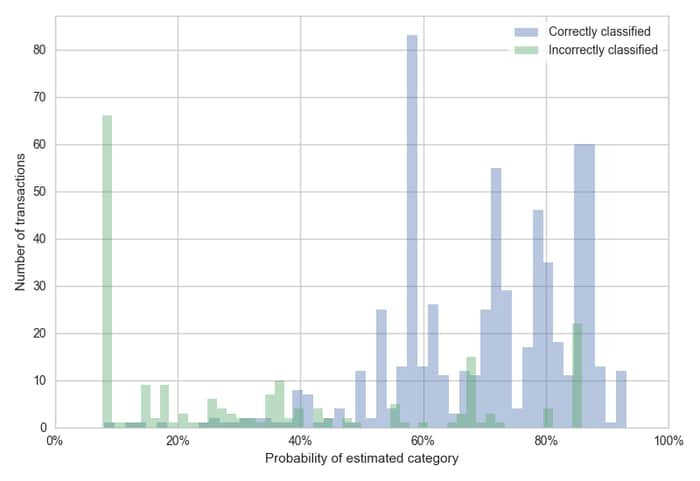
Machine Learning project, we need data feed samples -
Banks statement "descriptions" and prediction
Machine Learning project, we need data feed samples -
Banks statement "descriptions" and prediction

you might like http://api.reimaginebanking.com/
it's a huge mock data api from capital one
Wow, thanks so much. .... Who wants to join us? ........ We have the code model. We have the huge dataset. I even have the full solution design, with tech specs.
We have a fully operational SaaS that can leverage this via RESTful services. We should be able to attack a huge industry with 30 million SMB customers.
We have a proven history of building highly scaleable systems with a micro services model and unlimited volumn processing.
Contact me gator8899 @ yahoo .com
There was an OK accounting ML classification tutorial available over the last few years but I am struggling to find it. I think it might have had a similar dataset to what you are after.
It was from the winners of a Kaggle (or similar) competition I think and was to be used for schools or sport clubs. Anyway, that might help you find it, but I will let you know if I come across it.
Thanks - We are currently developing the "description" prediction when you look at bank statements there can be 30,000 different strings, with a combination of english words and some abreviations, a few codes. Once we have this operating at a high percentage this enables our application to do debit/credit general ledger posting 20% by human 80% by bot.
Sounds interesting!
I had no luck finding that dataset sorry.
I think the system design also can make or break its usefulness. For example, Xero's design of incorporating a rule based approach (where the user sets the rules); some minor ML in smart suggestions; and some automation does allow for at least 80% of it to be automated for the average business. I assume they are also training a ML with the data from the allocations that they may release one day (if not, they should be).
In fact I think the rule based system works quite well because businesses tend to use mainly the same suppliers so once you set the rule it is automated even though it has no ML.
Due to this I would incorporate both your pre trained model and also do some quick training on the historical data of the specific business if possible which should be weighted higher because then it would allow for categorisation specific to that business.
A different approach seems to be starting to be used by some banks, like CBA in Australia who also automate categorisation for use in their apps (https://www.commbank.com.au/digital-banking/spend-tracker-insights.html). I am guessing their categorisation is based on just what industry the merchants business is in rather then training a model on each specific transaction description.
Anyway, I look forward to following your progress and all the best.
I did find a pdf on the design for the system. Expense trackers have an advantage, as they consume metadata when the vendor service is presenting the charge. That metadata is consumed and lost. Sadly we get only the description field of the charge in the bank statement. Fortunately we have a working model and working code that has a success rate of 78%. While this success rate is only with a small data set. Over time if we feed larger data sets into this model it gets smarter. Our service is NOT accounting software facing the business owner like Xero and Quickbooks. Our system completely REPLACES those products. Why should a small business owner learn debits and credits and chart of accounts? Our system eliminates all that required knowledge. Business accounting on FULL autopilot.