**$40,000/mo Selling Multipurpose Mount for Tech Devices — Inspired by Octopus**
$40,000/mo Selling Multipurpose Mount for Tech Devices — Inspired by Octopus
Hi everyone, Dean from Sumo. We recently started the Founder Spotlight series where I interview successful small business owners to learn more from their entrepreneurial journey.
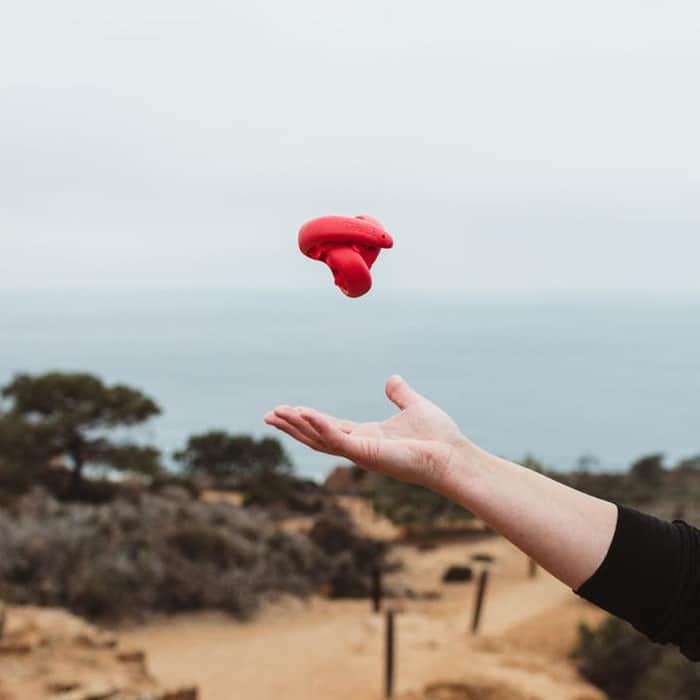
Today, we have Hans Dose from Tenikle. Tenikle is a tech accessory to mount all your tech — phones, tablets, and cameras — anywhere. In Hans’ words, it’s a Swiss army knife of tech accessories.
Let’s kickstart the interview with some stats.
- Product: Multipurpose mount for tech devices
- Founded: 2017
- Location: San Diego, California
- Revenue: Avg. $40,000+/mo
- Profit: Prefer to keep confidential
- Founders: 1
- Employees: 3
. . .
Where did you get your business idea?
I would go on hikes with my fiance, and we’d always forget to bring a tripod or something to take pictures. We’d then prop up our phone against the rock or a tree, trying to take a picture. Because of that, I always had an idea for a mechanism that could attach all sorts of accessories, like battery power, lenses, clips, mounts, wallets, etc.
Then, one day I got pulled over and got a ticket from a cop for looking at my phone. In fear of getting a future ticket, I went to a major tech store to buy a car mount. As I was searching to pick out the perfect one, I became disappointed that they were all the same big, boring, black mount and only did one thing!
That was when the idea hit me. I thought it'd be kind of cool to merge the two (tripod and car mount) together so that I would never forget my tripod anymore, and also have my car mount.
I grew up surfing and always naturally inspired by the ocean. So I’d always look at octopus and starfish. I thought it was really unique how they're able to grab and hold onto things almost anywhere easily.
Inspired by that, I kind of copied the design of the octopus. It's funny that we always boast that we patented the octopus because it's sort of what we did. After making the prototype, I realized that it does way more than those original two things that I tried to have it do — grab and hold onto things — which is fantastic and kind of fun.
. . .
Could you walk us through the process of prototyping and developing your product?
Yea. So at first, it was difficult because no one person can go make it for you. If they do, they're going to control a huge part of your business. I thought there was something really special to this, so I wanted to have as much of a control over the business.
I also wanted it to be my college experience. Instead of going to school to get an MBA, I decided to start a business. What's a better way to do it than jump in and learn? So I started by learning how to do CAD design. It was really about drawing the prototype out on 2D, making some designs of what it could look like, and then going in and 3D designing it.
Because the prototype is flexible, it needed to have different materials for different parts. So I would only 3D print the actual mold itself instead of the prototype. Then, I would go to art stores, buy some art silicone, and makes it in the garage.
It was really a full DIY project in the garage, with all these vacuum chambers, and the gassing material. It was really fun, especially when I got into the science of it.
That was the early stage of coming up with the actual product. It's one thing to make a prototype, but another to take it to mass production. It required a lot more engineering. So once I had a prototype, I started taking it to manufacturers in San Diego, got some quotes in, and tried to figure out how to manufacture it.
I started working with a manufacturer on that, and then the rest was about starting to market and sell it.
Overall, the prototyping and engineering of the product was very much DIY. Put your head down, just do it, and keep going. I’ve failed a lot. I came up with a lot of lousy prototypes. But eventually I got one that worked, and that’s when I realized: “Okay, I can make this thing work!”
. . .
How did you launch your business and get your first customer?
I started with crowdfunding, mainly through Kickstarter and Indiegogo.
Due to the nature of the actual product, I couldn't really show a good prototype without getting some production tooling done beforehand. There’s a lot of mechanics to the nature of the actual suction cups that needed to work correctly in the first round.
So I went and got a business loan ahead of time to purchase the molds for the crowdfunding campaign. Which was a big gamble and a huge risk. But it forced me to make sure that the Kickstarter and Indiegogo campaigns work because I needed them to now. I'm in debt with these molds, and I've got to pay it back somehow. So the biggest focus for me during the crowdfunding campaign was to make a really compelling video to promote the product.
Everyone on Kickstarter kind of does the same video formula:
- Introduces themselves.
- Talk about their mission.
- Say what they do.
I really wanted the product to speak for itself. I wanted to show the versatility of Tenikle where it does so many things and kind of overwhelmed the customer in a way.
So instead of talking about myself too much, I showed the product in action. Then, there was a short section in the Kickstarter page where it's like “Hi, I'm the inventor. And this is Tenikle.” I didn't want to talk too much about me. I wanted it to be about the product.
Sidenote from Dean: You can check out Han’s Tenikle Kickstarter page here.
That ended up doing really well. People were very excited about the product because I already had the molds done. That means I could promise that the product will get made and delivered on time.
A lot of times, creators on these crowdfunding campaigns don't realize that they're going to hit all these engineering speed bumps along the way. So getting the molds done ahead of time is helpful.
Yes, it's a lot more risky upfront, but it allowed me to promise to all the Kickstarter and Indiegogo backers that, “Hey, we're ready to go on this. All I need is your support to get this launched and to pay back for the molds that we already produced. Then we can get it going.”
It turned out to be a great success. Tenikle got more than 710% funded on both Kickstarter and Indiegogo at $107k and $126k respectively.
It was a very backward way of doing it compared to most Kickstarter campaigns. But that's how I did it, and it ended up working. It probably wouldn't work 100% of the time, but it worked out this time.
Besides that, our crowdfunding campaign is probably one of the fastest to ship the product. We launched in August 2017, and we shipped everything before the December 2017 holidays. So we got all of our orders out in time for the holidays, and that was pretty cool to be able to do that in that short of a time.
. . .
Since launch, what has worked for you to attract and retain customers?
Good question. Sometimes I don't know, but I think the strongest so far has been a really good compelling video and using that across as many platforms as possible. Facebook and Instagram marketing has been our primary focus. We've also done YouTube ads, but we took a break from that while developing Tenikle 2. We're going to jump back into some more video soon.
Everyone says content is king and video content is the new leader, and that's absolutely true. It’s about making a short, concise but clear video on what the product is, at the same time, not making it too salesy.
One of our most successful videos was a video that says “This is Not a Fidget Spinner.” It was coming off of the trend of fidget spinners. It stuck really firmly in the trend and we kind of use that as a plug in the first couple of seconds to grab the attention.
Sidenote from Dean: Here is the viral Facebook video mentioned above
It’s also important to NOT make the video too infomercial-ly. You have to add some more value to keep people watching your videos. Telling people about your product isn’t going to add enough value, so sometimes it needs to have a little bit of humor and be light on product promotion.
With that, you're explaining and educating the viewers about your product. They may or may not buy the first time around, but you can always retarget them in the future and start winning them as a customer.
Once you have them as a customer, you can start retaining them better using emails and other outlets. But I'd say the biggest one for us is video ads.
. . .
How is the business doing now and what does the future look like?
It’s doing great. For marketing, we’re looking into investing more in content marketing especially videos because it has been what works for us. We also launched Tenikle 2, an upgraded version of the original Tenikle we launched on Kickstarter and Indiegogo based on user feedback.
We went back to the drawing board to develop the product using a different mechanism and materials. It’s way more flexible, and the suction works better compared to the original Tenikle.
The original Tenikle got 3.6 stars out of 5 in reviews, while Tenikle 2 got 4+ stars so far.
Sidenote from Dean: Hans has a video about Tenikle 2 here.
. . .
What has been the most influential books, podcasts, or resources to you?
Business Rockstars
To me, the podcast leans toward more of emotional-based storytelling. I started listening to the Business Rockstars podcast a while ago, and it was really helpful to get into the mindset of starting and running a business.
Mixergy by Andrew Warner
I really like this podcast because it's packed full of real-world tools and insights. I did run into Andrew down here in San Diego. He was grabbing a coffee, and I approached him to say hello and then chatted a bit about business. To me, he is a super nice guy.
SCORE
SCORE is another excellent resource that a lot of people don't know about. It’s a platform that provides business guidance and mentorship programs (for free) funded by the government. There are a lot of retired businessmen, entrepreneurs, and even sales brokers across pretty much any industry — who want to help others.
I’ve been able to find a few people here in San Diego. Two guys in particular have been really helpful and guided me through some of the things because they’ve been there and done that.
. . .
Advice for entrepreneurs who want to get started or just starting out?
One — Know your numbers and track them every month
Make an expense sheet every month and track exactly what you're spending your money on and where the return is. I say it because it was the one thing I did not do upfront, and it put me in a bit of a pinch down the line.
Ask yourself what you’re spending on and if it’s helping your business. If it's not totally helping your business, it’s time to let it go. That’s the real-hardcore, old school way of doing things too.
I think a lot of times younger entrepreneurs get caught up in the whole startup-style business model of raising money, gaining meaningless traction, and chasing shiny tactics.
When you're in business and you're moving, there's a lot of money coming in and out. For me, it’s hard to track it all sometimes. But all you really need to do is sit down and go through your balance sheet.
I wish someone would've told me that. In business, it's one of those things you learn the hard way. But yeah, that is really, really important.
Two — Keep going
The number one reason why any business will fail is that it got too hard for somebody. I’d say if you’re stubborn enough to not give up and keep going when it’s hard, you will see the light at the end of the tunnel.
Even when it's easy and things are moving right, when you feel like you can settle down, there's always something around the corner that you might not be aware of. It’s critical to be on top of everything and not stop. No matter if it's hard or easy, you can't let it rest.
