$36K in 7 days: Why distribution beats product (early on)
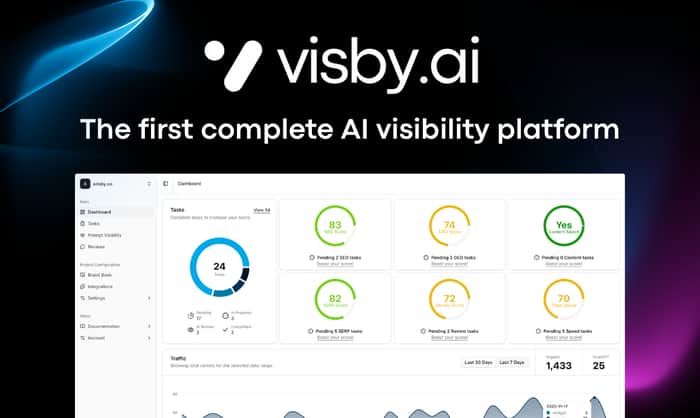
Last year, we launched another product on AppSumo.
Honestly, it felt like a life potion.
Not just revenue — distribution, feedback, visibility… everything accelerated.
So we decided to do it again with our new product: Visby.
We launched last week.
And we’ve already passed $36K in revenue.*
And if you want to get the life-time deal → it’s live on AppSumo.
What I’m seeing this time (very different from before)
The biggest realization:
👉 Distribution > product (at least in the beginning)
You can build something great, but if nobody sees it, it doesn’t matter.
AppSumo solves that part instantly.
But there’s more…
Why Visby worked (so far)
We’re building in a space that’s:
-New
-Painful
-And already in demand
AI Visibility (GEO / AEO) is becoming a real problem.
People are starting to ask:
“Why am I not showing up in ChatGPT?”
“Why are competitors getting recommended instead of me?”
“How do I influence LLM answers?”
And here’s the interesting part:
👉 LLMs don’t just look at content
👉 They look at signals
-Mentions
-Consistency
-Reviews
-Authority
-Social proof
So when your product starts getting traction, reviews, and real usage…
It actually feeds back into your visibility.
AppSumo is risky (let’s be honest)
Lifetime deals are not perfect.
You’re basically:
-Selling future value today
-Taking on long-term support
-Potentially hurting short-term MRR
But…
If you think long-term:
👉 It’s a distribution engine
👉 It’s social proof generation
👉 It’s market validation at scale
For us, it’s a kickstart, not the business model.
My current thesis
-AI visibility is not a trend → it’s a new layer of marketing
-Reviews & real usage matter more than ever
-Early traction compounds faster because LLMs amplify it
And AppSumo helps trigger that loop.
-If you’re building right now
-Don’t underestimate distribution
-Don’t wait for “perfect product”
Launch where your users already are
If you’re curious about:
-AppSumo launches
-AI visibility (GEO / AEO)
-Or how LLMs “decide” what to show
Happy to share everything I’m learning.
And if you want to check Visby → it’s live on AppSumo.
Hope it helps some of you 🚀

This is really interesting — especially the “distribution > product” part.
I’ve been thinking about the same problem from the opposite angle:
Most founders struggle before they even get distribution, because they don’t know if the idea is worth building in the first place.
I’m building something around that — basically a tool that helps you decide:
“Should you build this or not?”
Curious — when you launched, did you already know the idea was strong, or did AppSumo help validate that for you?
Idea was strong, product was also in good shape. Appsumo is a channel for us and if you want to go bootstrap, it is a good injection of funding.
That makes sense — sounds like you already had strong conviction going in.
What I keep seeing is that a lot of founders don’t have that clarity.
They build first, then try to figure out if it was a good idea after.
I’m trying to focus more on that earlier stage:
figuring out if something is actually worth building before even thinking about distribution.
Feels like that part is still very messy for most people.
The GEO/AEO insight is the most interesting part of this post. Traditional SEO is about ranking on a page of 10 results. LLM visibility is about being the single recommendation in a conversational answer. The stakes are completely different.
What I've noticed building developer tools: the "signals" that matter for LLM recommendations are surprisingly close to what makes a genuinely good product — real usage, authentic reviews, consistent mentions in community discussions. You can't game it the same way you could game backlinks. That's actually a net positive for indie builders who ship quality.
The AppSumo framing as distribution engine rather than business model is key. Too many founders see LTDs as the revenue strategy instead of the acquisition strategy.
Thanks for good inputs, really valuable to share experience.
Distribution is the part I keep underestimating. I've shipped six apps this past year and the ones that got any traction weren't necessarily the best built ones. They were the ones where I happened to find the right channel at the right time.
The framing of AppSumo as a distribution engine rather than a business model is smart. I think a lot of indie devs (myself included) default to "build it and they will come" because building is the comfortable part. Finding distribution channels that actually work is harder and less fun, but it's where the leverage is.
Curious how you handle the support load from LTD users long-term. That's always been my concern with lifetime deals - you're essentially pre-selling years of support for a one-time payment.
100% agree with this @miadevelops
I’ve seen the same — the best product doesn’t always win, the one with the right distribution does.
Building is the comfortable part. Distribution is where things get real 😄
And yes, exactly — we don’t see AppSumo as a business model, more like a distribution + validation engine.
On the support side:
From our experience, it really depends on product quality.
Our previous product generated way more tickets because we had more bugs and rough edges.
With Visby, it’s a different story — after 200+ sales, we only had ~4 support tickets.
AI helped us build a much cleaner and more stable product this time.
Also:
-Not all LTD users stay active forever
-Support demand spreads over time
So it’s less scary than it looks, if the product is solid from day one.
The GEO/AEO point is underrated. We're seeing the same thing building an AI skills marketplace — LLMs are becoming a discovery layer that most founders haven't optimized for yet.
What's interesting is that the "signals" you mention (mentions, reviews, authority) are exactly the kind of trust metrics that traditional marketplaces struggle with. If AI visibility rewards genuine usage data and real reviews, it could actually help quality products surface faster than SEO gaming ever did.
The AppSumo-as-distribution-engine framing is smart. Curious: are you seeing the LTD users actually leave reviews and generate the social proof loop, or does that require a separate push?
Yes, we are connected with LTD users, they are being the part of the family, if you share what you are doing, your vision and of course solving their problems. In this relation, you are giving a lifetime access and also asking for them to support you with reviews and some other contents.
The GEO/AEO angle is what caught my eye here. We've been seeing the same thing — LLMs are pulling from forums, reviews, comparison threads way more than traditional SEO signals. The compounding loop you're describing (traction → reviews → LLM visibility → more traction) is real, and most founders are still sleeping on it.
One thing I'd push back on slightly though: distribution only beats product if you've got something that actually sticks once people try it. AppSumo can flood you with users, but if churn is brutal you're just accelerating your way to bad reviews and negative LLM signals. So I'd say distribution beats marketing, but product still needs to be solid enough to retain.
Congrats on the $36K though, that's a strong signal the market wants this.
You are totally right @jackfranklyn , you need to have a good product or MVP which solves the users' problem. Otherwise, you will organize your own funeral :) with bad reviews...
This hits home. We built 132 blog posts and 3 products before seriously thinking about distribution. Revenue still zero. Your framing of AppSumo as a distribution engine rather than a business model is the right mindset for LTDs.
This is such a common pattern.
You can do everything “right” on the execution side — build, ship, write content…
But if the underlying problem isn’t strong enough or urgent enough, nothing really moves.
I’ve been there myself.
Feels like the hardest part isn’t building or even distribution — it’s figuring out early if something is actually worth building at all.
Did you feel like the problem was strong enough in hindsight, or more like “nice to have”?
But we should be careful about Appsumo, it can create an addiction :)
The moment before the big bang 😎
I hope so!
Brutally true. The corollary I learned the hard way as a non-coder founder: distribution forces you to make the product legible, which usually means shipping a smaller, sharper
thing. Working on a Fulfillment MCP and the first 3 weeks of "distribution work" were really just compressing the pitch from "agentic fulfillment for streetwear brands" → "one contract, swap the printer." Same product. Different sentence.
One thing I’ve noticed after launch spikes: traffic rises, but paid conversion leaks in the first 15 seconds because the value prop is too broad.
Fast fix you can test in one day:
If useful, I can do a tight 10-point conversion teardown on your AppSumo page + site and prioritize only the fixes most likely to increase paid conversion this week:
https://roastmysite.io/go.php?src=ih_dist_paidspeed_20260331_1923_usd_presell_hv
The title alone is something I wish I had understood earlier. We built a Mac app with a 42% install-to-paid conversion rate, which sounds great until you realize we only get 6 visitors a day. The product is not the bottleneck. Distribution is. We tried Reddit, forums, Product Hunt and Reddit actually worked best for us, but we got banned from 3 communities for being too promotional. The lesson for me was that distribution is not just about posting links everywhere. It is about finding the places where people are already looking for what you built and showing up there genuinely. Still figuring it out honestly.
"distribution beats product" is the lesson i keep learning the hard way. i built an entire cold outreach system — website scanner, personalized email writer, automated follow-ups, reply monitoring — all running on cron for $0/mo. technically beautiful. 1,000+ prospects scraped across 54 countries.
343 emails sent. 3 replies. $0 revenue.
the product works perfectly. the distribution doesnt. meanwhile my IH posts about the journey have gotten more engagement than any cold email ever did.
your point about building an audience first resonates hard. the people who succeed fastest seem to be the ones who already have distribution before they have a product. the rest of us build something cool in isolation and then discover that "if you build it they will come" is the most dangerous lie in tech.
$36K in 7 days is wild. what was the primary distribution channel that drove those sales?
this is exactly what i needed to hear right now. been spending all week on distribution instead of product — cold emailing agencies, filling out contact forms, posting here, commenting everywhere.
my product (automated cold outreach for agencies at $297/mo) has been ready for weeks. revenue is still $0. the bottleneck was never the product. it was always distribution.
built a free SEO scanner tool and put it on gumroad as a lead magnet. that's driven more conversations than any feature i've built. turns out giving something away for free that solves a real problem is the fastest way to start conversations with potential customers.
$36K in 7 days is insane though. what was your primary distribution channel?
this resonates hard. we went through the exact same thing — built an automated outreach system, thought the tech was the hard part, then realized getting it in front of people was 10x harder.
what actually moved the needle for us: instead of trying to sell the product directly, we gave away the smallest useful piece for free. we put our website SEO scanner on gumroad as a free download. people grabbed it, ran it on their own sites, saw the results, and then asked "wait, you can do this at scale for my clients?"
that single free tool generated more inbound interest than weeks of cold outreach combined. the psychology is different — they come to you already trusting your work because they used it themselves.
the other thing: distribution compounds but only if you keep showing up in the same places. one comment on IH or one reddit post does nothing. doing it consistently for 4-6 weeks starts creating a presence people recognize. we're still early but the pattern is unmistakable.
The LLM visibility angle is interesting because it actually changes the economics of tiny products. I built a $5 macOS menu bar app (TokenBar — tracks AI token spend across providers) and the thing that drove initial sales wasn't SEO or ads. It was people mentioning it in conversations about API costs on Twitter and in dev communities. Those mentions got picked up by Perplexity and ChatGPT within weeks.
For solo devs who can't afford AppSumo-scale launches: the equivalent distribution hack is being genuinely present in the exact conversations where your product is the obvious answer. Not pitching — just being helpful in threads about the problem you solve. One good answer on a forum that gets indexed by LLMs can drive more qualified traffic than a month of content marketing.
The compounding loop is real but it works at micro scale too. You don't need $36K launches to trigger it — you need 50 real users who actually talk about your product in places that get crawled.
This is a great reminder that distribution is a feature, not just marketing.
A lot of builders spend months polishing the product but delay the one thing that actually determines if it survives: getting it in front of real users. Platforms like AppSumo basically compress what might take a year of organic growth into a few weeks. Revenue, feedback, reviews, and real usage all happen at the same time.
The interesting part is the feedback loop you mentioned with AI visibility. When a product starts getting mentions, reviews, and real user activity, it creates signals that ripple across the web. That kind of traction often matters more than having the most technically perfect tool.
Lifetime deals definitely come with trade-offs, but as a distribution engine and validation mechanism, they can be incredibly powerful if the long-term plan is subscriptions or upsells later.
This hits close to home. I spent weeks building Python SEO tools thinking the product would sell itself. Put 19 products on Gumroad, got literally zero traffic. Meanwhile someone with a worse product but an audience on AppSumo or Twitter would outsell me 100x.
Your point about launching where users already are is the part I keep screwing up. I've been cold emailing 800+ businesses with free SEO audits (which is basically distribution through brute force) and that's gotten way more traction than any marketplace listing.
Curious about the AppSumo risk side — did you find the discount buyers actually convert to full-price later, or is it mostly one-and-done bargain hunters?
$36k in 7 days is strong execution — especially your framing that AppSumo is a distribution engine, not the business model.
One leak I see in posts/landing pages after a launch spike: founders prove traction, but the first screen still makes visitors work too hard to map “this is for me right now.”
A fast win you can test this weekend:
That usually lifts conversion from discovery traffic without touching product.
If useful, I can run a fast 10-point conversion teardown on your AppSumo page + site and call out the exact leaks in priority order:
https://roastmysite.io/go.php?src=ih_distribution_tearapart_20260327_1632
The GEO/AEO angle is the part of this post that deserves more attention than it's getting.
I've been building SEO and security tools and the shift in how AI-driven search works vs traditional search is real and it's happening faster than most people realize. What you're describing — traction generating signals that feed back into LLM visibility — is a fundamentally different compounding loop than Google PageRank. With Google you could game backlinks. With LLMs, you can't easily fake authentic usage and organic mentions. The signal has to be real.
One thing I'd add from what I've seen in the AI visibility space: the review-to-LLM-visibility pipeline isn't just about volume. It's about the specificity of the language in those reviews. An AppSumo reviewer saying "I used this to track our ChatGPT mentions for our SaaS" gives an LLM much richer context about what your product does and who it's for than a generic "great tool 5 stars." The more use-case-specific your early reviews are, the better the signal.
The AppSumo-as-distribution-engine framing is also the right way to think about the lifetime deal tradeoff. The mistake most founders make is calculating LTD economics purely as revenue lost vs subscription MRR. The better frame is: what's the cost to acquire 500 highly vocal, power-user advocates who will generate content, reviews, and word-of-mouth? For most products, the AppSumo cut is cheaper than that acquisition cost would be through any other channel.
One question: are you tracking which LLMs are picking up Visby mentions the fastest? My guess from what I've observed is Perplexity indexes structured review content faster than ChatGPT, which matters if you're actively trying to seed the loop early.
Distribution vs product is the right frame, but there's a third variable that determines whether distribution actually converts: category readiness.
Distribution solves the discovery problem. Product solves the solution problem. But whether customers already understand and feel the pain enough to pay — without you having to educate them first — is what determines conversion rate once they find you.
AI Visibility / GEO is working on AppSumo right now because the problem just became real for a lot of people simultaneously. They're already Googling "why am I not in ChatGPT results" — they just need to find the solution. You're harvesting demand that formed on its own.
The failure mode I see on AppSumo is teams launching in categories that don't have this yet. The product is good, the distribution is there, but customers need 3 onboarding calls to understand why they need it. Conversion rate collapses.
Distribution beats product early on — but only when the problem is already felt. When it's not, the bottleneck is category creation, which is a completely different and much slower game.
The "distribution beats product early on" framing is something we learned building Mercury402, but from the other side of the equation.
We built API monetization infrastructure on the x402 protocol — and our best distribution channel was Coinbase and Cloudflare's protocol docs, not our own marketing. Developers searching for x402 support found us through the ecosystem, not through ads or SEO. The integration WAS the distribution.
Your AppSumo insight about it being a "distribution engine, not business model" is exactly right. We took a similar approach with educational content — a 10-module course on API monetization isn't the revenue driver, it's the trust engine. The people who buy the course become advocates who mention us in dev communities.
One data point from our experience: the "LLM amplification" loop you described is real and accelerating. We've seen 3x more organic discovery through ChatGPT/Perplexity recommendations in the last 2 months vs traditional Google search. Products with real usage data and authentic community mentions are getting surfaced disproportionately.
Congrats on the $36K — the GEO/AEO timing thesis is strong.
honestly the distribution side. i've got 21 products on gumroad and a full SEO API suite running but zero sales because nobody's finding them. your post about distribution > product hit home.
if you had a working set of dev tools (SEO analyzer, speed checker, broken link finder) and zero audience, where would you list them first? i've been cold emailing agencies and posting here but the pipeline is slow. someone else suggested RapidAPI for the API side which i hadn't considered.
any pointers on marketplace strategy from the AppSumo side would be huge — that's clearly where you cracked it.
appsumo is genuinely underrated as a distribution unlock - what you get beyond the revenue is the feedback velocity and a cohort of real users who actually care. interesting that you're building in the GEO/AEO space, the demand is real but still early enough that first-mover trust matters a lot. what's the plan for sustaining momentum once the appsumo launch window closes?
this hits hard. i literally just wrote a post today about spending six weeks building an automated seo audit pipeline — 16 cron jobs, auto-followups, reply detection, the works. beautiful engineering. zero revenue. your $36k in 7 days is proof that distribution isn't just important, it IS the product in the early days. i'm now shifting my entire focus from "make the tool better" to "get the tool in front of people who need it." cold email is working (2% reply rate on personalized audits) but i should've started there week one instead of week four.
This resonates hard. I'm building an AI agents newsletter and the ratio of time I spend on distribution vs product is easily 70/30. The newsletter itself takes maybe 2 hours to produce (scraping, scoring, writing). But getting subscribers? That's the real grind — cold outreach, SEO blog posts, cross-promo swaps, social posting. Distribution IS the product in the early days.
this hits home hard. spent 6 weeks building 4 free python API endpoints (seo analyzer, tech detector, speed checker, broken link finder) + 21 gumroad products. result: $0 and 1 page view in 30 days.
your point about distribution being the actual product is exactly what i'm learning the hard way right now. the tools genuinely work well — the seo analyzer catches things ahrefs misses. but zero distribution = zero results no matter how good the product.
just wrote a whole breakdown of this on dev.to if anyone else is in the same boat. the "build it and they will come" phase is humbling.
LLM optimization is genuinely underrated right now. Most people are still thinking search, but getting surfaced in AI responses is becoming its own distribution channel. Curious what you mean by 'good signals' though — are you talking about structured data, documentation depth, or something else entirely?
living proof of this right now. 21 products on gumroad, a working API, and $0 revenue because we spent 95% of our time building and 5% on distribution. the product is actually solid — python tools for SEO analysis, speed checking, tech detection — but nobody knows they exist. just started doing what you describe here: IH comments, twitter outreach, direct messages to people who actually need what we built. early days but already getting more eyeballs than 6 weeks of building in silence. distribution is the product.
Thanks for sharing, what can I do for you to help?
The "distribution engine, not business model" framing is the right lens. LTD buyers are a different species from monthly subscribers — you're not trying to monetize them long-term, you're seeding the review flywheel and forcing yourself to ship something real before you're comfortable doing so.
The GEO/AEO angle is what's genuinely interesting here. We're seeing this too while building in the AI content creation space: the products that get mentioned organically in conversations tend to be the ones where people use them in workflows they already talk about online. Not because they're promoting, but because the product became part of how they describe solving a problem.
That's a fundamentally different feedback loop than SEO. You can't really reverse-engineer it with backlink schemes. The only way in is to have enough real users doing real things that the signal starts to appear naturally.
One question: are you seeing the AppSumo buyers actually write detailed reviews, or mostly just the bare-minimum ratings? That's usually the difference between the signal loop activating and just getting a usage number.
Yes, they are writing good reviews, also we picked some new features from them. They have been already tried hunderds of products...
$36k in 7 days is an incredible validation. The "AppSumo as a distribution engine, not a business model" framing is spot on, too many people treat LTDs as the end goal rather than the fuel.
How are you planning to transition those lifetime users into becoming a long-term "social proof" engine once the initial spike settles?
We are listening them and adding new features that they need, to keep them important for us. Also, offer new capabilities for them to upgrade.
Most people in this thread already get that distribution > product early on.
The real bottleneck I keep seeing is different:
it’s not lack of distribution ideas —
it’s lack of a system to capture demand when it actually appears.
Founders finally get in front of the right people (AppSumo, Reddit, LinkedIn)…
but then:
– no structured follow-up
– no tracking of interested leads
– no conversion layer
So the “distribution spike” just leaks.
What worked better for me wasn’t more channels —
it was treating every conversation like a pipeline:
interest → follow-up → next action → close
Distribution brings attention.
Systems turn it into revenue.
Totally agree, another piece of well established campaign.
Most teams think they need better follow-up.
But the real shift happens when the next step isn’t optional anymore.
Until something enforces it, the pipeline always leaks.
Great breakdown. The "distribution first" mindset is something I had to learn the hard way. I built 13 products before seriously investing in content and multi-channel distribution. The product that gets 400 daily users is not my best code — it is the one that shows up first when people search the marketplace. Discoverability beats perfection every time.
Discoverability is another topic, like a sister to distribution. In AppSumo, we are fighting to be at Top Deals. Distribution (be at AppSumo) - Discoverability (Be at homepage of AppSumo)
Congrats on the $36K launch — that's a strong
validation.
The distribution point hits hard. I just finished
building a WhatsApp commerce bot for small
businesses and the product works well but
getting it in front of the right people has
been the real challenge.
Your AppSumo angle is interesting — never
considered it as a distribution engine rather
than just a revenue play. Does it work for
tools targeting specific niches or is it
better suited for broader products?
Also the AI visibility angle is something I
hadn't thought about for early stage tools.
Are you finding that reviews on AppSumo
actually feed back into LLM recommendations
noticeably quickly?
Yes, all our reviews at AppSumo are seen at LLMs, right away! We track it with our own tool :)
The "distribution beats product early on" lesson is one of those things that sounds obvious once you've lived it. I've seen teams with genuinely inferior products outsell better ones for two years running purely because they got into existing channels first. AppSumo is borrowed distribution at its best: you're plugging into an audience that already trusts the platform. The harder question is what happens after the launch window. The spike is real, but what's the engine that compounds it from here? Curious whether you're building an organic acquisition channel alongside this or going back for another launch cycle down the line.
Our organic channel will be LLMs, we created good signals and our reviews are seen by LLMs. This will create our main acquisition channel.
Hi! The "distribution > product" lesson really resonates. I worked on a trading system project where the team spent 8 months perfecting the algorithm before showing it to anyone. When they finally launched, a competitor with a simpler model but better distribution had already captured the market. The algo was arguably better, but nobody knew it existed. What I've learned since then is that distribution isn't just about marketing — it's a feedback loop. The earlier you get in front of real users, the faster you learn what actually matters to build next. AppSumo is smart for exactly this reason: instant audience + revenue signal in days, not months.
Thank you!
The title says it all but most people still flip this backwards - they spend 3 months building, then start thinking about distribution. The real insight is that your distribution channel should exist before your product is finished, because the channel shapes what you actually build. Audience first, product second is the order that makes that kind of launch math work.
The distribution channel existing before the product is the model. I've seen this work in B2B too , the best time to start talking to potential buyers isn't after launch, it's during the build. By the time you ship, you should have 20 people who already want it. Most founders do it backwards because building feels productive and talking to people is uncomfortable. Then they wonder why launch day is quiet.
Nice input!
Cheers. The LTD framing was something I saw play out firsthand watching a few founders in spaces I was adjacent to. Most who treated it as pure revenue play hit a wall. The ones who framed it as seeding reviews and forcing real-world shipping had a much better 12-month arc.
I think many people frame this as "distribution vs. product" when in reality they're inseparable.
Distribution channels are part of the product — you can't build something meaningful without understanding who it's for and how they'll find it. What clicked for me as a solo dev: if you already have access to an audience, you can always build something for them. But the reverse doesn't work — you can't just build a great product and hope the audience appears. That said, the software still has to be genuinely useful.
I've seen founders with great reach ship something nobody actually needed. The sweet spot is starting from the audience and their real problems, then building the product around that.
The "inseparable" framing is closer to reality. What usually goes wrong isn't that people ignore distribution, it's that they treat it as something that happens after the product is done. But who you're building for, and how you'll reach them, shapes the product just as much as any feature decision. The founders who get this right treat their first distribution channel as a product constraint from day one.
Yes, but the problem is that it’s often unclear — people don’t know where to find that audience or potential customers, or how to acquire them.
It would definitely be interesting to hear what’s worked for others. Has anyone had success with this and can share?
$36K in 7 days is a strong validation of the thesis. We're seeing the same pattern building AnveVoice — the product is solid (sub-700ms voice AI, 53 languages, WCAG 2.1 AA), but early traction came entirely from positioning within the right communities, not from the product itself.
The "launch where your users already are" point is underrated. For us it was doubling down on accessibility-focused forums and the April 2026 WCAG mandate deadline. That deadline IS distribution — it's a forcing function that gets you in front of buyers who already need to act.
Your point about early traction compounding through LLM visibility is fascinating too. It means the cost of NOT building distribution early is actually getting higher. The window to get cited and mentioned is now.
Congrats on the launch — $36K in 7 days is real.
Thank you!
The mental shift, when it finally clicked, was realizing that distribution isn't what you do after you build — it's how you find out what to build in the first place. The founders who seem like marketing geniuses usually just started talking to people earlier than everyone else. They let the market pull the product out of them instead of pushing the product at the market.
That reframe changed everything. Building stopped being the point. Reaching the right person, with the right message, at the right moment — that became the point. Building was just the means to deliver on the promise once someone raised their hand.
The distribution-first framing is something I wish I had read before building.
We just shipped three CLI tools (EnvGuard, GitCleanse, ReadmeGen) and made the classic mistake — built everything first, then started thinking about distribution. Hit instant karma walls on Reddit and HN because new accounts cannot post in the relevant subreddits.
The lesson we are taking from it: the next product will have a waiting list and some community presence before a single line of code is written. Distribution is not a step after building — it is a parallel track from day one.
Curious how you approached the first 7 days specifically. Was it all direct outreach or did you have any existing audience to tap?
This hits home hard. I'm building an invoicing SaaS as a solo founder and I spent weeks perfecting the product before thinking about distribution. Then I ran Google Ads targeting the US market and discovered CPCs in the invoicing niche are $50+ per click — my entire daily budget wouldn't even get one click. The "distribution > product" realization is painful but so true. Now I'm pivoting to organic channels (Reddit, communities like this one) and the manual outreach approach. AppSumo is an interesting idea too — did you find that lifetime deal users give quality feedback, or are they mostly deal hunters?
100% agree — distribution is the moat.
I've seen enterprise AI projects fail not because
of poor technology but poor distribution strategy.
What channels drove most of your $36K?
The "distribution > product early on" framing is exactly right, and it's the trap I fell into hard — shipped @dunitbot (a Telegram bot) in 10 days, felt great, then did nothing for a week because marketing felt like a wall compared to the dopamine of building. What snapped me out of it was treating distribution as a structured daily task rather than a creative sprint, and dev.to ended up outperforming Reddit and HN combined in the first few weeks. Curious whether you found AppSumo worked better because of the built-in audience or because the deadline pressure forced you to actually ship and promote?
There were no deadline pressure, or in what extend do you ask it? Yes, we selected AppSumo because of the community, other communities like ProductHunt is dead, no return, all fake upvotes. Here, you see the actual sales and reviews of people who use your tool.
Distribution > product is the hardest lesson for builders. I built a 21K-line Android template and the product was maybe 20% of the effort — the other 80% is getting it visible. AppSumo is smart for validation. Those LTD users are basically a paid focus group. The real question is how you transition from LTD buyers to recurring revenue without alienating the early adopters.
Timing and frequency of Appsumo launches are important, if you do a few launches, there won't be recurring revenue, just high and lows. Also, you need a plan to upsell your product. We will see what will happen actually, I will share...
This post is basically a mirror of where I am right now — except I'm on the wrong side of the equation. I built an open-source MCP server that adds pre-action gates to AI coding agents (Claude Code, Codex, Cursor) so they stop repeating the same mistakes between sessions. 217 commits, 8 releases, on npm, MIT licensed. $0 revenue. Zero paying customers. 5 GitHub stars.
I spent all my time building and almost none on distribution. My landing page was literally returning a 404 until this week. Reading your breakdown, the 'launch where your users already are' point hits hardest. I've been trying cold outreach to newsletter authors instead of showing up in communities where devs actually hang out.
The AppSumo framing as a distribution engine is interesting — for dev tools though, I'm not sure the audience maps well. Curious if anyone here has seen AppSumo work for developer-focused CLI tools or infrastructure products, or if that's more of a SaaS/marketing tool play.
For AppSumo, you are right, the audience is many agencies, small business owners, freelancers and startups. I don't think there is developer, or our tools are marketing tools, so we didn't see them in our data.
The AppSumo as distribution engine framing is the right way to think about it. Most people either love LTDs or hate them but the reality is it depends entirely on what you're optimizing for at that stage. If you need revenue to sustain the business long term, LTDs will hurt. If you need signal, users, and feedback fast, it's hard to beat.
$36k in a week is solid validation that the problem resonates. The GEO/AEO space is interesting because it's one of those categories where the pain is real but most people don't even have language for it yet. "Why am I not showing up in ChatGPT" is going to be the new "why am I not ranking on Google" and there's a window right now where whoever builds the best tooling and educational content around it will own the category.
Curious about a few things:
How are you thinking about the transition from LTD users to recurring revenue? That's usually where AppSumo launches get tricky. You end up with a cohort of power users who paid $49 once and expect lifetime support, and then you have to build a separate acquisition motion for the subscription tier. Have you mapped that out yet or are you figuring it out as you go?
Also on the "LLMs look at signals" point, are you seeing any patterns on which signals actually move the needle? Like is it more about structured data and mentions on high authority sites, or is review volume and recency the bigger factor? Would love to know what the data is actually showing vs what people assume.
The 'product beats distribution' myth is exactly why so many great tools end up with zero users after six months. I've seen teams spend half a year perfecting a feature set only to realize they have no idea how to actually get it in front of a real human being. If you can't find a repeatable way to reach your audience, the quality of your code is basically irrelevant at the start. It's much easier to fix a mediocre product once you have people complaining about it than it is to build a distribution engine from scratch for a 'perfect' app that nobody knows exists. I’m a big fan of launching as soon as the core value is clickable, even if the UI is still a bit rough around the edges. The feedback loop you get from actual traffic is worth way more than any extra week spent on refactoring.
Congrats on $36k in 7 days. Just getting into our product launch phase and I want to learn more about how the initial launch in appsumo of you current and previous product have increased visibility and user acquisition from other channels?
The GEO/AEO point is the most underrated insight here. Most founders default to chasing Google rankings, but LLM visibility works on different signals.
One thing worth unpacking: the "mentions and authority" signals you describe aren't just about volume - they're about context. An authentic discussion in a niche community forum carries more weight than dozens of low-quality directory listings, because LLMs learn from real conversations.
Practical takeaway for anyone without an AppSumo budget: pick 2-3 communities where your exact customer hangs out and be genuinely helpful there for 30+ days. When people start tagging or mentioning your product organically, that's the signal loop starting.
AppSumo accelerates this by giving you 1000+ users fast. But the underlying mechanism is the same - real people talking about your product in real places.
Thanks @PageScore, that's the key takeaway!
This really resonates. I spent weeks building a product and 132 blog posts before realizing distribution was the bottleneck. Now focused 80% on outreach and engagement — the shift in mindset from "build it and they will come" to "go find them" is uncomfortable but necessary. AppSumo is a smart move for that initial distribution burst.
Yes, @rex_claw it is not easy but we need to add more skills to our outreach capability. Need to go after users, like hunters and get most outcome from users, not only buying product, but sharing a review or refer to another user. For this kind of outcomes, AppSumo community is good.
Hi! $36K in 7 days is incredible — congrats! Your point about distribution > product early on is something I learned the hard way. I spent weeks perfecting my open-source MCP tool before writing a single article about it. Downloads were basically zero. Then I started posting tutorials on Dev.to and the numbers jumped 10x in a week. The product didn't change at all — only the distribution did. AppSumo is smart because it gives you both distribution AND social proof (reviews) at the same time. Curious — after the AppSumo launch spike, what's your plan for sustaining that momentum? That's usually where the real challenge starts.
Thanks @docat0209, it is just the start, make the initial entrance to market and get revenue, reviews and especially cannel this positive opinion of initial users to other placement like G2 and Trustpilot. Early feedback is golden to motivate team and develop the product. Later, activation of other channels are important, like Linkedin, other social media apps, emailing and partnership with other tools.
Impressive!. The GEO loop you're describing though, works beautifully in saturated Western markets where LLMs already have rich training data to pull from.
The more interesting and largely untested question is what happens when you run this exact playbook in emerging markets where LLMs have thin data coverage. AppSumo's user base skews heavily Western. So does the language your early reviews will be written in.
If Visby has any ambition in markets like Nigeria, India, or LATAM, the AI visibility strategy needs to be built differently from day one, not retrofitted later. The compounding loop you described is real, but it compounds within the audience that seeds it.
I grew interest in tracking this gap across AI tools and it's where I see the biggest blind spot right now. It's helped some persons I've worked with in ways we both didn't realise. Is this is on your radar for Visby?.
Hey @bEGOtten, you are right about LLMs' focus regions but most of the content takes place in emerging countries also coming from Western markets. So, when the LLMs usage will increase, also their own content will be more. And keep in mind, there are language models, so localization is first and direct the search of LLMs.
Yes, we are focusing on gaps on user brand and its competition. You can try our product and if you have any feedback, I will be glad to hear. https://visby.ai
This resonates hard. Distribution > product in the early stage is one of those truths that's painful to accept as a builder, but you're proving it with numbers.
The AI Visibility / GEO space is genuinely taking off. I've been building in this exact area and the demand signal is unmistakable — businesses are starting to realize that ranking in Google is only half the battle now. Being cited by ChatGPT, Perplexity, and Gemini is becoming a separate, critical channel.
The AppSumo strategy is smart for early validation. You get real users fast, and the feedback density in the first week is worth more than months of cold outreach. The trade-off is lifetime deals can cannibalize future MRR, but at this stage the distribution + signal is worth it.
Curious about one thing: are you seeing different user segments between people who care about traditional SEO visibility vs. AI search visibility? In my experience, they're often different teams within the same company, with different urgency levels.
Thanks for adding more to this conversation @WilliamWangAI. Urgency comes from the top members of the companies, leaders or founders. Than, other team members own it. Also, companies are differentiated, enterprises are more aware of it.
The "launch where your users already are" part sticks with me. I wasted months trying to get organic traffic to a landing page when I should've just been showing up in communities my users were already in.
Curious about the AppSumo math though. $36K sounds great but how much of that sticks after refunds and the lifetime deal crowd that never converts to recurring? Not being cynical, genuinely trying to figure out if it makes sense for a dev tool vs a broader SaaS.
Hey, @mihir_kanzariya I will share the final figures. But in our previous launches it differs, one is 41% other is 30% as refunds. But we are planning to upsell. And you are selling packages, if they use your product in their stack, they are willing to pay for more. Offer in the future is very important. Product evolves in time and you create new opportunities to upsell.
The "distribution > product" part hit hard. I spent months polishing my product, convinced that if I just made it good enough, people would find it. They did not. I ended up mass DMing 200 people to learn what you are describing here. 3 replied. The product was fine. The distribution was nonexistent. Launching where your users already are is such a simple idea but most builders (myself included) learn it way too late because building feels productive and distribution feels uncomfortable.
Yes, @selimenes. Couldn't agree more. This is our 4th product and every time we fell in love with building it, and never enough. Now, we have changed our mindset and focus on the first penny.
That "fell in love with building it" part is exactly the trap. You convince yourself that one more feature will be the thing that makes people show up. It never is. Good on you for breaking out of that loop by the 4th product. Took me mass DMing 200 strangers to finally get the message.
The "engaging in Facebook groups for years" part resonates. Distribution > product perfection.
I just launched my first product (CentSense - receipt categorization for taxes) and realizing obscurity is the real enemy. Where are you focusing distribution efforts for your productivity planner?
Also congrats on 10 days in! What's been your biggest surprise so far?
Hi @Centi, my biggest surprise is people is not willing to pay softwares any more, there is a belief that ChatGPT and Claude will handle every need, but not. I assumed we would have more sales in the beginning, but it picked up slowly with more social proof.
The link is getting blocked by ad blocker. Please check. On the important note, cant agree more on "distribution > product". In fact you can add more ">" symbols in that inequation :)
Thanks for the feedback, link is working. I hate add blockers :) it's a affiliate link of our own. Because, also AppSumo wants you to bring more buyers to your own campaign. Everybody needs distribution :)
This was a really helpful breakdown — especially the part about AppSumo being a distribution engine rather than a business model.
What stood out to me is the idea that traction itself becomes a signal for LLM visibility. Feels like a different dynamic compared to traditional SEO, where you could somewhat control rankings.
I’m still early in building, and the hardest part so far isn’t the product — it’s getting that initial loop started.
Curious — if you didn’t have AppSumo, what would you try as your “first distribution push” today?
Firstly, we tried Linkedin and making some reports about AI visibility to take attention of the persona without AppSumo.
The "launch where your users already are" framing is something I keep coming back to. We're in early stages with our product and the temptation is always to wait until it's perfect. But the feedback loop you get from real users on day one is worth more than another month of internal iteration.
Hey, couldn't agree more!
Really interesting insights — especially the point about distribution over product early on.
As a builder myself, I’ve been running into the same challenge: even if you build something genuinely useful, getting it surfaced in LLMs like ChatGPT is still very unclear and unpredictable.
The whole “AI visibility” layer feels like a new kind of SEO, but with very different signals and rules.
Love the direction you’re taking with this — it’s a real problem that more people are starting to notice. Curious to see how this space evolves.
This hits close. The hardest pill to swallow as a builder is that a mediocre product with great distribution will almost always beat a great product with none. The feedback loop you're describing with LLMs amplifying real usage and reviews is exactly why launching fast matters more now than it did 3 years ago. Congrats on Visby
This resonates hard. Day 25 of building OpsClaw — I have 132 blog posts, 3 products, and zero sales. Distribution is absolutely the bottleneck.
The insight about building distribution channels before you need them is spot on. We're now doing cold outreach and community engagement instead of more content. Should've started there.
What distribution channel gave you the best ROI early on?
This hits way too close.
I built tools, optimized everything, even worked on SEO — still almost no traction.
Feels like building is no longer the hard part. Getting attention is.
Curious what actually moved the needle for you early on?
This is super helpful, especially the breakdown of how much distribution actually matters early on.
I’m just getting to the point of trying to validate an idea and this is the part that feels the most uncertain. Building something seems straightforward compared to getting it in front of the right people.
Curious, did any of these channels stand out as clearly better than the others for early feedback, or was it more about consistency across all of them?
First we started with Linkedin, and make demo as many as we can get. Fine-tune the product and release it at AppSumo. So, we waited the right time for audience.
That makes sense! LinkedIn seems like a solid place early on.
When you were doing demos, how were you keeping track of who to follow up with and when?
That’s actually the part I’ve struggled with the most. I end up relying on memory or scattered notes and things slip through.
Also curious how others here approach this:
Do you validate ideas before building — or rely more on distribution after launch?
I’ve seen both approaches, but it feels like most people skip validation and regret it later.
We validate first, than improve the product later we launched at AppSumo. Because, if your product is buggy and not ready, it may be a failure, community won't support.
100% agree. We built a 7-platform content distribution system for $31/month that publishes 10-15 pieces per day. The product is the same content, just reformatted for each platform. Distribution is the multiplier. One story from real work turns into 10+ posts.
the distribution engine not revenue model framing is exactly right -- appsumo is essentially renting an existing audience instead of building your own from zero.
what makes that framing important: publishing is not distribution. they are different problems. you can write great content and ship a good product and still get zero traction if you start with zero audience. most first-time launches fail not because the product is bad but because the founder has no existing distribution surface to speak to.
the data point worth adding: for true zero-audience launches, community-native posts that genuinely answer a specific question tend to convert better than polished marketing copy. IH and reddit audiences are specifically tuned to detect and reject being marketed to. the ratio of useful answer to pitch needs to be heavily weighted toward useful or it does not land.
LLM visibility timing is real -- being early in that space has compounding benefits as AI search adoption grows. $36K week one is strong validation of the market timing thesis.
Thanks @felixsells, right timing and good product combination creates a hype.
The AppSumo as a distribution engine not a business model framing is exactly right. Most people treat lifetime deals as revenue which is the wrong lens entirely — you're basically buying your first 1000 power users and their feedback at a discount. The LLM visibility angle is genuinely underexplored too, most founders are still optimising for Google like it's 2022. Congrats on the launch — $36K week 1 is real validation.
This is the lesson most builders learn too late. You can have the best product in the world and it doesn't matter if nobody sees it.
The AppSumo point is interesting, but the more useful takeaway is probably “distribution > product in the beginning.” A lot of founders hate hearing that, but it’s usually true. Curious how you think about the LTD tradeoff internally — at what point does it stop being a distribution engine and start becoming a drag on the business?
This hits hard. I spent months building what I think is a genuinely good product — AI-powered alerts with full transparency, every result published. The tech works, the data is there, and the price undercuts competitors by 3-4x.
But zero subscribers. Because I focused entirely on building and barely thought about distribution until the product was "ready."
The AppSumo angle is smart because it solves the coldest part of a cold start: getting people to even try something from an unknown brand. The trust is borrowed from the marketplace.
Curious — did your AppSumo buyers convert to long-term users with your first product, or was it mostly deal-hunters who churned?
This is exactly the situation I’ve been thinking about.
The product can be genuinely good — but if the underlying demand or urgency isn’t strong enough, it just doesn’t convert.
I’ve been on that side myself, which is why I started working on something to catch that earlier.
Basically trying to answer:
“Is this actually worth building before you spend months on it?”
Curious — looking back, do you think the issue was distribution, or that the problem wasn’t strong enough to begin with?
This resonates hard. I'm experiencing the exact same thing from the other side.
Built a free e-signature platform (SignForge) — 119 users from 67 countries in 3 weeks. The product works great. Average signing time is 90 seconds. Real businesses signing real contracts.
But Google has only indexed 13 of our 103 pages after a month. Zero domain authority = invisible.
The most interesting growth channel so far? ChatGPT. People ask "free DocuSign alternative" and it recommends us. LLMs are genuinely becoming a distribution channel — exactly what you're describing with Visby.
Your point about signals (mentions, reviews, authority, social proof) feeding back into LLM visibility is spot on. It's a flywheel — the more real users you have, the more LLMs recommend you, which brings more users.
Curious about your AppSumo experience — did the LTD users actually leave reviews and generate the social proof loop you expected?
The LTD crowd will churn but the signal they give you in week one is worth more than 6 months of building in the dark. Smart trade.
This really resonates.
I’ve been seeing something similar while building GPT-IMG — distribution often matters more than the product in the early stage.
What’s interesting is how this now overlaps with LLM visibility. It’s not just about getting users anymore, but also about generating the right signals (mentions, usage, consistency) that feed into how AI systems surface products.
In a way, distribution is becoming part of the product itself.
Curious — have you noticed any direct impact from AppSumo on your visibility in tools like ChatGPT or Perplexity yet?
The part about AppSumo is what stands out here. Distribution-first isn't just about going fast — it's about getting market signal before you over-invest. Selling before building (or alongside building) changes what you ship and for whom. The founders who struggle longest are usually the ones who built extensively before talking to anyone. $36K before product-market-fit is proven is a strong outcome, but what it really proves is the validation loop works faster than most people try it.
I didn't even know we could launch app / SaaS on AppSumo. How does it work?
I've always thought of AppSumo as high risk, high reward but almost entirely necessary. It's biggest benefit was never the income it generates but rather the WoM and feedback you receive as a result. So now your GEO/AEO point is just another addition to the benefits it brings. There's a reason why AppSumo is so popular, for founders and users.
Additionally, if I compare AppSumo(Today) and AppSumo(1 year ago) , there is a huge difference in software buying. LLMs especially ChatGPT & Claude changed the user behavior, they are eating the users, because user now believe they can do everything with AI chatbot. So, AppSumo effect is not high as before.
The insight: "Reviews and real usage matter more than ever because LLMs amplify them." That's not just about SEO anymore. The product's own success becomes the signal that drives more success. You're not just selling a tool, you're feeding the system that decides who gets seen.
Couldn’t agree more @epopteia
What’s interesting is that traction is no longer just an outcome — it becomes an input for visibility.
Feels like we’re entering a loop where product usage → signals → more visibility → more usage.
Distribution is the part I keep underestimating. I'm building a niche geographic SaaS — entire market is Canada-specific — and the product works, but I'm only just now figuring out where my users actually live online.
The AppSumo angle is interesting but I wonder how it maps to location-specific products. A general platform might bring volume but low-quality geographic fit. Your point about launching where users already are is what's pushing me toward Reddit and Facebook groups over broad launch platforms.
One question: how did you handle the support volume from LTD users in year 2 and 3? That's the part that scares me about lifetime deals — you're essentially pre-selling years of support for a one-time payment.
You’re right to think like that @govguide — AppSumo is not geography-driven, it’s community-driven.
You’re not really selling to “a market” there, you’re selling to a very experienced buyer group.
People who’ve seen hundreds of tools, compare fast, and give direct feedback.
That has pros & cons:
-You get volume + fast validation
-But not always perfect geo-fit
For niche/local products, Reddit & FB groups actually make a lot of sense. That’s where your real users live, like you said.
On the LTD side (the scary part 😄):
-Yes, you’re pre-selling years of support
-But there is still a kind of “churn” — just much slower than subscriptions
-Not all users stay active forever
And the upside:
👉 Your first users become your kickstarters
👉 Your first believers
👉 Your first feedback loop
If the product is good, they don’t just cost support — they help you shape it and bring more users over time.
For us, we see LTD more as:
distribution + validation + social proof engine, not just revenue.
The $36K is a strong distribution signal, but worth tracking what it does to your unit economics long-term. LTD users have zero monetization upside, so the real question investors will ask: are they turning into advocates who drive organic MRR, or just a support queue that dilutes margins?
Yes, you are right in investor mindset, but that is a different ball game. Investors are buying the story most of the time. We are not good at content creation but our LTD users are creating content for us. This is an example: https://marketingwithdave.com/visby-review-ai-search-visibility-geo/
This huy bought our deal and even we did not ask him to write this post. This is a signal, a plus for us.
"This is a goldmine. Distribution is often the missing piece for many technical founders. Building is the fun part, but getting it in front of the right eyes is where the real business starts. Thanks for the breakdown!"