4 Unique Benefits of Pain Point SEO For Small SaaS Businesses
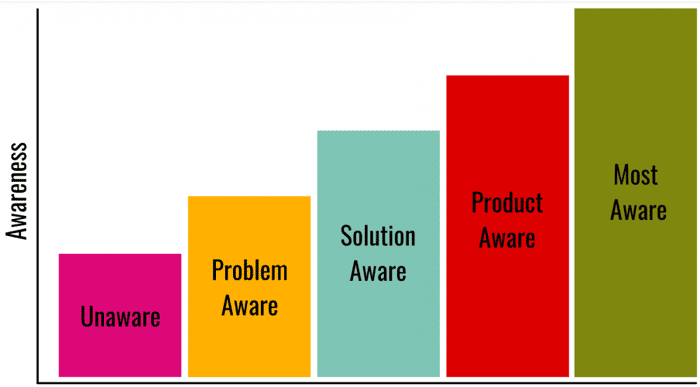
Getting people to visit their website is one thing for many early-stage SaaS businesses. Converting a good percentage of the visitors into quality leads and paying customers is an entirely different challenge.
Interestingly, some people might be tempted to say often that it’s a conversion problem.
In reality, it is a problem of ineffective strategy. If your SaaS SEO strategy is not aligned correctly with problem-aware prospects with existing needs your product can solve, you will not get the best results from your invested money and efforts.
It doesn’t matter what the website traffic volume or leads you get; a little mismatch between the core variables often leads to lower conversion rates and poor SaaS marketing ROI.
That’s where the pain point SEO strategy comes into play. In this post, I’ll highlight some key benefits of being proactive toward getting the best results from your SaaS SEO budget, efforts, or investment.
What Is Pain Point SEO Strategy?
Pain point SEO strategy identifies the specific challenges, frustrations, or “pain points” a target audience faces and then creates content that directly addresses these issues.
Instead of merely targeting high-volume keywords, this approach digs deeper into the problems potential customers are searching for solutions to. By understanding their pain points, businesses can create content that offers solutions, builds trust, and establishes authority.
This type of content resonates more with users because it speaks directly to their needs, increasing the likelihood of engagement, conversions, and customer loyalty. Pain point SEO can also improve rankings because search engines increasingly prioritize content that demonstrates relevance and value to users.
Benefits of Pain Point Drive SEO Strategy
#1: Improved Quality of SaaS Website Visitors
Generally, you know that search engine optimization is supposed to bring you some website visitors. You also understand that most website visitors won’t convert into free trial leads or active paying customers within 1–365 days in your funnel.
These facts imply that the quality of your website traffic is rarely equal when all the segments are compared over time.
The key point here is that the pain point SEO strategy could help you increase the quality of your website visitors. Contrary to the high-volume keyword-first approach, you can start making a more significant impact by focusing on quality. For most people, measuring the quantity of website traffic is more accessible than the quality.
And that’s why everyone does it and probably stops there.
But how do I measure website traffic quality, you may ask? Well, the first thing to note is that there is a big difference between SaaS buyer keywords and informational keywords. Now, I want to ask this question.
Instead, Would you spend most of your SaaS product marketing budget attracting people looking for information to learn and go or prospects actively looking for solutions to problems that can be solved with your products?
Yes, it is hard, but you can get insights into website traffic quality by tracking conversion rates through website visitor segmentation and conversion funnels.
Just pause now and think about the difference that a marginal 1–20% increase in traffic quality can have on your conversion rate.
#2: High-Quality SaaS Demo Lead Generation
Generating demo leads is one of those specific goals you can measure in your product marketing strategy.
However, just as the website traffic quality is essential, the quality of leads signing up for your SaaS demo is also necessary, if not more.
While sending prospects to your demo lead generation landing page through generalized SEO is easy, focusing on the people who have acknowledged their pain points has benefits.
The exciting thing is that when people have known problems they want to be solved, probably now or challenges towards a goal, the probability of converting them is usually higher. Your challenge is finding topics and keywords that attract people most likely to request a demo.
Perhaps having a SaaS demo lead generation landing page is one. Sending quality website traffic to that page is an entirely different challenge.
#3: Free Trial User Acquisition
Pain point-driven SEO strategy addresses potential customers’ problems or challenges, making it highly effective for SaaS businesses in generating free trial users. Most SaaS companies often solve distinct pain points, such as improving workflow efficiency, reducing operational costs, or enhancing customer experiences.
By identifying these pain points and crafting SEO content that speaks directly to the frustrations or needs of their target audience, SaaS businesses can attract high-intent users searching for solutions.
For example, a project management SaaS might target keywords like “how to manage team deadlines more effectively” or “best tools for project tracking,” creating blog posts, landing pages, and other content that ranks for these queries.
This kind of content attracts traffic and establishes the SaaS product as the solution to the problem, leading users to engage with the free trial as a logical next step in resolving their pain points.
Additionally, pain point-driven SEO helps build trust and credibility by positioning the SaaS company as an expert in addressing those challenges.
When prospects find in-depth articles, case studies, or even video tutorials that speak to their specific needs, they are more likely to view the SaaS company as a trusted partner rather than just another software vendor.
A high lever of trust increases the likelihood of conversions, as users feel more confident trying out a solution that has already proven itself through informative and helpful content.
Simply creating content that aligns with the buyer’s journey, from awareness of the pain point to considering solutions, SaaS businesses can turn organic search traffic into a steady stream of free trial sign-ups, effectively nurturing leads with minimal ad spend.
#4: Paying Customer Acquisition
The fourth benefit of SaaS SEO is discussed in this post. Especially in a bootstrapped business, your demise becomes inevitable if you are not acquiring enough paying users to support long-term growth and profitability.
Regardless of your niche, here are the three significant factors determining your success in paying customer acquisition.
Product Market Fit — If the business hasn’t found a strong product-market fit, marketing or selling the product to get paying customers will be relatively more complex. In most cases, the opposite usually holds. More than anything else, it all depends on how well the need for the product or solution is validated in the first place. Moreover, the size and stage of the business also play a role here.
Market Size — The size of the market in which you are working to implement a profitable SaaS product marketing strategy also plays an essential role in paying customer acquisition. Validating with your friends and family is good. However, if the market demand is not sizable enough, paying for user acquisition will continue to be a painful struggle, regardless of the product’s innovation. However, this is the place where keyword search volume might be helpful.
Willingness To Pay — while it may not be your responsibility to determine the product’s price, you ought to be in a market where many prospects are willing to pay for the product to alleviate their pain points or solve a specific problem. On a fundamental level, this has a lot to do with the measurable financial or operational benefits the buyer will get from using the product.
From the other perspective, you have to think about the exact pain points or problems the product is supposed to solve.
Practically, these are the key factors that will determine your success in terms of paying user acquisition through strategic search engine optimization and product marketing.
As you can see from the preceding, most of the benefits discussed above are practically measurable.
Depending on the size of your team, skill set, and available resources, you may want to implement a system for tracking product marketing KPIs.
Final Thoughts
Spending money and time to create content for your SaaS website is one thing. Getting good results in comparison to invested resources is an entirely different challenge.
Especially when your SaaS marketing budget is limited, doing the same thing repeatedly like everyone else while expecting a different result won’t get you closer to your revenue goals.
It doesn’t matter how expensive your landing pages are or your traffic volume; all visitors are rarely equal, especially regarding purchase intent and conversion potential.
If you continue using the informational, high-volume keyword-first approach, the ROI will likely remain below your minimal expectations. That’s why you need to start thinking differently. And that’s where a pain point-driven SEO strategy can help you improve progressively.
