5 Signs Your Retainer Needs a Deeper Clean (And How Ultrasonic Technology Solves Each One)
Introduction: When a Rinse Is Not Enough
Most retainer wearers adopt a routine of rinsing their appliance under running water and perhaps giving it a quick brush every now and then. For a long time, this may seem adequate. But retainers are complex objects with grooves, junctions, and surfaces that standard cleaning methods simply cannot reach effectively.
If you recognise any of the following five signs in your retainer, it is a strong signal that your current cleaning method is not keeping up — and that an Ultrasonic Cleaner could make a significant difference.
Sign One: Your Retainer Has a Persistent Unpleasant Smell
A retainer that smells bad, even after rinsing, is a clear indicator of bacterial activity. The odour typically comes from volatile sulphur compounds produced by bacteria metabolising food particles and organic matter trapped on the appliance surface.
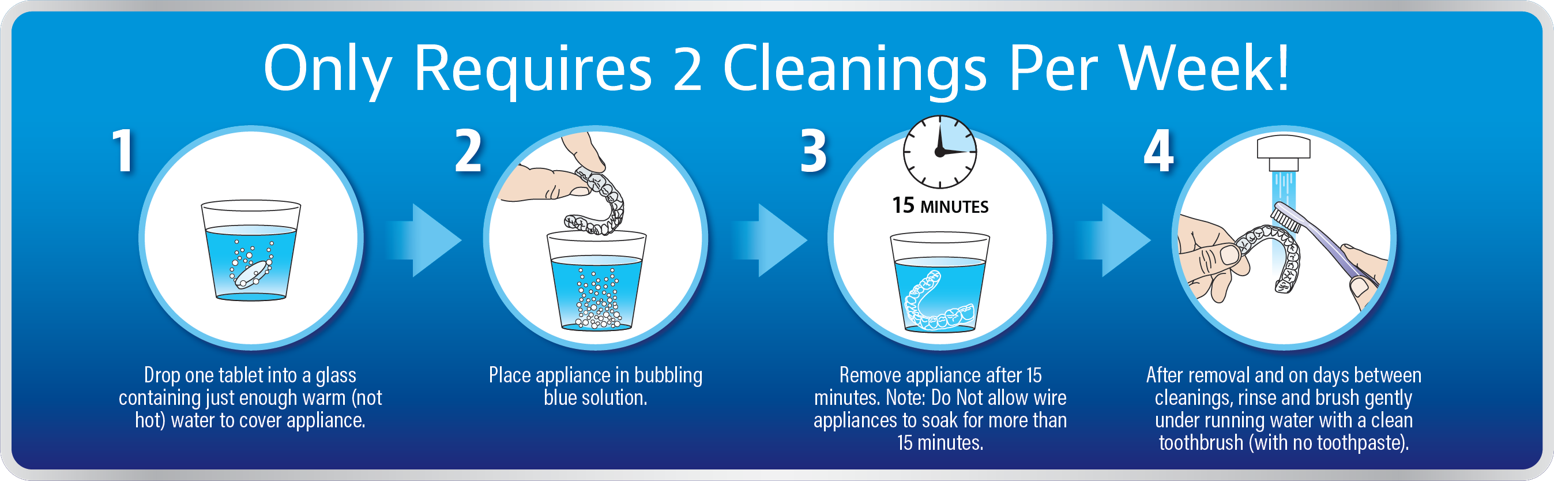
Manual brushing and rinsing can remove surface bacteria but rarely reaches deeper into the microscopic grooves and textured areas where odour-producing colonies establish themselves. Effervescent tablets can help, but their effectiveness diminishes over time as biofilm builds up.
Ultrasonic cavitation addresses this directly. The energy generated by collapsing microbubbles disrupts and dislodges biofilm from every surface simultaneously, including areas that are physically inaccessible to brushes. After an ultrasonic cleaning cycle, retainers typically exhibit noticeably reduced odour within just a few sessions.
Sign Two: Your Retainer Looks Discoloured or Stained
Retainers and clear aligners that should be transparent can develop a yellowish, brownish, or generally cloudy appearance over time. This discolouration comes from two main sources: pigments from food and drink (tea, coffee, red wine, turmeric) binding to plaque deposits on the surface, and mineral deposits from saliva creating a white or cloudy film.
Brushing can remove some surface pigmentation but struggles with embedded staining. Tablet soaks can help with chemical dissolution but often require long soak times for adequate results and may not fully address mineral deposits.
Ultrasonic cleaning excels at removing mineral deposits. The physical energy of cavitation effectively chips away at mineral buildup that soaking alone cannot dislodge. For pigment staining, cavitation combined with a mild cleaning tablet produces particularly strong results.
Sign Three: Your Retainer Feels Rough or Tacky
A properly clean retainer should feel smooth when you run your tongue over it or hold it between your fingers. If it feels rough, sticky, or gummy, that is a tactile sign of plaque or tartar buildup that has not been adequately removed.
This rough texture is problematic beyond aesthetics. Bacteria adhere more readily to irregular surfaces, meaning that a rough retainer will continue to accumulate contamination faster than a smooth one. Breaking the cycle requires effective mechanical cleaning.
The ultrasonic cavitation process is particularly effective at restoring smoothness to retainer surfaces. The microscopic implosions that characterise cavitation act like countless tiny pressure washes across every surface, removing the rough deposits that cause the tacky sensation.
Sign Four: You Can See White Deposits or Scale
Visible white or off-white deposits on a retainer are mineralised calcium deposits from saliva — the same material that causes limescale in kettles and calcium buildup in pipes. These deposits are particularly common in people who live in hard water areas or who wear retainers for extended periods.
These calcium deposits are genuinely difficult to remove through normal cleaning. Manual brushing can scratch the surface trying to remove them, potentially creating new sites for bacterial colonisation. Acidic soaks (such as diluted white vinegar) can dissolve them chemically but may be harsh on certain materials.
Ultrasonic cleaning addresses calcium deposits through physical energy without requiring harsh chemicals or abrasive action. The intensity of the cavitation process at these deposit sites is sufficient to break the bond between mineral and surface, after which a brief rinse removes the loosened scale.
Sign Five: Your Retainer Causes Mouth Irritation
If wearing your retainer causes a metallic taste, inflammation of the gums or soft tissues, or general mouth irritation that was not present when the appliance was new, bacterial load may be a contributing factor. Heavily contaminated retainers can introduce or reintroduce bacteria and their metabolic byproducts to the oral environment.
While persistent irritation should always be assessed by a dental professional to rule out other causes, ensuring that the retainer itself is thoroughly cleaned is an important first step. Many people report that upgrading their cleaning routine — particularly to ultrasonic methods — reduces the minor irritation they had come to accept as normal.
How Ultrasonic Technology Addresses All Five Signs
What makes ultrasonic cleaning uniquely effective is that it addresses all five of these problems through a single mechanism: cavitation energy. Unlike manual methods that only clean surfaces you can physically reach, or chemical methods that require contact time and cannot remove physical debris, ultrasonic waves clean every accessible surface simultaneously.
The device works in three to five minutes, requires no technique or effort from the user, produces no abrasion or chemical residue, and delivers consistent results with every cycle. For retainer wearers experiencing any of the five signs above, ultrasonic cleaning represents a meaningful upgrade over manual methods.
Conclusion: Do Not Ignore the Signs
Your retainer is in your mouth for many hours each day. The condition it is in directly affects your oral environment. If you recognise any of the five signs above — smell, discolouration, rough texture, mineral deposits, or mouth irritation — your retainer is telling you it needs a better cleaning routine.
An ultrasonic cleaner offers a practical, effective, and daily-sustainable solution. It is the most technologically sound approach to dental appliance maintenance currently available for home use, and it makes a genuine difference to the hygiene and longevity of your retainer.

