5 Ways to Boost Your Small Business with AI Marketing Tools
5 Ways to Boost Your Small Business with AI Marketing Tools
As a small business owner, you're always looking for ways to gain an edge and stay competitive in your market. One increasingly valuable resource you may be overlooking is the power of artificial intelligence (AI) marketing tools.
AI has transformed the marketing landscape, offering small businesses unprecedented capabilities to streamline workflows, personalize content, optimize campaigns, and drive better results. In this article, we'll explore 5 ways AI marketing tools can help supercharge your small business.
1. Automate Content Creation with AI
Creating high-quality, engaging content is crucial for small businesses to attract and retain customers. But let's face it - content creation is incredibly time-consuming. From ideation to writing to editing, the content production process can be a major drain on your team's resources.
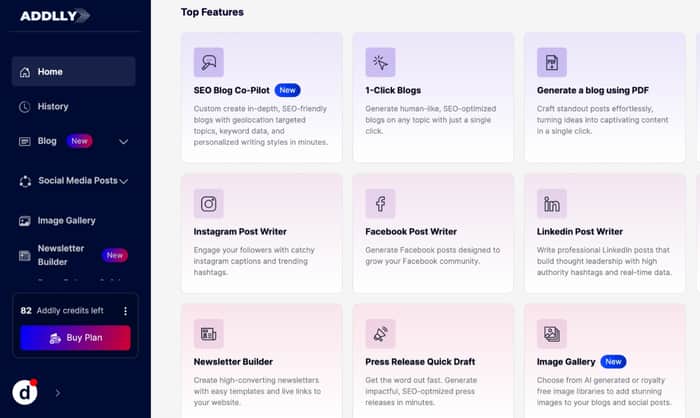
This is where AI content generation tools like 1-Click Blog Writer come into play. With just a few clicks, you can input a topic and keyword, and AI will automatically generate a full blog post optimized for search engines. The AI analyzes your specified parameters, taps into a vast knowledge base, and crafts a unique, human-sounding article - saving you hours compared to manual writing.
Better yet, the AI-generated content is designed to be SEO-friendly, complete with an optimized title, meta description, and schema markup. This gives your content the best chance of ranking highly in search results and driving organic traffic to your website.
2. Personalize Customer Experiences with AI
Delivering personalized experiences has become essential for small businesses to stand out and build lasting customer relationships. AI-powered tools can analyze customer data to deliver hyper-targeted content, product recommendations, and messaging that resonates on an individual level.
For example, AI-driven email marketing platforms can automatically segment your audience and dynamically populate email content based on each recipient's browsing history, purchase behavior, demographics, and more. This level of personalization leads to higher open rates, click-through rates, and conversions.
Similarly, AI chatbots and virtual assistants can provide real-time, one-on-one support and guidance to website visitors - freeing up your team to focus on higher-value tasks while ensuring customers get the information they need.
3. Optimize Advertising and Marketing Campaigns with AI
Small businesses often operate with limited budgets, so it's crucial to maximize the efficiency and impact of your advertising and marketing spend. AI-powered advertising platforms and marketing analytics tools can help optimize your campaigns for better ROI.
AI can analyze vast amounts of data to uncover insights about your target audience, pinpoint the best channels and ad formats, determine the optimal bidding strategies, and continuously refine your campaigns in real-time. This takes the guesswork out of marketing and allows you to make more informed, data-driven decisions.
Some AI marketing tools can even automate the ad creation process, generating multiple ad variations and testing them to identify the highest-performing creative. This saves your team valuable time and ensures you're putting your budget behind the ads most likely to convert.
4. Predict Customer Behavior with AI
Understanding your customers' behavior and needs is essential for small businesses to stay relevant and competitive. AI-powered predictive analytics tools can comb through your customer data to identify patterns, forecast trends, and anticipate future actions.
For example, AI can analyze past purchase data to predict which products or services a customer is likely to buy next, allowing you to proactively recommend relevant offerings. Or, AI can detect warning signs of customer churn and trigger personalized retention campaigns before a customer leaves.
This level of predictive intelligence empowers small businesses to make smarter, more strategic decisions - whether it's optimizing inventory, refining marketing strategies, or improving the overall customer experience.
5. Streamline Operations with AI
In addition to supercharging your marketing efforts, AI can also help streamline your small business operations. AI-powered tools can automate repetitive, time-consuming tasks like scheduling, invoicing, data entry, and customer support - freeing up your team to focus on more high-value work.
AI-driven process automation can also help identify inefficiencies and bottlenecks, and recommend ways to optimize workflows. This contributes to improved productivity, reduced costs, and better overall business performance.
Furthermore, AI-powered business intelligence platforms can aggregate and analyze data from across your organization, providing you with valuable insights to inform strategic decision-making. From identifying areas for cost savings to spotting new growth opportunities, these AI-driven insights are invaluable for small businesses navigating an increasingly competitive landscape.
