60M streams, £10K+/month passive income—and I only just built a website
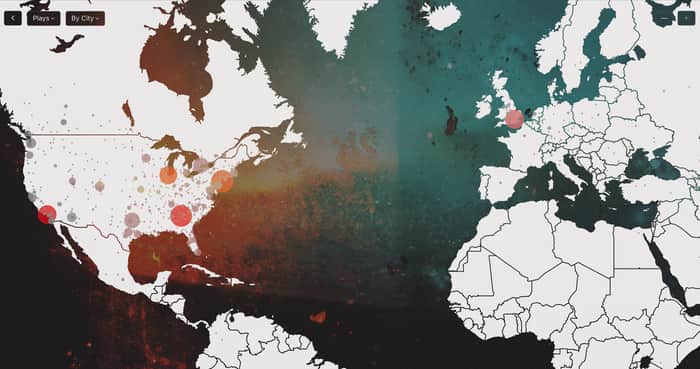
Here's why that was a mistake—and what I'm learning now.
At seven years old, I used a static-soaked Fisher Price radio to fall asleep. My brain couldn't shut down in silence.
Fast forward to 2018. I'd spent years running a DIY record label and music publishing business, but the maths stopped working. My wife was the breadwinner. Nursery fees were brutal. We were in debt. I needed something I could do on the side while being present for our kids.
So I started making ambient sounds. Textured, nostalgic noise. The kind my brain had always craved.
Seven years later: 60 million streams across platforms. My 2025 Apple Music Replay showed 328,647 listeners across 158 countries. 92 million minutes of listening time in one year.
My wife could quit her job. I'm earning more from "shhhhhh sounds" than I ever did running a label or writing songs.
Why I finally built a website
My audience is completely gatekept by Apple Music and Spotify. Hundreds of thousands of people use these sounds, but I have no way to reach them.
For seven years, I treated this like a side hustle that accidentally got out of hand. I felt weird about it—making money from noise when I used to work with "real" artists.
So I finally built noise-foundation.com—not because I figured it all out, but because I needed to stop hiding.
What I built
WordPress (custom theme, not page builder bloat):
Content strategy:
- Problem-first blog posts: "I Can Hear Electricity," "Why Is Silence So Loud," "When White Noise Isn't Enough"
- Targeting what people actually search at 3am, not "ambient music playlist"
Technical:
- 0.228s load time
- Custom schema markup linking streaming profiles (E-E-A-T signals)
- Mobile-first (insomnia traffic is phones)
The SEO problem
Despite 60M streams of real-world credibility, Google sees a brand new domain with zero backlinks.
6 weeks post-launch:
- 108 pages indexed
- 141 impressions/week
- 5 clicks/week (all branded)
- Ranking page 3-5 for relevant queries
Google has no external proof I'm who I claim to be.
60M plays. 7 years of doing this. Google doesn't give a damn. New domain = zero authority.
What I'm learning
Pink and brown noise outperform white noise in my streaming data, even though "white noise" is what people search for. People prefer texture over purity.
"Relaxing music" often makes anxiety worse. If you're not already calm, melodies demand too much attention. Texture without melody gives your brain something to rest on.
Sound sensitivity is more common than I thought. My "I Can Hear Electricity" post started ranking for ADHD-related searches. Millions of people experience this.
Questions for IH
1. How do you translate platform authority into domain authority?
I have 60M streams, 328K listeners, 7 years of credibility on Spotify/Apple Music. How do I get Google to recognise that?
2. Content strategy:
Should I create "how I make it" content for producers (higher engagement) or stay focused on problem-solving for listeners (actual revenue)?
Business model
- Free: Everything on Spotify, Apple Music, YouTube, Bandcamp
- Revenue: £10K+/month streaming royalties (passive)
- Website: No paywall, just context
- Goal: SEO → streaming discovery → more plays
Not building a SaaS (...yet!). Just making sounds that help.
The lesson
If I started over:
- Build the website first. I'd have 7 years of Google trust by now.
- Document publicly. The shame wasted years.
- Collect emails from day one. I have listeners but no direct channel.
- Take your weird thing seriously, sooner.
That's all this ever was: making what my brain needs and hoping people with similar wiring find it useful.
60 million streams later, I'm still figuring it out.

This is a really compelling story—especially the shift from treating it as a “side project that got out of hand” to finally building a proper web presence around it. The fact that you’ve got 60M+ streams but still face a cold start with Google really highlights how disconnected platform authority and search authority are.
The insight about texture-based sound outperforming “white noise” is also fascinating—feels like there’s a real content gap there that most competitors aren’t thinking about.
On the SEO side, this feels similar to cases where platforms like Spotify or Apple Music drive massive engagement but don’t translate that into owned search authority unless you actively build it from day one.
Curious—have you considered building email capture or “sleep profiles” to convert listeners into a direct audience outside streaming platforms?
Prize pool just opened at $0. Your odds are the best right now. If you're working on something new, this could help 👀
$19 entry → idea competition
🏆 Tokyo trip
💰 $500 guaranteed
Round open 👉 tokyolore.com