7 Best AI Music Generators in 2026 (Actually Worth Using)

AI music generators are everywhere right now.
But after testing dozens of them, I realized most tools still fall into one of three problems:
- robotic vocals
- messy song structure
- or music that sounds impressive for 10 seconds and falls apart after that
For creators making YouTube videos, TikToks, podcasts, games, or even full songs, that becomes frustrating very quickly.
So over the past few weeks, I tested a wide range of AI music tools to see which ones are actually usable in real creative workflows.
Some were surprisingly good.
Some felt unfinished.
And one platform I kept coming back to was Tegmix.
This guide breaks down the best AI music generators in 2026 based on:
- music quality
- vocal realism
- workflow speed
- customization
- soundtrack generation
- licensing clarity
- and actual creator usability
Let’s get into it.
https://tegmix.com/
— Best AI Music Generator for Fast Creative Workflow

If most AI music tools feel like isolated generators, Tegmix feels more like a workflow system.
What makes it stand out is how many parts of the music creation process it combines into one place:
- AI song generation
- lyrics-to-song
- vocal generation
- soundtrack creation
- instrumental tracks
- audio enhancement
- music for short-form videos
Instead of constantly jumping between multiple tools, Tegmix keeps everything inside a unified workflow.
That sounds simple, but in practice it saves a huge amount of time.
Another thing I liked is that the platform is actually easy to test without paying upfront. New users get free generation credits, which makes it possible to experiment with different workflows, prompts, vocals, and soundtrack styles before committing to a paid plan.
A lot of AI music platforms lock most useful features behind subscriptions almost immediately. Tegmix feels more creator-friendly in comparison, especially for people who want to iterate quickly without worrying about every single generation.
What impressed me most
Most AI music generators are good at creating short clips.
Tegmix was one of the few tools that consistently generated tracks that actually felt structured:
- intros
- transitions
- build-ups
- endings
The outputs also sounded less “AI-loop-ish” than many competitors.
Another strong point is speed.
A lot of AI music tools slow down creative momentum because every generation takes too long. Tegmix keeps generation relatively fast, which makes experimenting with different prompts much easier.
Best Features
- Text-to-song generation
- AI vocals
- Lyrics-to-music workflow
- AI soundtrack generation
- Instrumental background music
- Audio cleanup & enhancement
- Short-form video music workflow
- Free generation credits for testing
- Beginner-friendly interface
Pros
- Fast workflow
- Easy for non-musicians
- Good structure consistency
- Strong for content creators
- Useful for TikTok / YouTube creators
- Multiple AI music workflows in one place
- Free credits make testing easy
Cons
- Advanced DAW-level editing is still limited
- Longer generations can occasionally drift stylistically
- Some genres perform better than others
Best For
- YouTubers
- TikTok creators
- Indie creators
- AI content workflows
- Fast soundtrack generation
- Beginners who want usable results quickly
2. Suno — Best for Full AI Songs

Suno still has some of the best AI vocals available right now.
It’s especially good for generating complete songs from simple prompts, and the newer Studio tools make it more flexible than before.
The downside is that generations can sometimes become inconsistent, especially with complex prompts.
Pros
- Excellent AI vocals
- Fast song generation
- Large creator community
- Strong remix features
Cons
- Commercial use requires paid plans
- Lyrics can feel repetitive
- Long songs sometimes lose consistency
Best for:
- full vocal songs
- experimentation
- meme music
- AI music covers
3. Udio — Best for Song Refinement
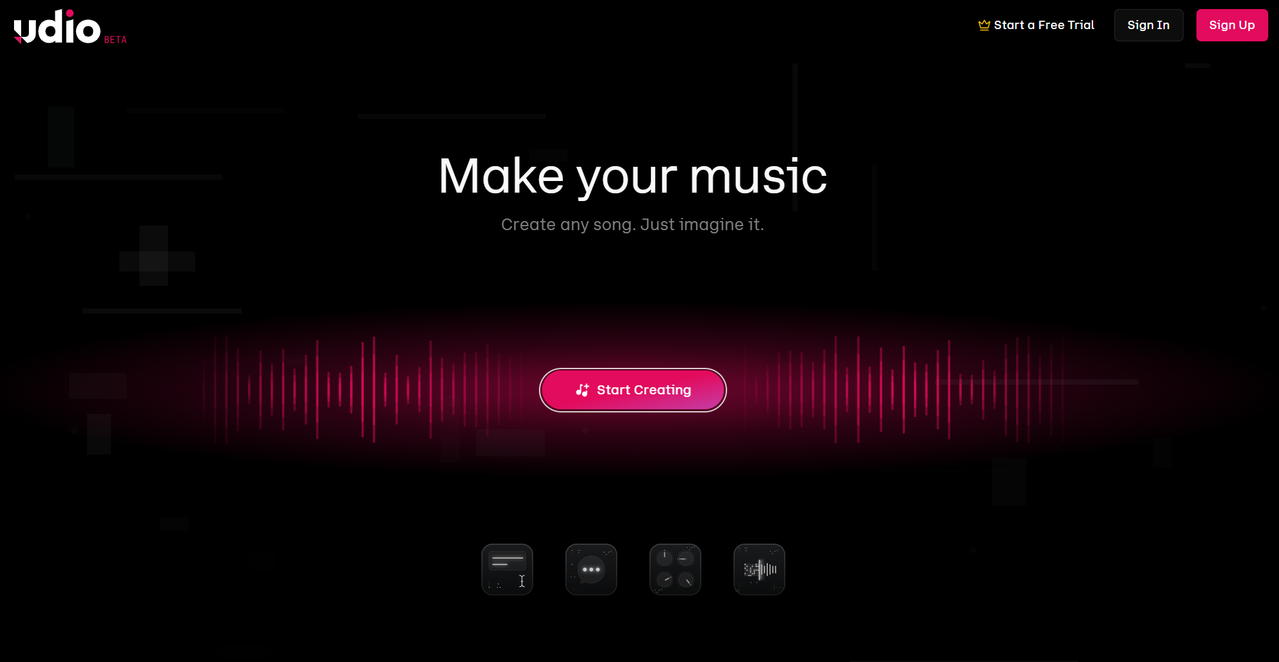
Udio feels more like a “music iteration” platform.
Instead of just generating random outputs, it allows you to refine sections, remix tracks, and gradually improve songs.
It’s one of the better options if you care about control instead of one-click generation.
Pros
- Strong remix workflow
- High audio quality
- Better editing flexibility
- Good for iterative creation
Cons
- Learning curve is slightly higher
- Some generations require multiple retries
- Not as beginner-friendly
Best for:
- musicians
- remix creators
- iterative workflows
4. Mureka — Best for Voice Cloning
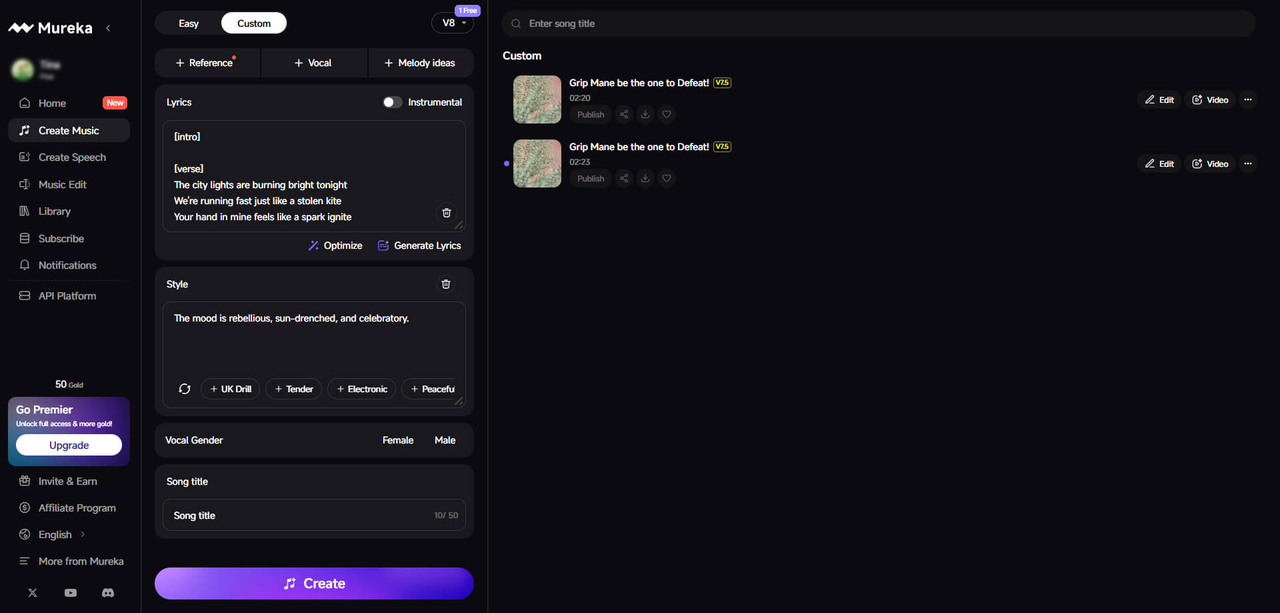
Mureka focuses heavily on personalized vocals and AI voice workflows.
If your goal is cloning voices or building a recognizable AI singing style, it’s one of the strongest options available.
Pros
- Voice cloning support
- Personalized AI models
- Multi-language support
- Flexible generation modes
Cons
- More complex than simpler tools
- Instrumentals can feel generic
- Requires more setup
Best for:
- voice creators
- AI singers
- personalized music workflows
5. Beatoven — Best for Video Soundtracks

Beatoven is excellent for emotion-based background music.
Instead of generating full vocal songs, it works better for:
- YouTube videos
- documentaries
- podcasts
- cinematic background tracks
Pros
- Strong emotional soundtrack generation
- Good for creators and editors
- Easy to use
- Royalty-free workflows
Cons
- No vocal generation
- Less useful for full songs
- Limited music editing
Best for:
- video creators
- filmmakers
- podcast music
6. Soundraw — Best for Instrumentals
Soundraw is one of the easiest tools for generating royalty-free background music quickly.

Its workflow is simple:
pick mood → pick genre → generate track.
Very creator-friendly.
Pros
- Fast instrumental creation
- Great for YouTube BGM
- Easy workflow
- Stable outputs
Cons
- No vocals
- Music can sound formulaic
- Less flexible creatively
Best for:
- background music
- YouTube creators
- podcast creators
7. AIVA — Best for Cinematic Music
AIVA still shines for orchestral and cinematic composition.
Compared with newer “viral AI music” tools, it feels more serious and composition-focused.
Especially useful for:
- game music
- trailers
- film scoring
- orchestral arrangements
Pros
- Strong composition quality
- Long-form music support
- MIDI export
- Professional workflow support
Cons
- Harder for beginners
- No vocal generation
- More expensive than most tools
Best for:
- composers
- game developers
- cinematic creators
What Makes a Good AI Music Generator in 2026?
After testing many platforms, the best tools usually share a few things:
1. Fast Iteration
Creative momentum matters more than people realize.
If generation takes too long, users stop experimenting.
2. Structured Output
Many AI songs sound good for 15 seconds but collapse afterward.
Consistency matters.
3. Real Workflow Utility
The best tools solve actual creator problems:
- background music
- shorts
- podcasts
- soundtrack creation
- fast ideation
4. Licensing Clarity
Creators care about copyright now more than ever.
Commercial-safe generation is becoming essential.
Final Thoughts
AI music generation is evolving incredibly fast.
A year ago, most outputs sounded robotic.
Now some tools are genuinely useful for real content production.
Among everything I tested, Tegmix stood out because it focuses less on “AI gimmicks” and more on workflow efficiency.
Instead of trying to replace musicians entirely, it feels optimized for creators who simply want to:
- create faster
- test ideas faster
- and ship content faster
And honestly, that’s probably where AI music tools are most useful right now.

Great list. I like how AI music generators are making it much easier for creators to experiment with original music without needing a full production setup.
Is the first one a new website? I’ve never seen it before.
Yeah, right now we’re giving away free credits, so I wanted to share it with everyone.
As someone who actually works with music, my biggest issue with most AI music generators is that they still don’t understand progression or tension very well.
A lot of them can generate a catchy 10–15 second moment, but sustaining emotion, transitions, and arrangement across a full track is still pretty rough.
Yeah, I completely agree. Most current models are great at generating moments or vibes, but maintaining a real musical narrative across an entire track is a totally different challenge.
Especially when it comes to tension/release and arrangement evolution. Those areas still need a lot more refinement.