7 No-Code & Dev Platforms That Are Actually Worth Your Time in 2026
A builder's honest look at the tools reshaping how we ship software
I've been following the no-code and low-code space for a while now. Every few months a new wave of tools promises to kill traditional development. Most of them don't. But some of them quietly become part of how real builders ship real things.
In 2026, the space finally feels mature enough to be genuinely useful — not just for demos and MVPs, but for production apps, internal tools, and serious infrastructure. Here's a breakdown of seven tools worth knowing about, who they're actually for, and where they fit in your stack.
1. MarsX — The Builder's No-Code Platform
If you're an indie hacker who outgrows Bubble but doesn't want to write everything from scratch, MarsX might be your answer.
The core idea is clever: instead of building features yourself, you pull from a library of "micro-apps" — pre-built, full-stack modules for things like chat, social feeds, marketplaces, and user auth. Each micro-app is built by a specialist developer who maintains it. You combine them, customize the final 1%, and ship.
The platform supports a hybrid workflow — you can start no-code, slide into low-code, and drop into a full JS IDE when you need real control. There's no vendor lock-in because you can export your code. The engine itself is open-source on GitHub.
It's bootstrapped ($3.5M ARR as of 2025), built by John Rush's team, and their community keeps growing. The free tier is genuinely useful for MVPs.
Best for: Technical founders who want to move fast without starting from zero every time.
2. Adalo — Still the Best Native Mobile No-Code Builder
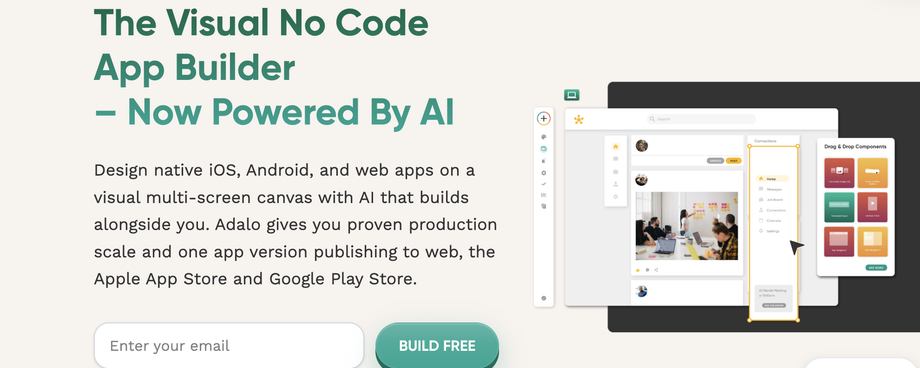
Adalo has been around for a while, but the Adalo 3.0 infrastructure overhaul in late 2025 changed the conversation. Apps are now 3–4x faster, there are no record limits on paid plans, and the platform handles over 20 million daily data requests.
What sets Adalo apart from web-focused no-code tools is that it publishes actual native apps to the App Store and Google Play — not web wrappers. One codebase, three platforms (web, iOS, Android). For founders targeting mobile users, that's a huge deal.
The AI Builder (rolling out in early 2026) lets you describe what you want and it generates the app foundation. "Magic Start" creates screens, database structure, and user flows from a plain English description. "Magic Add" lets you add features the same way.
Pricing is flat-rate, which matters — no surprise bills when your user count grows.
Best for: Non-technical founders building consumer or B2B mobile apps.
3. DreamFactory — Turning Databases Into APIs Without Writing a Line
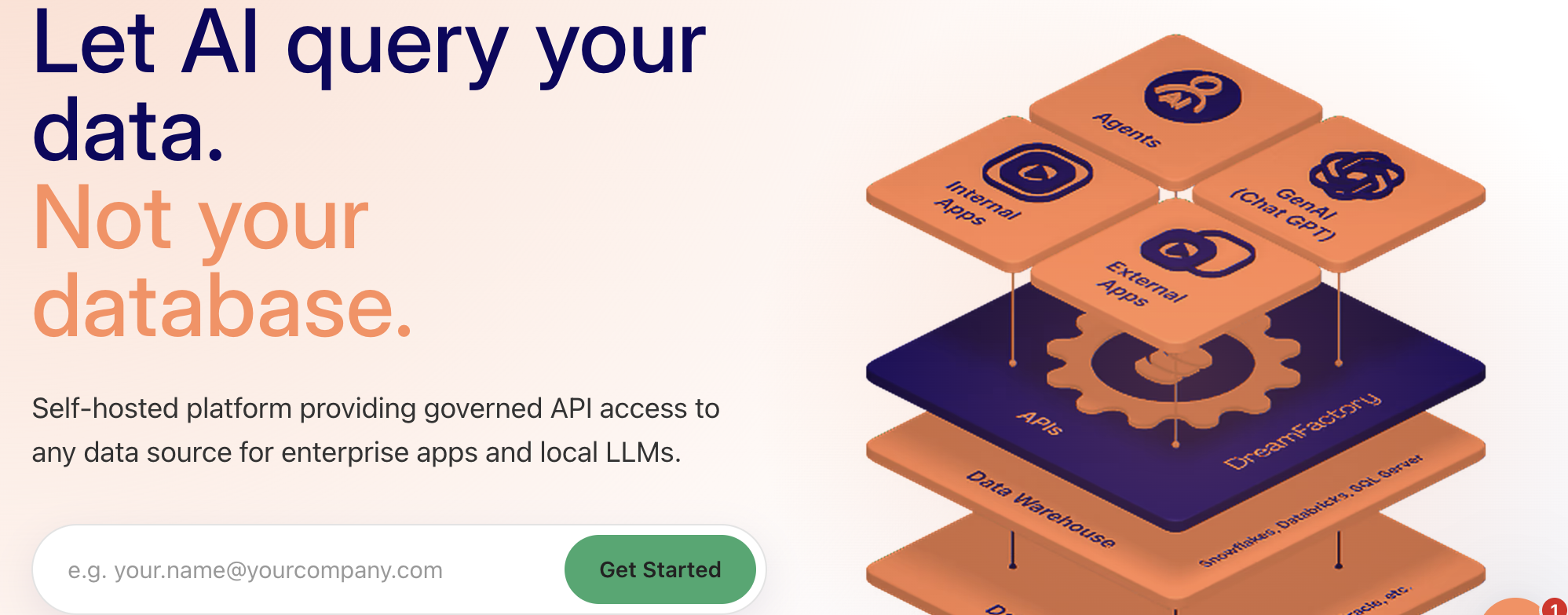
If your problem is "I have a database, and I need an API on top of it," DreamFactory solves that in a way nothing else quite matches.
Point it at your database — PostgreSQL, MySQL, MongoDB, Oracle, SQL Server, legacy systems, whatever — and it auto-generates fully documented REST (and GraphQL) APIs with role-based access control, rate limiting, and audit logs. No manual API coding required. The team claims $201,783 in annual developer cost savings per organization.
What makes DreamFactory increasingly relevant in 2026 is its built-in MCP (Model Context Protocol) server. This lets AI agents and LLMs query your databases securely through governed endpoints — which is exactly what you need if you're building AI-powered apps on top of existing data.
Version 7.5 shipped in early 2026 with GitHub as a first-class MCP integration, security hardening across the board, and Playwright-based CI tests for the admin UI. It's self-hosted, which enterprise and regulated-industry teams love.
Best for: Teams with existing databases who need to expose data to apps, APIs, or AI systems quickly.
4. Blazestack — Enterprise-Grade No-Code for Internal Tools
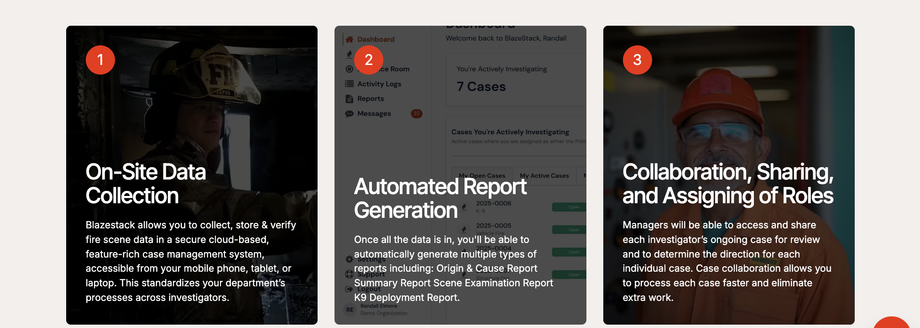
Blazestack (built on Blaze.tech's foundation) targets the other end of the market: enterprises that need serious internal tools without hiring a dev team to build them.
The drag-and-drop interface connects to your existing data sources — Airtable, Google Sheets, Salesforce, MongoDB, Stripe, and dozens more — and lets you build customer portals, workflow automation, invoice management, inventory dashboards, and more.
The security story is the differentiator: SOC2-certified infrastructure, HIPAA compliance, SSO, and 2FA out of the box. For healthcare, finance, or any regulated industry, that's not a nice-to-have, it's the whole point.
It's not cheap (enterprise pricing starts in the $1,500/month range), and it's probably overkill for small teams. But if you're inside a larger organization trying to get something built without waiting 18 months for the dev queue, this is a real option.
Best for: Ops teams, healthcare orgs, and enterprise teams building internal tools at scale.
5. Distance — AI Agent for Service Business Automation
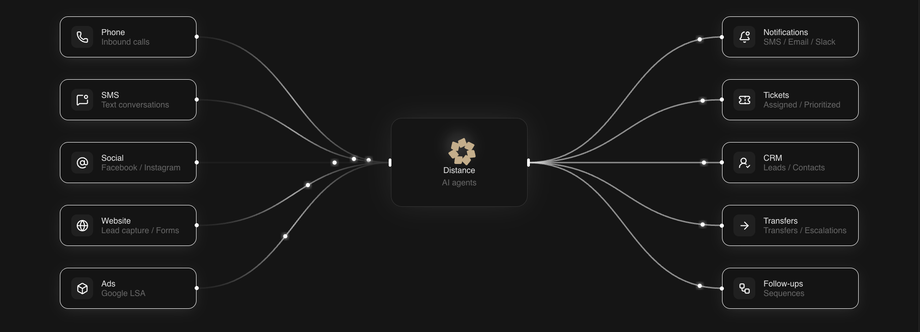
Distance isn't a traditional no-code builder — it's more of an AI operations platform. But it belongs in this list because it represents where the space is heading.
The product is simple: Distance handles your inbound calls, messages, web form submissions, and bookings automatically using AI agents. It qualifies leads, routes conversations, and books appointments — all without human involvement.
It's built for service businesses: cleaning companies, HVAC, pest control, law firms, medical clinics. The playbooks feature lets you set up industry-specific automation workflows without any code. You describe your process, Distance runs it.
In 2026, where AI agents are moving from demos to production workloads, Distance is a clean example of what "no-code + AI" looks like when it's actually solving a real business problem.
Best for: Service businesses that want to stop losing leads to slow response times.
6. ApolloWeb — Custom Web Presence Without the Agency Price Tag
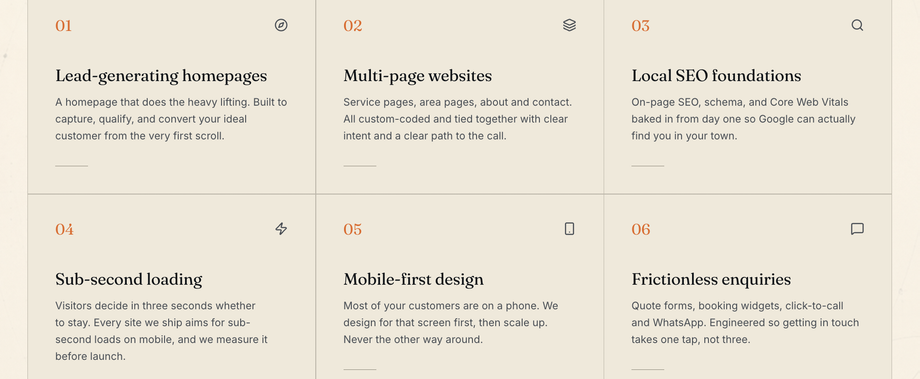
ApolloWeb sits at a different point in the spectrum. It's not a DIY platform — it's a one-person UK-based web studio that builds custom-coded sites quickly and affordably using AI-assisted workflows.
For indie hackers, the appeal is practical: you get a properly coded, performance-optimized, SEO-ready site for a fraction of what a traditional agency charges, with a free homepage mockup before you commit. Changes are handled within 24 hours, indefinitely. No retainers.
It's not a SaaS tool you run yourself — it's a service. But in 2026, where the line between "tool" and "AI-augmented human service" is increasingly blurry, it's worth including as an option for founders who want a proper web presence without DIY friction.
Best for: Solo founders and small businesses who want a real website fast, without managing it themselves.
7. ControlPlane — Making Cloud-Native Infrastructure Accessible
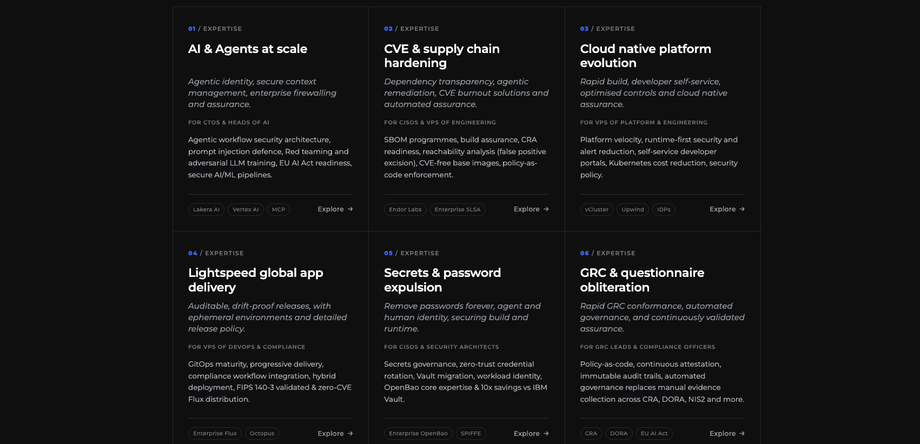
ControlPlane is the most technical tool on this list. It's not no-code in the traditional sense — it's a cloud-native security and platform engineering firm that helps teams build on Kubernetes, implement GitOps, and harden their cloud infrastructure.
What makes it relevant to the no-code/low-code conversation in 2026 is that as serious builders graduate from no-code tools to real infrastructure, they hit a wall: cloud-native security is hard. ControlPlane bridges that gap with managed services for Flux CD, OpenBao (the open-source Vault successor under Linux Foundation governance), and DevSecOps practices.
Their Enterprise for OpenBao offering is getting traction with companies like GitLab, SAP, and NVIDIA. The EU Cyber Resilience Act comes into effect in stages through 2026–2027, and ControlPlane is positioning itself as the compliance partner for teams that need to take supply chain security seriously.
Best for: Engineering teams scaling past the point where cloud security can be an afterthought.
The Honest Take
The no-code space in 2026 isn't about replacing developers — it's about moving the baseline of what one person or a small team can build. The tools above sit at different points on that spectrum, from pure no-code (Adalo) to AI-assisted services (ApolloWeb) to serious infrastructure tooling (ControlPlane and DreamFactory).
Pick based on where you actually are, not where you want to be. A solo founder doesn't need Blazestack's enterprise pricing. An ops team at a healthcare company probably can't get by with Adalo.
The market is big enough that almost everything has its place. The question is whether it has a place in your stack.
What tools are you using to build in 2026? Drop your setup in the comments — always curious what's working for people.
#nocode #buildinpublic #indiehackers #lowcode #saas #productdevelopment #startups #appbuilder #api #devtools #2026
